In 1906, a Danish math historian and philologist named Johan Ludvig Heiberg was able to get his hands on a library catalog. In it was observed a prayer book made of parchment – which was inscribed twice. The book’s synopsis and a transcription of an earlier, overwritten part were both included in the catalog. The earlier text must have originated with Archimedes, a fact that was instantly apparent to Heiberg, one of the foremost experts on ancient Greek mathematics.
This means that the Danish scholar has uncovered the earliest surviving copy of Archimedes‘ works written in Greek. There are no other known copies of the mathematician’s writings that are older than this one by around 400 years. Ancient originals no longer exist since the papyrus scrolls on which Archimedes penned his treatises in the 3rd century BC have long since been destroyed. Texts from antiquity were only carried down if someone copied them at regular intervals.
The Archimedes Palimpsest is consisting of 174 parchment folios.
Page-turning, not page-scrolling, has been the norm since late antiquity
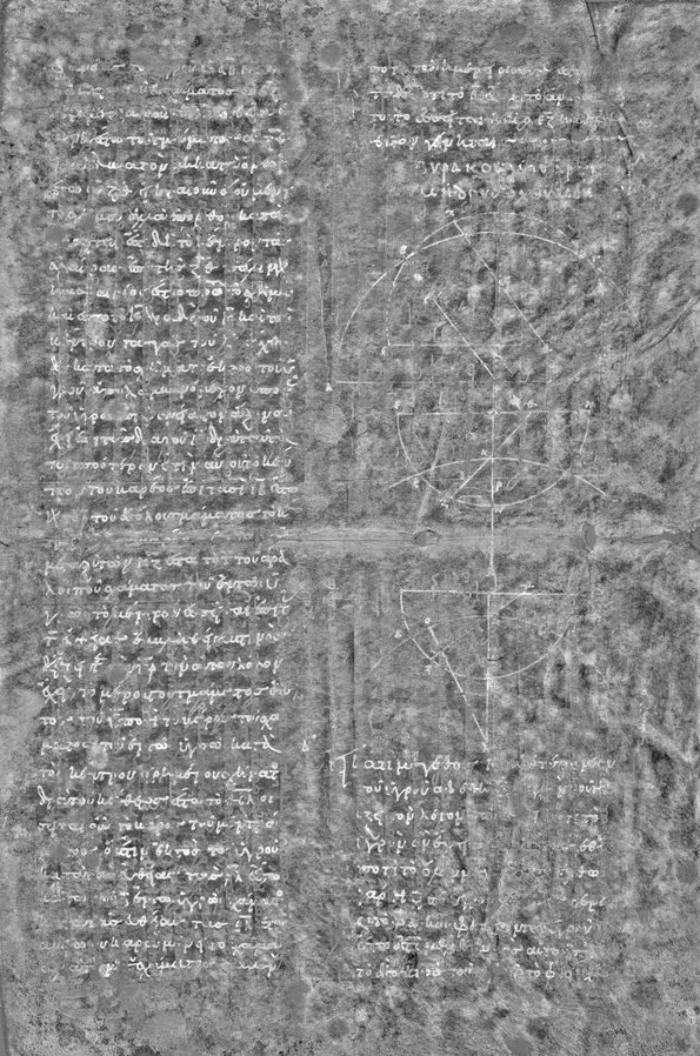
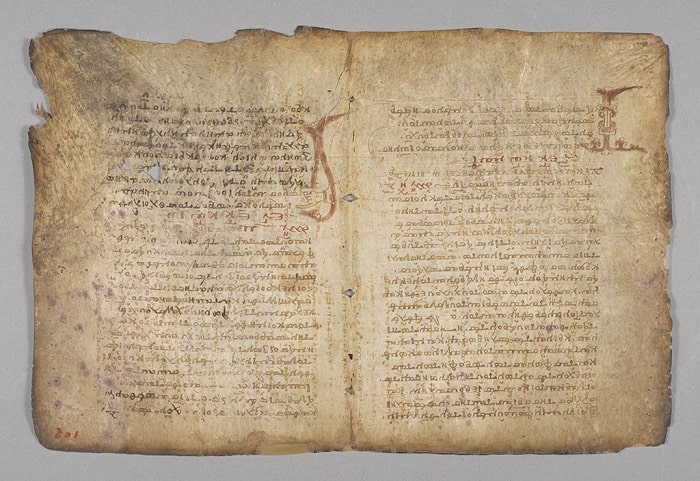
Imaging a palimpsest page reveals the original Archimedes text underneath.
Papyrus was the medium of choice for Archimedes’ writings, most of which were letters to colleagues. All capital letters, no punctuation, and no spaces between words characterize his writing style. The Library of Alexandria, the biggest library of its day, currently has some of his correspondence.
However, even it wasn’t enough to keep Archimedes’ works hidden for long. Papyrus scrolls were no longer used after the 4th century. Books, or codexes, were the format of choice. Any ancient writings that were not in codex form were then forgotten. Authors who were well-liked by their contemporaries in the literary and reading communities could count themselves fortunate, since their works were often reproduced.
That was not the case with Archimedes. We are aware of this because of Eutokios. The mathematician offered commentary on Archimedes’ treatises from the 5th century and highlighted the great challenges Archimedes had in acquiring his writings. In addition to the commentary, Eutokios also transcribed the writings of Archimedes himself, ensuring that many of his writings would endure through the generations.
Only three complete works of Archimedes have survived
Eutokios had avoided the biggest threat, but the ancient book culture still faced more challenges in the near future. Because most libraries went the way of the dinosaurs along with the rest of antiquity. The best scribes and copyists were now located in Christian monasteries, where they showed little enthusiasm for Archimedes’ work.
Since then, only three codices containing Archimedes’ writings have been discovered. All three were originally from Constantinople, which is now Istanbul, and were reproduced in the 9th and 10th centuries. Later, researchers came up with the very original titles Codex A, B, and C for these three versions.
The original text has been translated into other languages. The Latin and then the Arabic versions of Archimedes were still available. Three novels only made it into the Middle Ages from copies of the original Greek manuscripts. Codex B was first recorded as part of a papal library in 1311, and after that it disappeared. So, Codex A was the primary source for Archimedes for centuries, until its disappearance in 1564.
Then came the codex C. At first, nobody could find the book. Codex C was written on parchment and included seven of Archimedes’ treatises. It was made of prepped animal skin. This allowed for easy text extraction and subsequent page reuse. And in 1229, this was precisely what happened with the book.
The most well-known palimpsest ever discovered, Codex C
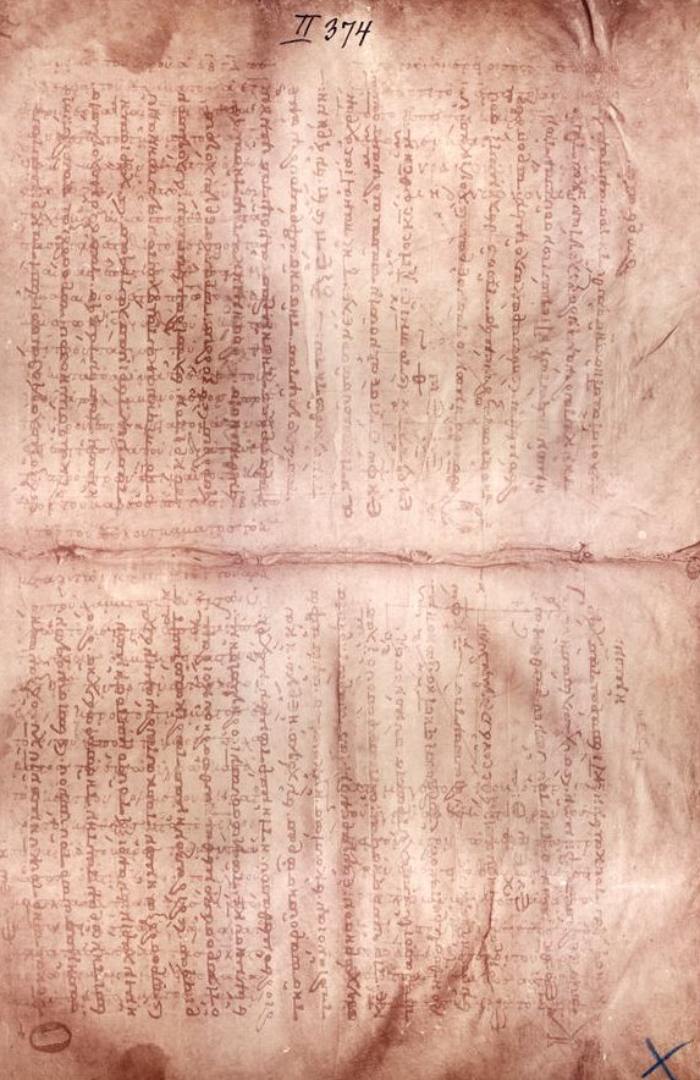
A page of Archimedes Palimpsest. The prayer book text is read from top to bottom, while the original Archimedes manuscript is read from left to right in a fainter font underneath it. (Credit: The Walters Museum- CC BY 3.0)
It is uncertain how Codex C made its way from Constantinople to Jerusalem, but once there, a local monk dismantled the book, wiped the pages with acid, and then scraped the text off with a stone. After that, he folded the papers in half lengthwise, flipped them through a full 90 degrees, and re-inscribed the text with Christian prayers. The original Codex C was now a palimpsest. But if you squinted, you could make out sketches and words from Archimedes’ treatises.
A monastery close to Bethlehem was where we would find the palimpsest, but a few decades later it turned up in Constantinople. There are no myths or legends surrounding the object’s origin or its subsequent placement. An 1840s citation, however, places it in the Constantinople library of the Jerusalem Church of the Holy Sepulchre, or Metochion. After Heiberg uncovered the palimpsest, he decoded the majority of Archimedes’ Greek text and quickly publicized his findings. Heiberg also photographed the palimpsest, which proved to be crucial since not long thereafter the book was lost forever.
Archimedes is now protected by the World Wide Web forever
Finally making its way to Paris, the piece spent decades collecting dust in a dark, damp basement. In October of 1998, an auction company in New York auctioned a palimpsest that was in such terrible shape that it could hardly be read.
The Greek Ministry of Culture was one of two desperate bids, but in the end, an unnamed American paid $2,000,000 for the book. As it turned out, he cared about keeping the book safe for future generations. This prompted him to make it accessible for study by donating it to Baltimore’s Walters Art Museum not long after he bought it.
It took 10 years for specialists there, led by William Noel, to fix it, remove mold and adhesive, and then scan it using complex imaging techniques. This allowed for the majority of the text to be reconstructed and made legible again. William Noel chronicled the exciting tale of the palimpsest with the help of Reviel Netz in their book, “The Archimedes Codex.”
In this way, the removal of Archimedes’ writing in 1229 helped ensure its continued existence. Indeed, the Internet has made it possible to see what may be the most well-known palimpsest ever in stunningly crisp detail. A remarkable illustration of the string of luck that has to be strung together for ancient wisdom to survive the test of time.
The primary goal of studying the history of physics is to reconstruct the many discoveries made by physicists going back to antiquity. There has never been a point in human history when mankind didn’t desire to know more about the universe. Many physicists have contributed to our collective knowledge by using observations and math to explain exactly how ordinary events occur. As such, we shall trace the history of universal thought and demonstrate the key developments that have led to the state of our understanding now.
An early point in physics
Archimedes.
The history of physics is deeply rooted in antiquity and the distant past. Archaeologists have shown without a reasonable doubt that ancient individuals had keen powers of observation. We know this because of megalithic structures like “Stonehenge” that have survived to the present day as physical monuments. Men throughout prehistory recognized this burning curiosity about the universe and attempted to recreate specific events, laying the groundwork for the first step in the scientific method: cautious observation.
In addition, the first tools to measure time arose at this time in human history. Among the first ones were the Ishango bone, the Abri Blanchard bones, and even Stonehenge and Carnac stones. The description of specific astronomical processes was the first step in the development of physics. However, we have a far more exact understanding of the physics of antiquity. The passing of time was also a major factor. The sundial, gnomon, and clepsydra (water clock) are all devices with ancient origins.
Many traction devices, including war machines, such as the catapult, may trace their ancestry back to Archimedes.
Greek knowledge was formed by physicists like Archimedes, Thales of Miletus, and Eratosthenes, going well beyond the mere measurement of time. Most of these philosophers have contributed to our knowledge of the universe since they were interested in matter and its processes. The Greek term atomos means “indivisible,” which is where we get our modern name “atom.” Democritus (460 BC–370 BC) was right in thinking that matter consists of discrete particles separated by empty space. He called those smallest and inseparable units “atoms.”
Democritus explained the atom, saying that the bodies we see as hard and massive owe their coherence to more hooked, more intimately linked corpuscles. According to him it is smooth and round corpuscles that form the bodies of a liquid and the rest of nature.
Many traction devices, as well as certain war machines, such as the catapult, may trace their ancestry back to Archimedes (287–212 BC), who is now considered the creator of static mechanics. However, his contributions to the field of fluid mechanics have brought him the most attention. “Archimedes’ principle” states that every body submerged in a liquid (or a gas) gets a push, which is exerted from bottom to top, and equal to the weight of the volume of liquid displaced. This discovery is said to have occurred after Archimedes yelled “Eureka!” (I have found it).
The term “thrust” in Archimedes’ principle was coined for this particular propulsion mechanism. Although we cannot possibly include every ancient physicist here, it is important to at least highlight Eratosthenes (276–194 BC). Using just a stick and some basic math, Eratosthenes determined the size of the Earth.
At midday in Alexandria, Eratosthenes measured the angle of the Sun’s beams with a vertical stick and found it at 7 degrees, lending credence to the assumption that the Sun’s rays were parallel. Similarly, in Syene, a city south of Alexandria, almost on the same meridian, the Sun’s rays did not create any shadows (0 degrees) at the same time of day. Eratosthenes calculated the Earth’s circumference as 25,072 miles (40,349 kilometers) using a proportionate relationship (assuming that Earth was a 360-degree globe), which is off by around 10 percent from the estimate we have today.
Observation, hypothesis testing, and the use of mathematical tools to create theories are the means by which physics advances and information is accumulated.
Advances in physics
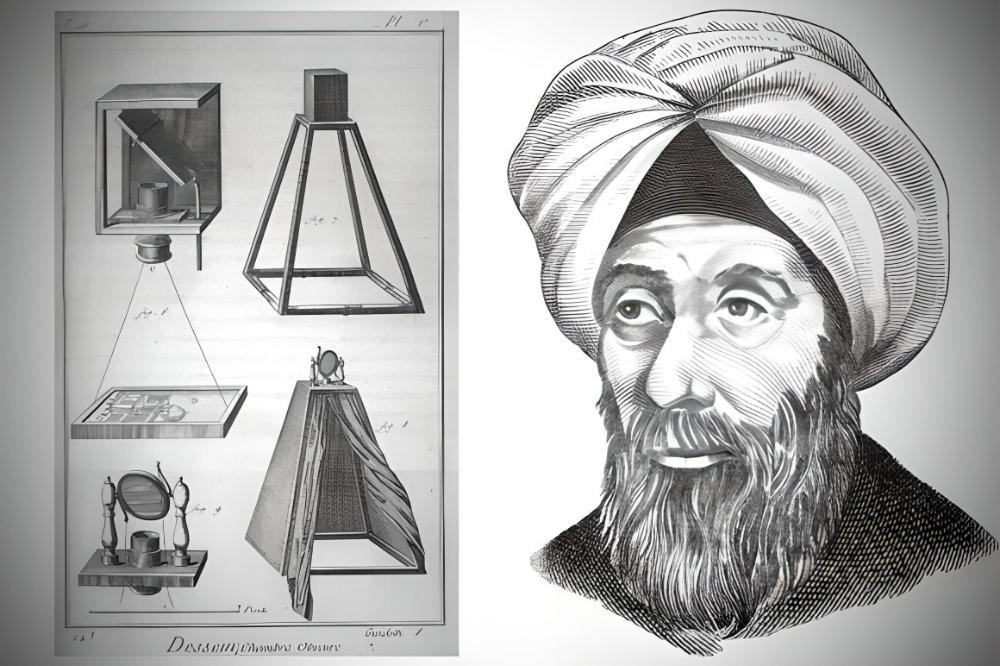
Ibn-al-Haytham or Alhazen.
As the Middle Ages settled in, conflicts proliferated. The collected Greek knowledge of Antiquity is lost due to invasions, conquests, and wars; nonetheless, certain thinkers, such as Boethius (480–524 AD), maintained some scientific heritages of antiquity via the Quadrivium. The golden age of scientific progress by Arab-Muslims occurred while the West was in a dark age, and it was during this time that the Greeks’ scientific works were carried on by the Arab-Muslims. In particular, they preserved the written records of discoveries and expanded upon them, laying the groundwork for a civilization based on knowledge.
Algebra and the work of mathematicians like Averroes (1126–1198) show how the introduction of the zero by the Arabs sparked a revolution in mathematics and paved the way for advancements in the field. When astronomer Alhazen (965–1039) created the first water telescope, he ushered in a new era of discovery that would profoundly alter the field. When asked why the Moon seems bigger at particular times or why the Moon shines, Alhazen was able to provide a rational explanation.
Alhazen also made the first recorded mention of refraction, a concept that later scientists would develop. Alhazen proposed the concept of inertia in mechanics, which was eventually adopted by Galileo; he also discussed the attraction of masses, which was mostly adopted by Isaac Newton a few centuries later. During the Renaissance, several scientists made groundbreaking contributions to the field of physics.
The next major figure is Galileo Galilei (1564–1642), an astronomer and physicist who achieved widespread renown thanks to innovations like the telescope. The study of dynamics allowed him to fathom the paths taken by the planets, an insight he gained in the course of his career. Aside from that, Galileo came up with the concept of inertia, which says that a body is either at rest or in uniform rectilinear motion if it is not subjected to any force or to forces whose resultant is zero. A few years later, Newton’s First Law would be based on this idea. René Descartes (1596–1650) devoted more time and energy to the study of optics, eventually formulating the mathematical expression of the rule of refraction of light and, of course, the law of reflection.
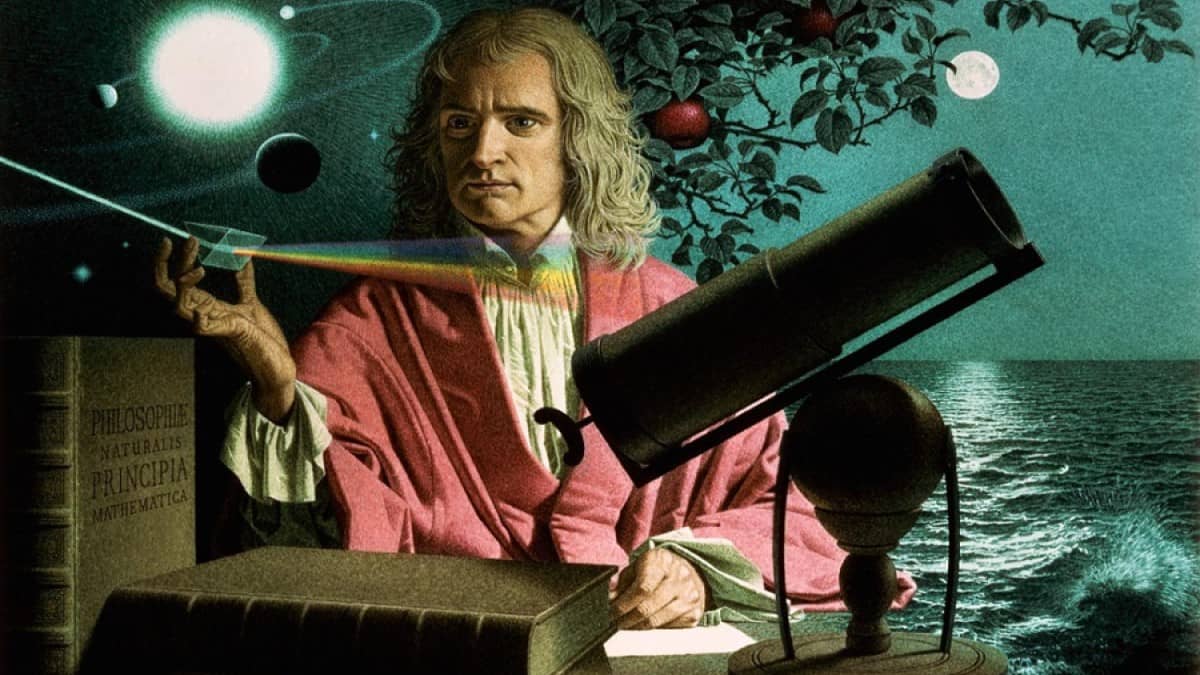
It is safe to say, however, that physicist Isaac Newton‘s (1643–1723) contributions were the most significant of the 17th century. By contributing to several disciplines, including optics, mechanics, and mathematics, Newton radically altered our view of the universe. With his work on the refraction of light, Newton built upon the discoveries made by Descartes (and Willebrord Snellius) by demonstrating that a prism separates light into its component colors before recombining them to generate white light. He also invented the Newton telescope, which outperformed Galileo’s in terms of clarity of image, and investigated diffraction.
Isaac Newton developed a mathematical theory of mechanics that used vectors to represent the forces responsible for the motion of things. With the help of his friend, the astronomer Edmund Halley (1656–1742), he was able to formulate three rules that would become known as “Newton’s Laws,” and he also succeeded in explaining how gravity worked by stating the law of universal gravitation, both of which were published in Newton’s book The Mathematical Principles of Natural Philosophy.
Finally, Gottfried Leibniz (1646–1716) was a major figure in the field of physics at the time. His theoretical findings on the conservation of energy and the theoretical modeling of spatial and temporal dimensions were immensely helpful to subsequent scientists.
Physical sciences after Newton
Understanding energy and motion (kinematics and dynamics) led to the development of thermodynamics, a science that brings together previously separated fields of study. Named after the ancient Greek words for heat (thermos) and power (dunamis), this subfield of physics studies the connections between motion and energy (heat is only a means of transporting energy). The advancement of industry (during the industrial period) and the improvement of steam engines can be credited to this new subject of physics.
James Maxwell (1831–1879) introduced yet another new physics field, electromagnetism. This new field brought together electricity and magnetism, and it did so with straightforward experiments (and theoretical and mathematical analysis): a moving electric current in a wire produces a magnetic field. When free electrons flow, they generate an electric current and a magnetic field.
The measurement of light’s speed was the century’s most significant discovery.
The measurement of light’s speed using an interferometer by Edward Morley (1838–1923) and Albert Abraham Michelson (1852–1931), who shared the Nobel Prize in Physics, was unquestionably the century’s most significant discovery. Their discovery shook the dynamics of physics by finding that the speed of light was constant across all reference frames of the same medium. This meant that the speed of light was the same for all observers no matter their speed of motion.
But in reality, the dynamics of physics dictate that an observer traveling in the same direction as a photon at high speed should perceive the photon going more slowly for that observer than for an observer at rest (in the same reference frame). Only George FitzGerald‘s (1851–1901), and later Hendrik Lorentz‘s (1853–1928) notion of length contraction was able to account for this. This assumption directly contradicted the principles of classical mechanics until Einstein made it explicit.
The physics world has been forever changed by Einstein
This unexpected finding was never made compatible with mechanics until Albert Einstein (1879–1955). In 1905, Einstein presented his theory of special relativity, which demonstrated that motion results from a distortion of space and time even if the speed of light remains constant. As a result, Einstein demonstrated that space and time are not fixed, but rather expand and contract, as shown by the imagined experiment of Paul Langevin‘s (1872–1946) twins, the ages of which would vary depending on whether or not they had traveled at high speed (according to some reference frame).
Reconciling special relativity with a theory of gravity was now possible thanks to the general theory of relativity that Einstein developed between 1907 and 1915. Indeed, Albert demonstrated that, in his view, gravity was only a warping of space-time. When a body, like a ball, was put on a rubber sheet, the sheet would sink and the latter would attract the former because of the gravitational lines created by this deformation, or geodesics.
Ernest Rutherford (1871–1937) paved the way for unprecedented breakthroughs in nuclear physics through his work in quantum mechanics.
Because of general relativity, the application of Newtonian physics turned out to be limited; it would no longer apply to objects traveling at very high velocities. General relativity also opened the door to novel ideas, such as the newly discovered black hole. Edwin Hubble (1889–1953), a physicist, would also demonstrate that galaxies are moving away from one another (contrary to what Newtonian physics led us to assume), thereby giving rise to the concept of the expansion of the universe in the wake of an event later dubbed the “Big Bang.”
Ernest Rutherford (1871–1937) paved the way for unprecedented breakthroughs in nuclear physics via his work in quantum mechanics. Rutherford uncovered radioactivity and ionizing radiation like alpha and beta particles. The nucleus, which combines the atom’s positive charges and gives it its mass, was discovered thanks to an experiment Rutherford performed on gold.
Modern physics
The field of physics today has a stable basis on which to build and make crucial advances. But the fundamental differences between quantum physics and general relativity have yet to be reconciled. The notion of a theory of everything and a master equation, which is the subject of considerable inquiry by physicists at the present time, stems from the fact that all the discoveries of the previous two centuries appear to go to the same point, to converge. Advances in the field of physics are facilitated by computers and machinery, which allow for faster and more accurate progression.
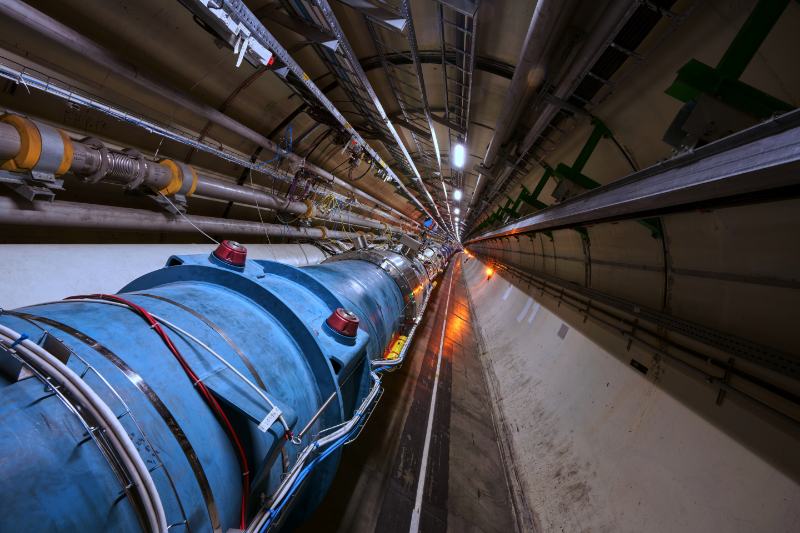
The Large Hadron Collider (LHC) at CERN (European Organization for Nuclear Research) still promises to reveal many new and exciting things about the nature of matter and the early universe. In part because of developments in mathematics, computing, and technology, the physical sciences keep making strides and adding chapters to the book that is the history of this beautiful field of study.
Archimedes of Syracuse was the greatest and most famous inventor of the ancient world and also one of the greatest mathematicians. From his writings that have survived to the present day, we have extensive knowledge of his discoveries in the field of mathematics. However, the details of his most important inventions are only available today thanks to the notes held by their contemporaries.
Who was Archimedes?
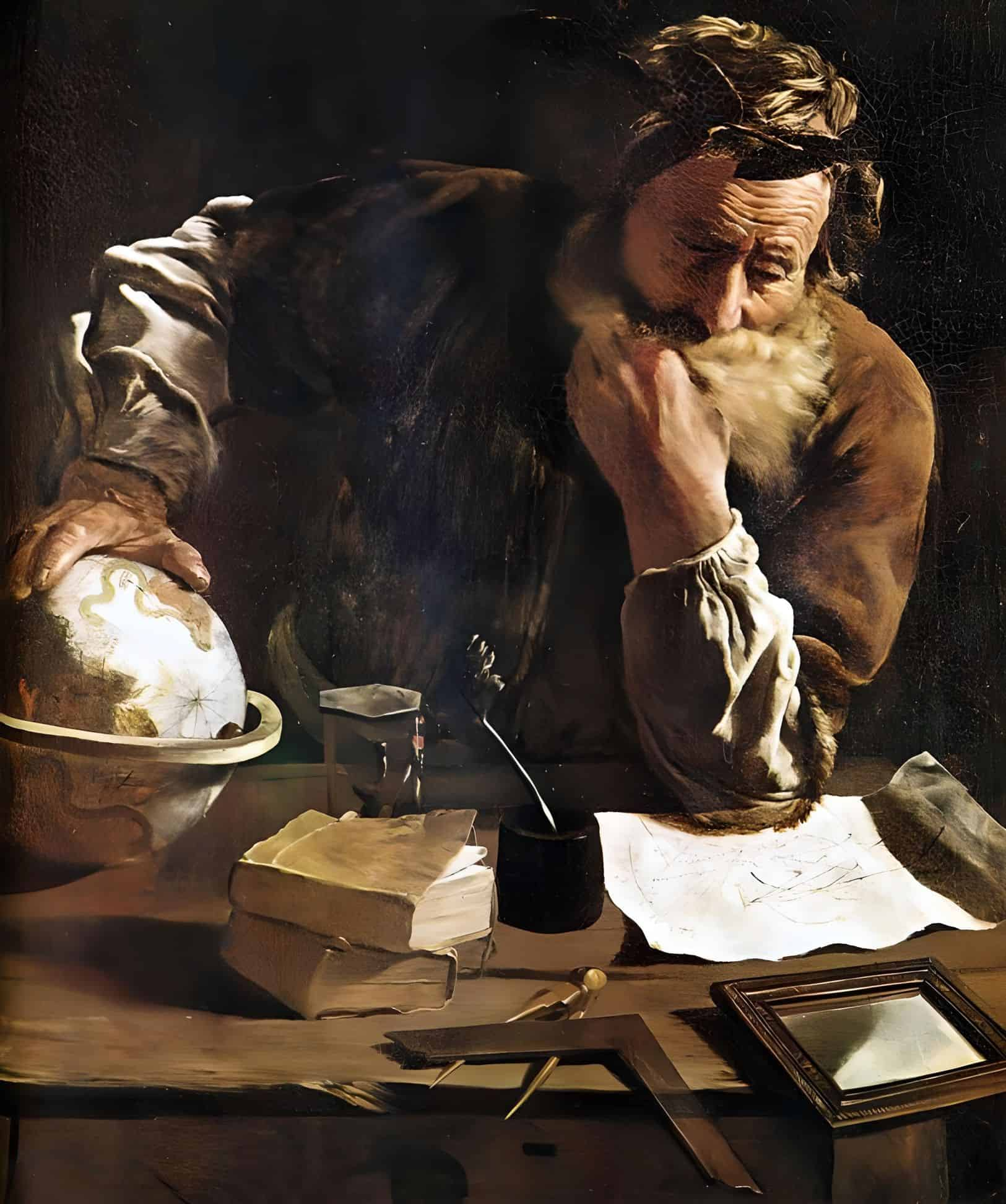
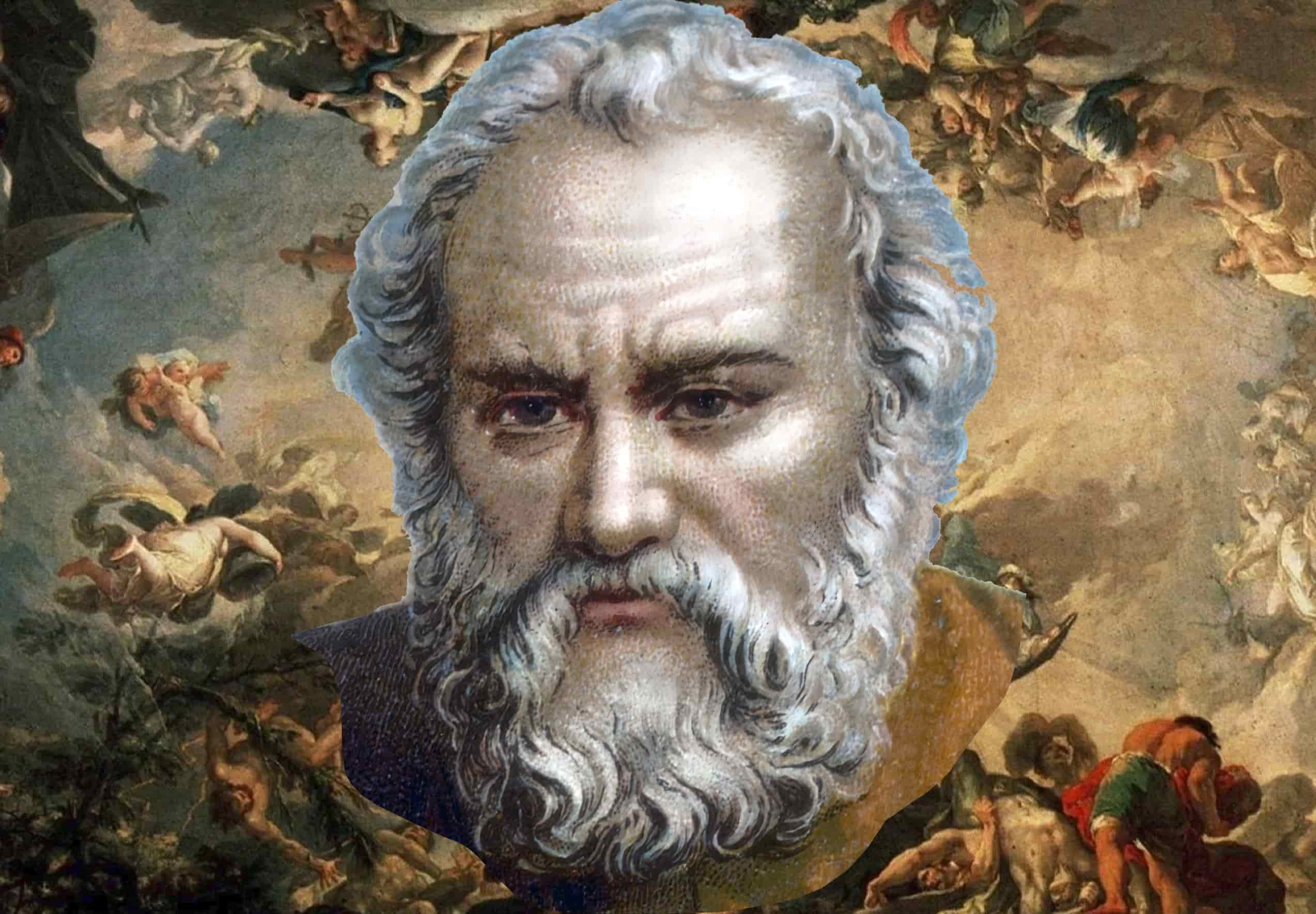
Archimedes by Domenico Fetti, 1620.
Archimedes was born on the island of Sicily, then called Syracuse, which was a colony of the Greek Empire at the time. There is very little information about his life or personality. The things that are known are based on the interpretations of historians who lived in the same period or in the centuries that followed. The most important source is the Greek historian Plutarch (circa 46–120 AD), known for his stories about the historical personalities of Greece and Rome. According to Plutarch, Archimedes’ father was an astronomer, and his family had close ties with the Syracuse ruler King Hieron II (306-215 BC).
King Hieron asked Archimedes to design a pump to drain water from the ship for his journey to Alexandria, Egypt. Archimedes found a simple but brilliant solution. This device, now known as the Archimedes’ Screw, was a large helical screw housed inside a pipe, and as the screw was turned, the water was drawn up.
The invention was so effective that it soon became available in many countries for agricultural use. The Archimedes’ Screw is now found in factories, earthmoving businesses, pumping rainstorm runoff, or lifting water or wastewater. Also, it is still used in agriculture all over the world.
Archimedes combined mechanical and experimental principles with mathematics. He saw a close relationship between the disciplines. He studied the mathematical studies of his time in Alexandria and soon expanded them. It was his remarkable mathematical proofs and thoughts that inspired his genius.
Simple machine designs
Archimedes Palimpsest – This book, containing Christian prayers (horizontal writings), was written in the 12th century on a 10th-century copy of one of the most important works of Archimedes (vertical writings).
Although none of Archimedes’ original papers have survived to this day, there are several copies of the papers that went on for about 1000 years after his death. The most important of these is a manuscript on parchment from the 11th century. This work contains Archimedes’ writings engraved; there are some Christian prayers written, and it is all part of a book.
This book is now known as the Archimedes Palimpsest, and it was actually sold at an auction in 1998. Scientists have used the most advanced techniques to “see the inside” of the Christian text and read Archimedes’ handwriting for the first time. The analysis’ most important finding is that Archimedes discovered some principles of the mathematical calculation technique known as calculus today. This technique, which is of great importance in terms of modern science and technology, was devised only in the 17th century by Isaac Newton (1643–1727) and Gottfried Leibniz (1646–1716).
Using a method that corresponds to applied mathematics today, Archimedes calculated the location of the centers of gravity of various objects and solved the mathematical principles that are fundamental to “simple machines,” such as levers, pulleys, and gears.
He created the first odometer (a device that measures travel distance) using his understanding of gears, a clock that strikes every hour, and a device that forecasts the positions of the Sun, Moon, and the five known planets at the time.
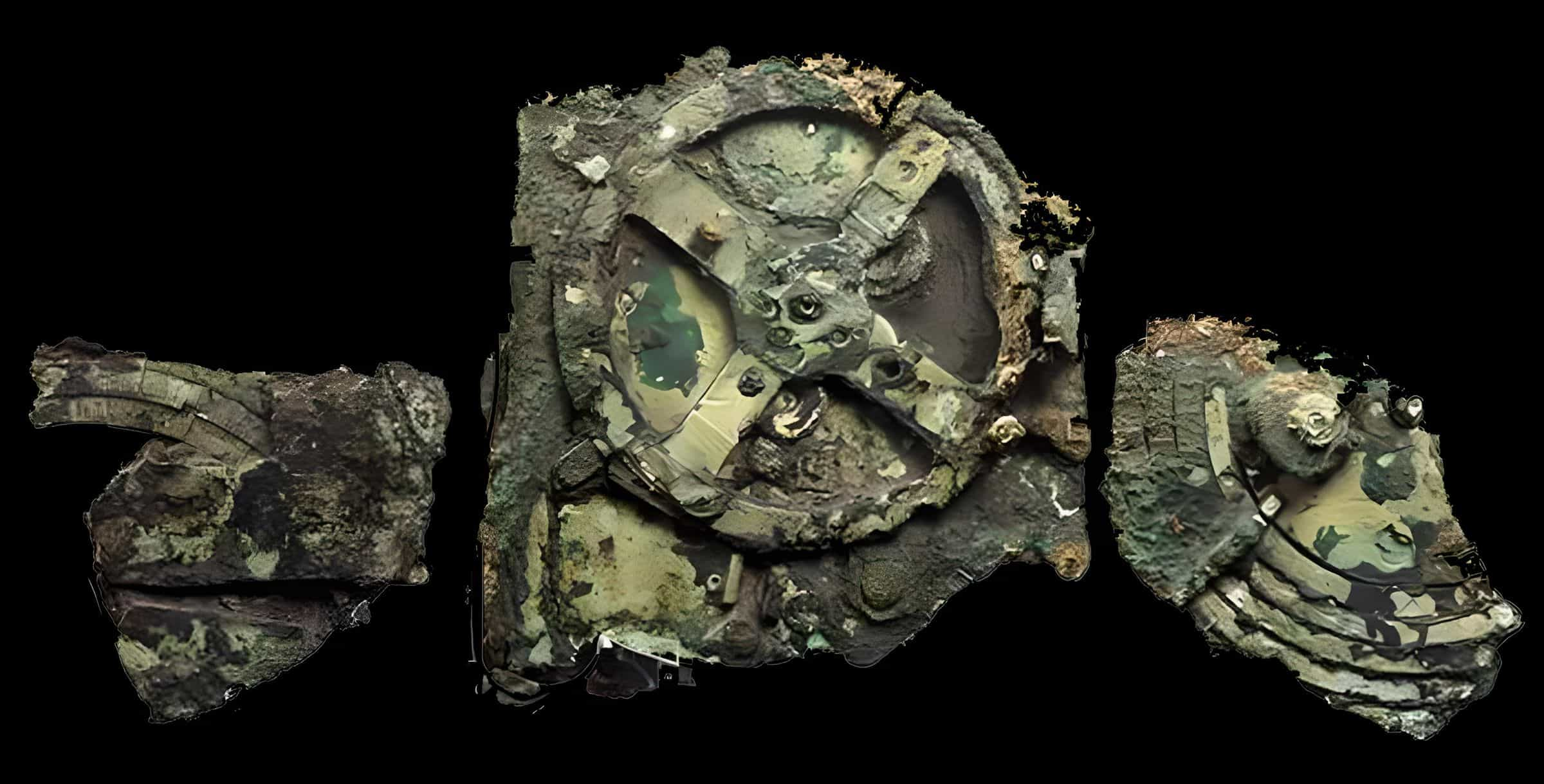
The Antikythera mechanism device was found in the remains of a merchant ship that sank in the first century BC.
In 1900, divers found a device in a shipwreck lying off the Greek island of Antikythera, which is 2000 years old. The device is called the “Antikythera mechanism,” which scientists described as an ancient celestial computer. Some historians believe that this device is closely related to the work of Archimedes.
Among Archimedes’ discoveries, the most popular at his time were the weapons he had developed to defend Syracuse during the Roman siege of the city in 214 BC. Among them, the most famous was the Claw, a type of crane fastened to a wall that lifted the Roman ships into the air and then dropped them to capsize.
Archimedes’ claw by Donn Philip Crane (1878 – 1944).
Pulley system
In ancient civilizations, the lever, inclined plane, wheel, axle, wedge, and pulley, which physicists called “simple machines,” were widely utilized. Archimedes is known to be the first person to use two reels together to exert tremendous power. This device, known as a pulley system, is currently used for lifting and towing heavy loads.
According to Plutarch, Archimedes developed this apparatus to respond to King Hieron after he claimed that there was no such weight that a lever could not reposition. Hieron told Archimedes that it was impossible for him to move the giant ship called Syracusia. The ship could only be towed by a group of powerful men. However, Archimedes was able to move the ship full of cargo and crew only with one hand, not with a lever but with a pulley system.
Archimedes quotes
“Mathematics reveals its secrets only to those who approach it with pure love, for its own beauty.”
“Man has always learned from the past. After all, you can’t learn history in reverse!”
“Give me a place to stand, and a lever long enough, and I will move the world.
“Rise above oneself and grasp the world”
“Those who claim to discover everything but produce no proofs of the same may be confuted as having actually pretended to discover the impossible.”
“There are things which seem incredible to most men who have not studied Mathematics.”