Throughout recorded history, nations have typically marched to war over comprehensible, if tragic, geopolitical stakes: fertile farmland, strategic trade routes, dynastic succession, or national survival. Yet the archives of military history are also littered with conflicts triggered by absurd misunderstandings, bruised aristocratic egos, stray domestic animals, and culinary disputes. Examining five of the most senseless armed conflicts ever waged reveals how quickly human stubbornness can escalate a trivial local incident into a full-scale military deployment.
The War of the Oaken Bucket (1325)
In early fourteenth-century northern Italy, the neighboring city-states of Bologna and Modena lay just twenty miles apart, divided by bitter political hatred. Modena championed the Ghibelline faction supporting the Holy Roman Emperor, while Bologna stood as a staunch stronghold of the Guelph faction loyal to the Pope. After years of border raids and skirmishes, the final spark that ignited a pitched battle occurred in the autumn of 1325 when a small band of Modenese soldiers slipped through the city gates of Bologna during a raid, cut the rope at a public city well near the Porta San Felice, and ran back home carrying the town’s wooden water bucket as a trophy.
Enraged by the public humiliation rather than the monetary value of an ordinary oak pail, the authorities of Bologna demanded the bucket’s immediate return. When Modena laughed off the ultimatum, Bologna mobilized an army of thirty thousand infantry and two thousand cavalry, marching toward Modena to retrieve their bucket by force. On November fifteenth, 1325, at the Battle of Zappolino, the outnumbered seven-thousand-man Modenese army led by Rinaldo Bonacolsi launched a furious counterattack in the fading afternoon light, routing the Bolognese forces and chasing them all the way back to the walls of Bologna. Over two thousand soldiers died on the field in a single afternoon, and during the victory pursuit, Modenese troops reportedly stole a second bucket from another well outside Bologna’s gates just to rub salt in the wound. To this day, the original fourteenth-century wooden bucket remains proudly displayed inside the Palazzo Comunale in Modena.
The War of Jenkins’ Ear (1739 to 1748)
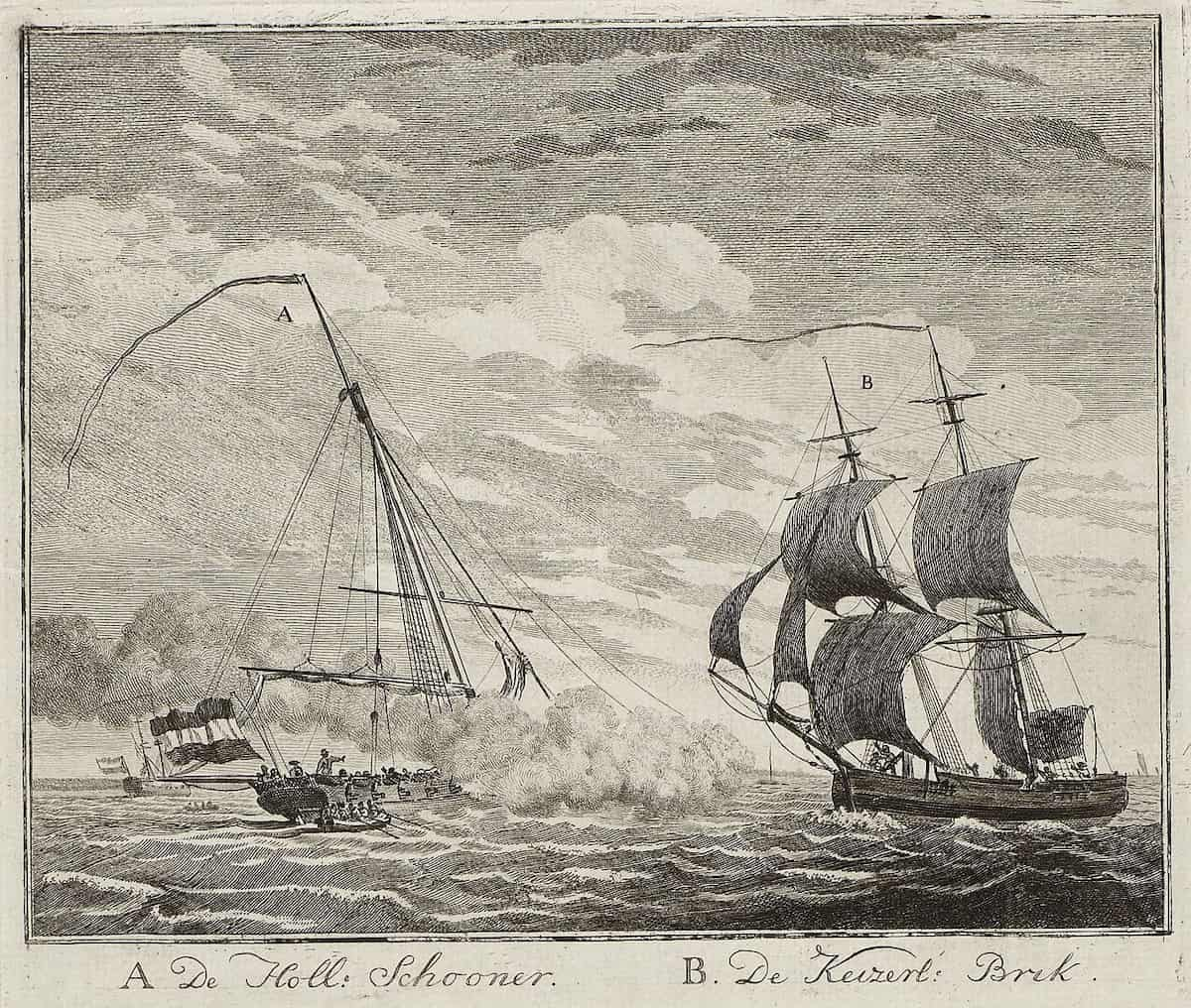
Few wars in European history boast a more bizarre casus belli than the conflict that erupted between Great Britain and the Spanish Empire in October 1739. Seven years earlier, in April 1731, the British merchant brig Rebecca, captained by Robert Jenkins, was boarded off the coast of Cuba by a Spanish coast guard vessel commanded by Julio Leon Fandino, who suspected Jenkins of smuggling contraband goods in violation of treaties. According to Jenkins, the Spanish commander tied him to the mast, drew his cutlass, sliced off Jenkins’s left ear, and handed the severed ear back to him with the taunt that he would do the exact same thing to King George II if he caught him smuggling.
At the time in 1731, the British government largely ignored Jenkins’s complaint to preserve peaceful trade relations. However, by 1738, hawkish opposition politicians in Parliament led by future Prime Minister William Pitt were desperate for an excuse to seize Spanish commercial dominance in the Caribbean. Summoning Captain Jenkins to testify before a committee of the House of Commons in March 1738, lawmakers gasped in theatrical horror when the captain dramatically produced a small glass jar containing what he claimed was his pickled, shriveled ear, declaring that when mutilated he had commended his soul to God and his cause to his country. Whipped into a patriotic frenzy, Britain declared war on Spain the following year, triggering nearly a decade of naval sieges in Colombia and Georgia that cost tens of thousands of lives before merging into the wider War of the Austrian Succession.
The Pastry War of 1838
In the turbulent years following Mexico’s independence from Spain, street fighting and military coups in Mexico City frequently damaged shops owned by foreign merchants. Among these merchants was a French pastry chef named Monsieur Remontel, who operated a bakery in the Tacubaya district outside the capital. In 1828 or 1832, drunken Mexican army officers broke into Remontel’s shop, locked the baker in a back room, smashed his furniture, and ate every single pastry on the shelves without paying. When the Mexican government ignored Remontel’s modest repair bill of roughly eight hundred pesos, the outraged baker inflating his claim to an astronomical sixty thousand pesos and wrote directly to King Louis-Philippe of France demanding royal protection.
Finding Remontel’s complaint a convenient pretext to collect six hundred thousand pesos in broader unpaid Mexican debts owed to French banks and businesses, French Prime Minister Louis-Mathieu Mole dispatched a naval squadron of twenty-six warships under Rear Admiral Charles Baudin to blockade the Gulf coast of Mexico in the spring of 1838. When the Mexican Congress refused to pay under the barrel of a gun, French warships bombarded and captured the fortress of San Juan de Ulua at Veracruz in November 1838. Calling the retired general Antonio Lopez de Santa Anna back to lead the defense of Veracruz, Mexican forces clashed with French landing parties on the docks, where a blast of French grapeshot shattered Santa Anna’s left leg, requiring its amputation—an injury Santa Anna famously exploited with a full state funeral for his severed leg to ride a wave of patriotic sympathy straight back to the Mexican presidency, while Mexico ultimately borrowed money from British banks to pay off the French pastry claim in March 1839.
The Pig War of San Juan Island (1859)
When the United States and Great Britain signed the Oregon Treaty of 1846 to draw the border between Washington Territory and British Columbia along the forty-ninth parallel through the middle of the water channel separating Vancouver Island from the mainland, the diplomats forgot that San Juan Island sat right in the middle of two different channels. Both American settlers and the British Hudson’s Bay Company claimed the island simultaneously, setting up rival farms within shouting distance of one another.
On the morning of June fifteenth, 1859, an American farmer named Lyman Cutlar looked out his window and saw a large black Berkshire boar owned by Charles Griffin, an Irish employee of the British Hudson’s Bay Company, rooting up and eating the potatoes in Cutlar’s garden for the third time. Grabbing his rifle, Cutlar shot the pig dead. When Cutlar offered to pay ten dollars to replace the pig, Griffin demanded one hundred dollars and threatened to have British magistrates arrest Cutlar as a trespasser on Crown land. In response, the hot-headed commander of the US Army’s Department of Oregon, Brigadier General William S. Harney, shipped Captain George Pickett (later famous for Pickett’s Charge at Gettysburg) and sixty-six American soldiers with cannons onto the island, prompting the British governor to dispatch three Royal Navy warships carrying over two thousand men and seventy naval guns under Rear Admiral Robert Baynes. For months, hundreds of American and British troops stared at each other across the beach until Rear Admiral Baynes famously refused the governor’s order to open fire, declaring securely that he would not involve two great nations in a war over a squabble about a pig—leaving the dead boar as the single casualty of the entire conflict.
The War of the Stray Dog (1925)
While the Pig War ended without human bloodshed, an equally trivial border incident between Greece and Bulgaria in October 1925 proved far deadlier. Along the tense mountain frontier pass of Demir Kapia in the Belasitsa range, Greek and Bulgarian border sentries watched each other through binoculars across a narrow strip of no-man’s-land. On October eighteenth, 1925, according to the most widely reported account, a Greek soldier’s dog broke off its leash and bolted across the border wire into Bulgarian territory. Without thinking to wave a white flag, the Greek soldier ran across the border line whistling after his pet, prompting startled Bulgarian sentries to open fire and kill him on the spot, followed immediately by a firefight that killed a Greek captain attempting to calm the situation.
Rather than treating the shooting as a tragic local accident, Greece’s military dictator, General Theodoros Pangalos, issued a furious forty-eight-hour ultimatum demanding two million French francs, an official apology, and the court-martial of the Bulgarian officers. Before Bulgaria could comply, Pangalos ordered the Greek Third Army Corps to invade southwestern Bulgaria on October twenty-second, occupying the border town of Petrich and ten surrounding villages. Instead of fighting back with a massive counter-offensive, the Bulgarian government smartly appealed to the newly formed League of Nations in Geneva. Acting with rare speed, the League ordered an immediate ceasefire, forced Greek troops to withdraw behind their border, and fined Greece forty-five thousand pounds in damages after over fifty people—mostly Bulgarian civilians—had lost their lives over a runaway dog.