Crowned at the age of five after a wave of illness wiped out three generations of his immediate family, King Louis XV of France ruled for fifty-nine years (1715–1774)—the second-longest reign in French history behind only his great-grandfather, Louis XIV. Celebrated in his youth as Louis le Bien-Aimé (“Louis the Well-Beloved”) when the entire country prayed at his sickbed in 1744, the monarch gradually squandered that popular affection through disastrous global wars, fiscal paralysis, and court scandals at Versailles. By the time he died of smallpox in 1774, his half-century on the throne had hollowed out the prestige of the absolute monarchy and set the stage for the French Revolution fifteen years later.
The Orphan Boy-King and the Golden Peace of Cardinal Fleury
Born at Versailles on February fifteenth, 1710, the young Duke of Anjou was never expected to wear the crown; three older males stood directly ahead of him in the line of succession. In a single tragic week in February and March 1712, however, a virulent measles epidemic killed both his mother, his father (the Duke of Burgundy), and his five-year-old older brother. Two-year-old Louis only survived because his devoted royal governess, the Duchess of Ventadour, literally locked the boy inside a bedroom and refused to let the royal physicians bleed him to death as they had his brother.
When the seventy-six-year-old Sun King died in September 1715, the five-year-old boy became King Louis XV under the Regency of his libertine cousin, Philippe, Duke of Orléans (1715–1723). After coming of age, the shy, intelligent young monarch made the wisest decision of his life: he entrusted the day-to-day governance of France for seventeen years (1726–1743) to his beloved childhood tutor, the septuagenarian Cardinal André-Hercule de Fleury:
Economic Stabilization: Following the collapse of John Law’s paper-money bubble in 1720, Fleury stabilized the gold and silver value of the French livre in 1726—giving France six decades of stable currency that fueled booming Atlantic port trade in Bordeaux and Nantes.
Paving the Royal Highways: Fleury and Controller-General Orry expanded the network of paved royal highways across France, initiated the peaceful diplomatic acquisition of the Duchy of Lorraine (which formally joined France in 1766), and kept taxes relatively stable until Fleury died at age eighty-nine in 1743.
1744: How “The Well-Beloved” Earned and Lost His Title
After Cardinal Fleury’s death, thirty-three-year-old Louis XV announced that just like Louis XIV, he would henceforth govern without a chief minister. During the War of the Austrian Succession (1740–1748), the King rode personally to the eastern front in August 1744—only to collapse in the city of Metz with a raging, life-threatening fever. As rumors spread that the young king was dying, thousands of ordinary Parisians wept in the streets and paid for six thousand Masses at Notre-Dame Cathedral for his recovery, spontaneous devotion that earned him the official title Louis le Bien-Aimé (“the Well-Beloved”). Months later, in May 1745, Louis XV and his thirteen-year-old son stood under cannon fire alongside Marshal Maurice de Saxe at the Battle of Fontenoy, winning the greatest French battlefield victory of the eighteenth century and conquering the entirety of the Austrian Netherlands (modern Belgium).
Then, at the Treaty of Aix-la-Chapelle (1748), Louis XV stunned his own subjects: desiring to act like a chivalrous Christian prince rather than a greedy merchant, he handed every single conquered Belgian city right back to Austria in exchange for almost nothing. Outraged Parisians who had paid heavy wartime taxes coined a biting street proverb that remained in the French language forever: “Bête comme la paix” (“As stupid as the peace”).
The Secret du Roi and the Disaster of the Seven Years’ War
Despite possessing a sharp, analytical mind and a passion for science, cartography, botany, and architecture, Louis XV suffered from crippling self-doubt and conflict avoidance in face-to-face cabinet meetings. Rather than firing ministers whose foreign policies he disagreed with, the King did something bizarre: beginning in the 1740s, he ran his own parallel, clandestine spy and diplomatic network behind the backs of his own official Foreign Ministers, known as the Secret du Roi (“The King’s Secret”)—often leading to comic chaos where an official French ambassador in Warsaw or Stockholm pushed one policy while the King’s secret agent in the exact same room pushed the exact opposite!
Guided by his brilliant official mistress, Madame de Pompadour, and Minister Choiseul, Louis XV executed the “Diplomatic Revolution” of 1756, abandoning France’s two-hundred-year hatred of the Austrian Habsburgs to ally with Vienna against Frederick the Great’s Prussia and Great Britain. The resulting Seven Years’ War (1756–1763) was an unmitigated geopolitical catastrophe for France:
Routed on land in Germany at the Battle of Rossbach (1757) and swept off the seas by the Royal Navy, France signed the humiliating Treaty of Paris (1763).
In a single stroke of the pen, Louis XV lost New France (Canada), all French territory east of the Mississippi River, and French political dominance in India to Great Britain, while ceding Louisiana west of the Mississippi to Spain—though Minister Choiseul did manage to rebuild the French Navy afterward and purchase the island of Corsica from Genoa in 1768 (just fifteen months before a boy named Napoleon Bonaparte was born there as a French subject!).
The Damiens Knife Attack, the Parlements, and “After Me, the Deluge”
At home, the final twenty years of Louis XV’s reign were consumed by a bitter constitutional war against the aristocratic high law courts, the Parlements, which repeatedly refused to register new royal tax decrees that would force wealthy nobles and clergy to pay their fair share of France’s crushing war debts. In January 1757, as the King walked to his carriage at Versailles, a mentally disturbed servant named Robert-François Damiens stepped out of the dark and stabbed Louis XV in the ribs with a small penknife. Although the thick winter coats saved the King from a serious wound, Damiens was subjected to a gruesome four-hour public execution by drawing and quartering at the Place de Grève that horrified Enlightenment writers like Voltaire.
In 1771, Louis XV and his tough Chancellor, René Nicolas de Maupeou, finally launched a bold royal coup against the noble judges—abolishing the obstructionist Parlements and replacing them with salaried courts so the Crown could reform taxes. Had that reform survived, the French monarchy might have avoided bankruptcy. However, when the sixty-four-year-old King contracted fatal smallpox at the Petit Trianon and died in agony on May tenth, 1774—so unpopular in death that his decaying coffin had to be driven at a fast trot through the dark night to the Abbey of Saint-Denis to avoid jeering crowds—his inexperienced nineteen-year-old grandson, Louis XVI, immediately made the fatal mistake of firing Maupeou and restoring the obstructive noble judges, fulfilling the famous fatalistic warning attributed to Louis XV and Pompadour: “Après moi, le déluge” (“After me, the flood”).
Elected King of Poland, Stanislas I Leszczyński was forced to give up his throne in 1709 but regained it after the death of Augustus II (1733). While he was supported by France, Spain, Sardinia, and Bavaria, his rival Augustus III (the deceased king’s son) received backing from Russia, Austria, and Saxony. This rivalry led to the War of the Polish Succession (1733-1735), at the end of which Stanislas renounced the Polish throne.
As compensation, he was granted the duchies of Lorraine and Bar. Constantly forced to flee, he was a philosopher, always in good spirits, and knew how to enjoy life, saying, “He who possesses much is not the happiest: it is he who desires little and knows how to enjoy what he has.” He was also the great-grandfather of three Kings of France: Louis XVI, Louis XVIII, and Charles X.
Summary of Key Achievements
King of Poland (1704–1709 and 1733–1736), though both reigns were marked by political conflict and eventual exile.
Duke of Lorraine (1737–1766), where he ruled with great success, promoting education, culture, and social welfare.
Cultural contributions, including the construction of the Place Stanislas in Nancy, which remains a symbol of his legacy.
His daughter, Marie Leszczynska, became the Queen of France through her marriage to Louis XV, linking Stanislas to one of Europe’s most powerful royal families.
Early Steps in Politics
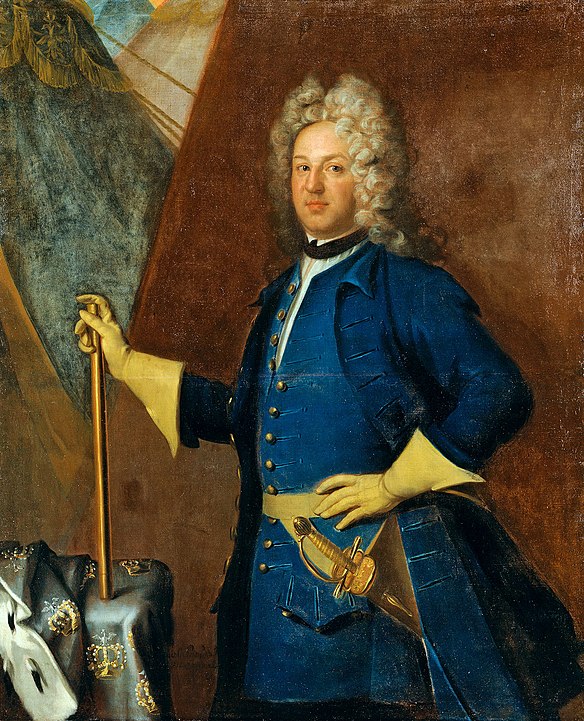
King Stanisław I Leszczyński of Poland (1677-1766). Credit: Wikimedia, Public Domain
Stanislas Leszczyński was born on October 20, 1677, into an influential family belonging to the Polish nobility since the 16th century. His father was the Palatine of Poznań and the Grand Treasurer of the Crown, while his mother was the daughter of a renowned general who had defeated the Swedes and Cossacks. He studied in Leszno, Greater Poland, learning sciences, mathematics, and literature, and he spoke Latin, German, Italian, and French fluently. At 18, his educational journey took him to Vienna, Venice, Rome, Florence, and Paris, but he had to cut it short in 1696 due to the death of King John Sobieski.
Holding the title of Count of Leszno and acting as the governor of Poznań, he made his first political moves and sat in the senate. Stanislas was elected to the diet preparing for the final election of a new king. Facing two tough competitors (the Prince of Conti and the previous king’s son), he withdrew from the final vote and left the throne to the King of Saxony, Frederick Augustus, who was crowned in Krakow in September 1697 as Augustus II. Stanislas had the honor of offering the assembly’s condolences to the widow of King John Sobieski, impressing everyone with his oratory skills.
At 21, in May 1698, Stanislas married the daughter of a Polish magnate, Catherine Opalińska, who gave him two daughters: Anna in May 1699, and Maria in June 1703. Her dowry included sixty towns and one hundred fifty villages, giving him control of a vast estate when his father, Raphael III, died in 1703.
Stanislas Leszczyński: The Short-Lived King of Poland
Charles XII of Sweden refused to accept the alliance that Augustus II had signed with Russia and Denmark against him. Impressed by Stanislas’s good nature, Charles maneuvered to demonstrate Augustus II’s incapacity to rule and install Stanislas on the throne. This was accomplished on October 4, 1705, in Warsaw, but not without difficulty, as Augustus II attempted to kidnap Stanislas! The new King of Poland could rely on his “protector” until 1709, when Charles XII suffered a major defeat in Russia and fled to the Turks. With Russian and Saxon armies advancing on Warsaw, Stanislas had no choice but to abdicate.
While informing Charles XII, Stanislas took refuge in Stettin and later Stockholm. Unlike the optimistic and victorious Swedish king, Stanislas knew that Poland would suffer more if he persisted. He had lost all his possessions and was now living as a refugee abroad. Meanwhile, Augustus II reclaimed Poland. Despite Charles XII’s insistence to hold on at any cost, Stanislas decided to join him in Turkey during the winter of 1712, disguised as a French officer.
After a complicated journey, including an arrest upon arrival and a quick release, Stanislas convinced the Swedish king to accept his abdication. In a moment of understanding, Charles XII offered him the Duchy of Zweibrücken in Germany as he waited to reclaim his Polish kingdom.
Stanislas traveled back through Vienna and Lorraine. In Lunéville, in need, he pawned his jewels. Despite using the alias “Count of Cronstein,” he was recognized by Mr. de Beauvau, loyal to the Duke of Lorraine, who allowed him to keep his jewels and lent him the estimated amount.
By early July 1714, Stanislas arrived in Zweibrücken and found an old castle. The income was 70,000 écus, but 400 Swedish troops in the garrison consumed much of it. Always good-natured, Stanislas adapted to this situation, and three months later, he brought over his wife and two daughters. He embraced this new peaceful life, despite the premature death of his eldest daughter in June 1717.
In Poland, Charles XII continued to push for Stanislas to reclaim the throne, although Augustus II attempted to capture him again in August 1717. After Charles XII’s death in late 1718, Stanislas was forced to relocate, first near Landau, then to Wissembourg in 1719, thanks to Regent Philippe d’Orléans, who granted him a pension of 4,000 livres a month. The Duke of Lorraine lent him an additional 30,000 livres
Lacking the funds to settle, Stanislas pawned his jewels again and proposed to Augustus II: he was ready to give up his crown if he could recover his property. He needed to marry off his second daughter, who had just turned 18. Suitors were scarce due to the family’s poverty, but Stanislas made peace with the situation, enjoying a happy affair with a French officer’s wife, philosophizing, hunting, and savoring the simple pleasures of life.
Father-in-Law to Louis XV
In France, after the departure of the Spanish Infanta, who was too young, seventeen candidates remained for Louis XV’s marriage, from an initial ninety-seven. Either they were not Catholic or, like Stanislas’s daughter, were too poor. The Duke of Bourbon, serving as regent after the death of Philippe d’Orléans, offered to marry Marie, and Stanislas was pleased with the outcome. In February 1725, a portrait painter for the royal court arrived and left with Marie’s portrait.
In early April, the Duke of Bourbon asked for her hand… on behalf of the King of France!
As Stanislas fainted, France was taken aback, but Louis XV was pleased with the portrait: “neither beautiful nor pretty, but with a fresh complexion, lively eyes, cultured, gentle in character, and kind-hearted like her father.” When Stanislas recovered, he reclaimed his pawned jewels with the help of a 13,000 livres loan from the Strasbourg government.
The marriage took place by proxy on August 15. Stanislas received good news in early September, thinking, “I lost the Polish throne, but my future grandson will ascend the throne of France,” and radiated with happiness. In 1729, Louis XV settled his in-laws at Chambord with a modest pension, but the castle was empty. Accustomed to having little, Stanislas managed his funds wisely, leaving much of the castle unfurnished. Life unfolded quietly between his devout wife, his mother indulging herself, his forest walks, and his readings. “We live in great tranquility, which makes my life sweet,” he said, having long given up on the Polish throne, as no one in France would act while Augustus II was still alive.
Stanislas Leszczynski Regains His Throne of Poland…
August II died in February 1733, and several candidates for the Polish throne emerged, including his son August III and Stanislas Poniatowski, a former loyal supporter of Stanislas Leszczynski. The Marquis de Monti, French ambassador to Poland, made every effort to help Stanislas reclaim his throne despite his exile. With the support of sympathizers, Monti spared no expense, explaining that Stanislas had the backing of the King of France, who would never invade Poland even though neighboring countries (Austria, Prussia, Russia) were threatening. He even assured that France was ready to defend Poland in case of an invasion by any member of the Treaty of the Three Black Eagles (Germany, Russia, and Prussia, who sought to prevent any Polish claimant from ascending the throne).
By March 1733, Monti requested that France send Stanislas to Poland, but he hesitated. While confident about reclaiming his throne, Stanislas was unsure of the reception he would receive from the Polish people. Brave and clear-sighted, he realized he didn’t have the support of the French Prime Minister; if war broke out, he couldn’t count on France’s aid. In August 1733, Stanislas set sail from Brest but was stopped in Copenhagen by the Tsarina, who blocked the roads.
Eventually, he disguised himself as a German merchant’s clerk and traveled by postal carriage. He arrived on September 8, just days before the election on September 11, which Monti had masterfully organized. On September 10, Stanislas was recognized leaving the embassy, and the public was ecstatic—no one had expected his presence! The next day, he was unanimously elected, with only three abstentions. Meanwhile, 5,000 Polish soldiers deserted!
A Master of Escapes
Barely elected and knowing the Russian army was advancing, Stanislas engaged in two glorious battles. But faced with the overwhelming number of attackers and lacking a regular army, he left Warsaw on September 22, heading to Danzig, where he awaited help from France.
That help would never arrive. Louis XV had decided to declare war on Emperor Charles VI (an ally of the Russians invading Poland), stationing his troops on the German-Italian border. Thus began the “War of the Polish Succession.” On October 5, 1733, August III was crowned with the support of 40,000 Russians, 20,000 Saxons ravaging the country, and 36,000 soldiers advancing on Danzig!
Finally, reinforcements arrived in April 1734—but with only 1,950 men, each with 20 bullets!
They quickly retreated, showing “good sense” in the face of the overwhelming enemy forces. As the Russians issued an ultimatum—”For the freedom of Danzig, hand over the King of Poland or let him flee”—the city continued to fight despite the soldiers’ exhaustion. In late June, the ambassador organized an evacuation plan: slipping past enemy posts, crossing the Vistula River, and reaching Prussia.
Furious that Cardinal Fleury had refused to send more help, Stanislas fled once again, maintaining his good humor. Assisted by a Swedish general, both disguised as peasants, he undertook a perilous journey. Along the way, the Polish king, who was also the French king’s father-in-law, was reprimanded by his guides. This was no time for royal airs—it was no longer about keeping the throne but saving his life, as enemies were everywhere, and a hefty reward had been offered for his capture, “dead or alive.”
The escape took over a week, traversing canals and moving from farm to farm, hidden in carts covered with goods. Eventually, he reached safety and was welcomed by the King of Prussia in Königsberg in early July. Frederick William I offered him an honor guard and a respectable pension. A few days later, Danzig capitulated, and Stanislas’ small band of loyalists was imprisoned in a castle near Marienburg by the Russian army.
In Versailles, no one dared tell the Queen of France the full story, to the point where pamphlets were printed in support of Stanislas! Meanwhile, the King of France signed a famous treaty known as the Pragmatic Sanction: Francis III, Duke of Lorraine, married Maria Theresa of Habsburg, ending the War of Polish Succession. France acquired the duchies of Bar and Lorraine, intending to install Stanislas there!
Stanislas Leszczynski Rules Over the Duchies of Bar and Lorraine
After two years of negotiations, Stanislas Leszczynski signed his abdication to the Polish throne on January 27, 1736, pressured and forced by Versailles. Even his daughter urged him to accept, explaining that Lorraine was close by, and though it wasn’t Poland, it was still a duchy where he wouldn’t be a king without a throne. Forced to sign the “secret declaration of Meudon” in early June, which stated, “His Polish Majesty, not wishing to burden himself with the administration of the finances and revenues of the duchies of Bar and Lorraine, leaves that responsibility to the King of France, from now and forever,” Stanislas was granted an annual income of 2,000,000 livres, a chancellor to manage affairs, and the honorary title of King of Poland. Stanislas would reign without ruling! As was his nature, he accepted this with philosophical grace.
Antoine Chaumont de la Galaizière, urged by Cardinal Fleury, took control of the duchies in February and March 1737, wielding full power. Stanislas made his official entrance into Lunéville on April 3 before a reluctant populace but reunited with an old acquaintance, Mr. de Beauvau, who had crossed his path 23 years earlier and set him up in his private mansion. Stanislas was happy and busied himself with restoring Lunéville Castle, which was uninhabitable, and furnishing the Bar Castle. Who would have thought he would reign over his duchies for 29 years and be beloved?
Stanislas “the Benevolent”
From the moment he arrived, though unwelcome, Stanislas Leszczynski got to work, establishing his Council of State, Finance, and Commerce. He spent his money on charitable works, fought against famine, created a form of social security to cope with unforeseen events like accidents, illness, or disability, and set up free legal consultations for the poor. In 1748, he founded an order of the Brothers of Schools and contributed to school maintenance, ensuring free education for several schools in Nancy. This kind man “smoothed the rough edges” when his chancellor imposed French laws.
Everything went smoothly until 1740 when the War of Austrian Succession began. Three years later, despite French armies stationed in Strasbourg, Stanislas fled Lunéville as the Germans advanced, seeking refuge in Metz. In 1746, he returned to Lorraine and took care of his castle, which had burned down in 1744. Queen Catherine died in March 1747, and the Marquise de Boufflers, nicknamed “the Lady of Pleasure,” became his mistress. Stanislas enjoyed life and, thanks to his passion for desserts, invented the “baba”: finding the kouglof too dry, he soaked it in rum. He was reunited with old escape companions: Thyange, the Chevalier de Solignac, Tercier, and he welcomed Montesquieu in 1747 and Voltaire in 1748-1749. His court was “more breathable” than Versailles, a haven of peace with a love for intellectual pursuits!
Architect of Lunéville and Nancy
Major works were undertaken at the Château de Lunéville, where he even created a throne room. He redesigned the gardens, installed a Turkish-inspired kiosk, a pavilion in the Chinese style, and in 1742, added a series of 88 automatons at the “Rock.” He also had the “Chartreuses” built for his favorite courtiers so they could host salons. Visitors came from far away to admire these wonders of Lunéville. All of this was gradually destroyed by Louis XV after the death of Stanislas, as the king wanted to transform the château into a military barracks!
In Nancy, he built the Church of Notre Dame de Bonsecours in 1738, unified the medieval Old Town and the New Town, and used his own funds to develop the Royal Square (future Place Stanislas), which was inaugurated in 1755. He also created a large public library, a Royal Society of Sciences and Fine Letters in 1750, and the Royal College of Medicine in 1752.
A Fatal Day for Lorraine
On February 5, 1766, Stanislas Leszczynski got too close to the fireplace, and the fur robe (a gift from his daughter) he was wearing caught fire. He tried to extinguish the flames but fell into the blaze.
By the time the guard managed to enter the room, it was too late: one side of Stanislas’s body was burned, and one of his hands was charred.
Stanislas died seventeen days later, on February 23, 1766, at the age of 88. His remains rest in the crypt of the Church of Notre Dame de Bonsecours, alongside his wife, Catherine Opalinska.
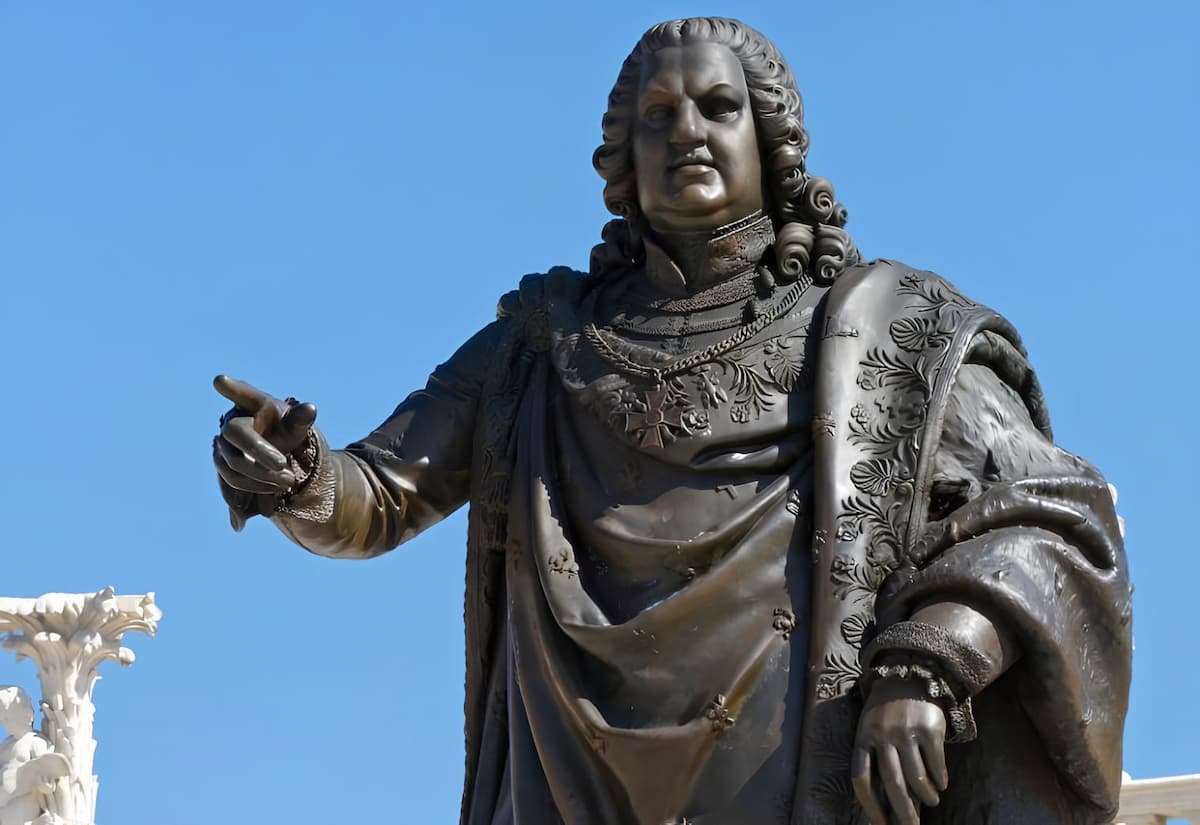
Following the agreements made with Louis XV, Nancy became part of France, and in 1831, the population installed a statue in his honor at the center of the Royal Square, with the inscription: “To Stanislas the Benefactor, from grateful Lorraine.”
In the rigid, blood-obsessed caste system of eighteenth-century Versailles, the coveted position of official royal mistress (maîtresse-en-titre) to the King of France was supposed to belong exclusively to daughters of the ancient sword nobility. Yet in 1745, a twenty-three-year-old Parisian woman born into the middle-class bourgeoisie—Jeanne-Antoinette Poisson, immortalized as the Marquise de Pompadour—shattered centuries of aristocratic snobbery to capture the heart of King Louis XV. For nineteen years until her death in 1764, long after her physical romance with the King had evolved into a platonic soul-mate partnership, Madame de Pompadour reigned as the unofficial Prime Minister and Cultural Minister of France: appointing generals, forging European alliances, protecting the writers of the Enlightenment, and founding the world-renowned porcelain and architecture of the Rococo age.
“Reinette”: The Bourgeois Girl Raised to Catch a King
Born in Paris on December twenty-ninth, 1721, Jeanne-Antoinette carried an unfortunate last name that aristocratic enemies at Versailles never let her forget: Poisson, which translates literally in French to “Fish.” (Her official father, François Poisson, was a financier forced to flee France temporarily during a black-market debt scandal, while her biological father was widely believed to be the wealthy tax-farmer Charles François Paul Le Normant de Tournehem.)
According to family legend, when Jeanne-Antoinette was just nine years old, her mother took the little girl to a famous Parisian fortune-teller named Madame de Lebon, who peered into her palm and declared that the child would one day rule the heart of a King! Delighted, her mother immediately nicknamed the girl “Reinette” (“Little Queen”), and her wealthy guardian Tournehem paid for an education fit for a princess: hiring the finest actors of the Comédie-Française to teach her elocution and theater, opera stars to train her singing voice, harpsichord masters, painters, and botanists.
Married at age nineteen to Tournehem’s nephew, Charles-Guillaume Le Normant d’Étiolles, the dazzling young bride quickly became the toast of the Paris Enlightenment salons, hosting Voltaire and Montesquieu—while intentionally driving her pink-and-blue phaeton carriage across the royal forest paths of Sénart dressed in striking pastel gowns right whenever King Louis XV was hunting nearby so the bored monarch would notice her.
The 1745 Masked Ball of the Yew Trees and Move Into Versailles
Her moment arrived on the night of February twenty-fifth, 1745, inside the Hall of Mirrors at Versailles during the legendary Bal des Ifs (“Ball of the Yew Trees”) celebrating the wedding of the King’s son. To remain incognito in the crowd of fifteen hundred masked guests, King Louis XV and seven courtiers dressed in identical, head-to-toe costumes shaped like clipped conical yew-tree bushes from the palace gardens, while Jeanne-Antoinette arrived dressed as Diana, the Roman goddess of the hunt, complete with a bow and quiver of arrows.
Cornering one of the walking yew trees who turned out to be the King himself, she charmed Louis XV with her wit before dropping her lace handkerchief on the floor; when the King bent down to pick it up and tossed it back to her politely, the entire ballroom gasped at the royal signal: “The handkerchief has been thrown!”
Within months, Louis XV arranged her legal separation from her husband, purchased the extinct noble estate of Pompadour in Limousin to grant her the noble title and coat of arms of Marquise de Pompadour, and installed her in an apartment directly above his own private chambers at Versailles, connected by a hidden spiral staircase.
Surviving as Unofficial Prime Minister After 1750
Every courtier at Versailles assumed that once the King’s initial physical passion cooled, the bourgeois “Poisson” woman would be packed into a carriage and sent back to Paris. Indeed, around 1750—plagued by chronic poor health, miscarriages, and exhaustion—Pompadour and Louis XV quietly ended their physical sexual relationship, and she moved down to a grand ground-floor apartment at Versailles usually reserved for princes of the blood.
Instead of losing her power after 1750, her political dominance doubled! Knowing the melancholic, easily bored Louis XV better than any living human being, Pompadour made herself completely indispensable:
Entertainment and the Little Theater: She built a miniature private theater inside Versailles where she sang lead opera roles for an audience of twelve people, cooked delicate late-night suppers for the King with her own hands inside private hermitage pavilions, and discreetly tolerated the King’s brief physical dalliances at the Parc-aux-Cerfs because she knew no younger girl could ever rival her intellect.
The Diplomatic Revolution of 1756: Acting as gatekeeper between the King and his cabinet, she elevated the reformist Duke of Choiseul, dismissed ministers who crossed her, and personally negotiated the historic 1756 Treaty of Versailles with Empress Maria Theresa’s envoy, uniting France and Austria after centuries of war (though she bore the brunt of public blame when French generals lost the subsequent Seven Years’ War).
Sèvres Porcelain, the Petit Trianon, and Protecting the Encyclopédie
While her foreign policy adventures proved costly, Madame de Pompadour’s legacy as a patron of the arts, science, and architecture is unmatched by any royal consort in French history:
Rescuing Diderot’s Encyclopédie: When conservative churchmen tried to ban and burn Denis Diderot and d’Alembert’s monumental 28-volume Encyclopédie—the engine of the French Enlightenment—Pompadour and her brother, the Marquis de Marigny (Director of Royal Buildings), protected the writers behind the scenes, and she proudly posed with volumes of the Encyclopédie and Montesquieu’s Spirit of the Laws sitting right on her desk in Maurice Quentin de La Tour’s famous portrait of her in the Louvre.
Founding Sèvres Porcelain: To stop French gold from flowing into Saxony to buy German Meissen porcelain, she persuaded the King to move a small porcelain workshop to Sèvres near her château at Bellevue in 1756—hiring top chemists to invent dazzling new colors like Rose Pompadour and turning Sèvres into the most prestigious porcelain manufactory on Earth.
The École Militaire, Place de la Concorde, and the Petit Trianon: Working with architect Ange-Jacques Gabriel, she urged the founding of the École Militaire in Paris to educate impoverished noble officer cadets (where a penniless Corsican boy named Napoleon Bonaparte later studied on scholarship!), backed the creation of Place Louis XV (now Place de la Concorde), purchased the Élysée Palace in Paris (which serves today as the official residence of the President of the French Republic), and commissioned the neoclassical jewel box of the Petit Trianon in the gardens of Versailles.
When Madame de Pompadour finally succumbed to pulmonary tuberculosis and heart congestion on April fifteenth, 1764, at the age of forty-two, King Louis XV granted her an honor strictly forbidden by centuries of Versailles protocol—which dictated that no non-royal subject was ever allowed to die inside the King’s palace. Refusing to move her from her Versailles apartment, the heartbroken King stood alone on the palace balcony in driving wind and pouring rain without a coat or hat, weeping silently as her funeral cortege rolled down the avenue toward Paris and murmuring: “That is the only tribute I can pay her now… A friend of twenty years!”
Sexual obsessives, sometimes paired with wickedness, dominated France for over four centuries. The French monarchy was characterized by continuous coitus from the time of the Valois in the 16th century to the time of Bonaparte, thru the Bourbons. It was a shindig of whores, homosexuals, transvestites, satyrs, rapers, incestuous people, and pedophiles.
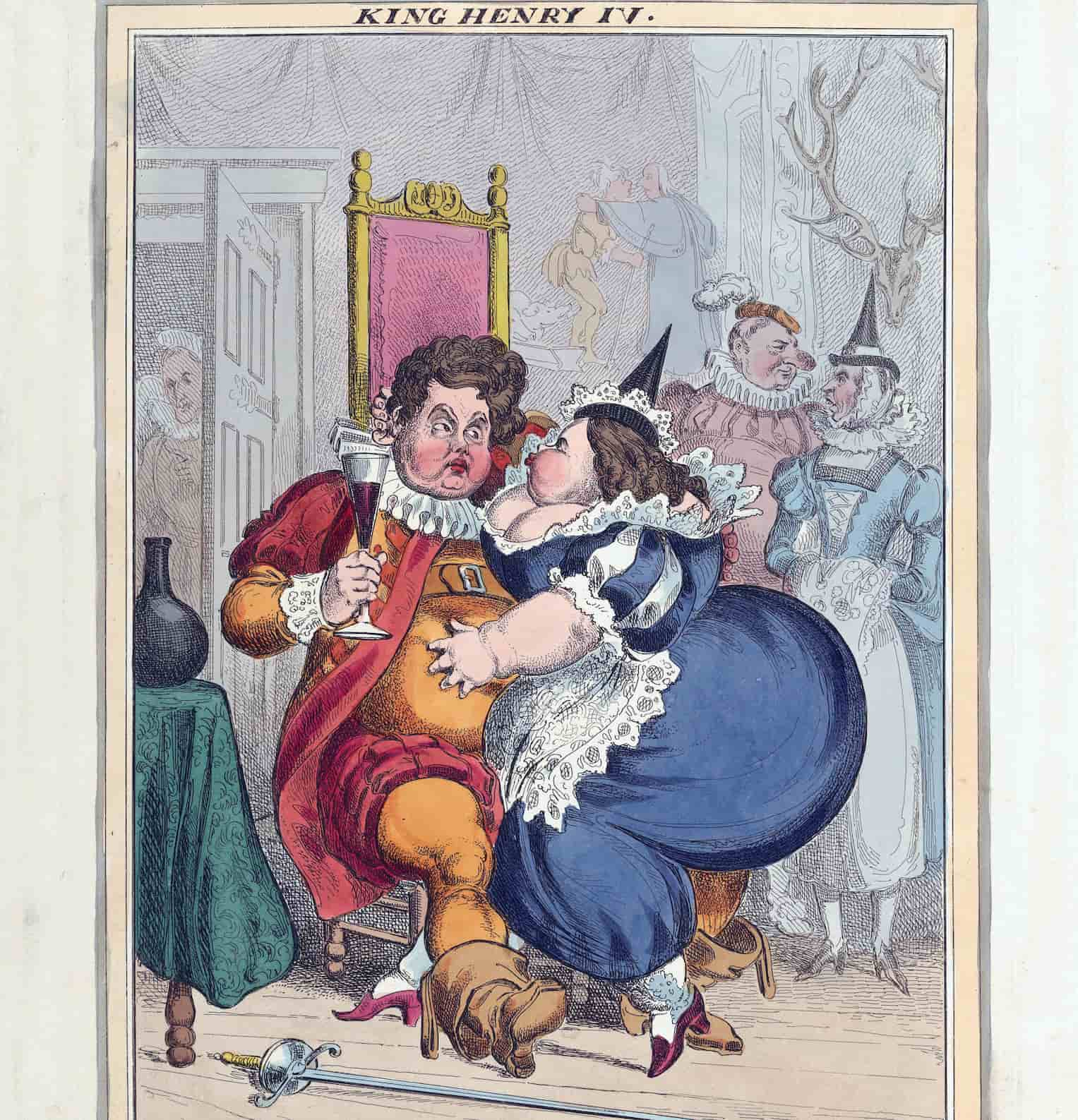
King Henry IV, Who Had 70 Affairs
Henry IV was the most well-known of these serial philanderers. He was called “The Green Gallant” solely for his numerous mistresses. His biographers claim he had relationships with about seventy different women. This is likely an extremely low estimate because of the carnal nature of this man.
The behavior of Henry IV with women left the Italian canon Giovannini utterly shocked, witnessing a level of “chaos” he had never encountered before. Whether they were nuns, prostitutes, country girls, gorgeous or hideous, Henry IV didn’t care. He needed all of them.
When he saw a marquise or prostitute whose features caught his eye, he would immediately dismount and fondle her while she was leaning against a tree or in a barn.
The cheerful and joyous ruler was also extraordinarily generous when it came to rewarding his affairs later.
Louis XIV’s Sexual Appetite Began to Run Wild Early
Louis XIV was tall, muscular, handsome, physically fit, and played the guitar. Women flocked to the most attractive prince in Europe. It’s hard to put a number on the affairs of Louis XIV outside of the official fifteen.
The Sun King’s sexual appetite was reportedly ignited at the tender age of fourteen.
Not even his mom’s closest friends were safe from his lust. Regardless of matters of state, Louis XIV had the capacity to send his advisors away, seized by a sudden urge to indulge in revelry.
When he was almost sixty years old, Louis XIV still “paid respect” to the noblewoman Françoise Maintenon on a daily basis. His alleged extramarital affairs were said to have cost as much as Versailles.
Louis XV Inherited His Father’s Genes for Lust
Louis XV, Louis XIV’s illegitimate son, shared his father’s “fixation”. But until he was 24, ladies actually paid him no attention. Then he met the noblewoman Mailly-Nesle, whose boyfriend, Richelieu, arranged for them to sleep together. That sparked the whole sex addiction of Louis XV.
The monarch went from being a model citizen to opening his own brothel and engaging in pedophilia, and he didn’t stop until he died. According to French historians, Louis XV is without a doubt one of France’s most notorious adulterers, alongside Henry IV.
The isolation of being a monarch, the weight of responsibilities that would crush lesser mortals, and finally the comfort of authority (because nobody can refuse to obey a king) might all contribute to this rage among French monarchs. Sex eventually became a normal pastime for the French royal court around this time.
Considering the staggering number of bastards produced by this massive orgy, it’s possible that millions of French citizens have a trace of kingly blood in their veins today (this was not supposed to sound good).