Scientists studying the oceans use the word “plankton” to describe any living thing that floats and travels with the tides and currents. They are often too small for the naked eye to detect without the use of a magnification or microscope. However, jellyfish, which is a plankton too, and other species may grow to be extremely big. There are hundreds of plankton species in just a single water drop.
Plankton are essential to the survival of all other organisms. Phytoplankton, tiny plant organisms that float in the water, generate oxygen, and provide food for marine life. However, will climate change prove too much for these little creatures?” When their “bad sides” run amok, they create hazardous algal blooms.
Even though plankton are very small, they have huge implications for the planet and for humankind. Each oxygen molecule in the air we breathe comes from them, and they also serve as the foundation for the vast majority of marine food webs. But how do these mini-superheroes do it all? And how do plankton handle the rising temperatures?
Subtle Yet Vital Life-Givers
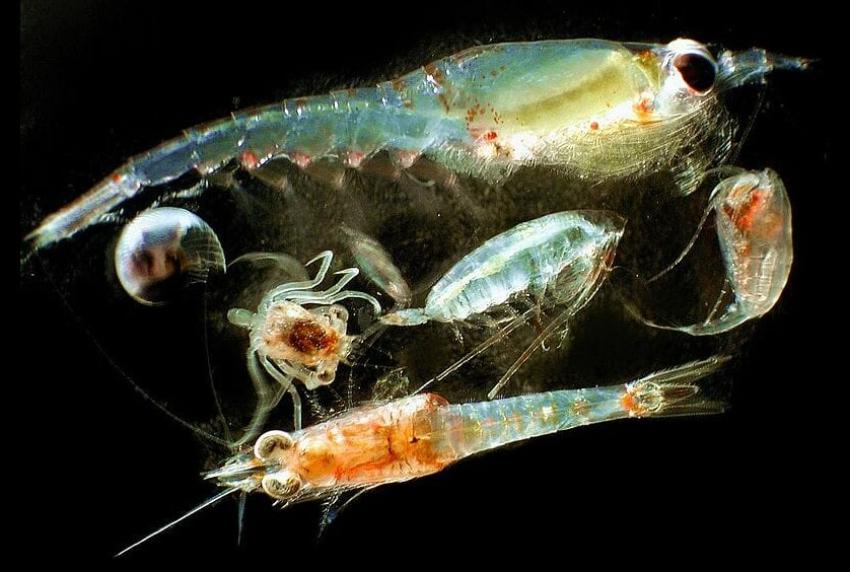
The waters across the globe are teeming with life, from colorful coral reefs to sharks to whales. However, plankton, the microscopic animals that lie at the base of the ocean’s intricate food chain, are sometimes disregarded.
The Greek root of the term “plankton” is to “float” or “move.” The majority of the organisms we classify as plankton are adrift in the water of the world’s seas, lakes, and rivers. Some animals are able to actively swim or alter their buoyancy, although even these are limited by the stream.
Plankton includes anything from microscopic microorganisms called phytoplankton to massive 80-inch (200-cm) megaplankton weighing several pounds. Two major classes of plankton are the plant-based phytoplankton and the animal-based zooplankton. Animals like krill, jellyfish, arrowworms, and copepods are examples of zooplankton that stay their whole lives as plankton (holoplankton). Some species, including the larvae of fish and crabs, are plankton just temporarily (meroplankton).
Oxygen From the Sea
To the zooplankton, phytoplankton is a tasty and healthy feast since it photosynthesizes exactly like land plants. These tiny planktonic algae convert solar energy, carbon dioxide, and water into organic matter and oxygen. To get to the air, oxygen must first dissolve into water and then travel to the ocean’s surface.
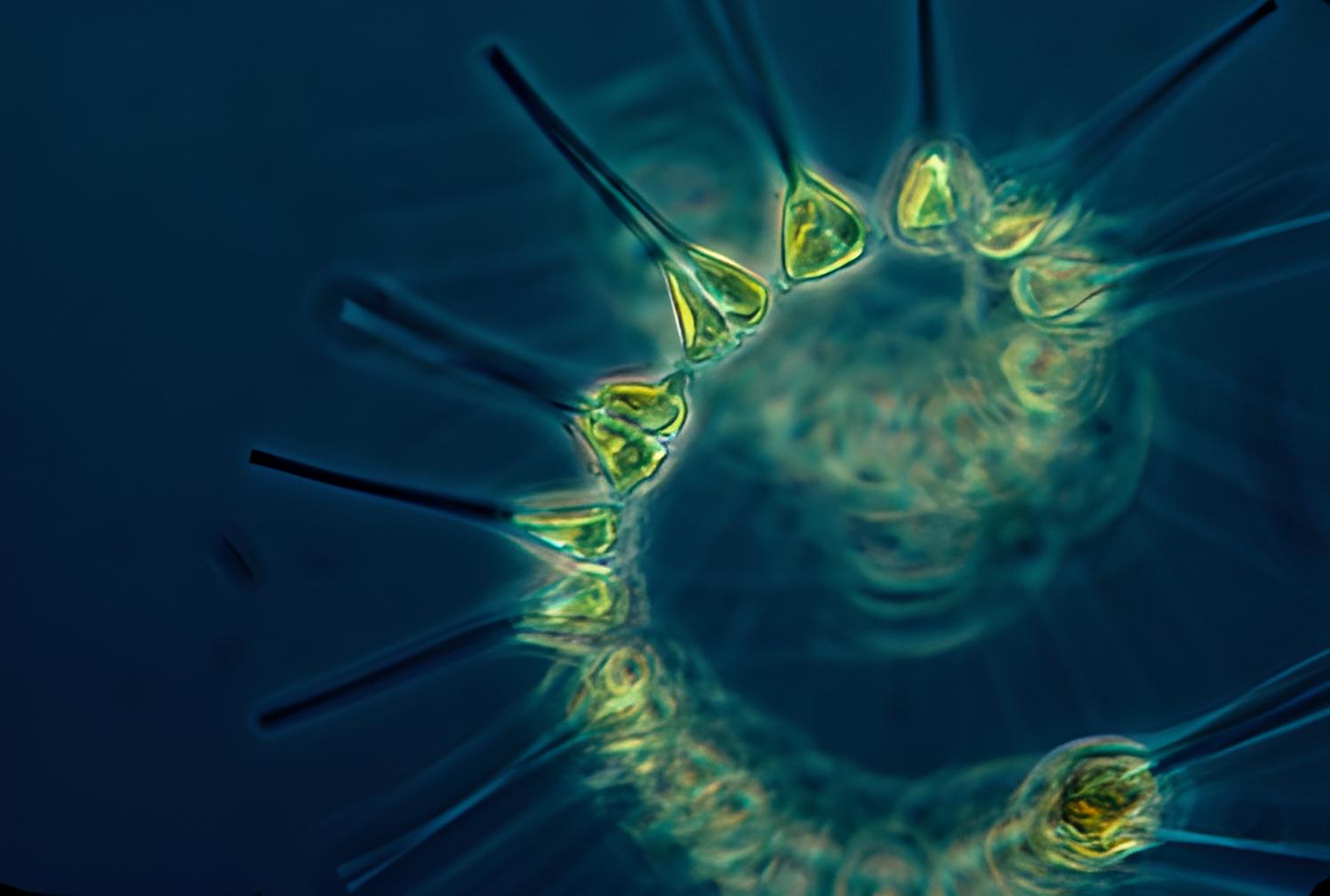
Phytoplankton in the water is responsible for producing an estimated 70% of the oxygen in Earth’s atmosphere. And according to the most conservative estimations, that number is still 50%. No matter the case, at least half of the oxygen we breathe in is produced by marine phytoplankton.
And not just today either. Two billion years ago, photosynthesis by phytoplankton guaranteed that Earth’s atmosphere was enriched with oxygen, allowing for a wide variety of animal life. Blue-green algae, often known as cyanobacteria, are singled out for this praise. Their name gives away the fact that they are bacteria and not plants. Nonetheless, they constitute one of the four major groups of phytoplankton because of their capacity to photosynthesize.
As a byproduct of photosynthesis, phytoplankton removes carbon dioxide from the water, reducing the acidity of the seas. The carbon in the waste products of zooplankton, such as dead bodies and excrement, is stored in sediments, helping to maintain the ocean’s role as a carbon sink.
An Extended Family
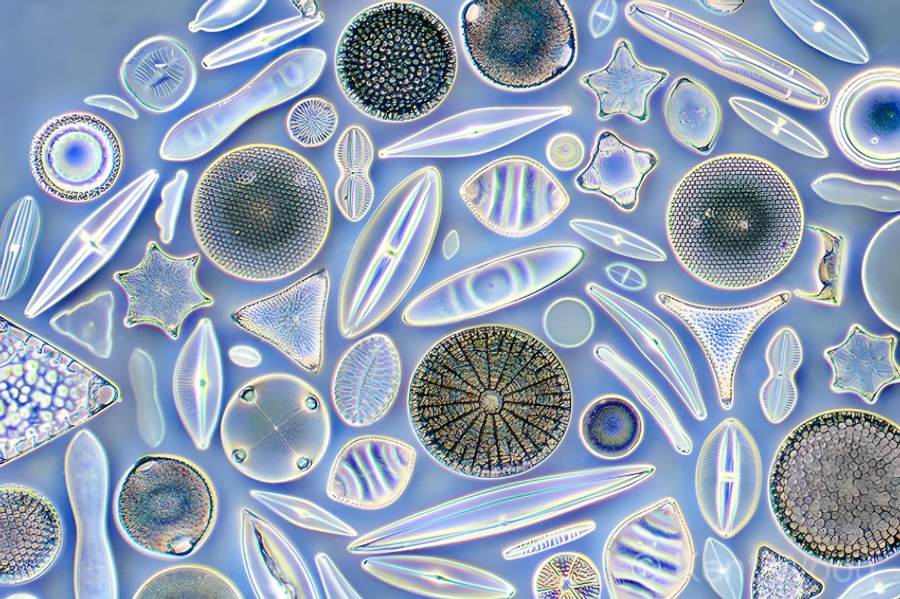
Diatoms are the most prevalent kind of plankton, which is termed phytoplankton.
The so-called diatoms comprise the second of these major groups. Their silica shells are delicate and fragile. These shells may have a variety of shapes, including circles, triangles, rods, and arches. About 25% of all photosynthesis on Earth occurs in diatoms.
Dinoflagellates, which have armored flagella, are another kind of plant plankton. Flagella, threadlike features on their surface, enable them to move around. Some armored flagellates supplement their diet with the flesh of other phytoplankton since they can’t produce enough of their own food via photosynthesis alone. Finally, the coccolithophorids, or calcareous algae, are the fourth and last group of phytoplankton. Calcium carbonate platelets form a spherical shell around their bodies.
Plankton Serve As the Foundation of Aquatic Food Webs
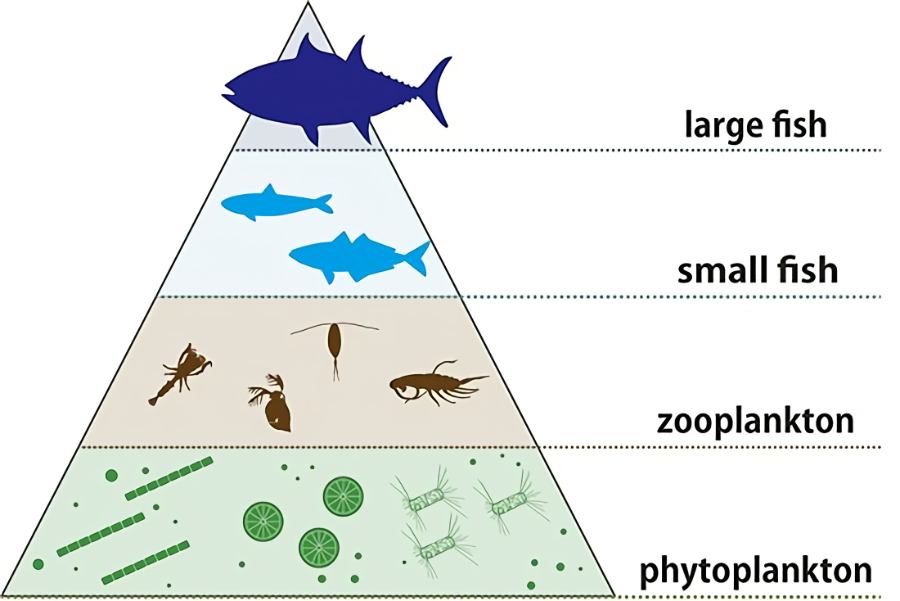
However, phytoplankton are not only “superheroes” because they provide oxygen. They also produce organic material as a byproduct of photosynthesis, which has remarkable properties of its own. Almost all marine food chains can be traced back to this component of the ocean. There would be no sharks, fish, or whales if not for phytoplankton.
To put it simply, phytoplankton and algae are the backbones of aquatic food webs. Primary consumers like zooplankton, small fish, and crabs devour the tiny light-transformers after they have made their own food via photosynthesis. The zooplankton eats the microgreens much like cows eat grass.
The primary consumers, like zooplankton, are prey to fish, tiny sharks, corals, and baleen whales. Massive baleen whales strain krill and other small fish from the ocean to eat. Ironically, the blue whale, the biggest living creature on Earth, subsists only on these little plankton creatures. Orcas, leopard seals, big sharks, and blue marlins are all examples of apex predators that may be found at the very top of marine food webs. Humans, too, participate in these complicated food webs by eating at a wide variety of levels.
However, there is one thing that all of the organisms in this succession have in common: they all rely on phytoplankton. Phytoplankton are the lifeblood of the ocean, and without them, the seas would be a lifeless wasteland.
Oceanic Fertilizers
The seas’ vivacity and diversity are in large part due to zooplankton. Consuming and being consumed are not its exclusive duties. It also plays a significant role in the ocean’s nutrient cycle. The “fertilization” of the deep sea occurs when zooplankton excretes or when deceased individuals drop to the ocean floor.
Another factor is the daily vertical movement of planktonic animals. The zooplankton often stays submerged throughout the day. There, it also defecates, speeding the descent of the nutrients in its waste to the sea floor. It’s only at night that the small floating critters go to the water’s surface to feast on the phytoplankton. It’s not safe to do this in the open ocean during the day.
Antarctic Smorgasbord
The food web in the Southern Ocean around Antarctica is a great example of a basic food chain based on plankton. There, planktonic diatoms coat the sea ice floes like a rug. Krill, a kind of tiny shrimp that are classified as zooplankton, eat them. The krill feed on the diatoms, which have a greenish-brown color, that float on the sea ice.
Krill are an accessible target for predators, even if they are hidden in deeper waters during the day, since they travel in large groups and are therefore more visible. The blue whale and other baleen whales can filter thousands of shrimp from the frigid waters using their trap-like lips. In the past, during the pre-whaling period, observers saw crimson ocean surfaces stained by swarming krill and endless cascades of feeding whales.
But then, our interference has disrupted the delicate equilibrium of this short, efficient food chain, which includes diatoms, krill, and baleen whales. The conventional view of the marine Antarctic community has been drastically altered in recent years by the intensive killing of whales in the previous century, followed by the severe exploitation of krill and the overfishing of fish supplies.
However, these transformations did not develop as predicted by scientists.
The Krill Paradox
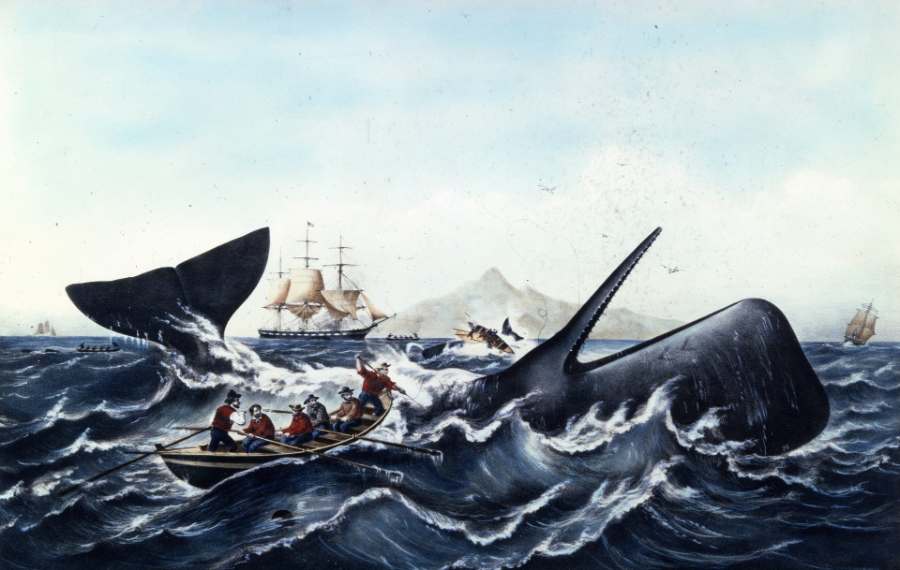
Anyone, even a superhero, may benefit from assistance now and again. However, this is seldom witnessed until that assistance is suddenly unavailable. This is what occurred long ago in the Southern Ocean around Antarctica. A particularly destructive rampage by whalers there in the 20th century not only pushed the whales to the verge of extinction but also damaged the whole ecosystem, although in a manner that the whalers hadn’t anticipated.
There should be a dramatic increase in the krill population if whales stopped consuming them, right? This did not happen. Instead, the krill population dropped by more than 80%. So, what happened? This krill paradox has baffled researchers for a long time.
It is now known that the food chains in the Antarctic oceans were not strictly hierarchical, in the sense that whales eat krill and krill eat diatoms. In fact, they are better understood as a cycle in which whales have a direct impact even on phytoplankton, the very base of the food web.
The once-abundant marine animals in the Southern Ocean provided the phytoplankton with iron-rich excrement, which is essential for the development of diatoms, etc. Scientists speculate that the phytoplankton may have absorbed as much as 1 percent of the iron discharged by the whales. Because of the fertilizing whale, the diatoms flourished, and the krill that fed on them eventually found their way into the whales’ stomachs, where they were recycled into iron-rich excrement.
An Antarctic Ray of Hope
However, commercial whaling has disrupted this iron cycle’s delicate equilibrium. It’s possible that there’s a fertilizer scarcity in the Southern Ocean because of the lack of whales. One time, Southern Ocean whales shed 12,000 tons of iron annually. The current estimate is just 1,200 tons. As a result of the 90 percent drop in iron, less phytoplankton bloomed, and krill populations declined for lack of food.
However, there is still hope for restoring the iron cycle. Scientists believe that bringing back the whale and dolphin populations would help bring back ecological services that were lost in the 20th century, which in turn would increase ocean productivity. The days of superhero plankton and its whale companion working together as they once did could be far off, but it’s possible.
Algal Blooms
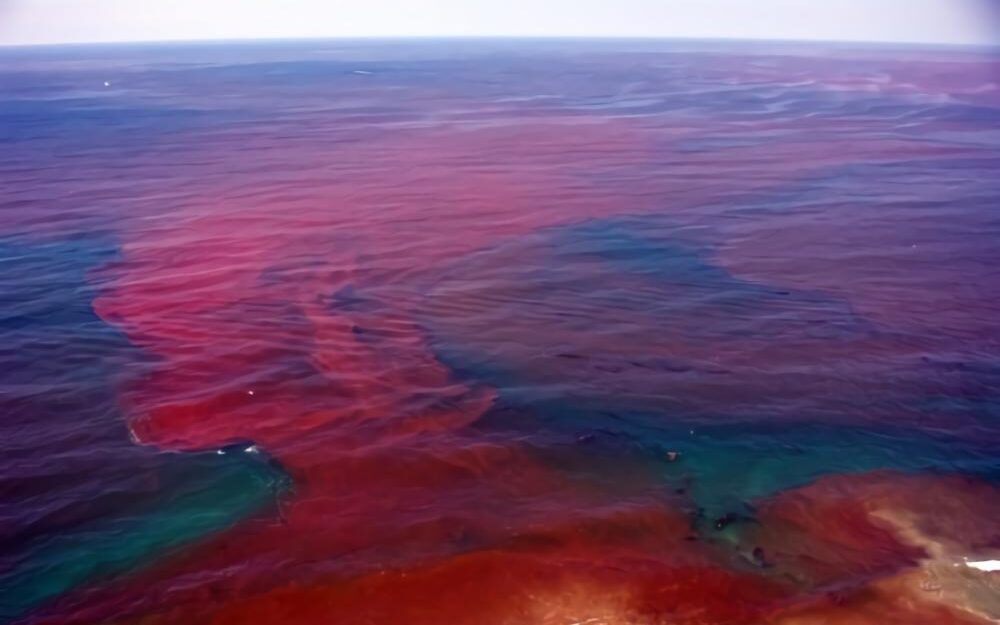
Every hero has their flaws, after all. Phytoplankton, which is often overlooked, is essential to life on Earth because it produces oxygen and provides food, yet it can also kill. Specifically, at times of extreme phytoplankton blooms. An algal bloom describes this phenomenon. Extremely hazardous to ecosystems and life forms, this event is occasionally observable from orbit.
About 300 of the 5,000 known species of marine phytoplankton may briefly arise in such abundance as to visibly stain the sea surface. These blemishes, which may be any color from red to mahogany, brown to even green, can occasionally be so large that they are visible even on satellite photographs.
The occurrence of algal blooms is a natural occurrence that follows a predictable pattern. As a result of the rising sun radiation in the spring, the diatoms on certain water bodies bloom at the same time. Such widespread reproduction is more typical of other species, which prefer to do it in the middle of summer when seawater is warmer and days are longer. When the plankton die off, so does the bloom. The phytoplankton often dies off because of a trifecta of nutrient depletion, viral infection, and grazing by zooplankton.
Once the algal bloom has subsided, a second bloom, this time of bacteria, will appear. Bacteria do this breakdown of dead plankton to return nutrients to the environment. This mechanism, for instance, is crucial for the abundance of fish in coastal waters. In turn, viruses and eukaryotic protozoa put an end to bacterial booms.
The Toxic Plankton and Their Health Effect on Humans
However, not all algal blooms are harmless. When populations of poisonous plankton species explode, the results may be catastrophic. Some aquatic life, birds, and mammals may perish as a result. Scientists have shown that exposure to them may lead to a variety of negative health effects, including issues with breathing or digestion, memory loss, seizures, lesions, and skin irritation.
Around 40 species of plankton create poisons that are ingested by people via fish and shellfish. It is not even necessary for the mini-algae to emerge in abnormally high quantities. A few hundred cells per liter of saltwater may be sufficient for certain marine organisms. The species Dinophysis, for instance, may cause diarrhea in humans at this concentration after being “infected” in mussels.
Brightly Colored Oxygen Scavengers
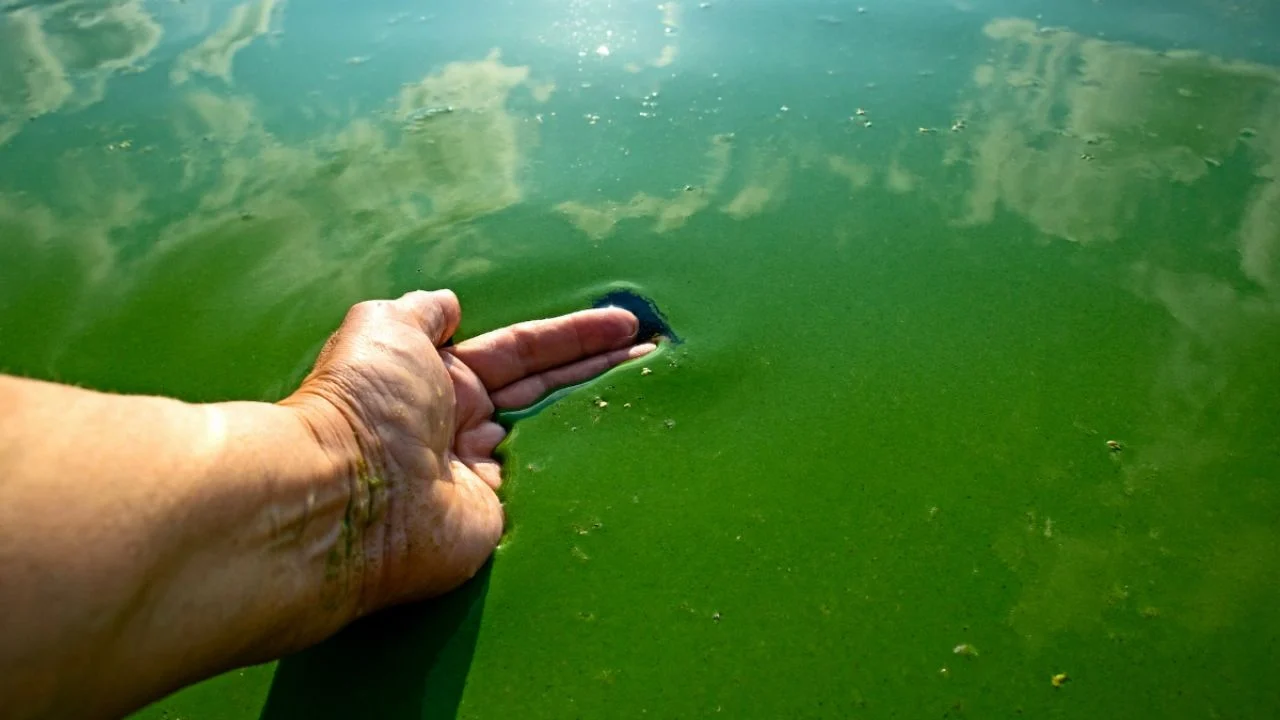
However, during the bloom season, even non-toxic phytoplankton may pose a significant threat. The fact that they suddenly arise in very high quantities is sometimes sufficient alone. The algae then starve fish and other marine life of oxygen because of their high metabolic rate. Furthermore, this happens when bacteria digest the dead algae, a process that uses up oxygen.
Science thinks that an algal bloom of this sort was originally referenced in the Bible. In one of the seven plagues, “suddenly, the whole [Nile] river turned to blood! The fish in the river died, and the water became so foul that the Egyptians couldn’t drink it,” according to Exodus 7:20–23. It is believed by scientists that fish in the Nile died from a lack of oxygen caused by a bloom of non-toxic, red algae at the time.
However, algal blooms may inflict significant harm regardless of the time period, and the current level of destruction they produce is far larger than that which occurred even a few decades ago. The reason for this is because people are finding more and more ways to profit from the ocean, such as via the selective cultivation of fish and shellfish.
When an algal bloom hits a fish farm, it poisons the water and kills thousands of fish that can’t swim away. In Chile, for example, algal blooms triggered a salmon die-off in 2016 with losses of $800 million. There has been a disturbing trend of harmful algal blooms occurring more often in the southern and central regions of the Americas.
Climate Change and Wastewater
A rise in water temperature is a contributing factor to the proliferation of hazardous algal blooms. Indeed, hazardous species like cyanobacteria thrive in warm water, displacing other, innocuous algae. El Nino, a circulation anomaly that alters ocean currents every few years, is another factor in the warming of the water alongside climate change. As a result, the water warms up off the coast of western South America. Also, the currents carry hazardous algae farther north, where they thrive.
But the seas aren’t the only place where deadly algal blooms are on the rise. This problem is exacerbated in still bodies of water like lakes. Due to the increasing water temperatures, the different water layers are no longer able to combine. Toxic cyanobacteria thrive when this circulation is disrupted.
In addition to a warm, wet climate and enough nutrients in the water, hazardous algal blooms are also encouraged by the overfertilization of water bodies with human excrement. This ended up in many large lakes in Central Europe in the 20th century. There, the sewage filled the water with nutrients that weren’t there before, allowing poisonous phytoplankton to bloom in large numbers.
Phytoplankton vs. Climate Change
It’s hard to imagine the seas without plankton, despite the fact that algal blooms may cause monetary losses and health issues. Without phytoplankton, we would lack the oxygen we need to breathe and the fish in our meals. Because of this, monitoring the effects of climate change on these little life-givers is of the utmost importance. The consequences of their demise would be catastrophic.
The oceans are experiencing a wide range of issues as a result of climate change. Temperatures are rising, acidity levels are rising, and circulation patterns are shifting. Are plankton capable of adjusting to these radical shifts? Researchers have shown that when temperatures rise, phytoplankton populations and species richness decline.
As climate change continues, it is expected that phytoplankton in warm oceans will suffer the greatest loss of variety. There might be as much as a 30% decline in predicted phytoplankton species in the tropics.
In consequence, melting sea ice and warmer seas in the polar areas might lead to a 30% increase in animal diversity. And since they thrive in nutrient-poor conditions, experts believe that tiny plankton species will become the norm in subtropical regions and the Southern Ocean. Larger species, however, may flourish in other areas, such as the North Atlantic.
However, this change creates difficulties for the plankton since the peak population densities of phytoplankton and zooplankton are no longer at the same time. The zooplankton that rely on phytoplankton for food aren’t always there when they bloom. A species of zooplankton in the North Atlantic, for instance, has been shown to reach its population peak eleven days sooner than it did in the past, as noted by researchers. However, it misses out on food and consumption since its phytoplanktonic food sources bloom 27–33 days sooner than they used to.
Alterations in the species composition of phytoplankton have been documented in several other regions as well. Certain types of cyanobacteria, in particular, do well in water that is warmer and contains more carbon dioxide. However, many types of zooplankton and other micro-marine organisms either do not ingest them or have a hard time using them. Experiments show that, the marine food web is becoming unstable and may eventually collapse.
More Than Helpless Bystanders
Plankton is vulnerable to the effects of climate change, but it also has the potential to mitigate these effects. As a byproduct of photosynthesis, phytoplankton removes carbon dioxide from the water, reducing the acidity of the seas. The carbon in the waste products of zooplankton, such as dead bodies and excrement, is stored in sediments, helping to maintain the ocean’s role as a carbon sink.
Some Southern Ocean plankton species even release the gas dimethyl sulfide, which contributes to the denseness of clouds. Clouds are thus 60% denser than they would be without the plankton effect because this transforms into sulfuric acid droplets in the atmosphere. The clouds’ ability to deflect sunlight helps keep the Southern Ocean area cool.
Phytoplankton, however, cannot halt climate change. In particular, not all species are equally suited to the current environment. There are additional options that raise CO2 levels rather than decrease them. But the heroic plankton has never failed us in a billion years. And it certainly won’t do it today just because of climate change.