Tag: middle ages

  • Sieges in the Middle Ages

    Sieges in the Middle Ages

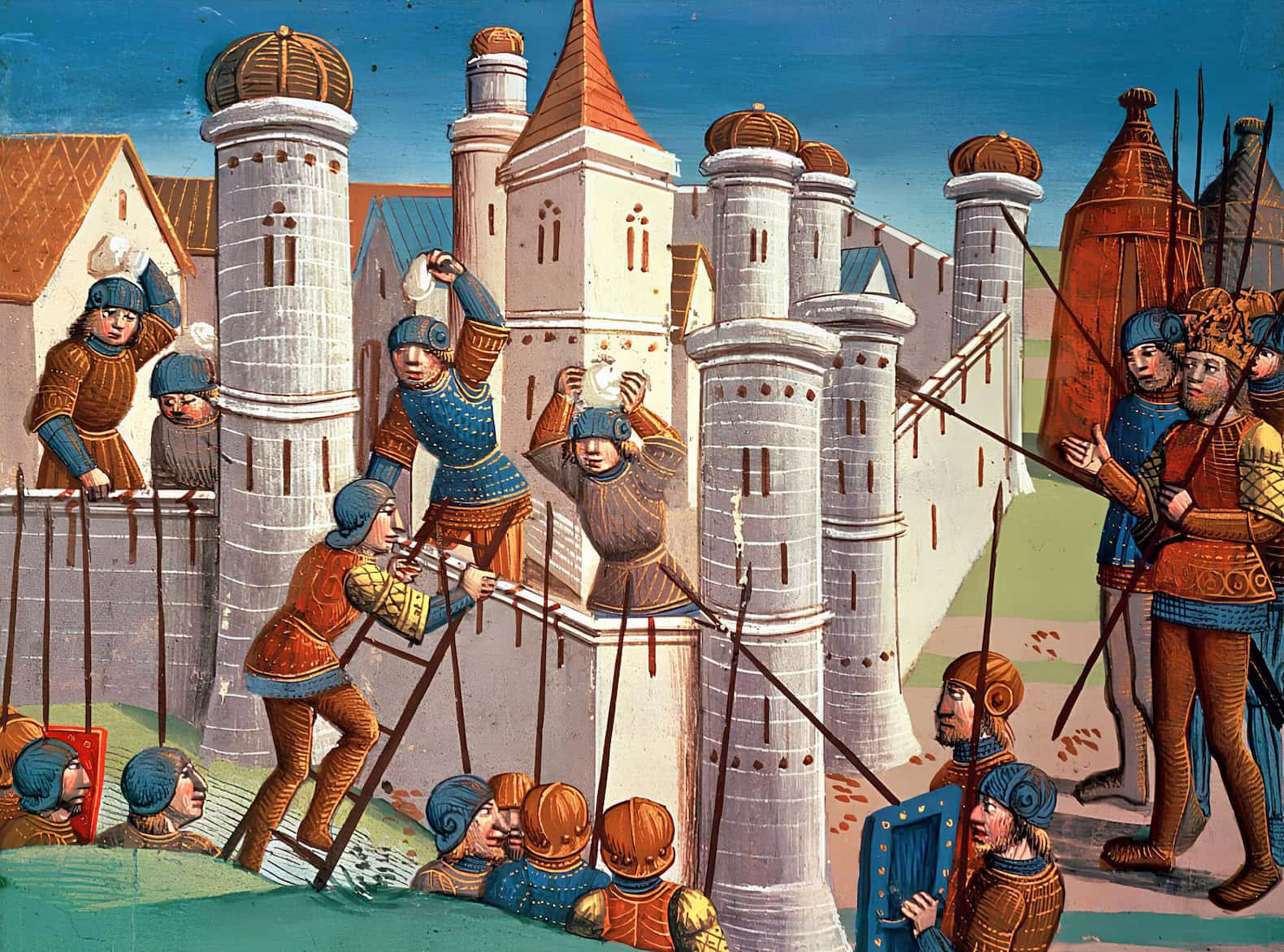
    The siege in the medieval period was one of the most crucial components of warfare at that time. During the medieval era, sieges were much more common than field battles because they were cheaper and required a smaller army, resulting in lower losses. A besieger, after a successful siege, gained much more territory and gains than if they had fought a battle. The siege tools and machines of the early medieval period were often based on older, ancient designs, showcasing the effectiveness of ancient siege techniques. However, these machines soon began to improve, leading to the development of new siege tactics and siege engines.

    Considering that every European ruler wanted to maintain control over their land, castles began to be constructed. Initially, castles copied defense techniques from ancient fortifications, but later, new methods of defense were introduced. Castles featured moats, drawbridges, circular towers, double walls, and more defensive structures. The pinnacle of the medieval period is referred to as the golden age of castles. However, this doesn’t mean that offensive methods were not being perfected. The trebuchet was the first original siege engine of the medieval period. It was invented towards the end of the 12th century and became widely used in the 13th and 14th centuries. Eventually, cannons began to be used, altering the nature of medieval warfare and marking the end of castles and, consequently, medieval siege techniques.

    Sieges in the Early Medieval Period
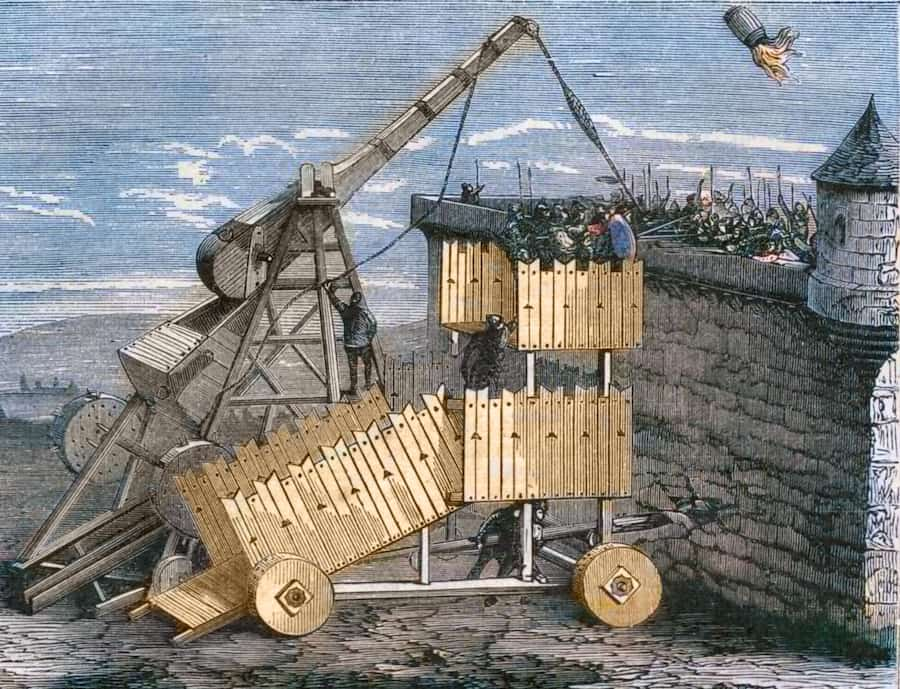
    Greek Fire Catapult.
    Greek Fire Catapult.

    In the early medieval period, all siege engines were replicas of ancient machines. Defensive structures were entirely similar to those in ancient times. It is more than likely that the quality of these machines and structures was inferior to their ancient predecessors due to a decline in manufacturing standards and a lack of skilled individuals. However, towards the end of this period, the machines began to improve and carry the traditional features of medieval warfare.

    Frequent wars and, consequently, sieges were common in early medieval Europe. This was caused by frequent invasions and the instability of the states at that time. The Byzantine Empire retained traditional Roman siege techniques and also invented new, effective weapons. The most impressive weapon of that era was Greek fire. Greek fire was likely invented by the Syrian engineer Callinicus of Heliopolis. It was a flammable mixture that ignited and exploded after a certain time.

    Greek fire was widely used in naval battles as well. The Byzantines considered Greek fire a gift from the gods, and the composition of this weapon was so jealously guarded that the formula and manufacturing process remain unknown. The main component was likely naphtha, with other ingredients possibly including ice, sulfur, resin, and petroleum. Greek fire proved itself many times, and its use is credited with prolonging the existence of the Byzantine Empire. Although the composition of this weapon was carefully guarded, eventually, Arabs and likely the French started using Greek fire.

    When the Roman Empire fell in 476, its military and, therefore, its siege techniques were adopted by the barbarians. The quality of weapons was initially lower than in ancient times, but constant wars led to their improvement. Barbarians settled in former Roman cities and quickly learned Roman ways. Medieval warriors used the books of the ancient Romans as their main source of information. A significant contribution in this regard was Vegetius’ work, “De Re Militari” (“Concerning Military Matters”). In this book, Vegetius describes siege tactics and provides readers with various pieces of advice. Towards the end of their empire, the Romans started using purely medieval siege structures. Circular towers, often attributed to medieval siege techniques, were actually invented by the Romans, and medieval warriors rediscovered them only at the end of the early medieval period. Water-filled moats, drawbridges, and grates, which were later adopted by the barbarians, were also employed.

    -> See also: The Technologies of the Roman Empire Ahead of Their Time

    The Emergence of Castles and Their Utilization

    The castle was a unique medieval structure, and the existence of castles is tightly associated with this period. Castles originated in the 10th century, and their significance declined during the 16th century. The main reason for the decline of castles was the discovery of gunpowder and the invention of cannons. The castle served as accommodation for the social elite, who were concerned about their safety.

    The castle had multiple functions: it protected its inhabitants, guarded trade routes, and served as a strategic point for all armies. Castles were built on the smallest possible territory, which brought numerous advantages. The construction of a castle was cheaper, required fewer soldiers for defense, and provided attackers with fewer options for assaults. Determining the exact origin of the first castles is challenging. So far, the oldest discovered castle was built around the year 950 in France and was named Doulé-la-Fontaine. Although Doulé-la-Fontaine Castle was constructed from stone, during the same period, there were common fortifications with earthworks.

    These fortifications had several advantages but also disadvantages. Since their defenses consisted of earth mounds, ditches, and palisades, this type of fortification was very cost-effective and could be erected during wartime. The downside of earthwork fortifications was the need for frequent repairs, as the mounds quickly deteriorated. This type of fortification was called motte-and-bailey, where “motte” refers to a mound and “bailey” to outer fortifications or the castle courtyard.

    The shortened term is motte. Similar to stone castles, determining the origin or development of motte fortifications is challenging. Historians and archaeologists have come to the conclusion that the first motte fortifications originated in France or Flanders, with the estimated time of origin being the 10th century. The primary reason for constructing a motte was frequent enemy raids, necessitating a quickly fortified point provided by the motte. The largest concentration of this type of fortification was found in Normandy and Brittany.

    Over time, stone castles emerged from the motte fortifications. The Normans, who settled in the region of Normandy, were pioneers in siege techniques and were the first to extensively construct stone castles. In the eleventh century, there was a mass construction of stone castles, and the use of motte fortifications declined. The increase in the number of castles was driven by the stabilization of Europe and European states, which sought to defend their territories with stone castles. Some progress was also noted in defensive techniques.

    Circular towers were erected in newly built castles (though square towers were increasingly visible), offering greater resistance to enemy attacks. Elements of Byzantine and Arab defensive techniques were introduced and brought back by crusaders returning from their expeditions. A medieval castle was constructed primarily from stone, but a synthesis of stone and earthworks was not uncommon. Castles of that time lacked a moat, drawbridge, portcullis, and fortified gates, which became integral parts of high medieval castles.

    High Medieval Castles
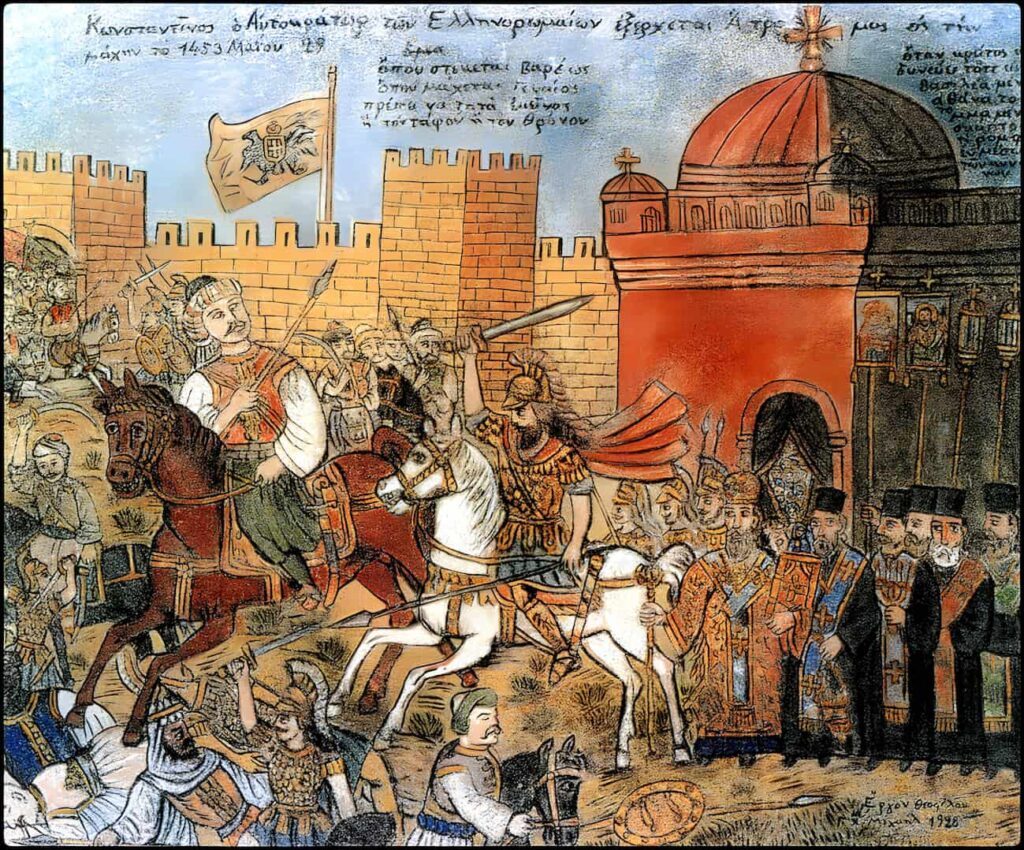
    Constantine the Emperor of the Greco-Romans exits fearless into the battle on 1453 May 29.
    Constantine the Emperor of the Greco-Romans exits fearless into the battle on 1453 May 29.

    High medieval castles represented a synthesis of the best practices from both ancient and medieval times. Old, ancient defensive strategies, such as circular towers and drawbridges, reappeared during this period. The re-emergence of ancient defensive practices was mainly influenced by a growing interest in Roman literature. However, it was not only the influence of ancient literature. Sieges were frequent during the medieval period, allowing castle builders to observe the effectiveness of castles and learn from their mistakes.

    The development of high medieval castles was significantly influenced by Byzantine and Arab fortifications. The Byzantines and Arabs, engaged in constant warfare, mutually influenced and copied each other’s defensive strategies. The Byzantines, in particular, were masters of siegecraft, as they were often the ones under attack from neighboring aggressors. During the Crusades, European warriors encountered magnificent oriental fortresses. The massive walls of the city of Constantinople made the greatest impression on the Crusaders and inspired some medieval castles.

    During the Crusades, the Crusaders learned to build highly impressive castles, with one of the best examples being the Krak des Chevaliers. These castles exhibited a phenomenon that emerged in Europe over the next few years. Not only were they the first concentric castles (see below), but there was also an increased emphasis on external walls.

    In early medieval castles, the greatest emphasis was placed on the outermost wall (of course, if the castle had more than one wall) and especially on the main defensive tower. The main defensive tower was typically the site of the toughest battles. In high medieval castles, the main defensive tower represented the last place of refuge (the castle defenders usually surrendered before the battle for this tower began). Most high medieval castles had double walls and, together with several other elements, formed concentric castles. The outer walls were lower than the inner walls, a design choice made to facilitate the defense of the castle. This ensured support for besieged units shooting from the higher walls. Castles of this type were constructed throughout Europe, with the greatest number found in France and England.

    Many cities and small states were able to maintain their independence thanks to their powerful castles. Castle construction was a relatively expensive undertaking, but it paid off. Castles were much cheaper than future modern fortifications.

    Castles varied, but a typical high medieval castle can be described: it had a moat that not only prevented attackers from approaching the walls directly but, more importantly, protected the castle against hostile mining. Towers were mostly circular in shape, as these towers were more resistant to attacks and mining. Gates were heavily fortified, featuring a drawbridge and one or two portcullises. The castle was, of course, of the concentric type and was built on an elevation. A castle described in this way posed a formidable challenge to any army.

    Siege Weapons of the Early and High Middle Ages
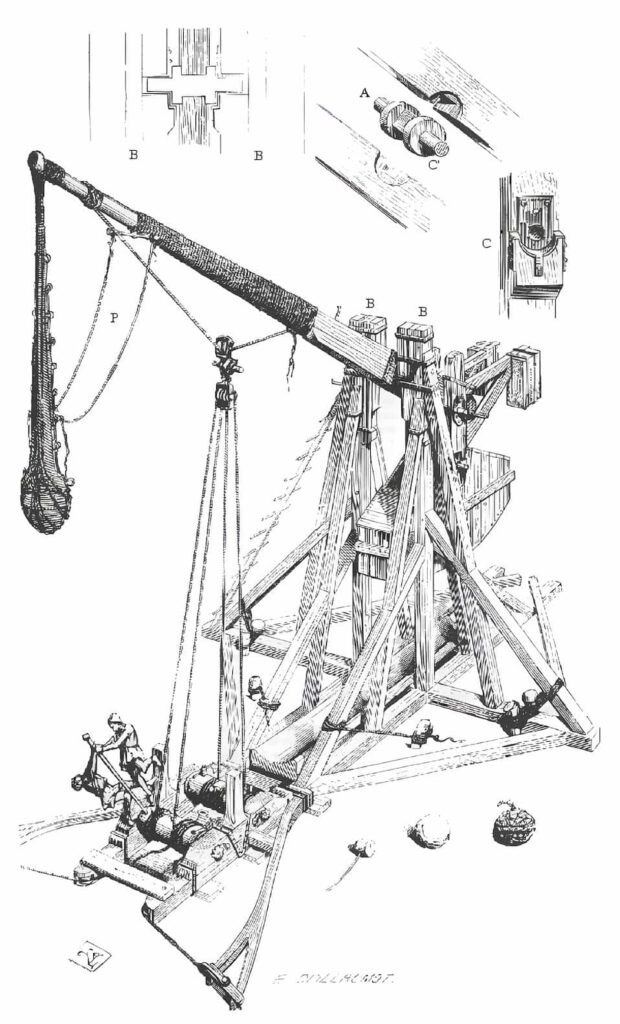
    Counterweighted trebuchet in preparation for launch.
    Counterweighted trebuchet in preparation for launch.

    Siege weapons of the early and high Middle Ages were, without exception, replicas of ancient machines, and their construction was only slightly modified. Typical medieval weapons such as trebuchets or cannons began to be used only in the late Middle Ages. Given that castle construction was continually improving, it is not entirely clear why siege weapons did not also see improvement. One reason may be that these weapons remained effective.

    However, archaeological finds suggest that attackers were often defeated. Another reason may be that medieval builders or engineers simply did not have access to enough suitable technologies or trained engineers. This indirectly confirms the invention of powerful siege weapons in the late Middle Ages, coinciding with a greater proliferation of knowledge and advancements in metallurgy. Although the high medieval castle was increasingly sophisticated, there was still a chance of its conquest. Medieval warriors had a choice of many more or less effective siege weapons.

    One of the simplest and most primitive weapons was the ordinary ladder. The medieval ladder was almost always made of wood and equipped with hooks or teeth that could be lodged in the walls. The ladder was a widely used weapon and could be seen in almost every siege. A mechanism that could lift ladders onto the wall was also observed. Every medieval castle was unique, so the height of its walls differed from others. This meant that not every ladder could be used to conquer a specific castle. Medieval soldiers addressed this by making ladders on-site to ensure that the ladder would reach the walls (though this often failed). Another simple siege weapon was the battering ram.

    There were sophisticated battering rams covered with a wooden roof, mounted on wheels, suspended on a frame by ropes and chains, and equipped with a metal head. The common ancient practice of placing the battering ram on a crane was “forgotten” in the Middle Ages. Of course, very simple battering rams were also seen, representing nothing more than a wooden log. Undermining the walls was highly effective. Attackers dug beneath the walls and either destroyed the foundations or created a tunnel through which the attacker could directly access the castle. High medieval walls countered this by building moats and circular towers. If the tunnel was dug too close to the ground, the water from the moat could destroy the tunnel. Defenders often led counter-mining efforts to surprise attackers and collapse their tunnels.

    One of the most impressive siege weapons was the siege tower (also known as a belfry). Although medieval siege towers were quite effective, they could not be compared to their ancient counterparts. The construction of medieval towers was often imperfect, and their overturning or destruction was not uncommon. Many men lost their lives when their siege tower collapsed on its own.

    Towers, like ladders, were often built on-site during a siege. They were as tall or even taller than the enemy walls, and a bridge was placed on top of the tower, allowing attackers to reach the walls. Siege towers could be equipped with catapults and battering rams to increase their offensive power. Siege towers were, of course, equipped with wheels. Protection was often provided using metal plates, rawhide (against fire), or willow twigs. They were transported to the walls either by soldiers or by animal teams, but the use of a crane also became practical. If the tower was well-built and had sufficient protection, it posed a very dangerous threat to any castle.

    The last type of siege weapon was a projectile thrower. They worked on two principles: either using the bow principle (firing arrows) or utilizing twisted ropes. Machines firing arrows were used to clear enemy battlements of archers and other soldiers, while machines throwing stone projectiles were used to damage or destroy walls. Arrows were often equipped with a metal head, and projectile-throwing machines could launch metal bolts and barrels of Greek fire. Like all siege weapons of the time, projectile throwers were replicas of Roman machines, as evidenced by the names of these machines (ballista).

    Undoubtedly, the most widely used projectile thrower was the mangonel. The mangonel was the successor to the ancient onager. It was used to launch stone projectiles, and its production was inexpensive and relatively fast. It was often equipped with wheels (like other machines), and its effective range was around 360 feet. An effective medieval tactic was also deception. Attackers would assault the castle in the evening, using ladders to get inside. If lucky, they could manage to open the gates. Betrayals were common, where a citizen or soldier of the castle intentionally opened the gates for the attackers.

    Siege of the Late Middle Ages

    The sieges of the late Middle Ages were influenced by two major inventions. The first was the trebuchet, and the second was the invention of the cannon. The trebuchet was the first original siege weapon in the medieval world. It is challenging to pinpoint its exact invention. Some historians argue that it was invented in ancient times, but no trebuchet findings were made in the early Middle Ages, contradicting this claim. The first written mention comes from the first half of the 12th century. It is not entirely certain whether this written testimony refers specifically to the trebuchet or some other siege weapon. The trebuchet certainly began to be used around the turn of the 13th and 14th centuries, but there is speculation that it might have been used as early as the beginning of the 13th century.

    The trebuchet launched stone projectiles but differed significantly from weapons like the mangonel. The trebuchet did not use a twisted rope system at all but operated on the principle of a counterweight. Experiments conducted by Napoleon III show that a trebuchet could hurl a stone weighing 24 pounds at a distance of 597 feet. Modern experiments demonstrate that to throw a stone weighing one ton, 24 tons was needed as a counterweight. In these experiments, it was found that the trebuchet was an exceptionally accurate weapon.

    The trebuchet was also the first weapon that truly threatened the existence of castles. According to contemporary accounts, a trebuchet could, after several shots, destroy less sturdy walls. Defenders of castles also attempted to use trebuchets, but their use within the castle was not very practical and was soon abandoned. Although the trebuchet was a very powerful weapon, capturing a well-fortified castle was still no easy task. Nevertheless, it was an invaluable weapon that made life easier for many medieval warriors.

    Another and even more powerful weapon that ultimately put an end to the dominance of castles on the battlefield was the cannon. The Chinese were the first to manufacture cannons, but they couldn’t appreciate their qualities and lacked skilled metallurgists, so they made cannons out of paper or bamboo. It was only in Europe that cannons began to be made of iron. However, iron furnaces were not yet known at that time, so the cannons of that era could not be cast. Cannons were made by welding iron rods around a cylindrical core, and then iron hoops were threaded onto this welded tube. The first cannons were quite imperfect and were more suited for intimidating soldiers and horses than for destroying castle walls. It wasn’t until later that cannons were fully appreciated, and all European countries began mass-producing them.

    The first to use cannons in a major siege were not Europeans but the Ottoman Empire. It happened in 1453, during the siege of Constantinople. Mehmed II, the Conqueror, hired a Hungarian defector named Urban, who was to build giant cannons to help conquer Constantinople. These cannons were so large that they had to be cast right in front of Constantinople because their transport would be very complicated. From cannons at that time, not much was expected; they were to be placed in one location (further manipulation with such heavy cannons was very difficult) and fired until the enemy walls collapsed. Constantinople eventually fell, largely due to the cannons.

    Castles across Europe succumbed one after another due to their unpreparedness against cannons. Castle walls were high but not very strong, designed so that attackers could not easily overcome them. However, these “thin” walls were vulnerable to cannons, which quickly destroyed them. This does not mean the end of fortifications. In the early modern age, sieges remained an important component of warfare, and even today, fortifications (bunkers) are built for the purpose of protection.

    New fortresses began to employ new defensive tactics, and cannons started to be used within fortresses. These fortresses were very expensive, and only the wealthiest rulers, nobles, and cities could afford them. This resulted in the conquest of many small, independent states. The era of castles came to an end. With the invention of cannons, castles practically ceased to be built. Instead, the social elite began constructing more luxurious residences—castles. Although fortifications were still constructed, they never again dominated a region in the way castles did in Europe.

  • Trade and Commerce in the Middle Ages

    Trade and Commerce in the Middle Ages

    For generations, popular culture painted the European Middle Ages (roughly 500 to 1500 AD) as a stagnant, thousand-year economic dark age in which isolated, mud-splattered peasants never traveled more than five miles from their feudal village and nobody used money. While it is true that the fifth-century collapse of the Western Roman Empire caused urban populations and long-distance shipping to contract sharply during the early centuries, beginning around the year 1000 AD Europe experienced a breathtaking Commercial Revolution. Driven by merchant guilds, maritime republics in Italy, the Hanseatic League in the north, and the great Champagne Fairs in France, medieval merchants invented almost every foundational tool of modern global capitalism: double-entry bookkeeping, marine insurance, bills of exchange, checks, and international banking houses.

    The Agricultural Spark and the Revival of Towns (Circa 1000–1200 AD)

    Before long-distance commerce could flourish, Europe first had to produce enough surplus food to feed people who didn’t farm. Between 950 and 1200 AD—aided by the Medieval Warm Period and three medieval agricultural inventions: the heavy wheeled iron moldboard plow, the padded horse collar (which allowed faster horses to plow fields without choking, replacing slow oxen), and three-field crop rotation—European grain yields doubled and the continent’s population surged from roughly thirty-five million to nearly eighty million people.

    Freed from the manor fields, enterprising artisans and peddlers (called pieds-poudrés in Old French, “dusty-feet,” because they walked from castle to castle carrying packs of goods) settled around river crossings, cathedral walls, and fortified burgs, purchasing royal charters of liberty that declared a revolutionary legal principle: “Stadtluft macht frei” (“City air makes you free”)—meaning any runaway feudal serf who lived and worked inside a chartered town for a year and a day automatically became a free citizen!

    Two Trade Superpowers: The Italian Maritime Republics vs. The Hanseatic League

    By the thirteenth century, European international trade operated as a giant hourglass linking two powerful maritime trading zones:

    • 1. The Southern Mediterranean Monopoly (Venice, Genoa, Pisa, and Amalfi): Using the Crusades to secure permanent tax-free harbor quarters in Constantinople, Acre, Alexandria, and the Black Sea, fleets of armed Venetian and Genoese merchant galleys imported the high-value luxury goods of Asia and the Islamic world: black pepper, cinnamon, cloves, ginger, cane sugar, Chinese silk, Syrian cotton, alum (essential for fixing dyes in wool cloth), and fine porcelain.
    • 2. The Northern Baltic & North Sea Monopoly (The Hanseatic League): Stretching from London and Bruges across Germany (headquartered at Lübeck and Hamburg) all the way to Novgorod in Russia and Bergen in Norway, nearly two hundred northern merchant cities banded together into a powerful commercial and military confederation known as the Hansa (Hanseatic League). Sailing high-sided, flat-bottomed wooden cargo ships called cogs, Hanseatic merchants traded high-volume bulk necessities: Russian wax and furs, Norwegian dried stockfish and salted Baltic herring, Swedish iron and copper, Polish grain and timber, and above all, raw English wool shipped to the giant weaving looms of Flanders (Ghent, Ypres, and Bruges).

    The Champagne Fairs and the Birth of Modern Banking

    How did Italian spice merchants from the south and Flemish wool weavers from the north meet to swap their cargoes without sailing all the way around Spain? Throughout the twelfth and thirteenth centuries, they met on land halfway between Italy and Flanders at the famous Fairs of Champagne—a continuous year-round cycle of six-week trade fairs hosted across four towns in northeastern France (Troyes, Provins, Bar-sur-Aube, and Lagny), where the Counts of Champagne guaranteed armed police protection on the roads and swift commercial courts for every merchant regardless of nationality.

    Because hauling bags of heavy gold and silver coins over bandit-infested Alpine passes was dangerous—and because every city and duchy in Europe minted its own coins with different silver weights—Italian merchants sitting behind green-cloth benches (in Italian, a banca, which gave us the word bank; and if a banker ran out of money, officials literally smashed his wooden bench—banca rotta, giving us the word bankrupt!) invented paper finance:

    1. The Bill of Exchange (Lettera di Cambio): Instead of carrying gold coins from Florence to Bruges, a merchant deposited 1,000 gold florins (first minted in Florence in 1252, alongside the Venetian gold ducat of 1284) with a Medici or Bardi bank branch in Florence, received a signed paper promissory note written in code, walked empty-handed to France or Belgium, and cashed the paper note for local silver coins at the partner branch office—simultaneously bypassing the Catholic Church’s ban on usury (charging direct interest on loans) by hiding the interest fee neatly inside the foreign currency exchange rate!
    2. Double-Entry Bookkeeping (1494): Perfected inside the counting houses of Venice and Genoa and codified in print by the Franciscan mathematician Luca Pacioli (Leonardo da Vinci’s close friend) in 1494, the system of matching every credit with an equal debit in a ledger gave European companies unprecedented clarity over profit, loss, and capital—laying the direct financial rails upon which the modern global economy still runs today.
  • Beguines: Free Women of the Middle Ages

    Beguines: Free Women of the Middle Ages

    The Beguines materialized as a devout and communal movement within the confines of the Low Countries, encompassing contemporary realms of Belgium, the Netherlands, and portions of France and Germany, throughout the epoch of the Middle Ages. The name “Beguine” initially denoted females inhabiting semi-monastic enclaves, wholly dedicating their existence to supplication, altruism, and benevolent endeavors benefiting their localities. The movement later expanded to include men as well, who were known as “Beghards.”

    Key Takeaways: Beguines

    • During medieval times in Europe, there existed a religious movement known as the Beguines. These were ordinary women who desired to lead lives of devotion, prayer, and service, all without committing to formal religious vows.
    • Distinct from official monastic orders or established religious bodies, the Beguines enjoyed a level of autonomy. This freedom allowed them to pursue their spiritual journeys while playing an active role in society.

    Half-Religious, Half-Secular Communities

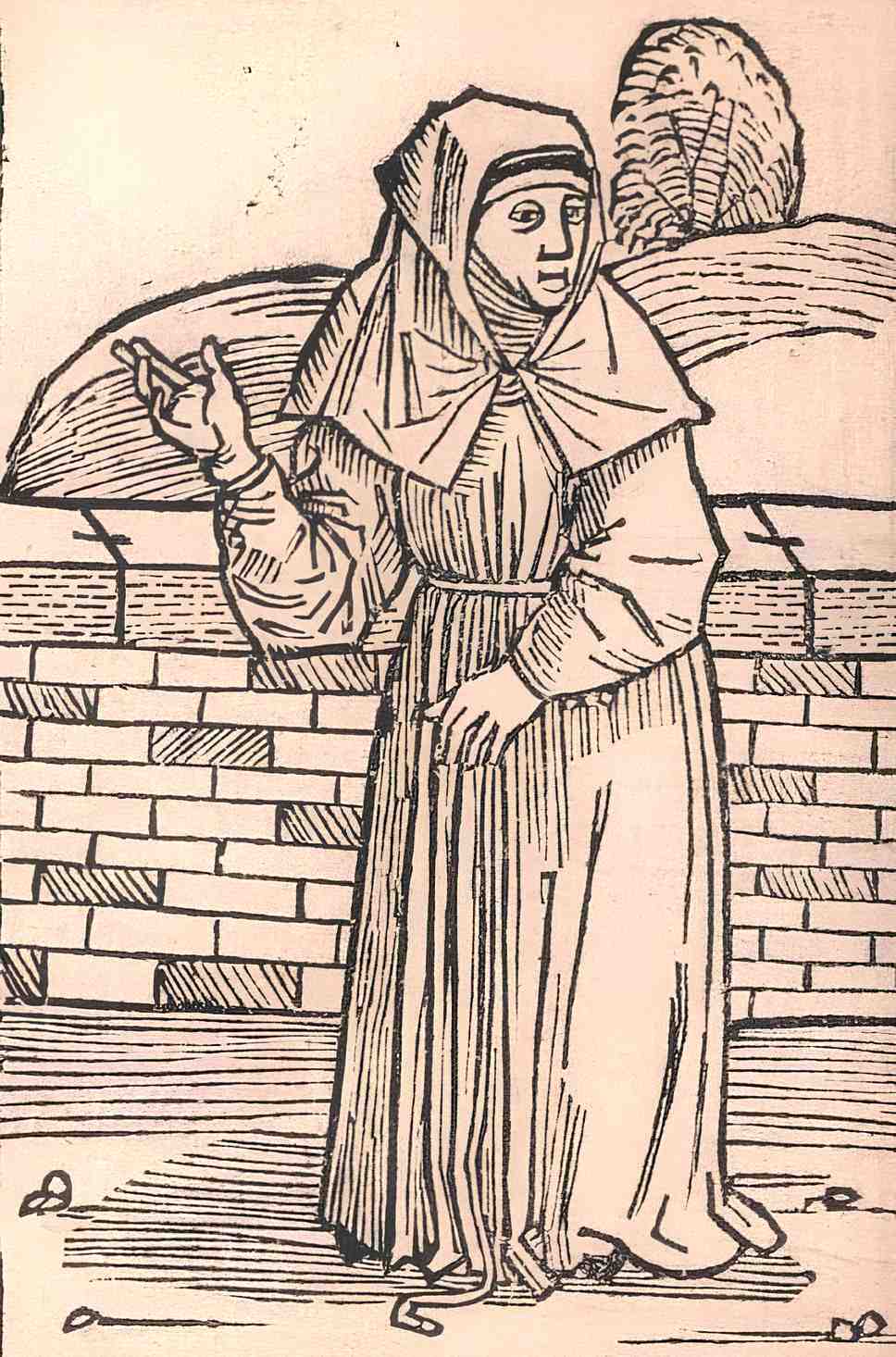
    Print of a Beguine in Des dodes dantz of Matthäus Brandis, Lübeck 1489.
    Print of a Beguine in Des dodes dantz of Matthäus Brandis, Lübeck 1489.

    This community, renegade for its time, was born at the end of the 12th century. Within the feudal tapestry of society, women found themselves ensnared beneath the dominion of patriarchal rule, confronted with a binary juncture: matrimonial union or embracement of the ecclesiastical fold.

    Nonetheless, the reverberations of the Crusades cast men afar, while conventual sanctuaries stood in scant supply, necessitating a dowry as an entry fee. What fate, then, awaited these women sentenced to a life of chastity? Unity beckoned as the answer! Thus unfurled the beguinages—a hybrid confluence of spiritual devotion and worldly existence.

    A charter of 1065 mentioned the existence of an institution similar to the Beguinage in Vilvoorde (Belgium). In the annals of history, the first beguinage arose in Liège in the year 1173, and a second soon after in Oignies (Pas-de-Calais), both revolving around the devout Marie of Oignies.

    The term “beguines,” shrouded in etymological enigma, congregated around the ethos of evangelical poverty akin to the Mendicant Orders, which concurrently thrived in a pious Europe.

    Yet, their commitment refrained from formal vows, liberating them to practice their faith in an unparalleled manner, emancipated from constraints. As evangelists, they disseminated their creed, embarking on the translation of the Scriptures and other divine manuscripts into vernacular French, imparting wisdom through their pedagogical endeavors.

    Nearly a Million Beguines in Europe in the Early 14th Century

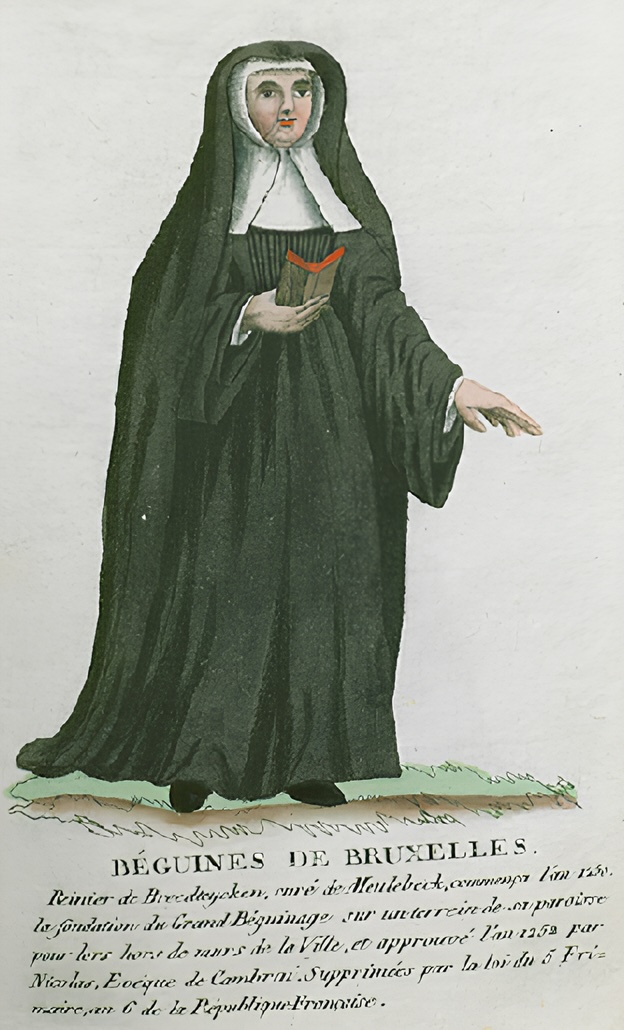
    Brussels Beguines
    Brussels Beguines.

    During the subsequent century, this movement expanded its influence across Europe. Letters penned by Pope John XXII in 1321 revealed a remarkable presence of 200,000 beguines residing solely in Western Germany.

    At the zenith of their prominence in the early 14th century, approximately one million Beguines’ voices echoed throughout the continent. In France, upon his return from the crusades in 1264, Saint Louis embraced them under his protective wing, gifting them parcels of land nestled in the heart of Paris.

    This gesture emancipated them from feudal constraints and empowered them to flourish beyond the bounds of subjugation. The grand beguinage of Paris flourished into a sanctuary, where the noise of male yielded to the resilience of steadfast women—a haven not of confinement, but of empowerment.

    Neither Subjected to Male Authority nor to That of the Church

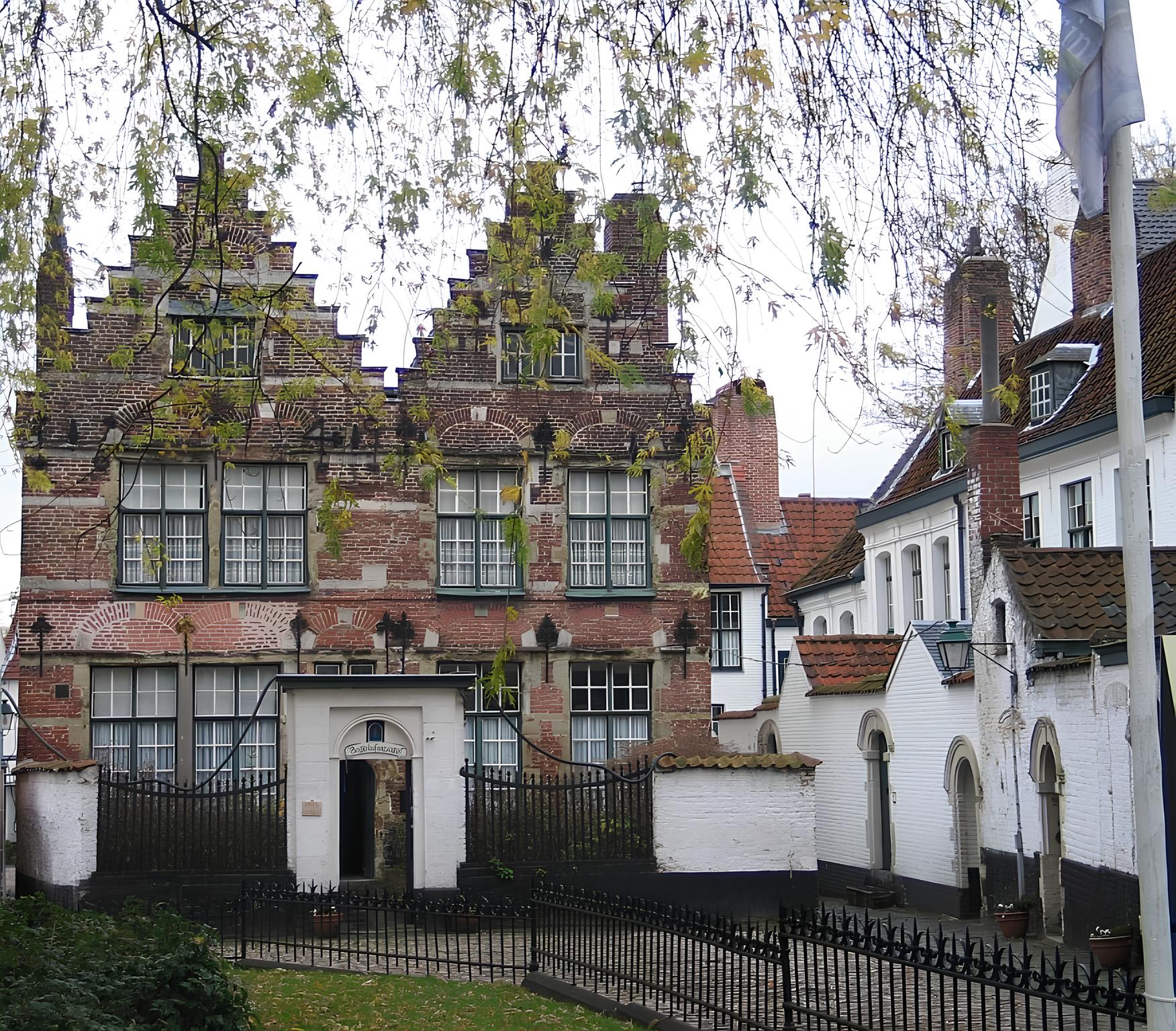
    Saint Elisabeth Beguinage of Kortrijk (Belgium): former house of the mother superior, now the Beguinage museum
    Saint Elisabeth Beguinage of Kortrijk (Belgium): former house of the mother superior, now the Beguinage museum. Image: Paul Hermans.

    Within the confines of these walls, the beguines, free in their exploration of the urban expanse, resided in self-governance. While diligently enacting Christian benevolence, they were also vested with the prerogative to engage in labor.

    On occasion, they instituted infirmaries and transition into the roles of caregivers, frequently inaugurating diminutive ateliers dedicated to the crafts of pottery, weaving, textiles, and the art of candle making.

    These communal enclaves appointed a “grand dame” who presided over the beguinage for a span of several years, as determinations coalesced during expansive convocations reminiscent of plenary assemblies. This marked an exceptional manifestation of democratic custom during that epoch.

    These women attained a state of near-complete autonomy ensconced within the core of the Medieval era. They remained unburdened by marital bonds and unaffected by male dominion or ecclesiastical authority.

    Their endeavors encompassed gainful employment, astute management of possessions, and the ability to bequeath these endowments to their fellow beguines. This was a freedom that women had lost for a very long time. Long before these concepts became trendy, the beguines embodied sisterhood and solidarity.

    Changing View Under Pressure From the Church

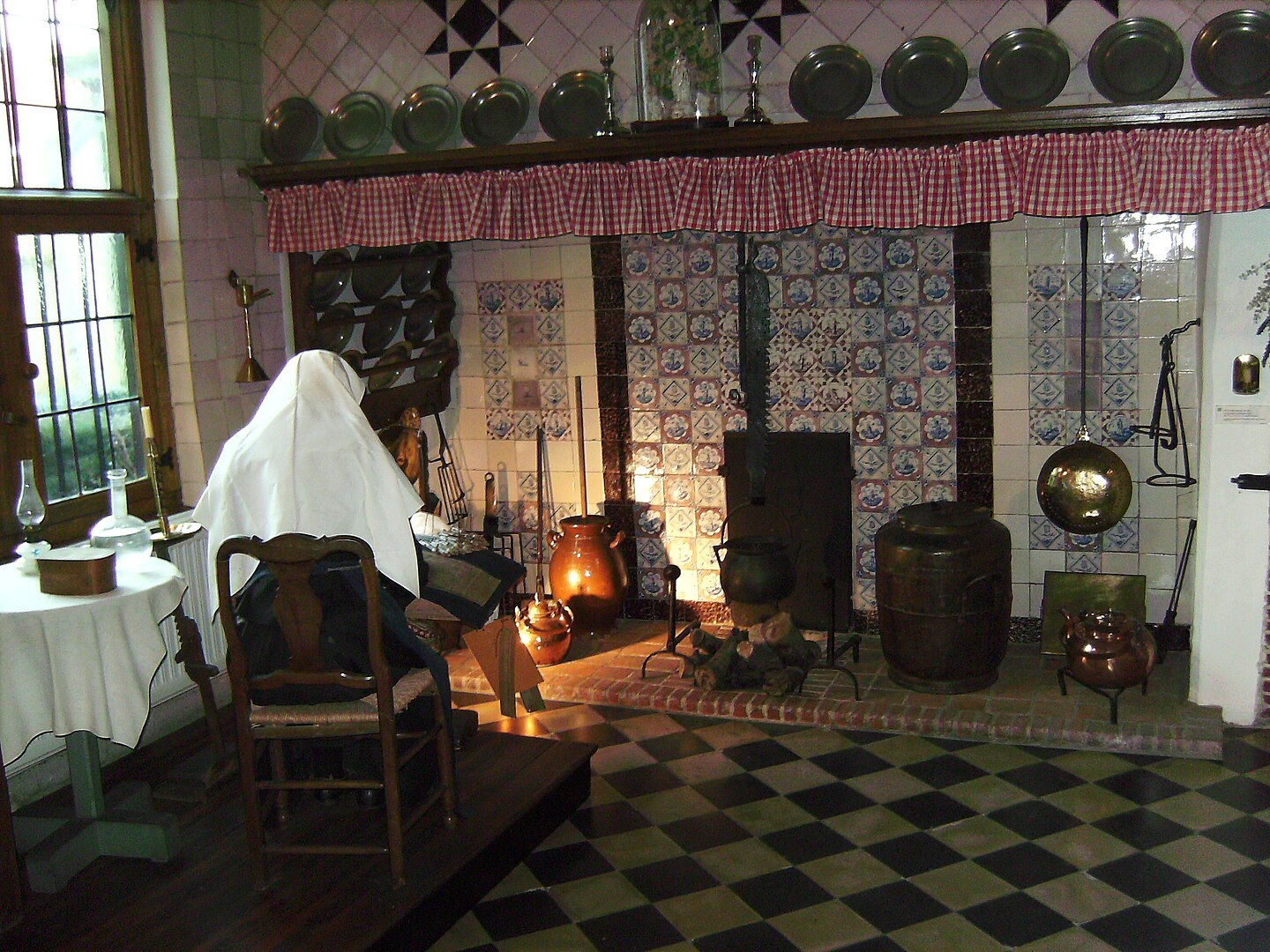
    Interior of a convent in the 19th century, Turnhout Beguinage Museum, Belgium.
    Interior of a convent in the 19th century, Turnhout Beguinage Museum, Belgium. Image: Vitaly Volkov.

    As substantiation of their assertion, certain prominent figures within the movement exhibited no reluctance in taking up the quill, an infrequent occurrence for women during that era. Inspired and often mystical, grappling with metaphysical questions, they even dared to write in vernacular languages—a departure from recognized Latin.

    Predictably, these unconstrained women unsettled many establishments. Particularly the ecclesiastical establishment, which, subsequent to an initial consent, curtailed their emancipatory endeavors.

    Their piety lived apart from any ecclesiastical authority, as well as their ideal of poverty, made them suspicious. Apprehensions arose that they might lead astray the monks, with whom they frequently partook in prayers, from the righteous path and their vow of chastity.

    In the year 1244, the Archbishop of Mainz mandated a regulation upon beguinages, stipulating the exclusion of individuals below the age of 40, ostensibly to “forestall the misemployment of liberty by younger beguines.”

    Certain individuals paid the price for their self-reliance with their lives. Instituted in 1231, the Inquisition consigned notable personalities to the pyre, including Lutgarde of Treves in 1231, and Marguerite Porete in 1310. In the subsequent year, the Council of Vienne classified the beguine movement as heretical.

    The impetus suffered a bust; numerous communities found themselves compelled to shutter their homes and forfeit their possessions. In Paris, the royal beguinage ceased operations in November of 1317.

    It would subsequently reemerge with markedly stringent regulations before succumbing to disintegration circa 1470. Universally, these autonomous collectives metamorphosed into secluded enclaves governed by stringent directives or vanished altogether.

    Notable Beguines

    • Agnes Blannbekin (Around 1250 – d. 1315)
    • Marguerite Porete (Around 13th century – d. 1310)
    • Colette of Corbie (1381 – d. 1447)
    • Juliana of Liège (1193 – d. 1258)
    • Margareta of Magdeburg (1237 – d. 1270)
    • Mechthild of Magdeburg (Around 1207 – d. 1282/1297)
    • Ida of Nivelles (1190 – d. 1237)
    • Marie of Oignies (Around 1177 – d. 1213)
    • Maria van Oosterwijck (Around 1470 – d. 1547)
    • Gertrud of Ortenberg (Between 1275 and 1285 – d. 1335)
    • Marcella Pattyn (1920 – d. 2013)
    • Marguerite Porete (Around 1250/1260 – d. 1310)
    • Christina of Stommeln (1242 – d. 1312)

    Marcella Pattyn: The Last Beguine Died in 2013

    Marcella Pattyn, the last beguine.
    Marcella Pattyn, the last beguine.

    Only the beguine residents of the Netherlands and Belgium survived the persecution thanks to two papal decrees. The initial one, issued by John XXII in 1319, safeguarded those in the Brabant province, while the second, granted by Clement VI in 1343, extended protection to those in Holland.

    Their survival was secured through a willingness to distance themselves from certain radical ideals and embrace a closer alignment with the Church. This shift marked a farewell to their previous autonomy as the beguines realigned themselves.

    As the 19th century drew to a close, Belgium still counted 600 of these women among its ranks. However, the last beguine bid farewell to the world a century later, precisely on April 14, 2013, in Kortrijk. With her passing, the curtain fell on the era of these pioneering religious women, who defied conventions well ahead of their time.

  • The Rise of Universities in the Middle Ages

    The Rise of Universities in the Middle Ages

    Among all the institutions bequeathed to the modern world by the European Middle Ages—alongside gothic cathedrals, representative parliaments, and mechanical clocks—none has shaped human civilization more profoundly than the university. Prior to the late eleventh century, higher learning in Western Europe was confined to quiet rural monastic scriptoria and small cathedral schools trained on basic literacy for clergy. Then, between 1088 and 1300, an urban educational explosion in Italy, France, and England gave birth to the self-governing academic guild known in Latin as the universitas—inventing the bachelor’s and master’s degrees, the academic gown, formal disputation exams, and the revolutionary concept of institutional academic freedom.

    What “Universitas” Actually Meant: A Trade Union of Scholars

    A common modern misconception is that the word university was coined because medieval schools taught “the whole universe of knowledge.” In reality, the medieval Latin term for a place that taught all subjects was a studium generale. The word universitas—short for universitas magistrorum et scholarium (“the totality/corporation of masters and students”)—was simply the standard Roman legal word for a trade guild or craft union, identical to a guild of stonemasons, weavers, or goldsmiths!

    Why did professors and students walking into twelfth-century cities like Bologna and Paris need to form a militant labor union? Because most students and masters were foreigners arriving from across Europe without local citizenship rights:

    • Protection From Greedy Landlords and Police: Local townspeople routinely price-gouged foreign students on room rents, sold them watered-down wine and spoiled bread, and had town bailiffs arrest students for minor tavern brawls.
    • The Weapon of the Strike (Cessatio): Because early universities owned zero campus buildings—professors simply rented a room above a tavern or taught inside a church cloister—a medieval university possessed the ultimate bargaining chip against an abusive mayor: the walkout! If a town mistreated its students, the entire universitas simply packed its books onto mules and moved to a rival city overnight, bankrupting the town’s landlords (which is literally how the University of Cambridge was born in 1209 when scholars walked out of Oxford, and how the University of Padua was born in 1222 when scholars walked out of Bologna!).

    Two Opposite Models: Student-Run Bologna vs. Professor-Run Paris

    As the first universities coalesced in the late eleventh and twelfth centuries—fueled by the thrilling rediscovery of Justinian’s sixth-century Roman Law code (the Corpus Juris Civilis) in Italy and the new Latin translations of Aristotle, Euclid, Avicenna, and Averroes pouring in from Toledo and Norman Sicily—they split into two radically different models of governance:

    1. The University of Bologna (Founded ~1088—Run by the Students!): Specializing in Roman Civil and Canon Law, Bologna attracted older, wealthy adult students (often already archdeacons or noble officials across Europe) who banded together into student guilds called Nations. In Bologna, the students hired, paid, and policed the professors! If a Bologna professor wanted to leave town for a single day to get married, he had to ask his students’ elected Rector for permission and pay a security deposit guaranteeing he would come back; if a professor lectured too slowly, skipped a difficult chapter in the textbook, or failed to attract at least five students to his lecture, the student union docked his pay with a heavy fine!
    2. The University of Paris (Founded ~1150–1200—Run by the Masters) and Oxford (~1096–1167): Because northern European universities specialized in Theology and the Liberal Arts and admitted much younger students—often teenagers starting at age fourteen!—Paris and Oxford were governed top-down as a guild of the professors (Masters). Following a bloody 1200 tavern riot in Paris where the town provost’s guards killed five students, King Philip II Augustus granted the University of Paris a royal charter exempting all students and masters from secular police courts and placing them strictly under sympathetic Church law (benefit of clergy).

    The Seven Liberal Arts, Scholastic Disputation, and Academic Degrees

    Every medieval student across Europe—speaking and writing exclusively in Latin, the universal passport that allowed a Polish student to study in Paris and teach in Oxford without changing languages—climbed the exact same two-tier curriculum ladder modeled on the guild system of apprentice, journeyman, and master:

    • The Undergraduate Arts Faculty (The Trivium and Quadrivium): Entering around age fourteen, a student first mastered the three verbal arts of the Trivium—Grammar, Rhetoric, and Logic (Dialectic)—followed by the four mathematical arts of the Quadrivium—Arithmetic, Geometry, Music (Harmonics), and Astronomy. After three to four years, the student became a “journeyman” scholar: a Bachelor of Arts (Baccalaureus), and after six years passed a public oral defense to earn the Master of Arts (Magister Artium), accompanied by the coveted licentia docendi—the license to teach anywhere in Christendom.
    • The Three Higher Graduate Faculties: Only after completing the Arts degree could an ambitious scholar spend another six to twelve years studying for a doctorate in one of the three elite graduate faculties: Medicine (centered at Salerno and Montpellier), Law (Bologna and Orléans), or the “Queen of the Sciences,” Theology (Paris and Oxford, led by towering scholastic intellects like Peter Abelard, Albertus Magnus, and Thomas Aquinas).
    • Lectio and Disputatio: Because hand-copied parchment books cost as much as a small farm before the printing press, classes consisted of the lectio (the master reading a canonical text aloud and explaining its commentary line by line) and the thrilling Friday afternoon intellectual joust known as the disputatio (Disputation)—where masters and advanced students debated controversial logical propositions (“Whether God exists,” “Whether a tyrannical king may be deposed”) using rigorous Aristotelian syllogisms in front of cheering crowds.
  • Pauldron: History of a Crucial Plate Armor

    Pauldron: History of a Crucial Plate Armor

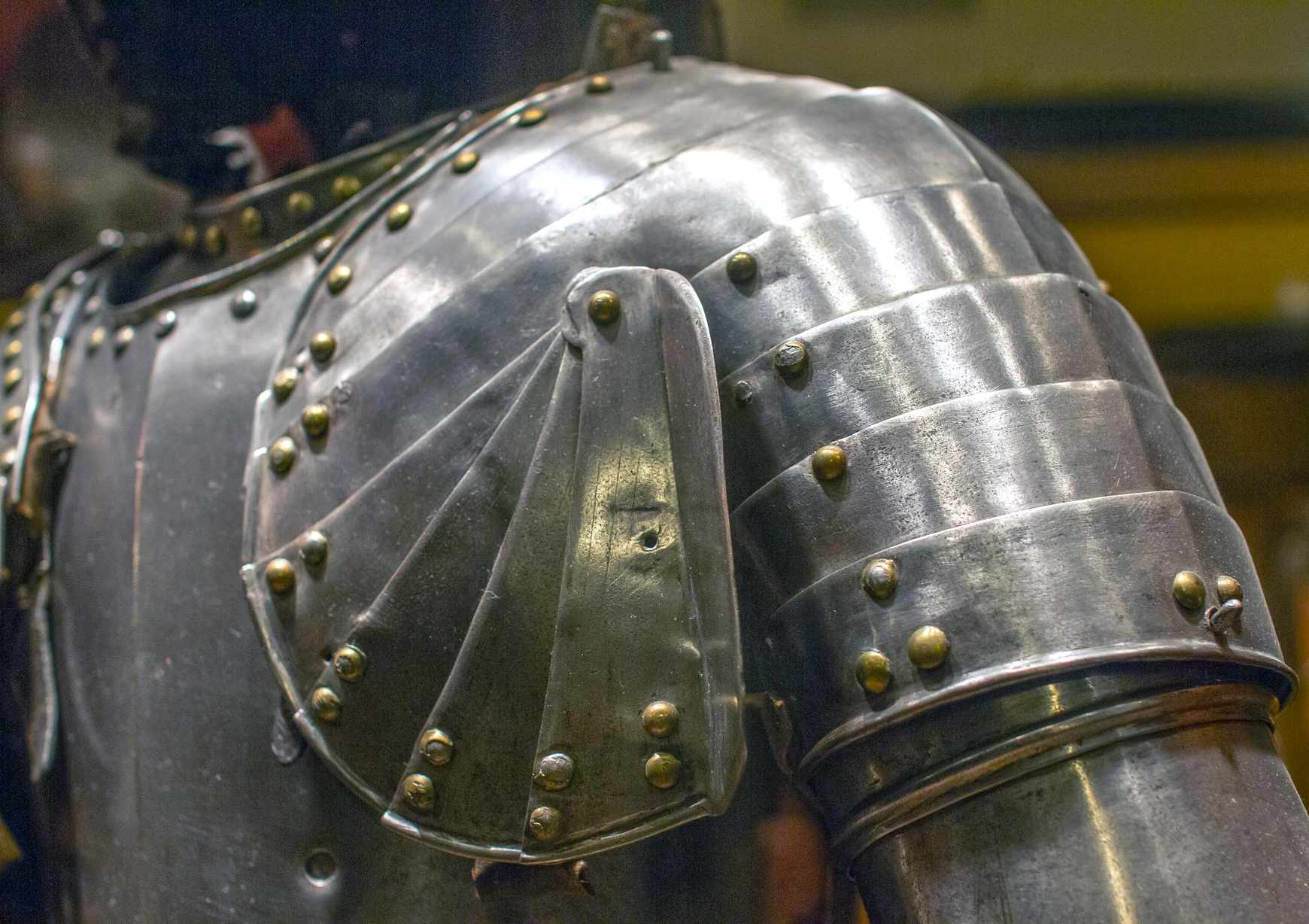
    The pauldron was an integral aspect of plate armor. It was a kind of shoulder and upper arm protection for soldiers. Protecting the wearer’s chest and head, pauldrons remained an integral part of plate armor throughout the Middle Ages and the Renaissance. It was developed in the 15th century to replace the smaller spaulders.

    buy finasteride online https://sballergy.com/wp-content/uploads/2024/10/jpg/finasteride.html no prescription pharmacy

    Because unlike pauldrons, the armpit was exposed while wearing spaulders. A limited number of pauldrons extended to encompass not only the armpit but the upper back and chest as well.

    History of Pauldron

    Shoulder Armor in the 13th Century

    Attempts to better protect the shoulder region of the knights led to the invention of the first shoulder armor around 1275. Ailettes were the first armor specially created for this.

    They were fastened to the breastplate with leather straps and intended to cover the shoulder and neck, although they were not especially sturdy and frequently slipped in combat.

    Pauldron armor

    By the end of the 1300s, shoulders were covered with scales or transversely joined laminar plates to enhance the ailettes. One example of the latter is called lorica segmentata (derived from lorica hamata) which was popular among Roman legionaries.

    Used first around 1270, this design was already pretty similar to the spaulder. However, even this evolution was inadequate, since the bottom of the arm still remained exposed when the arm was lifted to attack.

    buy fluoxetine online https://sballergy.com/wp-content/uploads/2024/10/jpg/fluoxetine.html no prescription pharmacy

    Pauldron in the 15th Century

    From the 15th century forward, the front and back of shoulder armor were widened to better shield the wearer’s armpits. Thus, the first pauldron was designed. These widened extensions were known as the rear and front wings.

    The first pauldrons were made of a single piece of plate. But they quickly gave way to more flexible versions that provided better freedom of movement. The front wing that led to the chest was the most crucial element of a pauldron. It was common practice to experiment with a variety of widths and lengths for the front wings.

    buy symbicort inhaler online https://sballergy.com/wp-content/uploads/2024/10/jpg/symbicort-inhaler.html no prescription pharmacy

    A magnificent plate armor of the German Pienzenau family with a pauldron and a round rondel, c. 1550, from a tomb in Lower Bavaria.
    A magnificent plate armor of the German Pienzenau family with a pauldron and a round rondel, c. 1550, from a tomb in Lower Bavaria.

    Since the lance was carried in the armpit region with the right arm, the wings on the right arm were often thinner, shorter, and cut concavely.

    This was because a large pauldron would have hindered the movement of the weapon arm. On the other hand, they were substantially longer and broader on the left arm since this side was shielded and not used for carrying weapons.

    Another part of the pauldron was the rondel and besagew. They were specifically developed for the pauldron to protect the armpit (rondel) and steady the jousting lance (besagew). They could be moved around to cover the gap between the armpit and breastplate. They also came in various shapes and sizes.

    The rondels started out square and lobbed, but were later shaped into disks. They stayed as part of pauldrons until the late 16th century. When lances fell out of favor about 1580, their absence led to a gradual enlargement of the front wings at the locations that had been shrunk to accommodate the lances.

    When the aventail was no longer worn, the back wings of a pauldron enlarged to absurd proportions. On Italian armor, they became so big that they overlapped at the rear to reinforce the rather weak back portion of the armor. The Italian armor also included a small and narrow frontal wing.

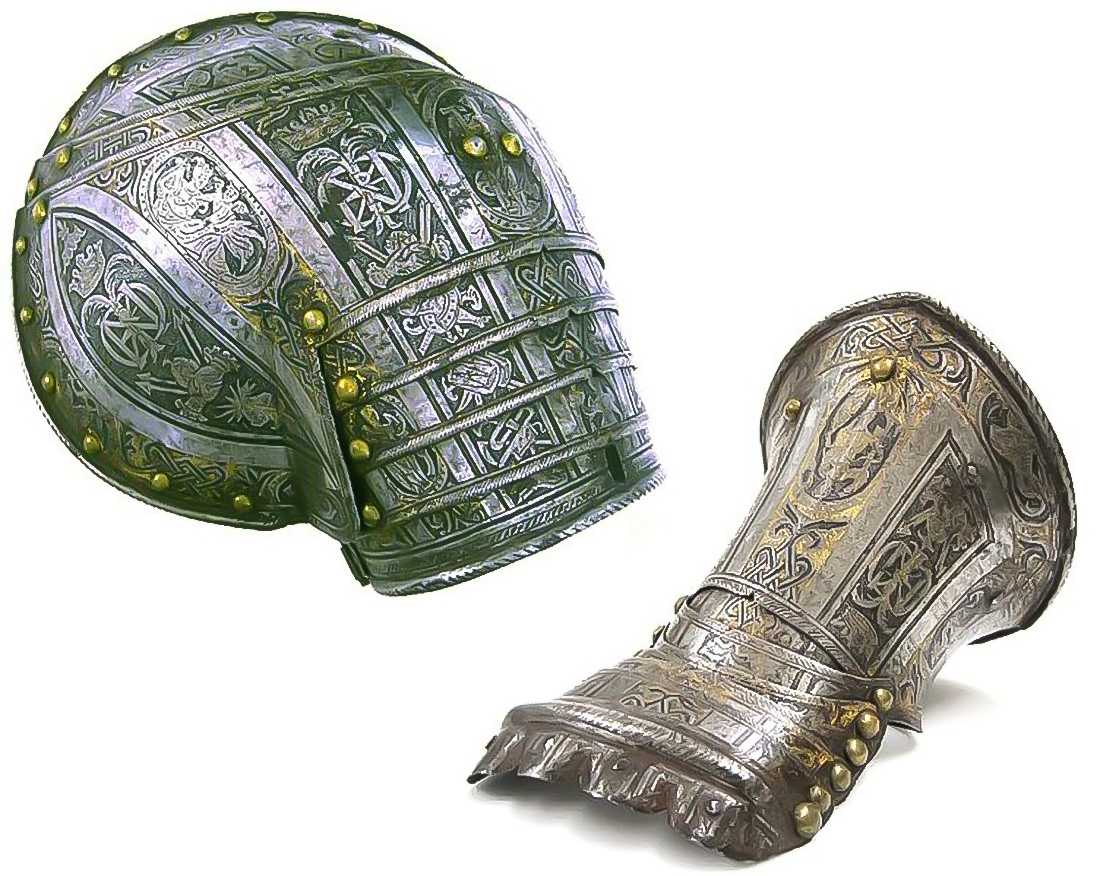
    Pauldron and gauntlet of Manfredi of Faenza, c. 1580.
    Pauldron and gauntlet of Manfredi of Faenza, c. 1580. Victoria and Albert Museum, CC BY 4.0.

    The research suggests that this was because Italians disliked movement restrictions brought on by their preferred fencing technique.

    For instance, the Italian lansquenets, who are known to wield large swords like spadone, did not wear pauldrons. They rather placed a protective attachment on the gorget (a steel or leather collar around the throat), which protected the armpits, shoulders, and upper half of the arm.

    There was a clear distinction between noble and mercenary armor during this period. While mercenaries favored the above design, nobles persisted in perfecting their pauldrons.

    Once tournaments rolled around, the pike and the lance were once again a menace to the knights. Their shoulder armor could be destroyed or badly damaged with a single blow from the long sword or a war hammer.

    The solution was to start attaching vertical armor to the edges of the wings. They came in lower and higher forms, and some of them extended over the shoulder. They deflected spearpoints and other projectiles from attacks.

    Pauldron in the 16th Century

    The pauldrons with vertical wings gradually faded away again by the middle of the 16th century. The forewings were now mostly above the shoulder. In most cases, the pauldrons were fastened to the gorget; in others, they were secured to the iron shoulder straps or the pauldron straps.

    In the 16th century, additional shoulder pieces were employed to significantly reinforce them for jousting armor. By screwing on an additional second pauldron, they were greatly strengthened. And they protected not just the shoulder but also the left side of the helmet, the face, and part of the chest. The right shoulder was once again smaller to make room for the lance.

    The elbow caps on the left arm were expanded significantly, and sometimes even a second cap was put on, known as a double cap. The left side of the plate armor, including the left pauldron, was fortified more often than the right since that’s where the opposing lance tended to strike.

    The existing caps were expanded by broadening their top edge since they were fairly small to begin with. Some of these caps were so large that they went over the top portion of the arm. Armor destined for jousting tournaments often included these extraordinary reinforcements.

  • Did People Really Live to an Average Age of 35 in the Middle Ages?

    It’s a common saying or tale that’s told over and over again: “People died young in the Middle Ages!” Alternately: “You would be an old man in the Middle Ages at the age of 40!” The average life expectancy of a medieval man is often mentioned in both popular and academic works, as well as in schoolbooks and pedagogical materials on medieval life. Somewhere between 33 and 50 years for males and 25 and 40 years for women is often cited as the average lifespan for Middle Age people; however, this range may vary greatly, as seen by a cursory examination of the available data. And it is unclear not only how these numbers were compiled but also whether they apply to the early, high, or late Middle Ages, to a certain location, or to a specific socioeconomic group.

    How Long Did People Live in the Middle Ages?

    Monks and nuns of the Middle Ages had far higher life expectancy statistics.
    Monks and nuns in the Middle Ages had much longer life expectancies. Medieval monks in a beer cellar, by Joseph Haier (1873). Source: Wikimedia

    The “Middle Ages” are now to be interpreted as “the dark, backward, unhygienic, unenlightened period before modernity,” when people’s lives were short and difficult, full of sickness and filth, and dominated by a foreign church and ruler. But this cliche has been disproven many times. What can we say with certainty about the average lifespan in the Middle Ages?

    No, you did not suddenly begin getting gray hairs at the age of 20. A person who made it to maturity could expect to live for a long time beyond the age of 35 during the Middle Ages.

    In the 15th century, the median age of the French infantry was 32, and 51 percent were 31 or older. As usual, we know very little about the lives of the poor and working classes of the Middle Ages. Their birth and death dates, as well as the number of children they produced, are unknown. Only by chance do things about people’s lives in the Middle Ages come out in directories of landlords, chronicles, and other written sources.

    But famous names are an exception to this norm. To give a rather arbitrary example, Charlemagne lived to be 66 or 67 years old, while his biographer Einhard lived to be about 70. The Flemish poet Jacob van Maerlant lived for approximately 60 years. It is estimated that the Holy Roman Empire bishop and scholar Albertus Magnus lived to be 80, the saint Hildegard von Bingen to be 81, the author Christine de Pizan to be at least 65, Eleanor of Aquitaine to have perhaps died at 82, and the Nuremberg master builder Endres Tucher to have died soon after his 84th birthday.

    On the other hand, it is also easy to name instances of renowned people’s children who died at a young age themselves, whether in puberty or youth. So, what do these numbers suggest? Did people really die young or only live to an average age of 35 in the Middle Ages?

    Life Expectancy From the 13th to 18th Centuries

    The Australian mathematical statistician Henry Oliver Lancaster looked into the lifespan of English aristocrats from the year 1200 to the year 1745. He determined the life expectancy of individuals who died of old age or sickness by omitting those who died through violence, accidents, or poison. A 21-year-old in the 15th century had a minimum life expectancy of 69 years. Citizens between the ages of 16 and 60 were eligible to serve in the militia, meaning that all adults up to that age were deemed physically and mentally capable of participating in military service.

    Henry Lancaster compares how long people have lived across different time periods:

    1200–1300: 43 years, 1300–1400: 24.5 years, 1400–1500: 48 years, 1500–1550: 50 years, 1550–1600: 47 years, 1600–1650: 43 years, 1650–1700: 41.5 years, 1700–1745: 43 years.

    The Factors That Affected Lifespan in the Middle Ages

    During the Middle Ages, most deaths occurred in three age groups: Young children (0–5) from childhood diseases, young adults from war or childbirth, and the elderly (60+), who lived to an age that was considered old according to the Bible’s lifespan of 70 years, as a historical source. The medieval people who lived to the age of 25 were not old, but they were a group for the most unpredictable factors: war and childbirth deaths.

    In common with other pre-modern nations, medieval people had little medical expertise and a high mortality rate overall. At adolescence, life expectancy started to differ between the sexes, despite continuing to rise with age. When boys reached the ages of 15 and 16, life expectancy was estimated at 60 to 80 years. However, mothers (especially the girl-mothers) were at increased risk for difficulties during delivery. Future King Edward I was born to Henry III (1207-1272) and his 16 years old bride Eleanor.

    Painting by Rita Greer, depicting the Great Plague of 1665 in London.
    Painting by Rita Greer, depicting the Great Plague of 1665 in London.

    Natural calamities and illnesses like the Black Death significantly reduced the life expectancy of the medieval people, yet certain individuals, like the Doge of Venice, Enrico Dandolo (1107–1205), lived to be 90 years old and commanded the Venetian navy.

    Just like today, a person’s lifespan in the Middle Ages was affected by a variety of factors, including their environment, genetics, diet, health, and access to medical treatment, as well as their socioeconomic level. According to the Nuremberg City Library archives, a Middle Ages citizen, a stonemason, lived in central Europe from the time he was 68 until his death in 1595. Monks and nuns of the Middle Ages, for example, had far higher life expectancy statistics than the general population since they did not rely on landlords for hard physical work. So, they were able to live pretty longer than other citizens.

    The Reason for the Short Lifespan Estimations in the Middle Ages

    The truth is that the average life expectancy in the Middle Ages actually says little about the actual age of death of a large portion of the population, the expected or achievable age, or the distribution of the average age.

    Because child mortality rates in medieval times were quite high, they dragged down the overall life expectancy average. 

    This calls for statistics, but due to a lack of data, accurate statistics cannot be generated. In principle, most medieval individuals could indeed pass away by age 40, given that this is the median lifespan (give or take a few years). In reality, however, there is a much wider variation: While many medieval children died as infants due to illness, malnutrition, accidents, and other causes, another not insignificant number lived to a ripe old age at this time.

    The high infant mortality rate, which was mostly attributable to illnesses or a lack of medical knowledge and treatment, an improper or insufficient diet, poor cleanliness, delivery problems, and sudden infant death syndrome, was a key factor in the fabrication of these short lifespan statistics for the Middle Ages. According to the estimations, up to 40 percent of children died before they reached puberty during the medieval period, and another 10 to 20 percent died within their first year.

    However, if one made it through their youth unscathed in the Middle Ages, their chances of living to be 50, 60, or even older were not terrible. But threats to human safety from things like violence, war, disease, starvation, and accidents persisted. Medieval women had to deal with the added stress of having many children, while males had to contend with the risks of strenuous manual work, both of which might drastically reduce their lifespans relative to modern times. Today, smoking, cancer, cardiovascular disease, and diabetes are only a few examples of the many contemporary risk factors that either have little impact or none at all on our lifespan.

    When Was Someone Considered Old in the Middle Ages?

    People living all the way to retirement age or a greater old age were not uncommon in the Middle Ages. Depending on the time period and the historian, the phases of medieval life were defined in various ways. However, in general, a person was regarded as an adult (adultus) from the ages of 21 to 40, a “mature” (maturus) from the ages of 41 to 60, and an elderly man from 61 and beyond (senectus).

    Thus, the perception of old age and young age was pretty similar in the Middle Ages to what it is today.

    Many teenagers commonly took the lead in combat throughout the Middle Ages, and 25 was considered a mature adult, typically with a family and responsibilities. It was no surprise at the time that William the Conqueror invaded England in his late 30s. Since it does not take into account things like deaths from sickness, the average life expectancy might be deceptive. A longer life expectancy of 60 years includes more elderly individuals, but also more children who live beyond the age of 5.

    Due to the lengthy apprenticeship and journeyman’s time required, few urban craftsmen would have been able to earn the master’s title and open their own workshop before the age of 30 or 40. Ages 40 and up had traditionally been seen as the cutoff for serious consideration for public office because of the inherent “maturity” that comes with it. However, the exception proves the rule, as typically only those who were considered “worthy” were granted any office role.

    So, in the Middle Ages, people who were 40 were not considered “old,” even though a hardworking farmer, craftsman, or day laborer might have thought otherwise. 


  • What Trades Did People Practice During the Middle Ages? 

    A wide variety of occupations existed in the Middle Ages, as evidenced by not only administrative and financial texts, but also paintings, sculptures, stained glass windows, and illuminations (or sumptuous books). These occupations ranged from slave and serf labor provided to the domestic or salaried work of servants and companions, through the chores provided by peasants to their lords. The innovations that sprung from the trades of the Middle Ages set the beating heart of society in motion, driving it forward in its never-ending quest for new knowledge and methods of exploration.

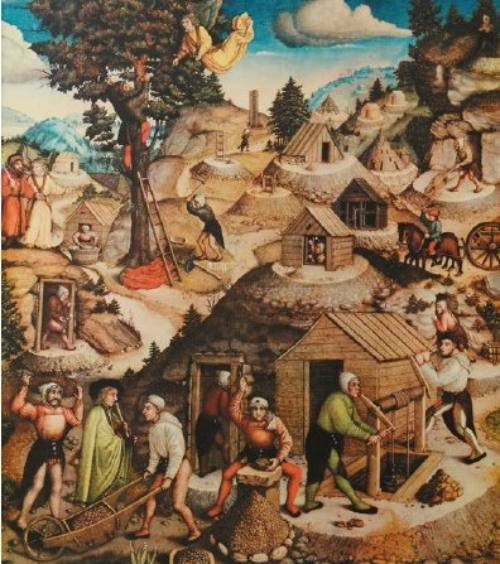
    Miners

    medieval miner

    While it was disregarded in antiquity, sea coal was mined from English beaches in the early Middle Ages. Open pit mines or somewhat shallow galleries are still used for the extraction of rare earth coal. Diggers excavated the mine, carpenters cut timbers for the tunnels, and pickers mined the coal vein. Slaves and inmates were put in charge of the task due to the inherent dangers of the work (landslides, floods, a lack of oxygen, etc.).

    The mines could only be opened by the wealthy and powerful (these were the “lords” of the mines from monks to rich merchants). Demand for metal increased in the 15th century, leading to the establishment of new mining communities all over the globe. Since the invention of water suction and air pumping, the job had become increasingly desirable. Between the years 1460 and 1530, European ore output grew by a factor of four.

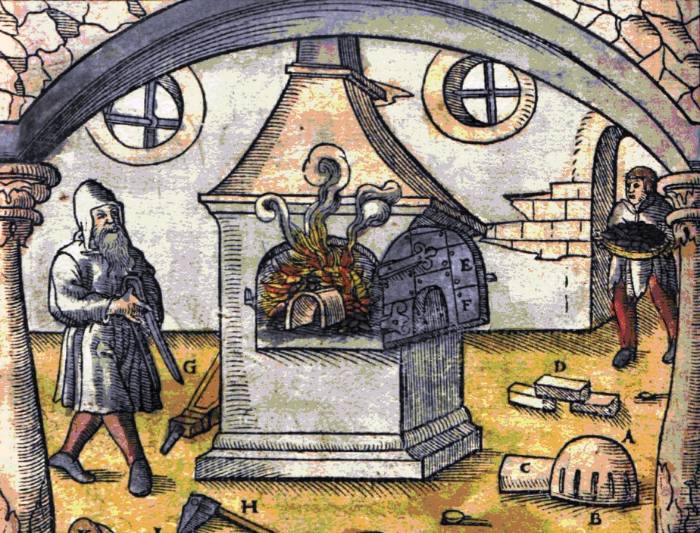
    The mined ore was broken up with a mallet, washed by hand with water, and then carried in baskets to the smelter, where it was combined with lime and cooked at a high temperature in the furnaces, with the impurities pouring out through an aperture on the surface of the molten metal.

    Bloomery or Catalan furnaces were employed before blowers and blast furnaces made it possible to completely liquefy the metal. Their distinctive form resembled a half-buried hemispherical cap. Experts in the iron industry used purging furnaces to remove the carbon from the cast iron.

    Iron cast in plates or sheaves was sold to blacksmiths exclusively by ironmongers, who also served as forge masters.

    Blacksmiths

    medieval Blacksmiths
    Medieval forge.

    To forge and shape metal, blacksmiths used simple tools and equipment such as anvils, stoves, bellows, pincers, and hammers in cramped workshops. Charcoal was burned in the forge’s refractory earth construction, and the fire was maintained by bellows at its sides, which were pumped by apprentices.

    Blacksmiths had high social standing in rural areas since they supplied weapons, armor, tools, household utensils, plowshares, sickles, and shovels, as well as shoed horses’ feet. Locksmiths installed and repaired locks, forged grails, chandeliers, and sometimes bells, but they also made clocks until clockmaking was attested as a specialization in 1483.

    The gunners created the terrifying iron crossbow, while the cutlers fashioned blades and sharp weaponry.

    Potters, woodworkers, and salters

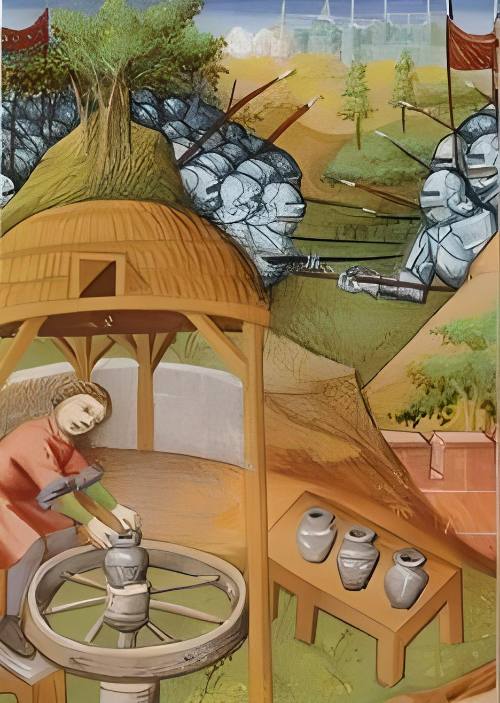
    middle ages potter

    Numerous potters worked in rural areas throughout the Middle Ages. They often worked in families or small, rather impoverished artisan groups. In the 1st century AD, when there were no ovens, clay was shaped and baked outside. It wasn’t until the 9th century that these potters were widely used and output increased significantly throughout Europe.

    Villages devoted only to pottery production sprung up over the world in the 11th, 12th, and 13th centuries; these settlements were situated on the outskirts of woods in order to have access to the wood needed for cooking. The carpenters and woodworkers worked together to construct half-timbered homes and shingle their roofs, while the woodworkers manufactured furniture such as tables, benches, and chests. That includes those who create clogs as well.

    Due to its importance in the preservation of meat and fish and in the manufacturing of butter and cheese, salt production offered a livelihood for many Middle Ages people. It was harvested from salt marshes through evaporation. There were “salt houses” in the north of Europe, where salt was extracted from saltwater by boiling it in huge pots.

    Stoneworkers and glassworkers

    main image.jfif

    The stone was ripped from the cliff sides by the quarrymen using picks, then smoothed with hammers, cut with scissors, and polished with rasps. Since the stonecutter was paid per unit, they would engrave their marks on every piece. Stones were brought to the building sites by boat or cart.

    Artists who worked in stained glass were one subset of the glassmakers, another was the glass artisan whose workshops were often located in close proximity to woods. Large amounts of wood were needed for the furnaces, and the work was difficult, hazardous, and required great expertise due to the high temperatures. While glass had been used since antiquity, it wasn’t until the 14th and 15th centuries that it really took off throughout Europe and beyond. Silica sand and beech ash made up the much-needed “glass paste.”

    Greased paper window
    A greased-paper window on a house built in the early 19th century. (Image: Public domain)

    The history of glass is not a smooth one. Windows were originally crafted from materials such as parchment, greased paper, or mica. The wealthiest residents eventually upgraded their windows from oiled paper and parchment to glass panes.

    Paper was often used for windows in ancient China, Korea, and Japan, but it was the Romans who introduced glass windows about the year 100 AD, and it didn’t become more popular until much later in the early 17th century. In the 13th century, the first glasses were created. It was about the year 1320 that the term “glass” began to be used to refer to the drinking vessels.

    Developments in the glass business around the end of the Middle Ages included the invention of the blowing rod, or “punty,” and the coloring of the glass before cooking. In the 14th century, Venice emerged as a major rival to Bohemia as a glassmaking hub.

    Builders

    Builders
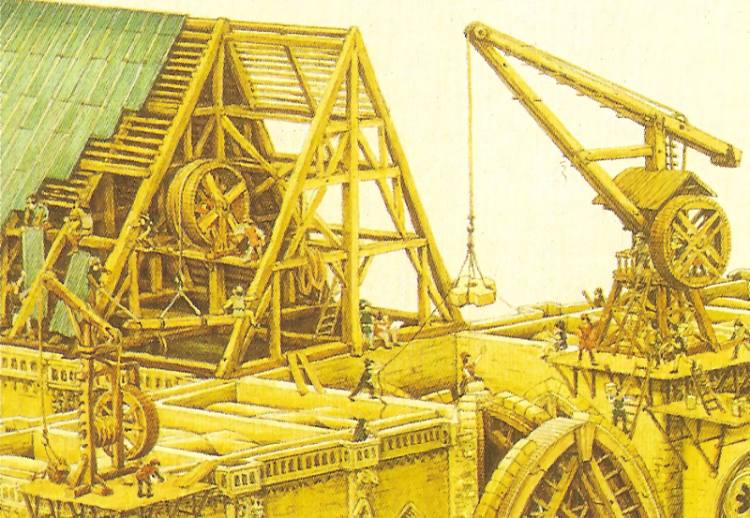
    Cathedral building in the Middle Ages.

    The building industry, which included tile makers, carpenters, bricklayers, pavers, and plasterers, grew as cities expanded and rulers and clergy became wealthy enough to construct palaces and churches. Over the ages, numerous new structures were constructed, ranging from the simple cob homes of laborers and craftspeople to the luxurious hotels of the affluent. The enormous churches were built over many years.

    The building of Westminster Abbey in 1253 provides some indication of the variety of skilled laborers that would be required in the Middle Ages. There were a total of 59 skilled tradespeople tallied, including 39 stonemasons, 13 marble artisans, 26 masons, 14 glass workers, 4 plumbers, 32 carpenters, 19 blacksmiths, and numerous unskilled employees.

    To be sure, the medieval laborers who built the cathedrals had a high level of expertise and were compensated accordingly. The building elite constituted the “upper” class of the construction industry, whereas the “lower” class masons only laid the stones.

    The master builder (the term “architect” did not exist in the Middle Ages) was an experienced mason who had the expertise to lay out the blueprints and locate the ideal spot for the building’s foundation. A compass, a graduated ruler, a staff, and a pair of gloves were among the honorifics bestowed upon them. The installation of the stained-glass windows set with lead needed the expertise of glassmakers who were trained in the craft.

    In the Middle Ages, medieval masons employed less framing and instead created makeshift wooden pathways that were supported by rafters placed into bolt holes so that the building could be occupied during construction. Who knows how many mishaps and fatalities could be traced back to this precarious approach.

    At the tail end of the Middle Ages, cranes were often used in addition to a system of ropes and pulleys to lift the stones. There was not much change to the tools: a serrated hammer, a hammer for the stone, a plumb line, a trowel, and a square. The construction crew lived in a makeshift shack called a lodge, where they stored their belongings and coordinated their daily efforts. This practice resulted in the “statutes of the lodge” which masons began to follow it. Masons still use the term “lodge” in their constitutions and statutes today. The construction sites often dictated the schedules for all the various professions.

    Specializations in the Middle Ages

    In the tool industry, each trade had its own highly specialized craftspeople. Some of them made large scissors used to shear woolen fabrics. Traveling grinders were in direct competition with those using knives or brute force. The lorimers worked in tandem with the saddlers, producing components of horse harnesses such as spurs, stirrups, mounts, and anything in between. Some of them specialized in plate armor while others produced chain mail for horses.

    The wheel rims were reinforced by iron hoops installed by the wheelwrights. Nails and locks were forged by the smiths, while old metal artifacts were recovered and recycled by the ironmongers, who were the forerunners of our modern scrap merchants.

    Pewterers specialized in making decorative objects like mirrors and bells, as well as functional items like plates and cups. In the 13th century numerous other metals, including copper and bronze, were also put to use. Belt buckles and other common household items were crafted by copper foundries and molders. Copper was often used in candle holders and lamp bases created by skilled lamp builders.

    The copper and bronze cookware came from boilermakers. Metal, from which plumbers took their trade name (from Latin plumbum, “lead”) was shaped by them for use in drainage systems, especially for gutters. 

    Attachers who created tiny nails used to adorn belts and harnesses, and the button makers who fashioned metal rosaries were just a few examples of the many specialized medieval artisans. The first button makers guild was formed in 1250 in Europe. The metalworking industry was fragmented into many tiny, often family-run businesses, and its members did not get much wealth with the exception of armorers. True artists, the coiners and goldsmiths were much sought after in both religious and secular courts.

    Millers

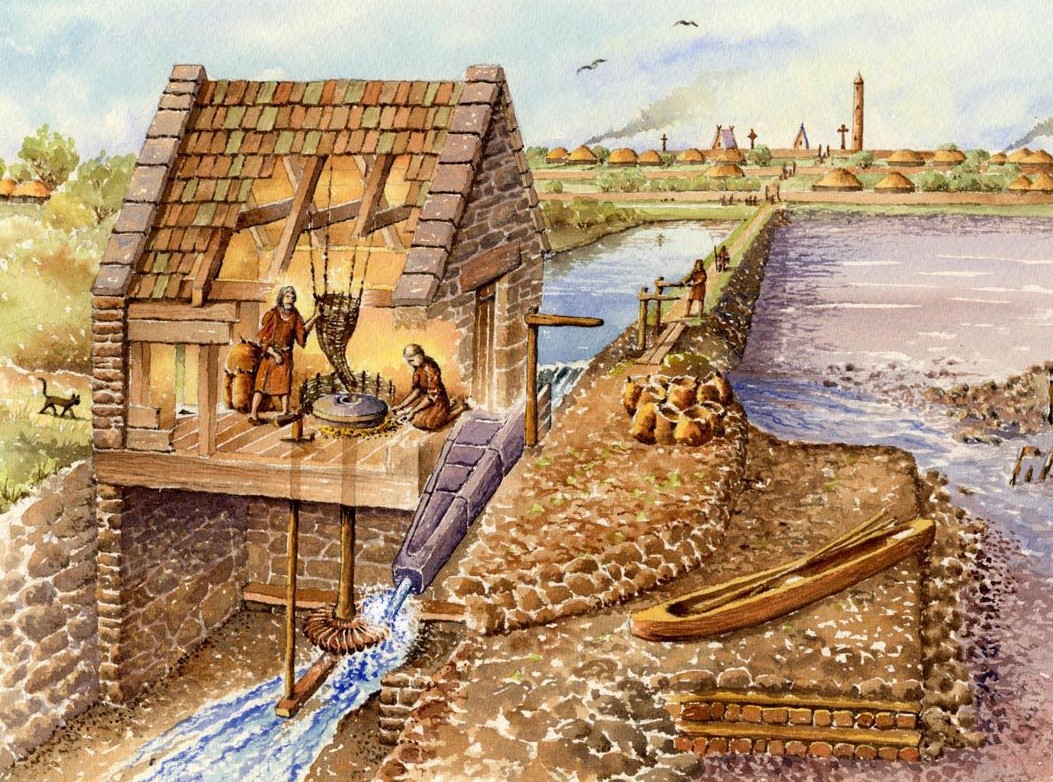
    middle age mill
    (Artist unknown)

    Mills were iconic features of medieval landscapes; they employed the power of water to turn a vertical wheel mounted on an axis, which in turn turned a horizontal wheel attached to the stones to grind. Although water mills were originally used to grind grain and olives, their purpose and design evolved over the 12th century. It was used in a mill where cloth, iron, and paper were worked into shape.

    It’s possible that the windmill has Asian roots. It’s a wooden structure with a metal base and three branches for support that houses the machinery and the grinding stones. The millers were notorious for their rapacity, so the lords often demanded a tax from the peasants who brought their grain to be ground.

    Codes and regulations controlled the vast array of artisanal and commercial endeavors that flourished throughout the Middle Ages, and their diversity never fails to astonish us (the word “artisan” comes from the Italian word “arte” which implies a turn of the hand). Throughout the Middle Ages, men and women carried on and perfected the inherited tradesmanship that had been passed down through apprenticeship.

    Food professions in the Middle Ages

    Bakers and pastry chefs

    In the countryside, every medieval household baked its own bread in the lord’s public ovens, but in most cities, where bread manufacture was monopolized by many different industries, this was strictly prohibited. Bakers had to work even on Sundays, and they couldn’t bake special cakes reserved for other guilds according to the statutes. Pastry chefs with their shops in the 13th century produced treats, cheesecakes, waffle-like pastries, or scalded pastries.

    Furthermore, they dominated the market for meat and fish pies, which were all the rage in Medieval Europe (salmon, eel, pork fish, woodcock, lark, or quail pies). Street vendors sold their medieval wafers to passers-by on the sidewalk.

    Butchers

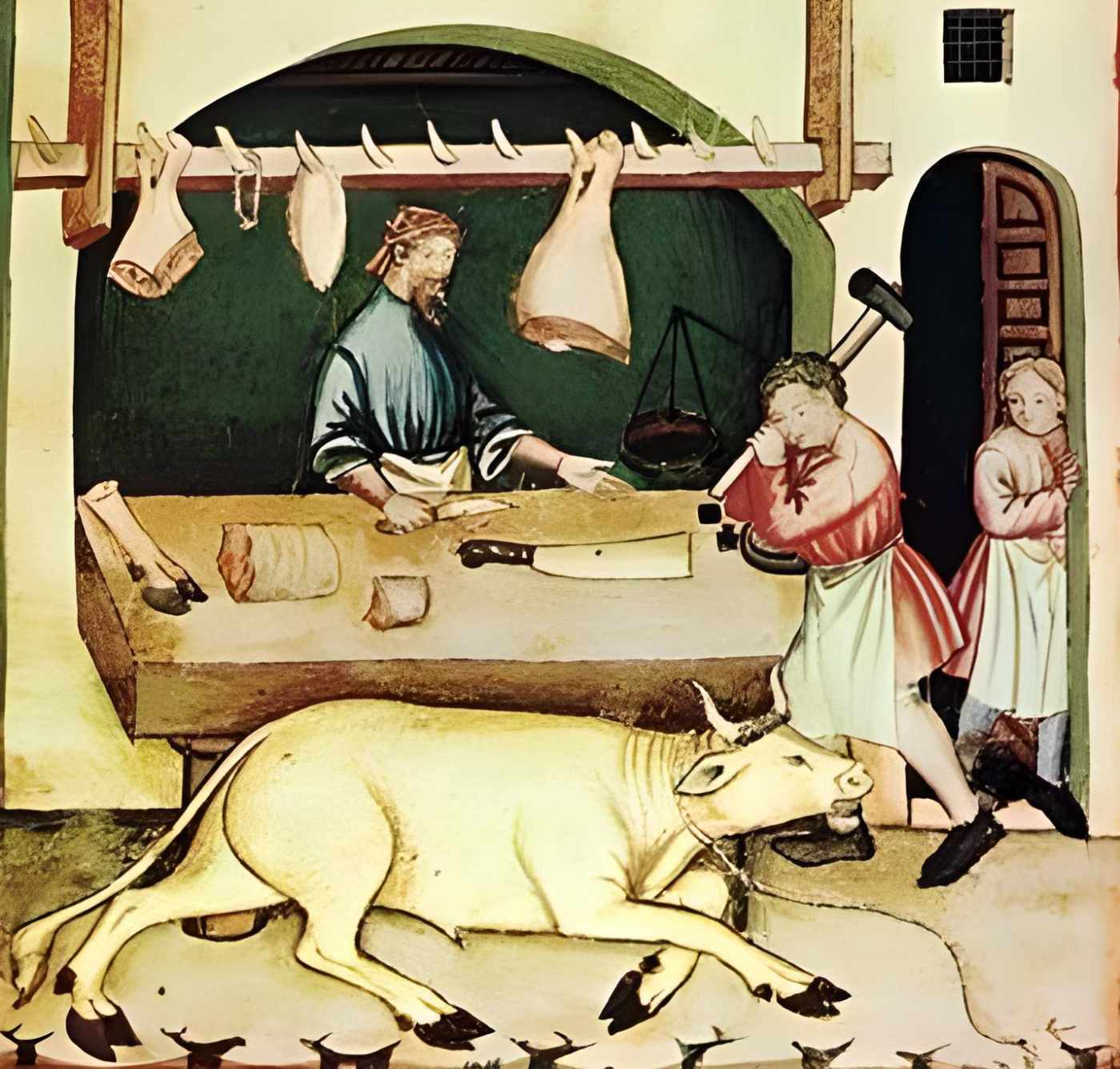
    What were the butchery, meat, and sanitary rules in the Middle Ages

    People living in medieval cities ate a lot of meat, which made butchers successful despite their unsavory reputations owing to the street killing of animals and the resulting garbage. They cut lambs, goats, rabbits, chicken, goose, and partridges, while selling beef, fowl, veal, offal, and cold cuts.

    Back in the 1300s, spice merchants helped customers disguise the flavor of rotten or too-bland meat. Street sellers were known to sell fruits and vegetables in addition to cheese, for which they were paid extremely badly.

    Fishmongers

    Since the late 1200s, Paris was home to three distinct groups of fishmongers: the King’s fishermen, freshwater fish merchants, and seawater fish merchants. During the time of Lent, many medieval people bought fish, especially herring and salted cod (salt allowed the preservation of fish as well as meat). Fish markets were the generator of waste and bad smells that the townspeople often complained about.

    Innkeepers, taverners, hoteliers, and cabarets

    Inns served as both homes and restaurants for weary travelers and pilgrims throughout the Middle Ages. These inns provided overnight accommodations and were distinguished by a sign. To draw in tourists or pilgrims, many inns were called after saints like St. James, St. George, and St. Catherine, or by catchy acronyms like “the hostelry of the angel,” “the three wise men,” “the red hat,” “the crown,” “the dish,” “the mermaid,” etc. Women, often widows, ran several of these lodging establishments. Medieval business deals and contracts were often struck at such locations.

    Cabarets offered wine in pewter or tin cups on the roadside counter of their stall. The taverners sold wine by the barrel or the pitcher.

    Crafting professions in the Middle Ages

    Tanners

    The tanneries’ foul odor was very disturbing in the Middle Ages. That’s why they were often located out of the ramparts. The skins were given a good scrub under running water, then shaved and conditioned with oil and alum. Tanners supplied the saddlers who made the leather coverings for the saddles, cobblers, glove makers, and bookbinders. 

    Cobblers got their name because they specialized in making shoes out of Cordovan leather, which was reserved for the upper classes. The glove makers employed exceptionally quality leathers such as deer, hare, or sheep skins, while the furriers sold furs from the Nordic nations.

    The cobblers owed their name to the Cordovan leather with which they made the most beautiful shoes for the aristocracy, while the poor were content to call upon the cobbler. The glove makers used very fine leathers: kid, deer, hare, or sheep skins, while the shoemakers sold furs from the Nordic countries.

    The rise of secular and religious bureaucracies, as well as the establishment of universities, paved the way for the expansion of the parchment industry.

    Textile tradesmen

    Fabric manufacture, including wool, was a major focus of medieval cities. Women beat the wool on racks to remove impurities and washed it in many baths to get rid of the wool grease that remains after shearing. The next steps were carding (in which the wool was put between two tiny rectangular wooden boards with handles and teeth) and spinning, both of which were common in rural areas and provided a means of subsistence for the local population.

    The weight of the spindle caused a delicate rotation mechanism, which transformed the fleece (which was ready to be spun with the distaff) into thread. Once the spool of thread was built up, weaving commenced. The process started with the warping, when the warp threads were stretched over a casement.

    Since the width of the woven pieces was restricted by vertical looms, it was not until the 11th century that horizontal looms were invented. The technique allowed for pattern production by having two workers, one on each side of the loom, sending a shuttle back and forth. The woolen fabric became unevenly grey and scratchy (it was used for horse blankets or for the poor and was called a quilt).

    It still had to be washed many times, scraped with thistle to make it felt, trimmed to get rid of any lingering knots, and finally fulled by being trampled in vats of water and sand or wine lees to get rid of any leftover oil (the fullers were a group of poorly paid workers with poor working conditions). After that, medieval tradesmen could choose to sell the wool sheets in their natural state or dye them to match the current trends.

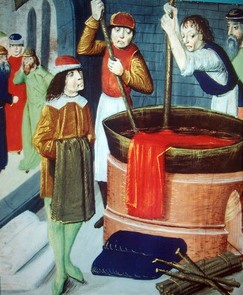
    The sheets were submerged in dye, mordant, and alum baths, and the workers stomped them. Since the blue color was rare in nature, a pastel blue offered a highly sought-after shade of blue, boosting the economies of the communities that churned it out. For the pink, brazilwood was used; for the yellow and green, dyer’s weed (Reseda luteola); for the black, walnut husk; and for the red, cochineal insect.

    Shaving the cloth again after it was colored improved its suppleness. So, in the Middle Ages, textile merchants specialized in five areas: weaving (including linen and hemp), shearing, fulling, dying, and tailoring. Cotton and linen, wool and linen, and wool and animal hair (rabbit or beaver felt) all arose at the end of the Middle Ages to create blended textiles.

    In the Middle Ages, dressmakers, haberdashers, and hatmakers constituted the bulk of the medieval fashion industry’s consumer base. Embroiderers engaged in a kind of needle painting, while tapestry weavers were responsible for the magnificent wall hangings that adorned the medieval manors.

    Intellectual and artistic professions in the Middle Ages

    barber surgeon
    Barber surgeons at work.

    The majority of medieval teachers were clergy, and the church dictated education in the Middle Ages. Schoolmasters and schoolmistresses were often laypeople, and this practice began at the end of the Middle Ages. In the university cities, the profession of booksellers or “stationers” developed in the 13th century, working alongside parchment makers, scribes, or copyists to create literature meant for professors and students. Beautiful illuminated manuscripts (painted books with decorative metals) were ordered by wealthy nobility and clergy. In the 15th century, printers began popping up in the main cities in Europe and around the world.

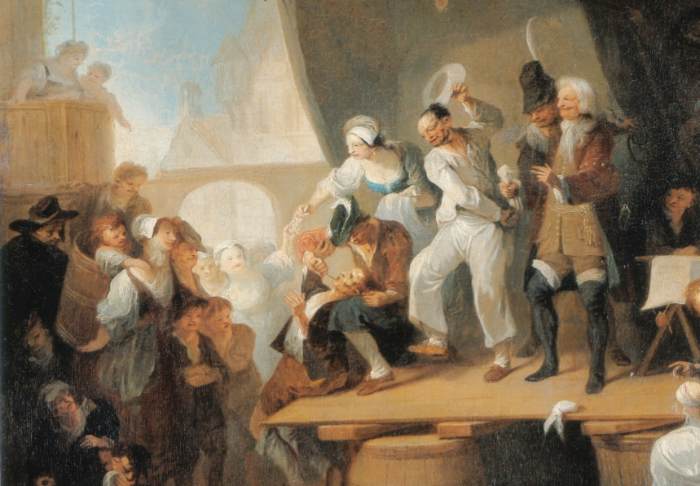
    A barber surgeon, trained via an apprenticeship, would shave patients, perform bloodletting and enemas, and use suction cups, whereas a medieval doctor, educated at a university, would simply examine the ill and prescribe a potion from the apothecary in the Middle Ages. The toothpullers, on the other hand, used big pliers to give their clients much-needed relief out in the public in full view (some even employed musicians to drown out their clients’ screams).

    The minstrels, who were both storytellers and musicians, were typically organized into a corporation with a full hierarchy of masters and apprentices but were paid badly and not given any credit for their work.

    With an eight- or ten-year apprenticeship, a goldsmith could become one of the most respected and well-paid professionals of the Middle Ages. Precious stones (ruby, emerald, diamond, rock crystal, etc.) used by goldsmiths in jewelry and silverware decoration were fashioned by lapidaries. They didn’t only make jewelry, however; they also made currency (royal coinage workshop). They were respected and powerful, to the point that no other creative field could compare.

    Because only mental abilities were deemed valuable and rewarded (with a few notable exceptions) in the Middle Ages, artisans who worked with their hands were classed together in the “mechanical” arts, and given a lesser status than the “liberal” arts such as law, medicine, or theology.

    Although most artists such as painters, sculptors, picture framers, and glassblowers learned their trade via an apprenticeship, their training did nothing to elevate them to the status of an artist. But those who carved bas-reliefs, tombs, recumbent figures, and stone sculptures for kings and the affluent in bone, boxwood, or ivory did well for themselves and were called “image carvers.”

    The carpenters were responsible for making the wooden effigies. Murals, woodwork panels, and illuminations were all crafted by the painters, and they also created the designs for the stained glass windows. Glassmakers sketched out their designs in wet chalk on enormous tables the size of the glass window, drew on the sketch in “sinopia” (red ochre), and then put the colored glass plates in place with lead.

    Apprenticeship, servants, and companions

    A young person between the ages of 12 and 16 would be sent by their parents to live and work under a master under the terms of a contract sealed by a notary public. The master (who could ask for an admission fee from the parents to pay the kid’s costs) devoted his professional conscience throughout these years of instruction, which could span anywhere from two to twelve years.

    During these years, the master took on the role of a parent, while the young lad devoted himself to labor without reluctance and to stay with his master until the conclusion of his contract, at the end of which he must produce evidence of his ability. When the evidence was excellent, it was not unusual to see a master leave his property or tools to his apprentice.

    Few young men were able to go out on their own as business owners, and most remained “servants” to the person who had taught them. People called journeymen or boy servants could be hired for a variable period of one day, one week, or one year.

    The journeymen banded together to stand up to their masters’ mistreatment, forming brotherhoods whose primary purpose was to provide aid in times of need. If tensions rose in a city, residents could decide to stage a mass exodus rather than return to work. Revolts sprang out as a result of these demands (the income disparity between bosses and employees only widened), but they were often put down violently and resulted in bloodshed.

    The world of medieval trades and professions is not without modern echoes: the hierarchy within the job, the division of labor between men and women, the inequity of remuneration and working hours, all these themes are quite contemporary.

    Documents from the Middle Ages reveal a humanity that is far from the anonymity of the Machine Age, while there were always individuals who were left out (unskilled laborers, beggars, and those with disabilities).


    Bibliography

    1. Janet E. Burton, 1994, Monastic and Religious Orders in Britain, 1000-1300. Cambridge University Press.
    2. Christopher Dyer, 2009, Making a Living in the Middle Ages: The People of Britain, 850 – 1520. Yale University Press.
    3. Jenny Kermode, 1998, Medieval Merchants: York, Beverley and Hull in the Later Middle Ages. Cambridge University Press.
    4. Mark Bailey, 1996, “Population and Economic Resources.”
  • Butchery, Meat, and Sanitary Rules in the Middle Ages

    Food safety rules are usually called into question in the wake of health problems in the meat sector, such as mad cow disease, hand-foot-and-mouth disease, and avian flu. Nonetheless, this kind of inquiry is not novel. In fact, the West has been monitoring and regulating food, particularly meat, since the Middle Ages due to concerns about the presence of unhealthy and corrupt meat. Media coverage of meat crises sometimes draws parallels to the “medieval” era, but what about the real hygiene standards of the actual Middle Ages?

    Laws to Regulate Butchery in the Middle Ages

    Avoiding the potential dangers associated with consuming meat was a top priority for the ruling classes of the medieval western world. But even though these threats were often misdiagnosed or not taken seriously in other ways, they caused a lot of worry and anxiety.

    Medieval baker punished for breaking the rules.
    A medieval baker punished for breaking the rules.

    A complex and fruitful legal system was the end result of this. Lords, municipalities, and even the monarch himself, on rare occasions, issued decrees to maintain public peace and safety. Rather than being only suggestions, they were actual “laws” that had to be discussed (sometimes bitterly) and came with enforcement mechanisms like checks and balances and penalties for breaking them.

    Most medieval texts on meat distribution were written between 1200 and 1500 AD.

    The Charter of Mirepoix, enacted in 1303 AD, is a prime example of the kind of meat regulation that was common in the Middle Ages. The fact that it was signed in front of the city lord, notaries, law professors, city officials, and all the butchers of the city shows that King Philip IV of France knew about the legal, economic, and political issues surrounding food.

    This charter was not even exceptional. Most medieval texts on meat distribution were written between 1200 and 1500 AD. In the urban centers of southern France and Italy, it was mostly the work of municipal leaders to standardize the sale of meat. Legal matters were taken up by medieval guilds in the northern hemisphere, such as the Parisian butcher’s shop, whose bylaws were enforced upon all butchers in the city.

    From the 13th century forward, medieval European society placed a greater emphasis on food law, which was formed in a disjointed and ad hoc fashion by a variety of means, including conventions, ordinances, capitulations, charters, laws, etc. Sometimes, the enforcement of this legislation was harsh.

    Animal Products That Were Forbidden

    What were the butchery, meat, and sanitary rules in the Middle Ages

    While Christians have not been bound by the dietary taboos that Jews and Muslims observe, there are still times when it’s best to steer clear of animal products for the sake of public health. People in the Middle Ages often consulted Greek and Roman historians like Hippocrates and Galen to help them figure this out.

    In the Middle Ages, animals were the target of two legal restrictions. The first involved goats, which had more to do with making dairy products than anything else. Goat meat was devalued in the cities because, according to Hippocrates, it was thought to spread illnesses like fever and cholera. Despite health concerns, the selling of kids (baby goats) was sometimes allowed. And this was justified by the prevailing desire for its flavor.

    Horse meat was the second kind of meat that was never allowed in the Middle Ages. The Church viewed its consumption as a primitive and paganic act, but the common man saw the animal as a work buddy helping to plow the fields or even as a confidant. Therefore, the practice of eating horse meat gained a bad reputation during the era.

    So, butchers could sell sheep, cattle, and pork meat from their shops as long as the meat was “excellent, useful, and not sick,” according to Middle Ages meat consumption charters.

    Since medical advancement was so slow during this period, any and all prohibitions could be instituted at the first sign of a disease. Disease transmission from animals to humans was a major issue for medieval man when it came to the safety of food sources. People went to great lengths to prevent illnesses like leprosy (from Leptospira bacteria).

    Medieval Practices for Slaughter and salS

    The slaughtering of animals was subject to some of the most stringent hygienic regulations in the Middle Ages with regard to meat. Among the various regulations, one that stands out is the requirement that animals enter the city on foot and go through sanitary control before being butchered.

    As early as 1450, butchers in the Italian city of Verona were compelled to kill animals in their shops, albeit they were typically not permitted to do so in their homes and had to instead utilize public slaughterhouses. The administration further worked on improving the regulation by creating a physical barrier between the slaughterhouse and the market. The animals had to get to these places on their own, which gave the buyer confidence that they were in good health.

    Each animal was charged as it entered the city, with the tax system providing additional financial support for sanitary regulations. The animals were then given a thorough internal and external checkup to make sure they were healthy before being put to death. After that, butchers could still slaughter animals and sell them, but they had to follow more rules.

    The sale of any perishable item required special attention, and the meat was no exception. Due to the impossibility of storing goods and the rigidity of sales windows, butchers operated on a just-in-time, demand-driven model. These deadlines were often two or three days, or at the very latest, a day and a half, after the animal was slaughtered.

    Butchers were allowed to store freshly slaughtered meat for two days in the winter and one and a half days in the summer. Moreover, beef was not the only product that was subject to tight standards at the moment of sale; bread, milk, fish, and shellfish were all subject to similar rules. It was against the law for pork butchers and sausage makers to sell cooked meat. This was done to stop the sale of leftovers and the spread of disease.

    After Everything is Said and Done

    So, is it fair to compare any contemporary meat scandals to the butchery standards of the Middle Ages? The laws regarding the sale and consumption of meat in the Middle Ages were impressive, but there could be a significant discrepancy between theory and practice, leaving historians to wonder whether these standards were ever really respected by the medieval butchers. But the reality is that maintaining hygienic standards seems to have been a priority for medieval civilization, a concern that echoes the persistent fiction of a meat-related phobia in contemporary culture.