Tag: middle ages

  • Women in the Middle Ages

    Women in the Middle Ages

    What was the role and life of women in the Middle Ages within medieval society? Their existence varied according to age and social status, their place within the family, their role in the couple, their relationship to sexuality, and the fundamental role of motherhood. The very mystery of childbirth inspired fear in men and, by itself, justified the idea that women were demonic beings, capable of enchanting and bewitching. From young girls to grandmothers, from peasant women to nuns, including noble ladies, it is an entire world—long overlooked—that is only now being rediscovered.

    The Young Woman in the Middle Ages

    In the Middle Ages, a young woman’s life was divided into three stages: childhood, which lasted until the age of seven; youth, until fourteen; and womanhood, from fourteen to twenty-eight. After this, a woman was considered old, whereas a man was not deemed old until he reached fifty. Canon law set the age of majority at twelve for girls and fourteen for boys. Once past the dangers of early childhood, girls were still regarded by clerics as imperfect beings, little creatures devoid of reason. However, they were granted a degree of purity and innocence, which had to be preserved through strict discipline.

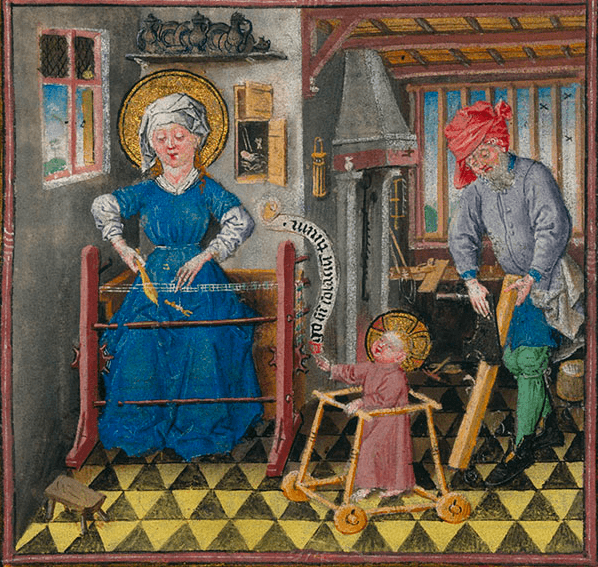
    At birth, well-born children were entrusted to a wet nurse, while poor women raised their own newborns. The baby was bathed and then wrapped in linen if they were wealthy, or in hemp if they were not. A diaper cloth was placed over this, crossed at the front. The baby was swaddled with bands of linen or hemp to keep them upright, and in winter, a small cap called a béguinet covered their head. When little girls began to walk, they wore a shirt like boys, along with a long, split robe in red, green, or striped fabric. Poor families made these from old garments. Around the age of two or three, the child was weaned— a crucial stage, as one in three children died before reaching the age of five. Poverty often led to abandonment, especially of girls.

    At seven, boys and girls followed different paths. In wealthy families, girls learned to spin with a distaff, embroider, or weave ribbons. This was also the age at which they could be offered to a monastery or betrothed. In rural areas, girls remained with their mothers, helping with household chores, farm work, weaving, and tending animals. They grew up within large sibling groups, where older children played an important role. In the 12th century, the Dominican Vincent of Beauvais advised educating girls in chastity and humility. Mothers therefore ensured that their daughters were modest, hard-working, and obedient.

    As for noble girls, they were often placed in convents from an early age, where nuns taught them reading, writing, and needlework. The jurist Pierre Dubois even suggested that they should learn Latin, sciences, and some medicine in the Middle Ages. As a result, they were often better educated than boys, who were primarily trained for war. However, the destiny of a medieval woman was focused on a single purpose: marriage and motherhood.

    Women’s Work in the Middle Ages

    Even after marriage, women engaged in many professions during the Middle Ages. In towns, they could work in trade, textiles, and food production—such as baking, brewing, and dairy processing—or as laundresses, seamstresses, bonnet-makers, washerwomen, and servants. However, their wages were significantly lower than those of men.

    In the countryside, women participated in farming, animal care, household management, spinning and weaving linen, baking bread, preparing meals, and maintaining the fire. And of course, they cared for children. While peasant women were expected to run their households, bourgeois and aristocratic women had to learn how to manage servants, acquire skills in singing and dancing, behave properly in society, and master sewing, spinning, weaving, embroidery, and estate management—especially in their husband’s absence.

    The Church viewed educated women with suspicion, emphasizing religious instruction above all. A young girl who had reached puberty was a source of fear and was closely watched by her parents. Female beauty, both feared and desired, was an object of fantasy for men. Clerics associated it with the devil, temptation, and sin, yet it was also celebrated in the ideals of courtly love, inspiring knights and troubadours alike.

    Beauty Standards

    In the 12th century, the ideal medieval woman was expected to be slender, with a narrow waist, wavy blonde hair, a complexion like lilies and roses, a small rosy mouth, white and even teeth, long black eyes, a high and smooth forehead, and a straight, delicate nose. Her hands and feet were refined and elegant, her hips narrow, her legs slender yet shapely, her breasts small, firm, and high-set, and her skin extremely pale. These beauty standards remained unchanged from the 12th to the 15th century. By the late Middle Ages, the preference for a broad forehead became so extreme that women pulled their hair back excessively and resorted to hair removal. They used various cosmetic tricks to conform to the male ideal.

    Witches

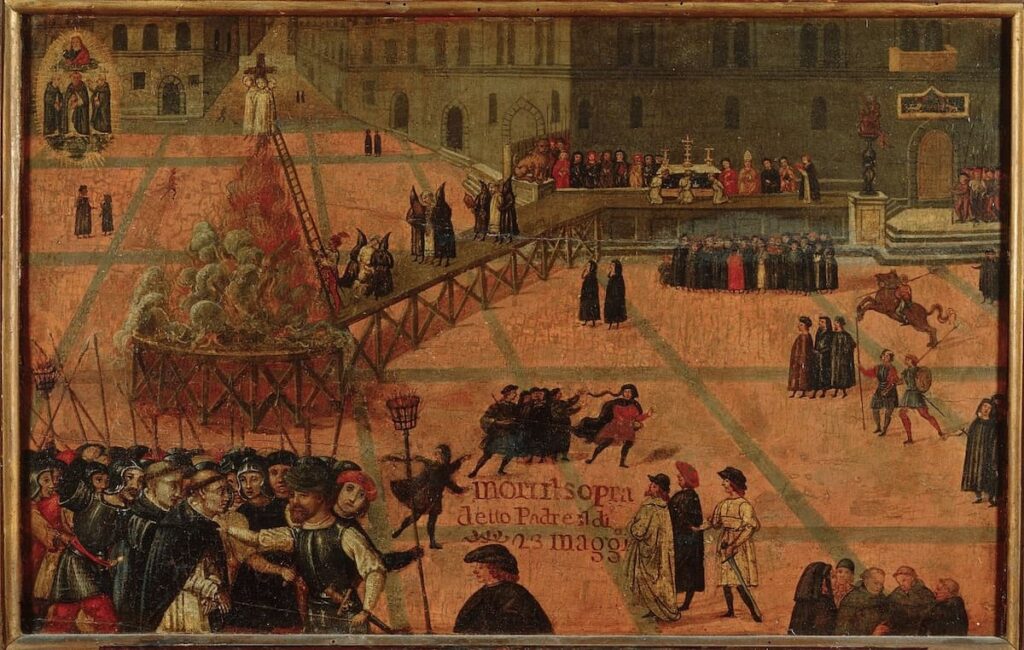
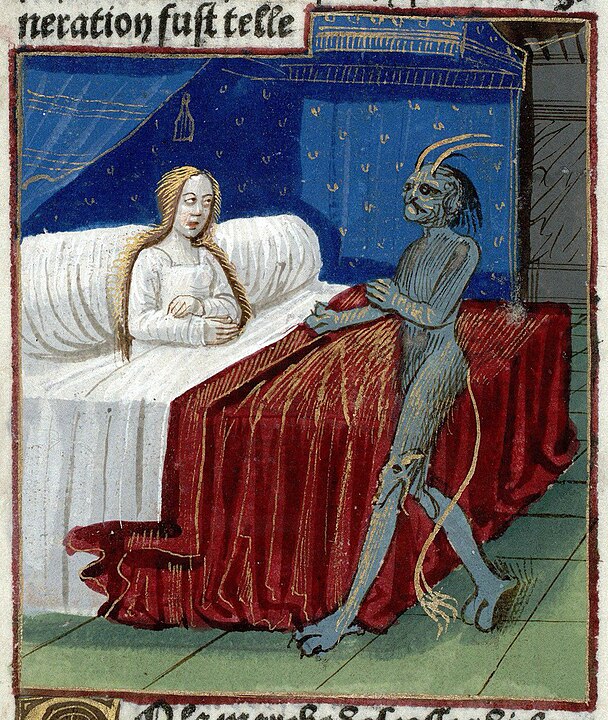
    For centuries, women were seen as embodiments of evil. Witch trials, which were an outpouring of hatred against women, were the culmination of long-standing clerical misogyny. As daughters of Eve, women were blamed for humanity’s expulsion from the Garden of Eden in collusion with the serpent, and they were believed to be unable to resist casting spells. It was even thought that they could magically “steal” a man’s virility through a spell known as the nouement de l’aiguillette. Accused of black magic, sorcery, and enchantments, so-called “heretical” women were burned by the thousands during the Inquisition.

    Until the 15th century, many nervous disorders were attributed to demonic possession, provoking fear and loathing. These afflicted individuals were thought to be creatures of the devil. In 1330, Pope John XXII intensified witch trials. In 1487, two German Dominican monks, Heinrich Kramer and Jacob Sprenger, wrote Malleus Maleficarum (The Hammer of Witches), which became the standard legal text for witch trials for the next two centuries. This work fueled an unprecedented witch hunt in the 16th and 17th centuries. It was not until the 18th century that these monstrous trials ceased, thanks to the rise of rational thought and the influence of Enlightenment intellectuals.

    Marriage in the Middle Ages
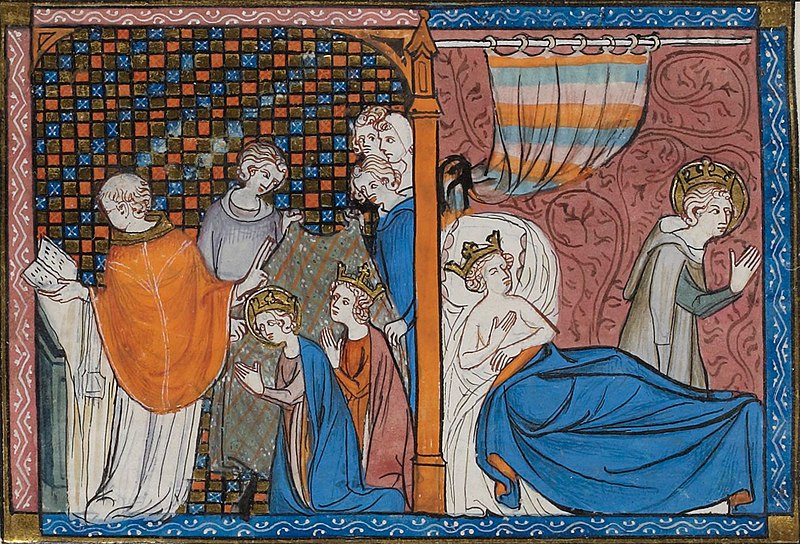
    Marriage of Louis IX and Marguerite of Provence.
    Marriage of Louis IX and Marguerite of Provence. Saint Louis practicing abstinence. Miniature taken from Life and Miracles of Saint Louis.

    Marriage in the Middle Ages was arranged by parents in all social classes. Among the nobility, it was a means to strengthen or create alliances between territories, increase landholdings, and amass wealth. Women were the subject of negotiations, sometimes even before they were aware of it. If a wife failed to produce male heirs, she risked repudiation—something not condemned by the Church. In 15th-century Flanders, the average age of marriage for women was between thirteen and sixteen, while for men, it was between twenty and thirty. This age gap had two major consequences: short-lived marriages and frequent remarriages. In other social groups, it was the father who chose a husband for his daughter, with negotiations taking place between the respective families.

    The bride brought a dowry from her parents, following the Roman tradition, which could take the form of property, land, or livestock. The groom also provided a dowry for his wife.

    The Married Woman’s Code and Domestic Violence
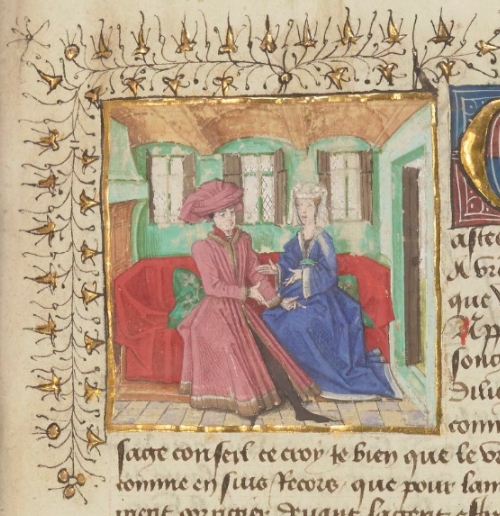
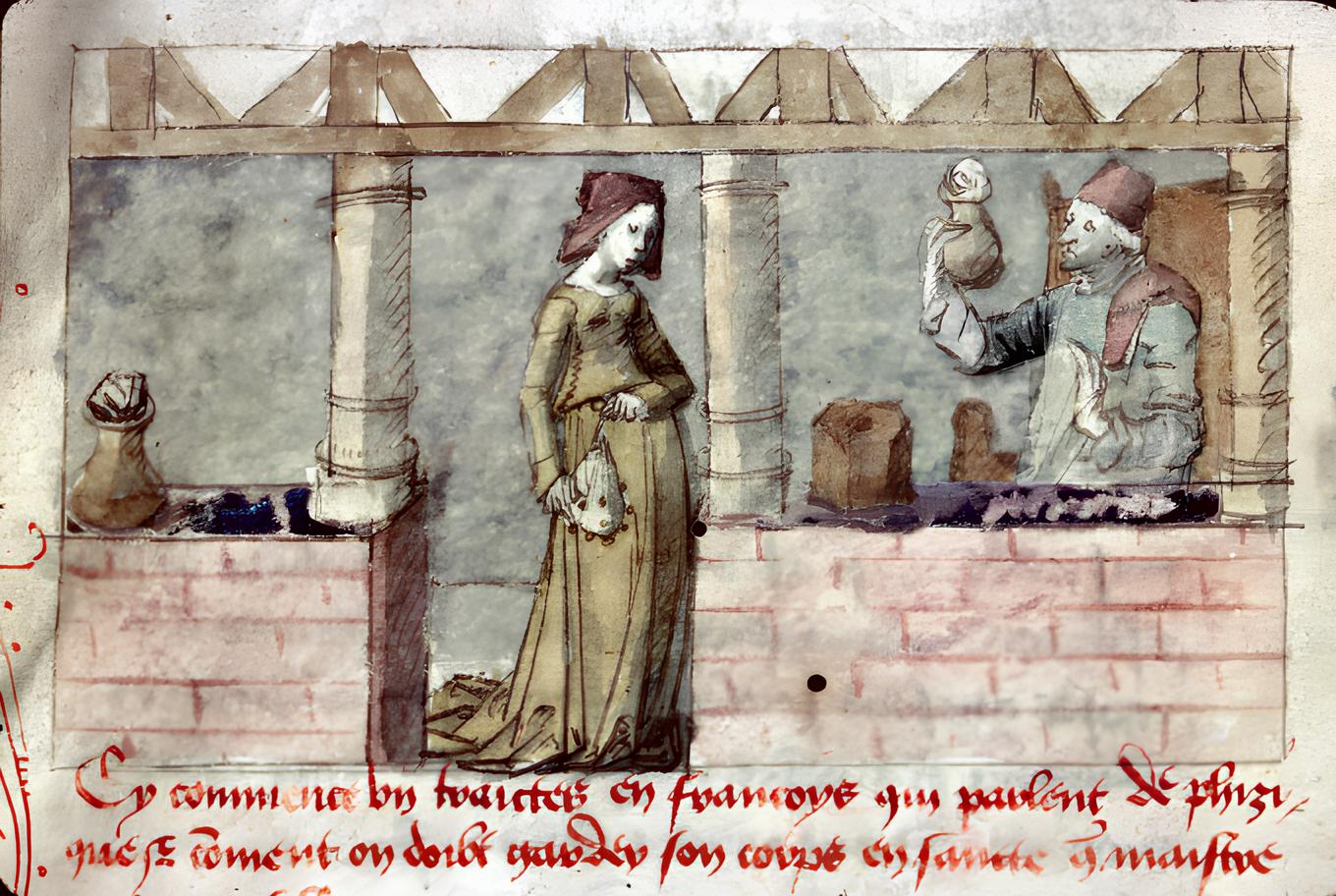
    Menagier de Paris
    Mesnagier de Paris (BNF Français 12477) f. 1r detail: miniature.

    Charter of the Married Woman and Domestic Violence

    The author of the Ménagier de Paris outlines the behavior expected of a good wife: after her morning prayers, she should dress appropriately for her social status, and she should leave the house accompanied by respectable women, walking with her eyes lowered, avoiding looking to the left or right (many representations from this time depict her with her eyes modestly lowered).

    She is to place her husband above all men, with the duty to love, serve, and obey him, refraining from contradicting him in all matters. She should be gentle, kind, and amiable, and when faced with his anger, she should remain calm and composed. If she discovers his infidelity, she should confide her sorrow only to God. She must ensure that he lacks for nothing, maintaining an even temper.

    It was common, and sometimes even recommended, for husbands to beat their wives during the Middle Ages. In the 13th century, the customs of Beauvais allowed a husband to correct his wife, especially in cases of disobedience.

    buy Revia online in the best USA pharmacy https://health.buynoprescriptionrxxonline.net/ no prescription with fast delivery drugstore

    Brutality and depravity were often exemplified by many of the Merovingian kings. It was easy to accuse a wife of adultery and imprison her, or even kill her, to remarry, since legislative sources confirmed the supremacy of the husband within the home, which he abused with impunity. This violence was found across all social classes.

    However, there were instances of happy marriages, but it was considered inappropriate to speak of them—such matters were not to be discussed. Among the aristocracy, courtly love, with its rules and customs, allowed young people to experience the emotions of love without overstepping the boundaries.

    The Church and Sexuality

    In the Middle Ages, the Church only sanctioned sexuality for the purpose of procreation. Even in antiquity, Stoic philosophers opposed bodily pleasures, and this view persisted into the medieval period. A woman was considered impure during her menstrual cycle and was expected to avoid intercourse, as was the case during pregnancy.

    The Church also imposed strict restrictions on sexual relations between spouses, forbidding them during religious holidays such as Lent, Christmas, and Easter, on saints’ feast days, before communion, on Sundays (the Lord’s Day), and on Wednesdays and Fridays (days of mourning). Clergy members sought to contain excessive passion by severely limiting its expression. Failure to adhere to these rules could even lead to an accusation of adultery—between husband and wife!

    Pregnancy, Childbirth, Contraception, and Intimate Hygiene

    Since a married woman’s primary role was to bear children, infertility was highly stigmatized. However, pregnancy and childbirth were life-threatening experiences for young mothers and their babies due to a lack of medical knowledge, proper resources, and especially poor hygiene. Many women died during labor or from postpartum infections such as puerperal fever.

    Even minor complications—breech births, twins, or prolonged and difficult labor—could be fatal for the mother. Thus, the joy of fulfilling their societal role was accompanied by deep anxiety. Maternal mortality peaked between the ages of twenty and thirty. If a woman died in childbirth, the midwife had to quickly perform a cesarean section to extract the baby and administer an emergency baptism (ondoiement), as the Church believed this would prevent the child’s soul from wandering in limbo.

    Childbirth was the exclusive domain of midwives, whose knowledge was passed down through generations. After delivery, the mother was considered impure and was forbidden from entering a church for forty days, at which point a priest would perform a purification ceremony known as les relevailles. The new mother, guided by the experienced women in her family, was expected to care for her child, with boys being valued more highly than girls. If both parents were absent, the child was placed under the protection of godparents, sometimes multiple, to increase the chances of survival.

    To avoid frequent pregnancies, women relied on herbal concoctions, potions, amulets, and even induced trauma—methods strictly condemned by the Church. In desperate situations, some resorted to abandoning their newborns or, in extreme cases, infanticide. To prevent such tragedies, the Church decreed in 600 AD that impoverished mothers could leave their infants on church doorsteps, allowing priests to arrange adoptions among parishioners.

    Rape and Prostitution in the Middle Ages

    A constant threat to young girls and married women, rape was committed both in times of peace and war. Rarely punished, it left victims to bear the shame of dishonor and the fear of pregnancy. Feudal lords often exercised droit de cuissage (the so-called “right of the first night”), which allowed them to sleep with a newlywed bride without her or her husband’s consent. Only the rape of a high-ranking noblewoman was punishable by death.

    If a woman became pregnant from rape, she was often blamed, as society believed she was somehow responsible. During wartime, sexual violence was tragically common, and no woman, regardless of age or status, was spared. Conquering forces engaged in pillaging, arson, rape, murder, and brutality with impunity, making medieval life especially dangerous for women, who bore the heaviest burden of these atrocities.

    During the Middle Ages, both the Church and secular authorities held an ambiguous stance on prostitution. While they officially condemned it, they also considered it a necessary evil. Many women who turned to prostitution had been dishonored by rape, abandoned after bearing the illegitimate children of their masters, or forced into destitution as laborers. The rise of urban centers from the 12th century onward led to the establishment of brothels, where prostitutes were confined to specific areas to prevent them from roaming the streets and setting a “bad example” for other women.

    In the 14th and 15th centuries, widespread war and epidemics pushed more women into extreme poverty, leaving them with few options for survival other than prostitution. Medieval society viewed women in rigid dichotomies: they were either pure or public. A girl who was raped, regardless of her innocence or ignorance, was often permanently labeled as a “fallen woman,” making reintegration into society nearly impossible. Many women who began as chambermaids in public bathhouses (étuves) found themselves coerced into brothels.

    Wealthier prostitutes attempted to dress like bourgeois women, despite sumptuary laws requiring them to wear distinctive clothing. The writer Christine de Pizan, an early advocate for women’s rights, denounced such societal hypocrisy and the degradation of women. Eventually, the Church established charitable institutions for repentant prostitutes, offering them an opportunity to escape the cycle of vice, take religious vows, or even marry.

    Whether noblewomen, peasants, craftswomen, nuns, recluses, “fallen women,” or accused witches, medieval women lived vastly diverse experiences. Their lives merit continued exploration, especially the contributions of educated and literate women. Through their writings—poems, psalters, and various treatises—they left a lasting imprint on history. Alongside these manuscripts, inquisitorial trial records offer valuable insights into the daily lives and struggles of women during the Middle Ages.

    Religious Life of Women in the Middle Ages

    The first monastery was established in Gaul in 513. In the 6th century, during the Merovingian kingdom, religious communities, often founded by women, multiplied: Queen Radegund founded Sainte-Croix, Queen Bathilde established an abbey in 656, and others appeared in Normandy. The Carolingian era saw the creation of numerous monasteries thanks to donations from royal families. After the violent period of Viking raids, new abbeys emerged around the year 1000, followed by Benedictine communities affiliated with the Cluny order. Women’s monasteries primarily recruited daughters from noble families, as a dowry was required to enter the convent.

    In this era deeply marked by faith, some women had a genuine religious calling, while others saw monastic life as a way to escape marriage, secure a safe and comfortable existence, or gain access to education and culture. Abbeys could also receive widows and noblewomen along with their families in the absence of their husbands. Candidates for the veil had to renounce all their possessions and follow the strict rules of Saint Benedict. After the noon mass, one hundred strikes were sounded on a cymbal to signal the sisters to prepare for the meal, giving rise to the expression “être aux cent coups” (literally, “to be at one hundred strikes,” meaning to be overwhelmed).

    The abbess, who governed the monastery, was often appointed by princely families and had to be over thirty years old. She oversaw a staff of assistants, including officers, prioresses, portresses, cellaresses, and nuns. Professed nuns held authority over novices, lay sisters, oblates, and servants. This hierarchy ensured the proper functioning of the community. A few men were admitted to monasteries as well, including farmhands responsible for agricultural work and the priest who officiated mass. Monasteries also served as educational centers where girls and boys, starting at the age of seven, were taught reading, writing, the Psalter, and sometimes painting.

    Abbeys lived in self-sufficiency. In the 11th century, double monasteries began to develop—on one side lived monks, and on the other, nuns, separated by enclosures and grilles. However, the Church viewed this arrangement with suspicion, and it eventually became subject to conciliar and civil prohibitions. (It was even reported that many infants were secretly entombed as a result of this cohabitation.) Some women, seeking to atone for their sins and devote themselves entirely to God, practiced strict reclusion, living in a small stone cell called a reclusoir. The door was sealed, leaving only a small opening to receive food. This choice was preceded by a solemn ceremony of definitive renunciation of public life.

    These cells were often built near a church, cemetery (such as the Cemetery of the Innocents), or a bridge where passersby could consult the recluse and ask for prayers on their behalf. The golden age of reclusion lasted from the 11th to the 14th century. By the 12th century, nuns belonged primarily to the Benedictine or Cistercian orders, followed later by the Dominicans and the Poor Clares. All monasteries were required to provide shelter for travelers and pilgrims. Religion permeated cultural life and played a fundamental role in the lives of medieval women, whether they were nuns or laywomen.

    Entertainment and Leisure

    Despite being deeply occupied with their work, rural women still found opportunities to converse at the village fountain or the mill. In the evenings, they gathered in small rounded rooms called écraignes, spinning wool with their distaffs while chatting together. Others spent their evenings with family by the fireside.

    buy Viagra online in the best USA pharmacy https://buynoprescriptionrxxonline.com/ no prescription with fast delivery drugstore

    The Évangiles des quenouilles (literally, “The Distaff Gospels”) depicted elderly women discussing a wide range of topics during gatherings between Christmas and Candlemas, reflecting many popular beliefs widespread in Flanders and Picardy at the end of the 15th century.

    Festivals, both religious and secular, provided opportunities for entertainment. In May, village boys had the right to esmayer the young women—an old custom in which they would gather with the girls’ consent and, on the first Sunday of May at dawn, place tree branches in front of the door of the one they admired. This charming tradition is referenced in literary and artistic documents. Family celebrations brought together both aristocrats and peasants, with women playing a prominent role.

    During agrarian festivals, queens were sometimes elected. Rural dances, called caroles, brought men and women together in circles and processions around trees and fountains, moving to the rhythm of love songs. Other dances included the tresque or farandole, the trippe (similar to a jig), the vireli (a turning dance), the coursault (a type of gallop), and the baler du talon. These dances provoked the ire of moralists, as the touching of hands and feet, along with the close proximity of dancers, was believed to encourage sin! Fortunately, these condemnations had little effect.

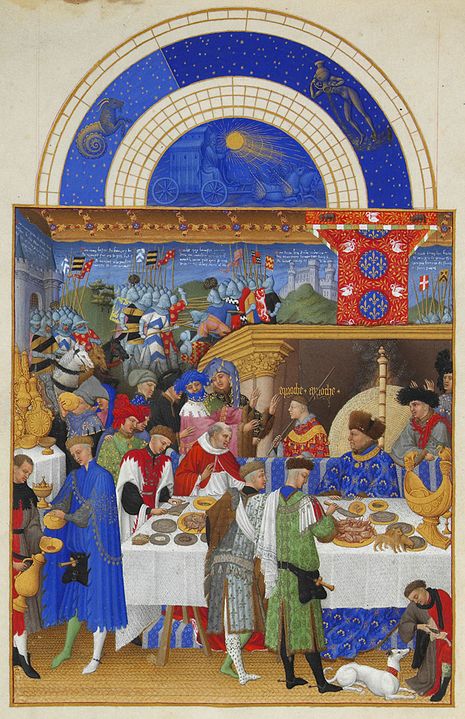
    Lords and sovereigns organized lavish banquets followed by sophisticated dances, where ladies adorned themselves in their finest attire. The highlight of a medieval feast came during the entremets, when entertainers such as singers, jugglers, storytellers, and minstrels showcased their talents. In 1454, nobles and aristocrats eagerly attended the famous Feast of the Pheasant. Board games were also popular, including chess, jonchets (similar to pick-up sticks), and card games, which emerged in the 15th century. The jeu de paume, the ancestor of tennis, remained a favorite pastime among the nobility. Some noblewomen engaged in falconry, hunting with hawks or sparrowhawks.

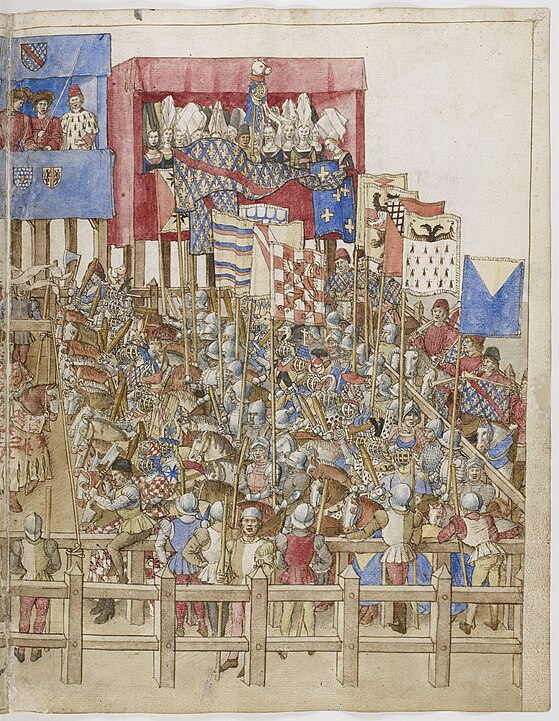
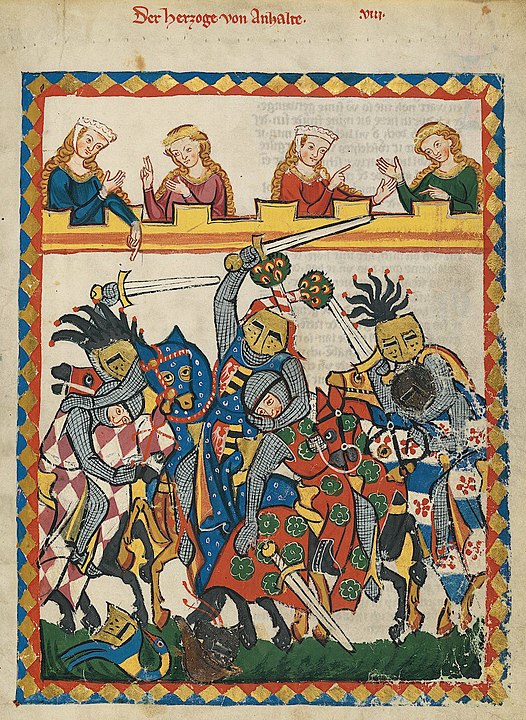
    Travel, while primarily undertaken for business or official matters, also served as a form of leisure. Jousts and tournaments provided lords with an opportunity to test their skills and offered a grand spectacle for noble ladies. These events were strictly governed by the codes of chivalry, with women honored as the audience.

    Street performers—including animal trainers, acrobats, jugglers, musicians, and storytellers—attracted crowds of onlookers. Processions and princely entrances dazzled the public, with streets cleaned for the occasion and decorated with flowers and draped fabrics. Small theatrical performances, known as histoires or mystères, were held near churches or at crossroads. Theater was a major attraction in medieval towns, with women attending alongside their noisy children. Medieval music, singing, and public readings were highly appreciated by the nobility, and young girls received musical instruction as part of their education.

    Widowhood and Old Age

    As a consequence of epidemics and wars, many women who married very young found themselves widowed with young children in difficult financial conditions, which pushed them to remarry. Aristocrats had little choice, as they needed support to defend their domains, and they also faced pressure from their families who wanted to use them to form new alliances. When children were adults, their mother could remain with them, her assets remaining incorporated into the family patrimony. If she wished to remarry or enter a convent, she could reclaim her dowry or dower, but her heirs preferred to pay her an annuity.

    These situations often generated conflicts of interest and endless lawsuits within families. A young unmarried widow was viewed with suspicion, with doubts about avarice or lust weighing upon her. In towns, however, she could continue to run her workshop or business, or establish a small enterprise. In her book “The Three Virtues,” Christine de Pisan, herself widowed very young, advises women to ignore gossip, to show wisdom, to pray for their deceased husband’s salvation, and encourages young widows to remarry to escape poverty and prostitution.

    Women of the time experienced several matrimonial lives and had children from different fathers. Wealthy widows attracted covetousness; they were often kidnapped and remarried against their will. By the end of the Middle Ages, family control was so strong that women had no choice; parents took charge of arranging their successive unions. How was a widow who managed to remain one supposed to behave? She had to wear simple black clothing, conduct herself with dignity, and frequently attend church services.

    The elderly woman was rather denigrated; at sixty, she symbolized ugliness and was associated with witchcraft, religious art attributed her with an evil role. The age of mortality was between thirty and forty years for women, forty to fifty years for men on average. Gregory of Tours cites cases of women of advanced age for the time: Queen Ingegeberge, wife of Caribert, the nun Ingitrude… Some Abbesses reached seventy or eighty years in the countryside or among the aristocracy.

    Noble Women and Women of Letters

    Two categories of women participated in medieval cultural life: secular women of noble birth and nuns. Educated, they protected writers and artists, composed scholarly works, and studied languages and poetry. At King Clotaire’s court, Radegund received extensive literary education; Fortunatus speaks of her readings from Christian literature. According to Einhard, Charlemagne desired the same liberal arts education for his daughters as for his sons. Dhuoda in 841 composed a work for her son William and appreciated poetry.

    Around the year 1000, the Ottonian court included many educated women, Adelaide, wife of Otto I, Gerberga, niece of this emperor who spoke Greek and studied classical authors. In the 12th century, Heloise knew philosophical and sacred quotations, spoke Latin, and according to Abelard had studied Greek and Hebrew. Adela of Blois in 1109 is cited in Hugh of Fleury’s work “Universal History.” The love of letters and arts is found among the ladies of the 14th and 15th centuries.

    Eleanor of Aquitaine reigned over troubadours around 1150. She protected courtly poetry and rendered judgments in André the Chaplain’s treatise on “Courtly Love.” Writers orbited in her circle under the influence of the Latin poet Ovid. Her daughter Marie of Champagne would write numerous works and also protect letters. In the 12th and 13th centuries, female literature was represented by many writers addressing religious or secular themes.

    Hildegard of Bingen, called the prophetess of the Rhine, born at the end of the 11th century to a noble Rhineland family, was offered to the Lord at eight years old, took her vows at fifteen, then was elected Abbess around forty. She authored three works: “Know the Ways,” “The Book of Life’s Merits,” and “The Book of Divine Works,” born from her visions. She traveled extensively, corresponded with the great figures of the earth – emperors, bishops, lords, and noble ladies. She also composed the “Book of Simple Medicine” illustrated with herbals, a bestiary, and a lapidary. Her “Causae et curae” is a manual of practical medicine and pharmacology.

    At the end of the Middle Ages, Christine de Pizan would become the first woman to make a living by her pen. Herself the daughter of an astrologer and physician, becoming widowed very young with a family to support, she created works in verse and prose dealing with love and wisdom, emphasizing loyalty and fidelity. Ballads, rondeaux, virelais, and other lyrical pieces allowed her to exercise her rhetorical virtuosity.

    buy cialis soft tabs online https://mexicanpharmacyonlinerx.net/buy-cialis-soft-tabs.html no prescription pharmacy

    She would be protected by French princes: Charles V’s brother, Duke of Berry, Philip the Bold, Duke of Burgundy, Charles VI, Louis of Orleans, Louis of France…. Several of her works would be translated. It was therefore not uncommon to encounter educated women writers in these periods of history.

    The medieval period covering ten centuries, the role of women evolved, sometimes regressed depending on laws and economic or demographic realities. Eventually, women would become the subject of passionate debate at the center of a Christian West that doubted and questioned… Since then, the “quarrel” of women has never ceased to stir society.

  • Flowers and Plant Symbolism in the Middle Ages

    Flowers and Plant Symbolism in the Middle Ages

    In the Middle Ages, the imaginary is an integral part of reality. The world of that time cannot be conceived otherwise. Within this panorama, both real and wonderful, plants play a major role in various domains. Whether from a political, heraldic, literary, or material perspective, the plant world is everywhere. Often, as is common almost everywhere in the Middle Ages, the Scriptures justify certain choices and give meaning to the staging of particular flowers, plants, or vegetative structures.

    First, we will focus on the literary domain with the case of the honeysuckle in the poetry of Marie de France. Subsequently, with the example of medieval gardens, we will explore how correspondences are woven between the material world and the imagination of the people of that time. Then, we will examine the fleur-de-lis, viewed more from a “political” angle, to clarify the myths surrounding it. We will conclude with a brief symbolic history of the apple.

    Natural Symbolism in Marie de France: Honeysuckle and Hazel

    Among the works attributed to Marie de France, a 12th-century poet, there is a collection of twelve brief stories written in octosyllabic verse, the Lais. These stories, which are relatively short in length, are imbued with assured love and eroticism. In the 12th century—the period of composition of these “poems”—fin’amor was flourishing. However, this carnal passion was not accessible to everyone. It was the privilege of noble people, of the Lady and her lover. The erotic symbolism of the lais is embodied in various elements, some of which are quite material. Nature can also play the role of awakening and revealing the senses. Fauna is particularly favored, especially birds, which are much appreciated by the poetess. Additionally, flora is well-represented, which is what interests us here.

    To describe the union of lovers, Marie de France uses the famous and evocative image of the honeysuckle entwining the branch of the hazel tree. This theme already appears in various mythologies, such as in Celtic tradition. This vegetal metaphor is actually used to courteously illustrate the union of Tristan and Iseult. However, the embrace of the two lovers should not be perceived as purely carnal. As mentioned, Marie de France’s poetry is part of the fin’amor tradition, where courtly values are paramount. The honeysuckle conveys an image of purity and freshness, perfectly aligning with the sentiment the poetess wishes to evoke in the reader.

    While the honeysuckle itself carries a strong symbolic charge, the hazel tree—and more broadly, the surrounding trees—give the story an ambiance conducive to the flourishing of romantic feelings. Both attractive and unsettling, the forest is a space where sensuality can bloom. Hidden behind the branches, the two lovers experience a privileged moment. It is also thanks to the wood that Tristan is recognized by his beloved. On a hazel branch, he carves his name, allowing Iseult to follow his trace.

    The image of the honeysuckle entwining the hazel branch is also an evocation of absolute and infinite love. Indeed, as Marie de France clearly states, once separated, the two plants die shortly afterward. The honeysuckle and hazel form an inseparable couple, just like Tristan and Iseult. Should separation occur, the outcome will be tragic. This is encapsulated in Marie de France’s beautiful concluding phrase in the lai: “Neither you without me, nor I without you.”

    The use of plant imagery here invokes both purity and freshness, where the erotic tension is thereby intensified. It is this interplay of dualities that gives the poetess’s lai its full flavor.

    Reality and Imagination in Medieval Gardens

    From the 11th to the 13th century, the population of the West grew significantly, leading to an increasing demand for gardens. Consequently, the medieval lexicon is rich in terms used to describe these types of spaces, sometimes described from a utilitarian perspective, other times staged in literature infused with Christian or secular culture. Generally, the courtil refers to the small plot of land adjacent to the house where some vegetables are grown for local consumption.

    From the 13th century, the term casal appears in the southwest to describe a similar type of space. Alongside these utilitarian gardens, the pourpris is more present in literature. It typically refers to a plot enclosed by a wooden fence or thorny bushes (hawthorn, rosebush…). Similarly, the jarz or vergier are places of tranquility where lovers meet among flowering trees, preferably in May.

    Contrary to what one might think, gardens are not only found in rural areas. Indeed, until at least the 12th century, the urban fabric remained sparse enough to accommodate numerous gardens, vineyards, meadows, or barns. Even in the second half of the 13th century, large urban centers still had many such spaces. Toponymy has preserved traces of this, as evidenced by the street names in Paris: Rue des Rosiers, Rue des Jardins, Rue du Figuier…

    In 14th-century Reims, there were still about 46 urban gardens. As housing density increased and construction took over undeveloped land, gardens were pushed to the periphery while still remaining within the city walls. Cities were also surrounded by a “gardening halo.” These gardens supplied the city with vegetables, fruits, wine, and other roots or medicinal plants. In any case, in the city, owning a garden could be considered a sign of wealth. Aristocratic, knightly, and soon-to-be merchant families used this element to assert their social preeminence. Louis IX himself owned a vergier on the tip of the Île de la Cité.

    The design of a garden was thought out based on the role it would serve. In general, care was taken to enclose it to prevent animal—and sometimes human—intrusions. Fruit and vegetable thefts were common and sometimes led villages into long-lasting disputes. To prevent this, one could use branches, hedges, stone, or bricks when the means allowed.

    Beyond the purely utilitarian function, the enclosure also became a marker of a spiritual space that invited meditation. The enclosed garden then directly referenced those in the Scriptures. A prefiguration of Paradise on earth, it became the place where the divide between savagery and civilization took shape. Similarly, many jarz and vergiers featured fountains. Beyond the obvious utilitarian aspect, the clear and pure water flowing through them resembled the four rivers irrigating Paradise.

    The flora of ornamental gardens was varied. Flowers were highly prized and sought after. Here, too, the symbolism of plants played a major role, as seen in the Roman de la Rose… In fact, rose cultivation was widespread in the Middle Ages. The red rose and its bud were enough to evoke love and eroticism. Alongside, one often found wild roses, gladiolus, lilies, daisies, and other wildflowers. In addition to offering a bit of shade and precious fruits, trees were cultivated with particular care.

    There was also a great variety of species: service tree, cherry, chestnut, fig, pomegranate… Non-fruit trees like ebony, laurel, plane tree, or pine also composed the landscape of these medieval gardens. The same applied to aromatic or medicinal plants. Ultimately, a good ornamental garden was one that appealed to all the senses: the bright colors of the flowers; the varied scents of herbs; the softness of petals against the rough bark of trees; the enchanting sound of branches swaying, sheltering lovers hidden behind a thick flowering bush.

    The Power of Flowers: The Lily

    There are many myths and legends surrounding the fleur-de-lis. However, it is an authentic historical object connected to various fields, including politics, dynasties, art, emblems, and symbolism. This stylized figure can already be found on Mesopotamian cylinder seals or engraved on Egyptian bas-reliefs. It even appears in Japan as well as on Sassanid fabrics. The oldest depictions of the flower, resembling those known in medieval Western Europe, date back to the 3rd millennium BCE in Assyria. Of course, its meaning changes with each period and in each region. Nevertheless, the lily almost everywhere maintains connections with power.

    The Middle Ages endowed the fleur-de-lis with a threefold religious dimension. First, it became a Christological symbol, based on the Scriptures, particularly this passage: “I am the flower of the field, and the lily of the valleys” [Song of Solomon 2:1]. With the development of Marian worship in the 13th century, the lily became a marker of purity and virginity, once again referencing the Scriptures: “Like a lily among the thorns is my darling among the maidens.” [Song of Solomon 2:2]. Medieval iconography frequently associates the Virgin Mary—and more broadly, noble ladies—with the lily. Finally, the evocative shape of the flower allowed theologians to make it an allegory of the Trinity and associate it with the three essential virtues: Faith, Wisdom, and Chivalry.

    The lily is also associated with power, as mentioned earlier. From the 14th century, chroniclers enjoyed telling that Clovis himself was the first king to adopt it. However, the Merovingian’s choice of the fleur-de-lis is purely a medieval invention. The first serious material evidence of a direct link between the flower and royalty dates to 1211, with the seal of Prince Louis, the future Louis VIII. However, under the influence of figures like Suger or Saint Bernard, the Capetians, at least since Louis VII, seem to have used the lily as a sign of their piety, without yet making it a royal attribute.

    The arms of azure scattered with golden fleur-de-lis are definitively attested around 1215, thanks to a stained glass window in the cathedral of Chartres. However, it is plausible that from the reign of Philip Augustus (1180-1223), the lily had already been incorporated into the royal arms. Thus, by using the floral emblem, the Capetian monarchy placed itself directly under the protection of the Virgin Mary. The king became the mediator between Heaven and Earth.

    With its new coat of arms, the king of France distinguished himself from other sovereigns in several ways. While England favored the leopard, the Empire the eagle, or Castile the castle, the Capetian was the only one to use a floral emblem. Similarly, he was the only one to use a scattered pattern (semé). The cosmic dimension was undeniable and was reinforced by the choice of colors—blue and yellow—which directly evoked the starry sky. From 1372, the scattered lilies were replaced by three fleur-de-lis. This time, it was not the Virgin who watched over the monarchy but “the blessed Trinity.”

    In general, from the 11th to the 15th century, the French monarchy maintained close ties with the plant world. Consider the lily, of course, but also the flowering rod, the scepter, and the flowered crown. Similarly, Valois princes and kings drew heavily on floral emblems: roses, daisies, irises, holly, currants… We can also add the famous oak of Saint Louis, of which Joinville enjoyed recounting that it “often happened in the summer [that the king] would go to sit in the woods of Vincennes after mass, lean against an oak, and have us sit around him.”

    However, the use of the fleur-de-lis was by no means a royal monopoly. Elsewhere, it functioned as a heraldic emblem in its own right. It is mainly found in the arms of the lesser and middle nobility of northern Europe, or even in Italy. Similarly, in some regions like Normandy, many peasants engraved a lily on their seals. Here, it was a common figure with no apparent direct link to its power symbolism.

    In rural areas, it was more associated with the plant world and fertility than with the monarchy. Cities like Lille or Florence even adopted the lily as their main emblem within their coats of arms. In both cases, the flower played a “speaking” role through the Latin terms lilium and flor. Finally, many abbeys or cathedral chapters used the lily, which then took on its full religious dimension. Ultimately, the fleur-de-lis in the Middle Ages had different uses and carried multiple symbols depending on the context in which it was found.

    In medieval culture, the apple frequently relates to theft on one hand and pleasure on the other. In the West, it became the quintessential fruit, while this role was occupied by the pomegranate in Islamic civilization or the plum in Japan. In Latin, the term pomum was used to refer to fruits in general. We still find traces of this today: pomme de terre (potato), pomme de pin (pinecone), pomme d’or (golden apple)… The word pomum evokes the idea of roundness. A distinction was then made between fleshy fruits (malum) and those with shells (nux). In summary, the apple is first referred to as pomum and then as malum.

    Since antiquity, the apple has often been associated with the walnut when depicting the plant world. In the medieval period, a new pairing emerged: the apple and the pear. These two fruits love and compete with each other simultaneously. The pear’s curved shape and soft texture made it resemble a woman, while the apple played the masculine role. Numerous proverbs depicted the two fruits. In the 13th century, it was said that “there is no worse pear than an apple,” or that “an apple given is better than a pear eaten.”

    Mythology has long had a close relationship with the apple, dating back to antiquity (see The Judgment of Paris). Think of Avalon, described as the insula pomorum by Geoffrey of Monmouth in the 12th century. On this mythical island where heroes and illustrious kings rest, King Arthur awaits his messianic return. Everything grows naturally around him, and the place is guarded by the fairy Morgan le Fay. To attract certain travelers and grant them immortality, Morgan and her fairies waved apple branches. As often, the apple served as a connection between the world of the gods and that of men. Similarly, many mythical stories depicted this fruit as one capable of bestowing immortality.

    The apple also entered the realm of power. Since the late Roman Empire, the scepter, crown, and spherical globe were the typical attributes of royal or imperial power. In the Middle Ages, Byzantine and German emperors, and some kings, retained the globe. It was not uncommon for it to be compared to a real apple, both in texts and in iconography. For example, at the end of the 12th century, the orb of the Holy Roman Empire was called the Reichsapfel, or “apple of the Empire.” In this case, the use of our fruit symbolized the prosperity and abundance guaranteed by the emperor.

    It was also in the Middle Ages that the tree of knowledge (Genesis 2:16-17) took the form of an apple tree through a clever process. Indeed, in Latin, the word for apple and the word for evil are the same, malum. Medieval culture liked to link words and things. Furthermore, the apple tree as a symbol of knowledge could also find its roots in other mythologies—such as among the Celts—or in the Arthurian cycle. For example, it is under an apple tree that Merlin tests his knowledge when practicing magic.

    In addition to these positive aspects, the apple was also viewed with suspicion and intrigue. The theme of the poisoned apple is already attested at the beginning of the 13th century in Le Morte d’Arthur (The Death of Arthur). Guinevere was accused of offering our venom-soaked fruit to Gaheris the White. Similarly, the apple could be associated with the Devil’s abode. At certain times, it could harbor creatures reviled by medieval culture—worms. These vile insects were believed to be born from decaying flesh. Moreover, the Scriptures remind us that “for the punishment of the ungodly is fire and worms” [Sirach 7:17-19]. A final negative aspect, which would deserve an entire article, is the connection between the apple and woman. The evil couple par excellence, it is the symbol of the Fall caused by Eve plucking the forbidden fruit.

    Ultimately, the apple is one of the most prevalent fruits in both scholarly and popular culture of the Middle Ages. Taken in a positive light, it could bestow immortality, and blossoming apple trees were considered the most beautiful trees. Taken negatively, the apple became malevolent and dangerous, symbolizing female corruption and evil.

  • 5 Medieval Inventions That Changed the World

    5 Medieval Inventions That Changed the World

    There is an opinion that the Dark Ages gave humanity nothing new and were a period of stagnation and religious hysteria. But that’s not true. During those difficult times, there were certainly strange and bizarre events, but people also accomplished good things.

    Glasses

    Yes, it was in Medieval Europe—most likely in Pisa in 1284—that glasses were invented, helping people with weak vision to read.

    Before that, a Berber astronomer, chemist, and engineer named Abbas ibn Firnas in the 9th century invented the “reading stone”—a polished piece of quartz that had to be moved across the pages of a book to magnify the letters. But it took another 300 years for Italians to come up with the idea of shaping such a stone into lenses and placing them in a frame. Allegedly, Alessandro di Spina from Florence invented glasses.

    Initially, they were attached to the nose like a clip and were used only for correcting farsightedness. It wasn’t until the middle of the 15th century that they invented side pieces (temples) and lenses for nearsighted people.

    Mechanical Clocks

    Mechanical clocks appeared in Europe between 1280 and 1320. Of course, this wasn’t the first timekeeping device ever—the ancient Greeks and Chinese had made water clocks long before.

    But the invention of the escapement mechanism with a toothed wheel, likely in Italy, allowed for the creation of fully mechanical clocks that operated without any liquid, relying instead on a weight descending on a rope. Finally, it became possible to make chronographs that didn’t take up an entire room or freeze in winter.

    This can be compared to the shift from massive vacuum-tube computers with punch cards to devices that fit on a desk.

    Watchmaking guilds in medieval Europe were highly respected, and their members crafted incredibly complex and finely made mechanisms. Often, clocks—especially large, tower clocks—not only measured time but also tracked the movement of celestial bodies.

    This was important because, according to medieval doctors, the planets predicted the future. For example, if Jupiter entered the house of Scorpio without an invitation, a plague would break out. You needed to be prepared for such events.

    Flying Buttresses

    Lübeck Marienkirche Strebeböge
    Flying buttresses support the main vault of St. Mary’s Church, in Lübeck, Germany. Image: Andreas Praefcke, CC BY 3.0

    Flying buttresses are clever architectural supports that allow the weight of large building walls to be distributed, making them more stable.

    These structures were invented in the 12th century, and they made the so-called Gothic architectural style possible. You know, all those huge cathedrals with statues and towers, like Notre Dame de Paris. Building them without flying buttresses would have been impossible—the buildings would have collapsed under their own weight. Structural mechanics at work.

    Before this, truly massive architectural monuments had to be built on the principle of the Egyptian pyramids—with a wide base and a small top. But flying buttresses transformed them from gray, dull piles of stone into majestic works of art.

    Tower Mills

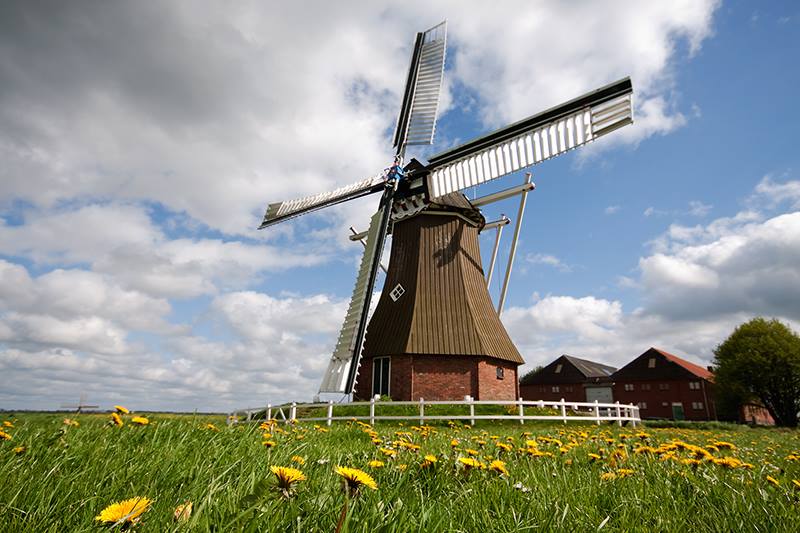
    Windmill de Dellen in New Scheemda
    Windmill de Dellen in New Scheemda

    The idea of using wind to grind grain, pump water, and lift loads wasn’t new. The first windmills were invented in Eastern Persia in the 9th century, and their blades were horizontally placed.

    But in the 13th century, Europeans invented the tower mill, which had a rotating roof and could carry really large sails. It was much, much more efficient than the Persians’ earlier inventions.

    For almost 600 years, the tower mill was the primary energy source in Europe.

    These structures were highly valuable in the Middle Ages, and building them was costly. As a result, they were often attached to castles or repurposed from existing watchtowers. The mill thus became not only a marvel of engineering but also a fortress capable of withstanding a siege.

    Enemies at the gates? Take down the sails so they don’t get damaged by arrows, and with a single elegant move, the structure transforms into a battle-ready bastion.

    Printing Press

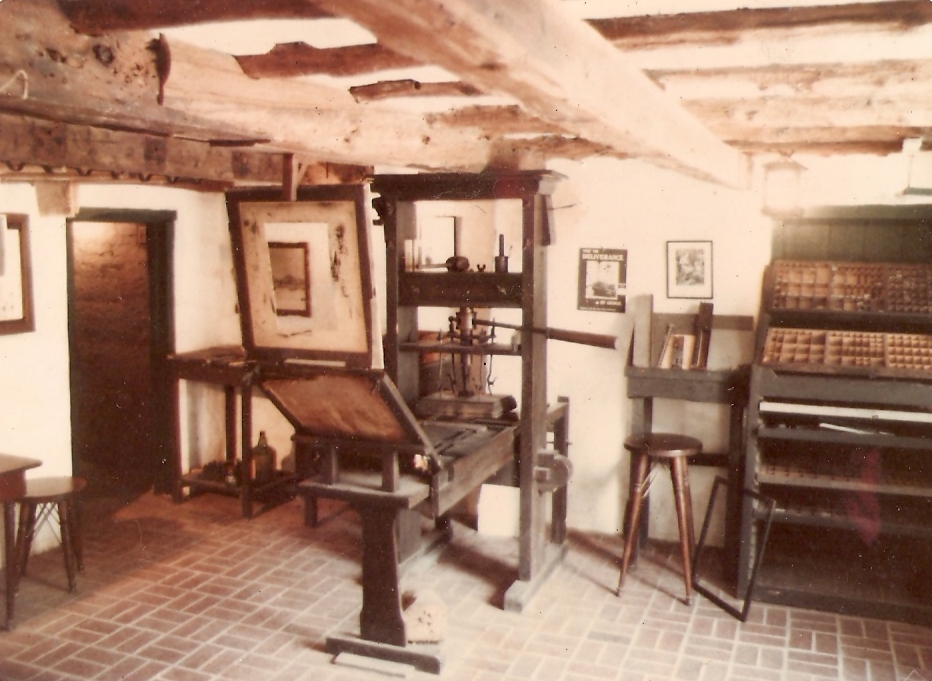
    A replica of Johannes Gutenberg's printing press
    A replica of Johannes Gutenberg’s printing press at the Featherbed Alley Printshop Museum, Bermuda.

    What do you think wine and books have in common? Well, alcohol not only provided inspiration to some writers, but it also enabled their work to become widely distributed.

    The thing is, a German engineer and engraver named Johannes Gutenberg, in the mid-1440s, looked at a wine press used to crush grapes for alcohol, thought about it, and decided to use a similar machine to print books.

    The mechanism worked like this: you assemble text from lead letters, like building blocks. Attach them to a plate, fix the plate to the press, apply ink, and press page after page until you’ve produced the desired number of copies.

    By the way, a couple of centuries before that, in 1282, Europe invented factories powered by water and wind, which allowed for the mass production of quality paper. Before this, the Chinese and Muslims produced it exclusively by hand, making the material too expensive.

    Printing and cheap paper triggered a revolution in European education, significantly increasing literacy rates.

    And yes, because books became more accessible, public libraries appeared in medieval Europe. The first was founded in 1452 by Malatesta Novello, ruler of the Italian city of Cesena.

  • 5 Weird Things That Were Considered Normal in the Middle Ages

    5 Weird Things That Were Considered Normal in the Middle Ages

    Special Boards for Dates

    Typically, a young man and a woman end up in bed together for intimate purposes. At least, that’s what modern people think. But in the Middle Ages, there were different views on this.

    Historical records show that in Germany, Switzerland, Wales, and Scandinavia of that time, the sexuality of teenagers was restricted—strict morals, Christian values, no physical relations before marriage. Hence, courtship customs were quite strange.

    Young men would lie in bed with their loved ones without undressing. They would always place a thick wooden board in the middle of the bed to maintain proper boundaries of decency. And they would sleep like that all night.

    This custom was in practice up until the 17th century. It allowed a young man to subtly hint to a girl that he cared about her, but he wanted everything to be official and proper. Only after the bride’s parents approved the courtship could a marriage be arranged, and physical love made possible. Until then, it was only with clothes on and with a board in between.

    Shared Beds for Kings

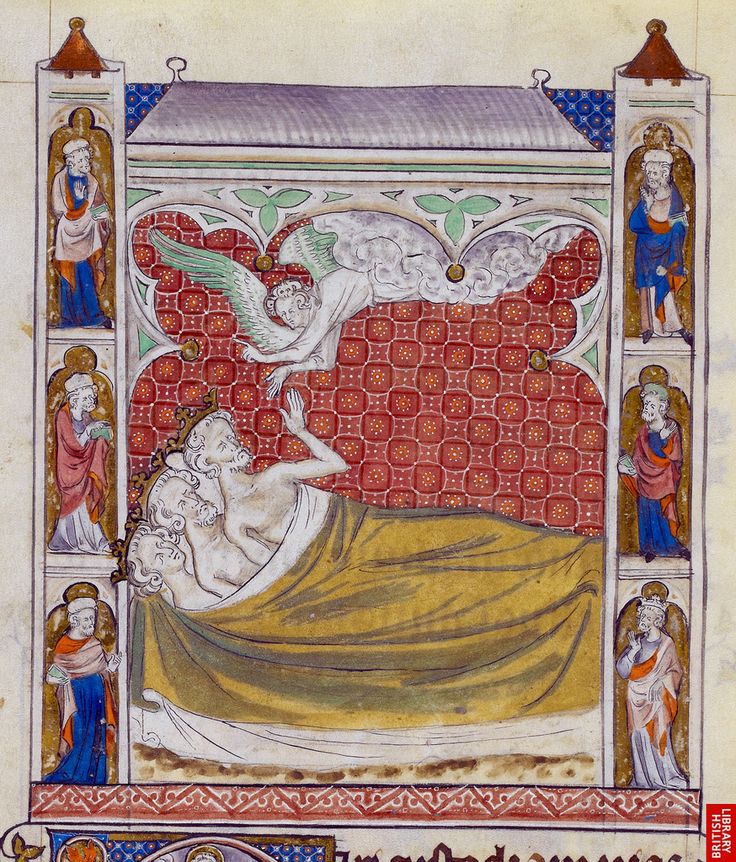
    Dream of the Magi from Queen Mary's Psalter, England,
    Dream of the Magi from Queen Mary’s Psalter, England, 1310-1320. Image: British Library / Public Domain

    In the Middle Ages, sharing a bed was a common practice because beds were expensive, and it was costly to provide separate sleeping places for everyone.

    However, even those who were not financially constrained sometimes did this. Even monarchs did not mind sharing a bed with someone else—as long as it was another person of royal blood.

    Philip honoured Richard so highly that every day they ate at the same table and shared the same dishes; at night the bed did not separate them. The king of France loved him as his own soul and their mutual love was so great that the lord king of England was stupefied by its vehemence.

    Chronicle of Roger of Hoveden [Source]

    This fragment from the chronicle led some historians to seriously believe that King Richard I the Lionheart was not interested in women.

    However, as English researchers John Gillingham and Stephen Jaeger write, for monarchs of that time, sharing a bed was not a sexual gesture but a political one. Eating from the same dish and sharing a bed with someone was a way to express friendship and affection; for carnal matters, there were mistresses.

    Moreover, nobles who respected each other could exchange clothes and kiss each other on the lips in a “Brezhnev style”—not for anything inappropriate, but to establish diplomatic relations. A kind of stern royal male friendship with pajama parties.

    Unusual Duels

    As we have previously discussed, ordeals, or judicial duels, were a common way to administer justice in the Middle Ages. Proper forensic examination and criminal investigation had not been invented yet, so determining who was right or wrong often came down to a physical fight.

    There was one catch. Medieval jurists believed that God would not allow an innocent person to lose. However, in practice, it usually turned out that God sided with people who were in good physical shape and professionally skilled with cold weapons.

    Of course, one could hire a professional duelist to fight on their behalf—such knights were called “champions.” But not everyone had the means to do so.

    Therefore, measures had to be taken to equalize the chances of both sides in a duel.

    In the late Middle Ages, two rules were developed for duelists. First, the fighters were literally sewn into duel suits, which could not be removed independently, and were smeared with grease.

    Second, they were given unfamiliar weapons. A skilled fencer would be given, instead of his usual sword, a club, a hook, or even a full-length battle door, so that his less experienced opponent had a chance to fight him on equal terms.

    These fights looked comical—nothing like Ridley Scott’s film “The Last Duel.” But they were fierce and bloody and, in most cases, ended in the death of one of the participants.

    Desecration of Graves

    It would seem that the superstitious inhabitants of the Dark Ages should have treated the graves of their ancestors with extreme reverence. However, according to the Austrian Academy of Sciences, about 40% of burials in medieval Europe were disturbed.

    In graves discovered by archaeologists in England, Switzerland, Germany, and Austria, many skeletons were found in strange positions—bound, turned face down, with twisted joints, or in unusual postures. Many were decapitated.

    The reason, historians believe, is simple: medieval people were fighting zombies. Europeans were preventing the threat of undead uprising at its root. This was necessary to ensure that the restless, or revenants, whom they sincerely believed in, did not rise from their graves and harm the living.

    It is quite hard to become a cool vampire when your head is lying somewhere between your knees.

    However, not all deceased were considered dangerous by the inhabitants of the Middle Ages. There were also good ones. For example, in Germany, members of the Lombard tribe opened the graves of their relatives to take skulls from there as keepsakes. Thus, in the 6th-century cemetery of Brunn-am-Gebirge, out of 42 graves, a third of the heads were missing.

    Apparently, the tribe members believed that the skulls of their ancestors could protect them and bring good luck. In some cases, however, they did not take the skulls away but, on the contrary, added a couple of new ones. Why this was done—archaeologists still cannot figure out.

    In other parts of Europe, from Transylvania to southern England, people also often opened the graves of relatives, taking weapons and brooches from them. At the same time, they did not touch the other belongings of the deceased.

    In general, in the Middle Ages, people were less concerned with the dead than they are today. Christianity preached that life after death is better than in the mortal world—not surprisingly, with the constant plague outbreaks and Viking raids. So, people regularly held gatherings, fairs, strength competitions, theatrical performances, and court trials in cemeteries.

    And women of easy virtue served clients there because cemeteries belonged to the church, and individual entrepreneurs did not have to pay taxes on them.

    Demonstrative Weeping

    We usually imagine lords or knights as stern, stoic, and unwavering. “Men don’t cry,” and all that. But in the real Middle Ages, tears were viewed quite differently.

    In classic knightly romances, we regularly encounter scenes where brave riders cry either about separation from their ladies, the death of their comrades, or the loss of their suzerain.

    This is not a literary exaggeration. Chronicles of that time also report knights and aristocrats crying frequently. For example, one ambassador, who arrived at the court of Philip the Good, gave such a speech during negotiations that he not only cried himself but also moved all the courtiers present to tears.

    Many men at that time “shed tears, were overcome with grief, and fainted.” Knights with tear-soaked eyes who fainted did not seem ridiculous to those around them but noble.

    No one tried to hold back their tears back then—on the contrary, both men and women cried demonstratively at the slightest emotional tension.

    To us, this seems strange, but at that time, tears were considered a sign of piety, a “gift from God.” Tears, according to the people of medieval Europe, brought a person closer to Christ. Crying was an essential part of the church services of that time, and the rules of monastic orders required shedding tears during prayer, preaching, and confession.

    The custom of crying at every opportunity in England, for example, persisted up until the Early Modern period. In 1628, English politician Thomas Alured described the reaction of the House of Commons to a letter from the king threatening to dissolve parliament: “Sir Robert Phillips spoke and mixed his words with tears… Saint Edward Coke was forced to sit down when he began to speak through abundant tears… The Speaker of the House also could not hold back from crying…”.

    Only the harsh Scandinavia managed to avoid widespread tearfulness. There, suspicion of crying was a serious insult to a man, and for it, one could easily be challenged to a duel and killed.

  • 5 Deadly Sports in the Middle Ages

    5 Deadly Sports in the Middle Ages

    Bear and Bull Baiting

    This sport looked like this: take a bull or a bear, as well as a fighting dog (or better, several) on a short leash, and try to kill one animal with the other. It’s that simple.

    There were many variations of this entertainment. For example, the unfortunate animal could be placed in a pit or chained to a post, so spectators could enjoy the show from a relatively safe distance. Bets were placed on how long the beast would last and how many dogs it would tear apart and trample before they finally brought it down.

    However, it was far more exciting to unleash enraged bulls and bears from their chains in a field or a wide enclosure, giving the participants with their dogs a chance to chase them. A thrilling workout for both the owners and their loyal mastiffs—far more interesting than football or hockey, don’t you think?

    Initially, the idea was to make the bull or bear meat more tender before cooking. But tenderizing an entire carcass with a hammer is inconvenient, while setting dogs on it is quite practical.

    Naturally, this blood sport was dangerous, and not just for the dogs. First, the hunters often died or were injured by getting too close to the wild beast. Second, even the spectators were not immune from mishaps.

    buy paxil online http://comdistec.com/gallery/images/gif/paxil.html no prescription pharmacy

    For example, in 1583, during a baiting event at Paris Garden in London, an excited crowd accidentally collapsed the arena, and several dozen visitors were trapped under the debris. Then, they got to know the bear a bit more closely than they had planned, and for many, the encounter was fatal. English Puritans saw this as divine wrath but believed it was due not to cruelty to animals, but because the games were held on a Sunday.

    This entertainment appeared in England during the Middle Ages and remained popular until 1835. Then, the British peers decided that cruelty to animals was somewhat unbecoming and banned bull baiting, cockfighting, and other such antics. Before that, even Queen Victoria had taken part in these competitions.

    English Football Without Rules

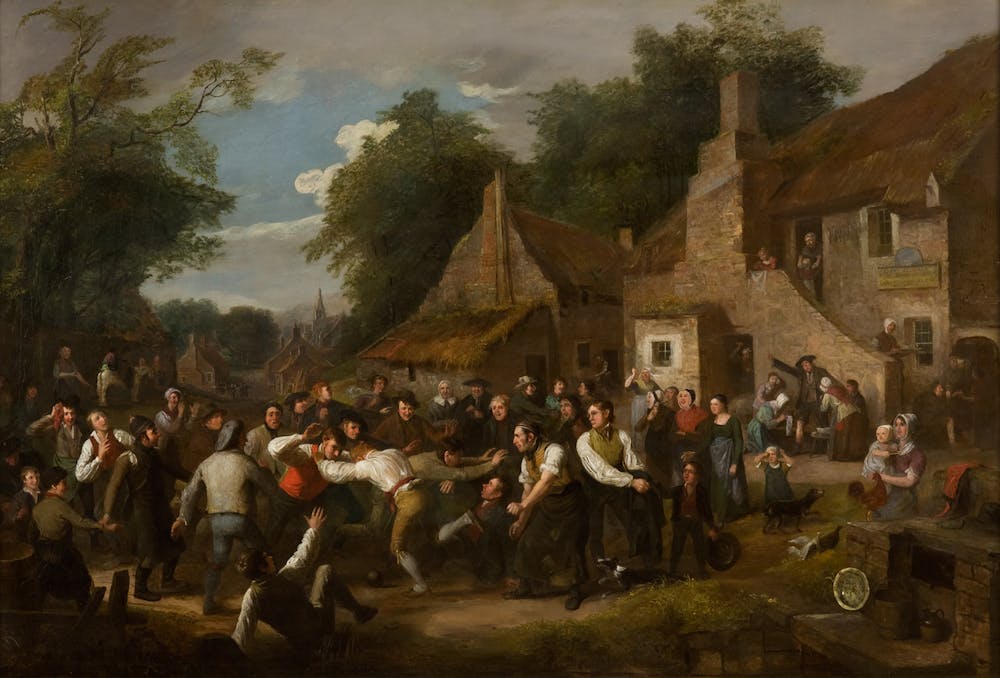
    The Village Ba’ Game by Alexander Carse, 1818
    The Village Ba’ Game by Alexander Carse, 1818: a village football match in Jedburgh, Scotland. Painting of a large group of men playing football in front of a large rural building.

    What happens if you give a crowd of rugged medieval men a ball made from a pig’s bladder stuffed with peas—heavy and hard as a stone? That’s right, you get traditional English football.

    It was usually played during Shrovetide, just before Lent. The goal was simple: get the ball into the opponent’s goal by any means necessary. Sometimes, the goals were several kilometers apart. At times, they didn’t bother with constructing goals at all—in such cases, one had to throw the ball onto the balcony of the opponent’s church.

    The rules did not prohibit beating opponents to take the ball, nor did they forbid causing them serious injuries and fractures. Naturally, there was no protective gear. You could even trample opponents who were lying down.

    It goes further—there are mentions that participants brought knives to some matches. Why not?

    There were no enclosed fields—the ball was chased through city streets, marketplaces, and agricultural fields, causing considerable material damage to unwitting spectators. Sometimes, the number of players on a team reached a hundred. Chroniclers mentioned that many footballers ended up with broken arms and legs, knocked-out teeth and eyes, and fatal outcomes were not uncommon.

    This game was rightly considered incredibly dangerous, and some kings even enacted laws banning football. For instance, Henry VIII was an avid player in his youth. However, later, when he realized the damage caused to royal property by overzealous football fans, he called the sport a “plebeian game” and banned it in 1548 under the threat of death.

    However, the severity of the law was mitigated by its lax enforcement: footballers continued to play, sheriffs turned a blind eye, and by 1603, the ban was lifted.

    buy zanaflex online http://comdistec.com/gallery/images/gif/zanaflex.html no prescription pharmacy

    Irish Stick Fighting Tournaments

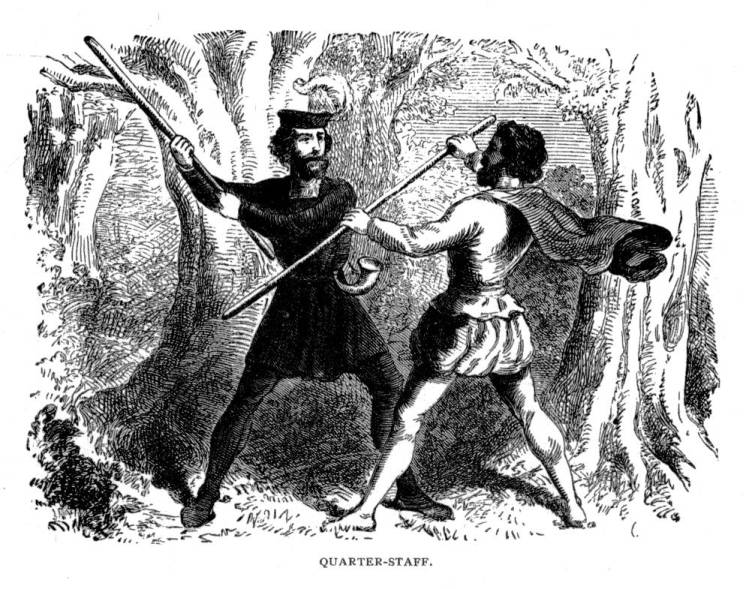
    An artwork depicting stick fighting
    Stick fighting, illustrations from Old English Sports, Peter Hampson Ditchfield. Image: Public Domain

    The shillelagh (from the Gaelic s iúil éille—”oak club”) is a traditional weapon in Ireland, also used as a cane. To make one, you need to trim a sturdy oak branch, carve beautiful traditional patterns on it, and then bury it in a pile of manure or put it in a chimney for several months to make the stick black and shiny.

    The ancient Celts regularly held competitions in fencing with such clubs, and in the Middle Ages, the English and Irish continued this tradition. The game had clear rules—this was not a drunken brawl.

    Stick fights were not only a form of entertainment but also a standard legal method for settling disputes among tenants.

    Usually, the rules required knocking the opponent to the ground and dragging them along the ground for the judges to count it as a win. Often, fencing with shillelaghs led to serious injuries.

    Interestingly, women were allowed to participate in the tournaments. However, men were forbidden from hitting them—they could only strike the shillelagh in the woman’s hand. The woman, on the other hand, could strike her opponent however she wanted.

    And who says that women were oppressed in the Middle Ages?

    Hammer Throwing

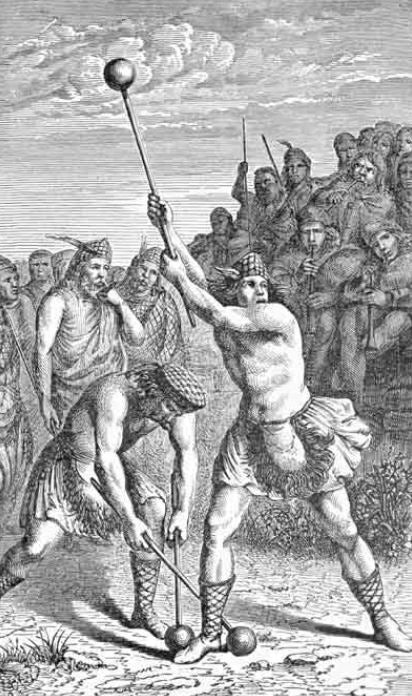
    Hammer Throwing
    Image: Public Domain

    Another sport with ancient Celtic roots is hammer throwing. The Celts engaged in hammer throwing as early as 1600 BC during the so-called Tailteann Games. These were athletic competitions that included jumping, running, javelin throwing, hammer throwing, boxing, fencing, archery, wrestling, swimming, and horseback riding.

    Much like the Olympic Games, you might say. But the Tailteann Games were held at funerals.

    Yes, the stern Celts believed that when an important figure like a king or military leader died, simply throwing them on a funeral pyre was too dull. So, they organized three-day feasts and competitions like hammer throwing, boxing, and vaulting. The Celts generally believed that funerals were a cause for celebration, not mourning, as the deceased was going to a better place.

    Over time, the Tailteann Games were forgotten, but hammer throwing remained, becoming a popular sport in medieval England. In principle, anything could be thrown—Irish people, for example, used heavy cartwheels.

    Medieval hammer throwing was a rather dangerous sport because, at fairs where it was held, there were no barriers or protection for either athletes or spectators.

    Therefore, when an athlete missed the target and the projectile flew into the crowd, casualties were inevitable. But then again, what is sport without risk?

    Water Jousting

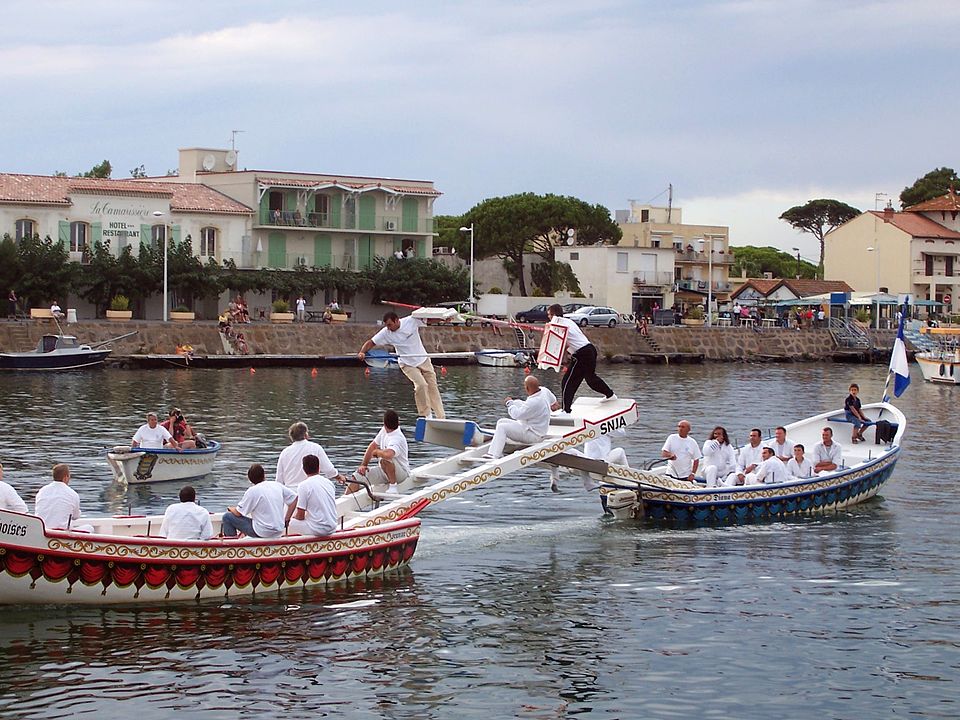
    Jousting on the Hérault river in Agde
    Jousting on the Hérault river in Agde. Image: Wikimedia, CC BY-SA 3.0

    Everyone knows about knightly tournaments. Two strong men in heavy armor mount their horses, take blunted lances, and charge at each other at full speed. Whoever remains in the saddle after the collision is the winner. The rules are simple—no mistake possible.

    But doesn’t riding horses seem a bit dull? Isn’t it far more interesting to hold tournaments… on boats?

    These jousts were invented in France—the first mentions date back to a tournament in Lyon on June 2, 1177. The mechanism of the duel is as follows: take two boats, fill them with teams of rowers. On the boats, set up simple ladders on which the knights should stand.

    The boats are launched into the water—full speed ahead! The knight who knocks his opponent off the ladder wins.

    Despite the seemingly comical nature of this competition, it was quite dangerous. Due to the armor, falling into the water could be fatal—25 kilograms of steel does not add to buoyancy.

    buy biltricide online http://comdistec.com/gallery/images/gif/biltricide.html no prescription pharmacy

    Also, clashing with a single shield could result in serious injuries.

    Boat jousting remains quite popular in France. Modern athletes, following in their ancestors’ footsteps, regularly hold traditional competitions in communes such as Cognac, Merville, and other places.

  • 8 Myths About Medieval Hygiene

    8 Myths About Medieval Hygiene

    In the Middle Ages, the Contents of Chamber Pots Were Dumped Out of Windows

    It is believed that this was a very common practice. In 13th century France, there was allegedly even a law requiring residents to shout three times, “Watch out, water!” before emptying a chamber pot.

    However, this is not true. People in the Middle Ages did use chamber pots, as toilets had not yet been invented, but they would empty the contents into cesspits and ditches, not onto the street from a window.

    Of course, there may have been some eccentric individuals who did throw waste out of a window, but they probably did not have an easy time.

    For example, in 14th century English cities, someone could be fined 40 pence for throwing garbage out of a window — an amount that many ordinary workers earned in a month. That could buy several barrels of beer, a couple of sheep, or a grown pig, so one would have to think twice about whether it was worth it.

    It’s also unlikely that the residents of medieval towns would have been thrilled about human waste being dumped on their heads from windows. Records have survived of a man named Thomas Scott who urinated in the street in 1307, which angered two other townspeople. They demanded that the troublemaker go to a public restroom, but when he responded rudely, they beat him and wounded him with a knife.

    Another man who threw a spoiled smoked fish out of his window was beaten so badly by his neighbors that he barely recovered.

    As you can see, people did not go easy on dirty habits back then.

    Wide-Brimmed Hats Were Needed to Protect Against Waste Being Dumped

    This myth is related to the previous one. It is also claimed that such hats were worn by middle-class people attending medieval theaters, forced to crowd in the pit. When lords and ladies lounging on the balconies and upper boxes threw leftovers or sneezed down on the commoners, the brims of these hats would help keep their heads relatively clean.

    In reality, wide-brimmed hats were made for the obvious purpose of protecting against rain and sun. They were common in all cultures, not just European ones.

    In the Middle Ages, they were most often worn by peasants and pilgrims. For the latter, the wide-brimmed hat eventually evolved into the capello romano, or saturno, as well as the galero — hats worn by clergy.

    Additionally, they were favored by soldiers, who often had to wander outside in bad weather or heat. Over time, their hats turned into the famous feathered hats of musketeers, known as cavalier hats. And when firearms became widespread and the wide brims began to interfere with aiming, they started pinning them up with pins, creating the tricorne.

    Nobles also liked such hats, but not because poor people often poured chamber pot contents on their heads. Aristocrats simply considered pale skin a sign of nobility, while a tan was seen as a distinctive feature of commoners who worked in the fields.

    Isabella of Castile Bathed Twice in Her Life

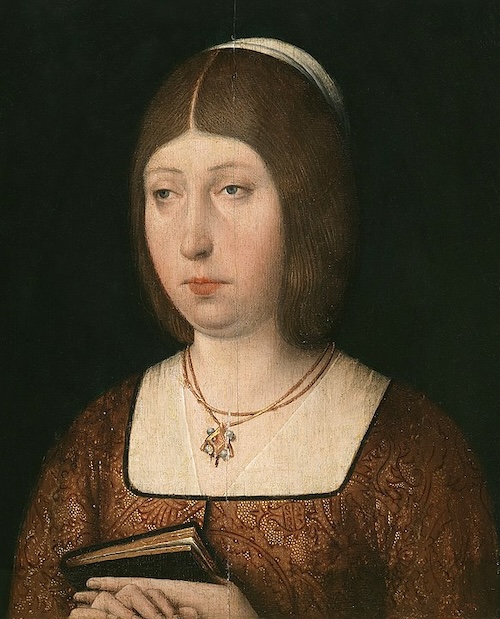
    Isabella I of Castile (1451-1504), queen of Castile and León.
    Isabella I of Castile (1451-1504), queen of Castile and León

    Experts in the unclean and suffering Middle Ages often cite Queen Isabella I of Castile, who ruled Spain in the 15th century. Allegedly, this lady was so devout that she considered bathing a sin and proudly claimed to have bathed only twice in her life — at birth and before her wedding.

    All this to avoid washing away the holy water that touched her skin during baptism.

    However, this is a myth, with no evidence to support it. There is only this legend: in 1491, the queen laid siege to the city of Granada, intending to expel the Muslims from Spain. She vowed not to bathe or change clothes until the city fell.

    Unfortunately for her, the siege dragged on for eight months, during which time Isabella’s clothes took on an unpleasant grayish-yellow tint that artists later named “isabelline.”

    The legend is quite murky: historians can’t determine whose name the color was originally based on — Queen Isabella I of Castile or Infanta Isabella Clara Eugenia of Spain. There were also rumors that the latter made a similar vow not to bathe when she began the siege of the Dutch city of Ostend in 1601. And the fighting went on for three years.

    As a result, the stories of these two Isabellas often get confused in tales about the unwashed Middle Ages, making it difficult to determine if there is even a grain of truth in the story.

    At that time, people often made strange vows to demonstrate steadfastness and win divine favor in battle through their suffering. For example, some knights vowed not to eat meat or shave during war, covered one eye with a patch, or deliberately refused to use fire to warm themselves.

    But even if we assume that the legend has a basis in reality and the queen did vow not to bathe for several months, this means that such behavior was unusual for her in normal times and was seen as a real ordeal. And after the city was taken, she did bathe again.

    Louis XIV “Stank Like a Beast”

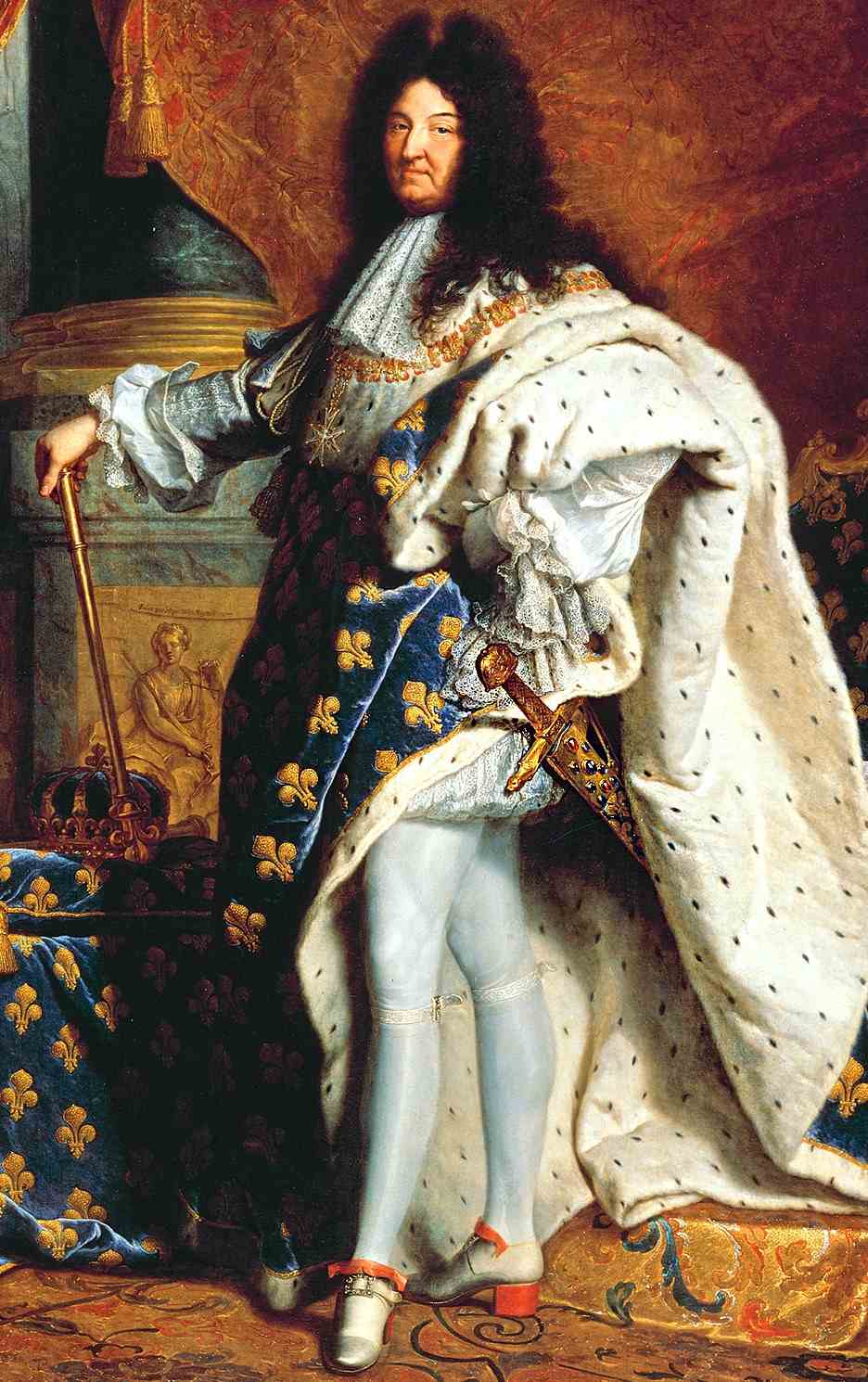
    Louis XIV
    Louis XIV with the Sword of Charlemagne Joyeuse

    Another figure allegedly known for avoiding bathing was Louis XIV de Bourbon, King of France—also known as the “Sun King” or “Louis the Great.” According to an internet myth, this monarch supposedly bathed only two or four times in his entire life and did so only under doctor’s orders. However, the idea of Louis XIV‘s poor hygiene can hardly be explained by medieval customs, given that this was already the Early Modern period.

    According to some “Russian envoys” (or “Cossacks” in another version), “His Majesty stank like a wild beast.” Sometimes, this phrase is even attributed to Peter the Great himself. However, the Tsar could not have said this because, by the time he visited Versailles in 1717, Louis XIV had already been dead for a couple of years.

    There are no historical records of Russian envoys or Cossacks making such a statement.

    Most likely, this anecdote was invented by blogger Denis Absintis, the author of a book about the “dirty and sick” Middle Ages, titled Zlaya Korcha (“Evil Cramp”). While describing the unsanitary conditions of that time, he might have gotten a bit carried away and “slightly” exaggerated.

    Moreover, in his work, he seriously references the writings of Patrick Süskind—a supposed “Swiss chronicler.” In reality, Süskind is a contemporary author known for his novel Perfume.

    In fact, Louis XIV bathed regularly. Otherwise, it would be hard to understand why he spent a fortune on bringing running water to Versailles and building baths and swimming pools there. As contemporaries noted, His Majesty was an excellent swimmer and could swim across the Seine on a dare.

    He built a Turkish-style bath in his palace and regularly took baths there, often in the company of court ladies. And when he could not bathe while traveling, he ordered his valets to wipe his body with grape spirits and sprinkle him with perfume.

    Crusades Brought Soap to Europe

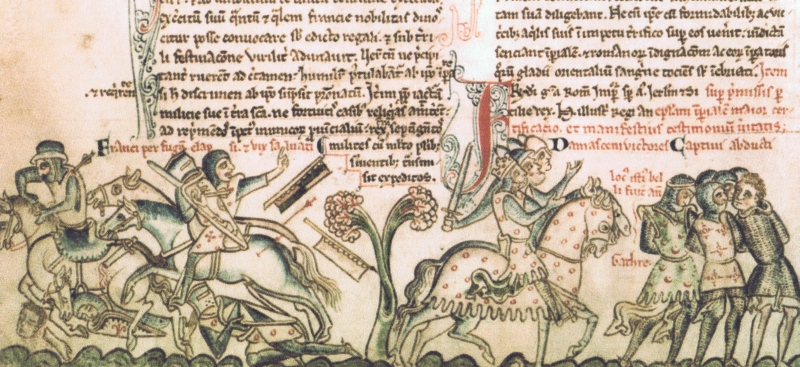
    The defeat of the Crusaders at Gaza
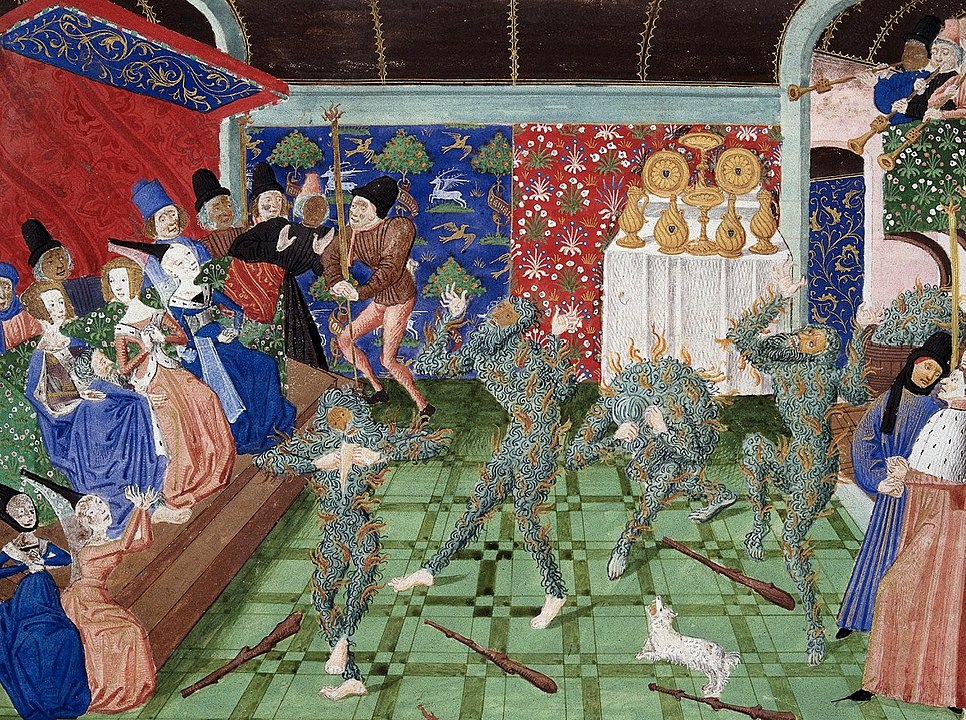
    The dance of the “wild men”. Miniature from “Chronicles” by Jean Froissart. 1470-1472

    There’s a claim that Europeans only started bathing after the dirty Crusades stole the secret of soap-making from the Muslims. Before that, the residents of Europe supposedly didn’t know about it at all.

    In reality, Europe had entire guilds of soap-makers as early as the 6th century. It’s unclear how they managed to produce their products if the First Crusade only took place in the 11th century.

    Crusades did bring back a specific recipe for soap from Palestine—one made with olive oil. When European soap makers started using olive oil instead of animal fat, their products began to smell better. Wealthy people then switched to this new soap. But to say that Europeans didn’t use soap before the wars with the Muslims is inaccurate.

    Europeans Considered Russians Perverts Because They Bathed Once a Month

    This statement also circulated on the internet, thanks to the author of Zlaya Korcha. However, there’s a catch: he provided no sources for this claim.

    Bathhouses were common in Europe at that time, both private ones (for wealthy gentlemen) and public bathhouses. The latter often doubled as bakeries or blacksmith shops to save firewood and not waste the heat from the ovens when there was no need to heat water. Here is a description of such establishments in the city of Erfurt in the 13th century:

    The bathhouses in this city will bring you true pleasure. A beautiful young girl will rub you well with her tender hands. An experienced barber will shave you without a drop of sweat falling on your face. A pretty woman… will skillfully comb your hair. Who wouldn’t steal a kiss from her if they wished?

    Civilization of the Medieval West, Jacques Le Goff

    Yes, bathhouses were often combined with brothels, and it was easy to receive additional services from the bath attendants besides washing. The Church turned a blind eye to these minor sins—in England, for example, bishops taxed bathhouses located within their dioceses.

    In the Middle Ages, People Ate with Their Hands and Had No Manners

    Medieval people, even noble lords, are often depicted as very ill-mannered diners who grabbed food from the table and ate it with their hands. The myth goes that forks were only brought from the East towards the end of the era, and before that, people had to use their dirty fingers.

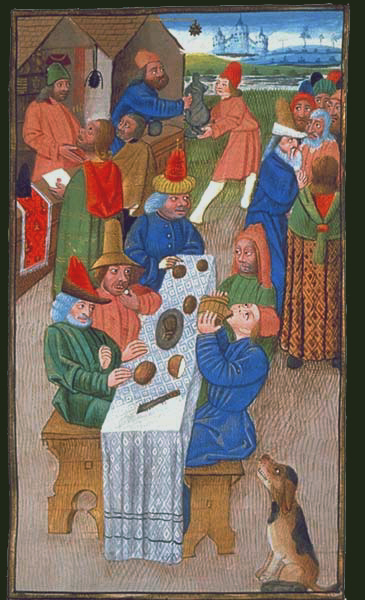
    However, medieval table etiquette can be judged from a 15th-century manuscript titled “Les Countenance de Table.”

    ……and let your fingers be clean, and your fingernails well-groomed. Once a morsel has been touched, let it not be returned to the plate. Do not touch your ears or nose with your bare hands. Do not clean your teeth with a sharp iron while eating. It is ordered by regulation that you should not put a dish to your mouth. He who wishes to drink must first finish what is in his mouth. And let his lips be wiped first. Once the table is cleared, wash your hands, and have a drink.

    Les Countenance de Table, 15th-Century Manuscript

    As you can see, it doesn’t quite resemble a scene from the comedy Black Knight, where the king served peas with the same hand he had just scratched himself with, and then fed the dog.

    Forks indeed appeared in Europe relatively late, in the 1600s. Before that, people only used spoons and knives, and a noble lord carried his eating knife on his belt—it was considered foolish to show up at a feast without your own cutlery. When medieval aristocrats finally acquired forks, they initially carried them in sheaths, too—a rather amusing custom.

    So Much Filth Flowed Through City Streets that People Walked on Stilts

    Medieval European cities, of course, were not as well-kept as modern ones, but authors of articles and books about the “grim Dark Ages” sometimes exaggerate too much.

    For example, there is a myth that streams of feces, manure, and other filth, poured from the windows and doors of surrounding houses, flowed down the streets of settlements. People were supposedly forced to walk on stilts to navigate the streets.

    It is also said that heels were invented to allow people to move through dung-covered streets without getting dirty.

    Sounds disgusting, doesn’t it? However, images of medieval sufferers on stilts, which are often used to illustrate such statements, are misunderstood by modern people.

    These devices were indeed worn, but not by city dwellers. Rather, they were used by peasants, who used them to move through wet fields and swamps without getting stuck. Additionally, stilts were used to harvest crops from tall trees and for entertainment—there were even amusing battles and tournaments held on them.

    It was not necessary to move around on stilts in cities, as filth did not flow down the streets. There were designated sewage channels for this purpose, and they were covered to prevent odors from spreading. Special responsible individuals made sure these channels did not overflow.

    As for heeled shoes, ladies sometimes wore them to avoid getting their dresses dirty—not in filth, but in rain puddles. Later, men adopted this fashion, using such shoes to emphasize their status and increase their height.

  • How to Have Fun in the Middle Ages

    How to Have Fun in the Middle Ages

    Fifty-two regular Sundays, a week each for celebrating the main Christian holidays—Easter, Christmas, and Pentecost—along with other obligatory holidays like Epiphany, Baptism, Candlemas, Palm Sunday, Ascension, Trinity, the Feast of Corpus Christi, the Sacred Heart, Transfiguration, Exaltation of the Cross, Feast of the Holy Family, Immaculate Conception, Saint Joseph’s Day, Feast of Saints Peter and Paul, Assumption of the Virgin Mary, and All Saints’ Day, plus days dedicated to various saints—patrons of cities, guilds, and so on—along with days for their commemoration and associated events, as well as entries of rulers, bishops, and other important figures. Altogether, about a third of the year was spent by medieval city dwellers in leisure.

    Go to Church and Listen to a Preacher

    Festive church services were performed with great pomp, featuring the best choir singers. From the 9th–10th centuries, festive Mass began to resemble an allegorical play due to performances based on Old Testament, Gospel, or hagiographic stories. These performances lasted until about the 13th century when they were replaced by city theatrical events.

    On holidays, women tried to dress up: they went not only to the service but also “to see people” — to look at others and show themselves. Everyone in the church had their place, determined by their social status. On Sundays and holidays, working was forbidden, and after Mass, parishioners often sought entertainment: dancing and singing often occurred right in the churchyard, although clergy at least formally condemned such behavior.

    Sometimes, a preacher would visit the city, and if he did not perform in the church courtyard, the townspeople would build him a platform where he could pray with the congregation and then deliver a scathing sermon.

    Watch a Performance

    King Charles VI nearly burned to death in 1393 at the Bal des Ardents at the Hôtel Saint-Pol
    King Charles VI nearly burned to death in 1393 at the Bal des Ardents at the Hôtel Saint-Pol

    Medieval theatrical performances primarily provided spiritual entertainment for the townspeople and explained the Holy Scriptures in the vernacular in various forms. The basis of a miracle play was apocryphal Gospels, hagiographies, and chivalric romances. In England, miracle plays were usually staged by members of craft guilds in honor of their patrons. In France, they were popular among members of puy—urban associations for joint pious activities, music, and poetry competitions.

    The plot of a mystery play was usually the Passion of Christ, the expectation of the Savior, or the lives of saints. Originally, mysteries were part of church services, but they later moved to the churchyard or cemetery, and then to city squares. They were performed not by professional actors, but by clergy and members of the puy.

    Moralities were something between religious and comic theater. In allegorical form, they showed the struggle between good and evil in the world and in the individual. The outcome of this struggle was either the salvation or damnation of the soul.

    Performances were announced in advance; posters were hung on city gates, and during the performance, the city was carefully guarded “so that no unknown people could enter the said city on that day,” as stated in a 1390 document preserved in the city hall archive in Tours.

    Despite the conventionality of the productions, what happened on stage was entirely fused with reality for the audience, and tragic events were mixed with comic scenes. Spectators often became participants in the action.

    Enjoy Wandering Performers

    One could also enjoy entertainment without moral lessons, like watching wandering performers. Around the 14th century in France, troupes of professional actors began to form—such as the “Brotherhood of the Passion” and the “Carefree Lads.” Traveling performers—histriones, spielmänner, and jugglers—used all sorts of tricks to amaze and amuse the public. The “Teaching of Troubadour Giro de Calancon to a Juggler” (he lived in the early 13th century) lists a whole range of skills an actor needed:

    [He] should play different instruments; juggle balls on two knives, tossing them from one blade to another; show puppets; jump through four hoops; don a fake red beard and costume to dress up and scare fools; train a dog to stand on its hind legs; master the art of a monkey handler; amuse the audience with comical depictions of human weaknesses; run and leap on a rope stretched from one tower to another, making sure it doesn’t give way…

    Listen to Music or Poetry

    Instrumental music was mainly the domain of jugglers and minstrels, who sang, danced, and performed to the sound of their instruments. Besides various wind instruments (trumpets, horns, flutes, Pan flutes, bagpipes), harps and types of bowed instruments—the ancestors of the future violin, like the crwth, rebab, and vielle or fiddle—were introduced into musical life over time.

    Moving from place to place, jugglers performed at festivals in courts, castles, and city squares. Despite church persecution, jugglers and minstrels managed to gain the opportunity to participate in religious performances in the 12th–13th centuries.

    In the south of France, lyrical poets were called troubadours, in the north trouvères, and in Germany Minnesingers. The lyric of the Minnesingers belonged to the nobility, heavily influenced by knightly poetry and the love songs of the troubadours. Later, the art of versification in German cities was taken up by the Meistersingers, for whom poetry became a special science.

    Like craftsmen, city poets formed societies similar to guilds. In Ypres, Antwerp, Brussels, Ghent, and Bruges, guilds of so-called “rhetoricians”—craftsmen and merchants who took charge of poetry—held festivals. Each guild had its own coat of arms and motto in the form of a charade, as well as a special hierarchical structure: dean, standard-bearer, jester, and other members of the “elder council.” The city authorities funded competitions in poetry and acting, awarding several prizes: for literary achievements, the best jester’s line, the richest costume, and the most magnificent entry into the city.

    To Dance

    A medieval peasant meal
    A medieval peasant meal. Image: French National Library

    Dance was a favorite pastime for all social classes in medieval society; no celebration was complete without dancing. Jugglers made the dance more complex by adding acrobatic elements, but townspeople loved to move themselves, not just watch the professionals. The church usually opposed such entertainments, and city governments did not always have a favorable attitude towards dancing. However, later on, authorities began to permit dances in city halls, and by the end of the 14th century, so-called dance houses began to appear. A dance house was usually located near or opposite the town hall and church. The loud music and laughter disturbed the pious atmosphere of the parishioners and church staff, causing their displeasure and endless complaints.

    In Nördlingen, Bavaria, the dance house was located in a three-story building. During fairs, the ground floor was connected by passages to nearby butcher shops and a tavern, allowing visitors to move between establishments. In buildings with multiple floors, the upper-level halls were typically reserved for burghers of noble origin, while the lower levels were at the disposal of ordinary townspeople. In some cities, the dance house also served as an inn, and in Munich and Regensburg, prisoners were even held in the basement of the “Tanzhaus” (dance house).

    Moreover, there were dance houses designed exclusively for commoners: a wooden platform slightly raised above the ground was covered with a roof supported by four columns. Musicians would be positioned on this platform, and men and women would dance in a circle around them. While the nobility preferred measured and ceremonial processional dances and guild festivals featured dances with hoops, swords, and other objects symbolizing artisanal products, the townspeople favored improvisational dances and round dances, which the church considered crude and shameless.

    To Visit a Fair

    Weekly markets served the townspeople regularly, but fairs were held much less frequently—only once or a few times a year: at Christmas, Easter, or on the feast day of a local saint, the city’s patron or the patrons of trade and craft guilds.

    For example, the fair in Saint-Denis, outside the walls of Paris, was held once a year but lasted an entire month. During this time, all trading in Paris ceased and moved to Saint-Denis. Residents flocked there not only to shop but also to marvel at exotic items from distant lands, to watch performances by jugglers, acrobats, and trained bears, and to listen to stories told by merchants who had traveled overseas. The spectacle was so popular that Charlemagne issued a special order to his officials to “ensure that our people perform the work they are required to do by law, rather than waste time wandering through markets and fairs.”

    Fairs attracted all sorts of riff-raff, often leading to fights and disturbances. This is why, for a long time, fairs were only allowed in cities where there was a bishop or ruler who could maintain order and resolve disputes between participants. In medieval England, there were even special courts with simplified procedures to ensure quick resolution of cases. These were called “courts of piepowder”—so named in 1471 by the English Parliament, which decreed that all persons associated with fairs were entitled to demand this type of court.

    To Participate in a Carnival

    Carnival was inseparable from Lent: it was the last multi-day celebration before a long period of abstinence, and it was accompanied by feasts, masquerades, processions, and mock fights with cheeses and sausages. Carnival was a realm of gluttony, chaos, and celebration of all things corporeal. Masks and disguises, half-animal half-human figures, kings of fools, ships of fools, and the election of an “ass pope”—all church and secular rituals were translated into the language of buffoonery, and symbols of authority were publicly mocked. Entire church services and sacred texts were turned upside down. The main events of the carnival took place in churches, although these obscenities had been officially banned with interdicts since the 13th century.

    In a message sent by the theological faculty in Paris to the bishops of France in 1445, the carnival was described vividly:

    One can see priests and clerics wearing masks and monstrous faces during services. They dance in the choir, dressed as women, pimps, and minstrels.

    buy super kamagra online https://infobuyblo.com/buy-super-kamagra.html no prescription pharmacy

    They sing indecent songs. They eat sausages in the corners of the altar while the priest celebrates Mass. There, too, they play dice. They burn foul-smelling smoke from the soles of old shoes. They jump, run around the church without shame. Then they ride through the city in dirty carts and carriages, making obscene gestures and uttering shameful and filthy words to the laughter of their companions.

    During the carnival, anything forbidden on ordinary days was allowed, hierarchies were broken, and established norms were turned upside down—but as soon as the festival ended, life returned to its usual course.

    Greeting a Guest or Ruler

    Ceremonial entries of emperors, kings, princes, legates, and other lords into their subordinate cities were always laden with a multi-layered symbolic meaning: they reminded people of the nature of power, celebrated victories, and affirmed political dominion over distant territories. These events occurred quite often: in the Middle Ages and even in the Early Modern period, royal courts were itinerant — to maintain power, kings had to constantly move from place to place.

    The ceremony consisted of several acts, each strictly regulated. It all began with the greeting of the ruler, often far outside the city; this was followed by the reception of the crowned figure at the city walls, the handing over of the keys, the opening of the city gates, and delegations from the nobility and clergy. From the gates, the procession moved along the main streets of the city, which were strewn with fresh flowers and green branches.

    Finally, in the central city square, oxen and game were roasted, and barrels of wine were rolled out for all the townspeople. In 1490, during the entry of Charles VIII into Vienne, a “Fountain of Good and Evil” was installed, which spouted red wine from one side and white wine from the other. Such feasts were intended to embody the image of a fairytale land of abundance, a vision the ruler was expected to present to his subjects at least once.

    For the guest, elaborate performances were staged. In 1453, a whole play was performed in Reggio: the city’s patron saint, Saint Prospero, hovered in the air with a host of angels who asked him for the keys to the city to hand them over to the duke, while hymns were sung in his honor. When the procession reached the main square, Saint Peter descended from the church and placed a wreath on the duke’s head.

    buy zepbound online https://infobuyblo.com/buy-zepbound.html no prescription pharmacy

    In the German lands, the sovereign often entered the city surrounded by criminals sentenced to exile, and they didn’t just accompany him in the procession but held onto the edge of his garment, the harness, saddle, or stirrup of his horse — thus allowing them to return to the city. For example, in 1442, King Frederick III ordered eleven people to accompany him to Zurich, and in 1473, thirty-seven to Basel. However, city authorities could expel the criminals again as soon as the ruler left the city.

    Watching a Knightly Tournament

    Duke John I. of Brabant Two knights release doves
    The Codex Manesse (also Große Heidelberger Liederhandschrift or Pariser Handschrift) is a Liederhandschrift (manuscript containing songs), the single most comprehensive source of Middle High German Minnesang poetry, written and illustrated between c. 1304 when the main part was completed, and c. 1340 with the addenda

    The tournament was a true celebration of martial valor and chivalric honor. Everyone wanted, if not to participate, then at least to watch how the noble youth earned glory and spoils. Initially, the event resembled a mix of a fair and a real battle: participants would clash wall to wall, some receiving serious injuries or even dying, and a diverse crowd gathered around, consisting of not only knights, their squires, foot soldiers, and servants, but also blacksmiths, merchants, money-changers, and onlookers.

    Under the influence of chivalric romances, tournaments gradually became more organized, with participants using specialized weapons. Knights would face off in one-on-one duels, and the lists would be fenced off. Stands were built for spectators, each with its own “queen,” and the prize for the best tournament fighter was traditionally awarded by women. In 1364, Francesco Petrarch described the atmosphere of a Venetian joust (from the Italian word giostre — “duel”) as follows:

    “Below, there is not a free spot… the vast square, the very temple [of Saint Mark], the towers, the roofs, the porticoes, the windows are not only full but overfilled and crammed: an incredible multitude of people hides the face of the earth, and the joyful, numerous population of the city, spreading around the streets, only increases the merriment.”

    Eventually, tournaments turned into a costly and sophisticated courtly entertainment, accompanying various celebrations such as the wedding of a ruler, coronation, or the conclusion of peace or an alliance — along with festive masses, processions, banquets, and balls, most of which were not intended for ordinary townspeople.

    The townsfolk responded with a parody “knightly tournament” (often organized during the big carnival at Maslenitsa), where the entire chivalric ritual was turned upside down. A person imitating a knight would ride out for a duel with a basket for a helmet on their head, sitting on an old nag or a barrel, and threaten the opponent with a rake or something from the kitchen instead of a lance. After the event ended, everyone would immediately set off to celebrate with a merry feast.

    Participating in Sporting Competitions

    The burghers had every opportunity to train and compete in the use of real weapons. For practice, archery societies and fencing schools were organized in Flemish, northern Italian, English, French, and German cities, as well as in Krakow, Kyiv, and Novgorod. Associations of archers and fencers had their own charters and resembled guilds.

    buy cialis professional online https://silvermancare.com/wp-content/uploads/2025/03/jpg/cialis-professional.html no prescription pharmacy

    Training was conducted in various disciplines, but each city chose a specific type of combat for its competitions. For example, in Spanish cities, preference was given to duels with cold steel and mounted bullfights, in southern England and Novgorod — fistfights, and in German and Flemish cities — fencing and wrestling.

    In Italy, the games and competitions of city-republic residents resembled drills. In Pavia, for instance, the townspeople were divided into two groups, given wooden weapons, and wore protective helmets. Prizes were awarded to the winners. In river cities, battles could be staged for the symbolic capture of a bridge. Images of a bustling crowd fighting on such a bridge were a favorite subject of engravings from that era: in the foreground, gondoliers are rescuing those who have fallen into the water, while numerous spectators crowd the windows and roofs of nearby houses.

    In England, playing ball was a popular pastime for young men.

    buy neurontin online https://silvermancare.com/wp-content/uploads/2025/03/jpg/neurontin.html no prescription pharmacy

    Everyone who wished could participate, and there were almost no rules. The ball, stuffed with bran or straw, could be kicked, dribbled with feet, rolled, or carried in hands. The goal of the game was to get the ball across a certain line. In cities, such large-scale skirmishes were fraught with great dangers, and it was no coincidence that in London, Nuremberg, Paris, and other places, restrictions were introduced early on to temper the players’ fervor.

    To Play

    For those who didn’t enjoy street fun, there were home entertainments. For example, blind man’s buff and “Frog in the Middle.” The rules of the latter game were as follows: a person sat in the center while others taunted and hit them. The goal was to catch one of the players without leaving the circle, and then that person became the “frog.”

    There were also calm games: some required players to answer questions from the leaders truthfully, while others involved telling a story. In addition, there was a game called “Saint Cosmas”: one participant took on the role of the saint, and the others knelt before them one by one. The leader had to make the kneeling player laugh by any means, and then that person had to perform some task.

    By the Middle Ages, checkers, chess, dice, and even cards had become popular. Chess was a pastime for the nobility, and chessboards made of wood or metal were considered luxury items, often true works of art.

    The rules for playing cards varied. For example, one participant would draw a card from the deck, and everyone present would bet money on it. If three or four cards of the same suit were drawn in a row, the player who drew the first card would win all the money bet on it.

    But the most popular game was dice. This game was enjoyed by all social classes — in huts, castles, taverns, and even monasteries — with people losing money, clothes, horses, and homes. Many complained that they had lost everything they owned in this game. Moreover, there were frequent cases of cheating, especially with fake dice: some had magnetic surfaces, others had the same side reproduced twice, and others had a side weighted with lead. As a result, numerous disputes arose, sometimes even escalating into private wars.

    To Go to the Bathhouse and Have a Good Drink

    In most medieval cities, there were public bathhouses. In Paris at the end of the 13th century, there were 26 bathhouses, half a century later in Nuremberg — 12, in Erfurt — 10, in Vienna — 29, and in Wrocław — 12. Visiting a bathhouse was not limited solely to hygiene; rather, it was a place for entertainment, pleasure, and socializing. After bathing, visitors participated in receptions and dinners, played ball games, chess, dice, drank, and danced.

    In German cities, wine merchants rolled wine barrels to the streets near the bathhouses, set up stools around them, brought out mugs, and offered wine to anyone who wanted to try it. An immediate drinking party would form on the street, so city councils were forced to ban this custom. Exceptions were made only for a few days a year, such as St. Martin’s Day when it was customary to open new wine. But on those days, people stood, sat, and lay in the streets — drinking wine.

    Despite prohibitions from the authorities and the church, some bathhouses and adjacent taverns took on the character of brothels: in addition to food and drink, citizens could also enjoy massages and services from prostitutes, who were often referred to as “bath attendants.”

    In general, although prostitution was condemned by the church, it was considered an inevitable phenomenon. “Women’s houses,” or “reputable houses,” belonged to noble families, merchants, royal officials, and even bishops and abbots, and the most prestigious of them were often located near the magistrate’s or courthouse. In the High Middle Ages, visiting a brothel by unmarried men was not considered shameful — it was seen rather as a sign of health and well-being.

    To Rest by the City Fountain

    Not all townspeople could afford to have a separate garden or water feature built behind their home; many lived in rented rooms, cubicles, and annexes. Water for household use was drawn from a public well or fountain located in the square, usually not far from the church. In the Late Middle Ages, these fountains served not only as decorations and sources of drinking water but also as meeting places and promenades for the townspeople.

    To Watch an Execution

    An execution site could be located outside the city, across the moat, on the square, or even in front of the victim’s house, but the execution was always a public event. The place and time of the execution, as well as the route of the criminal, were known in advance to all townspeople. Heralds summoned the spectators. The optimal time was considered to be noon, and often the authorities held executions on market days to ensure the maximum crowd, although not on religious holidays.

    The crowd gathered around the criminal gradually as the procession moved through the city.

    buy trazodone online https://infobuyblo.com/buy-trazodone.html no prescription pharmacy

    The entire punishment ritual was designed for spectators, a slow theatrical performance meant to involve the surrounding public in the ceremony. In some cases, the criminal was given the right to duel with the executioner, and people could assist in their release. This happened in Saint-Quentin in 1403 when, during the struggle, the executioner fell to the ground, and the townspeople demanded that the royal provost release the victor. Spectators monitored the precise execution of the ritual and could demand a retrial if something went wrong.

    The bodies of criminals were forbidden to be buried in cemeteries, and their corpses remained on the gallows for many years until they completely decomposed, serving as a warning to those wandering around.

  • 6 Victims of a Medieval Trial

    6 Victims of a Medieval Trial

    Desiderius (Died 607)

    Desiderius, Archbishop of Vienne, was not only a well-educated man but also a righteous one. However, because he advocated for teaching grammar based on secular literature, the church authorities accused him of an inappropriate love for pagan poets. Additionally, Desiderius openly condemned what he saw as the debauched lifestyles of King Theuderic II, his grandmother Queen Brunhilda, and other secular authorities.

    The archbishop’s real troubles began after he quarreled with Prothadius, an official with connections to the royal family (it is believed that Prothadius was the lover of the elderly queen). In 603, a noblewoman named Justa, one of the parishioners, suddenly accused Desiderius of rape. Not long before, several similar scandals had erupted in the Frankish kingdoms, and Vienne was the capital of their religious life, so Queen Brunhilda could not ignore this case. Desiderius did not deny his guilt or comment on the incident at all, yet historians believe the accusation was completely fabricated.

    buy celexa online https://workplacementalhealth.iu.edu/images/jpg/celexa.html no prescription pharmacy

    A church council was convened to judge Desiderius. The case was examined in Cabillonum (modern-day Chalon-sur-Saône), the royal residence of Burgundy. The presiding bishop was Aredius of Lyon, who did not like Desiderius. In the presence of King Theuderic II and Queen Brunhilda, the council quickly found the archbishop guilty and sentenced him to removal from office, deprivation of civil rights, and exile to a monastery on the island of Lérins.

    Four years later, Prothadius died, and doubts were raised about the truthfulness of the accusations against Desiderius. Theuderic and Brunhilda restored the exiled archbishop to his post — but not for long. Desiderius again turned the queen against him, was arrested, and taken to a village near Lyon (which still bears his name). There, royal soldiers, without trial or investigation, beat him to death. Later, the church canonized Desiderius.

    Conradin (1252–1268)

    Execution of Conradin by Giovanni Villani
    Execution of Conradin by Giovanni Villani, Nuova Cronica, 14th century. Image: Public Domain

    Conradin, Duke of Swabia, King of Jerusalem, and Sicily, lost his father at the age of two and inherited the throne. In Sicily, his father’s brother, Manfred, became regent. Upon receiving a false report of his nephew’s death, Manfred declared himself king. When it was revealed that Conradin was still alive, he decided not to return the throne to his nephew but promised to make him his heir.

    Meanwhile, Pope Clement IV did not recognize the right to Sicily for either of them and blessed Charles I of Anjou to the throne. Charles defeated Manfred’s forces and took possession of the Kingdom of Sicily. Then, Conradin, who was already fifteen years old, won several important battles, but his army was eventually defeated, and he was captured. Most of his supporters were immediately executed, while Conradin and his close associate, Frederick of Baden, were taken to Charles in Naples to be executed following a court ruling.

    In Naples, a public and allegedly impartial hearing was organized, where the prosecution’s lawyers presented Conradin’s invasion as an act of treason and robbery. They argued that the accused had gone against the Pope, resulting in the deaths of civilians in the area of Tagliacozzo (an Italian town near the site of Conradin’s decisive battle), which was outside the disputed territory of Sicily. They characterized these deaths as murders and crimes against divine and human laws.

    The defense was represented by a Neapolitan lawyer who claimed that Conradin was the legitimate heir to the throne, and thus his actions should not be seen as defiance of the Pope’s will or as aggression. As for the civilian deaths, he argued they were the result of a military conflict, and Conradin should not be held responsible.

    Ultimately, four judges found Conradin guilty, adding the charge of insulting the Pope, for which Conradin was first excommunicated. Additionally, the court sentenced Conradin and Frederick of Baden to death. The execution was carried out in 1268: Conradin and several of his associates were beheaded. This execution shocked all of Europe. Conradin was later mentioned as an innocent victim by Dante and Heinrich Heine.

    Jacques de Molay (1244–1314)

    Jacques de Molay sentenced to the stake in 1314
    Jacques de Molay sentenced to the stake in 1314, from the Chronicle of France or of St Denis (fourteenth century). Image: Public Domain

    In the early 14th century, rumors spread throughout France that the Templars, members of one of the largest and wealthiest military-monastic orders, were forcing new members during initiation to spit on the cross, worship idols, encourage “unnatural lust,” and commit other indecencies and blasphemies. Jacques de Molay, the 23rd and last Grand Master of the order, first appealed to King Philip the Fair and then to Pope Clement V to investigate the defamatory rumors about the order.

    Both promised to comply with his request, but instead, the king secretly instructed his officials to begin mass arrests of Templars. De Molay was among those arrested. The order’s property was confiscated and added to the royal treasury. Furthermore, Philip sent letters to other European monarchs demanding the extradition of knights who were outside France.

    buy professional cialis online https://workplacementalhealth.iu.edu/images/jpg/professional-cialis.html no prescription pharmacy

    At first, they refused, but after the Pope, who was trying to lead the persecution of the Templars, issued a bull essentially requiring compliance with the king’s request, they handed over a few people.

    This was followed by a lengthy trial during which the original five charges grew to an unprecedented number.

    During the investigation, the defendants were subjected to the harshest torture, explaining why Molay changed his testimony several times. In October 1307, he admitted that there was indeed a custom in the order to renounce Christ and spit on the cross. He wrote a letter to the members of the order, urging them to follow his example and confess to the offenses described in the letter; many knights followed his advice. But at the first hearing held by the papal commission, Molay recanted his testimony, and Clement V suspended the investigation.

    Soon, Philip forced the Pope to reopen the hearings. The process was now divided into two parts: the papal court dealt with the cases of individual members, while the fate of the order as a whole was to be determined by a specially convened Council of Vienne. In August 1308, Molay was interrogated again, this time in the presence of royal agents, and returned to his confessional statements, but in 1309, before the papal commission, he denied the charges against the order.

    Other members of the order began to join him, claiming that their confessions had been extracted under torture. In response, Philip IV executed 54 knights of the order, burning them at the stake as relapsed heretics. In 1312, the Pope finally dissolved the order.

    The hearings continued for another two years. Finally, Molay and his closest associates were sentenced to life imprisonment. Most Templars listened to the verdict in silence, but Molay and a member of the order, Geoffrey de Charney, declared that they were guilty not of what they were accused of, but of renouncing the order in an attempt to save their lives. The Grand Master stated that the order was holy and innocent. This enraged Philip. Molay was swiftly condemned and burned at the stake as a heretic without further investigation. Before his execution, he was offered a quicker death if he confessed his guilt, but he refused.

    William Wallace (1270–1305)

    William Wallace's trial in Westminster Hall
    Wallace’s trial in Westminster Hall. Painting by Daniel Maclise

    In 1296, King Edward I of England proclaimed himself King of Scotland. The following year marked the beginning of the First War of Scottish Independence. The war began with the murder of the English sheriff of Lanark by William Wallace, a member of the lower Scottish nobility. According to legend, Wallace was avenging his wife’s death. The war gradually spread throughout Scotland, and the Scottish nobility began to join the rebels. The struggle proceeded with varying success, and at one point, only a few castles remained in English hands.

    However, in 1305, Wallace was captured near Glasgow and taken to London.

    His trial took place in Westminster, presided over by King Edward I of England himself. Wallace was accused of treason, the murders of royal officials and civilians, sacrilege, and the burning of churches and relics. He was not allowed to defend himself; instead, he had to silently listen to the full list of actions for which he was blamed. Nevertheless, in response to the accusations, he uttered the famous phrase that he could not be a traitor because he had never been Edward’s subject nor sworn allegiance to him.

    This remark, essentially true, changed nothing: in front of a large crowd, it was announced that Wallace was sentenced to the punishment reserved for all traitors to the crown. He was tied to a horse and dragged through the streets from the Tower to Smithfield, the execution ground in London. There, he was hanged, drawn, and quartered, and his head was cut off. Parts of his body were displayed in major Scottish cities to intimidate their inhabitants.

    John Ball (1330–1381)

    Medieval drawing of John Ball giving hope to Wat Tyler's rebels
    Medieval drawing of John Ball giving hope to Wat Tyler’s rebels

    The English priest John Ball preached social equality and sympathized with the emerging ideas of Protestantism. Due to his radical views, he was repeatedly imprisoned for heresy. At one point, the Archbishop of Canterbury even banned him from speaking and forbade the congregation from listening to his sermons, apparently excommunicating him from the church. However, this did not stop Ball; he became a wandering preacher without a parish and continued to enjoy popularity among the public.

    In the spring of 1381, the first major peasant uprising began, led by a village craftsman named Wat Tyler. According to one version, at this time Ball was once again in prison, where he was to remain for three months, but was freed by the rebels. The preacher then joined the uprising and became its ideological leader, proclaiming that slavery was unnatural because all people are born equal, and therefore, serfdom in England should be abolished. In his most famous sermon, he said, “When Adam delved and Eve span, who was then the gentleman?”

    By the summer, the rebellion had reached London. The young King Richard II, concerned by the scale of the revolt, sought to appease the rebels, assuring them that he would meet their demands. However, during one of his meetings with Tyler, the latter was killed. Deprived of their leader, the rebellion gradually subsided.

    buy soft cialis online https://workplacementalhealth.iu.edu/images/jpg/soft-cialis.html no prescription pharmacy

    The peasants, trusting the king’s promises, dispersed and returned home.

    After this, John Ball was arrested and brought to trial the very next day. Many of the rebels were merely fined or given short prison sentences. However, Ball, who at the trial did not deny the charges against him, refused to renounce his ideas, express regret, or show any doubt in his actions, fully acknowledging his authorship of the speeches and letters, was sentenced to death as a traitor. In the presence of King Richard II, he was hanged, drawn, and quartered, and his head was displayed on London Bridge as a reminder of the fate that awaits rebels.

    Girolamo Savonarola (1452–1498)

    Savonarola's execution in the Piazza della Signoria
    Savonarola’s execution in the Piazza della Signoria, painting by Filippo Dolciati (1498). Image: Public Domain

    At the height of humanism, with its cult of classical literature, pursuit of spiritual pleasures, and proclaimed freedom of human will, Savonarola, a Florentine Dominican priest, delivered sermons at the church of San Marco, denouncing vice and predicting divine punishment that would befall Italy for its sins. He openly criticized Lorenzo de’ Medici, the ruler of Florence, and later his son Piero the Unfortunate, accusing them of debauchery, lack of piety, and passion for luxury. He also spoke out against the Pope and prelates who were excessively fond of Greek poetry and the arts.

    Savonarola became an extraordinarily influential preacher. He claimed that God’s words descended directly to him from heaven, thus placing himself on par with Old Testament prophets. His credibility was strengthened after several of his prophecies came true.

    In 1494, the French King Charles VIII invaded Italy and ousted Piero de’ Medici. Savonarola became the de facto ruler of Florence and began its purification. He reformed the governance of the republic and punished impious citizens—fashionistas, gamblers, blasphemers, and the depraved. In February 1497, a massive “Bonfire of the Vanities” took place in the city, in which expensive clothes, mirrors, playing cards, books, musical instruments, paintings, and sculptures were burned—several of Botticelli’s works are believed to have been burned in this fire.

    During his fanatical activities and uncompromising sermons, Savonarola made many enemies. In May 1497, Pope Alexander VI excommunicated Savonarola from the church and demanded that the Florentine authorities either imprison him immediately or send him to Rome, threatening Florence with a ban on religious rites if they disobeyed and excommunicating anyone who listened to the priest.

    Eventually, under pressure from Rome, the city authorities banned Savonarola from preaching. In response, the priest wrote a letter to Charles VIII, proposing to depose the Pope, but the letter never reached the king as it was intercepted and delivered to the Pope himself.

    Savonarola was challenged to prove his righteousness through an ordeal: he and a Franciscan monk were to pass through several fires—it was assumed that the one on God’s side would remain unharmed. Without notifying Savonarola, one of his followers volunteered to undergo the ordeal. On the day of the test, the whole city gathered in the square, but rain prevented the ordeal from taking place. The absence of the promised miracle and the fact that another person was to undergo the trial instead of Savonarola led to a loss of popular support. He had to take refuge from the angry crowd in the monastery of San Marco. The next day, the crowd besieged the monastery, and, choosing between the enraged people and the authorities, Savonarola chose the latter.

    Contrary to the Pope’s wishes, the trial took place not in Rome, but in Florence. However, the Pope established a special commission of seventeen of Savonarola’s opponents to review the case. During the investigation, he was subjected to torture fourteen times a day, during which he repeatedly confessed that all his teachings, visions, and sermons were false, but as soon as the torture stopped, he retracted his words. This could not serve as convincing evidence, so the defendant’s testimony was eventually falsified and published in a more consistent form. The court sentenced him to death. Before a large crowd, Savonarola and his followers were hanged, and their bodies were then burned. Two centuries later, the church exonerated Savonarola, and today there is discussion about his canonization.

  • Was the French Language Born in the Middle Ages?

    Was the French Language Born in the Middle Ages?

    The existence of the Oaths of Strasbourg in 842, which are mutual assistance oaths between Charlemagne‘s grandsons (a bilingual document in the Gallo-Roman language, the “ancestor” of French, and in Old German), is not sufficient to identify the beginnings of the use of French in administrative documents and political acts. The use of the language must correspond to a common practice that can be observed if the state of the archives allows it.

    The Emergence of Vernacular Languages

    Extract from the Strasbourg Oaths written in 842, text in Gallo-Romanic (“Romana lingua”)
    Extract from the Strasbourg Oaths written in 842, text in Gallo-Romanic (“Romana lingua”); copy made in Soissons in the 10th century. Exhibition at the Musée Historique de Strasbourg in 2012.
    buy zoloft online https://jayhawkfoot.com/wp-content/uploads/2025/03/jpg/zoloft.html no prescription pharmacy

    Wikimedia Commons, Public Domain

    A distinction must be made within the vernacular languages (local languages spoken by the community) derived from Latin, between Romance languages and those belonging to other linguistic families (Germanic, Celtic, and Slavic). As long as the link between Romance dialects and the Latin mother tongue remains, Latin continues to be used in writing. Non-Romance languages, autonomous from Latin, appear in charters (written administrative and legal acts) earlier, particularly in non-Romanized territories (Scandinavia, Central Europe, etc.).

    Throughout medieval Western Europe, the primary language of charters remained Latin, which accompanied the spread of Christianity. The Latin language, liturgical and scholarly, was essentially used for establishing legal acts involving ecclesiastics. Vernacular languages penetrated charters in two different ways: first, through the clear replacement of Latin by another language, with acts written entirely in the vernacular. This almost immediate transition seems to have been the case for French. Alternatively, a vernacular language could be inserted through words and then sentences in acts written in Latin.

    Langue d’oïl and Langue d’oc

    A map of Occitan dialects according to Pierre Bec
    Geographical area of the main dialects of the langue d’oc. Image: Domergue Sumien, CC BY 3.0

    The linguistic border between langue d’oc and langue d’oïl separates the regions where Occitan languages (or Occitano-Romance languages) are spoken from those where langues d’oïl (Gallo-Romance languages) are used. This transitional space is a contact zone between oc and oïl dialects, embodied in dialects influenced by each linguistic domain. The Occitan language has been spoken since around the 8th century by a population occupying a space delimited by the Atlantic and the Po Valley on one hand and by the north of the Massif Central and the Pyrenees on the other.

    Provinces and later regions share this highly diversified linguistic space, which includes the following variants: Old Occitan, Aranese, Auvergnat, Béarnais, Gascon, Gavot, Limousin, Languedocian Occitan, Provençal, Nissart, and Vivarois. What do Béarn and the Nice region have in common? The only element uniting them in the long term is the language of their inhabitants, which is a local representation of Occitan.

    The langue d’oïl is a Gallo-Romance language that developed in the northern part of France, southern Belgium, and the Channel Islands. It then encompassed different cousin dialects (French, Orléanais, Burgundian-Morvandiau, Champenois, Lorraine Roman, Picard, Walloon, Norman, Gallo, Angevin, Tourangeau, Sarthois, Mayennais, Percheron, Franc-Comtois, Poitevin, Saintongeais, Berrichon, Bourbonnais). This northern linguistic group retained an important Celtic substrate and underwent significant influence from Germanic dialects.

    From one oïl dialect to another, people managed to understand each other, thanks to administrative writing. In Paris (11th-12th centuries), a French “porous” to all these dialects was spoken, which became a linguistic reference in the 14th century as the city became the political and administrative capital of the kingdom.

    The Progression of the French Language in the Kingdom of France

    French is the medieval “vulgar” (living) language that experienced its strongest expansion outside its territory of origin, the oïl domain. The first “export” of French was a consequence of the Norman conquest of England in 1066: a cousin variant of French, Anglo-Norman, was established in the British Isles. At the same time, the clergy of the kingdom perpetuated Latin habits. In the 1230s-1240s, the practice of French spread in legal and administrative acts established by the Dukes of Lorraine and the Counts of Luxembourg.

    In the Kingdom of France, the Dukes of Champagne and Burgundy (great fiefs vassal to the king) began to use it. French penetrated the Duchy of Brittany during the years 1250 to 1280; it spread from the middle of the 13th century in Flanders. On the other hand, the center and west of the oïl domain remained very faithful to Latin throughout the 13th century.

    As French became the language favored by the king, it gradually replaced other vernacular languages of the kingdom. In southern Roman France, the French language penetrated rather slowly: introduced around 1250 in the Dauphiné, it spilled over into the lands of the Germanic Empire from the end of the 13th century (French-speaking Switzerland, Savoy, and the Aosta Valley) and imposed itself in Lyon in the 15th century. In the oc domain, the penetration of legal French did not begin with the Albigensian Crusade.

    It was late and gradual: present after 1350 in Auvergne and Limousin, French imposed itself in Languedoc and Provence after 1450. At the beginning of the 16th century, only the Pyrenees maintained a written production exclusively in the Occitan language; however, in the oc domain, the role of the king’s language was still limited because Latin and local vernacular languages coexisted with written French.

    In the 14th century, French became the language of royal administration at the local level of bailiwicks and seneschalties, then at the central level of the Chancellery and Parliament, until it supplanted Latin after the ordinance of Villers-Cotterêts in 1539.

    buy vermox online https://jayhawkfoot.com/wp-content/uploads/2025/03/jpg/vermox.html no prescription pharmacy

    Forty percent of the words in our dictionaries were forged between the 14th and 16th centuries: this is the period of “Middle French.
    buy symbicort online https://jayhawkfoot.com/wp-content/uploads/2025/03/jpg/symbicort.html no prescription pharmacy

    ” The emergence of a standardized linguistic form, modern French, did not occur before the 17th century, with the creation of the French Academy.

    A Multilingual Metropolitan France

    Today’s France is largely multilingual, thanks to its exceptional linguistic heritage, composed of five Romance languages (oïl domain, Occitan, Catalan, Franco-Provençal, and Corsican), three Germanic languages (Alsatian, Franconian, and Western Flemish), one Celtic language (Breton), and one pre-Indo-European language (Basque). Not to mention the French-based creole languages (America, West Indies, Indian Ocean, Pacific) and all the languages of immigration!

  • Discover the History of Apothecary

    Discover the History of Apothecary

    Apothecary or Pharmacist? Around 1260, an “apothecary” was someone who prepared and sold drugs. By 1314, the term “pharmacy” referred to purging with medication. Around 1530, an “apothecary” was often a nun who prepared remedies for the sick in hospices. Then, in 1575, “pharmacy” became the science of remedies and medications. Finally, around 1730, the apothecary’s shop, or pharmacy (both terms were used), was where drugs, remedies, and medications were prepared and stored.

    In the 12th century, medicine and pharmacy were still intertwined and often practiced by religious figures. Care was provided in Hôtel-Dieu hospitals, which had a hospitalization room, a botanical garden, and an apothecary. In 1241, at the request of the Germanic Emperor Frederick II of Hohenstaufen, the Edict of Salerno imposed an oath on all those who wished to manufacture medicines.

    The profession of apothecary was monitored, and the price of remedies was regulated. This edict established a legal separation between doctors and apothecaries. The Edict of Salerno, through its diffusion throughout Christendom, can be considered the birth certificate of the apothecary profession, even though specialists in medication preparation had existed since antiquity.

    When the Apothecary Was Still Just A Learned Grocer…

    Discover the History of Apothecary
    Depiction of a master apothecary teaching his apprentice. Illustration from Medicinarius (1505) by Hieronymus Brunschwig. Image: Wikimedia, Public Domain

    Medieval medical doctrine considered diseases as morbid essences and remedies as antidotes. In the Middle Ages, apothecaries and grocers sold the same types of products: plants, spices, and especially sugar, which was rare and considered more of a remedy than a food.

    Apothecaries therefore belonged to the grocers’ guild. Their training was exclusively practical and focused on learning how to prepare remedies. Master apothecaries were responsible for instructing apprentices, who needed to have a basic knowledge of Latin and grammar to read doctors’ prescriptions. The duration of apprenticeship varied according to local legislation; in Strasbourg, the training of an apothecary’s assistant lasted five years.

    Birth of the Apothecary Profession

    Apothecary guilds were formed in cities, giving rise to the regulated nature of modern pharmacy. In the Kingdom of France, the first apothecary statutes appeared in Montpellier at the end of the 12th century, then in Avignon in 1242, Paris in 1271, and Toulouse in 1309. In 1484, Charles VIII issued an ordinance stating that “henceforth no grocer in our said city of Paris may engage in the business and vocation of apothecary unless the said grocer is himself an apothecary.”

    Many conflicts arose over questions of competence between trades; apothecaries also found themselves in competition with barber-surgeons. By the 16th century, apothecaries, as members of an influential guild and holders of rare and expensive drugs, had become true merchants. The sale of tobacco in powder form was even reserved for apothecaries.

    Apothecary Profession Gains Prestige

    An apothecary in the 15th century
    An apothecary in the 15th century. Image: Wikimedia, Public Domain

    In the 17th century, science progressed, but remedies extracted from the plant, mineral, and animal kingdoms did not necessarily align with advances in pharmacology. The first public school of “pharmacy” dates from 1576, and in 1777, Louis XVI transformed it into the Royal College of Pharmacy. The king definitively separated the professions of apothecary and grocer and recognized pharmacists’ monopoly on the sale of medicines.

    He officialized pharmacy as a medical science, requiring in-depth studies and knowledge. In April 1803, First Consul Napoleon Bonaparte created three pharmacy schools in Paris, Montpellier, and Strasbourg. Each school was required to organize, at its own expense, the teaching of at least four subjects: botany, the history of medicines, pharmacy, and chemistry.

    Military Apothecary

    In the field of medicine and natural sciences, it is important to emphasize the essential role of military pharmacy: the concern for improving survival conditions and providing care to soldiers and sailors contributed to advances in pharmacology. Military pharmacists were involved in all campaigns and expeditions on land and sea. Witnesses to the mass casualties on battlefields and the ravages caused by diseases and malnutrition, they became responsible for the manufacture and distribution of health and hygiene products to the armies.

    The presence of apothecaries associated with the king’s armies is first described in a report by the surgeon and anatomist Ambroise Paré in 1552. Richelieu created the first sedentary hospital for soldiers in Pignerol (in Italy) in 1620, staffed with two apothecaries. They were associated with doctors and surgeons in the military hospitals established by King Louis XIII during the Thirty Years’ War, particularly in Italy in 1629.

    The royal edict of 1674 provided for an apothecary position at the Hôtel des Invalides, which received “all officers and soldiers both crippled and old and decrepit” from Louis XIV’s wars. In the 1740s, the increasing abuses in military hospitals led to the formation of a corps of military apothecaries subordinate to doctors, with one apothecary for every fifty hospitalized soldiers.

    An Illustrious Apothecary: Antoine Parmentier (1737-1813)

    At 20, Antoine Parmentier was already an army pharmacist during the Seven Years’ War (1756-1763). Taken prisoner in Germany, he discovered the nutritional quality of the potato, which was used as food for animals and prisoners. In 1766, Parmentier obtained the position of apothecary at the Royal Hôtel des Invalides and continued his agronomic research on potatoes.

    In 1772, members of the Paris Faculty of Medicine finally declared that potato consumption posed no danger to health. With the support of Louis XVI, Parmentier created a plantation in Neuilly in 1786, and then in Gentilly, where the guards were ordered to let the population “steal” the precious plants, helping to popularize the tuber.

    Parmentier also focused on the preservation of flour, wine, and dairy products. He improved the quality of bread distributed to armies and hospitals by devising a new bread-making method that gave rise to the reputation of French bread.

    He advocated for the preservation of meats by refrigeration and worked on the technique of food canning by boiling, developed by Nicolas Appert in 1810. Parmentier became the first president of the Paris Pharmacy Society and was very attached to his title of pharmacist. He defined his life and work thus: “My research has no other goal than the progress of the art and the general good… I have written to be useful to all.”

  • Music in the Middle Ages

    Music in the Middle Ages

    From the monk’s chant, praising God six hours a day, to the improvisations of a trouvère or troubadour, music’s omnipresence gave rhythm to daily life in the Middle Ages, in both the collective and private spheres. Yet medieval society didn’t think in terms of music; it thought in terms of music, which was seen as the keystone of Christian society in the West.

    The result was a philosophical conception inherited from Greco-Latin antiquity and adapted to Christianity by the Church Fathers, making music as much an art as a mathematical, philosophical, and divine science, contributing through its harmony to the order of the world.

    The Greco-Latin Heritage of Music in the Middle Ages

    From Greek antiquity until the 16th century, a theory persisted that the universe is governed by harmonious numerical relationships and that the distances between planets are distributed according to musical proportions. This is traditionally known as the music or harmony of the spheres. At that time, only seven planets (Moon, Mercury, Venus, Sun, Mars, Jupiter, and Saturn) were known to orbit around the Earth; it wasn’t until Nicolaus Copernicus introduced heliocentrism in the 16th century that planets were understood to orbit around the Sun, corresponding to the seven musical intervals (excluding the octave) from a mathematical perspective.

    This concept of cosmic music originated from Pythagoreanism and gained popularity among Greek philosophers, notably through Plato in his Timaeus and Republic as well as through Aristotle. The theory of the harmony of the spheres flourished subsequently under the pen of illustrious Latin authors such as Pliny or Cicero and remained vibrant in neo-Pythagorean and neo-Platonic schools with authors like Macrobius or Martianus Capella.

    Primarily, it was the philosopher Boethius who synthesized around 510 AD the fundamental principles of Pythagorean and Platonic theory. His treatise, De institutione musica, became an indispensable reference throughout the Middle Ages. Indeed, his work was elevated to the rank of a “best-seller” among medieval musicologists and appeared to be the reference manual in musical education at the University of Paris in the 13th century.

    In it, he categorizes music into three categories: musica mundana, musica humana, and musica instrumentalis.

    buy soft cialis online http://mediaidinc.com/scripts/js/soft-cialis.html no prescription pharmacy

    The first, the music of the world (the harmony of the spheres), is at the top, harmoniously ordering the universe. The human body produces music, which is a harmonic relationship between the soul and the body. The latter characterizes music from instruments and voice; it is the only music perceptible a priori by the senses. Thus, while Boethius distinguishes musical practices linked to the sensible domain, he presents music primarily as a speculative and rational science organized around numbers.

    A Mathematical Science?

    As strange as it may seem to us today, music in the Middle Ages was not only taught as an artistic discipline but primarily as a mathematical discipline. For Boethius, only the theoretical aspects of music are worthy of study since musical practice falls under the manual labor of the artisan, instinct, and servitude. His treatise examines the various types of proportions, consonances, and dissonances based on their mathematical nature.

    This conception of music as a mathematical science was taught throughout the Middle Ages, mainly within the quadrivium of the liberal arts.

    buy antabuse online http://mediaidinc.com/scripts/js/antabuse.html no prescription pharmacy

    In medieval universities, every “student” begins their curriculum with a common foundation of disciplines: the study of the liberal arts, divided into two categories: the trivium and the quadrivium. The trivium brings together language subjects: grammar, dialectic, and rhetoric. As for the quadrivium, it encompasses the four mathematical sciences: arithmetic, geometry, astronomy, and music.

    However, music sometimes occupies a shifting place between the trivium and the quadrivium, as mastery of singing resembles mastery of speech and thus rhetoric. Furthermore, in addition to Boethius’s writings, another musical treatise universally known and used during the Middle Ages is Saint Augustine’s De musica. This latter, bishop of Hippo in the 4th century, considers music the “science of audible number,” allowing for proper modulation.

    buy amoxicillin online http://mediaidinc.com/scripts/js/amoxicillin.html no prescription pharmacy

    Consequently, he undeniably places this discipline on the side of mathematics, but he also understands music as the mirror of universal harmony, in other words, the reflection of divine beauty.

    From Spiritual Science to Musical Practice

    For Christian theorists of the Middle Ages, music allows reason to rise to the contemplation of divine beauty and wisdom. From a mathematical science, music is considered a spiritual and philosophical science that enables one to approach the divine. This explains its omnipresence in medieval liturgy.

    But this conception of music thus requires resorting to musical practice. The encyclopedist Vincent de Beauvais in the 13th century summarized music from both a theoretical and physical point of view, focusing on describing strictly musical aspects of the discipline such as rhythm, melodies, and musical instruments. He follows in the footsteps of the famous 11th-century musicologist Guy d’Arezzo, inventor of the Western musical notation system, who partly rejects Boethius’ treatise, judging it more useful to the philosopher than to the singer.

    Many medieval thinkers, mainly from the late 13th century onwards, subsequently distanced themselves from the founding texts of musical conception, placing practical aspects above theory. For them, music should serve human pleasure and not be limited to the praises of God. This rupture leads to theological debates on the place and role of music. We can think of Thomas Aquinas, who, in his Summa Theologica, accepts the pleasures and diversions that a juggler can bring moderately for the common good of society.
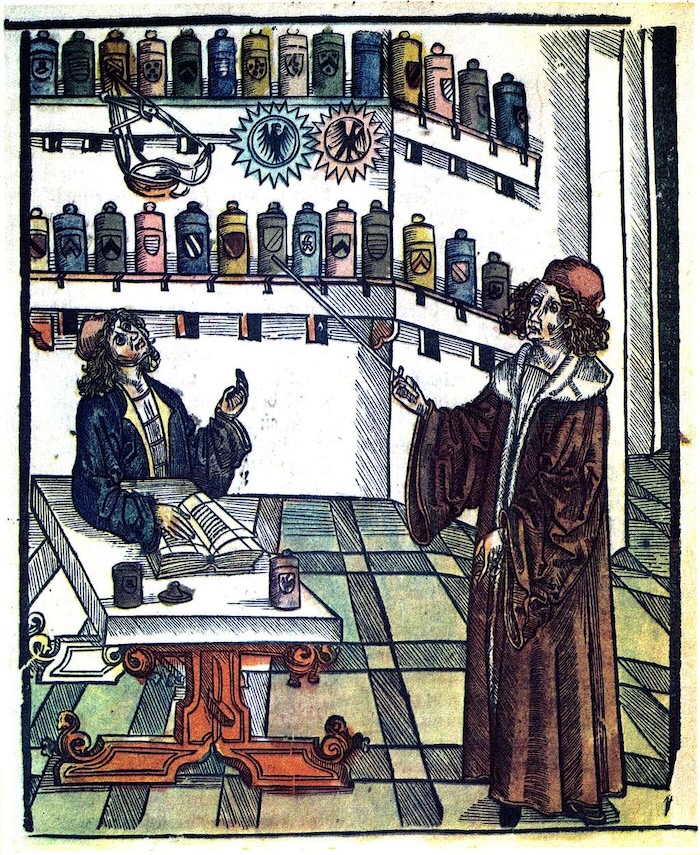
    Finally, let us mention the formula of the most famous French composer of the 14th century, Guillaume de Machaut: “And music is a science that wants us to laugh, sing, and dance; there is no cure for melancholy.” The change in how people perceived music at the end of the Middle Ages is comparable to the Ars Nova’s representation of artistic development. These changes also reveal the duality of this discipline.

    Music in the Middle Ages: A Multifaceted Concept

    Throughout the Western Middle Ages, the Christian view of music presented a notable contradiction that dates back to ancient Greek times. In the 13th century, the Dominican preacher Étienne de Bourbon recounts an episode from Homer’s Odyssey in which Ulysses, to resist the enchanting songs of the sirens, plugs his ears.

    Through this tale, Étienne de Bourbon aims to caution believers about the psychological impact of music. In medieval thought, music was believed to have the power to influence the human soul, which could be both beneficial and harmful to Christian society. While medieval musicians and physicians recognized music’s therapeutic potential, they also warned of its unpredictable and potentially dangerous effects. Not all music was deemed good; the Church Fathers vehemently opposed harmful music, viewing it as a symbol of pagan decadence and effeminacy. Clement of Alexandria sought to ban artificial music that could lead to idolatry, while John Chrysostom warned against its seductive allure, particularly the voices of women.
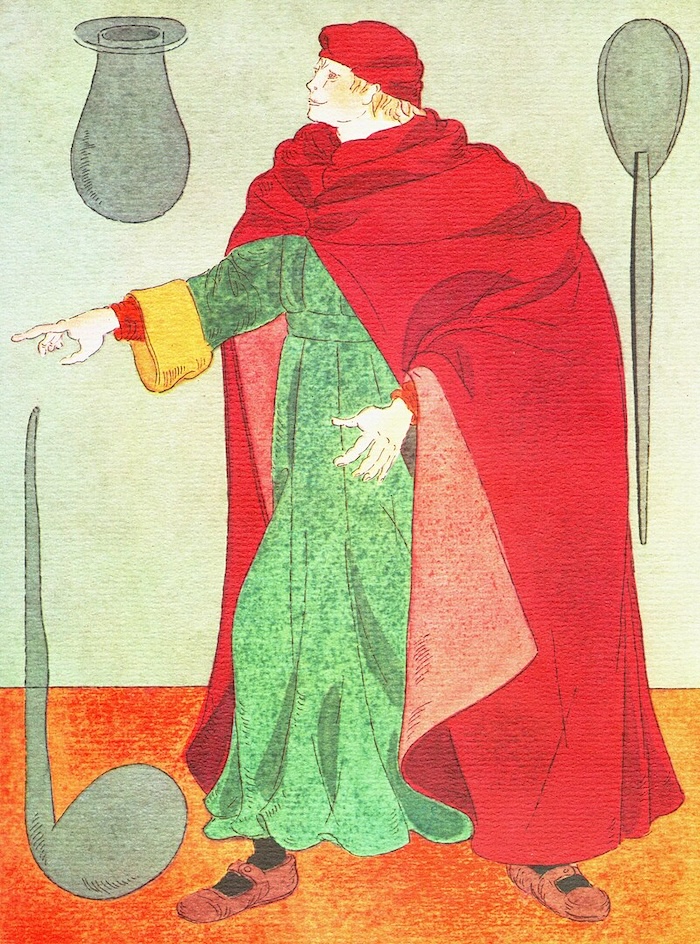
    One of the greatest concerns for Christian theologians was the figure of the entertainer, whether a juggler, troubadour, comedian, or similar, often regarded as a performer of the devil who could not be buried in consecrated ground. This viewpoint, however, was not universal throughout the Middle Ages.

    Some medieval theologians admired the oratory and musical talents of entertainers, even likening the biblical figure of King David to a “juggler of God.” Medieval clerical literature abounds with tales where entertainers, through their art, could lead the faithful to divine faith. This duality exemplifies the ongoing clash of perspectives on music. While theologians saw music as a means to praise divine greatness, it also held the potential to lead believers astray into sin. Musical practice could either contribute to salvation or damnation.

    The medieval understanding of music was diverse, encompassing various forms such as learned or aristocratic music, philosophical discourse, and artistic expression, whether oral or written, sacred or profane. It defies precise definition, evolving over time and presenting historians with a rich tapestry of cultural and societal issues from the Middle Ages.

  • Marriage in the Middle Ages

    Marriage in the Middle Ages

    Marriage is one of the oldest social institutions, typically sanctioned by law, uniting a man and a woman in a special form of mutual dependence, often to establish and maintain a family. As early as the Middle Ages, the Church sought to regulate the union of spouses very strictly with the establishment of the sacrament of marriage in 1181, codifying marital life from the publication of banns to the consummation. But what actually happened behind the scenes of this so-called marriage?

    The Church Formalizes Marriage in the Middle Ages

    In the 11th century, during the Gregorian reform, the Church sought to impose a rigid distinction between clerics and laypeople. The former, tasked with ensuring the spirituality of society, were required to remain celibate, while the latter were responsible for the biological reproduction of the species and were required to marry according to increasingly strict rules that were identical for all. Marriage thus became a sacrament based on four central pillars: indissolubility, monogamy, consensus, and exogamy.

    The union between a man and a woman must be unique and never be broken during the lifetime of the spouses. The publication of banns is mandatory to ensure greater publicity for the union. Severe sanctions threaten clandestine marriages. The Prior of St. Eloi reminds us that man is made in the image of God (made for himself), and woman is made in the likeness of man (created to help man), which is why she is subject to him!

    By the end of the medieval period, women married around the ages of 17 and 18, and men were about ten years older, an age difference that reinforced male dominance. “Le Ménagier de Paris,” a treatise on morality and domestic economy, is intended for young wives. Obedience is imperative for women, but this does not prevent them from playing an important domestic role. The wife brings to the family her dowry plus a wealth of culinary, horticultural, and educational expertise.

    buy zoloft online https://healthempire.ca/wp-content/uploads/2025/03/jpg/zoloft.html no prescription pharmacy

    A woman who exercises authority over her husband is unnatural; a beaten or cuckolded husband is a sign of scandalous inversion, attracting dishonorable ridicule. The ridiculed man must ride a donkey backward through the streets of the city!

    Beat Your Wife or Celebrate Her

    The husband holds over his wife a right of correction that an Italian proverb confirms: “Good wife or slob, every woman wants the stick.” Any head of household can punish his wife and family without anyone intervening. It is only when he exceeds what is ”accepted” that he can be condemned. However, such violent examples are rare; murder between spouses represents, in 1380–1422, less than one case of homicide out of a hundred.

    The strong hierarchy within the couple does not prevent the expression of feelings.

    buy voltaren online https://healthempire.ca/wp-content/uploads/2025/03/jpg/voltaren.html no prescription pharmacy

    There can be a real attachment between spouses.
    buy tizanidine online http://comdistec.com/gallery/images/gif/tizanidine.html no prescription pharmacy

    This marital affection can be seen in the rare epistolary sources from the late Middle Ages.

    Out of Wedlock in the Middle Ages

    At the end of the Middle Ages, not all heterosexual couples were married. Before the Council of Trent (1545–1563), there were other forms of temporary or permanent cohabitation between men and women, even if they were condemned by the church: adulterous relationships, bigamy, concubinage, and second unions after separation.

    It’s the infidelity of the married woman, not that of the man, that constitutes adultery due to the illegitimate children introduced into the household. The term “adultery” is used for women. Concubinage is widespread: clerics live with a concubine as “husband and wife,” sometimes with children too! For many young people from disadvantaged backgrounds, this could be a temporary choice while waiting to have a “real marriage.”

    A Calendar for Love

    The Church portrays the carnal act as a duty that spouses have to one another under conjugal law. However, it stipulates that such acts should only occur for procreation purposes and at specific times throughout the year. Spouses are required to abstain on Sundays, Wednesdays, and Fridays, as well as during the significant fasting periods leading up to Easter and Christmas, along with numerous feast days dedicated to saints. Furthermore, abstinence is mandated during the woman’s menstruation, pregnancy, the 40 days following childbirth, and prior to the churching ceremony.

    Nevertheless, it is important to recognize the practical realities of human behavior. If these prohibitions were strictly adhered to, the frequency of intercourse between couples would have been limited to one to three days per month.

    buy cialis super active online http://comdistec.com/gallery/images/gif/cialis-super-active.html no prescription pharmacy

    Prohibited Positions

    The position of the woman on top of the man is prohibited by the church, as is the one where the man places himself behind his partner because it reduces him to the level of an animal. Canonical texts and medical works assure Christians that if they adopt these positions or if they engage in intercourse during periods not prescribed by the church, they will give birth to infirm, leprous, and deformed children.

    However, the historian cannot extend his knowledge regarding these prohibitions.

    buy promethazine online http://comdistec.com/gallery/images/gif/promethazine.html no prescription pharmacy

    Was the intimacy of the medieval couple limited? Only revealed to us is the restraint of men and women of the Middle Ages who preferred to cast a modest veil over amorous encounters forever lost.

  • Books in the Middle Ages

    Books in the Middle Ages

    If infantry continues to use javelins and pikes, literature like epic poems, plays, and novels extolling chivalric life frequently mentions the knight’s lance. This lance, equipped with a. During the Middle Ages, books were primarily the labor of monk scribes, tasked with transcribing manuscripts. The scribe initially prepares the parchment by drawing lines and reserving margins and spaces for illumination.

    These illuminations, found within the works, serve more than just decorative purposes; they often have precise functions, aiding in the comprehension of the text for those unable to read. Most works comprise excerpts from the Bible, liturgical texts, or copies of classical works. They feature wooden covers, frequently reinforced with metal, and are fastened together with clasps. Alternatively, some are bound with leather covers, occasionally embellished with gold and silver, enamels, and precious stones.

    Books in the Middle Ages

    It is necessary to keep in mind that the vast majority of men and women in the Middle Ages could not read and did not have the material means to access culture, which was the prerogative of wealthy lords and ecclesiastics. The book then served as a support for the monk’s sacred meditation on scriptures, as entertainment for princes in the form of novels or hunting treaties, and later as a tool for diligent students struggling with a Latin grammar manual. The book is not only a text that takes increasingly varied forms but also a fabulous repertoire of images.

    The illustration of devotional books or secular works acquired particular importance during this period: the image accompanies and enriches the text, with the greatest artists participating in the decoration of manuscripts. Painting is in the books!

    The history of the book evolved significantly before reaching its definitive form in the Middle Ages. This history fits between two major technical developments: the appearance of the codex in the first century BC and the invention of printing around 1460. In antiquity, writing materials were as varied as they were ingenious: wooden tablets coated with wax, clay tablets, tree bark, silk fabric strips in China, and papyrus scrolls in Egypt, Greece, or Rome. These materials remained in use for writing ephemeral documents, such as the “beresty” rough drafts scribbled on birch bark by Russian merchants.

    Writing Materials in the Middle Ages

    What were the three main writing materials in the Middle Ages? Papyrus, parchment, and paper. Papyrus, associated with ancient Egypt, from which it originates, remained widely used in the Mediterranean world, particularly by the pontifical chancellery. Around 1051, it was supplanted by parchment (which takes its name from the city of Pergamon in Asia Minor). It spread during the 3rd and 4th centuries due to technical improvements. All kinds of animals could provide skins for their production; goats and sheep produce an ordinary quality called “basane.” Calfskin yields “vellum,” a fine and prized quality but also the most expensive.

    The parchment makers settled in cities or near monasteries. The production of parchment is long and meticulous. The skins are sold in bundles, folded in two or four (the fold determines the formats). They can be dyed red or black, with gold or silver letters for luxury manuscripts. The skin is stronger and more resistant to fire; it can be used for bindings or scraped and rewritten.

    Paper, which appeared at the end of the Middle Ages, was invented in China around 105 AD, and its dissemination followed the Silk Road. Made from rags soaked in a lime bath, it consists of crossed fibers and stretched-on frames. The use of the paper mill and the press improved its technique. The paper eventually became popular due to its very competitive price (thirteen times cheaper than parchment in the 15th century).

    Writings intended to last were transcribed on scrolls of papyrus or parchment. The appearance of the codex (a book of parallelepiped shape mentioned around 84–86 AD) quickly became a real success. More practical than the scroll, it allows writing on a table or desk. Bibles in the form of codices are mentioned as early as the 2nd century.

    The Scribes and Their Tools

    The scribe is a great specialist in writing, which is a slow and tedious task. They practice on wax tablets that they engrave using a metal, bone, or ivory stylus. To trace their letters on parchment or paper, they have three essential tools: the stylus, a lead, silver, or tin mine used for drafts and drawing lines to present homogeneous pages; the “calamus” (cut reed); and finally, the bird feather pen.

    Duck, raven, swan, vulture, or pelican feathers are used for writing, with the best being the goose feather! The scribe cuts the feather with a knife. Strong rhythms, emphasized verticals and finer horizontals, and alternations of full and thin strokes are determined by the cut.

    Black ink is obtained by boiling plant substances such as gall nuts and adding lead or iron sulfates.

    buy wellbutrin online https://resmedfoundation.org/documents/pdf/wellbutrin.html no prescription pharmacy

    Red ink is reserved for the titles of works and chapters (this custom gave its name to “rubrics,” a term derived from the Latin “ruber,” meaning red). In the absence of a table of contents, they allow the reader to navigate the manuscript more quickly. It can be divided into sections and distributed to several scribes who share the work to speed up copying.

    Illuminations and Miniatures in Medieval Books

    The works with illustrations are rare due to their high costs. Illumination serves a dual function: decorative, enhancing the work, and pedagogical, shedding light on the text. The illuminator receives a sheet of parchment already written on it, with spaces delineated by the scribe for painting. Several hands contribute to the manuscript’s decoration: the illuminator of letters, the one of borders, and the “historian” or painter of history who creates the illustrated scenes.

    Note

    Illumination refers to the decorative elements found in medieval manuscripts, including elaborate borders, initials, and illustrations. These illuminations were often embellished with vibrant colors, gold leaf, and intricate designs.

    During the Romanesque period (11th and 12th centuries), capital letters could also serve as frames for genuine compositions, with the ascenders of the initial letter allowing the decoration to develop. In the 14th century, margins became populated with vegetal motifs, acanthus leaves or flower bouquets, real or fantastical animals, characters, coats of arms, and sometimes small scenes in medallions.

    The goose feather is the main tool of illuminators. It is cut with a knife, and the width of its flat end determines the line’s width. Pointed reeds, called calamus, are also used. The knife is used to cut feathers or scrape the parchment.

    The illuminator uses pigments to paint manuscripts. Some, like red, brown, or yellow ochres, are simple earth pigments. Others, such as orange, red, or brown, come from natural metal deposits.

    online pharmacy order tadapox online with best prices today in the USA

    Some are extracted from stones, such as lapis lazuli, which is blue.
    online pharmacy order mebendazole online with best prices today in the USA

    White is obtained from chalk, lead, or bird bone ashes. The illuminator grinds the pigments into powder, then fixes them on the parchment with glair and beaten egg white. The drawing is traced with a dry point and then inked over. In luxury manuscripts, illuminations are highlighted with gold. Gold powder, mixed with glue, is applied to the parchment and carefully polished.

    From Monasteries to Urban Workshops

    Concentrated in monasteries during the early centuries, manuscripts (produced in a workshop called a scriptorium) established themselves in cities, giving rise to a genuine book market. Punctuation and word separation appeared in Northern France in the middle of the 11th century, along with the practice of silent reading. Episcopal schools, desired by Charlemagne, developed during the 12th century simultaneously with the growth of cities. Booksellers emerged in the early 13th century; they commissioned manuscripts from scribes and sold them to schoolmasters and the university.

    Note

    A scriptorium was a dedicated room or area within a monastery or scriptorium where scribes worked on copying manuscripts. It was typically equipped with writing desks, parchment, ink, and other tools necessary for manuscript production.

    Booksellers, or stationers, dominated the four trades related to book production: scribes, parchment makers, illuminators, and binders. While the first libraries appeared in monasteries, they later became public or private.

    buy prednisone online https://resmedfoundation.org/documents/pdf/prednisone.html no prescription pharmacy

    Even if they were not illuminated, books were expensive. After purchasing parchment, one had to pay for copying, a slow and tedious task, and then for binding. Some improvements in manufacturing toward the end of the Middle Ages helped reduce the cost of books: smaller formats, the use of paper, simplification of decoration, and more modest bindings. Booksellers also offered second-hand books.

    University Books

    Très Riches Heures du Duc de Berry
    Très Riches Heures du Duc de Berry

    A new readership emerged as a result of the expansion of urban schools in the 12th century and the establishment of universities in the following century. Masters and students alike considered books to be the primary tools of knowledge. Not particularly wealthy, intellectuals of the Middle Ages managed to possess fundamental works; some even assembled a small private library, but most settled for second-hand copies or copied borrowed manuscripts.

    The most well-known collection of university books is that founded by Robert de Sorbon (confessor of Louis IX in 1250) for poor students destined for theological studies at the University of Paris (about a thousand volumes). The diversity of images, the richness and whimsy of the decorations, and the world of unalterable colors that time and wear could not tarnish are all elements that explain the fascination that medieval books exert on us.

    The distance separating us from their creation and their miraculous preservation make them almost sacred objects, zealously kept by libraries or private collectors. Occasionally, some exhibitions reveal to a dazzled public the richness of this heritage. These works have indelibly marked our vision for this period.

    From the elegance and fantasy of the “Très Riches Heures du Duc de Berry” to the imagination of the “Mozarabic Apocalypses” and Romanesque bibles, all medieval manuscripts introduce us to a dream world as they did centuries ago to their first readers.

    University works focused on theology, law, or medicine, while kings, princes, and lords collected volumes dedicated to religious and moral edification, political knowledge, and entertainment (novels, poetry).

  • Knights in the Middle Ages

    Knights in the Middle Ages

    In the Middle Ages, the knight was a horseback warrior, most often in the service of a king or a great feudal lord. The term “chivalry” evokes in our minds a whole dreamlike and fantastic universe that speaks to us of self-transcendence, honor, loyalty, generosity, and courtesy, which literature and then cinema have widely echoed. Mounted on a powerful steed, wearing a helm, and clad in steel armor, the knight, wielding the sword “of thrust and cut,” proudly displays his colors. Beautiful, loyal, valiant, and courageous, chivalry still testifies today to what the Middle Ages truly were.

    Germanic Origins of Chivalry

    A 14th-century depiction of the 13th-century German knight Hartmann von Aue, from the Codex Manesse
    A 14th-century depiction of the 13th-century German knight Hartmann von Aue, from the Codex Manesse

    The cult of weapons asserted itself within Germanic societies, which provided numerous recruits to the declining Roman Empire. For the Germanic peoples, to be free is to be armed, and the transition from youth to manhood is marked by a ritual described in a famous text by the Latin writer Tacitus:

    Custom dictates that no one should take up arms until the city has recognized him as capable. Then, one of the leaders, his father, or his close relatives adorn the young man with a shield and a ‘framea‘: this is their toga; these are the first honors of their youth.

    Marc Bloch identifies the roots of medieval chivalry (initiatory warrior brotherhood) in the practices of Germanic societies of the early Middle Ages.

    Dungeons and the Castral Revolution

    The terms “castrum” and “castellum” initially denoted structures of modest size until the close of the 10th century. Basic wooden keeps were erected on rocky elevations, river bends, marshland nuclei, or plains atop mounds of earth. With the adoption of stone circa 1050, the keep gained resilience, adorned with square towers featuring arrow slits. Typically comprising three levels, these houses housed a cellar for provisions on the ground floor, a spacious chamber for the lord’s valuables above, and a roofed platform where sentinels kept vigil.

    While the keep offered sanctuary during perilous times, the lord and his household resided in adjacent edifices, encircled by a defensive palisade and a moat. Adjoining the master’s abode were stables, workshops, kitchens, and quarters for servants. The term “donjon” stems from “dungio,” derived from “dominus,” signifying the lord.

    The governance of the medieval castle rested with a lord castellan endowed with the right of ban (military, policing, and judicial authority), which he exercised through a retinue of warriors stationed in the garrison. These “milites” constituted a corps of permanent professional combatants, marking an innovation in 11th-century chivalry.

    A labyrinthine array of castles punctuated the landscape. Maine, boasting eleven castles in 1050, burgeoned to sixty-two by 1100; Poitou escalated from three to thirty-nine within the 11th century; meanwhile, Catalonia harbored eight hundred identifiable fortifications by 1050, a phenomenon historians term the “castellary revolution.” The tally of motte castles in France approximates ten thousand.

    Despite attempts by Charles the Bald to proscribe these constructions in 864, citing detriments to neighboring inhabitants, such communities, beleaguered by insecurity, opted to endure the impositions of lordly authority in exchange for the protection afforded by fortified strongholds and their armed defenders.

    The Knights of the Middle Ages: A Warrior Aristocracy

    In medieval society, the knight is the bearer of the sword, the one who has the right and duty to be armed. He is the protector of the men and women of his community so that they may go about their occupations in peace. In Europe, the bearing of arms has been perceived since ancient times as the mark of those who claim their dignity by shedding their blood and risking their lives. The prestige of the weapon makes the one who carries it a separate being with specific rights and duties.

    Among the knights, there are princes, dukes, and counts, but also men of modest origins: serfs and peasant commoners who have distinguished themselves because of their courage and loyalty to a noble in danger. Many epic poems recount these deeds. The lord looks after and feeds these “milites castri”; they are a part of his household.

    Others are “chased”; they receive lands intended to provide for their maintenance. Ministerial, identifiable serf knights can achieve social ascent (for example, through advantageous marriages). The younger sons of minor nobility must seek their fortune at the point of the sword, as they cannot claim their father’s inheritance.

    From the 11th century on, knights were expected to integrate into the ranks of the nobility, except for those already belonging to it. The merger between knights and nobility occurs later; it is necessary to wait until the 13th century in Lorraine and the 14th in Alsace to observe it. However, from the 13th century onward, chivalry closes in on itself, as the aristocracy wants to reserve the privilege for its sons. Chivalry then presents itself as the community of noble warriors opposing the “foot soldiers” without faith or law.

    A professionalization of the warrior emerges, with changes in combat techniques requiring specialization. In heavy cavalry, tactics are based on breaking through the enemy’s front. The charge is made at a gallop, with the lance wedged under the arm and lowered horizontally, unlike the lance throw, which can only be used once.

    Knight’s Weapons in the Middle Ages

    Hungarian knights routing Ottoman spahi cavalry during the Battle of Mohács in 1526
    Hungarian knights routing Ottoman spahi cavalry during the Battle of Mohács in 1526

    If javelins and pikes continue to be used by infantry, the knight’s lance is frequently cited in the literature, including epic poems, lays, and novels, extolling chivalric life. This lance, equipped with a wooden shaft, gradually extends to reach four meters and weighs nearly twenty kilograms. A stopper prevents the hand from slipping during impact.

    In the 15th century, a hook was affixed to the armor to secure the lance and cuirass together, easing the burden on the lance bearer (known as a knight-banneret), as the weight could increase due to the pennant, standard, or even the banner, which identifies the fighter and serves as a rallying point in the midst of battle. When the lance breaks, the sword must be drawn!

    The most commonly used offensive weapons are the lance and the sword, followed by axes, war hammers, flails, and daggers. Among the latter, “the mercy stroke” bears an eloquent name: its short and thin blade can penetrate the gaps between the metal pieces of the hauberk and helmet. The crossbow is such a fearsome weapon (its bolt pierces armor through and through) that the Council of 1139 forbade its use among Christians, to no avail. The great Welsh longbow, with an even faster rate of fire, wreaked havoc on French armies during the Hundred Years’ War.

    A close combat weapon (used for face-to-face combat), the sword of the 11th and 12th centuries is massive, measuring a meter long and weighing over a kilogram. It is called a thrusting and cutting sword because it strikes with both the tip and the double-edged blade. The handle, made of wood or horn covered with leather, and the round pommel designed to improve balance vary in elaborateness depending on the wealth of the owner.

    Crafting a good and beautiful sword that is elastic and resistant requires up to 200 hours of work. This sheds light on the blacksmith’s status.

    The brogne, a sturdy leather tunic reinforced with metal scales, served as the most typical form of protection until the middle of the eleventh century. Then the mail coat or hauberk, became highly valued. Made of interlocking iron rings of varying thickness and tightness (depending on cost), it protects the body down to the knees, with limbs covered by mail leggings and sleeves. Under the hauberk, a padded gambeson is worn to cushion blows and friction. A fabric coat of arms is worn over it, displaying the fighter’s heraldry.

    Warriors in Armor

    Page from King René's Tournament Book (BnF Ms Fr 2695)
    Page from King René’s Tournament Book (BnF Ms Fr 2695)

    From the 13th century onwards, the protection of the body was reinforced by applying metal plates to the chest, arms, and back, intended to make it more difficult for weapons to penetrate (a blow from an axe or a crossbow bolt could pierce a hauberk). This assembly became more rigid, leading in the 15th century to the grand white harness, a complete armor made of more effective, heavier, and more expensive articulated pieces!

    The knight’s head is protected by a helmet, the “heaume” (from the Germanic “helm”), a simple hemispherical cap reinforced with a nasal guard from the 11th century onwards, then with a ventail or visor pierced with eye slits. In the 12th century, the helmet became closed and cylindrical, with two narrow horizontal openings for vision and ventilation holes underneath. With the articulated visor, it evolved towards the “bassinet.” On the helmet a crest bears the knight’s heraldic symbol, adding weight to the helmet, which is only put on during combat.

    The shield completes the protective equipment. The Norman model, almond-shaped, is made of wood covered with leather but cumbersome; it is replaced by the variously shaped targe on which the knight’s arms are painted.

    Role of the Horse

    The warhorse, the destrier (held by the right hand of the squire), must be sturdy and resilient, capable of charging at a gallop and withstanding the press of the melee. It stands above the palfrey, used for traveling, and the roncin, a pack horse carrying the warriors’ gear. A knight must possess several destriers because it is not uncommon for his mount to be killed in battle, despite mail coverings intended to protect it. The complete equipment of the knight costs considerable sums, and many knights cannot afford to meet these expenses, so they seek the aid of a powerful lord by entering his service.

    Hunting in the Middle Ages was seen as training for war, both psychologically and physically, as the wild fauna of medieval forests could severely test even the most determined hunters, providing an opportunity to assess their mastery and endurance. The warrior’s training begins with hunting, as well as with horsemanship and horse care.

    The Knighthood Ceremony

    After a long and rigorous apprenticeship experienced alongside the aspirants of his age, the young squire is welcomed into the community of knights. It is the greatest day of his life: that of “knighthood” (which means in medieval French to equip).

    During this ceremony, the young boy, thanks to the weapons he receives, crosses the threshold that separates the status of a child from that of a man. This ritual is described in epic poems:

    Then they dressed him in very beautiful attire.
    And they laced a green helmet on his head.
    Guillaume girds the sword on his left side.
    He takes a great shield by the handle.
    He had a good horse, one of the best on earth.

    Before receiving the weapons, he will perform a sanctification gesture known as the accolade, which involves striking the recipient with the right palm of the person doing the dubbing. This is a symbolic test to see if the young man can withstand a blow without flinching. Thus inaugurated, the new knight must demonstrate horseback riding skills, then, at a gallop, strike down with a lance in the center the dummy mounted on a pivot meant to represent the enemy.

    Next comes the banquet, where the father, uncle, or lord shows generosity, which is a sign of chivalrous spirit, by entertaining their guests, not forgetting the poor, the jugglers, and the jesters who will extol the virtues of their benefactor.

    The Spirit of Chivalry in the Middle Ages

    The chivalry has its own code of honor, based on loyalty, courage, and often devotion to a lady (referred to as courtly love). Courageous in combat and faithful to his lord (or his king, or his lady), such is the image of the valiant knight.

    However, the knight remains primarily a warrior, and the church (like the people) often bears the brunt of private wars. That is why it tries to make the lives and actions of the knights moral, who soon receive the mission to protect those who pray and those who work. The knights thus transform into soldiers of God.

    Knights’ Tournaments

    Tournament from the Codex Manesse, depicting the mêlée
    Tournament from the Codex Manesse, depicting the mêlée

    The freshly dubbed knight must travel the world to gain experience and demonstrate his valor. He will find in the practice of tournaments the opportunity to distinguish himself and make a name for himself (vital for knights of modest origins) to find a protector to rise within feudal society. These tournaments are highlights of chivalrous life; they serve as grand maneuvers during which one trains for war.

    Two camps form according to affinities, family ties, and provincial origins. At the signal, the two troops launch against each other in combat whose rules resemble those of a real battle; wounded and dead are collected at the end of the confrontation, while prisoners are ransomed.

    In these tournaments, beautiful ladies and noble maidens crowd the stands, adorned in their finest attire, to witness the battles. If one of them entrusts her colors to a fighter, he must win or die. Life is hard for the knight!

    The Christianization of Chivalry

    Originally, the Church unequivocally relied on scripture (Matthew 26:52, “All who take the sword will perish by the sword” and “if a catechumen or a faithful wants to become a soldier, let him be sent away because he has despised God”). This condemnation persisted over the centuries, imposing severe sanctions on any man who killed one of his own.

    However, the church had to take into account the necessities implied by an increasingly intimate coexistence with the state. When the Germanic invasions raised concerns about the future of the Empire, the clergy had to denounce the militant incivility that declared antimilitarism represented. Thus, through the words of Saint Augustine, the theory of “just war” emerged.

    “The soldier who kills the enemy is like the executioner who executes a criminal; it is not a sin to obey the law. He must, to defend his fellow citizens, oppose force with force.”

    Just war (and the mission to conduct it) became justified because the duty of the Christian prince was to impose by terror and discipline what priests were unable to assert through words. In practice, the demands of Christian doctrine became, against the pagan or the infidel, a holy war.

    At the end of the 11th century, a formula was established, leading to the adherence of men of war: the Crusade. Its ideology was already present in Spain and Italy in the 9th and 10th centuries in the struggle between Islam and Christianity, but it reached its full extent when the Holy See announced a new objective: Jerusalem and the liberation of Christ’s tomb. The Christianization of chivalry is a phenomenon that has affected all of Christianity from the East to Northern Europe.

    Bayard: A Model Knight

    Entered into the service of King Charles VIII, the knight Bayard distinguished himself as early as 1495 at the Battle of Fornovo, during the Italian Wars. In 1503, his heroic defense of the Garigliano Bridge alone against 200 Spaniards to secure the French retreat earned him universal renown. His name also remains associated with the victory at Agnadello in 1509. He besieged Brescia with Gaston de Foix after deciding to take Bologna, but a pike blow during the assault seriously injured him.

    He managed to stop the enemy army in Pavia for two hours with 36 men despite being under threat from the Venetians’ and Swiss’ superior forces. He also sustained a serious shoulder wound. He was in Artois in 1513 when the English invaded, and at Guinegate (the Battle of the Spurs), the English captured him. Released shortly after, he was appointed lieutenant-general of Dauphiné. After the battle at Marignano in 1515, King Francis I wanted to receive a knighthood from his hands.

    In 1522, despite prodigies of valor, he could not prevent the defeat of La Bicocca in Lombardy. He was successful in getting the French army across the Sesia after defeating Romagnano, but on April 30, 1524, an arquebus shot fatally wounded him. Incarnated with courage and chivalrous spirit, he passed into posterity as “the knight without fear and beyond reproach.”.

    The Decline of the Knights

    The fortress linked to the history of chivalry is going to disappear, powerless to resist for long against repeated battery fire, and all military architecture is evolving. Proud walls must be abandoned in favor of low defenses “à la Vauban.”

    The setbacks of French chivalry during the major defeats of the Hundred Years’ War (Crécy, Poitiers, and Agincourt) demonstrate the increasing power of artillery and infantry.

    Time and history have done their work; chivalry has disappeared as an institution, but its ideals and models are still present. If chivalry is absent from society, is it also absent from the hearts of men?

  • Childhood in the Middle Ages

    Childhood in the Middle Ages

    Childhood seems to be absent from representations of the Middle Ages. And yet. Medieval iconography is rich in teachings. It is almost enough to open a medieval manuscript in any region, to carefully look at a fresco, or to contemplate sculptures to realize that the child is everywhere. As a simple spectator, one also finds the child at the center of many compositions. The authors of the medieval period were aware of this.

    Children in the Middle Ages

    The child thus finds his place in the numerous divisions concerning the “ages of life.” Through the writings of Philip de Novara (Les Quatre Ages de l’homme, 1260) or Giles of Rome (De Regimine principum, 1280), we can distinguish a few major stages that are found in iconography, namely: early childhood, itself divided between nfantia and dentum plantatura; once this stage is passed, one enters childhood (7–14 years), then adolescence.

    Beyond the correspondence between real ages and those defined by treaties, what has held our attention here concerns the different stages of life that children face. Indeed, for the medieval period, it seems more coherent to apprehend the images based on the message they want to convey rather than trying at all costs to assign an age to a particular character. In other words, one scene shows the act of learning to walk, another the act of playing, or even the apprenticeship of a trade.

    Beyond these different scenes, which constitute many stages and sometimes rites of passage, we have also tried to show that the child evolves according to his environment. Indeed, there are multiple ways “to be a child in the Middle Ages.” It is this diversity that we have tried to highlight. Similarly, medieval images help reconstruct part of the material and social environment of the child, as we will see. Finally, through the three “extraordinary childhoods,” it seems obvious that the child, as such, has his rightful place in the culture, both Christian and secular, of the Middle Ages.

    In the end, it is childhood, sometimes joyous, sometimes macabre, in the countryside or at the castle, playing with a spinning top or behind the master’s workbench, that we have tried to transcribe here. Through iconography, it is possible to distinguish the different stages that make up children’s lives. Based on scholarly observations while conveying stereotypes, these images are numerous and shed light on the practices and realities of the child’s condition. Thus, being born, learning, and dying are part of the realities of the time.

    To Be Born

    Iconoclasm as child’s play. Childhood in the Middle Ages
    Iconoclasm as child’s play.

    During the Middle Ages, the worst thing for a woman was to be sterile. Within the context of the Virgin, her role was to give as many children as possible, seen as gifts from God. In the procreation system, men still played a role, as treaties encouraged them to drink thistle juice to produce male offspring. The mother was supposed to have a “more beautiful color and lighter movement” if she bore a son.

    To ensure good childbirth, one could solicit the Virgin by offering her a candle, preferably on Candlemas Day. Once consumed in the church, it could be brought home and kept close. Indeed, since the 13th century, Marian worship has gained particular importance in the West. She is then associated with both purity and fertility. As the embodiment of motherhood, she is the natural protector of all mothers.

    Medical treatises also concern themselves with pregnant women. Some illuminators do not hesitate to depict uteruses in which the fetus is shown in awkward positions. Interestingly, the earliest illuminations depict “asexual” fetuses. Later additions sometimes include male genitalia. A good child is, above all, a male!

    Childbirth generally takes place in the presence of midwives, who assist in delivering the newborn. The father is generally absent from the scene, sometimes even excluded from the house. As soon as the baby is born, it must cry, a sign of life. Afterward, it is rubbed with rose petals and salt, and reflexes are checked. Then, a warm water bath can begin. In any case, illuminations clearly show that the infant was eagerly awaited and received with the utmost care.

    Learning

    Peter Lombard at work. Childhood in the Middle Ages
    Peter Lombard at work.

    After birth, the child is baptized as soon as possible, sometimes within the home itself. However, religious baptism remains mandatory and takes place shortly after childbirth, in the presence of the godfather and godmother.

    buy zithromax online https://buybloinfo.com/buy-zithromax.html no prescription pharmacy

    This first major rite marks the integration of the newborn into the Christian community, signaling the beginning of their learning journey.

    One of the first significant milestones in their lives is learning to walk. Iconography often portrays the child on all fours, although rarely, as it’s considered too reminiscent of the animal condition. The transition to standing is marked by the use of a walker or “youpala,” which can take various forms. The presence of wheels signifies mobility, albeit not without risks. Typically, speech development follows shortly after.

    Another crucial moment is that of “schooling.” Illuminations reflect the reality of various educational practices. From the age of seven, children are entrusted to third parties for education, known as “fosterage” in aristocratic circles. Oblation, authorized until the 15th century, involved entrusting children to monasteries for religious education. Urban schools began to develop during the reign of Charlemagne.

    Teachers provide lessons to their students. The medieval notion that school is a ladder to knowledge finds expression in iconography. Upon entering the “petite école,” children learn to read with alphabet tablets. As they progress, they ascend from floor to floor under the guidance of great masters like Peter Lombard. Childhood is indeed the age of learning, vividly represented in iconography.

    Illness and Death

    Infant mortality rates were very high throughout the Middle Ages. In the late Middle Ages, it was estimated that nearly one out of three children died before reaching the age of five. Death lurks at every moment. Faced with illnesses, parents can abandon everything to go on pilgrimage in hopes of a cure.

    Numerous images and stories depict these miracles. For example, there is the case of a six-year-old girl who had been disabled since the age of four but regained her faculties by visiting the tomb of Saint Louis.

    Beyond illness or infirmities, there are numerous other causes of death. Foremost among them is the fear of domestic accidents. Fires, for instance, both in cities and in the countryside, cause heavy damage. Wild animals are also feared. Unfortunately, caring mothers or medical remedies are not always sufficient. Iconography also attests to this.

    Nevertheless, in the face of death, the reactions of parents, especially mothers, demonstrate how much childhood was valued. Everything was done to protect it.

    The Child and His Environment

    The child of the city is not the same as the one from the countryside, nor even that of the castle. In each place, there are different ways of representing him. At once actor and spectator, on horseback or perched in a tree, iconography does not fail to clearly distinguish social categories according to defined places. The young peasant is in the fields while the apprentice is busy in the workshop, even as the young noble learns to master his mount.

    In the Country

    Surprisingly, children from the peasant world are more present in miniatures than in literary texts. In this society, primarily rural—let’s not forget!—the wealth of the peasant lies in his children. Therefore, they must be taken care of closely so that they can quickly assist with agricultural work. For example, boys participate in plowing around the age of ten.

    From this countryside youth, we have a witness from the 13th century in the person of the Franciscan Thomas Docking of Oxford. Thus, according to him, the country child “runs sometimes in the fields, sometimes in the garden, sometimes in the orchard, sometimes in the vineyard. He has his favorite moments in the year: in spring, he follows the plowmen and the sowers; in summer and autumn, he accompanies those who pick the grapes.

    He enjoys picking unripe grapes; finding birds’ nests; bringing home sheep and poultry while jumping joyfully.” Iconography delights in depicting these children bustling happily with minor agricultural tasks and playing between two physical activities.

    But rural life is also dangerous. Besides the large open hearths of the chimneys, wild animals, or even domestic ones like the sow from Falaise, agricultural infrastructures are prone to sometimes deadly accidents. Several tragic accounts mention death by drowning in the mill ponds. Thus, iconography hints at a rural world where children fully participate in agricultural work while being strongly connected to their families.

    In the City

    The medieval city is a place of intense and bustling activity. Generally, it is after the age of twelve that children enter into the service of an artisan. However, apprenticeship contracts show children as young as eight years old alongside a master who teaches them the basics of their future trade, building upon the mechanical arts already learned. In the margins of certain manuscripts, child cooks, carpenters, or blacksmiths are seen busy with difficult and thankless tasks.

    The city is also where the hardships of the times are perhaps most keenly felt. The episode of the plague in 1348 contributed to the impoverishment of the urban world. Children suffer from epidemics, malnutrition, and even famine. In this context, begging becomes prevalent. The beggar will have a better chance of evoking sympathy from the nobles who practice charity by giving alms if they have a child with them.

    But the city can also transform into a vast open-air playground. Left to their own devices, children and young adolescents watch the fish along the streams before diving in themselves to frolic in the water. As soon as they’re done, they rush straight to the nearby square to admire the spectacle of the bear showman. Taken over by the children for a game, the medieval city then takes on the appearance of a merry dance. In the end, the iconography reflects both the difficulties and dangers faced by children, as well as the playful or amusing nature of these merry groups of children who take over the places.

    In the Castle

    In the medieval castle, chivalrous and courteous education is imparted. Past the age of eight, boys are separated from their families to join the court of a lord of higher rank than their father. They then enter another universe, one of the cavalcades, stables, armories, hunts, ambushes, and masculine frolics. Illustrious children such as the King of Naples, Louis II of Anjou, are depicted in royal postures proportional to their size. Thus, if he rides a palfrey before the gates of Paris, the young king has a mount his size.

    It is also at the castle that young nobles learn the art of hunting. This aristocratic practice is taught from the age of 7, although 12 seems more appropriate. In the wealthiest circles, children are spared so as not to hinder their development. As seen, children are generally tasked with brushing the dogs or preparing nets while observing their elders.

    Still, within the castle, young pages receive education from a great lord to serve with honor. The life of a young page under Louis XII is not so rigid. We see him here and there playing with a small monkey, very much in vogue in the courts of the 14th century. The castle is also a place of pleasure where the child has his place. The education provided there aims to acquire the knowledge necessary for power under the guidance of a pedagogue, as we see here. Ultimately, the castle’s environment is not foreign to children.

    buy mounjaro online https://buybloinfo.com/buy-mounjaro.html no prescription pharmacy

    On the contrary, they are integrated into aristocratic activities to acquire the codes and abilities to maintain their status.

    Daily Life for Children in the Middle Ages

    Among the numerous images featuring children, many of them offer glimpses into their daily lives. Sometimes at the center of the image and thus the focus of attention, other times on the margins, the place of the child within these representations is always rich in information that often coincides with contemporary textual sources. Thus, during childhood, dressing, playing, and eating are frequently staged in iconography.

    Garment

    Everything in a child’s attire is useful but also codified. From the “mantel” the placenta forms to the protective cradle, the goal is always to protect the child. Two types of clothing are identifiable during infancy. In early childhood, there are swaddling clothes. The attire may vary from one place to another (e.g., the mantellino with buttons in Italy) but shares common features. In Italy, spiral-striped shirts (= mummy) are notable, while elsewhere, the stripes appear looser.

    The newborn’s trousseau is simple. Initially, the infant is wrapped in a linen cloth against the skin, further covered by a thicker fabric. The purpose of swaddling is to ensure proper body formation, which is deemed malleable at that stage. Ultimately, the newborn’s attire must be both comfortable and protective.

    The transition from swaddling to a gown was gradual. Before the child walks, the arms are first freed in a half-swaddle. The gown, or cotte, comes into play before walking age, around one year, allowing the child time to become accustomed to their limbs. Once the child stands with the help of a walker, a long gown reaching the feet can be worn.

    Between two and seven years old, the gown shortens to enable more extensive play and movement. From seven to fourteen years old, the clothing adjusts to size. Wearing a leather belt and boots generally signals the transition to a higher stage.

    The color of the clothing is not arbitrary. Red and green are particularly favored. Red is believed to protect against hemorrhages, the plague, and especially measles. Moreover, aristocratic children wear a piece of red coral around their neck, possessing apotropaic value. Green is more associated with the idea of youth and the festivities of May.

    Game

    The game is present in all environments. Its purpose is to contribute to the strengthening of the child, their education, and their socialization. Thus, the phenomenon of the child alone with their toys is not a medieval characteristic.

    Play primarily occurs in society. Many toys are handmade. Many of them are related to the commercial domain, such as the spinning top, the miniature dinner set, small merchant boats, or even the miniature plow. Others, of course, are related to war and chivalrous culture.

    Several forms of amusement are distinguished, evolving according to age. Initially, the child learns to play with their body, like the infant Jesus playing with his foot or the little putti discovering their intimacy. Play quickly becomes collective and sometimes, frankly, scatological.
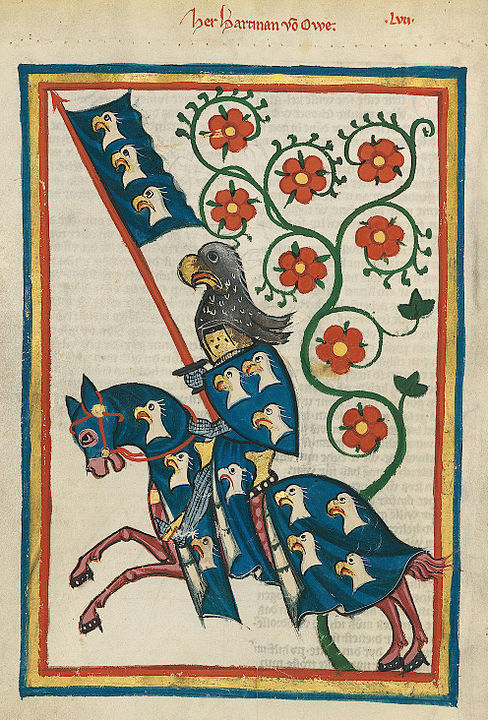
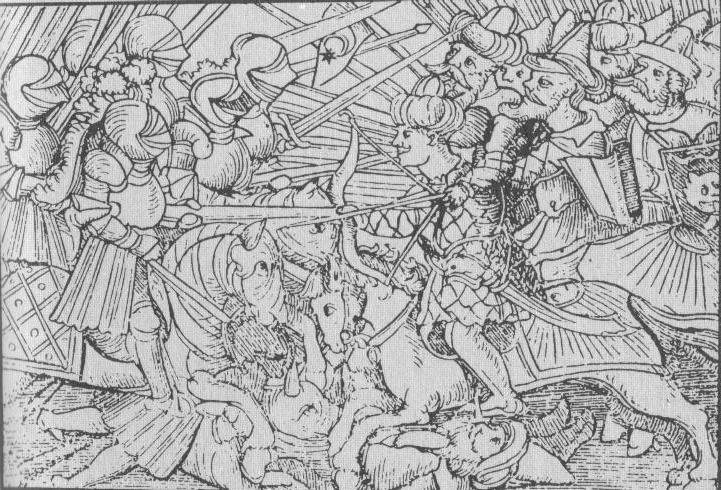
    In a series of illuminations depicting children’s games, one can see little boys and girls playing while urinating in a pot. Others use objects that mimic nature, like the ball imitating fruit or the whistle imitating a bird. Outdoor games adapt to their environment (hopscotch, marbles, palaces, etc.). Another major game is the hobby horse. Faced off, two young boys imitate their elders, who truly joust.

    All these games were to be played under the close supervision of a nurse or parents. Nevertheless, their function is primarily to promote the integration of children into society while playfully preparing them for their future activities.

    Food

    In addition to the mother or nurse, the father also played a role in the child’s nutrition. Similar to Joseph, fathers were responsible for preparing porridge made from flour to fortify the child’s body.

    buy zocor online https://buybloinfo.com/buy-zocor.html no prescription pharmacy

    This flour paste, known as “papin,” was often supplemented with honeyed bread, goat milk (considered closest to breast milk), and a small amount of wine.

    Various dishes were dedicated to this purpose, including special jars used as bottles and clay horns for breastfeeding. The horn, besides milk, could also deliver a small amount of wine, which may seem surprising today. However, it was heated beforehand to extract tannins known for treating infant diarrhea.

    The weaning process was gradual, transitioning from breastfeeding to porridge consumption. By the age of two, children could consume a more regular diet, including boiled foods, eggs, cooked apples, wine, and poultry. They could even participate in banquets and receptions.

    In iconography and literature, the crust of bread often symbolizes childhood.

    Extraordinary Childhoods

    The Infant Jesus

    Throughout the Middle Ages, the representation of the Nativity underwent evolution. By the late Middle Ages, the scene typically unfolded in a stable where the ox and the donkey were included, despite their absence from the Gospels.

    The shepherds and their animals congregated around the Holy Family to commemorate the Lord’s arrival, having received a warning from an angel. Subsequently, the Magi arrived to present gifts to the infant Jesus. The number of Magi depicted varied over time in iconography.

    According to Jacques de Voragine, Melchior, depicted with white hair, symbolized gold and royalty; Gaspar, represented with red, offered incense from Asia; and Balthazar, with a black face, brought myrrh, symbolizing the Son’s eventual death. Similarly, various representations of the Virgin and Child existed.

    The presentation of Jesus in the temple corresponds to a passage from the Old Testament indicating that “every firstborn male shall be consecrated to the Lord” [Exodus 13:2, 11–13]. An elderly man named Simeon received the infant Jesus. At the age of twelve, Jesus was discovered in the Temple conversing with the doctors. Upon being found by his mother, he responded, “Why were you searching for me? Did you not know that I must be in my father’s house?” [Luke 2:40–50].

    Hence, medieval iconography depicted all episodes of the infant Jesus’ life.

    Merlin: Half-man, Half-demon

    The conception of Merlin as depicted in a circa 1494 manuscript of the Prose Lancelot Childhood in the Middle Ages
    The conception of Merlin as depicted in a circa 1494 manuscript of the Prose Lancelot.

    Merlin is the son of a princess impregnated during her sleep by an incubus demon. The sexual power of the demon is suggested in some illuminations by a cacophony of other demons. Merlin is, by nature, half-diabolical.

    The son of a devil who deceived a virtuous woman, Merlin knows the past and the future. He reveals himself differently from birth: an astonishing newborn covered in hair, he lives secluded in a tower with two servants and his mother, who will await a witchcraft trial for two years, which could lead her to the stake.

    Meanwhile, the child has been lowered into a basket to be baptized in the presence of a curious crowd that will accompany him throughout the journey. The visual procession of baptism emphasizes the integration of the devil’s son into the Christian community and thus dispels the suspicions that weigh upon him.

    Two men are putting the stake together close by in a room with a low wall separating them. These preparations weigh like a threat and seem to indicate that the verdict is known in advance.

    But this is without counting on the extraordinary talents that Merlin will display during the trial held at the top of the tent. Merlin, now two years old, wears an orange robe and raises his arm to defend his mother. An exceptional orator and jurist, he argues before the prosecutor and the three judges, whom he accuses in turn, revealing their secrets and denouncing their bias. He manages to have his mother’s innocence recognized.

    He serves as the intermediary between the group of women and the men of law, just as he symbolized in his younger years the exchange between the top of the tower cut off from the world and the churchyard where the baptism is celebrated outdoors and in public.

    The play of colors is also interesting. The orange hue of Merlin’s robe, the same color as the justice tent, highlights an essential characteristic of the character: a public figure, a man of words, Merlin saves his mother through his eloquence and upholds a higher justice.

    buy vermox online in the best USA pharmacy https://draconatural.com/wp-content/uploads/2025/05/png/vermox.html no prescription with fast delivery drugstore

    In contrast, the yellow of the men preparing the stake symbolizes disorder in medieval times.

    Lancelot: The Best Knight in the World

    Lancelot is the son of King Ban of Benoic, a vassal of Arthur, and Queen Helen. He spent his early childhood surrounded by his cousins, the sons of Bohort de Gaunes. But one day, the terrible Claudas assaults his family, forcing them to flee. Upon seeing the burning castle, Ban of Benoic, his loving father, dies of grief at the thought of what will happen to his family.

    buy ampicillin online in the best USA pharmacy https://draconatural.com/wp-content/uploads/2025/05/png/ampicillin.html no prescription with fast delivery drugstore

    In their flight, as they have just found a place to rest, Queen Helen sees the arrival of the fairy Viviane, who dangerously approaches Lancelot’s cradle. She manages to steal the young child and rushes toward a lake, where she jumps on her feet first.

    From the age of three, “The Lady [of the Lake] taught him and provided him with a master who taught him how to fight and conduct himself as a nobleman.” From then on, Lancelot is not quite like his peers. At one point in his education, he argues with his tutor. Angry, the master strikes his greyhound. In response, the young and fiery knight smashes his bow over the bad master’s head. The Lady of the Lake intervenes and sides with Lancelot, who, from then on, needs no one and can judge the best and noblest behavior.

    After some exploits, Lancelot goes to King Arthur’s court to receive his knighthood, a rite of passage marking entry into a higher stage. Childhood is over, making way for youth, tournaments, and chivalrous feats.