1. The Aztecs Believed the World Had Been Destroyed Four Times, and the Fifth Was Near
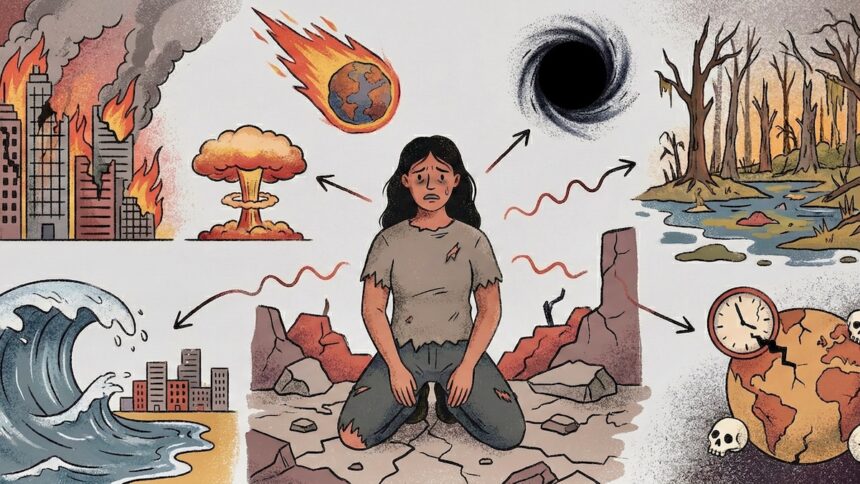
In the worldview of the Aztecs, who lived in Central Mexico from the 14th to 16th centuries, the history of the world was a succession of destructions and rebirths. They believed that before the present time, four epochs had existed, each ending in catastrophe due to conflicts among the gods.
- 1. The Aztecs Believed the World Had Been Destroyed Four Times, and the Fifth Was Near
- 2. Zoroastrians Believed in the Universal Purification of the World — Frasho-kereti
- 3. The Passage of Halley’s Comet in 1910 Caused Mass Panic
- 4. Thousands of William Miller’s Followers Sold Everything and Awaited the End of the World in 1844
- 5. The Münster Rebellion Turned the City into an “Apocalyptic Commune”
The first epoch was called the Sun of the Jaguar. During this time, giants lived, who were eventually devoured by predators. At the end of the second, the Sun of Wind, people transformed into monkeys, and the world was destroyed by the strongest hurricanes. The third epoch, the Sun of Rain, ended with a fiery downpour that annihilated all living things. And the fourth epoch, the Sun of Water, concluded with a flood, after which only those who transformed into fish survived.
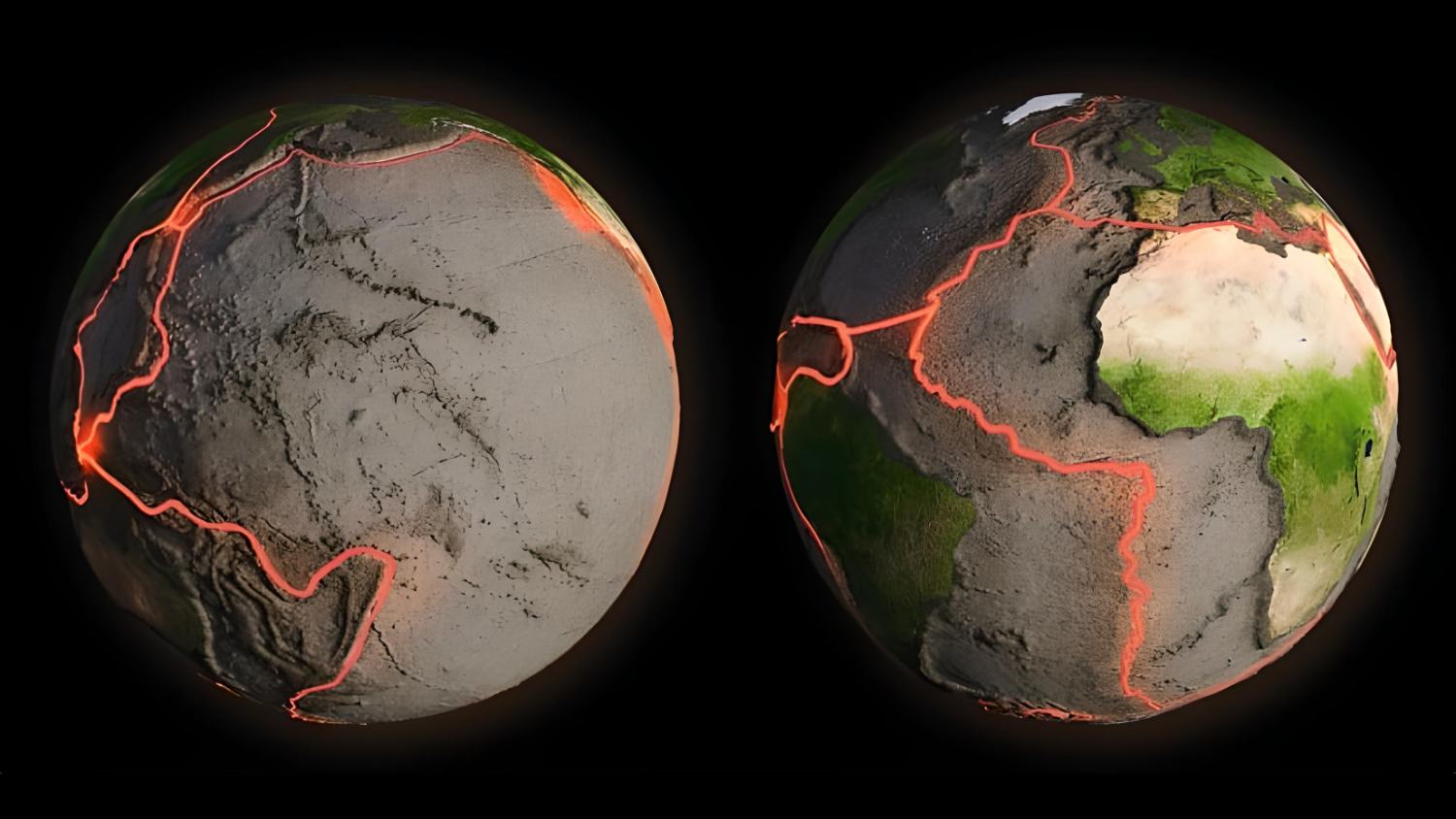
According to Aztec mythology, we are currently living in the fifth epoch, known as the Sun of Movement. The Aztecs believed this world would be destroyed by earthquakes and tectonic shifts. To prevent this, they constantly made sacrifices, including human ones, to sustain the sun and earn the gods’ favor.
2. Zoroastrians Believed in the Universal Purification of the World — Frasho-kereti
Zoroastrianism emerged in Iran in the 7th-6th centuries BCE. Its founder, the prophet Zarathustra, called for a choice between “Asha” — truth and order — and “Druj” — lies and chaos. Zoroastrians still believe that human thoughts, words, and deeds determine not only the fate of the soul but also influence the entire universe.
In this religion, there exists the concept of frasho-kereti, or the “great restoration.” It describes the final stage of cosmic history when good will ultimately triumph over evil. A great battle will occur between the forces of the Wise God and the demons, after which all the dead will be resurrected and face judgment.
The Trial by Fire is one of the most terrifying images in this religion.
According to Zoroastrian texts, after the battle, the gods will melt the metals of the mountains, and they will pour across the earth like a molten river. Every person must pass through it. For the righteous, the river will be warm, like fresh milk. But the wicked will burn in it, suffering and being purified of their evil.
After this, the metal will rush into hell, and the world will be cleansed of all evil and return to its original perfection. The righteous will receive eternal life without disease, hunger, or aging; all people will speak a single language and unite into a society without borders.
The idea that the world would be subjected to a stream of molten metal instilled terror, especially because there was no escape from the trial: all souls, living and dead, had to pass through it.
3. The Passage of Halley’s Comet in 1910 Caused Mass Panic
Halley’s Comet is one of the most famous in history. It returns to Earth approximately every 76 years. Its appearances have always generated interest, but in 1910, things took a different turn: one scientific discovery led to mass panic. This was because American scientists had detected cyanogen gas in the comet’s tail, known for its toxicity in laboratory conditions.
Warnings began appearing in the press that when Earth passed through the comet’s tail, this gas could fill the atmosphere and kill all living things. This was an exaggeration, but rumors, like fear, spread quickly. People everywhere were buying gas masks and “anti-comet” pills sold by charlatans. In China, many hid from the rain and even avoided drinking water, fearing that “poisonous vapors” would descend to earth along with moisture from the comet’s tail.
Newspapers published satirical illustrations showing crowds trying to climb onto overcrowded airships to escape the celestial threat. Meanwhile, in Paris, the famous department store Le Bon Marché ran an advertising campaign promising to show the comet its “great stores” if it made a secret visit there.
Scientists tried to calm the public: the concentration of cyanogen in the rarefied cosmic gas was too small to cause harm. But the panic continued: some farmers in Germany refused to plant crops, deciding they wouldn’t live to harvest them. Debtors stopped repaying money to “live life to the fullest” while they still had time.
And in Los Angeles, one enterprising broker began selling “comet insurance”: families of the deceased would receive $500. True, in practice, it was unclear how anyone could claim the money if all of humanity perished, but buyers were found nonetheless.
On May 19, Earth actually crossed the orbit of Halley’s Comet — coincidentally, thunderstorms began in some places, which frightened people even more. But nothing supernatural happened that day.
4. Thousands of William Miller’s Followers Sold Everything and Awaited the End of the World in 1844
In the 1840s, a simple farmer from New York State named William Miller managed to convince tens of thousands of people that the end of the world would come very soon. After studying the Bible, especially the prophecies in the Book of Daniel, he concluded that the Second Coming of Christ and Judgment Day would occur between March 21, 1843, and March 21, 1844.
Miller didn’t just quietly wait — he became an active preacher. He gave lectures, published pamphlets, posted signs, and traveled through cities, telling people about the approaching end.
Soon he had about 100,000 followers — Millerites. Many of them took his words seriously: they sold their property, quit their jobs, and moved to the mountains to meet Jesus. When the promised date arrived but nothing resembling the Second Coming occurred, Miller slightly recalculated the numbers and set a new day — October 22, 1844. But people expecting the earth to burst into flames and the Kingdom of God to begin woke up on the morning of October 23 in a world that hadn’t changed. This event was later called “The Great Disappointment.”
Some Millerites returned to their former lives, while others began seeking explanations. Eventually, a new denomination emerged from the movement — the Seventh-day Adventists, who still believe in the nearness of the end of the world, but without specifying a date.
5. The Münster Rebellion Turned the City into an “Apocalyptic Commune”
In the 16th century, riding the wave of the Protestant Reformation, many radical religious movements emerged in Europe. One of the most striking were the Anabaptists — advocates of adult rebaptism and the creation of a “pure” Christian society. In 1534, they seized the city of Münster in Germany and proclaimed it the “New Jerusalem” — a place where the apocalypse was about to begin.
The central figure in this uprising was John of Leiden — also known as Jan Bockelson, a tailor from Leiden who declared himself a prophet. He assured people that Christ would return right here, to Münster, while the rest of the world would be destroyed. Under his rule, the city transformed into a theocratic commune. Power passed to the “chosen ones,” laws based on “divine right” were introduced, private property was abolished, and women were forced to enter polygamous marriages — supposedly to “prepare for the Kingdom of God.”
Some sources report that the city was ruled by the harshest regime, while those close to the prophet led dissolute lives. Citizens suffered from hunger and violence but couldn’t leave Münster: the gates were closed, and the army of Bishop Franz von Waldeck was besieging the city from outside. After a year of siege, in 1535, the uprising was brutally suppressed. Bockelson was captured and executed, and his remains were displayed in an iron cage on the bell tower — as a warning to others.