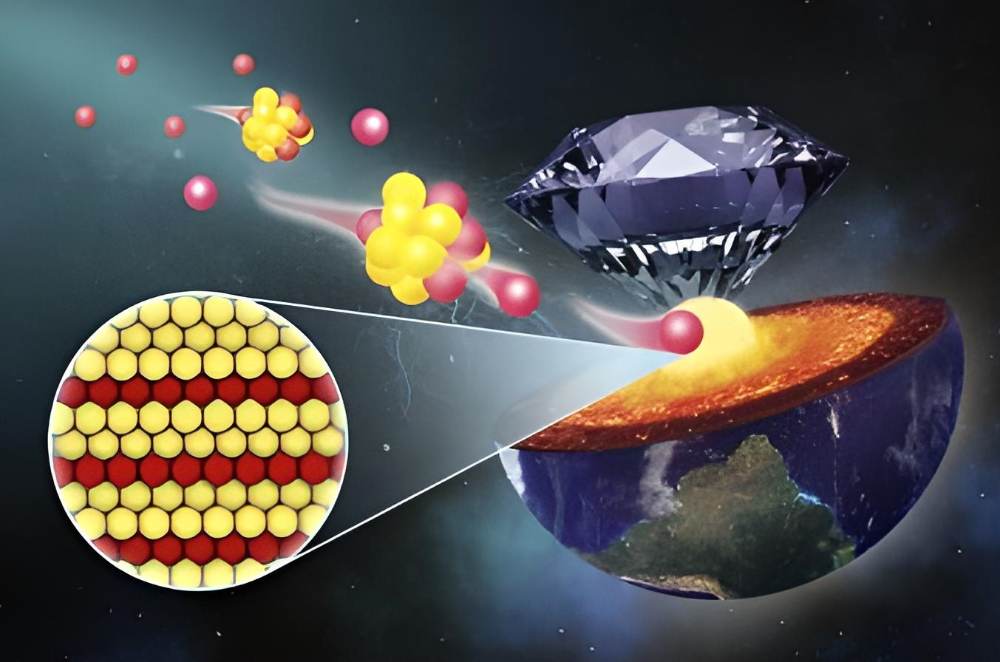
High-pressure studies show that the Earth’s deep core may include oxygen in the form of an unusual, iron-rich oxide in addition to iron and nickel. Two layers of iron atoms and one layer of oxygen atoms alternate in an iron oxide, which might develop at the high pressure and high temperature of the Earth’s core. To explain why the Earth’s core is softer than solid metal, this hitherto undiscovered chemical may be responsible.
Aside from outer space, the inner, solid core of the Earth is the most intense and mysterious spot in our world. This is due to the fact that very little is known about the composition of this solid metal sphere beyond the fact that it contains iron and nickel. However, there have been growing signs over the last few years that the Earth’s deep core is softer than previously assumed and must therefore also include lighter elements like hydrogen, sulfur, silicon, carbon, oxygen, and maybe even the noble gases helium and xenon.
Complications with oxygen
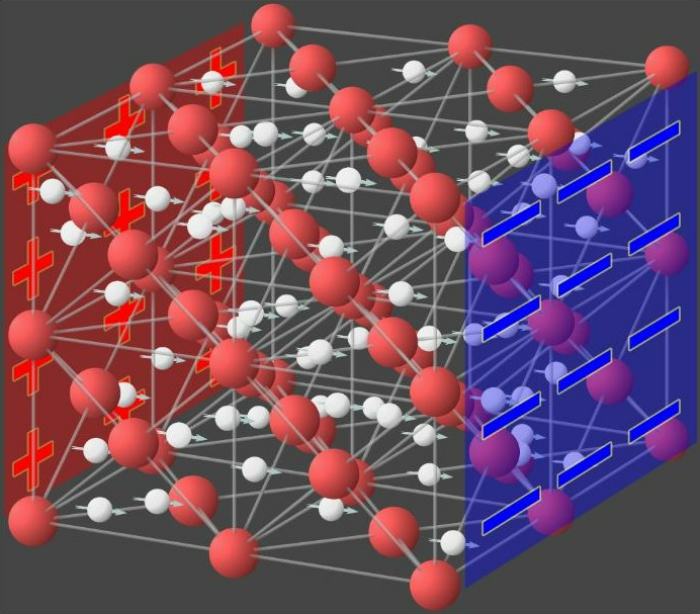
Iron-rich iron oxides, composed of alternating layers of iron (yellow) and oxygen (red) atoms, are generated under the high pressure and temperature of the Earth’s interior. (Image: Jin Liu)
Light elements, such as oxygen, are thought to exist somewhere towards the core of the Earth. Chemical interactions in the deep interior include oxygen transmission between the core and mantle, as explained by the researcher Jin Liu of Beijing, HPSTAR. Oxygen was present at every stage of Earth’s creation and development. In spite of the fact that iron and oxygen are widely acknowledged as crucial ingredients in planet formation, the existence of oxygen in Earth’s deep core remains disputed.
Some scientists hypothesize that unique high-pressure iron oxides contain oxygen and might be found in the Earth’s deep core.
The issue is that until recently, only low-iron varieties of iron oxide – the most probable form of oxygen in Earth’s core – were known. However, they do not correspond to the iron-rich interior of Earth. Conversely, it is generally accepted that pure oxygen is insoluble in solid iron. In order to simulate the high pressure and temperature found in the Earth’s core, the scientists conducted high-pressure tests to see whether iron-rich iron oxides could be created under such conditions.
Researchers used a diamond anvil cell to subject iron powder and iron oxides (FeO or Fe2O3) to pressures of up to 260 gigapascals and temperatures of 4,900 to 5,800°F (2,700 to 3,200°C).
Iron oxide with novel properties at the core of the Earth
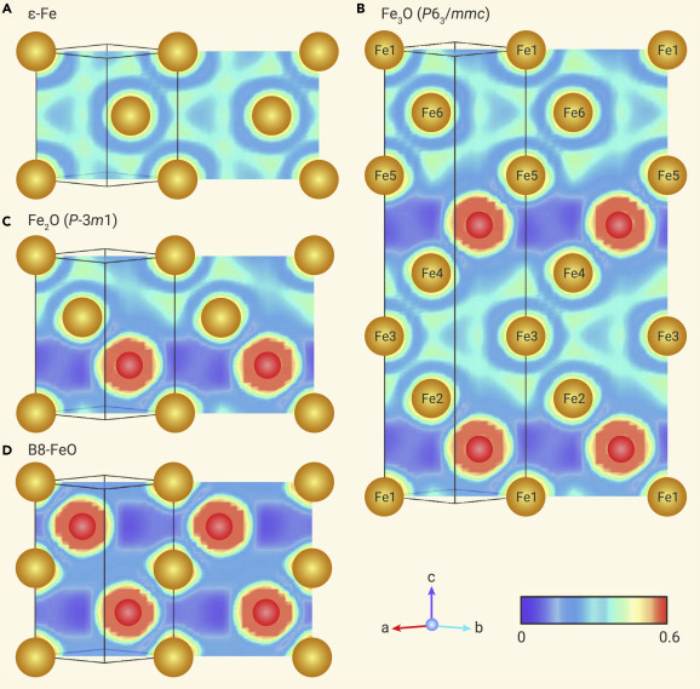
The iron and oxygen are symbolized by the gold and red spheres, respectively. (Image: Cell.com)
Since nothing significant was occurring in the sample chamber during the first runs, even at temperatures of 4,170°F (2,300°C) and pressures of 220 gigapascals, the results were not encouraging. A chemical reaction did not seem to have occurred. When the material, however, reached the very high pressures and temperatures at the center of the Earth, things changed. Researchers claim that X-ray scattering analysis revealed peaks that did not correspond to any previously identified iron oxides or iron carbides.
Analyses showed that in the high-pressure chamber, Fe28O14, an iron-rich iron oxide, had been produced. Unlike other iron oxides, the oxygen and iron atoms in this compound’s crystal structure are not randomly scattered around. Instead, they stack in discrete layers, one of oxygen atoms after two of iron atoms. The atomic structure as a whole is a tight hexagon.
Having properties more akin to metal than oxide
Based on these findings, the team concludes that iron-rich iron oxides may be stable in the extreme conditions of the Earth’s deep core. Therefore, oxygen may be present in Earth’s inner core and may explain the seismic “softness” of the solid core as one of the light element admixtures. This would also explain why preliminary investigations show that the iron in these iron-rich iron oxides seems to behave more like a metal than a conventional oxide.
Further research into the anisotropic iron oxide compounds’ elastic, rheological, and thermal transport capabilities might shed light on the seismic aspects of Earth’s deep core, its creation and composition, and the thermal development of our planet. High-pressure iron oxides are thought to exist in both the outer and inner cores of the Earth, although little is known about their precise characteristics or the nature and extent of their presence.
We now know that two super-Earths located just 218 light-years away are really ocean planets with no rocky interiors. They could be composed of mostly water and other easily evaporated compounds. The heated twin planets Kepler-138c and Kepler-138d presumably conceal an ocean roughly 1,243 miles (2,000 km) deep behind their dense vapor envelope, as researchers report in “Nature Astronomy.” The conventional wisdom on super-Earths has them being predominantly terrestrial big brothers of Earth; these exoplanets disprove that idea.
Super-Earths are hypothetical extrasolar planets that are 10 times heavier than Earth but else structurally quite similar. So far, astronomers have found a large number of instances of this kind of extrasolar planet. Super-Earths like TOI-1452b and K2-18b may contain an ocean larger than Earth. There are many more Earth-like planets that may be habitable as well. Water planets have been hypothesized to be more common in the Milky Way than rocky planets by certain scientists.
Earth’s oceans are only around 2.5 miles (4 km) deep
Cross sections of Earth and the exoplanet Kepler-138d. The half of Kepler-138d’s capacity is comprised of water layers, giving it an approximate depth of 1,243 miles (2,000 km). However, Earth’s oceans are only around 2.5 miles (4 km) deep on average, with just a tiny portion of its surface covered in liquid water. (NASA)
Observers headed by Caroline Piaulet of the University of Montreal have discovered two new ocean worlds. The red dwarf star Kepler-138 is around 218 light-years distant, and in 2014, the Kepler Space Telescope identified two super-Earths orbiting it. At the time, observations suggested that they were two approximately Earth-sized exoplanets with radii of 1.17 and 1.2 times that of Earth, respectively.
Kepler 138c and 138d are two super-Earths that circle their star in close proximity. Therefore, it is likely that their surfaces have equilibrium temperatures of 136 and 72 degrees Celsius; these are heated but not necessarily exceedingly hot planets. The other, innermost planet in this system has roughly the same mass as Mars and orbits much closer to the star. Details regarding the three planets were sketchy at best.
Less dense than expected
With the help of the Hubble and Spitzer space telescopes, scientists have seen 13 more transits of these planets. In addition, they analyzed information on Kepler-138’s radial velocity. This demonstrates the extent to which the gravitational influences of the circling heavenly bodies affect the star’s movements and, by extension, its mass. The density of the planets, in turn, may reveal their composition by using their size and mass.
A startling result emerged from the analyses. The two Kepler-138c and Kepler-138d super-Earths are less dense than expected, despite their large size. It follows that if these two super-Earths have the same kind of iron-rich core as Earth and the other terrestrial planets, then the remainder of their bodies must be rather lightweight. Kepler-138d has a little over 11 percent by mass and 51 percent by volume of volatiles, whereas Kepler-138c has a little less than 11 percent by mass but a little more by volume.
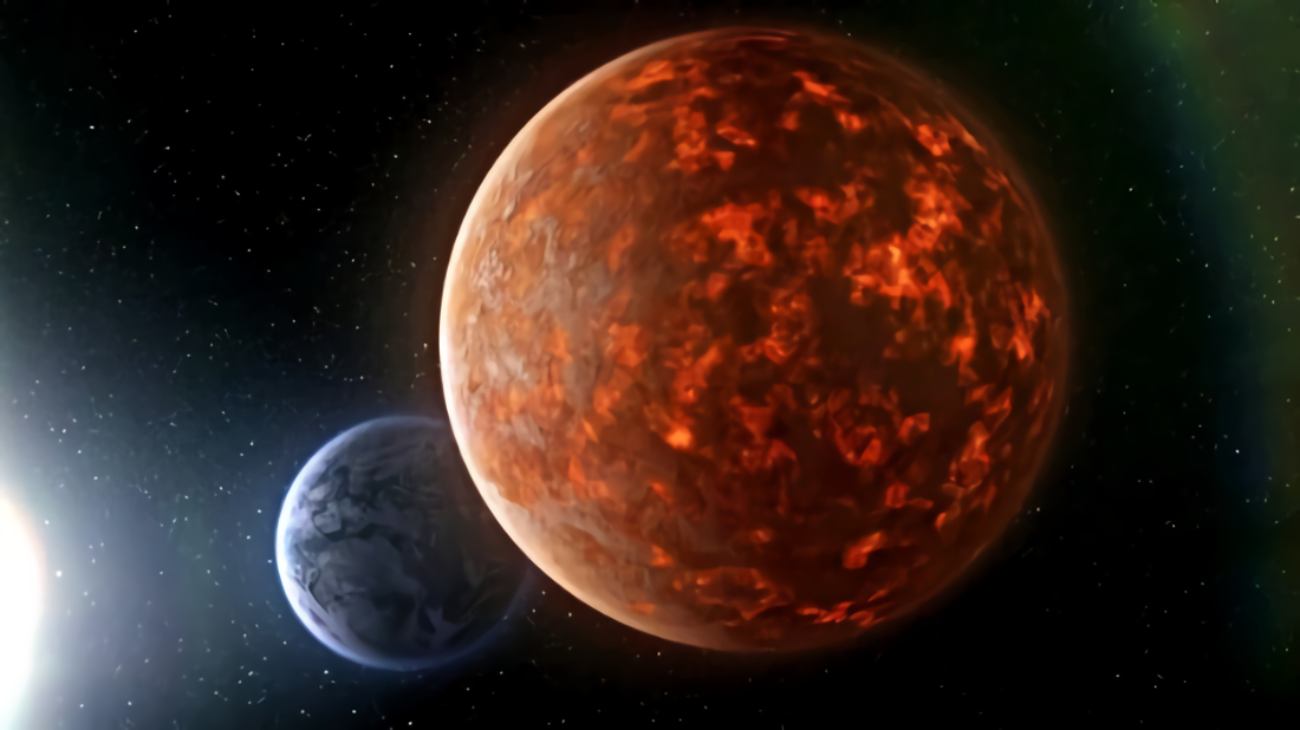
The red dwarf star that hosts the super-Earths Kepler-138d (front) and Kepler-138c. (NASA)
This, however, suggests that water makes up a significant portion of both worlds’ total mass. This is the first time planets have been definitively classified as water worlds. Data suggests that the super-Earth Kepler-138d may contain an ocean some 1,243 miles (2,000 km) deep, and scientists assume the same for Kepler-138c, which is extremely similar to Kepler-138d but slightly warmer.
Picture the ice moons of Jupiter and Saturn, Europa and Enceladus, but much bigger. Kepler-138c and Kepler-138d may have substantial water envelopes rather than icy ones due to their tighter orbits around their star. The water in these global seas is probably pressured to the point of becoming supercritical because it lies behind a thick vapor envelope that raises the surface pressure to extremes. Here, water has the density of a liquid but the viscosity of a gas.
Super-Earths with liquid water than rocky planets
The two super-Earths in Kepler-138’s neighborhood go against the grain of what we usually expect from exoplanets of this kind. Until recently, they have been seen as terrestrial, bigger equivalents to Earth. However, the existence of two ocean planets with a low density indicates that not all super-Earths need to be structured like Earth. This suggests there is significant diversity within the super-Earth population.
Light water planets with a large concentration of volatile compounds may instead make up a considerable part of super-Earths. There may be many more ocean worlds with a water content of 25 to 50 percent than rocky planets in our galaxy. In particular, several super-Earths and mini-Neptunes may satisfy the necessary conditions.
A fourth habitable planet
In addition, Piaulet and her team found evidence of a previously undiscovered fourth planet in the Kepler-138 system when analyzing the new data. Having a mass of just around 0.43 Earths, this planet is far less massive than its inner neighbors, and it may be located inside the red dwarf’s habitable zone. Unfortunately, more precise information on the size and composition of Kepler-138e is still lacking since the planet does not transit in front of its star.
Picture this: On the solar system’s rim, a ninth planet is slowly but surely taking shape. This scenario being close to reality is the opinion of several researchers. A planet further distant from the Sun than Neptune, Planet X has the potential to be one of the century’s most significant astronomical discoveries. While its existence has yet to be verified, the ninth planet of the solar system has been a topic of conversation for decades. The concept of a possible ninth planet, variously known as “Planet 9,” “Planet X,” and “Nibiru,” dates back to the 19th century.
Do we actually live in a solar system with nine planets, or is Planet X just a myth? Astronomers have spent decades on the hunt for a hypothetical ninth planet. What do we know about this phantom planet that could evolve at the edge of the solar system?
Although some in the scientific community have voiced their doubts about this proposal, believing that the data used to support it may be explained in other ways, the prospect of discovering a ninth planet in our solar system has sparked enormous excitement among other academics. The search for Planet Nine is aided by the development of new technologies and the appearance of new observatories, both of which have the potential to either identify an unseen planet or note its absence and close this file for good.
Exactly what is this mysterious Planet X?
The main part of the Kuiper Belt begins at Neptune’s orbit. Credit: NASA.
Theoretical planets beyond Neptune’s orbit are collectively referred to as “Planet X” by astronomers. Planet X is the name astronomers have given to the planet we have yet to discover and, hence, have not given a name to. In mathematics, the letter “X” denotes the unknown. When its existence was first hypothesized via calculations, Pluto was given the designation “Planet X.”
Modern discussions about Planet X often center on a hypothetical planet 9 that forms near the solar system’s rim. It would be situated in the Kuiper Belt, which is the region of the solar system beyond the planet Neptune. If its existence is verified, it will likely be a gas giant planet like Jupiter, Saturn, Uranus, and Neptune, according to the most current speculations.
From whence did the idea that there could be a ninth planet emerge?
In the 19th century, in 1846, this idea emerged when scientists noticed quirks in Uranus’s orbit. Some scientists believe that the existence of a ninth planet, whose gravity would disrupt Uranus’s orbit, is the only possible explanation for these anomalies. Ultimately, it was Clyde Tombaugh’s 1930 discovery of Pluto that prompted the hunt for Planet X. However, Pluto’s mass is essentially inadequate to be responsible for the anomalies found in the velocity of Uranus. There are still many who believe the existence of a Planet 9 is an open mystery.
Is Nibiru perhaps the Solar System’s ninth planet?
The idea that Nibiru is the name of a planet has no validity in science and is instead based on a mythological figure from Babylonian literature. The proponents of this idea argue that Nibiru is a star whose orbit is too eccentric for astronomers to have identified it yet and, hence, is a planet. Once every 3,600 years, this planet would get close enough to Earth to trigger natural calamities like earthquakes and volcanic eruptions. According to this idea, species extinctions throughout Earth’s history could have been triggered by these major catastrophes.
It was predicted that the world would end in December 2012, when the planet Nibiru would cross Earth’s path and collide with it. In the most recent instance, a fresh collision was reported on September 23, 2017, showing how often this forecast gets revived. Since this ridiculous hypothesis has been spread so extensively, NASA has issued a denial to put a stop to it once and for all. So, if some scientists believe in the existence of Planet X (the ninth planet), then Nibiru is only a myth.
Planet 9, Planet X, the planet goes by so many names
Since the 19th century, several explanations for the existence of a ninth planet have been proposed. Clyde Tombaugh, an astronomer, went on the hunt for Planet X in 1930, but he found Pluto instead. Around 2003, the fictitious planet Nibiru was proposed as an explanation for the existence of a ninth planet in our solar system. Planets beyond Neptune’s orbit are collectively referred to as “Planet X.”
According to the hypothesis, the Sun would form a binary system with a hypothetical star named Nemesis. That is, they would share a single center of gravity with one another. The scientific community has generally disregarded this notion since they feel that if such a star existed, it would have been discovered by now.
Planet X: myth or reality?
The possibility that a ninth, undiscovered planet is developing near the solar system’s rim is a concept that continues to enchant many scientists today. The likes of Mike Brown and Konstantin Batygin stand out among them. These two scientists, together with their colleagues, are diligently following the progress of this obscure star. In 2016, researchers concluded that an invisible planet nearly 10 times heavier than the Earth impacted the unusually elliptical orbits of 6 Kuiper Belt objects.
In 2022, a research added more supporting evidence to this notion, which was published in the scientific journal Nature. In addition to Jupiter, Saturn, Uranus, and Neptune, the authors postulate the existence of a fifth gaseous planet. According to others, a planetary system similar to our own can be achieved by adopting a model of solar system creation that includes five gas planets rather than four. Where exactly this planet is situated and whether or not it is still in existence are both open questions.
Even if all we have to go on for Planet X at this point are a few hints as to its existence, the discussion continues. While some researchers believe this to be nothing more than an urban legend and that no planet of this type could pass unnoticed, others believe it has some basis in truth and helps explain the present solar system structure.
There are many distinct layers of solid, viscous, or liquid rocks that work together to form the Earth. Each of the three kinds of layers—from the inner core to the continental crust—is distinct in terms of structure, thickness, and temperature. Find out what the Earth’s crust is made of among all these materials.
The five layers that make up planet Earth
From left to right: crust, mantle, outer core and inner core. (Image: phys.org)
The three primary configurations of the Earth’s five layers are as follows:
The core is 17 percent of Earth and can be found in its center. It is the hottest area in the world because it is made of iron and nickel. The inner core can reach temperatures of 10,800 degrees Fahrenheit (6,000 degrees Celsius) and is the densest part of the planet. Estimates put its thickness at 750 miles (1,200 kilometers). The outer core is in a liquid state since it is 6,900 degrees Fahrenheit (3,800 degrees Celsius).
The mantle is a transitional layer between the solid rocks (beneath the Earth’s crust) and the molten rocks (near the core) where the electric currents that create the Earth’s magnetic field are generated. Even though it’s not as heated as the core of the Earth, at 81% of the planet’s volume, it nevertheless reaches temperatures above 1,800°F (1,000°C). The upper mantle is relatively solid, whereas the lower mantle is made up of molten rocks (called magma) and is hence more viscous. It lies immediately under the Earth’s crust and ranges in thickness from 340 to 435 miles (550 to 700 kilometers).
The Earth’s crust: this is the outer section of the Earth, the one we know best since it is where people, animals, and vegetation evolved.
The layer of the Earth called the “crust”
Earth’s oceanic crust. (Image: W. Commons)
The crust is the outermost layer of the planet that can be directly seen by humans. It consists mostly of rock, and makes up just 2% of Earth’s total volume. Also, it has a layered structure with two distinct sections:
The continental crust is a section of the Earth’s crust that corresponds to the continents that have risen to the surface. The surface temperature is about 60–70°F (15–20°C), and it is mostly granitic in composition. The reliefs that make up the landscape produce variations in its thickness.
The oceanic crust, which is at the bottom of the seas and has a thickness of around 6 mi (10 km), is thicker than the continental crust, which can be anywhere from 9 to 44 mi (15 to 70 km). Deep underground, temperatures of up to 1,000°F (540°C) have been recorded. It is denser than continental crust because it is composed of basaltic rocks.
To what extent do tectonic plates play a part in the structure of the Earth?
Tectonic plates
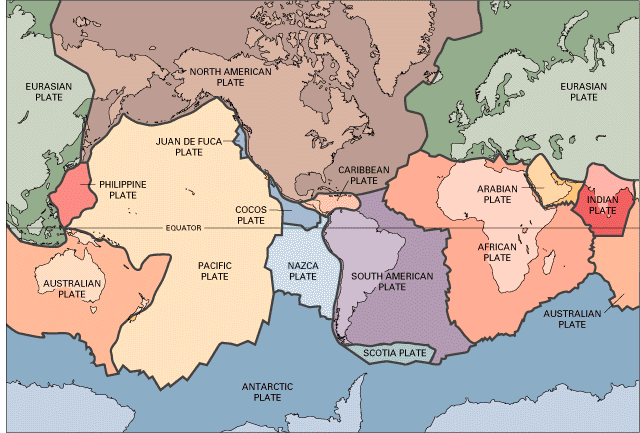
Since the movement of the tectonic plates is responsible for creating the oceanic crust, they are an important part of the crust. The seafloor plates are in constant motion, with a space of around 1,550 miles (2,500 kilometers) between them. Oceanic ridges are formed as these plates move apart, creating faults that are then filled with magma. These seamounts have a combined length of more than 40,000 miles (64,000 kilometers) and a width of 620 to 1240 miles (1,000 to 2,000 kilometers).
Certain summits of these mountains rise above the waves to become islands. The Azores and Iceland both came into being due to this event. Given their origin, volcanic materials including basalt, trachyte, and lava compose these areas. In fact, the island nation of Iceland has capitalized on this natural phenomenon by switching to geothermal power as its primary energy supply.
It’s been decades since humans last visited the Moon, but that could change soon. That’s because several space organizations have recently announced plans to send humans to the Moon, and unlike previous trips, they want to really settle there. The plan is to set up bases on the Moon’s surface and in orbit around it. However, what may these lunar outposts really resemble? Where will they acquire the supplies they need?
Apollo 11‘s first lunar landing was 50 years ago, marking a major milestone in human spaceflight. The next logical step would be to begin lunar colonization. Due to the fact that the Moon still contains valuable resources like helium-3 and rare metals, it also serves as a crucial staging area for missions to Mars and beyond.
Thus, there has been a resurgence in the Moon Race. This time around, material economic and geopolitical objectives are at the forefront, rather than political considerations. Major space powers and private enterprises are developing ideas and technology for future lunar orbits and surface stations.
The long-fictionalized “Moon Base Alpha” is therefore taking on more concrete shape, and may become a reality within the next 20 to 30 years.
Why do we want to go back to the Moon?
Eugene Cernan, Apollo 17 astronaut, with lunar rover – he and Harrison Schmitt were the last men on the Moon in 1972.
New beginnings on the Moon
Humans have only ever stepped foot on the Moon, yet it is the first and only extraterrestrial celestial body we have ever explored. When Apollo 11 landed on the Moon for the first time in July 1969, people all across the globe applauded in response. At the time, many people thought that we would soon have outposts on the Moon and possibly colonies on Mars.
The Moon takes a back seat
But the excitement didn’t last long, and in 1972 the United States government abruptly scrapped the Apollo program once again, after only six landings and a total of twelve astronauts. All three remaining missions were scrapped. After the United States and the Soviet Union won the historic and politically significant race to the Moon, many American leaders, including President Richard Nixon, decided that further space exploration was no longer a priority.
The Moon and its exploration have been put on the back burner since then. Few orbiter probes remain in Earth’s satellite orbit, but the information they provide from afar is invaluable. However, landings have not occurred for decades, not even with unmanned probes. That all changed in 2013 when the Chinese spacecraft Chang’e 3 and the lunar rover Hutu touched down on the Moon for the first time in four decades. The first two unmanned missions to the far side of the Moon—Chang’e 4 and Hutu 2—landed in January 2019. Even still, no one has set foot on the Moon since 1972.
Alluring raw materials
However, in the meanwhile, there is activity once again in terms of lunar missions, as many space agencies and commercial organizations have revealed plans to send people to the Moon in the near future. However, the current objective is a lengthier, and probably even permanent, human presence aboard Earth’s satellite, in contrast to the flying visits of the Apollo missions.
Another deviation from the Apollo period is that the stakes are now material, economic, and technological benefits rather than a race of political systems. One reason to go to the Moon is all the precious metals and minerals it contains, including iridium. Due mostly to meteorite impacts, they have collected in the lunar regolith. Desire may also be sparked by helium-3, an exceptionally uncommon isotope of the noble gas helium. We’ll need it for things like coolants, measuring devices, and potential fusion reactor coolants, and the Moon has just what we need. Several corporations have declared their future plans for “Moon mining.”
The significance of Moon
In addition, the Moon’s strategic value lies in the fact that it might be used as a launching pad for human trips to Mars and beyond due to the much reduced rocket fuel needs afforded by the Moon’s low gravity. Telescopes and other observatories might potentially help boost space exploration efforts from the Moon. This is because, in particular, the far side of the Moon provides complete protection from any terrestrial disturbance.
Finally, the potential for profit from well-heeled space travelers is exciting. Elon Musk, the creator of SpaceX, revealed his company’s first lunar tourist in 2018: Japanese tycoon Yusaku Maezawa, who paid millions of dollars for passage for himself and a large group of friends on SpaceX’s first voyage to the Moon in 2017. In 2023, we want to achieve lunar orbit.
Thus, the Moon is now again a very appealing vacation spot.
Moon Village and Lunar Gateway
The European Space Agency (ESA) is preparing to build a full-scale lunar village that will serve as a research and business hub. Image: ESA
New Moon missions are in the works
When will the world learn the truth about the space countries’ bold new Moon programs? It seemed to be getting serious after 10 years of lofty intentions that never materialized. The United States, the European Union, China, and Russia are all planning missions over the next several years to be ready for the eventual return of humans to the Moon and the eventual establishment of a lunar outpost.
Everyone living in their own “Moon Village”
Jan Wörner, the head of the European Space Agency, proposed the idea of a Moon Village in 2016. This would be a multi-national outpost on Earth’s satellite, available for any and all uses. Her goal is to set up shop on the Moon permanently. Science and fundamental research, economic operations like raw material extraction, and even tourism might all be conducted by participants at this permanent lunar outpost.
Robots and autonomous rovers might launch the first phases of construction for this lunar outpost, with human astronauts joining in later. One major benefit of this plan is that it may be launched with very few resources. A number of nations are currently making preparations to send modest land missions, so that’s where we can begin. Afterwards, bigger initiatives might be built upon that foundation and include worldwide collaboration. As such, the lunar town has the potential to serve as the ISS’s successor, although one that is located on the Moon rather than in Earth’s orbit.
America: We’re here to stay this time
In December 2017, the United States issued a directive making a trip back to the Moon and subsequent trips to Mars a top priority for the American space program. Rather than just leaving our mark this time, we want to lay the groundwork for future exploration of Mars and beyond.
We are taking cutting-edge technology and systems to the Moon in order to study previously inaccessible regions, said NASA Administrator Jim Bridenstine. We want to settle on the Moon this time, unlike Apollo. Our next giant step into space will be taken after that.
Lunar Gateway
In the 2020s, NASA hopes to realize its goal of constructing a lunar “gateway,” or space station in lunar orbit. Because of this gateway, we will be able to establish a strong foothold in cislunar space and more effectively investigate the Moon and its potential benefits. From there, we want to launch manned missions to the lunar surface.
In the same way that the ISS was built in increments, this next orbiting outpost will also be composed of modular components. The parts will be sent into orbit by NASA’s Space Launch System (SLS) and carried there aboard the Orion spacecraft. The core propulsion and supply portion of the station might be placed in lunar orbit really soon. In 2024, astronauts will have access to the first module that doubles as a home and lab. Once that happens, personnel may stay at the station for 30 or 60 days at a time to do their jobs.
Assisted landing by a private party
NASA is hoping to recruit commercial enterprises to help with the trip from the ISS to the Moon’s surface. Six businesses are competing in a tender announced at the end of 2018 under the NextSTEP initiative. The objective is to design a method that can transport, land, and return to the space station from the lunar surface.
In terms of requirements for future landing modules, durability and reusability are high on the list. In contrast to the Apollo lander modules, whose whole underpinnings were left on the Moon and are still there today, future landers will be entirely reusable. After that, they’ll be refueled either on the ground or in space. According to NASA Administrator Jim Bridenstine, we aim to return humans to the lunar surface within the next decade, but this time we want to do it sustainably.
How would a Moon base look like?
The European Space Agency’s (ESA) vision for a Moon base.
Lunar selters made of lava rock and regolith igloos
Those who choose to settle on the Moon in the future will be met with a harsh and perhaps lethal environment. As a matter of fact, the Moon is not exactly a warm and fuzzy location to spend some time. There is no magnetic field, no atmosphere to shield you from the elements, and no oxygen. Those who choose to remain on Earth’s surface are unprotected from the Sun’s radiation, the solar wind, and the meteorite showers. Simultaneously, there are dramatic shifts in temperature: If the Sun is out, everything will get to be around 120 degrees. Temperatures, on the other hand, dip to a chilly minus 170 degrees in the shadow and on starry evenings.
Therefore, the primary function of a lunar base is to offer shelter from these dangerous conditions. I mean, how? Obviously, an inflatable dome like the one seen in “The Martian,” a science fiction novel and film, would not be sufficient for a lunar outpost. A shield from radiation or meteors could not be created with this. Astronauts need sturdy walls in their lunar habitat if they are going to be able to stay there for an extended period of time.
Living and working in lunar lava caves
Lava caverns, which are found naturally on the Moon, might be used as a safe haven. Underground craters and tubes were formed by the Moon’s early volcanic activity. In 2017, scientists found a massive lava tunnel in the lunar Ocean of Storms (Oceanus Procellarum). It stretches for 31 miles (50 km) and is up to 3300 feet in height and width, providing enough room for an entire lunar metropolis. A hole with a diameter of around 165 feet (50 m) provides access to the surface.
Lava caverns near the Moon’s polar area, though, might be an even better fit. This is due to the presence of water ice, which may be used to provide both potable water and fuel for the astronauts. Philolaus crater, an impact crater of 44 miles (70 km) in size at 72 degrees north latitude, has been mapped and explored by scientists, and many spots inside it have been identified as promising candidates. Multiple shadowy crevices on the crater floor suggest the presence of lava caverns.
Moon bricks from the solar oven
We may also use Moon dust to construct the requisite defensive fortifications. DLR (German Aerospace Center) scientists in Cologne are already hard at work on a plan to fire regolith into a Moon block. They are focusing sunlight into a powerful beam using curved mirrors. The thin layer of volcanic grains used as a regolith mimic is heated to temperatures of over 1,000 degrees using this method.
Extreme heat causes the material to sinter, which means the granules adhere together and create a solid layer. Layer by layer, like a 3D printer, solid components may be created from regolith. Already, with today’s technology, we have access to a substance approximately as stable as gypsum. However, with more improvement, lunar regolith might be made into a construction material with the strength of concrete.
However, even with their solar 3D printer, it still takes the team around five hours to manufacture a single regolith building block. It would take around 10,000 of these bricks to create a protective shell around a lunar igloo. Months would pass before it could be accomplished. However, if many sintering plants were to be run in parallel on the lunar surface, the process may be sped up.
3D printing with regolith sludge
Together with the British firm Monolite, ESA researchers are researching an alternative method. First, a slurry is made by combining the regolith mimic with a magnesium oxide solution. This allows the document to be printed out. The business uses a binding salt to turn the substance into a stone-like solid, turning it from a liquid into “ink” for solid creations.
With this technique, the team can print and complete 6.5 feet (2 m) of material in an hour. If the next-generation design can achieve 11.5 feet (3.50 m) per hour, a whole skyscraper might be constructed in one week. Regolith material is used to make each block, which results in each one weighing 1.5 metric tons and featuring many holes throughout. It has not yet been determined, however, whether the building method would hold up in the lunar vacuum and dramatic temperature swings.
Catenary arch igloo design
A plan for the next ESA lunar outpost already exists, even though the building material has not been agreed upon. British superstar architect Norman Foster and his team designed it. The mathematical-physical theory of the catenary arch was adhered to in order to make the lunar dwellings as stable as possible. Arches are very stable because their shape, a parabola, takes the route of least energy.
In this way, the homes on the Moon seem more like igloos than like regular residences. They too are a hybrid of tube and dome shapes. The inflated inner shell serves as the structural base for these Moon igloos. This is the outline, which the robots are currently covering with regolith bricks from the outside. Each habitation module on the Moon will have enough room for four people and shield them from cosmic rays, meteorites, and temperature swings.
Water and oxygen
Both the Moon’s South Pole (left) and North Pole (right) have ice deposits (turquoise) in craters. Credit: NASA
Raw material sources: crater ice and regolith
Assuming the lunar base is complete and ready for its first residents. Then, at the very least, there’s the issue of getting fuel, water, oxygen, and food to the astronauts. It would be impractical and prohibitively costly to transport all of these materials from the Earth. Therefore, it is evident that a lunar colony, in order to exist, must make use of on-site resources.
Ice from the lunar craters
The most straightforward answer concerns the provision of water: if future lunar outposts are constructed in the polar regions of Earth’s satellite, sufficient water ice will be found there. In 2010, data from India’s Chandrayaan-1 lunar spacecraft indicated that there are ice layers a 3.2 ft (1 m) deep in the craters near the lunar north pole. Present evidence suggests there may be roughly 10 billion metric tons of water at each pole.
However, the exact amount and composition of the ice found in the lunar dust have not been determined. To this end, the possibility of obtaining potable water from ice remains open. In the next several years, this will be answered by a number of robotic lunar missions. To be fair, the needs of a lunar outpost wouldn’t be very high at first: NASA suggests that a crew of four may get by on just a few dozens of metric tons of water each year.
Water from the crater ice might be collected using solar energy. Using parabolic reflectors, the radiation may be focused and directed to evaporate the ice only in the parts that were shielded by the foil. In the event that this water vapor is dispersed and cooled once again, it condenses into potable water. Alternatively, robotic excavators may harvest ice, which could subsequently be melted or evaporated in stationary solar furnaces.
Regolith as a raw material supplier
Water could be retrieved from the regolith on the Moon even if there were no ice formations. This is because, as was recently discovered by spectrometer data from the Lunar Reconnaissance Orbiter, water is bonded to the rock as hydroxyl (OH) practically everywhere on the lunar surface. This trapped water is also located away from the lunar poles, making it a more accommodating site for a lunar outpost than the polar craters.
NASA’s Goddard Space Flight Center scientist William Farrell says that after being blasted by the solar wind, every rock on the Moon has the potential to generate water. According to the findings of his group, this bound water is produced by a chemical process in the regolith. Oxygen-containing minerals in lunar rock have their connections broken by the solar wind’s intense energy. Since reactive oxygen radicals are created, they may “grab” hydrogen from their surroundings to form hydroxyl.
Oxygen and water from the lunar soil
How, therefore, might this potentially hydrous rock be mined for potable water? Again, researchers showed that solar heat was crucial on a mock journey to Hawaii. At temperatures of around 900 degrees Fahrenheit, the regolith-like volcanic dust began to shine. Furthermore, passing hydrogen or methane across it causes it to react with the oxygen in the regolith to produce water. NASA estimates that 119 grams of water may be recovered from one kilogram of the most abundant lunar mineral, ilmenite (FeTiO3).
As a useful byproduct, the astronauts’ breathing air’s oxygen may be extracted from the regolith using this method. When water vapor is produced during heating, it must be separated back into its original hydrogen and oxygen components. One kilogram of ilmenite could provide enough oxygen for 106 grams of breathing space, at least in principle. However, studies are currently being conducted to ascertain which approach is most appropriate and how oxygen and water may be created using the fewest resources and the least amount of energy.
Electricity and fuel
The Moon’s 14 days long nights might hamper solar power generation. Credit: NASA’s Scientific Visualization Studio.
Generating power on the Moon
A lunar outpost needs its own power plant if its inhabitants are to survive. Electricity is essential for astronauts because it powers their heaters, lights, and other electronic gear. They should be able to use local resources to produce fuel for the landing shuttles and lunar vehicles.
Electricity from the Sun
Sunlight is a simple and effective way to get energy. Photovoltaic systems have a long history of usage in space exploration, and the Moon is a suitable location for them. The catch is, however: Since one lunar day is equivalent to 29 Earth days, the Moon is always in the dark for two weeks when the Sun isn’t available to provide energy. Aside from that, the Earth sometimes shuts out the Sun for a few hours during solar eclipses, which happen several times a year.
Scientists, however, have come up with answers for this as well: Aidan Cowley of the European Space Agency says that throughout the day, there is sufficient solar energy to split water into its component parts of hydrogen and oxygen. We could convert these gases back into water and use them to generate energy when the Moon was asleep. In theory, this might work by having fuel cells soak up sunlight throughout the day and then churn out power after the Sun goes down.
In a perfect world, hydrogen, oxygen, and the resultant water would all be recycled indefinitely inside this system, forming a closed cycle. The only other component needed is sunshine. According to David Bents of the Glenn Research Center, who studied these regenerative fuel cells for NASA a few years ago, if nothing breaks or wears out, this may operate indefinitely without having to be recharged.
Moon as a gas station
Among the many resources needed for space flight, fuel is one of the heaviest and most vital. As of now, it constitutes the vast majority of the total launch mass of a rocket, and thus, a significant proportion of the associated launch expenses. A lunar outpost would have to generate its own fuel to be cost-effective.
In addition, a lunar outpost is seen as crucial by space organizations as preparation for Mars and beyond. For this reason, NASA’s lunar orbiting station Lunar Gateway will, in the long run, serve as a refueling station for space trips. After all, space probes won’t have to struggle against Earth’s gravity to lift their entire fuel load into space if they only do it in lunar orbit. Concepts for such “refueling stations” in lunar orbit are already being developed by a number of academic organizations and businesses.
Even if these filling stations are built, the issue of where to get gasoline for them remains. Once again, the regolith of the Moon is being seen as the best option. It contains the ingredients for a standard rocket fuel, hydrogen, and oxygen, and can be extracted using the Sun’s heat. The upper burn stage of the Saturn V, the Atlas 5, and the engines of the space shuttles have all employed liquid oxygen and hydrogen. However, this fuel combination is also used by cutting-edge rockets like the European Ariane 5 rocket.
What is the source of the food on the Moon?
A Mars greenhouse is seen in this artist concept. Using a hydroponic method, plants are being grown with the aid of red, blue, and green LED light strips. Image credit: SAIC
Plants grown in the Moon
That remains the issue of sustenance for the lunar colonists of the future. For a long time, astronauts (including those living on the ISS) have needed to rely on supplies sent all the way from Earth. But the logistics and prices of a lunar colony would not allow for something that is currently difficult and costly in Earth orbit. Because of this, it is essential that the lunar station’s personnel generate as much as possible inside the facility itself.
Vegetables cultivated on lunar soil
Vegetables and fruits, at least, could make this simpler than previously believed. Plants were successfully grown by Dutch researchers in 2016 using lunar and Martian soil replicas. The difficulty is that the regolith has almost no nutrition since it lacks organic components due to the absence of life on the Moon. However, the astronauts’ own waste products, like urine or leftover food, might make up for the lack of these organic ingredients.
To secure the success of their culture experiment, Wieger Wamelink and his colleagues sent in soil microorganisms from Earth to further enrich their synthetic lunar regolith with such organic material. They then planted a variety of vegetables and grains including tomatoes, peas, rye, radishes, leeks, spinach, lettuce, cress, quinoa, and chives. The end result was that plant life flourished in the artificial lunar soil. About half as much biomass was created as on Earth, but there was still plenty to harvest.
Orbit and Antarctica are being used for test crops
On the International Space Station, astronauts are attempting a new approach. Since 2015, the station has included a miniature greenhouse. Plants are nourished by a nutrient solution and grown in a calcareous mineral mass. Bright red, blue, and green LEDs light up the entire object. The ISS crew has already gotten their hands on fresh lettuce thanks to this “veggie” technology. A completely autonomous automated plant-growing system is the next step. More than 180 sensors monitor the soil, air, and water supplies separately and adjust the flow as needed.
Plant growth on the Moon is being tested again in the Antarctic. The EDEN-ISS greenhouse container has been stationed in the Antarctic since the beginning of 2018, around 1300 feet (400 m) from the German Neumayer III research station. Plants like lettuce, radishes, and cucumbers thrive here because the system is comparable to the one used on the space station. Scientists working in the Arctic have already harvested their first crop, which they have consumed with great gusto.
Gioia Massa, a NASA researcher, notes that the farther and longer people go from Earth, the more important it is to be able to produce plants for food, for processing the atmosphere, and for psychology. So, plant life is crucial to any future extended space missions.
It’s a matter of compromises
The people of the future lunar outpost, however, will need more than just lettuce and cucumbers to sustain themselves. Unfortunately, supplies of food will still need to be sent in from Earth. Therefore, a trip back to the Moon and the construction of a lunar station will not be a cheap luxury. What ultimately matters is whether or not the benefits and insights acquired are worth these expenses.
Because Europa, Jupiter’s moon, is thought to conceal an ocean of liquid water under its icy cover, it may be home to intelligent life from outside our solar system. Europa is perhaps more intriguing than any other moon in the galaxy. The frigid moon may be more habitable than previously believed. Europa, the ice moon, seems frigid and frightening at first view. However, it is misleading. Because there is a massive ocean of liquid water under its crust, providing possible conditions for life. Scientists have been slowly digging into the question of whether or not life exists on Europa in recent years. The outcome of which might be unexpected.
Ocean below Europa’s ice
This might be what it looks like when water vapor and water shoot out from the ice and form springs on Europa. (K. Retherford/SWRI/NASA/ESA)
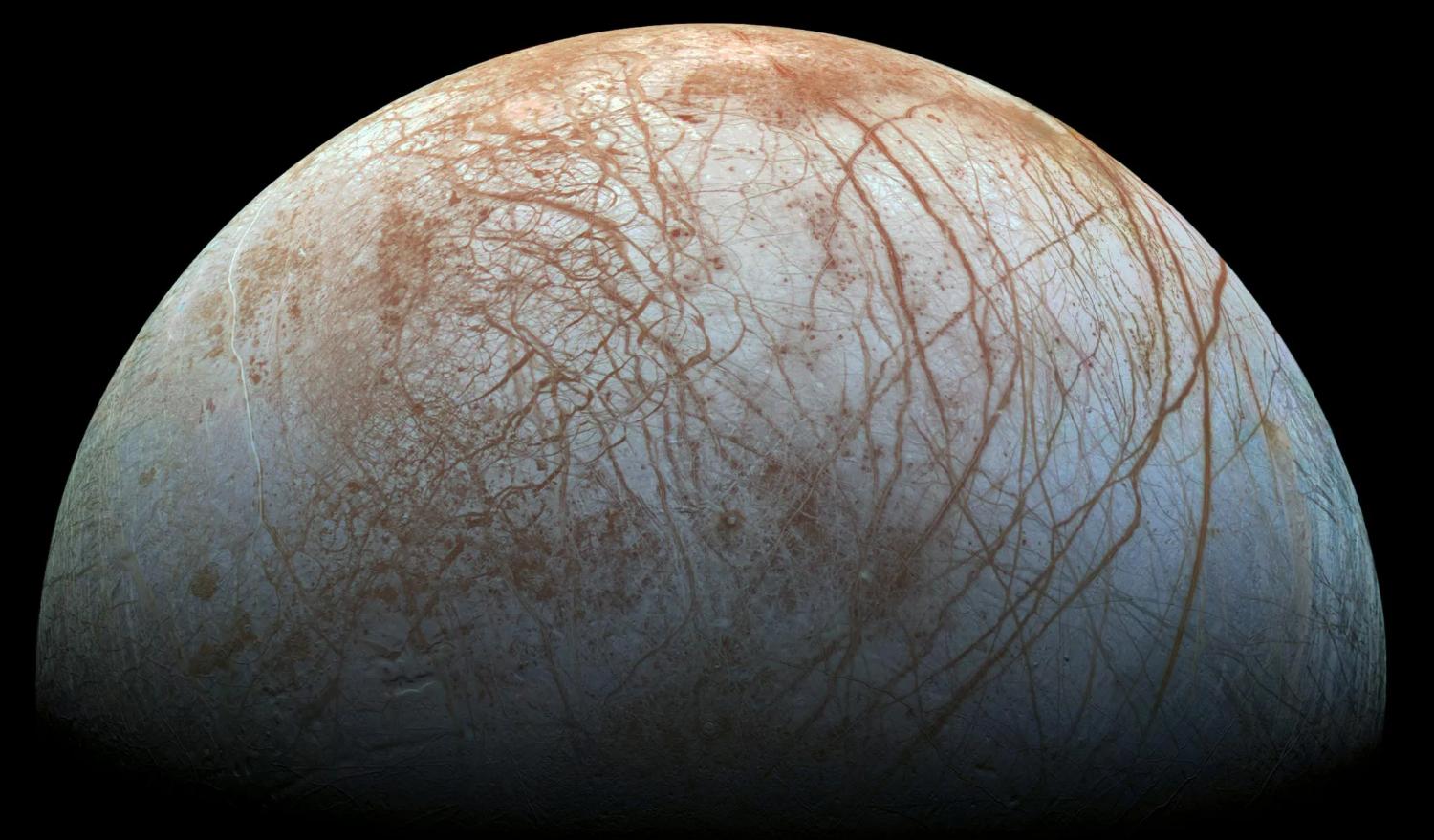
Jovian satellite Europa is strangely beautiful, with a network of furrows that stretch for miles over its icy surface. These furrows resemble the cracks in a painting. However, this stunning scenery comes at a high cost, since no form of life could survive the -240°F (-150°C) temperatures, solid ice crust, and complete absence of air.
A secret habitat
According to the results, Europa likely has lakes underneath its frozen surface. (NASA/JPL/University of Arizona)
However, at depths of 6 to 9 miles (10 to 15 km), a whole other universe opens up. Here lies a vast ocean of salt water that wraps around Europa and is likely to be at least 60 miles (100 km) deep. This ocean may hold twice as much water as all the seas on Earth combined.
Again, details about this watery supermassive planet were gleaned through Galileo probe magnetic field data. Because it also picked up telltale abnormalities in Jupiter’s magnetic field surrounding Europa, the kind of disturbances usually caused by motions of conductive fluid. A magma ocean is unlikely on Europa since the moon is entirely covered in ice and, unlike Io, has no solid crust to keep the heat in. A subglacial sea of liquid salt water, on the other hand, would be conductive but also allow ice crusts to exist.
Overwhelming tidal forces by Jupiter
Since Europa is Jupiter’s second-most inner moon, powerful tidal forces are at play there. (NASA)
The key question, though, is: what exactly is it that keeps the water liquid under the ice in Europa? Tidal forces from Jupiter are a likely cause. Europa’s orbit is very elliptical and somewhat eccentric around its host planet. Because of this, the strength of Jupiter’s gravitational attraction varies throughout the orbit. Thus, the interior of Europa varies according to how squeezed it is by Jupiter at a given moment.
There is a little elliptical deformation of the whole moon when Jupiter is near enough to cause the ice, water, and rock on the side facing it to rise. However, when Europa migrates away from Jupiter, its form once again becomes roughly spherical. These continuous motions produce heat through subsurface friction, which may be sufficient to maintain a liquid water layer under the ice of Europa.
Europa’s cracks and their meaning
When did the cracks start taking on such a peculiar form?
This colorized Galileo satellite picture shows that the ice crust is fractured along many directions. (NASA/JPL/University of Arizona)
Europa’s ice crust is so stiff that it cannot adapt to the movement and fissures caused by the subglacial ocean’s continual ups and downs. Images taken by the Galileo spacecraft reveal a fascinating pattern of elongated trenches and furrows formed by these fissures. Water from the ocean rises to the surface at these fissures regularly and solidifies, thus, causing the darker hue of the lines.
Mysterious directional shifts in the fractures
But there’s something off about these lines. It’s unclear why these fractures have changed direction over time. Since Jupiter’s moon rotates in a tidal lock with the planet, the tidal pressures are always exerted in the same direction. Then why are the cracks not constantly forming in the same direction?
There are theoretically three potential causes: To begin, Europa’s icy crust may revolve a little faster than the rest of the moon. As a result, Jupiter’s tidal forces would gradually shift the crust’s orientation relative to the planet over time. Another idea is that, like Earth’s axis of rotation, Europa’s is somewhat inclined relative to its orbital motion. As a result, Europa would wobble more over time, and its crustal areas would alternately begin to draw closer to Jupiter.
A third prospect is that the fractures are scattered at random and that their direction is not related to lunar activities but could be related to local weak points in the ice sheet.
Europa’s wobbling axis
But this crust hypothesis came up on the losing end, with the models based on this scenario consistently failing to reproduce Europa’s usual cracking pattern. However, if the simulations were modified in a way that Europa’s axis swung back and forth by around 1 degree over time, the results would get quite similar to the fracture pattern seen in the ice crust, suggesting that the wobbling axis is more likely the reason for the directional changes in Europa’s fractures and ridges. Even a little axial tilt (or obliquity) accounts for a lot of this current phenomenon on Europa.
Liquid water under Europa’s ice sheet
What maintains the ocean’s fluidity on Europa? Sloshing water, or even subsea volcanoes. It’s from NASA and the Jet Propulsion Laboratory.
The usual breaking pattern of the ice crust may have been caused by Europa’s mild tumbling, which may also have led to the creation of a subglacial ocean. That’s because the heating impact of tidal forces can be amplified even by tiny variations in Europa’s orientation with regard to Jupiter.
Some scientists think that the subglacial ocean in Europa is continually sloshing back and forth under the unyielding crust due to the ice moon’s wobbling. Instead of being relatively motionless, the water would be marked by powerful currents. Also, the energy released by the motion of the water might be enough to keep Europa’s ocean liquid. Thus, the liquid water on Europa could be heated by the ocean itself, not by the surface or the subsurface. But, this is still only a theory at this point.
The possibility of life on Europa
Organisms under the ice
If water exists as a liquid on Europa, then there might be life on this icy moon of Jupiter. But there is more to it when it comes to subglacial lakes or seas. For thriving and reproducing, most organisms need either light or air, or at least certain gases. That’s why, for a long time, it was believed that the subterranean lakes of Antarctica were fairly unfriendly to life. But that didn’t turn out to be true.
Proof of life on Lake Vostok
A perspective image of the ice surface of Lake Vostok. (Michael Studinger / Lamont-Doherty Earth Observatory)
Lake Vostok, the biggest subglacial lake in the Antarctic on Earth has always been frozen solid. Having been covered by ice almost 2 miles (3 km) thick for the last 15 million years, its waters have been cut off from the surface. No light can make it through this ice sheet, the air pressure is very high, and food is probably in short supply. It’s undeniable that species on Earth that call Lake Vostok home must thrive under very harsh circumstances.
No samples of the lake’s liquid had been obtained due to concerns about contamination, so it was unclear whether or not there were organisms living in the waters of Vostok. However, in recent years, scientists have drilled just above the water level, collecting the first samples of frozen lake water from the boundary layer. This layer forms when the lake water freezes at the points of contact with the glacier ice and then collects on the underside of that glacier ice.
Incredible variety
The samples at depths of around 11,700 to 11,900 ft (3,550 to 3,600 m) came from the ice formed by the lake water and when the samples were studied, the scientists deciphered the DNA and RNA sequences frozen in the ice to discover the kind of species living in the Lake Vostok.
What they uncovered instead of an area devoid of diversity was the DNA of thousands of species living in impossible conditions. 94% of the species were bacteria, while the remaining 6% were either fungus or archaea, a unique class of single-celled creatures. This finding has forever changed our view of what is and isn’t deemed liveable.
Evidence of higher life
Future autonomous diving robots may help us learn more about the ecosystem of Lake Vostok, and potentially Europa as well. (NASA / JPL-Caltech)
What’s more, the investigations also uncovered the fact that many of the bacterial species detected in the ice are generally found in close connection with multicellular creatures. They are parasites and commensals that inhabit fish and other marine organisms such as crabs and worms. Some of the DNA samples could have even originated from these higher species.
This leads to the conclusion that there may be some complex organisms than single cells living in Lake Vostok which also suggests that life may exist on Europa’s cold surface if terrestrial creatures have colonized such purportedly hostile and severe habitats on Earth.
Europa’s ice crust is vital for possibility of life
Is it blocking life or safeguarding it?
Jupiter’s moon Europa has an ice cover that is 3,300 ft (1 km) thick, and it has a crucial role in the search for life on this icy moon. The ice cover serves as a blanket, protecting the subglacial ocean from the deadly cold of space and the lethal effects of radiation. As an added bonus, the ice crust, together with the rocky core, is likely the primary source of chemical building blocks for life. This is due to the coating of chemical compounds left on the surface of Europa’s ice sheet by meteorite strikes, radiation, and particles from Jupiter and the solar wind.
Does Europa have oxygen?
Those fissures in the ice are a hint that the crust of Europa regularly tears open and becomes permeable. (NASA/JPL)
When this radiation splits the water molecules in the ice, this in theory should release oxygen into Europa’s atmosphere. These gases and liquids can as well reach the ocean below if the ice sheet is thin enough to allow them to escape through its countless fractures. Yet, this thick ice crust can still be detrimental to life. And Europa’s ice crust is not precisely a thin sheet, being at least 6 miles (10 km) in thickness.
Recent models showed that enough oxygen could make its way down to the subglacial water from the glacier surface, and it is simply a matter of how long it would take. This is because tidal pressures on Europa could be causing the ice crust to shift and break apart on a regular basis, sending new, frozen ice to the top while pushing other sections of the surface layer deeper into the underwater ocean.
The upheaval in Europa
Numerous new bulges and seams can be seen all throughout Europa’s surface, proving that similar upheaval processes are still happening right now. In theory, oxygen was once restricted to the atmosphere’s outermost layers in Europa. But the simulations reveal that free oxygen might have been mixed in over the full thickness of the ice crust during the span of around 1 to 2 billion years of irradiation and upheaval.
Meanwhile, similar to the underside of ice floes in our terrestrial (surface) seas, a persistent, quicker interchange of thawing and freezing happens at the boundary layer between water and ice on Europa’s icy crust. In as short as half a million years enough oxygen might have been dissolved in Europa’s ocean water during this exchange at the ice-water interface to provide minimum oxygen saturation for life.
Getting ready for life
This amount of oxygen would support life on Earth for even the smallest crustaceans. In under 12 million years, oxygen levels in Europa’s atmosphere may have risen to match those of our seas, making breathing comfortable for even the biggest aerobic organisms. If Europa had started out without oxygen for 1 or 2 billion years, that may have been the perfect amount of time for life to evolve there since this is similar to the history of Earth.
The chemically hostile oxygen wasn’t there when the original building blocks of life developed on Earth. Circumstances altered and the increasing oxygen content of the atmosphere produced the conditions for the genesis of higher life forms only after the earliest single-celled creatures had existed. The water under Europa to possibly have enough oxygen to allow for the formation of even bigger life forms is, therefore, not inconceivable.
Lakes under Europa’s ice
Chaos Terrain for clues
To what extent the ice on Europa can be penetrated is a key aspect of the survival of any life on Jupiter’s moon. Europa’s icy shell may be more permeable than previously assumed. Images taken by the Galileo probe reveal strange landscapes on Europa such as uneven ridges, cracks, and plains that appear jumbled. This topography is called “Chaos Terrain.” The planets Mars and Mercury, as well as the dwarf planet Pluto, all have Chaos Terrains.
Scientists find the ice sheet mechanisms remarkably similar to those structures. This is because similar processes occur on glaciers and ice shelves that sit above subglacial volcanoes.
Caves under Europa’s ice
It is hypothesized that Europa may have subsurface lakes, like ice-filled caverns that sit about midway between the surface and the ocean. There are many cracks in the rough topography of the Chaos Terrain formations above the lakes, which might enable abundant oxygen and organic substances to infiltrate the waters in these shallow caves in the ice.
However, this may also mean that these subglacial lakes of Europa may support life. As time goes on, these tunnels might eventually burst apart due to massive fractures in the ice, allowing for a passageway to the ocean below. Even though Europa has a strong crust, scientists can now see that it may be home to enormous shallow lakes that facilitate “mixing.” This mechanism of mixing has the potential to improve the habitability of Europa’s ocean.
Connection to the ocean under the ice
Springs of water
Image data from the Hubble Space Telescope revealed that water vapor is coming from Europa’s south pole, sometimes in gigantic springs that reach heights of over 125 miles (200 km), providing more proof of a connection between Europa’s surface and its subglacial ocean.
A blue glow
The map above depicts the area where water vapor was found over the southernmost part of Europa. (Credits: NASA/ESA/L. Roth/SWRI/University of Cologne)
The spectrometer on the Hubble telescope picked up the faint light of excited oxygen and hydrogen atoms near the pole of Europa. In most cases, this is brought on by the disintegration of water molecules in response to a magnetic field. That implies that water vapor is present on Europa but at very low temperatures.
The moon Enceladus of Saturn is reported to experience a similar phenomenon. Geysers that are currently active here also send clouds of steam, ice, and dust hurtling into the void. However, only water vapor was found on Europa; whether the springs also include ice and dust particles is still unknown. Also, the origin of these springs remains unknown.
Connection to a hidden ocean
But do these openings reach the ocean under Europa’s ice crust? Or they might be created in the ice as a result of frictional stress close to the surface. In that case, there would be no need to delve into the subglacial ocean to learn more about its composition.
The water vapor auroras always appear when Jupiter’s moon is at the farthest point in its eccentric orbit. This phenomenon is likely caused by Jupiter’s tremendous gravitational pull and its tidal forces. Scientists believe that the large fractures and fissures on Europa’s ice are stretched farther away from the planet, allowing water vapor to escape. But as Europa returns to its orbit around Jupiter, the planet’s gravity squeezes the moon, causing the fractures to close.
Water vapor escaping near Europa’s south pole reinforces its status as a top contender for life in the Solar System. Europa’s subglacial ocean may provide favorable circumstances for the emergence of life, if it were connected to the surface.
Chemical reactions taking place in the ice of Europa
A dynamic surface
There are possibly more than simply an ocean and lakes full of liquid water under Europa’s ice crust: Deep under the ice, the chemical reactions could be occurring at a remarkable rate between the frozen objects. This is thought to be invaluable. For one thing, at -305°F to -225°F (-187°C to -143°C), chemical processes just cannot take place on their own and extra energy would be required for them to happen.
Jupiter as an energy supplier
The areas where chemical substances have altered the ice are highlighted in false color. Acids and salts are seen in red. (NASA/JPL)
In theory, Jupiter provides one such energy supply. There is a steady release of radiation and energetic particles into the atmosphere through its radiation belts. If they were to land on Europa, they would set off chemical reactions. Nonetheless, these particles often only go down a few millimeters into the ice. For this reason, it was widely believed that considerable chemical activity could not have persisted in the depths of Europa’s ice crust.
However, this extra energy is actually still achievable without radiation and particle flow from Jupiter. Scientists conducted experiments in a high-vacuum room cooled to 50 to 100 Kelvin (minus 223° to minus 173°C) by spraying water vapor and sulfur dioxide gas onto mirrors. Instantaneously, the vapors froze into solid ice. Previous satellite observations have confirmed the presence of sulfur in Europa’s ice, most likely from the ice volcanoes on Jupiter’s moon Io but also from Europa’s subglacial ocean. However, what happened to this sulfur thereafter was a mystery.
The -280°F reaction
Do chemical processes take place on Europe’s ice cap? (NASA/JPL)
The scientists then observed the changes in the reaction chamber using infrared spectroscopy. Despite the subzero temperatures, the sulfur dioxide nevertheless managed to react with the water molecules, resulting in the formation of positive and negative ions. This reaction occurred very instantly at a temperature of -225°F (-143°C). After around half a day to a day at -280°F (-173°C), the reaction reached saturation.
A day may not seem like a little amount of time, but now compare it to the age of Europa, 4.5 billion years. After all, the process in the laboratory surprisingly transformed around 30% of the sulfur dioxide. What’s more, the positive and negative ions formed in this reaction readily combined with other molecules, triggering even other reactions.
What if the crust were more dynamic than we realized?
After this, they added carbon dioxide to the mixture to see whether the process would still occur in carbon dioxide ice, simulating the circumstances on Europa. This also froze up instantly on the mirrors while not halting the continuing reaction. If the frozen carbon dioxide had prevented the reaction this whole theory would have failed.
This, however, implies that Europa’s ice, and maybe the ice of other frozen moons like Ganymede and Callisto, may be chemically active. This means the sulfur dioxide under the surface of Europa is possibly interacting and forming chemical compounds, paving the way for the possibility of life.
Tonight, the DART spacecraft from NASA ended its mission and successfully hit an asteroid. The 540-foot (165-meter) wide asteroid moon Dimorphos was the intended target of the DART probe’s autonomous navigation system. The force of the collision should have been enough to decrease the fragment’s orbital period around Didymos by around 1 percent. As of this moment, only telescope observations can confirm or deny this theory.
This is only a practice run before the big thing: If an asteroid ever threatened Earth, the most promising solution would be a kinetic deflector, which would involve deflecting the asteroid with a massive unmanned space probe. However, it has to strike its target early enough, fast enough, and at the appropriate angle for its impact pulse to send the asteroid far enough out of its orbit for it to miss Earth.
DART’s approach and successful impact
The DART probe collides with the asteroid moon Dimorphos, altering its course.
NASA’s DART mission has now demonstrated that this is possible, even when the asteroid in question is 6.8 million miles (11 million kilometers) from Earth and cannot be seen with ground telescopes. DART arrived Friday night at the 2560-foot (780-meter) asteroid Didymos and its 540-foot (165-meter) moon Dimorphos after a ten-month journey. When the spacecraft was 56,000 miles (90,000 kilometers) from its target, the photos taken by DART’s onboard camera were analyzed by the probe’s autonomous navigation system, which distinguished the two asteroids from each other and headed for the actual target, Dimorphos.
Just after midnight, the moment had come: The DART spacecraft sped at an estimated 14,000 miles (22,500 kilometers) per hour toward its target asteroid and slammed into it. The navigation camera captured the last moments before the DART crashed into Dimorphos, revealing a close-up picture of the asteroid’s surface littered with gritty rubble. NASA scientists now know that they can successfully bring a spacecraft to collide with a rather minor celestial body with precision.
Dimorphos was deflected by how much?
The final photo of the Dimorphos asteroid from the DART camera before the probe collided with the asteroid. (Image: NASA/Johns Hopkins APL)
Even though the DART spacecraft is only around 1,260 pounds (570 kilograms) in weight and the asteroid Dimorphos weighs roughly five billion kilograms, the velocity of the collision and the rebound of the ejected rock should be enough to nudge the asteroid slightly off of its orbit. An asteroid’s course can be drastically altered with even a little increase or decrease in its speed.
Telescopic studies over the next several weeks will indicate whether or not the collision of DART altered the course of the asteroid Dimorphos. The orbital period of Dimorphos can be tracked from Earth by observing the pair’s brightness as Dimorphos passes in front of its bigger parent asteroid. Based on the simulations, the collision between Dimorphos and DART should have shortened its orbit by 1%, which would have shortened its orbital period by 10 minutes.
Compact chunk or porous pile of rubble
The degree to which the rammed asteroid’s trajectory was altered is an important indicator of both the efficacy of kinetic deflection and the composition of the target asteroid. But, the stability and compactness of the target object have a significant impact on the outcome of a deflection operation. Too much porosity allows impact energy to evaporate without an influence, rendering the deflection useless, which would be critical in a crisis situation.
The LICIACube mini-satellite will provide valuable data about the DART-Dimorphos collision. LICIACube is part of the DART mission and positioned itself 15 days before the impact to photograph the crash and its immediate aftermath. This is because the asteroid’s interior may be revealed by factors like the crater’s size and composition and the kind of material that was ejected. However, it will take many weeks to receive all of the photographs due to the tiny CubeSat’s (LICIACube) restricted communication capabilities.
The European space probe HERA will revisit the asteroids in four years to investigate them further.
Validation for the actual test
The critical part of the DART mission has been accomplished with the successful “ramming test” of the asteroid Dimorphos. According to NASA’s first-ever Planetary Defense Officer Lindley Johnson, “DART’s success provides a significant addition to the essential toolbox we must have to protect Earth from a devastating impact by an asteroid.” DART has demonstrated that “we are no longer powerless to prevent this type of natural disaster.”
Not quite a solid and not quite a liquid, physicists have found that water can take on entirely new forms in controlled environments. This suggests that at ambient temperatures, a monolayer of water molecules may undergo a phase transition into the “hexatic” state, in which the H2O molecules spin in place while being neither solid nor liquid. Physicists report in Nature that at slightly higher pressures, liquid water becomes superionic, adopting a condition previously theorized exclusively for planetary nuclei.
The water is both familiar and foreign. The apparently straightforward molecule H2O really displays a wide variety of quirks even under normal conditions, including density anomalies, self-dissociation, and more than a dozen distinct ice forms. However, when the water molecules are substantially constricted, as in tiny veins, the phenomenon takes on an even more outlandish flavor: water abruptly loses its dipole moment and becomes “electrically dead,” and it also flows with less resistance than it normally would.
Confined water everywhere
Also, physicists from the University of Cambridge headed by Venkat Kapil found out that this isn’t all there is to it. Researchers have utilized sophisticated physics models and AI to examine the effects of temperature and pressure on the structure of a single layer of water. Nanoscale cavities being filled with water are crucial to the functioning of innumerable common events.
Such ultrathin water layers are present in the capillaries and membranes of all living beings, they are the defining feature of the pore water in subterranean rocks, and they play a vital role in many technological, medicinal, and chemical processes. The behavior of “restricted” water in a variety of environments is, nevertheless, poorly understood. The attraction forces of the “walls” are the only thing that can be said for definite when discussing the pressure exerted on water molecules in such tight spaces.
Phase diagram for single-layer water
Superionic ice is unique in that it may also serve as a conductor. (Image: W. Commons / CC BY-SA 4.0)
The analyses of Kapil and his colleagues have resulted in the first phase diagram for single-layer water, which depicts the changes in phase as a function of both temperature and pressure. The first-principles approach they used in their modeling successfully captured the state of single-layer water. This method relies only on established rules, which eliminates the possibility of erroneous conclusions being reached due to the introduction of unproven assumptions or guesses. This is considered the gold standard in the realm of physical modeling and computation.
The analysis began by confirming several previously known phase transitions, such as the single-layer water undergoing a series of ice phases when cooled to temperatures below freezing. Under increased pressure, the water molecules rearrange themselves from the standard hexagonal atomic lattice to a pentagonal form, a square, and eventually a rhombic crystal lattice (flat). According to the findings, the water undergoes a series of transitions known as “triple points,” when all three phases coexist.
Not solid or liquid but hexatic
The water transformed into a previously unobserved exotic state at ambient temperature and the pressure of 0.5 to 2 gigapascals characteristic of nanoscale channels. Neither a solid nor a liquid, the water had taken on a new phase. Water molecules still have their atoms grouped approximately in a hexagonal configuration, but they are constantly spinning in a circle in this newly discovered phase.
Some theoretical physicists have speculated about such a condition of water, but until now it had never been seen. The “hexatic” phase is so named because of its unusual mix of hexagonal symmetry and high rotation. Kapil’s team’s calculations, to the best of our knowledge, are the first to propose that this hexatic state already exists in nanochannels at ambient temperature and, hence, may be identified experimentally.
Superionic even at moderate pressure
Later in the study, the monolayer water altered its state once again, this time becoming superionic, at temperatures of roughly 167 degrees Fahrenheit (75 degrees Celsius) and pressures of four gigapascals. This superionic state is characterized by the oxygen atoms remaining in their localized positions and forming a lattice, while the hydrogen protons freely move through this lattice. This state increases the conductivity of water.
Incredible as it may seem, for ordinary, unconfined water to become superionic, it requires temperatures over 790 degrees Fahrenheit (420 degrees Celsius) and pressures of about 56 gigapascals, or around the same value as deep below the Earth.
Since superionic phases often only form in very high-pressure environments like the cores of Uranus and Neptune, their occurrence under circumstances that are relatively simple to manufacture is remarkable. Recent reports suggest that the substance making up Earth’s inner core may likewise have superionic properties.
The practical applications of superionic water
The research verifies how drastically the characteristics of materials change when they are compressed into a single or a few molecular layers. Hexatic water is one of the numerous unique phases of water. Because hexatic and superionic water exist naturally in small channels under rather typical circumstances.
Superionic water may have certain useful applications: When water is in its superionic phase, it exhibits conductivity that is 100–1,000 times greater than that of typical battery electrolytes. Since this condition may be created by applying a little amount of pressure in nanochannels or between graphene layers, this may pave the way for more efficient batteries. Given constrained circumstances, additional chemicals also become superionic sooner than previously anticipated.
Jupiter is brighter and more visible in the sky now than it has been for decades. This is because, as viewed from Earth, the gas giant is directly opposite the Sun during its opposition. Jupiter is unique in that this opposition nearly exactly coincides with when the planet approaches its closest point in orbit to Earth. That makes Jupiter’s distance from Earth “only” 367 million miles (591 million kilometers), which is the closest Jupiter has been to Earth in 60 years. At the moment, Jupiter is one of the brightest objects in the sky.
Jupiter is the largest and most massive planet in our Solar System. This gas giant also spins the fastest, has the most moons, and produces the most intense storms. Only its migration made it possible for Earth to become habitable and Venus to become a hot hell, and its existence has affected the formation of the solar system.
Jupiter, despite its considerable distance from Earth, is visible to the naked eye in the night sky because of its large diameter of 88,900 miles (143,000 kilometers). These days, it may be seen as an “evening star” high above the southeast horizon immediately after sunset and remain visible all night long. Its brilliance rivals that of the brightest stars.
Jupiter is right now closer and brighter than it has been in the last 60 years
Today, on September 26, 2022, Jupiter presents an especially breathtaking panorama. Due to the fact that Earth is just passing the more slow-moving Jupiter in its “inner orbit,” the Sun, Earth, and Jupiter will all be in a straight line for a brief period of time. Jupiter is right now totally lighted by sunlight as seen from Earth since it is in opposition to the Sun at the moment. Because of this, Jupiter is appearing very luminous. Such an “overtaking maneuver” of the Earth occurs about every 13 months.
However, this year there is an additional complication: Because neither the Earth’s nor Jupiter’s orbits around the Sun are perfectly round, the distance between them during opposition fluctuates greatly. Between 360 and 600 million miles (580 and 966 million kilometers) separate Jupiter from Earth.
However, Jupiter’s proximity to Earth during its present opposition is enhanced by the fact that it will soon reach its perihelion, or closest approach to the Sun, in January 2023. Only 367,000,000 miles (591,000,000 kilometers) separate us from this planet, and this happened for the last time approximately 60 years ago in 1963.
Because of this, Jupiter is brighter now than it has been in decades. With an apparent size of slightly less than 50 seconds of arc and a brightness of magnitude -2.94, it is difficult to miss Jupiter in the sky today. Right now, only the Sun, Moon, and Venus can compete with Jupiter’s brightness. Once every 107 years, we can see Jupiter this prominently in the sky. So, this is a “once in a lifetime moment.”
Best time to observe the four large moons of Jupiter
Now, with the use of binoculars, the four Galilean moons of Jupiter can be spotted as well. These moons are named Io, Europa, Ganymede, and Callisto. You can see these big moons of Jupiter as pinpoints of light to the right and left of the planet. Galileo Galilei discovered them about 410 years ago. Jupiter’s characteristic stripes can be seen with binoculars or a small telescope with a little luck. This event also allows us to track the motion of Jupiter’s moons as they pass in front of the gas planet.
Those who want to push their luck might try to spot Ganymede and Callisto with the naked eye. To accomplish so, select a dark area and position yourself such that Jupiter is partially blocked by a tree, lamppost, or another object. For instance, on September 26 at roughly 10:00 p.m., Ganymede will be visible to Jupiter’s left, and on September 27 around the same time, Callisto will be transiting the outer section of its orbit around Jupiter.
Saturn’s rings and current wobble in its rotating axis may have their origins in a “lost” moon. The research claims that Saturn’s hypothetical moon Chrysalis was broken apart by Saturn’s gravity when it went out of orbit around the planet 160 million years ago. This altered the planet’s axial tilt, which in turn disrupted Neptune’s resonance and produced sufficient debris to create the rings. It’s possible that this is also the reason Saturn’s rings are not that old.
No other planet in the solar system has such a large and intricate ring system as Saturn. Recent measurements imply that the thick bands of frozen pieces only formed around 100 million years ago, rather than simultaneously with Saturn.
Saturn’s rings are at a different location when it is in opposition to Earth because of the tilt and precession of Saturn’s axis (Credit: Mosesofmason/CC-by-sa 3.0).
It’s a puzzle why the axis is tilted
The rings and axis of rotation of Saturn are inclined 26.7 degrees with respect to the plane of its orbit around the Sun, giving it a somewhat powerful tilt. The known formation mechanisms in the protoplanetary disk or early collisions on the planet are insufficient to account for such a great inclination. Numerous hypotheses have been put forward, but none of them are very compelling.
There’s a suggestion that Saturn’s axial tilt is due to gravitational interactions with Neptune. As a result, Saturn’s axis wobbles nearly in time with Neptune’s orbital period, which may be indicative of a resonance effect. Scientists have assumed that Saturn’s rotational axis became as large as it is now due to a gravitational interaction between the planet and one of its moons.
To the limits of resonance
However, the angular momentum of Saturn is a vital quantity in determining whether or not the resonance theory is right. It affects how readily a planet may be knocked off of its orbit by natural or man-made disturbances. Neptune may be responsible for Saturn’s asymmetrical rotation if the angular momentum is too high. A decreased angular momentum, however, renders the whole situation implausible, necessitating the search for an alternative theory.
Jack Wisdom, Burkhard Militzer, and coworkers have recalculated Saturn’s angular momentum using a combination of observed data from NASA’s Cassini mission and theoretical considerations. Their finding was unexpected: the two planets do not resonate with one another. Regardless of the model assumptions or rotation period, the system is close to the resonance area but always outside of it. Their findings indicate a variation of about 1%.
Planetary scientists draw the conclusion from this that Saturn and Neptune were in resonance for an extended period of time. Nonetheless, this bond has obviously been compromised during the previous 200 million years.
Why is the moon Chrysalis missing?
But how exactly? The researchers used a model to replicate Saturn’s moon’s and its neighbors’ evolution to find out. Initially, they investigated whether the resonance break may have been caused by a shift in the orbits of Saturn’s moons. Although Titan, Saturn’s largest moon, has migrated further from the planet over time, this was not enough to disrupt the resonance between Saturn and Neptune.
If Saturn had a second moon in the past and subsequently lost it, the system could have been able to break free of resonance. It’s possible that this missing moon was swept away by a gravitational storm, or that it approached Saturn too closely and was shattered by the planet’s tidal forces. Each of these factors might disrupt the synchronization of Neptune’s orbit with Saturn’s axis.
Ejected from orbit
Based on their models, Wisdom’s team is able to piece together the following scenario: The new moon, Chrysalis, weighed nearly as much as Saturn’s third biggest moon, Iapetus. In theory, Chrysalis should be around 910 miles (1,470 kilometers) in circumference. Chrysalis’s orbit was predicted to lie between Titan and Iapetus, where it would have remained stable for a considerable amount of time. But then Titan started to move further and farther away from Earth.
The moon Chrysalis got into an unstable orbit due to this event sometime between 100 and 200 million years ago. In some simulation runs, this factor led to the moon being expelled from the system. The moon was ripped apart by Saturn’s tidal forces because it passed too near to the planet on previous orbits. Saturn would have lost resonance in either scenario.
Newly-formed ring explanation
Moreover, the rings were formed as fragments of the moon continued to circle Saturn. Their theory also explains the young age of Saturn’s rings, which has long been a mystery. Those icy rings might be what’s left behind from when Saturn had a huge ice moon. If the mythical moon Chrysalis existed and was eventually destroyed, it would account for a number of anomalies in Saturn’s system.
This explanatory mechanism for both Saturn’s proximity to a precessional resonance with Neptune and for its young rings seems quite plausible. Yet Wisdom and his colleagues acknowledge that further testing of the scenario is now necessary.
A super-Earth entirely engulfed in water that is just 100 light-years away from us may be a planet that supports life and is habitable by water. Astronomers have discovered an exoplanet called TOI-1452 b that is roughly 1.6 times as big as Earth and circles one of two dwarf stars in a binary system. Due to its low density, this planet may contain over 30% water. At moderate temperatures of just a little over 50 degrees, this would have to be liquid.
The majority of currently known exoplanets are either massive gas giants or rocky planets similar to Earth. But scientists think there may be a lot of other, as of yet undiscovered water planets amid the super-Earths and mini-Neptunes. These ocean-covered worlds may be more prevalent and habitable for life than rocky planets. The first prospective examples of such water worlds are the super-Earths K2-18b and GJ1214b, which is close.
Does Toi-1452 Have a Planet?
The exoplanet TOI-1452b could be a planet with much deeper oceans than Earth.
Astronomers headed by Charles Cadieux of the University of Montreal may have recently found another neighboring water planet. Data from NASA’s TESS space telescope, which discovered startling brightness variations in a binary star system about 100 light-years away in the constellation Draco, served as the inspiration for this. The light from the two dwarf stars TOI-1452 and TIC 420112589 dims for a brief period once every 11.1 days. Such regular shadowing is often a sign of a transit, which is when a planet passes in front of its star.
Astronomers used the Canada-France-Hawaii Telescope on Mauna Kea and the high-resolution SPIRou spectrometer at the Mont Megantic Observatory in Quebec (OMM) to study the binary star system to confirm this. The OMM was very important in determining the nature of this signal. The measurements show that a planet is really orbiting the system’s somewhat bigger star, TOI-1452.
Strikingly Low-Density Super-Earth
This is one possible image of the water planet TOI-1452b. Only 100 light years away from us. (University of Montreal/Benoit Gougeon)
The spectral data analysis showed that the newly named planet TOI-1452 b is a super-Earth, being 4.8 times more massive and 1.6 times larger than Earth. Strangely, scientists note that the resultant density of 5.6 grams per cubic centimeter (0.2 lbs/in3) is rather low for a planet of this size. The density would need to be greater for a traditional super-Earth with an iron core and a thick rocky shell.
Three possibilities are feasible: It’s possible that TOI-1452 b is an ocean planet. It might also be made nearly completely of rock with no iron core. Or the planet has a thin but extensive atmosphere and is around the size of Earth. But the parent star also includes iron, making the absence of an iron core implausible. It is challenging to form a planet that is so deficient in iron relative to its star. It would go against accepted theories of planet creation.
An Earth-Like Planet Made of Water or Gas
Therefore, the astronomers conclude that it is considerably more plausible that TOI-1452 b’s low density is caused by a large concentration of water or hydrogen. As a result, the planet is either a water world or a rocky planet with a high atmosphere. However, it is believed that a water planet is more plausible since the super-Earth’s temperature is just 122 degrees Fahrenheit (50 Celsius) degrees, which is rather moderate.
TOI-1452 b is one of the most promising prospects for a water planet. The researchers’ estimates suggest that it may contain roughly 30% water, which would be sufficient for a deep ocean to round the whole planet. On Earth, the oceans’ total water volume is merely 1%, despite the fact that they cover 75% of the planet. Oceans on TOI-1452 b would consequently need to be far deeper than those on Earth.
The James Webb Space Telescope May Clarify It
If this is verified, the exoplanet—which is just 100 light-years away—might provide an abundance of liquid water and suitable surroundings, which would be ideal for the birth of life. Whether TOI-1452 b is a water planet will soon be determined by the James Webb Space Telescope. This is due to the fact that its high-resolution infrared spectrometers are ideal for clarifying the make-up of extraterrestrial planets and their atmospheres.
The team of astronomers intends to shortly submit an application to get observation time on the James Webb Space Telescope. To fully comprehend TOI-1452 b, observations with the Webb telescope will be crucial.