The Ripper Became the First Serial Killer Celebrity
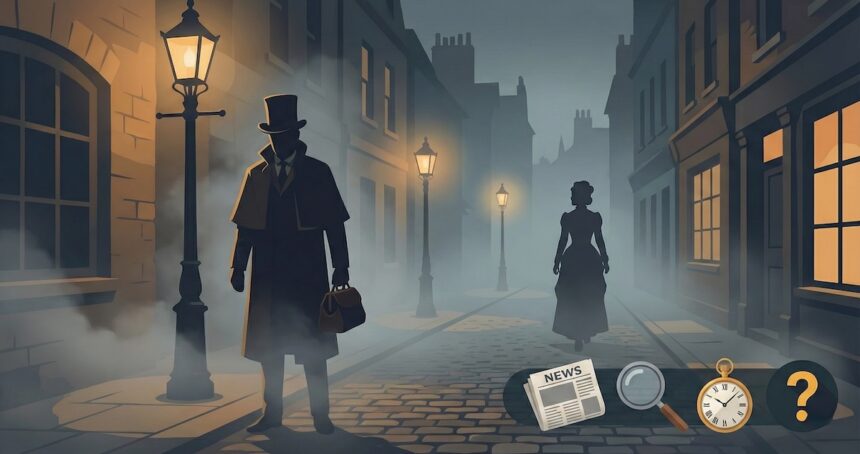
In 1888, in the London district of Whitechapel and its surroundings, an unknown serial killer strangled and then stabbed at least five women: Mary Ann Nichols, Annie Chapman, Elizabeth Stride, Catherine Eddowes, and Mary Jane Kelly. Some historians believe there were more victims—up to eleven—but only this “canonical five” has been definitively established.
- The Ripper Became the First Serial Killer Celebrity
- Hundreds of Letters Were Sent to Police in Jack the Ripper’s Name
- The Ripper Was Long Considered Left-Handed
- Some Believed the Ripper Was Inspired by the Story of Jekyll and Hyde
- Prince Albert, Lewis Carroll, and a “Mad Russian” Were Suspected in the Ripper’s Crimes
All the maniac’s victims came from the poorest segments of society and worked as prostitutes. At first, police suspected the killer might be a surgeon, as he knew how to handle a scalpel. But later, researchers concluded that no anatomical knowledge would be required to so brutally mutilate bodies.
To this day, the maniac’s identity has not been established. Yet Jack the Ripper consistently ranks first in lists of the most famous serial killers in history.
But why did Jack become so famous? After all, maniacs existed before him.
It all comes down to when exactly the Ripper committed his atrocities. Since 1870, England had had a law on compulsory education, and the overwhelming majority of the population was literate. At the same time, the press became one of the most important pillars of society: by the end of the 19th century, England’s population no longer passed news orally but read newspapers en masse.
Thanks to the media’s pursuit of sensations—writing about any incidents that could be connected to the maniac, every police move, and the most absurd rumors—the Ripper became a true “star.” The yellow press shrouded his figure in numerous myths and rumors.
Ripperologists—as people who are passionate about solving the mysteries connected to the Victorian maniac’s history are called—have assembled quite an impressive archive of publications written about the Ripper by his contemporaries. Chilling details about Jack’s exploits are recorded in 5,972 articles in 303 newspapers published worldwide.
Hundreds of Letters Were Sent to Police in Jack the Ripper’s Name
More than 700 letters were sent to London newspapers and police from pranksters pretending to be the killer for a joke, and concerned citizens sharing suspicions and thoughts on how best to catch the maniac. Some of these messages, however, deserve special attention.
The first was sent to Scotland Yard on September 29, 1888, and began with the greeting “Dear Boss!” In it, the presumed killer boasted about how cleverly he was leading the police around by the nose and promised to cut off his next victim’s ears and send them to the police. The author signed himself “Jack the Ripper”—thus the nickname was born.
Soon the body of Catherine Eddowes was found, whose ear had been partially cut off. And police thought the letter might be genuine.
The second message was sent on October 1, 1888. It was a postcard in which the maniac called himself “Saucy Jacky” and talked about the double murder of Elizabeth Stride and Catherine Eddowes, also regretting that he didn’t have time to cut off both ears.
Terrifying messages, right? Except it’s a hoax. In 1931, a journalist named Fred Best confessed that he and his colleague Tom Bullen forged the “Dear Boss” and “Saucy Jacky” letters to give their newspaper The Star grounds for a sensation. The journalist learned about the double murder from a source in the police, and simply guessed about the severed ear.
There’s one more letter, and there are far more serious grounds to believe it was written by the real Jack the Ripper. It began with the words “From Hell” and was addressed to George Lusk, head of the Whitechapel Vigilance Committee—an organization of volunteers patrolling the streets in search of the maniac.
In this message, written with terrible spelling errors, the psychopath confessed that he fried and ate a piece of the kidney of the murdered Catherine Eddowes. And he sent the remaining part to Lusk—a box with a preserved half of a human kidney was attached to the letter.
Whether this kidney belonged to Eddowes cannot now be determined. It’s quite possible this was also an ominous prank by some joker with access to anatomical collections—for example, a medical student.
The Ripper Was Long Considered Left-Handed
Immediately after Jack the Ripper’s first murder, he was considered left-handed. This assumption came from Dr. Rees Ralph Llewellyn, the surgeon who performed the autopsy on the body of the first victim from the “canonical five”—Polly Nichols. In his report, he wrote:
Obviously, the cuts were made with a knife with a very sharp blade. Presumably inflicted by a left-handed person. Death occurred almost instantly.
The doctor based his assumptions on the character of bruises on the neck and the direction of cuts. Thanks to Llewellyn’s conclusions, Jack the Ripper is still stuffed into various internet lists and books like “The Most Famous Left-Handers in History.”
Except the Ripper wasn’t left-handed. Dr. Llewellyn made this assumption before he received the coroner’s permission to perform an autopsy, that is, after a superficial examination. He later abandoned this theory. In a note by Chief Inspector Donald Swanson dated October 19, 1888, it’s mentioned: “At first the doctor was of the opinion that the wounds were inflicted by a left-handed person, but now he doubts it.”
The fact is that the Ripper didn’t cut his victims’ throats from behind, as the doctor initially assumed. He first strangled them, then began to mutilate them after laying them on the ground—in which case the direction of cuts turns out to be the direct opposite.
Llewellyn’s conclusions may have been based on prejudices against left-handers common in the 19th century. One of the first criminologists in history, Cesare Lombroso, claimed they commit crimes three times more often than right-handers. Naturally, all his “statistics” were later considered false.
Some Believed the Ripper Was Inspired by the Story of Jekyll and Hyde
If some madman perpetrates bloodshed in our day, his rampage is first blamed on violent computer games. They play their Dota, then kill people. But this tendency appeared long before the invention of games. For example, the Ripper’s cruelty was blamed on… the work of Scottish writer Robert Stevenson.
In January 1886, he published the Gothic novella “Strange Case of Dr. Jekyll and Mr. Hyde,” in which a respectable doctor, due to experiments with medications, periodically transforms into a sociopath, sadist, and killer. The book was successful, and in August 1888, a play based on it was staged at London’s Lyceum Theatre. British actor Richard Mansfield played the role of Jekyll-Hyde. And three days after the premiere, Martha Tabram was stabbed to death in Whitechapel, a murder also attributed to the Ripper.
The press immediately began comparing the Ripper to Dr. Jekyll.
According to reporters’ assumptions, Jack was inspired to murder by the play. So the maniac decided to embody Mr. Hyde’s cruelties in real life. By day, he supposedly led the life of a respectable London gentleman, and at night went hunting for women. Moreover, Stevenson’s Jekyll was a doctor, and Jack was suspected of having surgical skills. See, it all fits!
It got to the point that on October 5, 1888, London’s City Police received a letter in which a concerned citizen demanded they check Mr. Richard Mansfield for possible involvement in the murders. You see, they said, you yourself saw how convincingly he pretends to be a psychopath on stage—you can’t act that well on purpose. So the killer must be him!
When Mansfield and his troupe stopped showing the play and went on tour to Liverpool, Derby, and other cities, the press explained it thus: the maniac fears being caught and decides to get out of London to be on the safe side. But most likely the reasons were financial: despite the “advertising” connected with the murders, Mansfield’s show turned out not to be in great demand.
Prince Albert, Lewis Carroll, and a “Mad Russian” Were Suspected in the Ripper’s Crimes
A theater actor wasn’t the most unusual suspect in the murders. Besides him, a whole crowd of people were cast for the role of the Ripper—more than a hundred in total. Perhaps the most unusual candidate is Charles Lutwidge Dodgson, better known by the pseudonym Lewis Carroll. Yes, that same writer and mathematician from Oxford who created “Alice in Wonderland.”
This theory was put forward by Richard Wallace, who wrote an entire book about Carroll’s supposed second nature. Supposedly the poems “Jabberwocky” and “The Hunting of the Snark” encrypted scenes of bloody murders. To see anagrams in Carroll’s humorous verses pointi