It’s believed that this was an extremely common practice. In 13th-century France, they supposedly even passed a law requiring residents to shout three times before emptying a pot: “Watch out, water!”
- Myth 2. Wide-Brimmed Hats Were Needed So Filth Could Flow Off Them
- Myth 3. Isabella of Castile Bathed Twice in Her Life
- Myth 4. Louis XIV “Stank Like a Wild Beast”
- Myth 5. Crusaders Brought Soap to Europe
- Myth 6. Europeans Considered Russians Perverts Because They Bathed Once a Month in a Bathhouse
- Myth 7. In Medieval Times, People Ate with Their Hands and Didn’t Know Table Manners
- Myth 8. So Much Filth Flowed Through City Streets That People Walked on Stilts
But this isn’t true. People in medieval times did use chamber pots because toilets hadn’t been invented yet. But they emptied the contents into cesspits and ditches, not onto the street through windows.
Of course, there might have been some originals who splashed waste out their windows, but they surely had a hard time of it.
For example, in 14th-century English towns, throwing garbage out of a window could result in a fine of 40 pence—as much as many ordinary workers earned in a month. With that money, you could buy several barrels of beer, a couple of sheep, or an adult pig. So you’d definitely have to think hard about whether it was worth it.
And it’s unlikely that medieval city dwellers would have been thrilled about human waste raining down on their heads from windows. Records survive of how a certain Thomas Scott in 1307 urinated on the street, which outraged two other townspeople. They demanded that the hooligan go to a public toilet, he started being rude, and they beat him up and wounded him with a knife.
And another smartass who once threw spoiled smoked fish out of a window was beaten so badly by his neighbors that he barely recovered.
As you can see, they didn’t mess around with slobs back then.
Myth 2. Wide-Brimmed Hats Were Needed So Filth Could Flow Off Them
This myth is connected to the previous one. Such hats were also supposedly worn by people of modest means who went to medieval theaters and were forced to crowd in the orchestra pit. When lords and ladies resting on balconies and in upper boxes threw food scraps and blew their noses onto the heads of the commoners, the brims of these hats allowed them to keep their heads relatively clean.
In reality, wide-brimmed hats were made that way for an obvious purpose—to protect against rain and sun. And they were common in all cultures, not just European.
In medieval times, they were most often worn by peasants and pilgrims. For the latter, the wide-brimmed hat eventually transformed into the cappello romano, or saturno, as well as the galero—clergy headwear.
Additionally, they were preferred by military men, who also frequently had to wander outdoors in bad weather or heat. Their headwear eventually turned into those famous feather-decorated musketeer hats called cavalier hats. And when firearms became widespread and the wide brims began to interfere with aiming, they started pinning them up—and the tricorn was born.
These headwear were also popular with nobles, but not because poor people often poured the contents of chamber pots on their heads. It’s just that aristocrats then considered pale skin a sign of nobility, and a tan the distinguishing mark of commoners who labored in the fields.
Myth 3. Isabella of Castile Bathed Twice in Her Life
Experts on the unwashed and suffering Middle Ages often cite Queen Isabella I of Castile, who ruled Spain in the 15th century, as an example. Supposedly this lady was so pious that she considered washing a sin and was proud that she bathed only twice in her life—at birth and before her wedding.
All to avoid washing off the holy water that got on her skin during baptism.
But this is fiction; there is simply no evidence. There is only this legend: once in 1491, the queen besieged the city of Granada, intending to expel Muslims from Spain. And she made a vow not to wash or change clothes until the city fell.
Unfortunately for her, the siege dragged on for eight months, so during this time Isabella’s clothing acquired an unpleasant greyish-yellow tint, which artists gave the name isabelline.
Actually, the legend is quite murky: historians can’t figure out whose name formed the basis of this color’s name—Queen Isabella I of Castile or Infanta Isabella Clara Eugenia of Spain. There were simply rumors that the latter also made a vow not to wash when she began the siege of the Dutch city of Ostend in 1601. And the military action stretched on for three years.
As a result, in stories about the unwashed Middle Ages, these two Isabellas are constantly confused, so it’s difficult to figure out if there’s any truth to this story.
At that time, people often made strange vows to demonstrate fortitude and earn God’s mercy in battle through their suffering. For example, some knights vowed not to eat meat during war, not to shave, cover one eye with a bandage, or deliberately not use fire to keep warm.
But even if we assume that the legend has real grounds and the queen really made a vow not to wash for several months—this means that such behavior in ordinary times was atypical for her and was perceived as a real ordeal. And after taking the city, she started bathing again.
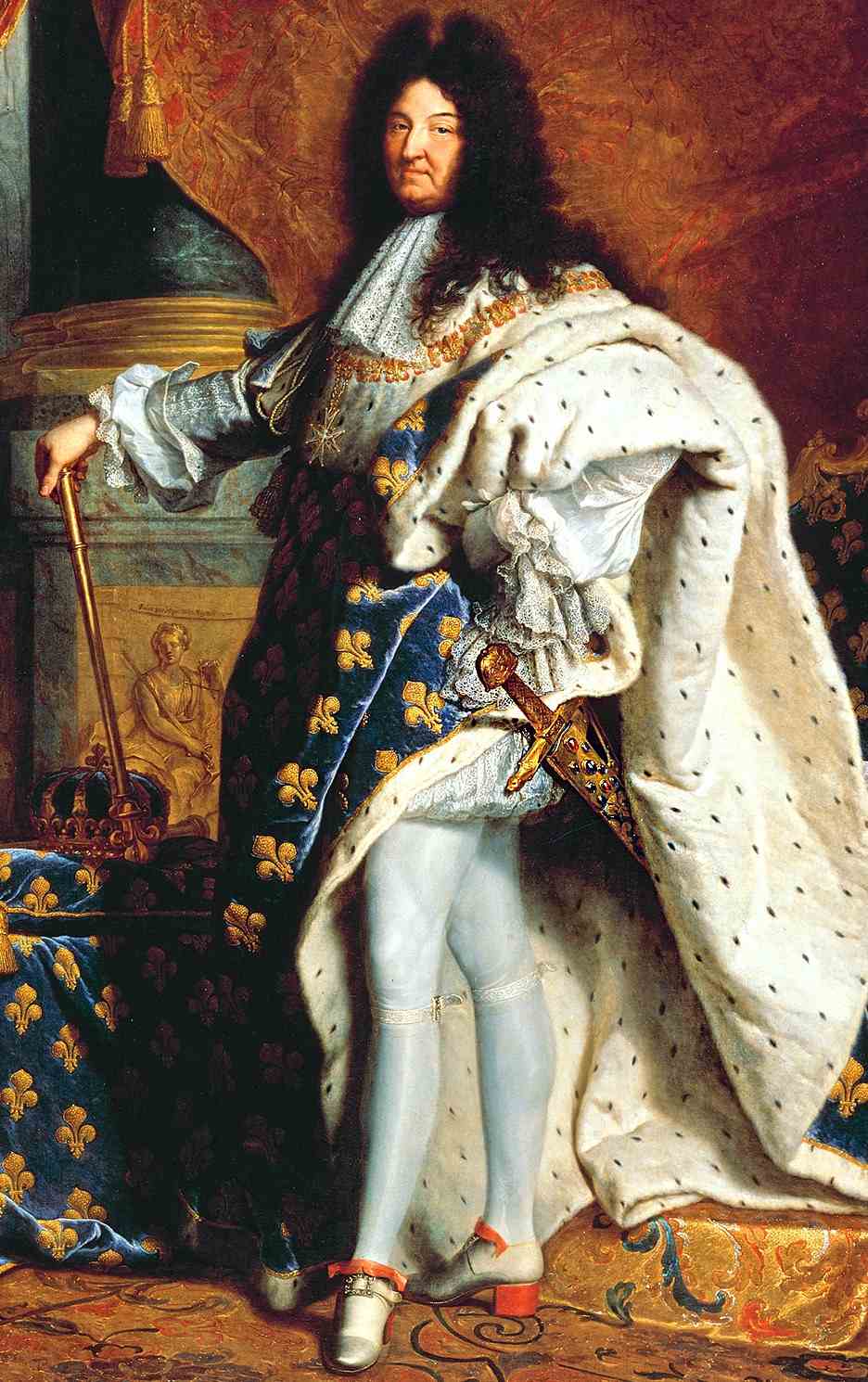
Myth 4. Louis XIV “Stank Like a Wild Beast”
Another person who supposedly really didn’t like bathing was King Louis XIV of France, also known as the “Sun King” or Louis the Great. A tale circulates on the Internet that this monarch also washed either two or four times in his life and only did so by doctor’s orders. Actually, Louis XIV’s uncleanliness can hardly be explained by medieval traditions—after all, it was already the New Age.
However, according to certain “Russian ambassadors” (by another version, “Cossacks”), “his majesty stank like a wild beast.” Sometimes this phrase is even attributed to Peter I himself. True, the tsar couldn’t have said such a thing, because by the time he visited Versailles in 1717, Louis had already been dead for a couple of years.
Historical evidence that Russian ambassadors or Cossacks said such a thing is also absent.
Most likely, this was attributed to ambassadors by blogger Denis Absentis—author of the book about the “unwashed and sick” Middle Ages called “Evil Writhe.” Describing the unsanitary conditions of that time, he got a bit carried away and “slightly” exaggerated.
Moreover, in his work, he seriously references the work of Patrick Süskind—a certain “Swiss chronicler.” Although in reality he is our contemporary, author of the novel “Perfume.”
In truth, Louis XIV washed regularly. Otherwise, it’s unclear why he spent a heap of money on bringing running water to Versailles and building baths and pools in it. As contemporaries wrote, his majesty was an excellent swimmer and could cross the Seine on a bet.
He built a Turkish-style bath in his palace and regularly took baths there, often in the company of court ladies. And when he couldn’t wash during a trip, he ordered valets to wipe his body with grape spirits and spray it with perfume.
Myth 5. Crusaders Brought Soap to Europe
You can encounter the claim that Europe only started washing after dirty crusaders stole the secret of making soap from Muslims. And before that, its inhabitants supposedly didn’t know about it at all.
In reality, there were whole guilds of soap makers in Europe at least since the 6th century. And it’s unclear how they managed to make their products if the First Crusade would only happen in the 11th century.
The crusaders did bring back from Palestine a soap recipe, but a very specific one—with olive oil. When European soap makers started using the latter instead of animal fat, their products started smelling better. And affluent gentlemen switched to it. But to say that Europeans didn’t use soap before wars with Muslims is impossible.
Myth 6. Europeans Considered Russians Perverts Because They Bathed Once a Month in a Bathhouse
This quote also went wandering around the Internet courtesy of the author of the book “Evil Writhe.” True, there’s one catch: he didn’t provide any references to its sources.
Bathhouses at that time were a common phenomenon in Europe, both private ones (for wealthy gentlemen) and public baths. The latter, by the way, were often combined with bakeries or smithies—to save firewood and not waste the heat from ovens when there was no need to heat water. Here’s a description of such establishments in the 13th-century city of Erfurt:
The baths in this city will give you true pleasure. A beautiful young girl will rub you properly with her tender hands. An experienced barber will shave you without dropping a single drop of sweat on your face. A pretty woman… will expertly comb your hair. Who wouldn’t steal a kiss from her, if only they wanted?
Jacques Le Goff, “Medieval Civilization in the West”
Yes, baths were often combined with brothels and there you could easily get other services from bath attendants besides washing. The Church turned a blind eye to these minor sins—in England, for example, bishops collected taxes from bathhouses located in their dioceses.
Myth 7. In Medieval Times, People Ate with Their Hands and Didn’t Know Table Manners
Medieval people—even noble lords—are usually depicted as extremely ill-mannered tablemates who grab food from the table and put it in their mouths with their hands. They say forks were only brought to them from the East toward the end of the era, and before that they had to use dirty fingers.
In reality, medieval table etiquette can be judged by a 15th-century manuscript called “Rules of Conduct at the Table.”
…and let your fingers be clean and your nails groomed. Having once touched a piece, do not return it to the plate. Do not touch your ears or nose with bare hands… Whoever wants to drink should first finish what is already in their mouth, and let them first wipe their lips. After the table is cleared, wash your hands and then drink wine.
“Rules of Conduct at the Table” 15th-century manuscript
As you can see, it doesn’t much resemble a scene from the comedy “Black Knight,” where the king served guests peas with the same hand he had just used to scratch himself and feed the dog.
Forks did indeed appear in Europe quite late, in the 1600s. Before that, people ate only with spoons and knives, and a noble lord carried his eating knife on his belt—it was considered foolish to show up at a feast without your own utensil. And when the medieval aristocracy got hold of forks… they also initially carried them in sheaths. Quite an amusing custom.
Myth 8. So Much Filth Flowed Through City Streets That People Walked on Stilts
Medieval European cities were, of course, not as well-kept as modern ones, but authors of articles and books about the “gloomy Dark Ages” sometimes exaggerate too much.
For example, there’s a myth that streams of feces, manure, and other filth flowed through the streets of settlements, poured from windows and doors of surrounding houses. And people were forced to walk through the streets on stilts.
High heels were also supposedly invented to walk through manure-covered streets without getting dirty.
Sounds disgusting, right? However, images of medieval sufferers on stilts, which usually illustrate such statements, are misunderstood by modern people.
These devices were indeed worn, but not by city dwellers, but by peasants, who used them to move across wet fields and swamps without getting stuck. Additionally, stilts were used to harvest from tall trees, as well as for entertainment—mock battles and tournaments were held on them.
Walking on them through cities was unnecessary, as filth didn’t flow through the streets. Waste channels were designated for the latter, covered ones at that, so smell wouldn’t spread. And special responsible persons monitored that they didn’t overflow.
As for heeled footwear, ladies sometimes wore it so their dresses wouldn’t get dirty. But not in filth—in rain puddles. Later, men also adopted the fashion, emphasizing their status with such footwear and increasing their height.