Tag: france

  • Thirty Years’ War: The European conflict from 1618 to 1648

    From May 23, 1618, to October 24, 1648, Europe was rocked by a series of religious and political wars known as the Thirty Years’ War. Conflict erupted between the Catholic Habsburgs of Spain and the Holy Roman Empire and the largely Protestant rulers of the German kingdoms of the Holy Roman Empire. Between 4 and 7 million people lost their lives in this conflict, which was fought by almost every European country. The Thirty Years’ War finally came to a close with the signing of the Peace of Westphalia (or Treaties of Westphalia) in October 1648. The separation of church and state in Germany was formally established. As Spain’s fortunes diminished, France rose to prominence in European affairs.

    Why did the Thirty Years’ War take place?
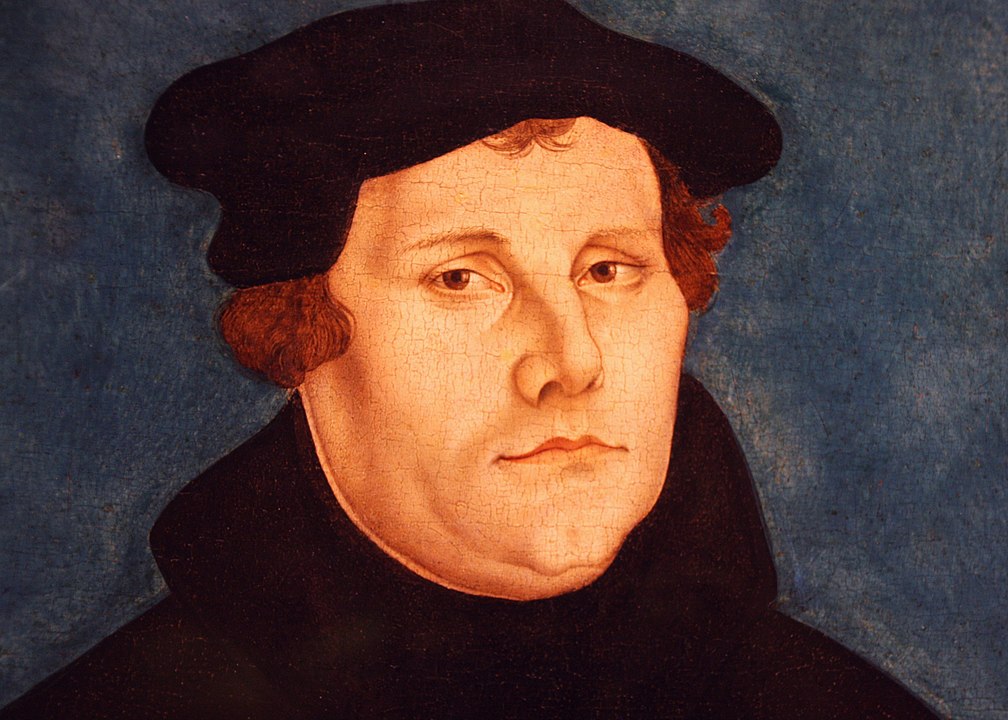
    Martin Luther in 1528 by Lucas Cranach the Elder.
    Martin Luther in 1528 by Lucas Cranach the Elder.

    It was Martin Luther’s “95 Theses (or Ninety-five Theses)” from 1517 that kicked off the Protestant Reformation. The Germanic rulers eventually became Protestant and introduced the religion to Prussia and the northern regions. After Luther and the Catholic Church signed the Peace of Augsburg in 1555, they were able to live side by side in Germany.

    To avoid further responsibility for failing to defend Catholicism, Holy Roman Emperor Charles V retired from political life in 1556. The Empire eventually passed to his brother, Ferdinand I, and then to his son, who became King of Spain. The Reformation and Counter-Reformation were major cultural movements in Europe that lasted for a long time.

    The Protestants of Bohemia, however, rose out against their new Catholic ruler on May 23, 1618. The recently crowned monarch had determined to convert his country to Catholicism. After a fight, several delegates from the Catholic Empire were thrown out of the windows.

    Starting the Thirty Years’ War was the defenestration of Prague. After Emperor Matthias I’s death in 1619, his cousin, Bohemian King Ferdinand II, was crowned Holy Roman Emperor. The Bohemian Czechs, still dissatisfied, nominated Elector Palatine Frederick V as their new king. Ferdinand II was forced to intervene in order to put down the rebellion.

    Who fought in the Thirty Years’ War?

    Battle of White Mountain
    Battle of White Mountain. Artist: Peter Snayers (1592–1667)

    The religious struggle known as the Thirty Years’ War had its roots in Germany but quickly spread throughout Europe. Protestant lords of the Evangelical Union (including the Elector Palatine, the Duke of Neuburg, the Duke of Württemberg, etc.) rebelled against the Catholic Holy League in the wake of the Bohemian uprising (which included the Emperor, the Kingdom of Spain, Saxony, Poland, Bavaria, etc.).

    The Bohemian army was decimated in the Battle of White Mountain on November 8th, 1620. The Peace of Lübeck was negotiated in 1629 when the King of Denmark arrived to help the Protestants at the end of 1624; his army was also beaten.

    Although the King of Sweden had intervened the previous year in support of the Lutherans, he was killed in the Battle of Lützen the next year. On May 30, 1635, Emperor Ferdinand II signed the Treaty of Prague, ending fighting in the Holy Roman Empire. The situation went back to how it had been before the Peace of Augsburg. With its territory hemmed in by the Habsburgs, Louis XIII’s France saw benefits in weakening the empire.

    France joined the war in 1635 on the side of Sweden after secretly intervening for years. In the Battle of Rocroi, which took place on May 19th, 1643, the Grand Condé decisively defeated the Spanish. The French defeated the Dutch Habsburgs in the Battle of Lens in 1648, bringing an end to the conflict.

    Alsace and Lorraine during the Thirty Years’ War

    During the Thirty Years’ War, Alsace and Lorraine took some of the worst hits. They were decimated by the passage of various armies, including Swedish, Spanish, and French forces. Locals’ embrace of brigands as a means to escape their plight just added gasoline to the chaos. Each country used mercenaries, some of whom were hard to command. Wheat prices hit all-time highs, so locals were reduced to subsisting on a diet of roots and herbs. The population of these areas dropped by half or more due to twenty years of hunger, plagues, and flight.

    Did massacres take place during the Thirty Years’ War?

    Military and civilian casualties during the Thirty Years’ War totaled between 4 and 7 million. In many cases, the different armies committed crimes (massacres, rapes, tortures, etc.) out of vengeance. To provide just one example, in 1631, the Catholic League’s forces sacked Magdeburg and murdered 25,000 of the city’s 30,000 residents.

    The Planche des Belles Filles mountain in the Vosges got its name because it was where the ladies of a nearby town sought sanctuary from the Swedish invasion in 1635, only to commit mass suicide as the Swedes closed in. Despite receiving no or little compensation, the mercenaries cover their expenses by engaging in various forms of extortion.

    Aftermath of Thirty Years’ War

    Peace of Münster (Gerard ter Borch, Münster, 1648).
    Peace of Münster (Gerard ter Borch, Münster, 1648).

    Some German provinces (including Saxony, Palatinate, Alsace, and Lorraine) lost as much as half their population when the treaties of Westphalia were signed on October 24, 1648. About one-fifth of the population of central Europe was wiped off in this catastrophe. Even though France acquired additional territory (Metz, Toul, Verdun, part of Alsace, Belfort, Artois, and Roussillon), the country’s economy had a difficult time rebuilding. Sweden expanded its influence and territory in the region of the Baltic Sea. Denmark was no longer a major world power.

    There was a new religious peace formed, and the German Empire was broken up into several smaller autonomous nations. Bohemia, however, remained a hereditary Habsburg possession. A number of countries, including Switzerland and the United Provinces (now the Netherlands), attained their freedom. However, the Habsburgs’ dominance and the might of the kingdom of Spain both started to diminish. Before the Treaty of the Pyrenees was signed in 1659, France and Spain remained at war. The union between Louis XIV of France and Maria Theresa of Spain brought peace back to Europe.

    TIMELINE OF THIRTY YEARS’ WAR

    May 23, 1618: The Defenestration of Prague

    Two of the king’s lieutenants were thrown out of a window after they were assaulted by a group of Czech Protestants who stormed the royal castle in Prague. The transition of power from King Matthias to the devoutly Catholic Duke Ferdinand of Styria sparked the turmoil. As they were thrown out the window, the two defenestrated individuals landed safely in a mound of dung, but this incident signaled the beginning of the Thirty Years’ War (1618–1648).

    November 8, 1620: The Battle of White Mountain

    Count Jean de Tilly of Wallonia led a Germanic army that defeated the Bohemian Protestants west of Prague. The Protestant uprising occurred because Habsburg Emperor Ferdinand II tried to suppress the rebels’ desire for personal liberty. After this fight, the monarch annexed the area and repressed Protestants severely until 1918.

    1621-The United Provinces resumed the war with Spain

    After a twelve-year ceasefire with Spain, negotiated in 1609, Prince Maurice of Orange, also known as Nassau, resumed hostilities in 1613. In this context, the Thirty-Year War was the setting in which the United Provinces allied with France. However, Maurice of Nassau’s involvement in the war was short-lived due to his untimely death in 1625. His brother, Frederick Henry of Nassau, took up the cause and worked to have the United Provinces’ independence from Spain recognized in 1648.

    March 31, 1621-Death of Philip III of Spain

    Philip III, King of Spain, Portugal and the Algarves, died of thirst on March 31, 1621, after a long battle with illness. The monarch complained of the heat, but no one near him had the authority to reduce the wood fire. He fainted from the heat and died in front of everyone. His son Philip IV inherited the throne and this pious monarch spent most of his time praying and lavishing his palace with lavish displays of wealth.

    March 31, 1621-Beginning of the reign of Philip IV of Spain

    On March 31, 1621, at the death of his father Philip III, the prince of Asturias became King Philip IV of Spain, Portugal, and the Two Sicilies. Philip the Great, born in 1605, used his first years as king to further consolidate Habsburg dominance throughout Europe. Philip IV was a major benefactor and collector until the end of his reign in 1665.

    July 10, 1621-Death of the Count of Bucquoy

    Lord of the Spanish Netherlands and a master of defensive tactics, Charles Bonaventure de Longueval, Count of Bucquoy was a formidable opponent. He entered the service of the Holy Roman Empire in 1571, the year he was born, at the beginning of the Thirty Years’ War. In spite of his numerous triumphs, he was killed on July 10, 1621, while fighting the soldiers of Gabriel Bethlen, prince of Transylvania, during the Siege of Neuhäusl (now Nové Zàmky in Slovakia).

    August 4, 1621-Swedish invasion of Livonia

    On August 4, 1621, King Gustav II Adolph of Sweden led an army into Livonia, then part of Poland. Since 1600, Poland and Sweden had been at war over Polish King Sigismund III Vassa’s claims to the Swedish throne. With the help of this mighty assault, Sweden was able to take control of the Riga region and the surrounding area of Livonia and Courland.

    February 25, 1628-Beginning of the War of Succession of Mantua

    During Europe’s Thirty Years’ War (1618–1648), the Habsburgs faced out against the French on the southern front. After the death of the previous Gonzaga dynasty in 1627, the former was engaged in an effort over the right to succeed as Duke of Mantua in northern Italy. Louis XIII and Richelieu marched over the Alps in 1628 and captured Mantua the next year. The dukedom was restored to the French line known as the Dukes of Nevers.

    July 7, 1628-Beginning of the siege of the city of Stralsund by Wallenstein

    siege of the city of Stralsund by Wallenstein
    Siege of Stralsund (1628)

    In 1618, a mob of angry Czechs threw a group of innocent people out of a window, sparking the Thirty Years’ War in Europe. In 1623, Albrecht Wallenstein, Duke of Friedland and generalissimo of the forces of the Holy Roman Empire, assembled a force of 50,000 soldiers. After pulling off a series of coups, he laid siege to Stralsund, a Hanseatic city in Mecklenburg-Pomerania, Germany. The eleven-week siege ended when Wallenstein was forced to call off the assault due to a shortage of troops.

    May 22, 1629-Signature of the Peace Treaty of Lübeck

    In the northern German city of the same name, the Peace of Lübeck was signed on May 22, 1629. After Catholic soldiers invaded the territories of Denmark, the two sides, Holy Roman Emperor Ferdinand II and King of Denmark Christian IV, signed the Peace of Lübeck. The conditions of this peace required Denmark to cease meddling with Holy Roman Empire conflicts, called for the release of detainees held by both sides, and required a renunciation of damages and interests resulting from the struggle.

    Altmark Peace Treaty was signed on September 25, 1629

    After the Swedish army was soundly defeated by Imperial and Polish-Lithuanian forces at Honigfelde, near Stuhm, and Gustav II Adolphus just avoided captivity, the Treaty of Altmark was signed. Eric Soop, a member of the king’s guard, came to the rescue after the monarch was wounded many times. Richelieu’s diplomatic efforts resulted in the signing of a six-year ceasefire. The whole Baltic coast was now under Swedish control. Poland handed up many East Prussian ports on September 25, 1629, including Königsberg and Danzig’s customs goods, from Livonia to the Dvina. In return, Sweden returned the inland areas of the Duchy of Prussia.

    July 6, 1630 – Sweden enters the Thirty Years’ War

    While the Thirty Years’ War was at its height, King Gustav II Adolphus of Sweden signed the Treaty of Bärwalde with France, securing French diplomatic and military help in the Baltic area. He landed in Pomerania on July 6, 1630, and established his army, the Hakkapeliitta, after a string of successful campaigns against Poland and the Baltic provinces. After almost a year of consolidation, he won another victory in 1631, this time against the Catholic League army in the pivotal Battle of Breitenfeld. The Danube will be invaded by his troops.

    Beginning of the Magdeburg siege, November 1630

    Magdeburg, the capital of Saxony-Anhalt, came under siege by the armed forces of the Holy Roman Empire. A Protestant stronghold, this city served as a major node in the Hanseatic League, an alliance of northern European merchant towns that dominated European commerce at the period.

    The city’s strong defenses allowed it to hold out against the Catholics until the Swedish army of King Gustav II Adolphus, who had been victorious in battle ever since he joined the fight, arrived. Despite this, in 1631 the city fell to the Holy Roman Empire, who slaughtered the locals and then plundered, destroyed, and occupied the city. The word “Magdeburgization” has now come to mean “destruction” because of the bloodshed that occurred during this event.

    December 1, 1630-George I Rákóczi becomes Voivode of Transylvania

    On December 1, 1630, George I Rákóczi, the son of Sigismund II Rákóczi and the “voivode” of Transylvania, assumed the throne. His brother Stephen III Bethlen was the rightful king, but with the backing of the influential Catherine of Brandenburg, a member of the aristocracy, George was able to ascend to the throne instead.

    He wed Zsuzsanna Lorántffy, and the couple had two sons who would eventually take over. The voivode supported the Protestant cause during the Thirty Years’ War by joining the armies of France and Sweden in their struggle against the Holy Roman Empire. In doing so, he protected Transylvania’s autonomy and the religious freedom of western Hungary.

    On January 23, 1631, France and Sweden signed the Treaty of Bärwalde

    In 1631, Louis XIII of France chose to back Gustavus Adolphus II of Sweden in his struggle against the Holy Roman Empire. With this action, France joined the Thirty Years’ War against the Habsburg Empire. The political, military, and economic alliance was established on January 23 with the signing of the Treaty of Bärwalde by the two sovereigns.

    With the Swedish supplies, Cardinal Richelieu could outfit the whole royal fleet. In addition, Sweden was responsible for leading an army of 30,000 men and 6,000 knights to Germany. France, meanwhile, agreed to pay Sweden 1.5 million livres tournois year in debt. The duration of this pact was contingent upon the return of peace.

    The Treaty of Cherasco, signed on April 6, 1631, officially ended the War of Succession of Mantua

    The succession struggle for the Duchy of Mantua occurred on the periphery of the larger Thirty Years’ War. In the aftermath of the Gonzaga dynasty’s oblivion and the duchy’s disinheritance, it took a stance against the French in favor of the Habsburgs over Mantua’s ownership. Battles fought during the Thirty Years’ War eventually diverted attention away from Mantua.

    Pope Urban VIII stepped in and sent a mediator, the future Cardinal Julius Mazarin. This day in 1631 marks the signing of the Treaty of Cherasco. The disputed land was partitioned between the warring parties, with France gaining control of the strategically important castle of Pignerol, which provided a gateway to the Po River plain in Italy.

    Battle of Breitenfeld was won by the Protestants on September 17, 1631

    The Protestants, under the leadership of Gustavus II Adolphus of Sweden, defeated the Catholics, under the direction of General Tilly, in the Battle of Breitenfeld during the Thirty Years’ War. On September 17, 1631, north of Leipzig in the town of Breitenfeld, the two armies engaged in battle.

    Although the Catholic army was led by the light cavalry of Count Pappenheim, they were finally beaten by the cavalry squadrons intermingled with Gustavus Adolphus’ musket-armed infantrymen. This victory proved that mobile infantry and the might of guns could beat the large and well-supplied pike army of the Empire, thus additional Protestant nations joined Sweden in her quest for independence.

    King Sigismund III Vasa of Poland and Sweden died on April 19, 1632

    In 1587, upon the death of Stephen Bathory I, Sigismund III of the Vasa dynasty was chosen King of Poland and Grand Duke of Lithuania, notwithstanding the claims of Maximilian III of Austria. At 1594, Sigismund was anointed in Uppsala as the next King of Sweden, succeeding his father, also on the condition that Sweden may remain a Protestant nation. Back in Poland, he sought an alliance with the Habsburgs so he could rally central Europe’s might against the Turks.

    As a result of his uncle’s efforts to seize power in Sweden while his absence, Sigismund was forced to abdicate the Swedish crown and depart the country, setting the foundation for a series of conflicts between Poland and Sweden. He invaded Russia with an army and seized various areas in the Smolensk area between 1605 and 1618. After the outbreak of the Thirty Years’ War in 1618, he took the side of the Catholics. Ladislaus IV, his son, took over the war effort after his death.

    Death of Holy Roman Empire army head General Tilly, April 30, 1632

    During the Thirty Years’ War, the Catholic League and the Holy Roman Empire both had their forces under the leadership of Jean t’Serclaes, Count of Tilly. He was born in 1159, grew up as a devout Catholic, and attended Jesuit school. In 1623, he defeated Christian of Brunswick in the Battle of Stadtlohn, and in 1626, he defeated Christian IV of Denmark at the Battle of Lutter, both of whose kings eventually signed the Peace of Lübeck.

    His promotion to supreme commander came in August 1630, after Wallenstein’s departure. Magdeburg, which he had besieged against Gustav II Adolphus of Sweden in 1631, was almost destroyed thanks to his efforts, and he was afterwards defeated by the Swedes at Breitenfeld. He was mortally wounded on April 30, 1632, while attempting to stop their assault on Munich at the Battle of Rain (a.k.a Battle of Rain am Lech).

    November 6, 1632-Death of Gustav II Adolphus of Sweden at the Battle of Lützen

    In the midst of the Thirty Years’ War, in Leipzig in Saxony-Anhalt, King Gustav II Adolphus of Sweden and his Protestant army faced off against Generalissimo Wallenstein and the army of the Holy Roman Empire. The Swedish monarch was killed at the Battle of Lützen, making it a pivotal conflict. As soon as Wallenstein heard that the Swedes were coming, he sent word to General Pappenheim to meet up with his forces.

    These last groups fled without delay, although they were still 40 kilometers from Wallenstein. After the first day of fighting went in favor of the Swedes, Pappenheim arrived with an additional three thousand cavalry to turn the tide of the battle. Pappenheim was killed in the first charge, while King Gustavus Adolphus was killed in a later charge around lunchtime. The Protestants, however, continued the fight and ultimately prevailed, saving Saxony from the Emperor.

    November 6, 1632-Accession to the throne of Queen Christine of Sweden

    At the Battle of Lützen on November 16, 1632, the Swedish monarch, Gustav II Adolphus, was gravely wounded. He had just one daughter, therefore in 1627 he abolished male devolution to ensure that she could replace him. Christine of Sweden, when just six years old, became monarch.

    Until 1644, when she legally became an adult, she was under the care of Chancellor Axel Oxenstierna. After the Treaty of Westphalia in 1648, Queen Christine fired her guardian and pushed for permanent peace. With the territory ceded by this treaty, Sweden became the dominant power in the Nordic region. She secretly converted to Catholicism in 1654 and abdicated the throne; she was welcomed in Italy, where Pope Alexander VII gave her first communion.

    November 8, 1632: Election of Ladislaus IV Vasa to the Polish throne and the beginning of his reign

    Ladislaus was a member of the Vasa dynasty and the lone son of King Sigismund III of Poland. He was anointed tsar at the tender age of 15 by a cabal of boyar lords while his father fought the Russian army and attempted to capture Moscow, but the Russians flatly rejected this designation and rose up against the 3,000 Polish troops garrisoned inside the Kremlin. Ladislaus was ultimately beaten, although he continued to call himself Tsar of Russia until 1634.

    A staunch supporter of the Catholic faith, he made his name in battle against the Ottomans in 1621 and the Swedes from 1626 to 1629. For a while, he even entertained the idea of conducting a crusade to wrest control of the Balkans back from the Ottomans. On November 8, 1832, the Sejm (the parliament of Polish nobility) voted to make Ladislaus King of Poland. Despite marrying Archduchess Cécile Renée of Habsburg, he declared Poland to be neutral throughout the Thirty Years’ War.

    December 1, 1633-Death of the Infanta of Spain, Archduchess of Austria, and Governor of the Spanish Netherlands

    Isabelle-Claire-Eugénie of Austria was the daughter of King Philip II of Spain and the granddaughter of King Henry II of France. She belonged to the House of Habsburg. This meant that in addition to Spain, she might also lay claim to the thrones of France and the duchy of Brittany.

    Her marriage to Albert of Austria, son of Emperor Maximilian II, brought her the crown of the Netherlands as a dowry, and her court included prominent painters such as Rubens and Brueghel. The marriage was successful in bringing peace between the Catholic country of Spain and the Protestant nation of the Netherlands, allowing commerce to thrive. The peace between Albert’s death in 1621 and Isabella’s on December 1, 1633, did not last long. The Thirty Years’ War ended in 1648 with the Treaty of Westphalia, officially splitting the Netherlands from Spain.

    1634-Beginning of the Franche-Comté

    Franche-Comté was ruled peacefully by the Spanish throughout the Thirty Years’ War that ravaged the rest of Europe. After his death in 1598, King Philip II of Spain granted his daughter, Infanta Isabella of Spain, and her husband, Albert of Austria, control of the Netherlands and Franche-Comté. In 1611, France and her reaffirmed their treaty of neutrality over the Franche-Comté, which stipulated that both countries would maintain their neutrality until 1640.

    Once both Isabella and her husband had passed away, her destiny was in the hands of King Philip IV of Spain. After many triumphs for the Holy Roman Empire, Richelieu assured King Louis XIII of France that Burgundy and Franche-Comté would be simple to take. Fearing further Catholic expansion, Louis XIII breached the treaty of neutrality in 1634 and sent a force of 25,000 troops under the command of the Prince of Condé. War between England and France, known as the Ten Years’ War, had just broken out and wouldn’t finish until 1644, when France agreed to terminate hostilities in return for 40,000 ecus.

    February 25, 1634-Assassination of General Wallenstein after his impeachment by Emperor Ferdinand II

    After several stunning victories for Emperor Ferdinand II’s side during the Thirty Years’ War, Commander Wallenstein went to Bohemia near Pilsen to reflect on his exploits with the help of astrologers and physicians. From there, he admittedly negotiated with the opposing powers to be installed on the Bohemian throne, jeopardizing the succession of the emperor’s son Ferdinand III. Wallenstein believed that his soldiers would not dare turn against him.

    On February 18, 1634, however, an edict was published in Prague charging Wallenstein of high treason, and he fled to Eger to seek shelter from the Swedish troops stationed there. On the evening of February 25th, Eger was killed by a squad of dragoons comprised of Irish and Scottish soldiers. Piccolomini and Gallas, Wallenstein’s lieutenants, took his position. He is remembered as the one who first proposed the enormous war levy that funded the Austrian army.

    September 5, 1634-Battle of Nördlingen and victory of Emperor Ferdinand III of Hungary over the Swedes and Lutherans

    Battle of Nordlingen 1
    Battle of Nördlingen (1634)

    Gustav II Adolphus, King of Sweden, died a victorious death in the Battle of Lützen on April 19, 1632. Despite the Protestants’ triumph, which would ultimately recover Saxony-Anhalt, the Spanish imperial army marched on and took the city of Regensburg, threatening to expand once again into Saxony. After that, the Protestants, led by Gustaf Horn, made plans for a nighttime attempt to reclaim the city.

    Poor troop management hindered their progress, and the artillery and supply trains lagged behind the troops. Since they had more time, the opposing forces readied for war. Between 12,000 and 14,000 Protestant soldiers were killed or captured at the Battle of Nördlingen on the night of September 5-6, 1634. As thus, this was the first time the Swedes had ever been defeated in the Thirty Years War. Seeing the imperial soldiers approach, France would have no option but to declare war on the Holy Roman Empire.

    October 11, 1634-Flooding of Schleswig-Holstein in the North Sea caused by the Burchardi storm

    This took place in the middle of the Thirty Years’ War and just after the plague had been eradicated from what is now German-controlled Schleswig-Holstein in 1603. Additionally, the North Sea seemed to be raging for years, and icebergs had already demolished a portion of the coastal dikes by the year 1625. When a result, a significant portion of the island of Strand was swept away by a storm surge on the night of October 11–12, 1634, as Burchardi raged off the shore.

    A storm surge, also known as a mandränke, was a sudden rise in sea level caused by a combination of wind and a deep depression on the ocean bottom. Church records indicate that anywhere from 8,000 to 15,000 people perished as a consequence of the storm surge, including around two-thirds of Strand’s population. After the Island of Strand vanished, other islands formed in their place, including Nordstrand, Pellworm, Halligen Südfall, and Nordstrandischmoor.

    On this day in 1635, France officially joined the Thirty Years War

    Seventeen years after the beginning of the Thirty Years’ War in Europe, France became deeply involved in the fight. Because to Spain’s intervention on the side of the Catholics in the Empire, Louis XIII and Richelieu declared war on it. France renewed the battle because it feared being encircled by the Catholic Habsburgs of Austria and Spain after they defeated the Protestants in an alliance. As a result, it began supporting the northern Protestant forces.

    Peace of Prague Treaty was signed on May 30, 1635

    On May 30, 1635, John George I of Saxony, the Elector of Saxony, and Ferdinand II, the Holy Roman Emperor, signed the Peace of Prague at Prague. The former stood for the Saxony-Anhalt Protestant states. The civil conflict portion of the Thirty Years’ War was ended, and Bavaria’s electoral prestige was acknowledged, thanks to the peace. In the end, John George I of Saxony was able to acquire the northeastern German province of Lusatia. But the battle persisted, first at the instigation of the Swedes and afterwards of the French, until the Treaty of Westphalia in 1648.

    June 22, 1636—Battle of Tornavento and victory of the Franco-Savoyards over the Spanish

    In 1636, during the height of the Thirty Years’ War, the Cardinal of Richelieu convinced Duke Victor-Amédée I of Savoy to mount an attack on the Spanish duchy of Milan. French troops made it over the Ticino River, but ran into the Spanish force waiting for them at Tornavento, while their Savoyard allies were still stuck in Italy.

    It was on June 22 when the Spaniards launched their assault, but the Duke of Savoy’s forces came to the rescue. Eventually, the Spanish withdrew to Boffalora, leaving the battlefield in disarray. To loot the nearby towns, the Franco-Savoyard army lingered for a few days before leaving Milanese territory for good. In other words, the first assault on Lombardy was doomed to fail from the start.

    July 2, 1636: Phillipe IV of Spain ordered a siege of the Picardy town of La Capelle

    Count Jean de Werth rose through the ranks of the Holy Roman Empire army after distinguishing himself in the Battle of Nördlingen, where he served with General Piccolomini. To Lorraine, Picardy, and Luxembourg in 1635 and 1636. Beginning in July 1636, they pillaged the area around the lower Meuse and on July 2 laid siege to the town of La Capelle. The presence of the invaders sparked the beginning of a French national spirit, and soon enough, a force of 50,000 men had assembled, forcing Jean de Werth and Piccolomini to retreat.

    October 4, 1636-Battle of Wittstock and Swedish victory over the Emperor

    Northern Germany was fought for during the Thirty Years’ War between the Catholic Holy Roman Empire and the Protestant Swedes and their allies. The two troops in 1636 were posted on opposite banks of the Elbe River. The Swedish army, led by General Johan Banér, crossed across and confronted the imperials south of Wittstock, in the area of the Scharfenberg hills.

    There was a significant experience gap between the Swedish artillery and the Saxon infantry. Although Johan Banér’s army emerged victorious, the outcome of the battle had no long-term strategic ramifications. Even though the Swedes attempted to lay siege to the city of Leipzig, Brandenburg would not join them. This was because a new imperial army headed by Matthias Gallas (the successor of General Wallenstein) forced them to retire to their old position.

    October 6, 1636-Victory in Szalonta of the Transylvanian prince George I Rákóczi over the Turks

    George I Rákóczi ruled Transylvania as prince from 1630 until his death in 1648. Because to the death of his brother Etienne III Bethlen and the backing of the aristocratic Catherine of Brandenburg, he was able to ascend to the kingdom. On October 6, 1636, he beat the Turks in Buda at Szalonta, which was his first military triumph. Then, during the Thirty Years’ War, George I Rákóczi took a side with the Protestants.

    February 15, 1637-Death of the Holy Roman Emperor Ferdinand II of Habsburg

    Born in 1578, Ferdinand II of Habsburg was brought up by the Jesuits of Ingolstadt, who influenced him to become a staunch Catholic and an adversary of Protestantism. By inciting hostility among Bohemia’s Protestant nobility, he helped spark what would eventually become the Thirty Years’ War.

    Assisted by his commander Tilly, he won the Battle of White Mountain in 1620, annexing Bohemia to the Holy Roman Empire. The Swedish army, headed by King Gustavus Adolphus II, intervened and ultimately won the Battle of Breitenfeld. As a consequence, the Thirty Years’ War consumed his entire reign and brought about the destruction of German society and industry. On the 15th of February, 1637, he passed away, and his son, Ferdinand III of Habsburg, took his place.

    February 15, 1637-Beginning of the reign of the Holy Roman Emperor Ferdinand III

    On July 13, 1608, Ferdinand III of Habsburg was born to Emperor Ferdinand II and Maria Anna of Bavaria. In 1625, he was crowned king of Hungary; in 1627, he was crowned king of Bohemia; but it wasn’t until Ferdinand II’s death in 1637 that he was officially crowned “King of the Romans,” i.e., the monarch of the Holy Roman Empire, to rule as Holy Roman Emperor. A renowned figure during the Thirty Years’ War, he gained notoriety for defeating the Swedish Protestants at the Battle of Nördlingen. In the years that followed, however, he was unable to successfully oppose the Swedes and their French backers. The Peace of Westphalia, Münster, and Osnabrück, which he was compelled to sign in 1648, effectively ended Holy Roman Empire hegemony over Europe.

    September 28, 1637-Battle of Leucate and French victory over the Spanish

    Leucate Castle, situated south of Narbonne, served as a fortress and strategic outpost for 500 years. From there, one could see the border between France and the Kingdom of Aragon. At the beginning of the Thirty Years’ War, the French army and the Spanish imperial army clashed at the base of the fortress. Spanish forces surrounded the city. The French defeated the Spanish on September 28, 1637, forcing the Spanish to retreat over the border. After the Treaty of the Pyrenees was signed in 1659, Louis XIV ordered the fortress to be destroyed.

    October 7, 1637- Death of Victor-Amédée I, Duke of Savoy and Prince of Piedmont

    Duchess of Savoy and Prince of Piedmont, Victor-Amédée I was born in 1587. In 1619, he wed Christine of France, who would eventually give birth to seven children, including his successor, Charles-Emmanuel II. With the Thirty Years’ War already in full swing when he assumed power, Victor-Amédée was soundly defeated in his first battle, losing the castle of Pignerol and a chunk of Montferrat. In the face of his setbacks, he decided he deserved a regal title and assumed the mantle of King of Cyprus, a position that rightfully belonged to his ancestors. The palace he built in Turin is now known as the Royal Palace. His death on October 7, 1637, in Vercelli came only a few days after his victories in the battles of Tornavento (1636) and Mombaldone (1637).

    December 1, 1640 – Portugal regains its independence

    The Acclamation of the King John IV Veloso Salgado
    The Acclamation of the King John IV, Veloso Salgado.

    Portugal’s modest aristocracy rebelled against the Spanish conquerors. After the assassination of King Sebastian of Portugal in 1578 in Morocco by Philip II of Habsburg, the Portuguese rebelled and reinstated their country’s independence by elevating one of their own to the throne; John of Braganza, who assumed the name John IV.

    September 14, 1641 – Treaty of Peronne

    King Louis XIII of France and Honoré II Grimaldi of Monaco signed the Treaty of Péronne on September 14, 1641. This 14-article treaty ended Spain’s dominion and brought the principality of Monaco back under French control. Honoré II’s Spanish holdings were seized by the French king, who in exchange gave him the fiefs of Valentinois, Carladès, Baux, and Saint-Rémy.

    September 9, 1642-Louis XIII took Perpignan from the Spaniards

    With the start of the Reapers’ War, Louis XIII’s army set out towards Roussillon to retake the territory. Attempting to retake the city from the Spaniards, the French began a siege on Perpignan. As there were only around 500 people remaining in the city by the time the siege ended on September 9, 1642, the governor opted to surrender on November 4, 1641. A few months later, Louis XIII passed away.

    May 19, 1643 – Great Condé wins at Rocroi

    In Rocroi, France, the French defeated the Spanish during the Thirty Years’ War (1618–1648). (Ardennes). At the age of 22, the Duke of Enghien—later renamed the Great Condé—displayed all of his military brilliance as the head of the French army. After a century of setbacks and internal strife, France finally returned to the world stage with this triumph.

    July 31, 1644 – Reconquest of Lerida

    French forces controlled almost all Catalan cities by 1642. In an effort to reclaim Lerida (today known as Lleida), King Philip IV of Spain ordered an attack to be conducted in the surrounding plain. The French united and mustered an army to oppose him, and they did so successfully. After suffering heavy casualties and waiting two years, the Spaniards were finally able to retake Lleida.

    18 December 1644 – Majority of Christine of Sweden

    Her father had gotten the nobility to agree to eliminate male exclusivity so that Christine of Sweden might succeed to the throne. She was just six years old when he died, but the question of who would succeed him was already determined, thus she was named to rule Sweden under the care of Chancellor Axel Oxenstierna. Christine, then 18 years old, overthrew the chancellor on December 18, 1644 in an effort to establish peace and put a stop to the hostilities with Denmark.

    March 6, 1645 – Battle of Jankau

    The imperial forces in southern Bohemia were defeated by the Swedish army on March 6, 1645, while the Swedes were making their way to Prague. During the Thirty Years’ War, the Battle of Jankau was one of the bloodiest engagements. With the imperial cavalry destroyed, the Swedes were free to launch an assault on the Austrian capital of Vienna in August of that year.

    Battle of Alerheim; August 3, 1645

    In the Thirty Years’ War, the Holy German Empire and France fought in the Battle of Alerheim (or Battle of Nördlingen). The French army was commanded by Duke Enghien, while the enemy was under the command of General Von Mercy. It was clear that both sides took heavy casualties, but the war was only ended when General Von Mercy fell; his soldiers dug in and gave the French the win.

    Treaty of Brömsebro was signed on August 13, 1645

    In 1643, Sweden, Denmark, and Norway began fighting each other as part of the Thirty Years’ War. This war (Torstenson’s War) ended with the Peace of Brömsebro. This pact not only put a stop to the fighting, but it also freed Swedish ships from tolls and granted Denmark and Norway significant areas as security for their promises.

    May 1646 – First siege of Lérida

    France began its siege of the Spanish city of Lérida in May 1646. Henri de Lorraine-Harcourt was the man in charge of them. Only two years had passed since the Spanish had gained control of the city, but that hadn’t stopped them from preparing to defend it with all they had. After nearly six months, the French were compelled to abandon the city and flee to Balaguer. They took nothing with them.

    Dunkirk’s Siege began on September 7th, 1646

    When Duke Louis II of Bourbon-Condé found himself in charge of the Flemish army on his own, he came up with a clever plan: assault Dunkirk, which had been in Spanish hands for more than eighty years. Poles and Ukrainians joined his ground forces, while Dutch sailors bolstered his navy. The gates of Dunkirk were opened on October 11, 1646, since the Spanish could not muster the backing of the English, who did not want to sever ties with France.

    June 17, 1647 – End of the siege of Lérida

    When Louis II of Bourbon-Condé, also known as Le Grand Condé, arrived on May 12, 1647, he immediately laid siege to the city of Lerida. To dissuade him from returning to France, Mazarin encouraged him to believe that he might succeed at Lérida, where Henri de Lorraine-Harcourt had been defeated the year before. They issued the challenge, and Le Grand Condé was happy to accept it. Due to massive casualties and desertions, the siege was lifted on June 17th, 1647.

    August 20, 1648 – Last battle of the Thirty Years War

    The Battle of Lens occurred in 1648 on August 20. Given its association with the August 17, 1648, seizure of Lens by Archduke Leopold-Guillaume of Habsburg, even though the actual fighting occurred in an adjacent plain, this battle is known by its nickname. After the failure at the Siege of Lérida, Louis II de Bourbon-Condé, sometimes known as the Great Condé, vowed to his men, “We must win or die. We shall have triumphed against the Spaniards.”

    September 8, 1648 – The independence of the United Provinces was recognized in the treaty of Münster

    The Treaty of Münster acknowledged the United Provinces’ independence from Spain as part of the signing of the Peace of Westphalia that ended the Thirty Years’ War. After William I of Nassau’s insurrection against Duke Alba, all hostilities between the United Provinces and Spain were finally put to rest.

    October 24, 1648 – Peace of Westphalia

    The Catholic Church and the Protestant United Church of Christ agreed to the Peace of Westphalia. The first one took place in Münster on September 8 and the second one occurred in Osnabrück on August 6. This marked the conclusion of the Thirty Years’ War and the acquisition by France of a portion of Alsace, by Sweden and Germany of new territory, and by Germany and Switzerland of newfound freedom.


    Bibliography:

    1. Groenveld, Simon (2009). Unie – Bestand – Vrede. Drie fundamentele wetten van de Republiek der Verenigde Nederlanden. Hilversum: Uitgeverij Verloren. p. 200. ISBN 9789087041274. (in cooperation with H.L.Ph. Leeuwenberg and H.B. van der Weel)
    2. Bireley, Robert (1976). “The Peace of Prague (1635) and the Counterreformation in Germany”. The Journal of Modern History. 48 (1): 31–69. doi:10.1086/241519. S2CID 143376778.
    3. Bonney, Richard (2002). The Thirty Years’ War 1618–1648. Osprey Publishing.
    4. Briggs, Robin (1996). Witches & Neighbors: The Social And Cultural Context of European Witchcraft. Viking. ISBN 978-0-670-83589-8.
    5. Brzezinski, Richard (2001). Lützen 1632: Climax of the Thirty Years War: The Clash of Empires. Osprey. ISBN 978-1-85532-552-4.
    6. Chandler, David (1990). The Art of Warfare in the Age of Marlborough. Spellmount Publishers Ltd. ISBN 978-0946771424.
    7. Peter Elmer, Challenges to Authority: The Renaissance in Europe: A Cultural Enquiry, Volume 3, page 25.
    8. Norrhem, Svante (2019). Mercenary Swedes; French subsidies to Sweden 1631–1796. Translated by Merton, Charlotte. Nordic Academic Press. ISBN 978-91-88661-82-1.
    9. O’Connell, Daniel Patrick (1968). Richelieu. Weidenfeld & Nicolson.
    10. O’Connell, Robert L (1990). Of Arms and Men: A History of War, Weapons, and Aggression. OUP. ISBN 978-0195053593.
    11. Outram, Quentin (2001). “The Socio-Economic Relations of Warfare and the Military Mortality Crises of the Thirty Years’ War” (PDF). Medical History. 45 (2): 151–184. doi:10.1017/S0025727300067703. PMC 1044352. PMID 11373858.
    12. Outram, Quentin (2002). “The Demographic impact of early modern warfare”. Social Science History. 26 (2): 245–272. doi:10.1215/01455532-26-2-245.
    13. Whaley, Joachim (24 November 2011), “Germany and the Holy Roman Empire in 1500”, Germany and the Holy Roman Empire Volume I: Maximilian I to the Peace of Westphalia, 1493-1648, Oxford University Press, pp. 623–624,
  • Seven Years’ War: “The First World War”

    Seven Years’ War at a Glance

    What was the Seven Years’ War, and what were its main causes?

    The Seven Years’ War was a worldwide struggle conducted between many major European nations, notably the United Kingdom, France, and Prussia, from 1756 to 1763. Territorial conflicts, as well as economic and political pressures, were the primary reasons of the war.

    What were some of the key military campaigns and battles of the Seven Years’ War?

    The Seven Years’ War was fought on several fronts, including those in Europe, North America, and India. The Siege of Quebec, the Battle of Rossbach, the Battle of Plassey, and the Battle of Kunersdorf were among the major military operations and conflicts.

    What were some of the major outcomes and consequences of the Seven Years’ War?

    The Seven Years’ War had a tremendous influence on the balance of power in Europe, as well as the main nations’ global colonial empires. The conflict saw France defeated and British colonial possessions expanded, mainly in North America and India. It also exacerbated tensions between Britain and her American colonies, which eventually led to the American Revolution.

    Which treaties ended the Seven Years’ War?

    u003cstrongu003eTreaty of Paris (1763)u003c/strongu003e: The treaty in question effectively brought an end to the hostilities that had been ongoing between Great Britain, France, and Spain across both Europe and North America. The treaty, which was executed on February 10, 1763, led to the transfer of a significant portion of France’s North American land to Great Britain, encompassing Canada and Louisiana, among other regions. However, France retained possession of certain Caribbean islands. u003cstrongu003eTreaty of Hubertusburg (1763)u003c/strongu003e: The treaty effectively resolved the hostilities that had arisen between Prussia and Austria in Europe. The treaty was executed on February 15, 1763, and culminated in Prussia’s retention of dominion over the province of Silesia, a significant source of dispute between the two nations.

    Middle 18th century European tensions were high between the major powers. Their conflicts on the Old Continent and the American colonies revolved on establishing and maintaining a hegemonic trading and territorial presence. When Britain declared war on France on May 17, 1756, France immediately responded. Following its alliance with Prussia in the defense of Hanover, it launched an invasion against French Canada. Frederick II’s conquest of Saxony a few months later drew European powers into the battle. This started the Seven Years’ War. Treaties signed at Paris and Hubertusburg in 1763 officially ended the war between England and Prussia.

    The war left both sides bloodless and deeply in debt, and it redrawn the political geography of Europe. As a result of England’s rise to global preeminence, France saw her colonial empire collapse. As Austria’s power waned, Prussia and Russia rose to prominence as political and military contenders. The American Revolutionary War would no longer be avoidable which started twelve years after the Seven Years’ War (1775-1783).

    What Caused the Seven Years’ War?

    The economic and expansionist rivalry between Europe’s leading nations were the root cause of the Seven Years’ War. The two countries had serious disagreements about who should control North America and India. When the War of the Austrian Succession broke out in Central Europe, Maria Theresa of Austria was keen to reclaim Silesia from Prussia. It was in the New World in 1754 that the battle first erupted informally.

    The British colonies’ westward expansion and the fur trade were both stymied by the French, who the colonists wished to see eliminated. A new colonial war between Britain and France was then proposed, but Britain was concerned about keeping the French army in Europe. In the face of mounting Austrian antagonism, it found a reliable friend in Prussia’s King Frederick II. The latter opted to act first, seizing Saxony on August 29, 1756. The Seven Years’ War started with this assault against the Holy Roman Empire’s State.

    How Did the Seven Years’ War Unfold?

    Frederick II, King of Prussia.
    Frederick II, King of Prussia.

    Prussia under Frederick II was besieged and must fight on its own for the remainder of the European war. Nonetheless, it sustained the assault and even scored some significant triumphs. In 1756, Frederick II won at Lobositz, and then again at Leuthen the following year. In 1757, he won at Rossbach, against France. Both the Russians and the French were beaten by him in 1758, at Zorndorf and Krefeld. His forces were eventually defeated in 1759, and he was forced to leave Bohemia. Both East Prussia and Pomerania were invaded by Russia and Sweden, respectively.

    French early victories in the New World were the capture of Fort Oswego and Fort William Henry. But in July 1758, during the Siege of Louisbourg, the tide of battle swung in England’s favor. It was in 1759 that the English first captured Guadeloupe and Québec City; the following year, they took Montreal. The country went to war with Spain in 1762 and promptly captured Havana and Manila. On January 16, 1761, after a long and bloody siege, France’s last commercial station in India, Pondicherry, fell to the British.

    Who Won the Seven Years’ War?

    The Battle of Rossbach in Saxony. Image: Neu-Augustusburg Castle
    The Battle of Rossbach in Saxony. Image: Neu-Augustusburg Castle

    Britain and Prussia triumphed over France and Spain in the Seven Years’ War in 1763. In 1762, Russia and then Sweden withdrew from the alliance, swinging the war in Frederick II’s favor. On May 22, 1762, Sweden officially signed the Treaty of Hamburg with Prussia and withdrew from the conflict. Austria collapsed after its loss at Burkersdorf and immediately launched peace negotiations. As a result, on February 15, 1763, the war in Central Europe was officially ended with the signing of the Treaty of Hubertusburg.

    While it retained Silesia, Prussia gave up Saxony to the Holy Roman Empire. The French colonial navy was swiftly overwhelmed by the superior British Navy, which sunk several French ships and assaulted French ports. Eventually, Louis XV made peace with England after being cornered.

    The Treaty of Paris was signed by France, Britain, and Spain on February 10, 1763. Canada, Acadia, and Louisiana were handed up to England by France (New France). Florida was ceded to the English by Spain. France handed lost Minorca to the British, but reclaimed Martinique, Guadeloupe, and five commercial stations in India, including Pondicherry.

    How Many People Died During the Seven Years’ War?

    Armies and civilian populations alike suffered tremendous casualties during the Seven Years’ War. The total number of military fatalities was close to 700,000; around 180,000 of them were Prussian troops. The human toll was even higher among civilians. More than a million individuals lost their lives, most likely due to starvation, sickness, or theft. Armed troops on the move sometimes raided the areas they passed through to obtain supplies and food.

    Since many men were paid badly, their dissatisfaction and violence only grew. Numerous exactions were performed against the populace over the seven years of the battle. In particular, we may recall the French invasions of the German nations and the English colonial wars against the indigenous peoples of the Americas. The sickness also killed many people who weren’t fighting. Hecatombs among the crews of warships and commercial ships were caused by typhus and scurvy, and the diseases destroyed whole communities.

    The Aftermath of the Seven Years’ War

    Map of the British and French settlements in North America in 1750, before the French and Indian War (1754 to 1763), which was part of the Seven Years' War.
    Map of the British and French settlements in North America in 1750, before the French and Indian War (1754 to 1763), which was part of the Seven Years’ War.

    The Seven Years’ War, often seen as the first global battle, significantly altered the geopolitical landscape of the next century. By the end of it, England had established itself as a global leader in trade and colonization. Austria’s influence in Europe declined as Prussia established itself as a dominant player. France, however, was severely debilitated and lost a sizable chunk of her colonial empire as a result of the war.

    After signing the Treaty of Fontainebleau on November 3, 1762, Louis XV handed up half of Louisiana to Spain.

    France was also defeated by Britain in the fields of diplomacy, culture, and the military. All nations suffer economic devastation as a result of the conflict. England’s debts were so high that it was inevitable that the colonists would be taxed. It also had to contend with the Amerindian uprising known as the Pontiac Rebellion from 1763 to 1766. The late 18th century is remembered for two important events, the American Revolutionary War and the French Revolution, both of which may be traced back to the choices taken at that period.

    KEY DATES IN THE SEVEN YEARS’ WAR

    Fighting flares up again in the Ohio and Mississippi valleys in May 1754

    In the months of May and July of 1754, the British and the French resumed their conflict for the sovereignty of the Ohio and Mississippi valley regions. The western Allegheny ridge was the scene of the fighting. The last French and Indian War started when the French attacked the British in Ohio.

    Battle of Jumonville-Glen Occurred on May 28th, 1754

    On May 28, 1754, the Battle of Jumonville-Glen took place, the first battle of the Seven Years’ War. The conflict, which occurred during the French and English war for dominance of the Ohio Valley, lasted all of fifteen minutes. It ended with the execution of the officer Jumonville by a platoon armed with George Washington. The latter was accused of murder by the French shortly thereafter.

    Battle of Fort Beauséjour occurred on June 16, 1755

    Portrait of Robert Monckton at Martinique by Benjamin West
    Portrait of Robert Monckton at Martinique by Benjamin West.

    From June 3-16, 1755, British forces led by Colonel Robert Monckton and stationed at Fort Lawrence fought French troops in the Battle of Fort Beauséjour. To facilitate the passage of English forces across the Chignecto Isthmus, the British began their attack at the start of the Seven Years’ War. The battle ended with a crushing British victory over the weak French troops.

    The Braddock expedition concluded on July 9, 1755

    The death of General Braddock at the Battle of Monongahela, 1755. Image: NAM
    The death of General Braddock at the Battle of Monongahela, 1755. Image: NAM

    The Braddock expedition, named for the commander who led it, was decisively defeated in the Battle of Monongahela on July 9, 1755. The purpose was supposed to see General Braddock and his British force push the French out of Fort Duquesne in Pennsylvania, but instead the British were defeated and Braddock was slain. The British suffered one of their first serious defeats of the Seven Years’ War.

    Expulsion of the Acadians, July 28th, 1755

    Acadia, in present-day Canada, was a former French province that was handed up to the British Crown in the year 1713. England, on the verge of going to war with France, had the Acadians swear loyalty to the Crown.

    As a result of their reluctance, England decided on July 28, 1755, to deport 13,000 Acadians to New England. During their forced migration, almost 7,000 people perished as a result of hunger, exposure, disease, or accidents at sea. After the war ended, some Acadians returned to France while others moved to Quebec and Louisiana.

    The Seven Years’ War officially begins on May 17, 1756

    Conflict between England and France, which began on May 17, 1756, and lasted until 1763, was recognized officially to have begun on this day. In opposition to Austria, France, Russia, Sweden, the Holy Roman Empire, and Spain were Great Britain, Prussia, and Hanover.

    The continents of Europe, North America, India, and Africa all experienced the Seven Years’ War at the same time. British rule expanded, Prussia asserted itself politically and militarily, and the first French colonial empire collapsed. Today, historians and experts see it as the first major global battle.

    The Franco-Spanish win the Battle of Minorca on May 20th, 1756

    "The English Lion dismembered". Cartoon English after the defeat of the Royal Navy at Menorca.
    “The English Lion dismembered”. Cartoon English after the defeat of the Royal Navy at Menorca. Source: Brown University.

    The Franco-Spanish alliance decisively defeated the British in the Battle of Minorca on May 20, 1756. Port-Mahon, a vital British naval station, was taken by the Marshal of Richelieu in a surprise naval raid in the middle of the Mediterranean. This clash occurred during the early stages of the Seven Years’ War, when Britain had just declared war on the House of Bourbons.

    French triumph at Fort Oswego on August 14, 1756

    Battle of Fort Oswego. Source: Journal de Montréal Edit: malevus.com
    Battle of Fort Oswego. Source: Journal de Montréal. Edit: malevus.com

    The Battle of Fort Oswego took place between August 10 and 14, 1756, and was won by Louis-Joseph de Montcalm and his forces, who were partnered with the Amerindians. Montcalm was able to exert dominance over the whole Great Lakes area when he destroyed Fort Oswego and captured Fort William Henry, which controlled the Hudson Valley. Following this triumph, he was granted complete autonomy over the deployment of his army by the monarch.

    Battle of Lobositz was won by the Prussians on October 1, 1756

    Cuirassiers from Austria and Prussia clash at the Battle of Lobositz on October 1, 1756.
    Cuirassiers from Austria and Prussia clash at the Battle of Lobositz on October 1, 1756.

    In the Battle of Lobositz in Bohemia on October 1, 1756, Prussia, headed by Frederick II, decisively defeated Austria. After this conflict, France, Russia, and Sweden all became involved in the infamous Seven Years’ War. On October 14, Frederick II’s forces took advantage of the unpreparedness of the Austrian army and secured a complete capitulation.

    Russia signs the Treaty of Versailles on December 31, 1756

    Russia became a signatory to the Treaty of Versailles on December 31, 1756. This pact altered previous diplomatic agreements during the War of the Austrian Succession and the Seven Years’ War. There had been an alliance between France and Austria against Britain and Prussia since May 1756. France, Austria, and Sweden strengthened their alliance on December 31 with the addition of Russia, Saxony, and Sweden.

    Execution of Admiral John Byng, March 14, 1757

    On March 14, 1757, the British Admiral John Byng was executed by firing squad in Portsmouth on the HMS Monarch. The British court-martial found the previous governor-commodore of Newfoundland guilty of treason for abandoning a fort under siege by the French at the Battle of Minorca. Due of his fear, he and his crew had abandoned the British forces and escaped to Gibraltar.

    Battle of Reichenberg occurred on April 21, 1757

    Battle plan at Reichenberg.
    Battle plan at Reichenberg. Source: Unknown.

    The Seven Years’ War battle at Reichenberg was fought on April 21 of that year. Marshal von Bevern and his Prussian forces were met by an Austrian army when they returned to Bohemia. The veteran soldier prevailed and reclaimed all of the Austrian supplies, enabling him to resume his march and capture Prague later that year.

    Battle of Kolín: June 18, 1757

    The Battle of Kolín in 1757 in Bohemia.
    The Battle of Kolín in 1757 in Bohemia.

    Austrian forces beat those of Prussian King Frederick II in the Battle of Kolín on June 18th, 1757. Austrian forces were assaulted at Kolín while Prussian forces occupied Prague. As a result of this first Seven Years’ War setback for the Prussians, Frederick II was forced to surrender not just Prague but all of Bohemia after a bloody struggle.

    Battle of Hastenbeck: July 26, 1757

    Battle of Hastenbeck. Source: Chapitre.com. Edit: malevus.com
    Battle of Hastenbeck. Source: Chapitre.com. Edit: malevus.com

    After joining forces with Prussia and Great Britain in the Seven Years War, France invaded Hanover in April 1757. Invasion by the French on July 26th, 1757, led to their victory in the Battle of Hastenbeck. French forces occupied all of Hanover after a combat that had begun the morning before at Klosterzeven.

    Battle of Moys: September 7, 1757

    In the midst of the Seven Years’ War, on September 7, 1757, the Battle of Moys took place in Görlitz, Silesia. General Hans Karl von Winterfeldt’s Prussian army of 13,000 soldiers was annihilated by General Leopold Joseph von Daun’s Austrian force of 30,000 troops. The whole Prussian army surrendered to the Austrians at the conclusion of this fight.

    Battle of Breslau: November 22, 1757

    The Austrian army won a great victory over the Prussian troops on November 22, 1757, at the Battle of Breslau. While the Prussian army seemed to dominate Austria and its 84,000 soldiers, it retreated into Breslau, before capitulating two days later. The great Prussian General von Brunswick was taken prisoner. This conflict took place within the framework of the Seven Years’ War.

    Battle of Leuthen: December 5, 1757

    In the Battle of Leuthen in Silesia, fought on December 5, 1757, Frederick II and his Prussian soldiers decisively defeated the forces of the Austrian Empire. During this battle of the Seven Years’ War, Frederick II kept his whole army together by capitalizing on the Austrians’ lack of coordination and tactical blunders. Thanks to this, Prussia was able to take full control over Silesia.

    First Battle of Gondelour: April 29, 1758

    The French and British warships fought the first of three Naval Battles of Gondelour on April 29, 1758. It occurred in the Bay of Bengal, south of India, on the Carnatic Coast, and its goal was to seize possession of Gondelour, the French trade station there. In this fight, which was part of the Seven Years’ War, France triumphed against Britain.

    Assault on Louisbourg Begins on June 8 1758

    The British capture Louisbourg – the beginning of the end for French Canada.
    The British capture Louisbourg – the beginning of the end for French Canada.

    The American colonial war was turned on its head on June 8, 1758, when the British started their siege of Louisbourg. The fort’s location on Cape Breton Island made it an important stronghold.

    After a month of warfare, Louisbourg finally capitulated to the British on July 27, 1758. With this new strategic location, the British Navy could launch attacks on the French forces in Quebec from up the St. Lawrence River. The slow downfall of Canada might be traced back to this first big French setback in North America.

    Battle of Saint-Cast: September 11, 1758

    The British attempted an invasion of France on September 11, 1758, but were soundly defeated. Jacques-Pierre Rioust des Villaudrains and a volunteer army were able to stave off the invaders in the Battle of Saint-Cast near Saint-Malo because to their tenacity and Vauban’s well-built defenses. For at least eight days, locals pushed the British to their limits in the harbour of Saint-Cast.

    Battle of Hochkirch occurred on October 14, 1758

    Frederick II of Prussia’s forces were defeated by Austrian forces at the Battle of Hochkirchen in Saxony on October 14. It is fair to say that the King of Prussia suffered one of his worst losses in this particular encounter during the Seven Years’ War. One of Frederick II’s preferred military strategies was utilized by Marshal von Daun and his 80,000 troops against the 31,000 Prussian soldiers.

    Battle of Beauport: 31 July 1759

    The British Navy sped up the St. Lawrence River after taking Louisbourg. On June 26, British forces under General James Wolfe’s command arrived in Quebec City. The French had taken strong defensive positions at the fort and along the beaches. At the Battle of Beauport on July 31, 1759, the French Army triumphed over the British. The English army was forced to flee after losing around 400 men against the French army’s 70.

    Battle of Kunersdorf: 12 August 1759

    Battle of Kunersdorf. Image: Alexander von Kotzebue
    Battle of Kunersdorf. Image: Alexander von Kotzebue

    At Künersdorf in Brandenburg on August 12, 1759, Prussian and Austrian forces handed Frederick II of Prussia his worst loss of the Seven Years’ War. More than 43,000 Prussian soldiers lost their lives at the hands of Russian forces headed by Marshal Piotr Saltykov. On the danger of losing his realm, Frederick II owed his deliverance only the pro-Prussian Russian tsar Peter III.

    Battle of Lagos: 1759, August 17

    Choiseul ordered the French Navy to focus on Scotland and the Thames Estuary on August 17, 1759. Even though the Toulon squadron’s fourteen ships made it around the Cape of Gibraltar, the British force eventually caught up to them. The French Navy was soundly beaten in the Battle of Lagos, which took place in the neutral seas off the coast of Portugal.

    September 19, 1759: Quebec Falls

    The death of General James Wolfe at Quebec, 1759. Image: NAM
    The death of General James Wolfe at Quebec, 1759. Image: NAM

    After two months of intense bombardment by the British fleet, the beleaguered French at Quebec surrendered on September 19, 1759. Capt. John Knox, after a bloody battle, finally gained control of the devastated city.

    A few days previously, the British army had beaten the French forces in the Battle of the Plains of Abraham. Montcalm and Wolfe, the leaders of opposing armies, were both slain in action. People in the province formally submitted to the authority of the British monarchy. The French troops had to retire to Montreal, which surrendered a year later…

    Battle of Quiberon Bay: November 20th, 1759

    The Battle of Quiberon Bay, which took place on November 20, 1759, was one of the Royal Navy’s finest successes of the Seven Years’ War. The French navy, which had been severely weakened by a lack of funds and different illnesses, was decisively destroyed by the British fleet and suffered heavy casualties in the Battle of Quiberon Bay.

    The English thereby established themselves as the undisputed masters of the high seas. The French fleet, commanded by Admiral Conflans, was distracted by the British force, commanded by Admiral Hawke, off the coast of Belle-Île. In 1756, France, Russia, and Austria declared war on England and Prussia. The conflict, which began in 1756 and continued until 1763, was often referred to as the Seven Years’ War.

    Battle of Sainte-Foy: April 28, 1760

    The French army’s last significant victory in Canada occurred on April 28, 1760, in the vicinity of Quebec City, at the Battle of Sainte-Foy. Chevalier François Gaston de Lévis, Montcalm’s successor, led an army that defeated Murray’s forces. When reinforcements from the English came through the St. Lawrence River, he was forced to abandon his attempt to regain Quebec. The lost Canadian colonies remained under British rule until the cession of New France at the Treaty of Paris in 1763.

    June 4, 1760: Arrival of the Acadians in New England

    French-speaking immigrants known as Acadians landed in New England from Nova Scotia on June 4, 1760. The Great Upheaval, of which this landing was a part, was a major expropriation of residents during the British takeover of the former French possessions in North and South America. From a total population of 15,000 to 18,000, historians have calculated that between 7,000 and 9,000 Acadians perished in the deportations of the Grand Dérangement.

    Battle of Landshut occurred on June 23rd, 1760

    At the Battle of Landshut in what is now Poland on June 23, 1760, the Austrian Army under the command of General Ernst von Laudon defeated Frederick II of Prussia’s army. The Prussian commander who commanded the fight, Heinrich de la Motte-Fouqué, arrested after this win for the Austrian Empire, which was crucial to the conclusion of the Seven Years’ War, which had been raging since 1756 throughout the globe.

    Battle of Warburg: August 1, 1760

    The French army under Louis de Félix d’Ollières fought against the united forces of Brunswick, Hesse-Cassel, Hanover, and the kingdom of Great Britain in the Battle of Warburg in Westphalia, modern-day Germany. The Seven Years’ War clash, which started on July 31, ended in a devastating French loss.

    Montreal Capitulates to the British on September 8, 1760

    Almost exactly a year after Quebec fell, Montreal capitulated. Governor Vaudreuil issued a surrender order to the Chevalier de Lévis and his forces as they faced up against three British armies.

    In the aftermath of the French evacuation, the English imposed martial rule on the citizens of Montreal. In 1755, the war between two enemies that had been at odds for generations in Canadian territory finally ended. After this, the British had complete control over New France.

    Battle of Kloster Kampen took place on October 15, 1760

    On October 15, 1760, the French army won the battle of Clostercamp, on the Rhine, against its enemies of the Seven Years’ War, Great Britain, Prussia, Hanover. The conflicts between de Broglie and Saint-Germain prevented them from capitalizing on the triumph, which might have helped France progress in its conquest of German territory and eventual victory.

    France’s loss of Pondicherry, January 16, 1761

    Three years into their battle with the English in India, the French found themselves in a desperate situation. Beginning on September 4, 1760, British forces laid siege to the Indian commercial town of Pondicherry.

    For the first time in eight months of combat, on January 16, 1761, the garrison of General de Lally-Tollendal surrendered due to famine. They still haven’t forgiven him for losing to France. A treason charge led to his execution in Paris in 1766. French control over Pondicherry was restored in 1763 as part of the Treaty of Paris.

    Treaty of Hamburg: May 2, 1762

    Russia severed ties with Prussia when Peter III was deposed on July 9, 1762. On May 2 of that year, Prussia made the decision to formally recognize the Swedish Empire by signing the Treaty of Hamburg. In it, Peter III’s successor Catherine II agreed to pull her soldiers out of Frederick II of Prussia’s army, but that didn’t stop them from beating the Austrians at the Battle of Burkersdorf two months later.

    Battle of Wilhelmsthal occurs on June 24, 1762
    On June 24, 1762, during the Seven Years’ War, a decisive battle was fought at Wilhelmstahl. When France tried again to take Hanover, a coalition of countries comprising the United Kingdom, Prussia, and the electorates of Hanover, Hesse-Cassel, and Brunswick united to oppose them. Even though the French had more soldiers, the alliance troops were able to push them back.
    Peter III of Russia is killed on July 17, 1762

    Elizabeth I of Russia, the tsarina, passed away at the start of 1762. Her nephew, Peter III, took over as monarch after her death. During the Seven Years’ War, he switched sides and sided with Prussia. He also desired a conflict with Denmark in order to seize Schleswig. Catherine the Great (Catherine II), afraid for her husband’s safety, staged a coup to remove him from power. On July 17th, Alexei Orlov, the head of the Naval Forces, mysteriously had him killed.

    Battle of Burkersdorf: 21 July 1762

    The Battle of Burkersdorf was fought on July 21, 1762, during the Seven Years’ War. Elizabeth I of Russia, the tsarina of Russia, passed away at the start of the year, and Peter III, her nephew, ascended to the throne. The latter, a supporter of Prussian King Frederick II, withdrew his forces and abandoned his holdings in East Prussia.

    While doing so, he dispatched an army to aid Prussian forces fighting Austria and negotiated a peace pact with Frederick II. Peter III was assassinated in early July, and his wife, Catherine II, became the new ruler of Russia. She pulled the Prussians out of the fight immediately upon being notified of this. Nonetheless, in an effort to deter the Austrians, Russian soldiers observed the Battle of Burkesdorf without actively taking part. The Prussians came out on top in the end.

    In the Battle of Signal Hill, September 15, 1762

    It was during the Seven Years’ War in North America that the Battle of Signal Hill took place. The French were caught off guard by the British on Signal Hill on the morning of September 15, 1762, and were forced to retire to the fort.

    Only roughly 500 troops participated in the combat, but it was decisive because it forced the French to leave Saint-Jean for the first time since June 27. To the knowledge, this was the last battle between the two sides.

    Battle of Manila began on September 24, 1762

    The naval battle of Manila started on September 24, 1762, during the Seven Years’ War. Archbishop Antonio Rojo commanded the Spanish army against William Draper’s British forces. On October 6 of that year, the British forces won the fight.

    Battle of Freiberg: 29 October 1762

    The Battle of Freiberg occurred on October 29, 1762, and was a pivotal event in the Seven Years’ War. In it, Prussia faced up against a coalition that included the Holy Roman Empire and the Archduchy of Austria. The battle was ultimately won by the Prussians, who drove the Allies back to the town of Pirna.

    Within a week after their victory, the conquerors plundered the Saxons’ food depots and took three cities. And in the meanwhile, the allied commander Andreas Hadik von Futak began talks with Frederick II of Prussia to dissolve the Imperial Army.

    The Treaty of Fontainebleau, signed on November 3, 1762

    After France was defeated in the Seven Years’ War, on November 3, 1762, Louis XV signed the Treaty of Fontainebleau in secret. The treaty ceded to Spain the region on the western side of the Mississippi River known as Louisiana. In 1763, the United Kingdom would get the balance of these territories thanks to the Treaty of Paris.

    February 10, 1763: End of the Seven Years’ War

    The war between France and England officially ended with the Treaty of Paris on February 10, 1763. When the French Revolution broke out, they gave up Canada, Acadia, the west bank of the Mississippi, and a number of islands in the Caribbean to the British.

    However, the country was able to reclaim five commercial posts in India and hold on to the profitable sugar islands of Martinique and Guadeloupe. As a result, England becomes the leading global power, overtaking France on the battlefield and in diplomatic relations. The Third Silesian War officially ended five days after the Treaty of Hubertusburg was approved by Prussia and Austria.


  • Reign of Terror: The Bloody Chapter of the French Revolution

    All those who opposed the current authority in France were either imprisoned or put to death during the Reign of Terror, a terrible and bloody period of the French Revolution. Between 1793 and 1794, the First Republic faced a number of challenges, both from beyond and within its borders. These included the Federalist revolts and the Vendean uprising, as well as the march of foreign forces seeking to re-establish the monarchy in France. The Convention, spurred on by Maximilien Robespierre, initiated a harsh crackdown on individuals it labeled “counter-revolutionaries” out of concern that these rival factions might eventually join forces and derail the Revolution’s progress. Fear among opponents quickly grew as a result of a series of arbitrary arrests, summary executions, and massacres that occurred in a span of less than two years.

    When did the Reign of Terror take place in France?

    Maximilien Robespierre
    Maximilien Robespierre

    The Convention (the assembly that ran the First Republic) decreed the “Reign of Terror” on September 5, 1793: “Terror is the order of the day.” With the arrest of the Jacobins and the death of Robespierre, the Reign of Terror ended on July 28, 1794.

    Since the monarchy of Louis XVI and France was toppled in 1792, this made a place for the formation of the Convention. The Marais, the Girondins, and the Montagnards were the three main political groups represented in this new legislature (radical revolutionaries of which the Jacobins were part). The Jacobins led by Robespierre were prepared to use dramatic measures to win over the masses. The 31st of May, 1793, was the day when Robespierre and his followers finally acted.

    On that day, leading Girondins were guillotined after being overthrown by the Montagnards. Robespierre was now able to rule France with an iron fist and root out any last counter-revolutionaries. Federalist revolts erupted in the south and west of France in response to this seizure.

    How did the Montagnards establish the Reign of Terror?

    Paradoxically, Robespierre and the Jacobins, who claimed to be defending people’s freedom, actually presided over a dictatorship based on the most fundamental instrument of repression: the Revolutionary Tribunal. This is where the Reign of Terror got its start. It was first initiated on March 10, 1793 which authorized the public trials and guillotines for the regime opponents. It was decided that the Girondins would pay the price for being viewed as too moderate. The Law of Suspects, one of the many tools of the Reign of Terror, was enacted on September 17, 1793. There was a wide definition of “counter-revolutionary” given in the document:

    “Those who, by their conduct, associations, talk, or writings have shown themselves partisans of tyranny or federalism and enemies of liberty; those who are unable to justify, in the manner prescribed by the decree of 21 March last, their means of existence and the performance of their civic duties; those to whom certificates of patriotism have been refused; […] those former nobles, husbands, wives, fathers, mothers, sons or daughters, brothers or sisters, and agents of the émigrés, who have not manifested their devotion to the Revolution.”

    Law of Suspects

    However, Robespierre and his followers still felt this was not satisfactory. In a decree issued on October 10, 1793, the Convention declared that “the government of France will be revolutionary until the peace,” an idea that had originated with Saint-Just. In other words, the Constitution of 1793 was not being applied and personal freedoms were not being considered until peace was restored. The Convention passed a new law on Law of 22 Prairial Year II (10 June 1794), which did away with both the right to a defense and the right to questioning by the prosecution. The Revolutionary Tribunal could have either found one not guilty or sentenced the person to death.

    What were the causes of the Reign of Terror?

     The French people destroying the emblems of the monarchy during the French Revolution
     The French people destroying the emblems of the monarchy during the French Revolution. Painting by Pierre Antoine Demachy.

    There were both domestic and international security concerns, thus the Reign of Terror was instituted to cope with them. To resist the French revolutionaries and restore the monarchy from the outside, a coalition of other European countries was created.

    However, the First Republic was still threatened at the time of the 1792 Battles of Valmy and Jemmapes. The counter-revolution united many different groups inside the nation, such as monarchists and those opposed to mass conscription for war, as well as recalcitrant priests (those who rejected the Civil Constitution of the Clergy). The tensions in the nation were already high when the Vendeans and the Chouans revolted in 1793.

    Amid mounting opposition, the French Revolution instituted the Reign of Terror in an attempt to protect itself. There had been numerous changes since 1789 due to the Revolution, and the old orders of aristocracy and church had not always taken well to them. The monarchy held on for a while, but in the summer of 1792, King Louis XVI was accused of treason. As a result of this incident, revolutionary beliefs became more extreme, and the monarchy was overthrown.

    A precursor to the Reign of Terror that would be implemented the following year, the September Massacres of 1792 served as an early warning. Historians have even argued that this event marked the start of the Reign of Terror. With the trial and killing of the monarch, the formation of the Revolutionary Tribunal and the Committee of Public Safety, the law of suspects, the trial and execution of the queen, and the eradication of the Vendean rebels, the new republic opted to escalate into the Terror.

    The aftermath of the Reign of Terror

    As a result of the “Terror” and the Law of 22 Prairial, the representatives decided to topple Maximilien de Robespierre. With Robespierre’s execution on July 28, 1794, the Reign of Terror came to an end. To forestall another Reign of Terror, the authorities created a new constitution. As a result of the switch from universal to census suffrage, minorities and the economically disadvantaged were no longer able to vote in elections.

    To prevent the rise of a new dictatorship, the powers that are primarily controlled by the bourgeoisie were further decentralized, with two assemblies presiding over the legislative and five directors presiding over the executive. France’s religious freedom was restored on February 21st, 1795. The human cost was also high, particularly in regions where repression was particularly harsh, like the Vendée. Over 170,000 people were killed during the Wars of the Vendée (War in the Vendée). During the Reign of Terror, approximately half a million people were incarcerated and 40,000 were killed.

    Did the Reign of Terror threaten the First Republic?

    Even while terror was established to keep the new republic safe, it ended up posing a threat to its survival. Maximilien de Robespierre and his followers contended during the Reign of Terror that the only way to defend the First Republic from the European kings who had invaded France was with a draconian rule. In contrast, Georges Danton advocated for peace in a speech given in November 1793, arguing that a nonviolent and moderate approach was consistent with the survival and prosperity of the First Republic. Danton and his “indulgent” associates were guillotined on April 5, 1794, for embezzlement.

    KEY DATES OF THE REIGN OF TERROR

    The Execution of Louis XVI, 1793, 18th-century coloured engraving
    The Execution of Louis XVI, 1793, 18th-century colored engraving.

    September 22, 1792: Abolition of the French Monarchy

    The Convention immediately dissolved the monarchy upon its formation, using its legal authority to do so. The Year I of the Republic was proclaimed the next day.

    December 10, 1792: The Trial of Louis XVI

    Louis XVI’s trial lasted more than two weeks, from December 10-26, 1792. The verdict was delivered on January 15, 1793: Deputies voted overwhelmingly in favor of the monarch’s death. He was accused of fleeing to Varennes, of ordering foreign forces to fire on his own people and of treason.

    January 21, 1793: Death of Louis XVI

    On January 21, 1793, Louis XVI was executed by guillotine in the Place de la Révolution (Place de la Concorde). His wife, Marie Antoinette, followed him to the scaffold on October 16.

    February 23, 1793: The Convention decides the conscription of 300,000 men

    In order to resist enemy aggression, the revolutionary army needed to strengthen its armed forces. The Girondins, in charge of the Convention, decided to recruit 300,000 more soldiers for the French army. As in Lyon, the population reacted negatively to this massive recruitment drive. The Vendée Wars were based on this situation.

    March 10, 1793: Creation of the Revolutionary Tribunal

    The Revolutionary Tribunal was established by the Convention as an “extraordinary criminal court” to cope with domestic dangers and counter-revolution. The Republic’s prosecutor decided whether or not to bring charges against those under investigation. The Revolutionary Tribunal stayed in operation until May 31, 1795.

    May 31, 1793: The Girondins are overthrown by the Montagnards

    Overthrowing the Girondins by the Montagnards on May 31, 1793, marked the official start of the Reign of Terror. Montagnards and capital sans-culottes responded to Robespierre’s appeal to surround the Convention and demand the resignation of Girondin representatives for their incompetence in handling the foreign invasion. As a direct result of this action, 25 Girondin lawmakers were beheaded.

    September 17, 1793: The Convention votes on the “Law of Suspects”

    The Convention votes for the “Law of Suspects” on September 17, 1793, the eve of instituting the Reign of Terror. All “counter-revolutionaries” were subject to arrest and prosecution under this statute. It was revoked after Robespierre’s execution since it endangered those who were not totally dedicated to the Revolution.

    October 10, 1793: Saint-Just declares the “Revolutionary Government”

    Saint-Just announced on October 10, 1793, that the government would continue its revolutionary course until a formal declaration of peace was made. Liberties for all individuals were put on hold until peace was restored, and a new revolutionary calendar was instituted.

    October 14, 1793: Marie Antoinette before the Revolutionary Tribunal

    The Revolutionary Tribunal presided over Marie Antoinette’s trial on October 14, 1793. During her rule, she was criticized for allegedly immoral behavior and erratic spending patterns, as well as for allegedly planning and cooperating with foreign powers.

    October 16, 1793: Marie Antoinette is guillotined

    Marie Antoinette’s execution at the Place de la Révolution took place on the day of her conviction on October 16, 1793. Her trial lasted barely two days.

    October 26, 1793: Couthon begins the destruction of Lyon

    Robespierre’s trusted ally, Georges Couthon, was sent to Lyon to put down the uprising and destroy the neighborhoods where it began. When it came to coordinating the repression, it was Couthon, as a member of the Committee of Public Security, who was in command. However, he couldn’t bring himself to carry out the Convention’s mandate, and was eventually replaced.

    November 6, 1793: Philippe-Egalité dies on the scaffold

    Philippe-Egalité was put to death by guillotine in late 1793. He was accused of wanting to bring back the monarchy. The Duke of Orleans, on the other hand, was a passionate revolutionary who had not hesitated to vote for Louis XVI’s death. In 1792, Louis-Philippe Joseph d’Orléans changed his name to Philippe-Egalité. From April on, he was locked up in Marseille. During the July Monarchy, his son Louis-Philippe I became king.

    November 10, 1793: Notre-Dame de Paris, Temple of Reason

    To make room for the cult of the Supreme Being, Notre-Dame de Paris was turned into a Temple of Reason. The deists created this new religion to represent the ideals of the Republic. In accordance with the Convention, this new religion would take the place of the Catholic faith.

    November 24, 1793: The publication of the revolutionary calendar

    On November 24th, 1793, a new calendar, called the revolutionary calendar or the republican calendar, was instituted. It has months of thirty days with names that recall the seasons (such as brumiaire, floréal, and fructidor) and weeks of 10 days.

    January 21, 1794: Turreau’s infernal columns attack the Vendée

    After the destruction of the Vendée army at Savenay on January 21, 1794, incendiary columns led by General Turreau were in operation until May 17, 1794. These columns terrorized the locals to no end as they went about their mission of wiping out the last remaining insurgent strongholds of the Vendée Wars by means of massacring the populace, destroying the agricultural infrastructure, and seizing the animals. The Convention settled on this “scorched-earth” approach in an effort to appease the Vendée.

    April 5, 1794: Danton and Desmoulins at the scaffold

    About fifteen “indulgent” persons, including Georges Danton, Camille Desmoulins, Hérault de Séchelles, and Fabre d’Eglantine, were tried by the Revolutionary Tribunal on April 2, 1794. While fighting Robespierre, Danton was accused of embezzlement. On April 5, 1794, they were guillotined.

    May 7, 1794: The Cult of the Supreme Being

    The cult of the Supreme Being was based on a series of events where deist Montagnards came together for civic and religious celebrations. Robespierre put this cult in place on May 7, 1794, to fight against the Cult of Reason, which had been set up by Hebdo revolutionaries the previous fall.

    June 10, 1794: The Convention decrees the Reign of Terror

    A lawyer and merchant named Georges Couthon, who was influenced by Robespierre, drafted the Law of 22 Prairial on June 10, 1794. With the reform of the Revolutionary Tribunal, this statute raised the Reign of Terror rule in France to a whole new level. The goal was to streamline the process by eliminating some steps, such as the defense’s opening statement and the accused person’s questioning. The “Terror” had thus begun.

    July 28, 1794: End of the Reign of Terror and Fall of Robespierre

    The Law of 22 Prairial, which was passed in June, was the last thing that made people stop supporting Robespierre. Maximilien Robespierre, also known as “the incorruptible,” was arrested and shot in the jaw on July 27, 1794. The next day, he and about twenty other Montagnard supporters were guillotined in the public square, along with Couthon, Saint-Just “the Archangel of Terror,” and Couthon. The Reign of Terror was over, and the Convention set up the more moderate Thermidorian Republic (Thermidorian Convention). The Jacobin Club was closed for good.


    Bibliography:

    1. Jean-Clément Martin, La machine à fantasmes, Paris, Vendémiaire, 2014, 314 p p. (ISBN 978-2-36358-029-0), p. 86-118
    2. Hervé Leuwers, Robespierre, Paris, Fayard, 2014
    3. Halsall, Paul (1997). “Maximilien Robespierre: On the Principles of Political Morality, February 1794”. Fordham University.
    4. Marjorie Bloy. “The First Coalition 1793-1797.” A Web of English History. https://plato.stanford.edu/archives/sum2014/entries/montesquieu/.
    5. Cléry, Jean-Baptiste; Henry Essex Edgeworth (1961) [1798]. Sidney Scott (ed.). Journal of the Terror. Cambridge: Cambridge University Press. OCLC 3153946.
    6. Mathiez, Albert (2011). La Révolution Française. Librairie Armand Colin. ISBN 978-7-100-07058-4.
    7. Linton, Marisa, Choosing Terror: Virtue, Friendship and Authenticity in the French Revolution (Oxford University Press, 2013).
    8. Gough, Hugh. The terror in the French revolution (London: Macmillan, 1998)
    9. Hibbert, Christopher (1981). The Days of the French Revolution. New York: Quill-William Morrow. ISBN 978-0-688-16978-7.
    10. Loomis, Stanley (1964). Paris in the Terror. New York: Dorset Press. ISBN 978-0-88029-401-0.
  • Marie Antoinette: The last Queen of France

    Louis XVI’s wife, Marie Antoinette, is remembered as one of France’s most renowned queens. The Revolutionary Tribunal found her guilty of treason and she was executed by guillotine in Paris on October 16, 1793. Marie Antoinette was born on November 2, 1755, in Vienna, Austria. She stoked the flames of animosity with her carefree demeanor and callous disregard for the people’s pain. She fought against the rebels with unsuspected power and bravery, proving herself to be a staunch counter-revolutionary. Also known as “The Austrian” or “Madame Deficit,” she appears to have followed her own road to the scaffold.

    Marie Antoinette, Archduchess of Austria

    The daughter of Francis of Lorraine and Maria Theresa of Austria, Marie Antoinette was raised and educated by a series of governesses. Her fate was already sealed by her mother, who planned to marry her off to the grandson of Louis XV. She received an education that placed more emphasis on external attractiveness than intellectual development. She perfected her posture, danced and mastered the piano, but for a long time ignored the written word, other languages and history. In contrast to Versailles, he grew up in a less strict atmosphere, free from restrictions and close to nature.

    Louis XVI’s wedding at Versailles

    In the end, Habsburg Empress Maria Theresa of Austria finally succeeded: The Duke of Choiseul initiated negotiations for the marriage of Marie Antoinette and Louis XVI in order to improve relations between the French monarchy and the Habsburgs by marrying their children to each other. Marie Antoinette was brought to Versailles at the age of 15 to marry the then-very young Dauphin Louis. The year was 1770. The splendid celebrations that followed turned into a nightmare for the people of Paris. More than a hundred people suffocated to death when crowds went wild during a spectacular and costly fireworks display over the city.

    Newly alone and unfamiliar with court life in France, Marie Antoinette spent her fortune on frivolous pursuits and, when her husband abandoned them, quickly fell into a life of excess and frivolity. Among the young aristocracy, she had a clique of social outcasts, the greedy and the immoral. Maria Theresa bombarded the Austrian Ambassador Mercy d’Argenteau and her daughter with a barrage of letters, concerned that her motherly advice and guidance were of little use.

    The unpopularity of Marie Antoinette

    Marie-Antoinette and Kids.
    Marie Antoinette and Kids.

    The accession to the throne of her husband on May 10, 1774, did not cause Marie Antoinette to reconsider her conduct. However, she did become more dependent on her newfound power to dismiss certain courtiers and ministers at will. It didn’t help that seven years into her marriage, Marie Antoinette still hadn’t produced any heirs for the monarch, and public opinion toward her became more negative in Paris. Multiple rumors circulated regarding her purported affair with the young Swedish lieutenant Axel von Fersen.

    Her first child, a daughter called Marie-Thérèse Charlotte, was born in 1778. Even when she gave birth to the dauphin, Louis Joseph, three years later, the public was still not on her side. Furthermore, Antoinette made no effort to hide her Austrian heritage, which worked against her. Even the derogatory moniker “Austrian” was openly applied to her. Repercussions from the jewelry incident (The Affair of the Diamond Necklace) were still being felt in 1785. Through the Cardinal of Rohan, jewelers Boehmer and Bassange requested 2,000,000 livres ($16.5 million in 2022) from the Queen to pay for a diamond necklace.

    However, Queen Antoinette was not aware of the necklace since it was a gift from Louis XV (her father-in-law) to his mistress. Following the revelation of the scandal, the monarch submitted the matter to Parliament. It was determined that the Count and Countess of La Motte were guilty, but the Cardinal of Rohan and the Count of Cagliostro were innocent.

    The Cardinal of Rohan had been easily deceived by the Countess due to his foolish wish to be close to the Queen. Therefore, Queen Marie Antoinette’s reputation suffered greatly, despite the fact that she was innocent. Because of her declining popularity as a result of this incident, she reduced her expenditures. But the harm had been done; from this point on, she would be held responsible for the poor harvests and dwindling royal treasury.

    “Let them eat brioche!”

    Marie Antoinette was said to say some horrible things about her people. When her people complained that there was not enough bread, she replied, “Let them eat brioche!” This response showed the gap between the well-off and the working poor was widening, which made the situation worrying. This was a distinction that Marie Antoinette would not have understood in respect to these words.

    “Let them eat cake!”

    The fact that brioche was more expensive than bread plays a great role here. This quote, allegedly from a “grand princess,” first appeared in Jean-Jacques Rousseau’s “Confessions,” written in 1782. And the fact that Marie Antoinette was so unpopular helped to attribute this saying to her. In fact, this phrase seems to be said by Victoire of France, one of Louis XV’s daughters. Moreover, there is no evidence that such a phrase was ever used by Antoinette. Nevertheless, the expression lives on and is often used, sometimes jokingly, as “Let them eat cake.”

    Marie Antoinette facing the French Revolution

    Marie Antoinette, while still grieving over the loss of her 7-year-old son, the dauphin Louis Joseph, to illness, did not hesitate to urge King Louis XVI to fight the revolutionary forces. The Queen’s pride led her to reject the concessions that La Fayette, Mirabeau, and Barnave, the more moderate figures, offered to her. Because the concept of a constitutional monarchy was abhorrent to Antoinette. Rather than go to her parents, she went to her brothers Joseph II and Leopold II for assistance.

    Marie Antoinette tackled the crisis with grace and fortitude that shocked onlookers. Since the 5th and 6th of October, 1789, the royal family had been imprisoned at the Tuileries. Queen Marie Antoinette, ever the fighter, persuaded her husband to evacuate Paris with their children on June 20, 1791. The group was eventually picked up in the town of Varennes and returned to the capital city under heightened tension.

    The people’s anger for the Queen was reignited when Leopold II, Emperor of the Holy Roman Empire, was rumored to be leading an impending war against France. This led to Louis XVI approving the Constitution under pressure on September 14, 1791. The riot of August 10 was sparked by the Brunswick Manifesto, which was published in France on August 1, 1792. The family was taken to Temple Prison when the enraged mob stormed the Tuileries.

    Marie Antoinette in the Conciergerie

    Despite the murders of September 1792, Marie Antoinette was optimistic that her life would be spared. Most of her close friends had been slaughtered and the severed head of the Princess of Lamballe hung outside her window. Her husband was executed after a long trial on January 21, 1793. But Marie Antoinette’s second son, Louis Charles (b. 1785), was taken from her very soon after and used against her.

    They separated Antoinette from her child and took her to the Conciergerie the following month. The trial against her was about to begin. She was buried alive with horrible accusations, but she still insisted on keeping her head high and prayed silently to be spared. Her lawyers’ arguments were irrelevant since the outcome of the trial had already been decided.

    Guillotined, the death of Marie Antoinette

    Marie Antoinette was found guilty of treason and sentenced to death at around 4 a.m. on October 16. At the age of 38, on October 16, she submitted herself to the scaffold with all the grace she could muster. One of his shoes was probably lost at some point at the top of the stairs. The Museum of Fine Arts in Caen has acquired this piece.

    With the other, she stepped on the foot of the executioner Henri Sanson and said to him: “Sir, I beg your pardon, I did not do it on purpose,” which were her last words. Marie Antoinette’s fate and the years of hostility against her left an indelible mark on the history of France. Accused of being “the scourge and leech of the French” and the one who pushed the King to betray, the Queen, by crystallizing the fury of the people, had considerably tarnished the image of the monarchy before the Revolution broke out.

    Her relationship with Axel von Fersen

    According to legend, the Swedish Count Axel von Fersen and Marie Antoinette met in 1774 and fell in love with each other. A book published by L’Archipel entitled “Marie Antoinette et le comte de Fersen – La correspondance secrète” (Marie Antoinette and the Count of Fersen: Secret Correspondence) explains this story. Axel von Fersen, Louis XVI’s political advisor at the Palace of Versailles, fell in love with Queen Antoinette and the two began exchanging letters across Europe.

    The Count de Fersen was therefore the “love of her life” for the French Queen. Even more shocking, the book implies that Fersen was the biological father of Louis Charles, the future King Louis XVII (1785–1795) and Sophie Béatrice (1786–1787) [Louis XVI’s second daughter who died in infancy].

    The letters exchanged by the two lovers were not released and properly decrypted until the publication of the aforementioned book in 2016. Invisible inks, duplicate envelopes, secret seals, numbers, code names, etc. were all utilized by the Count of Fersen and Marie Antoinette to conceal their unavowable devotion. On October 29, 1791, Axel von Fersen would write to the Queen, “Farewell, my dear friend, I love you and shall love you all my life fiercely.” After the royal escape attempt failed on June 2, 1791, Marie Antoinette wrote to him: “If I am here at all, it is only to express my undying love for you. […] Farewell to the most adored of men.”

    Key dates of the history of Marie Antoinette

    The execution of Marie Antoinette on October 16 1793. Heritage Images / Getty Images
    The execution of Marie Antoinette on October 16, 1793. Heritage Images / Getty Images.

    November 2, 1755: Birth of Marie Antoinette

    Known by her full name, Marie-Antoinette-Josèphe-Jeanne d’Autriche-Lorraine, she entered the world on August 16, 1755, in Vienna. Her parents, Francis I of France and Maria Theresa of Austria, had 14 previous children, making Marie their fifteenth. From the moment she opened her eyes, her mother had set her sights on the oldest grandson of King Louis XV of France for a marriage.

    May 16, 1770: Louis XVI married Marie Antoinette

    Dauphin Louis or Louis XVI, grandson of Louis XV, married Marie Antoinette, daughter of Emperor Francis I of Lorraine and Maria Theresa of Austria, at Versailles. They were 14-year-old and 16-year-old in order. Choiseul, the Minister, wanted to strengthen the alliance with Austria so as to restrain the aggression of Prussia and England. The anti-Austrian sentiments, however, won out, and Marie Antoinette derisively dubbed “The Austrian” very soon. The two spouses, victims of the Revolution, were guillotined in 1793.

    May 10, 1774: Louis XVI, King of France

    Louis XVI, the grandson of the recently deceased Louis XV, ascended the throne of France with his wife Marie Antoinette. As an honest and intelligent monarch, he confidently claimed power. But he was so painfully timid that he failed to make a strong impression. A few years later, the kingdom’s finances collapsed due to the American Revolutionary War and Queen Antoinette’s irregular spending. The situation continued to deteriorate until the beginning of the French Revolution.

    19 December 1778: Birth of Marie Thérèse

    Marie Antoinette had her first child eight years into her marriage. Marie-Thérèse, a girl, was called “Madame Royale” by her admirers. Marie Antoinette was a doting mom who prioritized providing a carefree, natural environment for her kids, free from the constraints of social convention.

    October 22, 1781: Louis Joseph is born

    The birth of Marie Antoinette’s son Louis Joseph, the successor to the French throne, came almost three years after the birth of her daughter. As with his sister, the young dauphin was showered with love and care from his parents. But his health was precarious, and in 1786 he began exhibiting indications of tuberculosis. His health deteriorated rapidly, and he passed away on June 4, 1789, under the Estates General. The royal family was unable to grieve because of the revolutionary climate in France.

    March 27, 1785: The future Louis XVII is born

    Louis Charles, Duke of Normandy and future King Louis XVII, was born to Marie Antoinette, Queen of France. Upon his brother’s death in 1789, Louis Charles learned about the French Revolution’s awful occurrences.

    July 1785: The affair of the Queen’s necklace before the judges

    The courts exonerated Cardinal Rohan but gave the Countess de La Motte a whipping and a life sentence. The infamous con artist known as the Count of Balsamo (then known as Count Alessandro Cagliostro) was expelled from France. Queen Marie Antoinette’s discontent with the Cardinal of Rohan was used by La Motte and Balsamo to coax 2 million livres ($16.5 million) out of the cardinal.

    The cardinal felt he could redeem himself from the Queen by lending money for a diamond necklace. Considering her state of royalty, she could not openly indulge in such a desire. The deception was uncovered when the cardinal approached the Queen for the money. Despite the fact that Marie Antoinette had nothing to do with the scandal, she was badly judged by the people and the monarchy was again seen to be unreliable.

    May 1787: Marie Antoinette in favor of Loménie de Brienne

    The French monarchy’s monetary affairs were entrusted to Loménie de Brienne when the Queen ordered that Calonne be removed from his position. The gathering of prominent citizens had voted against his reforms. Loménie de Brienne was put in charge of the Royal Council of Finances, but she was unable to fix the disastrous state of the kingdom’s finances.

    August 25, 1788: Necker is recalled by the King

    Queen Marie Antoinette successfully lobbied for Louis XVI to fire Loménie de Brienne and reinstate the well-admired Necker in his position as Minister of Finance. It seemed that Marie Antoinette had now realized the depth of the animosity she had endured for so long. She made an effort to utilize her sway with the King to make things right, but her efforts were fruitless.

    October 5, 1789: The Parisian women demand bread

    In the late afternoon, some thousand women marched in riot to Versailles. They were sick of being hungry and being forced to pay exorbitant prices, so they protested King Louis XVI. On the evening of October 5th and 6th, Louis XVI finally gave in and accepted the decrees he had been fighting against for so long. The Parisians stormed the castle in an attempt to bring the royal family back to the city. To comply, the King and Queen relocated to the Tuileries Palace, where they lived out their days as French captives.

    June 21, 1791: Louis XVI arrested at Varennes

    In the hamlet of Varennes-en-Argonne, Louis XVI, Marie Antoinette, their two children and the governess, disguised as servants, were captured. They had escaped from the Tuileries Palace the day before and joined the Marquis de Bouillé’s troops in Metz. However, the royal regiment was discovered at Sainte Menehould by postmaster Drouet, who alerted the authorities.

    Antoinette’s family was sent back to Paris. The public felt betrayed that the King had left the country. The Assembly temporarily removed the King from office. Marie Antoinette tried to portray this royal escape as a counter-revolutionary kidnapping in order to curb the Republicans. However, everything led to the shooting on the Champ-de-Mars and the killing of about 50 people.

    August 10, 1792: Capture of the Tuileries

    Parisian rebels attacked the Tuileries Palace. The French Army’s disarray was blamed on the King, who was suspected of treason. The Duke of Brunswick, commander-in-chief of the Prussian Army, issued a proclamation in France on August 1 in which he threatened to level the city if the royal family was endangered. After the Sans-culottes (lower-class partisans) marched on the Tuileries, slew the Swiss guards, and plundered the palace, the King was forced to seek sanctuary in the Assembly. The royal family was imprisoned in the Temple when the King was overthrown.

    August 12, 1792: The royal family imprisoned in the Temple

    Two days after the Parisian uprising, Louis XVI, Marie Antoinette, and their two children were thrown into the jail of the Temple.

    January 21, 1793: Death of Louis XVI

    Louis Capet or Louis XVI, 39 years old, former King of France, was guillotined at 10:20 a.m. on the Place de la Révolution (today’s Place de la Concorde). The Revolutionary Tribunal passed the death sentence in August 1792 while he was imprisoned with his family in the Tuileries. The delegates at the Congress branded him a national traitor. “My people, I die innocent! Gentlemen, I am innocent of everything of which I am accused. I hope that my blood may cement the good fortune of the French,” were his last words. But the drumbeat announcing his execution drowned out his last words. His wife Marie Antoinette was guillotined on October 16.

    July 3, 1793: The dauphin is taken from his mother

    Louis XVII or Louis Charles was removed from his mother, Marie Antoinette, and given to shoemaker Antoine Simon shortly after his father’s death. Louis Charles was mistreated, tortured into testifying against his mother and sister, deprived of food, and thrown in prison. Two years after he had to leave his family behind, he succumbed to his condition and died.

    It was the Revolutionary Tribunal public prosecutor, Fouquier Tinville who forced the small child to testify against his mother. Radical journalist Hébert claimed that his mother had incestuous connections. Louis XVII was reared among the common people after the death of his mother and was treated no better than the others. After being imprisoned in 1794, he was given to Simon, where he remained until his death in June 1795, and probably abused.

    August 2, 1793: Marie Antoinette taken to the Conciergerie

    The former Queen of France, Marie Antoinette, who had been held with her daughter and sister-in-law in the Temple, was transferred to the Conciergerie. A trial was scheduled to begin shortly.

    October 14, 1793: Marie Antoinette before the Revolutionary Tribunal

    At the hands of the Terror (Reign of Terror), Marie Antoinette faced trial. The Revolutionary Tribunal that presided over her trial was quick and efficient. She was accused of treason, but also of being a lousy mother and an immoral woman, as well as of having wasted French funds on banquets and dresses.

    Marie Antoinette was first taken into custody with King Louis XVI in June 1791 in Varennes. She spent the next year in the Temple before being transferred to the Conciergerie in August 1793. On October 16 after her day in court, she was publicly guillotined.

    October 16, 1793: Marie Antoinette is guillotined

    Marie Antoinette, the ousted Queen of France, was put to death in the Place de la Révolution (Place de la Concorde) in Paris on October 16 after a swift trial that had begun on October 14. She left her son and daughter behind with grace and dignity as she ascended the scaffold. The guillotine was her fate after she was convicted of treason. She had been incarcerated since the summer of 1792, just after the execution of her husband, Louis XVI.


    Bibliography

  • Battle of Waterloo: The final fight of Napoleon’s the Hundred Days

    On June 18, 1815, not far from Brussels, Napoleon Bonaparte‘s soldiers met the Anglo-Prussian troops of Wellington and Blücher at the Battle of Waterloo. Previously, on March 20, 1815, Napoleon reclaimed control in France (“Hundred Days”) after returning to Paris after escaping from the island of Elba, where he was imprisoned for 11 months. Russian, Austrian, Prussian, and British forces were swiftly sent to the Belgian border in order to initiate an invasion of France. Emperor Napoleon, with his 124,000 men, marched out to confront the foe. Waterloo was the primary confrontation of the battle, and Napoleon lost there, leading to the eventual collapse of the First Empire. Three armies participated in the Battle of Waterloo: Napoleon’s Army of the North (Armée du Nord), a multinational Anglo-allied army under Wellington, and a Prussian army under General Blücher.

    Background of the Battle of Waterloo

    Meanwhile, Louis XVIII and his court reached Flanders, the escapee from Elba, Napoleon made a triumphant arrival in Paris on March 20, 1815, following a careful strategy of avoiding the most royalist districts. Rather then take him to Paris in chains, the soldiers joined him. The dignitaries of the Empire were there to greet Napoleon I as he alighted from his cart, and throughout Paris, tricolor flags waved proudly from every window as he was being carried up to the steps of Tuileries Palace by the masses.

    Following Napoleon’s return to power in 1815, the Great Powers of Europe (Austria, Great Britain, Prussia, and Russia) proclaimed Napoleon an outlaw, and so the War of the Seventh Coalition had begun on March 13, 1815. Austria, the Netherlands, Prussia, Russia, Sweden, the United Kingdom, and a number of German states formed the Seventh Coalition.

    Emperor Napoleon’s return to power was met with celebration, but this should not obscure the serious challenges he was facing. Not all former Empire executives had come forth, and there were widespread suspicions that this imperial restoration was bound to fail. In an effort to keep the most dangerous ministers on his side, Napoleon restored Joseph Fouché’s police ministry, but politically, he needed to give pledges, especially because the Senate was responsible for his removal in 1814.

    Napoleon especially aimed at liberalization; press freedom was restored (although he turned against it), and on April 6 his old adversary Benjamin Constant was given the task of writing a new constitution. In one week, Constant, who had just recently insulted Napoleon in the Journal des Débats, drafted a constitution that would define the new Napoleonic administration: a representative system with a wide electoral base, ministries answerable to the chambers, etc. Even the Chamber of Representatives was called to order by the end of May, and thus, the Additional Act to the Constitutions of the Empire had established a fully liberal system.

    1,300,000 YES votes were cast in the 1815 French constitutional referendum, while only 4,000 NO votes were cast. While it was imperative to focus all efforts on the exterior threats, mainly the Seventh Coalition, Napoleon’s main goal was to avert an internal resistance (the Vendée region was already uprising) by supporting both the Royalists and the Republicans. Former National Convention (a French Revolution parliament) members like Bertrand Barère and other Revolutionary heroes like the Marquis de Lafayette were now serving in the new Chamber of Representatives.

    At the forefront of this group was Jean-Denis Lanjuinais, a critic of Napoleon and one of the first to call for his overthrow in 1814. So, it’s not known whether Napoleon actually acknowledged his diminished power or if he saw this as a temporary compromise that he expected to revert to after the external threats had been eliminated and Napoleon no longer had any challengers at the head of his army. As such, Napoleon needed a swift military victory not merely to remove the foreign threat but also to destroy his political rivals at home.

    Also, Napoleon had to reconnect with his troops and the people in order to get them back on his side. Louis-Nicolas Davout took command of the Ministry of War, which resulted in the recall of soldiers who had been disbanded during the Bourbon Restoration (1814), the conscripts raised in 1815 for Napoleon’s army, the restoring of the National Guards, the Imperial Guard, and the cavalry (to the letdown of the gendarmes, who were now forced to patrol on foot), and the formation and deployment of VIII Corps (Grande Armée) with a focus on the northern and eastern borders.

    In order to counter the Seventh Coalition with the strength of 700,000, Napoleon planned to muster 800,000 soldiers by the end of the year. Napoleon Bonaparte also sorted through the marshals who hadn’t been faithful to him and reorganized the top of the army. By the end of it all, just Louis-Gabriel Suchet, Michel Ney, Louis-Nicolas Davout, and Jean-de-Dieu Soult remained under Napoleon, along with a newly promoted name, Emmanuel de Grouchy who will be decisive in the outcome of the Battle of Waterloo.

    A conflict with the Seventh Coalition is inevitable

    napoleon 1815 france the Seventh Coalition 3
    The Seventh Coalition rallies. (Map: The Waterloo Association)

    Along with this military display, Napoleon also wanted to detach his father-in-law, the Emperor of Austria Francis I, from the coalition, but Austrian Foreign Minister Metternich made it clear that they would never ally with Napoleon regardless. Napoleon suffered another setback in Italy when his key ally, the Napoleonic King of Naples, Joachim Murat, who previously betrayed him during the Fall of Napoleon in 1814, tried to take the Italian peninsula on his own to atone for his actions against Napoleon, but he was defeated by the Austrian army under Neipperg.

    Thus, the peaceful rhetoric that Napoleon was attempting to convey to the Seventh Coalition countries was now broken as a consequence of Murat’s hasty move. It became clear to the coalition that a violent Napoleonic showdown was, in fact, imminent. On June 1, 1804, Napoleon organized a grand event in the Champ de Mai to mark his return.

    Planning of the battle

    To impose himself on his political opponents while on his way to Paris, Napoleon wanted a decisive victory against an uncompromising external threat. A number of campaign plans were proposed against the Seventh Coalition, including an April assault, then a defensive battle in Paris and Lyon, or an offensive in June. Napoleon decided on the latter. Because Brussels was surrounded by the Duke of Wellington’s Anglo-Dutch forces, Namur by Blücher’s Prussians, and Moscow and Vienna were too far away to help them.

    If Napoleon were to launch an offensive in June, he could be able to catch Wellington and Blücher’s Prussians off guard before they launch an assault first. If Napoleon were to win decisively over these two armies, it wouldn’t be the last of the Seventh Coalition (the Austrians and Russians would still be standing), but he believed it would be enough of a shock to get them back to the negotiation table as soon as possible.

    And if the offensive approach against Paris and Lyon were to fail, the defensive strategy was always an option. To prepare for this possibility, Napoleon stationed 25,000 more soldiers in Alsace to confront the Austrians. It has been argued that this extreme caution by Napoleon was a mistake since it prevented him from committing the whole force of the Empire to the decisive Battle of Waterloo in Belgium.

    On June 14, Napoleon arrived in Belgium with 124,000 men and 370 cannons. His plan to defeat Wellington’s 95,000 soldiers and 186 guns with the Prussians’ 124,000 soldiers and 312 cannons was to separate their forces to compensate for the significant numerical deficit.

    The French army crossed the Sambre River in three columns on June 15, 1815, after having successfully surrounded the city of Charleroi in Belgium and driven out opposing detachments. Napoleon’s plan was to strike at the Prussians first, as they might threaten his flank if the British intervened on their side. As the French General Grouchy repelled the Prussian advance at Fleurus, Napoleon sent Marshal Michel Ney to Quatre Bras to hold the British.

    The battles of Ligny and Quatre Bras

    Battle of Ligny 2
    Battle of Ligny (Credit: Theodore Yung)

    On the night of June 15–16, the Duke of Wellington realized that the French assault was primarily directed against the Prussian army. He devised a plan to shock the French forces by having the Prussians act as an “anvil,” keeping Napoleon’s soldiers pinned down around Ligny, and allowing Wellington to land the “hammer.” The British struck the French flanks at the Battle of Quatre Bras while Napoleon and Grouchy marched to confront the Prussians at the Battle of Ligny.

    With the oppressive heat and humidity, Napoleon decided to make an assault on the Prussian center while expecting Ney to take the Quatre Bras and then strike the Prussian flank. But under the command of Wellington, the British resisted, and Ney failed to take the Quatre Bras in time. It was now too late for Ney to help Napoleon.

    Marshal d’Erlon’s corps might have played a crucial role that day, but they were stuck between the battles due to the conflicting instructions of Napoleon and Ney, and thus they ended up not fighting in either.

    The day ended with the Prussians being defeated by Napoleon but not destroyed. Prussian General Blücher was thrown to the ground by the Imperial Guard and Baptiste Milhaud’s cuirassiers. He was knocked unconscious while the French cavalrymen rode right by him, and he spent the next ten minutes laying behind the French lines until riding back to join his army on a British Dragoon Guard’s horse. Wellington withdrew to the defensive position of Mont-Saint-Jean in Belgium, the last open ground for battle before Brussels, before the Soignes Forest, while the Prussian army retreated to Wavre. The Prussians lost between 12,000 to 20,000, killed or wounded, compared to 6,500 to 8,500 on the French side.

    Lady Butler, Quatre Bras, 1815.
    Quatre Bras, Lady Butler, 1815.

    Napoleon later said that Wellington had made a poor decision by deciding to fight in this area since he could not have made a well-planned escape via the woodland massif had he been defeated. Napoleon continued his advance on the 17th, this time heading for Mont-Saint-Jean, and gave Grouchy and his 30,000 soldiers the mission of pursuing the Prussians.

    Napoleon pictured several possibilities, but his instructions were still vague about how to act. It was also unclear to Grouchy whether Blücher would choose to join Wellington or withdraw to his lines of communication to the east. The French were right behind the English rearguard, cannoning them with artillery and sabering with cavalry. Even worse, violent thunderstorms broke out in the area, soaking the sunken roads and fields. These storms proved invaluable to the defenders, as they delayed Napoleon’s assault on June 18 and weakened the French artillery as cannonballs sank in the mud rather than ricocheting through the enemy ranks.

    The Battle of Waterloo

    battle of waterloo painting
    Battle of Waterloo by William Sadler

    The Anglo-Dutch-Belgians had 85,000 troops on the day of the conflict, minus the 17,000 detached, for a total of around 68,000 men and 184 guns. There were 127,000 Prussian soldiers. The French, however, fielded just 74,000 soldiers and 266 guns for the Battle of Waterloo.

    The British army was poised for war on June 18, 1815 at first light. Wellington had taken a defensive stance. He deployed his men along the whole 1,9 miles (3 km) of Mont-Saint-Jean, hiding them slightly below the ridge line from the heavy French guns. British artillery was stationed atop the ridge, ready to rain destruction down on any infantry columns that dared attempt to scale the plateau. Finally, Wellington positioned soldiers around three farmhouses on the hill to break the momentum of these assault columns: the Hougoumont farm on the British right-wing (to the west), the La Haye Sainte farm in the middle, and the Papelotte farm on the left wing (to the east).

    Almost half a mile to the south, the French soldiers awoke. Yes, the French troops, like the rest of the Seventh Coalition, had slept outside in the rain. Napoleon and his staff ate breakfast together at the Caillou at 8:00 in the morning. Charles Reille, who had fought with Wellington in Spain (Battle of Vitoria), strongly advocated against a frontal assault because of Wellington’s policy of relying on artillery via relatively thin infantry lines. However, a frontal assault was part of Napoleon’s strategy; after waiting for the sodden terrain to dry up a little due to the weather, he was planning to make an attack on the enemy center with his strong artillery. Just like at Ligny, the temperature quickly got hot and humid.

    It wasn’t until 11.30 a.m. that the cannonade began, and it wasn’t particularly effective since the French guns were so far away (around 4,000 ft or 1,200 m) and most of the British forces were hidden behind the ridge. When Napoleon gave the order to assault the Hougoumont farm in order to distract the British army before attacking the center, his brother, Prince Jerome, operated this initial assault. The position was defended by a Scottish Lieutenant-Colonel, James Macdonnell, who was in charge of 200 Coldstream Guards and 1,000 Germans from Nassau. The fighting was ferocious. The defenders had constructed a fortification around the farm, complete with a wall 6,5 feet (2 meters) high that is riddled with small gaps just like a castle.

    Hougoumont farm
    Nassau troops at Hougoumont farm. (Credit: Jan Hoynck van Papendrecht)

    Lieutenant Legros of the “1st Léger” was able to use an axe to smash through the southern gate and lead a small group of French soldiers into the farm’s fence, but the defenders quickly reopened the gate and slaughtered them. The French left wing wasted their time attempting to capture this secondary objective as Wellington dispatched troops to protect the farm. The defenders lost just 1,000 men during these attacks, while 5,000 Frenchmen died. The British referred to the area in front of the farmhouse as the “killing ground” because of the large number of bodies that had been left there.

    When the first part of the fight was over, Napoleon moved on to the second phase, which included attacking the heart of the enemy’s defenses. Napoleon had General Grouchy retreat because the first Prussian forces were already spotted. Starting at 1:30 p.m., the French infantry launched an assault on the Prussian center, beginning with a furious artillery duel that drove the Dutch-Belgians up the hill and onto the plateau and the defenders of the La Haye Sainte into a defensive encampment. Knowing Wellington’s firepower-based plan, General d’Erlon avoided forming compact columns in favor of extended lines. Wellington’s left flank was threatened when General Durutte advanced all the way to the Papelotte farm.

    But the British (consisting of veterans of the Spanish War) and Hanoverian forces halted the French attack on the ridge by bombarding the exhausted grognards (Napoleon’s Imperial Guards) who had just scaled the plateau. British General Thomas Picton even tried to mount a counterattack, but a musket ball shot him in the head. Wellington’s 1st and 2nd Life Guards, assisted by General Ponsomby’s Dragoon Guards, swooped down on the French General Marcognet division and forced it back to capture the left flank.

    the-Battle-of-Waterloo
    The Royal Scots Greys cavalry on the charge. “Scotland Forever!” by Lady Butler, 1881.

    However, the British cavalry, initially failed in discipline, later caught in the momentum of the Royal Scots Greys cavalry, and continued their push despite the order to withdraw, sabering the French artillery before being caught in a pincer movement by the lancers of Martiguez and the Cuirassiers of Jacques Travers and suffer heavy losses. General Ponsonby was wounded by a spear but survived with the help of a French soldier.

    With the French central assault failing, the Battle of Waterloo entered its third phase at approximately 3:30 p.m., when French artillery began bombarding the La Haye Sainte in preparation for an attack. Several German battalions retreated for cover, but Ney mistook this action for a massive withdrawal. At 4 p.m., he ordered his cavalry to launch a full-scale attack on the enemy’s central stronghold, with Milhaud’s Cuirassiers leading the way. Wellington’s core and right flank saw the gleaming mass of army approaching and organized into around thirty squares in four rows, forming walls of bayonets against the cavalries of the French.

    These infantry squares were fortified by British artillery, which answered the arrival of the French cavalry with deadly fire. Next came the salvos of the infantry, who were provoked to maintain their ground by commanders yelling from the heart of the squares. The batteries were overrun, but although Ney led ferocious attacks for two hours, the British squares held firm. These valiant attacks ultimately failed catastrophically, and Napoleon was frequently blamed for not launching the troops to back up Ney’s cavalry. The remnants of the British cavalry, led by the Earl of Uxbridge (Henry Paget), gave pursuit to the fleeing French.

    Nonetheless, the French infantry was far from idle. The French troops in the southeast were about to confront the approaching Prussians under Friedrich von Bülow, who was closing in on the French Imperial Army’s rear. On the front lines, no one was told about this dreadful news, but they were informed that French General Grouchy was on his way for support. At 6 p.m., combat broke out in the village of Plancenoit, forcing Napoleon to call in the Young Guard, assisted by two battalions of the Old Guard, and ultimately retaking the village of Plancenoit for the French. The French leader Quiot and his troops stormed the Sainte Farm and took it when the defenders ran out of ammunition, as Napoleon had instructed Ney to do so. With the farm’s seizure, French artillery was able to move closer to the British center to unleash a bombardment.

    waterloo british Hussars
    “Waterloo”. Painting by Denis Dighton (1792–1827). British Hussars of Viviene’s Brigade.

    On the other hand, French General Durutte dealt significant damage to the British left flank. Wellington’s situation was dire; his defenses were about to collapse, his cavalry had been wiped out, his supplies were running short, and the Cumberland Hussars had already abandoned the field. “Night or the Prussians must come!” the British commander cried out in desperation. The night was still hours away, but Napoleon knew the Prussian threat was real. The battlefield situation had deteriorated to the point of paralysis, and Napoleon was unable to deploy the reinforcements Ney had been pleading for. Napoleon formed a square with his men on the route to Brussels and sent the Guard to clear Plancenoit.

    Seeking the improbable

    Sir Arthur Wellesley 1st Duke of Wellington
    Sir Arthur Wellesley, 1st Duke of Wellington.

    Then Napoleon could either move back while his Imperial Guard covered the retreat, or he might risk all in a last attack. But Napoleon could only try option two because of the political and strategic need for a victory. At 7 o’clock in the evening, the Imperial Guard launched its last attack, sending 9 battalions to the plateau to clear it of enemy forces. Similarly, Wellington hastily rushed to bolster his center with all of his available reserves. Ney routed the assault columns in the same direction as the cavalry, leaving them vulnerable to the artillery, whereas taking the road to Brussels would have been a safer option. Napoleon’s Imperial Guard advanced in a line up the ridge, showing off their hard training. But after taking a deadly barrage from the British 5th Brigade, the Imperial Guard initially halted but later drove the defenders back.

    The British defenses were on the verge of collapse, but the arrival of the Dutch reinforcements on the second line actually stabilized the situation. And after taking heavy damage from British artillery and the subsequent salvo fire, the Imperial Guard withdrew for the first time in its history. The remainder of the Guard, facing the British, was also wiped out by the salvo fires dropped at about 82 ft (25 m). British Colonel John Colborne placed his soldiers in a long line to the left of the French onslaught, giving them an unobstructed field of fire that annihilated the Imperial Guard.

    With shouts of “The Guard retreats. Run for your life!” spreading panic through the French lines, the French fled to the base of the plateau, and Wellington ordered his forces to advance. After having five horses killed beneath him during the combat, Ney yelled to the British 95th Regiment, “Come and see how a Marshal of France meets his death!” Napoleon and his three battalions of Old Guard were positioned around 330 feet (100 meters) from La Haye Sainte. Several memorialists, including the well-known Jean-Roch Coignet, attested to Ney’s desperation and desire to die on the battlefield.

    Napoleon, giving up, retreated toward La Belle Alliance. The French General Cambronne confronted the English while they invited him to surrender. He famously, and allegedly, answered the English by saying “The Guard dies, it does not surrender.” The village of Plancenoit was still held, but the battalions couldn’t stand any longer against the British army corps. The withdrawal was ordered by Napoleon. The only orderly retreat was made by the Old Guard, who formed two squares and moved backward at a walk. Plancenoit fell to the Prussians at 9 p.m., and Blücher and Wellington met up at La Belle Alliance. Blücher wanted this place to become the name of the battle, but Wellington preferred the village of Waterloo, where his headquarters were found.

    The Battle of Waterloo shattered Napoleon’s reputation forever. According to scholars, Napoleon suffered from painful hemorrhoids since the beginning of the Battle of Waterloo, which stopped him from riding his horse to properly survey the battlefield. But obviously, given the Battle of Waterloo’s outcome, these factors cannot account for the loss on their own. The retreat turned into a debacle. Napoleon lost his ceremonial coat, his treasures, and one of his hats. 

    “Take no prisoners!” That was the Prussian order. 20,000 French soldiers were killed or injured, including seven French generals. Roughly the same number of Coalition soldiers were killed or injured on the opposing side. This number included 7,000 Prussians. The remaining French troops marched towards Charleroi and then Paris through Laon.

    Grouchy’s role in the Battle of Waterloo

    Napoleon and his generals blamed Emmanuel de Grouchy for the loss of the Battle of Waterloo. His inexperience, slowness to respond, and lack of initiative were held against him. Gerard had ordered him to “march to the sound of the guns” at Waterloo to help Napoleon, but he had intentionally held his soldiers back and not joined Napoleon.

    While Napoleon fought at Mont-Saint-Jean, Grouchy went for the Blücher’s Prussians instead, foolishly believing he was still completing his order of stopping the Prussians to join forces with the British. But in reality, Grouchy had faced just one Prussian corps at Wavre instead of four, which the Saxon Thielmann left behind. It was 6 p.m. on this pivotal day when he finally realized it.

    Since Grouchy failed to hold Prussians back at the Wavre, Napoleon’s army was overwhelmed at Waterloo with Wellington and Blücher’s forces joined together.

    Thielmann had accomplished his goal of keeping Grouchy away from the Battle of Waterloo by successfully blocking him in the city of Wavre. The new order that Grouchy received on the 18th was not clear either. It ordered him to continue the combat in Wavre and at the same time to pursue the Prussians toward Waterloo. It was written in pencil and was partly illegible, so no one could tell whether or not the battle had been “engaged” or “won” in Waterloo. Because it would have taken 3 hours for the 1 a.m. order to reach Grouchy, some argue that Grouchy would not have been able to close the 9.3-mile (15-km) gap between himself and Napoleon before the battle in Waterloo ended.

    Once the Battle of Waterloo was finally lost, Grouchy was given the command to return to France through Namur. Grouchy at least deserves recognition for safely returning his army to French soil without losing a single member of his unit.

    When the Battle of Waterloo lost, the Napoleonic government lost

    battles of Ligny

    Within 10 days, Napoleon aimed to muster enough soldiers to mount a defense, as previously planned. Napoleon wanted to assemble 80,000 to 100,000 troops if he could rapidly rally the corps of Grouchy, Jean Rapp, and the Army of the Loire. Enough to delay the coalition forces for long, Napoleon raised a tremendous army, bringing the total number of soldiers fighting for him to 800,000. To expand his constitutional dominion, however, he needed the support of the deputies. But, he had no idea that Joseph Fouché (the Minister of Police), having learned about the Waterloo defeat on June 19, was already attempting to persuade the deputies that Napoleon must abdicate.

    Napoleon regrouped his army around the city of Philippeville and gave the command to Jean-de-Dieu Soult while Emmanuel de Grouchy was still fighting at Wavre. Napoleon then went ahead to organize the defense of Paris as he knew that he could only have an influence on the deputies if he stood there in Paris during the invasion.

    The Napoleonic forces were successful in their operations in Belgium against the Vendée insurgents (War in the Vendée), and in the East, Marshal Suchet repelled the Piedmontese attack and advanced on Geneva. After all, there was still hope. Although his brother Lucien was a skilled politician, Napoleon was unable to maintain the support of the Chambers. Attempting to seize dictatorial power to oversee the last stages of the campaign, he still failed.

    Lucien Bonaparte insisted that dissolving the Chambers was the only option, but Napoleon was uninterested, and the Chamber had proclaimed that any effort to do so would constitute high treason.

    Lazare Carnot advised Napoleon to proclaim a national emergency and mobilize the National Guards in order to regain the momentum of 1792 and 1793 and to fortify his position behind the Loire River in preparation for a counterattack. However, Napoleon’s advisor, Caulaincourt, explained that all would be for naught if Paris were to fall.

    There was still a strong sense of patriotism and will to resist in Northern and Eastern France, where students as young as sixteen were forming artillery companies, including units of snipers called “francs-tireurs” like Colonel Viriot’s “Corps Francs,” who flew a black flag with a skull and crossbones bearing the words “The Terror precedes us. Death follows us.” Patriotic support was actually on the rise, even in historically unsupportive areas like Puy-de-Dôme, where people donated harnessed horses to the army.

    Although only partially, France appeared capable of rising against the Seventh Coalition Army. While the general uprising had its benefits, it also had its drawbacks. The federal associations that were previously formed had brought together not only the Bonapartists but also the “Patriots of 1789” and “Terrorists of 1793,” who were committed to preventing the Bourbon Restoration, but they were not loyal to the imperial monarchy either.

    And added to all this, the majority of French people were actually weary of the conflicts of the Revolution and the Empire, and they were desiring peace quickly. There was reluctance to deploy mobile guards in several areas, including Ariège, Haute-Loire, and Oise. Having been burned by 1814, the France of 1815 was quite different from the France of 1792. The peasants had fled before the approach of the Seventh Coalition, and the cities had not put up a violent opposition. Worse, not only in the Vendée but across the country, there was outspoken royalist support. Some royalists were already plotting a tyrannicide behind the scenes to assassinate Napoleon; provincial lords were bribing the mobilized troops, and businesspeople were even hoping King Louis XVIII would return so that they could resume profitable commerce with England again.

    Napoleon was unable to enforce military recruitments in the face of widespread opposition; inexperienced prefects had been appointed during the political cleansing of the Hundred Days, and many royalist mayors had been allowed to stay in post in the communes.

    Napoleon’s political situation had stalled, and Fouché was already making plans for the post-Empire era. The Chamber of Representatives granted itself sovereign rights and forced Napoleon to abdicate or face a coup. 

    In the face of the civil war threat and despite the support of a portion of the Parisian population that came to demonstrate its love for Napoleon in the vicinity of the Élysée, Napoleon, not wanting to turn into the “King of a Jacquerie” (a popular revolt of the 14th century), abdicated on June 22, 1815, withdrawing to Château de Malmaison.

    Then, Carnot, Grenier, Caulaincourt, and Quinette formed a temporary government, with Fouché as their leader. Although Napoleon’s son Napoleon II was the disputed new Emperor of France, Fouché already had the support of the English on the capitulation of Paris and the restoration of the Bourbons.

    The defense of Paris

    The march of the Seventh Coalition to Paris was littered with battles, some of which went in favor of the French but which had since been forgotten due to the lack of strategic significance in the shadow of Waterloo’s devastating defeat. On June 20th, Grouchy won a decisive victory against the Prussians, who had been tailing him for too long.

    Le Quesnoy, guarded by the National Guard, fell to the Coalition forces on the 26th. On the 27th, d’Erlon gained a decisive victory against Ziethen’s Prussians at Compiègne, while Bülow took both Senlis and Creil. After the Coalition soldiers prevailed on all fronts on June 28, Blücher planned to assault Paris from the north on June 30 as they were around 30 miles (50 km) away from the capital. But after being driven back by the Parisian defenses, Blücher regrouped to the west and south of Paris.

    Food and ammunition were not an issue for Davout in Paris, and he was confident in his ability to resist Blücher. Nonetheless, Davout was well aware of the immediate need for a second restoration of Louis XVIII. He sent Isidore Exelmans’ second cavalry corps to quell the Prussians’ will. There were 16 Dragoon, 6 Hussar, and 8 light Imperial Guard cavalry squadrons along with the 4 battalions of the 44th Line Infantry Regiment ready for a charge.

    Colonel Sohr’s brigade was smashed by Exelmans’ surprise attack on their way to Vélizy, where they had a numerical advantage of seven to one (about 5,000 to 750). After losing the fight, Colonel Sohr and 300 of his troops were captured. 

    After the Prussian vanguard was defeated at Rocquencourt, the Belgium campaign came to an end three days later with the signing of an armistice. However, the war in France continued, and the Château de Vincennes was not given up until November 15, 1815, when General Daumesnil agreed to do so.

    For his part, Napoleon traveled to Rochefort after proposing, in vain, to assume command of the Government Commission’s armed forces as a mere general. For a long time, Napoleon had hoped to be able to escape into exile in America, but on July 3 he found out that he had been denied and the British navy was blocking the coast. Since Napoleon knew that Fouché might hand him to the royalists, he surrendered to the English in the hopes that they would be more forgiving. Napoleon waited on the Island of Aix as Louis XVIII entered Paris on July 8, marking the second restoration of King Louis XVIII. On July 14, Napoleon embarked on the Bellerophon and made his way to Plymouth before setting sail for Saint Helena, the burial place of the Emperor, where Napoleon died from stomach cancer on 5 May 1821.

    The legacy of the Battle of Waterloo

    Within a short time, the Battle of Waterloo had become a cultural touchstone, remembered by every participant. And thus, on June 18th, Wellington held a feast to celebrate the triumph, which continued until 1857. Waterloo has been honored by the naming of several public structures, including barracks and a well-known London Waterloo Train Station.

    Napoleon’s final battle, the Battle of Waterloo was as brutal as it was spoken about. The accounts of the combat were recorded in the memoirs of the participants, such as Marcellin Marbot. In addition, Napoleon’s own account of his failed political endeavor in the Belgian lowlands was published in 1823 in the Memorial of Saint Helena. This imperial epic worthy of the ancient tragedies became the bedtime reading of a generation of young romantics bored by the blandness of their own era.

    Despite being a staunch royalist and previously a firm enemy of Napoleon, the writer Chateaubriand became a passionate supporter of Napoleon and delivered the narrative of how he went through the Battle of Waterloo. Victor Hugo succeeded Chateaubriand in continuing to deliver more Napoleonic memories. Exiled following Napoleon III’s coup in 1853, Hugo composed the most beautiful verses and, perhaps, the most renowned lines about the Battle of Waterloo in his Les Châtiments (“Castigations”):

    Waterloo! Waterloo! disastrous field!
    Like a wave swelling in an urn brim-filled,
    Your ring of hillsides, valleys, woods and heath
    Saw grim battalions snarled in pallid death.
    On this side France, against her Europe stood:
    God failed the heroes in the clash of blood!
    Fate played the coward, victory turned tail.
    O Waterloo, alas! I weep, I fail!
    Those last great soldiers of the last great war
    Were giants, each the whole world's conqueror:
    Crossed Alps and Rhine, made twenty tyrants fall.
    Their soul sang in the brazen bugle-call!
    
    —Les Châtiments ("Castigations,") translated by the English poet and translator Timothy Adès

    After going out of his way to visit the battlefield of Waterloo in 1861, Victor Hugo wrote a collection of poems named “The Legend of the Ages,” which included “The Emperor’s Return.”

    Erckmann-Chatrian‘s most popular historical fiction, Waterloo, was published in 1865 during the Second French Empire, which followed the previous Histoire d’un Conscrit de 1813 (The History Of A Conscript Of 1813). They added a touch of epic and reality to this work in a style that has been defined as rustic realism, in which basic and familiar individuals become heroes of the epic.

    Among the founders of realism in European literature, Balzac also planned to write on the history of the Napoleonic Wars and the tragic myth of Waterloo.


    Bibliography:

    1. The Champ de Mai · Napoleon’s 100 Days
    2. David Hamilton-Williams, (1993), “Waterloo New Perspectives: The Great Battle Reappraised.”
    3. J. Christopher Herold, (1967), “The Battle of Waterloo.”
    4. Victor Hugo, (1862), “Chapter VII: Napoleon in a Good Humor”, Les Misérables.
    5. Brown University Library, “Napoleonic Satires.”
    6. Bernard Cornwell, (2015), “Waterloo: The History of Four Days, Three Armies and Three Battles.”
  • How Tall Was Napoleon? The History Behind Napoleon’s Height

    How tall was Napoleon Bonaparte? One of the first things that come to mind when we think of Napoleon Bonaparte is probably the adjective “small,” as the man from St. Helena is typically portrayed as a ruler who is of average height and build. But, contrary to what one might believe, the “Little Corporal” did not suffer from stunted growth. Napoleon was perfectly normal in terms of height and weight. Based on the findings that have been provided by Napoleon’s contemporaries, Napoleon’s height was approximately 5′ 6.6″, or 1.69 meters. But there is more to it than it seems.

    Napoleon’s Height According to Documents

    Napoleon Bonaparte's portrait where you can have a clear clue about his height. Painted by Jacques-Louis David at his Tuileries workshop in 1812.
    Jacques-Louis David painted Napoleon Bonaparte at his Tuileries workshop in 1812. (Lifestyle pictures / Alamy Stock photo)

    From the time he took the throne until he died in 1821, Napoleon Bonaparte (1769-1821) was the subject of a variety of benchmarks. According to the memoirs of Louis Joseph Narcisse Marchand, the Emperor’s valet, Napoleon measured “five feet, two inches, and four lines” or 1.686 meters. Again, General Gaspard Gourgaud, who measured how tall Napoleon was in 1815 while they were traveling to St. Helena, reported in his diary a height of five feet, two inches, and a half, or 1.692 meters.

    At Longwood, the English upholsterer in charge of taking height estimates measured how tall Napoleon was (who was a prisoner at the time) and found it to be 5 feet, 7 inches, or 1 meter, 70 centimeters. In 1821, when François Carlo Antommarchi was autopsying Napoleon Bonaparte, the French physician found Napoleon to be about the same height as the French general Jean Gabriel Marchand (who was 5′ 6.4″ or 1.686 meters).

    The Average Height of French People in Napoleon’s Time

    This portrait of Napoleon Bonaparte gives a guess about his height. 19th century work by Charles François Gabriel Levachez.
    This portrait of Napoleon Bonaparte gives a clue about his actual height. 19th century work by Charles François Gabriel Levachez.

    Based on the findings that have been provided by Napoleon’s many contemporaries, Napoleon’s height was approximately 5′ 6.6″ or 1.69 meters. Based on this measurement, Napoleon Bonaparte appears to be a monarch of average height for his time. The average height of French people increased significantly from Napoleon’s time in 1810 until 2010.

    For instance, the average height of men in France in 2009 was 5′ 9″ (1.75 meters), while the average height of French women was 5′ 4.2″ (1.63 meters). But in 1900, the average height of French men was only 5′ 5.4″ (1.66 meters), and the average height of women was only 5′ 0.6″ (1.54 meters).

    What Makes Us Think of a Short Napoleon?

    Portrait of Napoleon and Archduchess Marie Louise with their son Napoleon II, in the Tuileries Gardens
    Portrait of Napoleon and Archduchess Marie Louise with their son Napoleon II, in the Tuileries Gardens. (Corbis/Getty Images)

    So, what is it that makes us think of a short Napoleon today? For a funny take on the dictator, the English propaganda machine made many pictures of a pygmy Napoleon.

    First, the French Imperial Guard was always stationed close to Napoleon while he was out in the field all the time. Napoleon was not a tall person, but they always made Napoleon appear shorter than he actually was. It was an elite corps that consisted of soldiers with at least ten years of experience and measuring at least 6 feet or 1.83 meters. That is nearly 8 inches (20 centimeters) taller than the average height at the time.

    So, the average height of the soldiers in this corps was also 6 feet (1.83 meters).

    Second, the Imperial Guards grenadiers always wore tall bonnets-á-poil or fur caps that measured more than 12 inches or 30 centimeters and covered their entire heads. The mission of this particular unit was to awe and dishearten the adversary by making them feel as if they were up against big, strong men. The Imperial Guard was an elite unit that was only used as a last resort in times of war.

    Enlisting in the French Military

    Napoleon with a child.
    Napoleon with a child.

    It is hard to provide an accurate height measurement for how tall the French people were in the year 1800. So, let’s take a look at the minimum height requirement for enlisting in the French military in the late 18th century. In 1776, it was 5 feet 5 (or 1.651 meters) and in 1792, it was 5 feet 4 (1.625 meters).

    According to these heights, the average height of the French people living at the turn of the 19th century was approximately 5′ 5″ or 1.65 meters. Comparing this to how tall Napoleon was, Napoleon was neither a dwarf nor a giant, but he was taller than the typical French citizen.

    A Discrepancy in Napoleon’s Height Regarding Measurement Units

    Another possibility for why Napoleon was known to be short in height lies in the disparity in length between the French foot and the English foot, which is the standard unit of measurement in both countries.

    Napoleon’s height of 5 feet, 6.5 inches is equal to 1.69 meters in France, while it is only equal to 1.58 meters in England. This could be another reason Napoleon was known for his short stature, particularly among the British.

    It seems that the funny stories about Bonaparte’s smallish size were most widely circulated by the British press, especially after the Treaty of Amiens was broken. The British painted Napoleon Bonaparte, or the “Corsican Ogre,” as a dwarf individual opposing the formidable John Bull of the United Kingdom in a famous caricature.

    After Napoleon Bonaparte’s abdication in 1815, the monarchists and then the republicans did not hesitate to adopt this faulty image of Napoleon about his short height, which has persisted up until this day. This topic of height also plagued Louis Napoleon Bonaparte (1808–1873), or Napoleon III, the nephew of Napoleon Bonaparte. Victor Hugo called him “Napoléon le Petit” or “Napoleon the Small.” This was the history behind how tall Napoleon was.


    Bibliography

    1. Bl.uk – “John Bull and Bonaparte, from a collection of material relating to the fear of a French invasion“
    2. Dunan Marcel – “Napoleon’s Height“
    3. Victor Hugo – “Napoléon le Petit“
  • French invasion of Russia, 1812: Napoleon’s Russian campaign

    From June 24 to December 14 ,1812, Napoleon I waged a military campaign against the Russian Empire. This conflict is known as the French Invasion of Russia. There were almost 300,000 casualties on Napoleon’s side, marking the beginning of the end for the French Empire. The retreat was characterized by various incidents of atrocities in which the barbarity of the Cossacks disputed the horrible environmental circumstances enforced by “General Winter.” Napoleon’s invasion of Russia was among the most dramatic events in the Napoleonic Wars (1803-1815). As a result of the lasting effect the tragedy had on people, the term “Berezina” has come to mean anything tragic today.

    What led to Napoleon’s invasion of Russia?

    French invasion of Russia, 1812: Napoleon's Russian campaign. The French Army crossing the Niemen River.
    The French Army crossing the Niemen River by Waterloo Clark (c.1771–1863).

    It has been argued that Napoleon Bonaparte, at the height of his fame and power, should not have risked all on a Russian campaign. But this is debatable for two reasons: first, Napoleon was not in an easy situation at the time, and secondly, his invasion of Russia was not motivated by a whim.

    Indeed, in 1811, Napoleon, while at the head of the first European (not to mention global) power, met obstacles. From a symbolic point of view, the situation with the Papacy had gotten increasingly problematic, but worse, from a military point of view, the imperial army was utterly bogged down in Spain, where it was confronting guerilla warfare and the English army.

    The finest soldiers were consequently compelled to stay in the peninsula and the continual casualties impacted French public sentiment. Moreover, French generals had begun to suffer defeats, which dispelled the notion that the French imperial force was unstoppable. And European kingdoms had revived their hopes of toppling the French Empire. When Austria went to war with France in 1809, Russia did nothing for its ally, France. As a result, Napoleon had to rely on his own resources to put an end to the Austrians’ inclinations.

    It turned out that the Russian alliance was merely nominal. Tsar Alexander I of Russia had not backed France and had grown more distant from the country since the Meeting at Erfurt with Talleyrand in 1808, during which Talleyrand had awoken in him the concept of being the new liberator of Europe by bringing the French Eagle down.

    The Russian alliance was no longer working for either military or economic reasons, and yet the Tsar continued his inactive stance, which only further provoked Napoleon. The goal of the Franco-Russian Alliance of expanding a continental embargo designed to suffocate the British economy, named the Continental System or Continental Blockade, was no longer honored by Russia.

    The great distances between the two countries meant that the trade was poor and mostly consisted of luxury items, both of which Napoleon had hoped to flourish. However, the Tsar put discouraging tariffs on goods of this kind. There was disillusionment on the battlefield, in the economy, and also in the family tree when the Tsar denied Napoleon’s sister’s hand in marriage and went for Marie-Louise of Austria as his bride.

    Moreover, the Tsar was also quite upset with Napoleon, it appeared to him that the Treaties of Tilsit were merely words. Alexander was weary of waiting for a battle against the Ottomans that was continually postponed, and he couldn’t take Napoleon’s stifling of his goals for Constantinople any longer.

    Nor could he tolerate the presence of the Duchy of Warsaw, Poland’s pseudo-rebirth under French control, which was just happening outside his front door. With the Siege of Oldenburg in 1805, France was at last in command of the Baltic Sea, a vital shipping route for Russian commerce. Trade with Russia had been difficult since the Continental System was signed, and the country traditionally always had a trade surplus with France.

    In 1811, Napoleon thought that the Tsar would turn from passive to military resistance at any moment as fresh reports of rearmament were spreading. Marshal Louis-Nicolas Davout, who was stationed in Poland, informed Napoleon of a major military movement of Russian forces to the east. Things were getting confirmed, and Napoleon was sure that Poland was in great danger, so he dispatched soldiers to fortify the likely front line. However, Tsar Alexander showed reluctance and ultimately abandoned his offensive plans in favor of a more cautious stance.

    Strides toward the French invasion of Russia

    Napoleon and his marshals are straining to keep the retreat under control
    Napoleon and his marshals are straining to keep the 1812 retreat under control.

    Napoleon, whose adherence to the Continental System was vital, readied his invasion force as new word of Russia’s invasion plans spread. As the diplomats dithered in St. Petersburg, Napoleon ordered a levy of 120,000 soldiers for 1812. The French Department of War’s topographic office was tasked with producing all of the required maps for the upcoming campaign. Beginning in January 1812, imperial forces from all over Europe began moving into Germany, while the military commander Davout and his 150,000 soldiers fortified the Polish frontier.

    It wasn’t that Prussia didn’t want to follow the Russians; rather, it was that if Austria were to do so, then only a victory would be assured. But Austria was still incapable of mounting a serious challenge to the French army after their crushing 1809 defeat. By the end of the war, Prussia had given in and agreed to allow the French Army to travel through its territory while also sending over roughly 20,000 of its own soldiers to aid in Napoleon’s invasion of Russia.

    The Austrian government did the same thing, supplying 30,000 soldiers with the intent of conquering parts of Romania. Austria agreed to grant Prussia the Galicia (Eastern Europe) if it can capture Illyria in exchange for the two countries working together in this 1812 French invasion of Russia.

    Sweden had never warned Napoleon about the possible Russian invasion. Although he was French too, King Bernadotte was exclusively interested in serving Swedish interests since the nobility was against him. Without regard to the Continental System, Napoleon conquered Swedish Pomerania, and Bernadotte joined the Russians, the enemy of his own nation.

    As a result, Russia not only gained the United Kingdom’s loyalty but also the neutrality of the Turks, whom they had just defeated. But despite the size of his empire, Tsar Alexander could only align two forces against Napoleon, one under the instructions of Barclay de Tolly (120,000 soldiers), and the other under the leadership of Pyotr Bagration (40,000 soldiers).

    The Tsar sent an ultimatum to Napoleon on April 8, demanding that he withdraw from Prussia and all territories east of the Elbe. Alexander didn’t bother waiting for a response, and he assumed the leadership of his troops at Vilna (Vilnius). Due to the extensive planning that had gone into the French invasion of Russia, Napoleon could not back down, and instead, he assumed direct control of the French troops.

    The beginning of Napoleon’s Russian invasion

    On May 16, Napoleon gathered his allies, including Francis I of Austria, King Frederick William III of Prussia, and King Maximilian I Joseph of Bavaria, around him at Dresden. Napoleon’s army entered Russian territory on June 24 after crossing the Niemen River. The same night, Napoleon’s horse was terrified by a hare and threw him off. Many French saw this as a foreshadowing of terrible things to come.

    Napoleon led an army of 250,000 troops, largely French, who were supported by forces led by his son-in-law Eugène de Beauharnais (90,000 Italian and southern German soldiers) and his brother Jerome Bonaparte, the King of Westphalia (70,000 Germans and Poles). Napoleon’s force seemed unstoppable, yet the Russians kept evading. On June 28, Vilna was captured, but Jerome Bonaparte was unable to prevent Bagration from fleeing; the tone in the French command shifted, and Jerome was sent home.

    The French Army was dwindling in the face of Russia’s vastness. To protect his supply routes, Napoleon was forced to leave minor contingents behind at all times. And the supply line was losing its potency the farther Napoleon and his army went into Russian territory. Any army in this situation was almost certain to lose troops due to desertion and illness (typhus, dysentery, etc.).

    At the outset of the French invasion of Russia, the invaders weren’t shivering solely due to the cold, but rather due to the extreme temperature swings between the day and night in Russia. To relieve the Army, Napoleon intended to utilize Prussia and Poland, but the hostile populace of the Prussian Army and poor crops in Poland rendered this strategy ineffective. About 6,000 soldiers were leaving Napoleon’s Russian campaign every day. Many of the weary soldiers never made it to the hospitals, and their decaying remains left a foul odor along the Russian roads.

    The Battle of Borodino

    Napoleon and his staff at Borodino. French invasion of Russia, 1812: Napoleon's Russian campaign.
    Napoleon and his staff at Borodino. By Vasily Vereshchagin (1842-1904)

    The Russian Army never stopped retreating. Although it is often claimed that the Russian Army was acting out of strategic understanding, the reason for their constant retreat during the French invasion could be the fear of conflict. But the retreating might have been planned strategically before the conflict as well.

    The Russian generals on the field probably considered it too dangerous to confront Napoleon, and while they are retreating, they burned the non-transportable stockpiles of supplies along their way. On August 17, the Russians attempted to hold Smolensk. But at the end, the Russians burned the city and began their retreat once again. When they arrived in Moscow, however, continuing to withdraw was out of the question.

    But for the new Russian marshal Kutuzov, who took the place of Bagration, the enemy was considerably weakening. Kutuzov decided to defend Moscow, and on September 7, 1812, he deployed his soldiers into a defensive stance. In this stage of the French invasion of Russia, the Russian strategy was to position a large number of soldiers (110.000) on a 5-mile (8-km) front by relying on formidable defensive anchorages such as earthen mounds, ditches, stake nets to pile up the French horsemen, and lines of wolf traps.

    The Russians’ plan was simple: bait Napoleon into an eroding battle so that he would have no choice but to commit his troops to their deaths on a sophisticated defensive system.

    The battle was extremely violent and indecisive, especially in the Battle of Borodino, which was ultimately won only by a formidable charge of French cuirassiers. This battle occurred at dawn when 1227 pieces of French artillery were unleashed on the Russians. There was an average of 3 cannon shots per second and 430 rifle shots per minute during the battle. 

    Though Napoleon had the chance to easily smash the Russian army, he missed it because he was hesitant to disband his position. The Russians surrendered over 20 cannons and roughly a thousand captives in the evening, in addition to losing 45,000 men (dead and wounded). Over 6,540 Frenchmen were killed, while another 21,450 were injured.

    The exhausted soldiers slept on the battlefield, next to piles of dead and dying colleagues and over 15,000 death horses. Kutuzov took advantage of this break to withdraw in chaos, and he managed to pass off this furious resistance as a triumph that would endure in Russian history. Since Napoleon had already reached Moscow on the 14th of September, the French victory in the invasion of Russia was almost certain.

    As Napoleon approached the Kremlin, it seemed apparent that the end of the invasion of Russia was near. Previously, he had negotiated peace treaties with Prussia and Austria after capturing Berlin and Vienna, and this could be the same with Russia. But Napoleon could have also abolished serfdom in Russia to win over the peasants. But it would have required committing himself to the redistribution of land and fighting to the death with the Tsar’s army when he was far from his supply bases. It was taking 15 days for a letter to get from Moscow to Paris.

    For Napoleon, Moscow was only a staging ground and a negotiation tool; he was not interested in remaining here.

    Fire of Moscow

    Fire of Moscow from 15-18 September
    Fire of Moscow from 15-18 September by A. Smirnov

    Moscow, the holy city of Russia, had been evacuated of its population. One fire followed another, and soon the whole city was in flames. All the Frenchmen ran in the direction of the water pumps, only to find that they had gone. On the Russian general Kutuzov’s order, Moscow’s governor Rostopchine had set a bunch of convicts out of jail and given orders to the head of police to promptly set fire to the whole of Moscow. The flames were fanned by the ferocious wind, which swept relentlessly through the primarily wooden structures across the city. The Fire of Moscow took place between September 14 and 18 in 1812, and two-thirds of Moscow erupted in flames.

    On that day, Moscow seemed like hell on earth as heat seeped into the streets, fires scorched flesh, and some French troops took advantage of the widespread fear to plunder the city. Napoleon was helpless as he saw the city crumble. After 21 days of burning, the blaze finally died out. Arsonists who were caught were put to death.

    Still optimistic, Napoleon waited for the Tsar to respond, hoping that this would signal the start of peace talks. But there was no response. Fearing being stranded in Russia, he resigned himself to commanding a retreat. After leaving Moscow in ruins, the French Army departed from the capital on October 19. But the Army had left 700 ill and injured men behind, which the Cossack general Ilowaiski had entrusted to local peasants who eventually killed them in order to obtain their uniforms.

    The French withdrawal from Russia

    Napoleon's Retreat from Russia by Adolph Northen (1828 – 1876).
    Napoleon’s Retreat from Russia by Adolph Northen (1828 – 1876).

    The most memorable moment in Napoleon’s invasion of Russia in 1812 is actually the withdrawal from the country. Due to the hostile locals and the Cossacks’ use of the scorched earth tactic, Napoleon’s French troops were unable to retreat and were ultimately forced to fall back. Adding to the poor supply line, Russia was now slammed by a sudden frost with temperatures reaching as low as -13 to -22 degrees Fahrenheit (-25 to -30 degrees Celsius). After October’s unusual warmth, the French were caught off guard by the onset of winter’s white hell.

    Napoleon’s French troops were unprepared and had to make do with whatever they could find along the road. The French column spread out, weighed down by the loot hauled in several carriages. When the horses surrendered to the cold and starvation, the carts were all winded up at the wayside. The frost covered the lips and limbs, and many soldiers who fell asleep never awoke. Those who stayed behind or moved out from the main column were slain by the Cossacks.

    As bellies rumbled, the horse meat was highly prized, but it was challenging to obtain food from horses that were dead and frozen for a long time. The Russian captives were considerably more desperate than the other starving troops, and cannibalism was reported among their ranks. There were many different types of people in the convoy, including soldiers, convicts, and women such as officers’ wives, sutlers, comedians, and prostitutes.

    Napoleon planned to get food from Smolensk, a city that burned down during the French invasion of Russia. However, the supplies were not organized well enough, so they weren’t enough and only helped the Imperial Guard, which had arrived first.

    Napoleon was declared dead

    Napoleon was hit with devastating news on November 6, 1812. By the time the reports of the military tragedy reached Paris, French General Claude François de Malet was close to overthrowing the government. On October 22 and 23, Malet orchestrated a coup by proclaiming Napoleon Bonaparte dead and mobilizing the units around Paris on the basis of a fake Senate order.

    He got several comrades freed from jail and even managed to tempt the first regiment of the Imperial Guard, which he commanded to block the exits to Paris. It was now up to him to persuade General Pierre-Augustin Hulin to hold the capital after having military officer Anne Savary and the director of police imprisoned.

    But as the sun came up, Hullin and his staff saw through the plot, and Malet was taken into custody. Napoleon was outraged by this news, but not so much by Malet’s bravado as by the incompetence of his ministers, and the officers’ behavior, which included obeying a fake Senate order without even thinking about helping his son, L’Aiglon Bonaparte.

    Napoleon made the decision to send his army to Paris after considering the danger that the rumors of his death were posing. His desire was to put an end to these political setbacks, and for that, the only way to regain the military initiative was to raise a new army in France to launch a counterattack.

    This was all happening under pressure from the Russians, who attempted to block the roads to halt the French Army, but Napoleon continued to push through with his soldiers. They were met with furious fights, like at Krasno. In Doubrowna, 600 remaining cavalrymen, the “Sacred Squadron,” formed a tight guard around Napoleon because of the threat of Cossack incursions.

    When the 21st of November rolled around, Napoleon had just 24,000 troops remaining.

    The chaotic Battle of Berezina

    Battle of Berezina
    Battle of Berezina by Victor Adam (1801-1866)

    When the French Army arrived at the Berezina, it found itself blocked by a river carrying large slabs of ice. The Russian Army’s moment seemed to have come. But the French Army managed to escape with 50,000 men owing to its pontoon boats, which performed miracles on the icy waters. Yet, it was only at the expense of an unfortunate scene: A French rearguard that was keeping back the Russians while on the bridges jostled one another, and in the end, they vanished forever in the turmoil of the frosty waters.

    Napoleon Bonaparte surrendered the leadership to his brother-in-law, Joachim Murat, and set out for Paris by sleigh, escorted only by a few of his officers. Napoleon carried a little bottle of poison around his neck on this journey from December 7 to December 18, 1812, in case he were to be captured. A horse cart in Meaux marked the end of Napoleon’s escapade. With barely 80 francs in all their pockets, Napoleon and his companions had to take credit to pay the road expenses of the trip.

    As Joachim Murat was unable to direct the retreating French army, he gave leadership to Michel Ney, who expended enormous efforts to salvage what was yet possible. Kutuzov routed the remnants of the French army on the 8th, and by the 12th, they had recrossed the Niemen River (or Nemunas). A total of almost 390,000 men, not including captives and deserters, died throughout Napoleon’s invasion of Russia.

    Prussians felt confident enough to switch sides in favor of Russia on December 31, 1812, and the result was a victory for their side. At that point, Napoleon’s former allies began to desert him one by one for the Russian Army, seeking to get the spoils of their participation in the successful advance. Although this reversal of alliance put Napoleon in a tough situation, he nonetheless managed to recruit a new army, and the year 1813 was highlighted by the German campaign of 1813.

    The end of Napoleon’s French Empire

    Despite his numerical disadvantage, Napoleon fought against the Sixth Coalition, consisting of the German states of Austria and Prussia, plus Russia and Sweden. He managed to win multiple battles, but the campaign resulted in the Sixth Coalition victory, which ended the domination of Napoleon’s French Empire.

    Napoleon’s last campaign was the one in northeastern France in 1814. The Austrian, Prussian, Russian, and other German troops of the Sixth Coalition invaded France after their victory at Leipzig in 1813. Napoleon put on a spectacular display of his strategic talent in this war in France, the final part of the War of the Sixth Coalition (1813-1814). 

    Napoleon was able to get several victories despite the Coalition’s overwhelming numerical advantage, particularly during the Six Days’ Campaign. And thus, Napoleon presided over a triumphant farewell until his abdication from the throne.


    Bibliography

    1. Richard K. Riehn (1990). “1812: Napoleon’s Russian Campaign”.
    2. Adam Zamoyski (2004). “Moscow 1812: Napoleon’s Fatal March”.
    3. David P. Chandler (1966). “The Campaigns of Napoleon”.
    4. Robert Thomas Wilson (1860). “Narrative of events during the Invasion of Russia by Napoleon Bonaparte, and the Retreat of the French Army, 1812.”
  • Louis XIV: The Sun King and Everything About Him

    The French palace awaited the news of the death of Cardinal Jules Mazarin, who was diagnosed with cancer in the first week of March 1661. This old man was the chief minister of the Australian Queen, Mother Anne, and was proclaimed regent. Mazarin had been the true ruler of France since 1643, when the five-year-old Louis XIV came to the throne.

    How Did Louis XIV Begin to Rule France?

    Then, for 18 years, Mazarin became King Louis‘ private teacher and friend. He ruled France with an iron fist and made the young King take over the royal authority in full. He allocated 5 million French francs for the King’s independent use to allow Louis to establish his ruling system.

    On his deathbed, Mazarin made a final recommendation to Louis as an indicator of his political wisdom. He said it would be foolish to appoint a chief minister. Crying while talking to his old friend for the last time, Louis took this last lesson to heart. Mazarin died on March 9. Despite admitting that this was the most terrifying moment of his life, Louis acted like a man born and raised to be a king.

    He ordered full mourning in the palace, whereas this was an unexpected order as this was generally only for members of the royal family. This order was also an indication that Louis was expecting full obedience from a 22-year-old boy who had never tried the art of governing a state.

    The absolute monarchy of King Louis XIV

    Louis XIV was a king who loved luxury and got interesting clothing styles for the period.
    Louis XIV was a king who loved luxury and got interesting clothing styles for the period.

    The next morning, King Louis summoned the ministers and stunned them by saying he was considering changing the French monarchy through the foundation. “It is now time for me to take over the reins of the administration. You will assist me with your advice when I ask for it.” In case the issue was not understood properly, he turned to Chancellor Pierre Seguier, whom everyone respects greatly, and said: “I request and command you, Mister Chancellor, to seal no orders except at my command and without having discussed them with me.“

    When an official asked to whom he should report the order, the King replied, “Me.” This word would determine the fate of France over the next half-century. Louis XIV raised the absolute monarchy to the level that a king equipped with divine rights could have, as the chief minister Cardinal Mazarin taught him. All this coincided with a period when the divine claim of Charles I, from the other side of the English Channel, resulted in a civil war. And when he came back to power, the monarchy was much more restricted than before.

    Non-noble people were appointed to important positions by Louis XIV, including Jean-Baptiste Colbert and diplomat Hugues de Lionne, who worked in almost all major government departments and was primarily responsible for economic matters. “It is important for my people to know the rank of those who serve me and realize that I do not intend to share my authority with them,” he said.

    The most magnificent symbol of royalist absolutism was the palace Louis built in Versailles. Everything about its construction and decoration was carefully planned to draw attention to the King’s glory and magnificence. The long wings opening from the center building, which used to be his grandfather’s hunting castle, were planned to form an impressive courtyard that all visitors from Paris had to pass upon entering the complex. The garden designed by André le Notre would become famous throughout Europe.

    The Versailles Palace

    versailles lead min
    The Hall of Mirrors, built by Jules Hardouin Mansart, is famous for its decorations. Decorated with half columns of green marble, the gallery receives its light from 17 arched windows facing the garden.

    The Palace of Versailles was built by two architects named Jules Hardouin Mansart and Louis Le Vau. The building’s interiors were completed under the supervision of the famous painter Charles Le Brun. In 1682, the castle was ready for the transportation of a court of 25,000 people. Versailles has 700 rooms, 2,000 windows, 1,250 chimneys, and 67 staircases.

    The etiquette inside the palace was made more polite and defined by strict principles that had not been seen until then. Daily work begins with the king’s “informal” awakening. The servants revolved around the “Sun King” like the planets that line up, and each woman and man would perform the role tailored to them.

    At least 100 palace members were entering the king’s bedroom, one after another, in six groups on a social scale, each of which was at a lower level than before. The highest nobles watched the king get out of bed, and those who came last were happy to witness a small moment towards the end of the king’s dressing.

    All these little ceremonies had an important political purpose. Louis wanted too much to get the attention of the aristocracy away from the intrigues in Paris. In Versailles, the nobility had become the obedient satellites of the monarchy and spent their days with luxury entertainment, such as hunting, feasts, and dances, that were endless and exhausting.

    This strategy worked well. Throughout the next century, the nobility could not produce a leader who opposed royal rule. When Louis XIII was on the throne, resigning from a palace job was an indication of opposition. Similarly, getting removed from Versailles meant being dishonored. “Being away from you not only brings unhappiness but also makes me embarrassed,” a noble told the King.

    The Divine Rights of the Kings

    Cardinal Mazarin
    Cardinal Mazarin suppresses the factors that threaten the monarchy, created the conditions for the Louis XIV to rule the country with absolute authority

    The French chief minister, Cardinal Mazarin, advised Louis XIV to support the belief that kings had divine rights as a reason to rule with absolute power. The roots of the doctrine of divine rights go back to the Middle Ages. At that time, the pope and the king were thought to be the deputies of God on earth, one of them being spiritual and the other being the most authoritative. According to this viewpoint, kings were only accountable to God for their actions; no one else could judge or oppose them.

    Over time, a counterargument to the tradition that the king could only be crowned with the approval of the people and rule with the consent of the society that formed the kingdom arose. The struggle between these two contradictory ideas gave birth to unusual events throughout European history. What shows the measure of the royal authority in France is that between 1614 and 1789, not even a single French king set up a meeting with the Etats-Generaux, or the national assembly. Even the most important issues facing the state were only looked at by the king and the ministers he chose.

    Some political structures that are very critical for France, such as the tolerance towards Huguenots (French Protestants) who are especially skilled in the textile trade, were destroyed by Louis XIV when he announced that he would repeal the 87-year-old Edict of Nantes in 1685. As a result, France lost thousands of important master craftsmen. These people immigrated to Britain and the Netherlands, France’s biggest trade rivals.

    Why Did Louis XIV Move the Palace Out of Paris?

    When Louis XIV was a little boy, he witnessed the bloody scene of the civil war known as the Fronde Rebellion in Paris, and during this period, Parliament played a prominent role in the fight against Cardinal Mazarin and his regency council. The winner of this civil war was the absolute monarchy, but Louis is said to have learned an important lesson from it: to reduce the influence of the Parliament in Paris by shifting the administration out of the capital.

    This thought may have affected Louis’ decision to build a palace outside Paris. Louis wishes to have a monument built for the Bourbon Dynasty, which has never had a palace or castle symbolizing its power, and he wishes to express himself as Europe’s most powerful king through architecture. But Louis also loved Paris very much: Paris owes Louis the restoration of the Cathedral of Notre Dame, the extensive expansion of the Louvre Museum, the arrangement of the Champ-Elysees Boulevard, and the construction of the Hotel des Invalides. However, there was insufficient space in the capital for a palace of the size that the King envisioned; thus, in 1669, he directed that work begin on the new palace in Versailles, 22 kilometers southwest of Paris.

    Under the direction of Jean-Baptiste Colbert
    Under the direction of Jean-Baptiste Colbert, a highly developed luxury product industry has been formed in France.

    During the 1660s, King Louis XIV of France’s most trusted minister was Jean-Baptiste Colbert, the son of a cloth trader. With his reforms in industry and trade, he was able to supply the cash required for King’s foreign policy goals. He bolstered Louis’ authority, transforming France into Europe’s dominant power. Colbert thought that the world had finite resources and that a nation’s power and destiny depended on its ability to get them. The most effective approach to accomplishing this goal was to export as many manufactured items as possible. Colbert prohibited experts and skilled artisans from leaving the kingdom for this reason and offered foreign masters special advantages. However, only two years after Colbert’s death in 1683, the annulment of the Nantes Edict would result in the desertion of the nation by Protestant masters and artisans, destroying the primary good repercussions of Colbert’s wise economic policy.

    How was Louis XIV’s foreign policy?

    Louis XIV dreamed of France regaining its strength from the years of Charlemagne. In particular, he claimed that he was superior to the Habsburgs, who still ruled the world’s most powerful empire. Louis fought for glory for 40 years, but he did not achieve much. The War of Devolution began in 1667. After the death of his father-in-law, the King of Spain, Felipe IV, Louis claimed that his wife had a right over the Spanish Netherlands. France’s victory in the war forced Habsburg Emperor Leopold I to agree on the partition of the country with Louis when the King of Spain died. But Carlos II lived until 1700, and the treaty could not be fulfilled.

    The Franco-Dutch War began with the invasion of the United Provinces by Louis XIV in 1672, when Louis saw the Calvinist Dutch Republic as an insult to its Catholic monarchy. France captured the Dutch cities; however, Leopold and Spain entered the war, and the invasion resulted in the Treaty of Nijmegen in 1679. Only the Franche-Comté region remained in France.

    Louis followed an aggressive policy in Germany, which resulted in the Augsburg League opposition, established in 1686 by Saxony, Savoie, Brandenburg, Sweden, Spain, Bavaria, the United Provinces, and the Holy Roman-German Empire. Louis’s invasion of the Rhine-Pfalz started the War of the League of Augsburg, or the War of the Grand Alliance, in 1688. The war resulted in the Rijswijk Treaty in 1697. Louis’s only gain was Alsace.

    The War of the Spanish Succession was Louis XIV‘s last major war, and it ended with great disappointment. The Duke of Marlborough received a victory at Blenheim in 1704, and this war ended the perception that France was invincible. With the Treaty of Utrecht in 1713, France had to leave the Newfoundland and Hudson Bay regions in Canada for England.

    What was the legacy of Louis XIV?

    When Louis XIV died in 1715, his grandson’s five-year-old son, Louis XV, took the throne. During the long reign of the young King, who ruled until his death in 1774, France’s power in Europe and overseas gradually decreased, while Britain gained more influence.

    Louis XV was loved in the palace. He was handsome and friendly, but he was also lazy and had many mistresses, like his great-grandfather. He rarely participated in council discussions and was often undecided.

    France was facing a crisis. As the bourgeoisie evolved, Louis XV’s discontent grew from not having a share in the country’s administration. While there was no strong leader to lead and direct national policies, the wars against England had put France in huge debt.

    Louis XV  tried to make reforms in the last four years of his reign. His grandson Louis XVI took the throne in 1774, but the country was already moving toward a revolution that would break out in 1789.

    Quotes

    “There is little that can withstand a man who can conquer himself.”

    “I could sooner reconcile all Europe than two women.”

    “The Pyrenees are no more.”

    “Every time I appoint someone to a vacant position, I make a hundred unhappy and one ungrateful.”

    “We can do all we wish while we live; afterward, we are less than the meanest.”

    “My child, you are going to be a great king; do not imitate me in the taste I have had for building, or in that I have had for war; try, on the contrary, to be at peace with your neighbors.”

    “It is impossible to please all the world.”


    Bibliography:

    1. Antoine, Michel (1989). Louis XV (in French). Paris: Fayard. ISBN 978-2213022772.
    2. Durant, Will; Durant, Ariel (1963). The Story of Civilization. Vol. 8: The Age of Louis XIV. Boston: Simon & Schuster.
    3. Dvornik, Francis (1962). The Slavs in European History and Civilization. Rutgers University Press. ISBN 9780813507996.
    4. Edmunds, Martha (2002). Piety and Politics. University of Delaware Press. ISBN 0-87413-693-8.
    5. Edwards (2007). “Edict of Versailles (1787)”. In Fremont-Barnes, Gregory (ed.). Encyclopedia of the Age of Political Revolutions and New Ideologies, 1760-1815. Greenwood Publishing. ISBN 9780313049514.
  • Nicolas Fouquet: Lavish Ambition for the Throne Led to a Tragedy

    What were Nicolas Fouquet’s main achievements as superintendent of finances?

    As superintendent of finances, Nicolas Fouquet implemented several reforms that helped to modernize and centralize the French economy. He established a system of tax collection and introduced measures to regulate public spending. He also oversaw the construction of several public works projects, including canals and fortifications.

    How did Nicolas Fouquet’s patronage of the arts and architecture influence the cultural life of France?

    Nicolas Fouquet was a major patron of the arts and architecture, commissioning works by some of the most celebrated artists of his time. He was especially associated with the development of the classical French style, which was characterized by simplicity, order, and symmetry. His support for the arts helped to promote French cultural identity and establish the country’s reputation as a center of artistic excellence.

    What were the circumstances of Nicolas Fouquet’s arrest and trial?

    Nicolas Fouquet’s arrest and trial were triggered by his lavish spending on the Château de Vaux-le-Vicomte, which was seen as a challenge to the authority of King Louis XIV. Although there is little evidence to support the charges of embezzlement that were brought against him, Fouquet was found guilty and sentenced to life imprisonment. He spent the rest of his life in prison, where he wrote poetry and continued to receive visitors and correspondence.

    How did Nicolas Fouquet’s downfall reflect the political and social tensions of the 17th century?

    Nicolas Fouquet’s downfall reflected the political and social tensions of the 17th century, which were characterized by a struggle for power between the monarchy and the nobility. Fouquet was seen as a representative of the old nobility, which was perceived as a threat to the authority of the king. His trial was also influenced by religious and philosophical debates, as he was associated with the libertine movement, which advocated for individual freedom and artistic expression.

    What was Nicolas Fouquet’s legacy in French cultural and political history?

    Nicolas Fouquet’s legacy in French cultural and political history is complex and contested. On the one hand, he is remembered as a symbol of the excess and corruption of the old regime, whose downfall helped to consolidate the power of King Louis XIV. On the other hand, he is celebrated as a patron of the arts and architecture, whose vision and taste helped to shape the cultural identity of France. His life and career continue to inspire debate and discussion among historians and cultural critics.

    What was the significance of the famous u0022Fête des Vauxu0022 held by Nicolas Fouquet in 1661, and how did it contribute to his downfall?

    The u0022Fête des Vauxu0022 was a lavish party held by Nicolas Fouquet at his estate in Vaux-le-Vicomte in 1661. The party was attended by many members of the French court, and was widely seen as a display of Fouquet’s wealth and power. However, the party also drew the attention of King Louis XIV, who was jealous of Fouquet’s success and began to investigate his finances. This eventually led to Fouquet’s arrest and imprisonment.

    The French politician Nicolas Fouquet (1615–1680) was born into a rich bourgeois family, and his father had become a nobleman with the acquisition of a government post. Cardinal Mazarin, the Chief Minister, named Nicolas Fouquet Superintendent of Finance on February 7, 1653. A few years after reaching the pinnacle of his success, he dramatically fell from grace due to his involvement with personal gain.

    Nicolas Fouquet, born in 1615, was originally intended for the church, but he rebelled and chose another route. His father gave in and secured him a seat as a counselor in the Parliament of Metz. When he was sixteen, this was his first job. Then, in 1636, he obtained one of the Master of Requests positions, which were established to raise money for the war that had been proclaimed against Spain. Given that he wasn’t 32 years old yet, Nicolas Fouquet was granted an exemption. Four years later, in 1641, he graduated with a law degree.

    Nicolas Fouquet had a quick career: in 1642, he became intendant of justice, police, and finances in the army of Marshal de Châtillon in Flanders; in 1644, intendant of justice, police, and finances in Dauphiné; three years later, intendant in the army of Picardy; in 1648, intendant of the generality of Paris; and in 1650, at the age of thirty-five, he bought the office of attorney general of the Parliament, which he sold in August 1661, on the sneaky advice of Jean-Baptiste Colbert, a trusted man of Jules Mazarin, who was brought to the service of King Louis XIV after Mazarin’s death. So, after that Fouquet was no longer the subject of the Parliament.

    To what heights can I not rise?

    The Fouquet family motto was “Quo non ascendet?” (To what heights can I not rise?) and in 1653, Nicolas Fouquet became the great treasurer of the kingdom of France, which was the pinnacle of his professional career.

    On February 7, 1653, he was named Superintendent of Finances at the age of 38. He could only hope to reach this position, as it was his ultimate goal. Although he was sought for the job after the death of the superintendent, he owed his appointment to his brother Basil, who was considered “a puppet” of Jules Mazarin, the young Louis XIV’s Chief Minister. However, Abel Servien, a more senior man, was chosen by the cardinal Mazarin to counteract Fouquet’s ambition. But Fouquet became the only supervisor when Servien passed away in 1659.

    The holder of this high position had to meet the daily requirements of the state, which had been living on credit since 1635 and was deeply in debt. Nicolas Fouquet appealed to groups of creditors and lenders. Those in the financial industry who had faith in Nicolas Fouquet helped him build up a sizable network. Additionally, he made loans to the government at usurious interest rates, using the riches his father left him in 1640.

    However, since the requirements of the French state were so crucial, he had to mortgage his possessions in the end. He played the affluent yet racked up significant debt for both the kingdom and his private spending (real estate acquisitions, maritime ambition, etc.). When Cardinal Mazarin passed away in March 1661, he had aspirations of becoming Chief Minister after rising to prominence in the French kingdom. He failed to see that the times had changed: Louis XIV was now preferring to rule without the assistance of a Chief Minister.

    The Design of Versailles Was Inspired by His Chateau, Vaux-Le-Vicomte

    Engraving showing Nicolas Fouquet's Vaux-le-Vicomte chateau, which he owned as Louis XIV's financial administrator.
    Engraving showing Nicolas Fouquet’s Vaux-le-Vicomte chateau, which he owned as Louis XIV’s financial administrator.

    Between the royal palaces of Vincennes and Fontainebleau, near Vaux-le-Vicomte, Nicolas Fouquet acquired a castle in terrible condition in February 1641. He expanded the estate via purchases in an effort to turn it into a luxurious residence. He commissioned the works from the best artists of the time. Above all, he enlisted the services of a triumvirate with a good reputation: Charles Le Brun (painter, in charge of interior decoration), André Le Nôtre (landscaper), and Louis le Vau (architect).

    He pushed them to think beyond the box to create a distinctive ensemble. It was a success. Vaux-le-Vicomte is a marvel of architecture and landscape design, with viewpoints, terraces, waterfalls, basins, statues, the first formal gardens, and lavish interior ornamentation. Their skills would subsequently be put to use at Versailles by King Louis XIV.

    France’s finance minister Fouquet had thrown a party in August of 1661 with a gala dinner, fireworks display, stage performance, and raffle to celebrate the opening of his beautiful new château (palace) Vaux-le-Vicomte. The guest of honor, King Louis XIV (1638–1715), envied the château so much that his face changed color from embarrassment, as if he was going to vomit.

    Up to that point, Fouquet (1615–1680) had accomplished a significant amount of success in his life. Furthermore, he was just making predictions for the future of the office. Ultimately, he aimed for the position of Chief Minister. He’d be second only to Louis XIV in terms of authority if this happened. But Fouquet’s career came to an unexpected end after he put on the beautiful “fête,” or party, called Fouquet’s Fall today.

    Ambitions of Becoming a Chief Minister

    During the lavish celebration on August 17, 1661, in his castle of Vaux-le-Vicomte, Nicolas Fouquet welcomes Louis XIV.
    During the lavish celebration on August 17, 1661, in his castle of Vaux-le-Vicomte, Nicolas Fouquet welcomes Louis XIV.

    On August 17, 1661, Nicolas Fouquet held the famous opening ceremony for his chateau, Vaux-le-Vicomte. He was a very influential figure in France at the time. He had become the government’s top lawyer and attorney general. His expectations were higher, however. In March of that year, Prime Minister Jules Mazarin (1602–1661), who had long ruled over state matters for the infant Louis XIV together with the Queen Mother, passed away. Mazarin’s departure has resulted in a political vacuum and complicated state finances. He and Fouquet were probably the only ones who knew who had authorized which funds, taken out loans, and paid them back. Fouquet’s fortune and the state’s treasury were not always clearly separated.

    With Mazarin’s death, a key position in the government was left unfilled. Fouquet strongly suggested that the young monarch, King Louis XIV, name him as his heir, but the King did not agree. Louis had doubts about the self-assured newcomer. The King then announced, to widespread astonishment, that he intended to become a one-man government, eliminating the position of Chief Minister. Fouquet, like many of his fellow courtiers and politicians, thought that the King would soon abandon politics in favor of parties, hunting, and ladies. To be on the safe side, however, Fouquet did all in his power to discourage Louis from going through with it.

    He intended to prepare a lavish banquet for the king. He was well aware that the House of Bourbon frequently credited a successful party with a promotion. Fouquet leaned in and gave it his all. A grandiose party was due in three weeks, and he was scrambling to pull it off. Nothing could go wrong since all the artists in his court were participating in the preparations.

    The Danger of Wild Animals

    Lion and Serpent (Lion au Serpent) (Image: MetMuseum)
    Lion and Serpent (Lion au Serpent) (Image: Met Museum)

    Fouquet planned a lavish dinner for Louis XIV, complete with 30 buffets, golden dinnerware, a theater, a raffle, and, of course, fireworks. The Sun King, however, was not in the least bit captivated. Only at royal festivities or significant triumphs were pyrotechnics permitted, and Fouquet had two fireworks displays that lit up the night sky. The King felt humiliated and intimidated by the event’s pomp and extravagant wealth. He started to believe that Fouquet was yearning for the throne. The only thing that could be said for sure was that Louis was completely over himself.

    The Fronde, an uprising of nobles and parliament against the royal family from 1648 to 1653, occurred during Louis XIV’s childhood. He had dethroned the nobility of the sword and surrounded himself with courtiers to avoid another coup d’état by the nobles. But the bourgeoisie grew stronger because they could now buy offices and rise to the ranks of official nobility. Fouquet was such a citizen; rich, cultured, and ambitious. And to show that his ambition was not yet satisfied, Fouquet did not skimp on meaningful symbolism at his party.

    Squirrels, which were important to the Fouquet family, were shown all over the castle, from the outside to the allegorical paintings. The motto “Quo non ascendet?” (To what heights can I not rise?) was inscribed on the family’s coat of arms. A painting of a squirrel interacting with a lion and a snake was perhaps the most intriguing thing for the Sun King.

    The lions and snakes were symbols that one had to be careful with. Even before La Fontaine began concealing moral teachings in animal fables, this was common knowledge among contemporary people. The lion had always been seen as a strong leader, while the snake was seen as the lion’s sneaky advisor. The snake and the lion got together to eliminate the squirrel. Since Mazarin’s death, royal adviser Jean-Baptiste Colbert (1619–1683), whose coat of arms depicted a snake, had grown closer to the King. He, too, wanted to be Chief Minister, but Fouquet, a financial juggler and arts patron, was standing in his way.

    One day, Colbert presented the King with an allegation that Fouquet had fortified the domain of Belle-Ile. Colbert claimed that his spy, disguised as a merchant, returned with the news and that Fouquet had a garrison of 200 men and a formidable arsenal (400 cannons, 3 or 4 warships, etc.). Louis XIV decided to arrest Fouquet at Nantes in the Estates of Brittany.

    Colbert worked as a clerical assistant at the court. He had meticulously documented Fouquet’s misbehavior for quite some time. An opportunity presented itself after the feast when Louis XIV was boiling with jealousy. Colbert then gave the king his list. Nicolas Fouquet was among them.

    He was taken into custody six weeks after the Vaux-le-Vicomte fireworks incident. Embezzling state money and committing high treason were the charges. Finally, after a three-year trial, the judges handed down a life sentence for Fouquet. His fortress was sealed up. But before that, the Sun King had the artwork, tapestries, and even trees inside the Vaux-le-Vicomte moved to his court, and he even brought the painters to himself. He was transforming his father’s former hunting lodge at Versailles into a home, and so he required the services of architects and painters like Le Vau, Le Brun, and Le Nôtre to pull it off.

    A Protracted Trial That Was More Political Than Legal

    Nicolas Fouquet was detained on King Louis XIV's orders on September 5, 1661, at Nantes by D'Artagnan.
    Nicolas Fouquet was detained on King Louis XIV’s orders on September 5, 1661, at Nantes by D’Artagnan.

    Nicolas Fouquet was accused of both lese-majesty (the insulting of a monarch; treason) and participating in a conspiracy against the royal authority. This included financial misconduct while performing his official duties. He was put on trial before an unusual court. Colbert and Louis XIV wanted this matter to be resolved soon, but more than three years passed due to the inquiry, legal disputes, and public arguments.

    Additionally, things were not done in accordance with the rules: following Colbert’s orders, investigators fabricated papers; crucial witnesses were not heard; Nicolas Fouquet was held in isolation as a prisoner. Not to mention that the ingenious financial structures made it difficult to uncover proof. Additionally, since he was a smart, competent jurist, and lawyer, Fouquet defended himself and interfered with the trial.

    Despite managing to save his life, Nicolas Fouquet was found guilty of embezzlement of public funds on December 22, 1664. Fouquet received the punishment of exile and property seizure. But Louis XIV raised the punishment to life in prison. For 26 years, Nicolas Fouquet was imprisoned in the Pignerol Fort. While waiting for his release, he died there in 1680.

    The Lavish Celebration of August 17, 1661: The Fallacy of Grandeur

    Nicolas Fouquet was also a great patron of the arts. And he supported the authors of the time like Madame Sevigne, La Fayette, Molière, Corneille, La Fontaine, and Charles Perrault. They were all affected by the folly of grandeur in his projects and his choices. Influential and powerful, he wanted to impress the gallery and please Louis XIV to win over the monarch. He had planned a celebration of unparalleled splendor just for this in his castle of Vaux-le-Vicomte in the summer of 1661. The feast he had prepared was of a magnificence never equaled until then, which left Louis XIV feeling humiliated.

    Water jets shot out of basins and fountains as the carriages went by. He requested the famous majordomo François Vatel for supper, and he provided a meal that contained both savory and sweet foods. Les Fâcheux, an original comedy by Molière, was commissioned just for the occasion. As a result, he produced a comedy-ballet with musical interludes that would become highly popular with Louis XIV a few years later. This piece’s music had the Lully signature. And to cap off this very successful night, Nicolas Fouquet provided enormous fireworks, which were directed by Italian expert Torelli. The event was flawless, and charming for everyone in attendance.

    According to legend, Louis XIV’s jealousy led him to decide to remove Fouquet, the director of finance, following this celebration. This is untrue, however, since the King chose to have this strong and troublesome person arrested in May. Jean-Baptiste Colbert, who wished to see Fouquet executed, was successful in persuading the monarch that the superintendent had committed misconduct. This was also because Fouquet was his rival for becoming Chief Minister.

    On September 5, 1661, D’Artagnan, the captain lieutenant of the musketeers, captured Nicolas Fouquet in Nantes according to the king’s instructions. And on September 15, Louis XIV disbanded the Superintendence and replaced it with a Royal Council of Finance.


    References

    1. Andrew Lossky, The Seventeenth Century: 1600-1715 (1967).
    2. Jacques De Maupeou, La Mère De Fouquet (1949).
    3. Inès Murat, Colbert (1980).