Tag: france

  • The Roaring Twenties in France (1920-1929)

    The Roaring Twenties in France (1920-1929)

    The Roaring Twenties (Années folles) in France refer to the period between the 1920s and 1929, a decade marked by a spectacular economic recovery and significant cultural and intellectual fervor. Benefiting from international détente, French industry established itself on European markets, and living standards improved. Paris became a vibrant hub of literary and artistic creation. Traumatized by the painful experience of World War I, French society underwent a transformation, while a minority gave rise to the “Roaring Twenties,” a period emblematic of the desire to forget the war and seek entertainment.

    France at the Dawn of the Roaring Twenties

    On July 14, 1919, all of France celebrated victory, but at what cost? Although France was among the victorious powers of the war, the victory was Pyrrhic, and the nation now had to reckon with its losses. As early as December 1918, the Under-Secretary of State for War estimated the number of French combat deaths at 1,385,000. Out of the 8,660,000 men mobilized to fight under the French flag, more than 7 million survived. Yet, many died in the immediate aftermath of the war due to bronchitis, poorly treated wounds, and other causes. Others were war invalids, a constant reminder that victory came at a price. In fact, it is estimated that there were 25,000 amputees and 14,000 men with severe facial injuries, known as “gueules cassées.”

    Demographically, France faced a problem it had not encountered in 1944. Unlike the post-World War II period, the aftermath of the First World War did not see a baby boom, destabilizing French demographics, which were already less dynamic than those of several other countries at the end of the 19th century.

    The birth deficit caused by the war is estimated at 1,400,000. This human loss (the “hollow classes”) altered the age pyramid and led to an overall aging of the population. By the early 1920s, the proportion of people over sixty already exceeded 13.5%, one of the highest percentages in Europe.

    buy lyrica online http://www.biop.cz/slimbox/css/png/lyrica.html no prescription pharmacy

    Songwriters quipped, “Why do we have sixty-year-old politicians? Because the seventy-year-olds are dead!”

    Legislatively, a law was passed on July 31, 1920, criminalizing abortion. Additionally, massive immigration was encouraged. In the 1920s, over a million immigrants came to France. While immigrants represented 2.7% of the population in 1911, they accounted for 6.96% by 1931. By then, France had become, “relative to its population, the world’s leading immigration country, ahead of the United States” (Ralph Schor).

    buy cialis black online https://andnewonlineblo.com/buy-cialis-black.html no prescription pharmacy

    Among this new wave of life-saving immigration, Poles were the most numerous, followed by groups from Mediterranean countries (Portugal, Italy). As a result, some northern cities (Paris, the north, and east of France were the regions with the highest immigrant populations) were almost entirely inhabited by Poles, such as the town of Ostricourt.

    To this grim human toll was added a tragic material cost. The war affected ten French departments in the north and east, where the most significant damage occurred. Some cities were completely devastated, like Saint-Quentin. Architectural damage was extensive, symbolized by the destruction of Rouen Cathedral. Additionally, 450,000 houses were partially or completely destroyed, and 5,000 km of railways were rendered unusable. There is no doubt that France paid a heavy price for this war, which many hoped would be the “war to end all wars,” a price that also brought political changes.

    From the National Bloc to the National Union
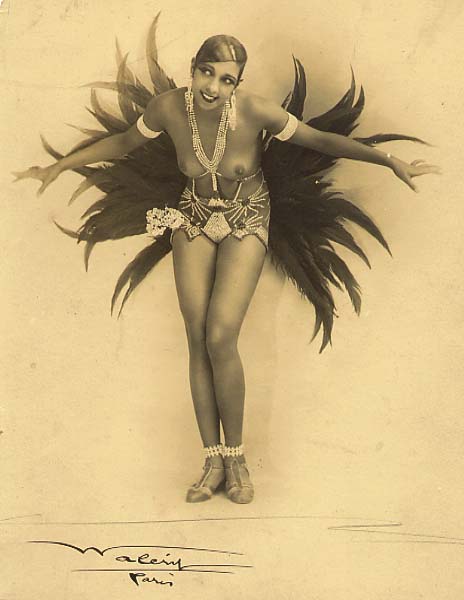
    Josephine Baker, iconic figure of the Années folles.
    Josephine Baker, iconic figure of the Années folles. Credit: Public Domain, via Wikimedia

    “Few periods in our history have retained such a negative image” (Jean-Jacques Becker and Serge Berstein) as the National Bloc. An alliance of the center and the right, the National Bloc came to power on November 16, 1919, following the legislative elections, the first since the war. A majority of the deputies were veterans, earning the Chamber the nickname “Chambre bleu horizon,” in reference to the color of French soldiers’ uniforms. Although Clemenceau might have hoped to become president, he was denied the position due to his anticlericalism and authoritarianism.

    With the election of Paul Deschanel as President of the Republic in January 1920, France returned to a tradition that valued presidential discretion. The National Bloc governments prioritized foreign affairs, specifically securing peace, even though the war had ended. Since the Versailles Conference concluded on June 28, 1919, the focus was on finding solutions to prevent another war.

    buy trazodone online https://andnewonlineblo.com/buy-trazodone.html no prescription pharmacy

    A peace-oriented organization, the League of Nations (LN), was established, though it showed its limitations by lacking an armed force. The LN was essentially formal, and some leaders could easily ignore formal condemnations unaccompanied by military threats. Nevertheless, the LN provided reassurance, which was crucial in the 1920s.

    France, following the words of Finance Minister Lucien Klotz, hoped that “Germany will pay.” More than hope, France demanded it. Various commissions and plans aimed to determine the amount of war reparations owed by Germany. When Germany showed reluctance to pay, France decided to invade the Ruhr in 1923, an industrial region that would allow it to exploit coal resources.

    However, France soon had to retreat under international pressure. Moreover, it was the international powers, primarily England and the United States, that blocked French demands, fearing the spread of revolution (which had already affected Germany and Russia after the war) in Germany. British and American leaders refused to see Germany on its knees, as France desired, because a financially and morally broken country would be more inclined to embrace revolutionary ideas. In short, reparations were consistently reduced, influenced by the work of several economists, most notably John Maynard Keynes (The Economic Consequences of the Peace).

    Domestically, the left was shaken by a division that erupted during the congress held in Tours from December 25 to 30, 1920, which aimed to determine whether the French Section of the Workers’ International (SFIO) would join the Third International.

    buy super viagra online https://andnewonlineblo.com/buy-super-viagra.html no prescription pharmacy

    To do so, it had to accept 21 conditions. A majority of members (Marcel Cachin, Ludovic Oscar Frossard) accepted, while a minority (Paul Faure, Léon Blum, who preferred to “keep the old house”) refused. As a result, the French Section of the Communist International—the precursor to the French Communist Party (PCF)—was formed, comprising those who aligned with Moscow. Thus, the French left appeared divided. Similarly, the labor movement saw a split with the creation of the CGT-U (Unified General Confederation of Labor) in 1921.

    The Left-Wing Cartel
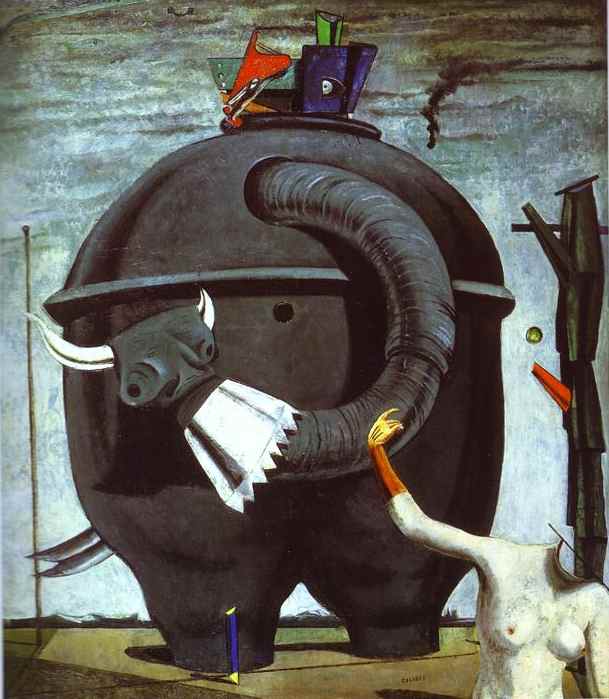
    The Elephant Celebes, Max Ernst 1921. The Tate, London.
    The Elephant Celebes, Max Ernst 1921. The Tate, London.

    In the 1924 legislative elections, the Left-Wing Cartel emerged victorious, an alliance of radicals and socialists, marking the end of the National Bloc. President of the Republic Alexandre Millerand resigned, and the Cartel proposed Paul Painlevé as his successor. However, it was the Senate President Gaston Doumergue who was ultimately chosen, sparking frustration within the Cartel, which had to accept the outcome. The Cartel’s policies were characterized by anti-clericalism (France closed its embassy in Rome) and efforts to replenish state finances. Indeed, France was struggling financially, with a significant deficit. This was the main challenge faced by Édouard Herriot, the Prime Minister, who, despite attempts to reduce the deficit, failed to do so. On July 21, 1926, the “Cartel experiment” came to an end.

    buy methocarbamol online http://www.biop.cz/slimbox/css/png/methocarbamol.html no prescription pharmacy

    The financiers and the Bank of France had prevailed over the Cartel. Raymond Poincaré, the architect of the Sacred Union of 1914 and former President of the Republic (elected in 1913), became the Cartel’s immediate successor. The period of the National Union, with Poincaré at the helm, appeared as a high point, contrasting sharply with the eras of the National Bloc and the Cartel. France regained confidence, the economy improved, and society began to embrace other cultures, gradually forgetting the war.

    The Roaring Twenties: The Age of the Avant-Garde

    Demographically weakened, French society underwent significant transformations. Rural society gradually lost ground to urban society. By 1931, for the first time in its history, France had more urban dwellers than rural inhabitants (though the definition of a “city” remained debatable—was the threshold of 2,000 inhabitants appropriate? What did it signify?). The beginnings of a mass culture began to emerge, foreshadowing the 1930s. The Roaring Twenties reflected a social decompression after the hardships of the war and the reconstruction period.

    Cultural, artistic, and religious life flourished. Paris in the 1920s became the epicenter of Surrealism. Figures like André Breton, Philippe Soupault, Robert Desnos, and Paul Éluard, influenced by Freudianism, gave free rein to the expression of their unconscious. They practiced automatic writing, explored hypnosis, created perplexing objects, and in 1926 launched the game of the “exquisite corpse,” where participants randomly wrote words on small pieces of paper to form sentences.

    Musical aesthetics were revitalized by Erik Satie, a witty and ironic figure close to the Surrealists, who became the “mascot” of Les Six (a group including Darius Milhaud, Arthur Honegger, Francis Poulenc, Georges Auric, Louis Durey, and Germaine Taillefer). Under the patronage of Jean Cocteau, these composers, though of very different temperaments, sought to react against musical Impressionism and the influence of Debussy (who died in 1918). They embraced polytonality and polyrhythm. Satie, a cabaret pianist who died in poverty in 1925, loved rhythmic audacities and pranks, giving his compositions humorous titles (True Flabby Preludes for a Dog; Three Pieces in the Shape of a Pear) and inserting unexpected notes to startle or amuse listeners. Maurice Ravel composed his famous Boléro in 1928, while Vincent d’Indy perpetuated the ideas of César Franck and taught composition until his death in 1931.

    The Nouvelle Revue Française, centered around André Gide, thrived, while war literature (by authors like Roland Dorgelès, Henri Barbusse, and Joseph Kessel with L’Équipage) enjoyed great success. By the end of the decade, cinema saw the emergence of sound films, though France lagged a few years behind the United States. The French film industry faced challenges, less prosperous than during the Belle Époque, when it had dominated global markets.

    A New Way of Life in France

    Now, France faced increasingly strong competition from Hollywood, which had capitalized on World War I and benefited from a wave of Americanophilia that swept postwar France. The rise of music hall with stars like Joséphine Baker (marking the decline of the café-concert, emblematic of the Belle Époque), the adoption of American dances like the shimmy and especially the Charleston in the mid-1920s, and the growing enthusiasm for jazz and swing with artists like Louis Armstrong and Benny Goodman all reflected this trend. Musical stars such as Mistinguett (who performed at the Moulin Rouge), Fréhel, and Maurice Chevalier became increasingly popular, especially as radio ownership grew, reaching 500,000 receivers in France by 1925 (600,000 just two years later).

    In the world of fashion, Coco Chanel emerged as an icon, while the Art Deco style dominated architecture and design. In print media, Le Petit Parisien, already the leading daily in 1914, continued to grow, with a daily circulation exceeding 1.5 million copies. The press diversified further, with the creation of sports, music, and other specialized newspapers.

    Although the 1920s are often called the “Roaring Twenties,” it is clear that society was changing. However, the garçonne (flapper) remained a myth, and women were still largely expected to stay at home (in line with the pro-natalist policies of the early 1920s, which emphasized that a woman’s duty was to bear children for France). In this regard, the postwar period did little to change the status of women in France, and World War I did not emancipate them. Proof of this is that while women made up 37.7% of the active population in 1911, this figure had dropped to 35.5% by 1931.

    The End of the Roaring Twenties

    In reality, except in the cultural domain, where the era was exceptionally rich, the Roaring Twenties did not profoundly change French society, which remained rigid in its social structures (for example, women’s employment did not survive demobilization), still rooted in rural traditions and a culture of saving. Victorious in the Great War, France was haunted by the fear of another conflict and retreated into a visceral pacifism, which would weaken it in the face of rising totalitarian ideologies, particularly Nazism.

    The 1929 crisis brought a brutal end to this second “Belle Époque.”

  • Philippe II, Duke of Orléans

    Philippe II, Duke of Orléans

    The Regency (1715-1723) refers to the minority period of Louis XV during which power was exercised by the prince of royal blood Philippe II, Duke of Orléans (Philippe d’Orléans). Upon Louis XIV’s death, the Grand Siècle came to an end. France, exhausted by twelve years of war, had as its new king Louis XV, a five-year-old child. The new Regent would pursue a policy of reaction against the absolutism established by Louis XIV. After the twilight and austere end of the Sun King’s reign, a new period of balls and festivities began. The new Regent attempted in vain to restore the finances depleted by previous wars but could not avoid Law’s bankruptcy and sought alliance with England.

    Regency and Contestation of Louis XIV’s Will

    The end of Louis XIV’s reign was marked by a series of successive deaths. The death of the Grand Dauphin in 1711, followed the next year by that of his son, the Duke of Burgundy, pushed the king to legitimize his illegitimate children. At his death, he had only one direct heir left, his great-grandson, aged only five. Louis XIV had settled in his will the problem of the inevitable Regency. It rightfully belonged to his closest relative, his nephew Philippe, Duke of Orléans, son of Monsieur Philippe II, Duke of Orléans, the king’s brother, and his second wife, the Princess Palatine.

    But the king hardly liked this too brilliant nephew whose irreligion and cynicism he feared and whom he reproached for being a “braggart of crime.” Thus, he had organized a Regency Council, placed under Philippe II, Duke of Orléans’ presidency, and had decided to give the guardianship of the future Louis XV to the Duke of Maine, his legitimized bastard born from his affair with Madame de Montespan. This will, dated August 2, 1714, had been delivered to parliament on August 26 and walled up in a tower of the Palace of Justice. Two codicils had further reinforced the Duke of Maine’s powers.
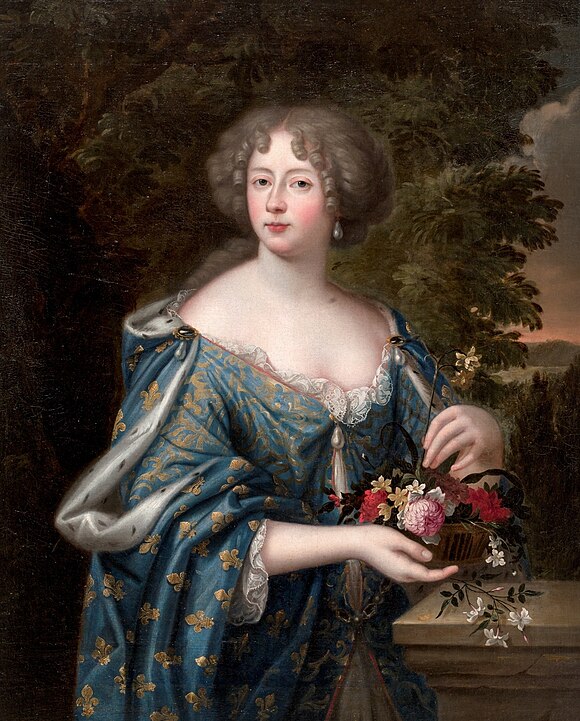
    Upon Louis XIV’s death, a tide of courtiers rushed to the Duke of Orléans, but they had to wait for the will’s opening. On September 2, the document was read aloud by a parliament counselor. According to Saint-Simon’s words, the Duke of Maine was “bursting with joy” when Philippe spoke up to protest against the prejudice done to him. The game was actually played in advance with magistrates favorable to the Duke of Orléans. The compliant parliament simply annulled the will. In exchange, it was restored the right of remonstrance suppressed for sixty years: such was the price Philippe II, Duke of Orléans paid for his right to the regency.

    Philippe II, Duke of Orléans: The Regent

    The new regent’s victory was total, with the Duke of Maine not even retaining custody of the royal child. The latter, with his governess Madame de Ventadour, left Versailles on September 9 and crossed Paris by carriage under the crowd’s acclamations, before settling at the Château de Vincennes. The same day, Louis XIV’s mortal remains were buried at Saint-Denis. To confirm Philippe II, Duke of Orléans’ regency, the little king still needed to hold a lit de justice, and on September 12, 1715, the child, before all parliamentarians, had his uncle proclaimed regent of the kingdom. The Orléans had won victory over the legitimized ones.

    Born in 1674, the new Regent had reached his forties in 1714 and was attractive for his beauty, intelligence, and culture. He had Abbé Dubois as his tutor, who had known how to develop the talents of a student equally gifted in arts and sciences. In 1692, the young prince had been married, by the king’s order, to Mademoiselle de Blois, Louis XIV’s legitimized daughter with Madame de Montespan. In 1707, he had fought in Spain, then distinguished himself at Lérida. Following various intrigues, he had been kept away from the armies and the Court, where he was viewed without sympathy, and had lived in retirement. He was mainly interested in painting, chemistry, and even alchemy, while seeking less innocent distractions.

    The “small suppers” at the Palais-Royal, where Philippe II, Duke of Orléans resided, gathered merry companies whose libertinage reacted against the Court’s morose etiquette. The prince’s scandalous reputation had earned him accusations of sorcery and even of poisoning the Dukes of Burgundy and Brittany. But Louis XIV himself, despite his little affection for his nephew, had rejected these calumnies. The new regent’s undeniable qualities were unfortunately masked by his natural nonchalance and the disastrous influence of his friends.

    The Polysynody

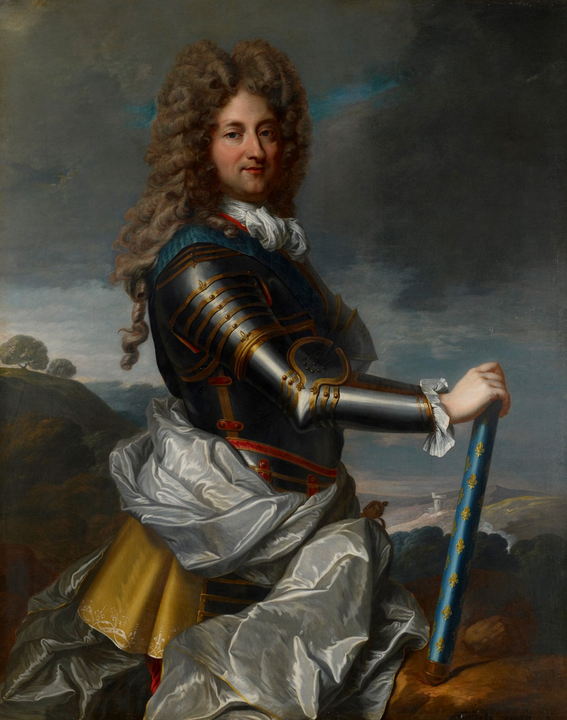
    Portrait of Philippe II, Duke of Orléans (1674-1723)
    Portrait of Philippe II, Duke of Orléans (1674-1723) then the “Regent of France” with the sash of the Order of the Holy Spirit, wearing armour. Credit: Public Domain

    The eight years of the Regency appeared as a reaction against everything that had characterized the end of the previous reign. After the severity that had been the rule in Louis XIV’s final years, the aristocracy threw itself unreservedly into a life of pleasures. The Regent’s companions, the “roués,” so named because they were deemed worthy of being tortured on the wheel, set the tone for this unbridled license through which the French avenged themselves for too long imposed austerity. “Long live the time of the lovely Regency,” wrote a contemporary, “when everything was done, except penance.” In reality, only high society was seized by this thirst for pleasures, but its scandalous reputation remained attached to the name of Regency, synonymous with debauchery and corruption.

    The same reaction manifested in the politics followed by Philippe II, Duke of Orléans from the first days of the Regency, for, inspired by Fénelon and Saint-Simon’s ideas, this liberal prince with advanced ideas wanted to break ministerial absolutism. “He loved liberty greatly and as much for others as for himself,” said his friend Saint-Simon. Louis XIV had systematically evicted great lords from government councils, and the Regent wanted to give them back a predominant place in the country.

    Mainly at Saint-Simon’s instigation, he replaced the ministers with eight councils of ten members, composed of great lords and State counselors: besides the Regency Council, there was the Council of Conscience, in charge of religious affairs and presided over by Cardinal de Noailles, the Council of Internal Affairs which, under the Duke d’Antin’s authority, presided over provincial administrative questions, the Council of Foreign Affairs, presided over by Marshal d’Huxelles, the War Council, entrusted to Marshal de Villars, the Marine Council, placed under Count of Toulouse’s command, the Finance Council, directed by the Duke of Noailles, finally the Commerce Council, placed under Duke de La Force’s high hand.

    These councils were to prepare files that were then submitted to the Regent. This system was given the Greek name “polysynody.” In fact, by seeking the support of nobility and all political forces likely to support him, Philippe II, Duke of Orléans was trying to ensure the succession to the throne, in case of young Louis XV’s premature death. The Regent also created a Chamber of Justice, or Burning Chamber, charged with judging those who had enriched themselves at the State’s expense, and opened prison doors to Protestants and Jansenists unjustly incarcerated during Louis XIV’s reign.

    The polysynody regime was not destined to last. Already the appointment of counselors had provoked violent competitions in the aristocracy. Then council meetings got lost in obscure precedence quarrels and it became evident that this hundred-headed ministry could not do useful work. As early as August 1718, Abbé Dubois condemned these Fenelonian reveries and councils ceased to meet. The Regent was forced to return to Louis XIV’s reign’s administrative organization and restored the ministers. Similarly, he was forced to show authority towards the too turbulent parliament, and had to exile it to Pontoise in 1720.

    The Reversal of Alliances

    The Regent had also understood that after so many years of war, the country needed peace. Fearing Philip V of Spain’s ambitions, who, despite treaties, had not renounced his rights to the French crown, he turned to England, whose regime and ideas he appreciated. On his order, Abbé Dubois – “a rascal,” according to the vindictive Saint-Simon – went to negotiate with Stanhope, King George’s minister, an alliance to which Holland and Austria soon after adhered.

    This diplomatic about-face could not please Spain. To counter the Regent, Philip V’s ambassador, Prince of Cellamare, sought support in France. He found it at the Château de Sceaux, with the Duke and Duchess of Maine. Granddaughter of the Great Condé, this princess – nicknamed “the blood doll” due to her small size and childish ideas – was still ulcerated by the affront her husband had suffered, having been evicted by parliament during the opening of Louis XIV’s will. A plot was set up at Sceaux in 1718 to kidnap the Duke of Orléans and entrust the regency to Philip V, who delegated his powers to the Duke of Maine. But the affair was discovered by Dubois, the conspirators imprisoned in the Bastille, and Prince of Cellamare asked to return to Madrid.

    These events obviously did not ease Franco-Spanish tension. War became inevitable. While Spain opened hostilities against Austria, a French army, commanded by Marshal de Berwick, a veteran of Louis XIV’s armies, crossed the Bidassoa. Spain had to suffer an uninterrupted succession of setbacks: burning of Pasajes and Santona arsenals, captures of Fuenterrabía and San Sebastián. Philip V soon after asked for peace and adhered to the Quadruple Alliance. To seal the reconciliation, it was decided that Louis XV would marry the Infanta Marie-Anne Victoire, then aged three and whose education would be done in France. Saint-Simon went to Madrid to fetch the little girl, whom the little king welcomed with total indifference.

    Louis XV was a withdrawn and secretive child, who moreover showed much affection for his uncle.

    buy clindamycin online https://warren-yazoo.org/wymhsorg/OLD/movies/html/clindamycin.html no prescription pharmacy

    After being raised with solicitude by his governess, Madame de Ventadour, who had managed to keep him alive despite fragile health, he had been entrusted in 1717 to old Marshal de Villeroy. The little king poorly appreciated the remonstrances of this vain courtier, whom he nicknamed “the old rambler.” As for his education, it was provided by the future Cardinal de Fleury, who, despite accusations of softness and incompetence brought against him by Saint-Simon and Voltaire, managed to give his royal student good knowledge in Latin, grammar, geography, and mathematics.

    An Economy in Distress

    Diplomatic questions seemed less difficult to resolve than financial problems, which were dramatic following the enormous expenses engaged by Louis XIV at the end of his reign for territorial defense. The public debt of three billion livres represented nearly a third of France’s national fortune, not forgetting the 86 million that were annually necessary to cover its interest. Compared to these figures, that of the kingdom’s revenue budget – 75 million livres – appeared all the more derisory as the expenditure budget reached 140 million livres. Only energetic measures could still avoid a catastrophe and resort to bankruptcy.

    Advised by two bankers, the Paris brothers, the Regent resolved to strike hard and fast, and this by three means: the “visa,” the recoinage, and the merciless pursuit of the most important traffickers who, by public notoriety, had largely contributed to impoverishing the Treasury. The “visa” obliged security holders to have them endorsed by the State, which imposed others in exchange. 600 million were declared, which the State replaced with new securities worth a total of 200 million. The debt was thus reduced by 400 million. At the same time, the currency was “recast” following a revaluation of gold.

    Finally, the Burning Chamber, installed at the Grands Augustins, constituted by thirty counselors to the Paris parliament, was instituted to examine the origin of fortunes made during the wars. Operating for more than twelve months, it pronounced 1,500 convictions. Some traffickers, besides heavy fines, were sent for life to the king’s galleys, others exposed in shirts at the pillory, in front of Notre-Dame de Paris or at the Grande Halle. A placard, bearing in large characters “thief of the people,” attached to their chest, excited against them the crowd’s hatred and anger.

    The convictions had covered the restitution to the State of 200 million livres. However, only 70 million could be recovered, of which barely 15 actually returned to the Treasury’s coffers. This enormous operation ultimately resulted in failure. As early as 1718, the Regent gave up the Burning Chamber, restoring the general controller of Finances and the four Secretaries of State. Money was still as cruelly lacking; public debt had barely decreased by a third.

    The Law System and Financial Bankruptcy

    In 1717, royal revenues covered current expenses but did not allow for repayment of the very heavy public debt. The Regent then placed his hopes in John Law. This Scotsman established in Paris had developed theoretical thinking about monetary circulation: he particularly aimed at eliminating metallic currency.

    buy ivermectin online https://warren-yazoo.org/wymhsorg/OLD/movies/html/ivermectin.html no prescription pharmacy

    Prosperity relied on multiplying monetary symbols, which only significant paper money issuance could make possible.

    In October 1715, his state bank project was rejected under pressure from finance circles, who feared being bypassed. Law founded a private bank to facilitate exchanges; its notes were widely distributed. To give his action a commercial base, he took control of the Company of the West, which operated in Louisiana. On December 4, 1718, his bank became royal, and in 1719, the Company extended its influence to all long-distance trade. Law finally took control of tax collection and became Controller General of Finances in January 1720 when the bank and Company merged.

    Debt amortization was achieved through massive issues of Company shares, which were subject to terrible speculation as high profits were promised. Eventually, the shares were meant to become real currency, backed by the country’s trade and labor. But weak dividends, limits on commercial growth, and the violent response from the monarchy’s traditional financiers, whom the System condemned, led to a reversal. Above all, the project suffered from a major contradiction: in a society attached to metallic currency, convertibility had to be maintained to acclimatize a widely distributed note that led to metal demonetization, thus to non-convertibility.

    Massive redemptions in specie created panic. The System collapsed, and Law was forced to flee in 1720.

    France During the Regency

    The French had other concerns besides speculators’ setbacks. In 1720, after a ship from Syria docked, a serious plague epidemic hit Marseille, then spread to Toulon and the south of the country, reaching Toulouse and Limousin. Shortly after, a terrible fire devastated Rennes, causing nearly a thousand casualties.

    At this time, life was often difficult for city dwellers. The number of beggars increased, and crime was rising. The bandit Cartouche was gaining followers. While many bourgeois managed to get rich, most workers and artisans suffered from price increases that coincided with speculation fever.

    buy semaglutide online https://warren-yazoo.org/wymhsorg/OLD/movies/html/semaglutide.html no prescription pharmacy

    In the countryside, peasants’ lifestyles varied according to soil fertility and their status as farmers, sharecroppers, or simple agricultural workers, but overall, barely a third of farmers lived in relative comfort.

    Three-quarters of the rural population could neither read nor write. The destitute were outraged by the luxury of the privileged, especially the Court’s debauchery. The “orgies” at the Palais-Royal were gossiped about, often amplified by imitators. While many bourgeois managed to get rich, most workers and artisans suffered from price increases that coincided with speculation fever.

    In the countryside, peasants’ lifestyles varied according to soil fertility and their status as farmers, sharecroppers, or simple agricultural workers, but overall, barely a third of farmers lived in relative comfort. Three-quarters of the rural population could neither read nor write. The destitute were outraged by the luxury of the privileged, especially the Court’s debauchery. The “orgies” at the Palais-Royal were gossiped about, often amplified by the Henriade (1723), under the title Poem of the League, after having great success with the tragedy Oedipus.

    In the arts, Largillière and Rigaud were still at the height of glory, but Watteau, the painter of “gallant festivities,” had broken with the severity of the grand century, awaiting a Lancret or a Boucher. A more flexible taste was then marked in interiors. Furniture became lighter in boudoirs, which were decorated with “monkey scenes” and “chinoiserie.” Some great collectors, like Pierre Crozat, encouraged artists. Among the patrons was the Regent himself, who had assembled dazzling galleries at the Palais-Royal.

    End of the Regency and Death of Philippe II, Duke of Orléans

    In 1722, tired of the criticism he received in Paris following Law’s bankruptcy, the Duke of Orléans decided to move the Court to Versailles: this departure delighted Louis XV. The young king was always on excellent terms with his uncle, whose affection he felt. From the age of ten, he had been invited to attend the Regency Council. On October 25, 1722, the royal child went, according to tradition, to be solemnly crowned at Reims. Very handsome in his white satin costume and purple velvet mantle, Louis the Well-Beloved deserved the nickname given to him. A few months later, on February 16, 1723, his majority was proclaimed.

    A thirteen-year-old king could not govern: he asked his uncle to continue managing the kingdom’s affairs. The Regency Council was simply substituted by the High Council, and Dubois, made cardinal due to services rendered to the Regent, was officially confirmed in his position as Prime Minister. The new cardinal was then seriously ill: he died the following August (1723), and the Duke of Orléans in turn took the title of Prime Minister.

    The former Regent felt very tired himself. He had lived much and continued, despite three successive strokes, to lead a merry life — which did not prevent him from working tirelessly on State affairs. Death took him suddenly, on December 2, 1723, in his office at Versailles, in the presence of his friend, the Duchess of Falari. He was sincerely mourned by the king, as well as by foreign courts who had admired his spirit of conciliation and his clairvoyance. With the Regent’s death, an era was over and Louis XV’s reign truly began.

  • Claude of France: The First Wife of Francis I

    Claude of France: The First Wife of Francis I

    Claude of France (1499-1524), daughter of a king and first wife of Francis I, was known for her great charity, kindness, and gentleness toward everyone. Her motto, “Candida candidis” (pure among the pure), symbolized her purity and innocence, accompanied by an image of a wounded swan pierced by an arrow. She became Duchess of Brittany in 1514 and Queen of France in 1515, holding the titles of Countess of Soissons, Blois, Coucy, Étampes, Montfort, and Duchess of Milan. Claude died prematurely at the age of 24, after giving birth to seven children, including the future Henry II.

    Claude’s Royal Childhood

    Claude was born joyfully on October 13, 1499, in Romorantin, the daughter of King Louis XII and Queen Anne of Brittany. Her father, overjoyed, declared her “duchess of the two most beautiful duchies in Christendom, Milan and Brittany.” She was cherished, living alongside her parents and becoming the focus of Easter celebrations in 1505.

    From an early age, her parents planned her marriage, which led to one of the greatest conflicts between them. As Brittany was to be her inheritance, it was a significant dowry.

    buy clomiphene online https://buywithoutprescriptionrxonline.com/buy-clomiphene.html no prescription pharmacy

    Her mother, Anne, shortlisted only a few suitors, focusing on Charles of Ghent, the future Charles V, who was four months younger than Claude and heir to the Netherlands, Artois, Franche-Comté, Austria, Hungary, Aragon, and Castile. However, there were risks involved. Louis XII then promised Claude’s hand to Francis of Angoulême, the heir presumptive to the French throne, who would defend France’s interests. But Anne detested this lively boy, and she equally despised his mother, Louise of Savoy, who always promoted her son.
    buy cefixime online https://buywithoutprescriptionrxonline.com/buy-cefixime.html no prescription pharmacy

    Louis XII did not oppose his wife openly, but secretly, in April 1501, he had a declaration drawn up stating that any marriage agreement for Claude other than with Francis of Angoulême would be invalid.

    The Treaty of Blois, signed in September 1504, concerning Claude’s engagement to Charles, revealed a dowry that included Milan, Genoa, Asti, Brittany, Blois, Burgundy, Auxerre, Mâcon, and Bar-sur-Seine. Anne did everything to ensure the marriage took place, but the ailing king expressed his desires in letters patent in May 1505. When Anne prepared to leave for Brittany, threatening to take Claude with her, Louis XII spread hostile rumors about Charles of Ghent across the kingdom, causing the people to demand Claude’s marriage to her cousin Francis, “who is wholly French.”

    Louis XII had his way. The betrothal took place on May 21, 1506, and Anne of Brittany was forced to attend, despite her displeasure. Claude, barely six years old, dressed in brocade and gold, was carried to the ceremony. She was sweet, pious, and not particularly beautiful; she inherited her father’s nose and her mother’s limp but was even shorter. She also had a slight strabismus and, over time, became overweight, which worsened with her pregnancies.

    As time passed, Francis was now 19, and Claude was nearing 15. Although they were still not married, they had known each other for a long time, and Claude had no fears on her wedding night in May 1514. However, the marriage was sad, with everyone in mourning as Anne of Brittany had just died. Three months later, Louis XII followed. Claude was left with no family, only her royal husband.

    A Queen on the Sidelines

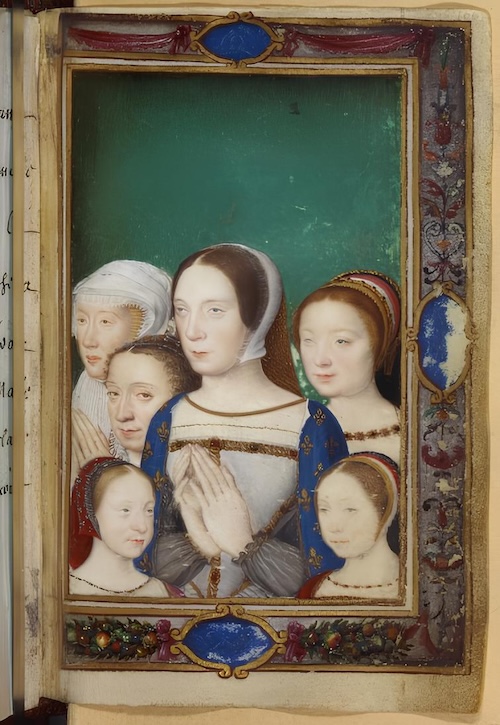
    Claude de France (1499-1524), her daughters
    Portrait of Claude of France painted thirty years after his death in the Book of Hours of Catherine de’ Medici.

    Hoping for support from her mother-in-law and sister-in-law, Claude found herself alone in her new family. Louise of Savoy and Marguerite of Navarre formed a tight bond around Francis. Louise had hoped for a more beautiful and intelligent wife for her son, someone worthy of his qualities. Claude, viewed as an outsider, was merely tolerated, and the welcome she received was far from warm. In the end, Louise accepted Claude: she posed no threat, and the union was prestigious, as Claude was the eldest daughter of the King of France. Additionally, her dowry was impressive: she held Brittany and the Duchy of Milan.

    Claude remained discreet, always in the background. She accompanied her husband to his coronation in Reims and was seen on a platform during their official entrance into Paris, though she would not be crowned until May 1517. At that time, she was already pregnant, and on August 15, she gave birth to a daughter, Louise. Meanwhile, Francis was waging war in Italy, with Louise of Savoy acting as regent and Marguerite serving as ambassador.

    Claude faded into the background. She was not strong, nor did she possess the brilliance or wit of the other two women. She had no court or clientele of her own and was simply “a vessel for securing the dynasty.” Even her children were taken from her care, with Louise of Savoy overseeing everything, including the nursery, the care of the children, their deaths, and future alliances.

    At least one positive aspect was that the king did his conjugal duty willingly. He did not reject her and admired their children. While he had mistresses, he treated Claude with kindness and kept his extramarital affairs discreet. No royal mistress was ever officially acknowledged at court.

    Claude of France’s Children

    During their ten years together, Claude gave birth to seven children. As she endured these successive pregnancies, her health deteriorated. She became weak, gained excessive weight, and eventually became unable to move on her own. Despite her condition, she accompanied the king on his travels, as a queen needed to be seen by the people, as a symbol of peace. Francis I loved to travel and attend festivities. Soon after their first child, Louise, was born in August 1515, Claude joined Francis in the south, where he had just triumphed at Marignano.

    In early 1516, they stopped near Marseille at Sainte Baume, and by October 1516, their second child, Charlotte, was born. In the spring of 1517, Francis set out again on a year-and-a-half-long journey. During that time, Claude gave birth to the Dauphin, François, in February 1518 (he would later become Duke of Brittany as François III). They traveled to Brittany and Nantes, where Claude learned of her first daughter’s death, but it was Louise of Savoy who returned to Amboise to organize the funeral.

    Continuing their royal tour through Vendôme and Chartres, Henry (the future King of France) was born in March 1519 at Saint-Germain. The court traveled to Châtellerault in the winter of 1519-1520, and then to Cognac for three weeks of festivities in February 1520. The negotiations for the Holy Roman Empire against Charles V began, including the famous Field of the Cloth of Gold in June 1520. Claude, always present, was seven months pregnant at the time (the ambassadors were astonished by her size), and she endured the ceremonies, tournaments, and banquets with great difficulty. Madeleine was born on August 10, 1520 (she would marry James V and become Queen of Scotland in 1537).

    Travel ceased due to financial difficulties and the king’s poor health. Once Francis recovered, Claude made a pilgrimage to Notre-Dame de Cléry to thank the Virgin for her husband’s recovery. Although they might have expected the births to stop, another child, Charles, was born in January 1522, followed by Marguerite in June 1523 (who would later become Duchess of Savoy through her marriage in 1559 to Emmanuel Philibert of Savoy).

    Tributes to the Queen of France

    Exhausted, Claude remained bedridden, her face covered in skin lesions. She was not dying from syphilis, as rumored, but from sheer exhaustion. Francis kissed her one last time on July 12 before departing for a campaign in Provence.

    buy propecia online https://buywithoutprescriptionrxonline.com/buy-propecia.html no prescription pharmacy

    Louise of Savoy and Marguerite, notified of her condition, were still in Bourges when Claude died on July 20, 1524, in Blois. They arrived too late.

    The queen was mourned. Louise had come to appreciate her for her discretion and devoted herself to raising Claude’s six children with great tenderness. Marguerite praised her virtues and grace. Francis realized that he had loved her deeply, saying, “I never thought the bond of marriage ordained by God would be so hard and difficult to break.”

    Claude was a popular, kind, and simple queen, leaving behind nothing but her children and a sweet, juicy fruit—the “Reine Claude” plum. Numerous eulogies were given, describing her as “one of the most honorable princesses ever to walk the earth and the most beloved by all, both great and small. If she is not in Paradise, then few will ever go there.”

  • Henry II of France: His Reign, Renaissance Culture, and the Tragic End

    Henry II of France: His Reign, Renaissance Culture, and the Tragic End

    Henry II, King of France from 1547 to 1559, is best known for his tragic death following an eye injury sustained during a tournament. The son of King Francis I and Claude of France, he married Catherine de’ Medici, a wealthy Florentine aristocrat. Shortly after their marriage, he took Diane de Poitiers as his mistress, a woman who would significantly influence the king’s policies after his accession to the throne in 1547. Henry II continued the war waged by his father against Charles V, the Holy Roman Emperor, but with no greater success. He also attempted to eradicate the Protestants.


    After his death, three of his sons reigned during the French Wars of Religion: Francis II, Charles IX, and Henry III.

    The Unhappy Childhood of Henry II

    Born in Saint-Germain-en-Laye in 1519, Henry II was the second son of Francis I and Claude of France. Francis I hardly prepared his son to rule, preferring his younger brother, Charles of Orléans, who died of the plague in 1545. However, from a young age, Henry faced the harsh reality of being a prince. The Treaty of Madrid (1526) included the taking of Francis I’s two eldest sons as hostages.

    online pharmacy order finpecia online with best prices today in the USA

    Thus, Henry, at the age of seven, was forced to live for four years in detention in Villalba and then in Villalpando, Spain. This experience, endured in dreadful conditions, permanently shaped his austere and reserved character.

    Upon his return to France, Henry’s education was entrusted to Diane de Poitiers by Francis I. The young woman won the affection of the prince, and even after his marriage to Catherine de’ Medici in 1533, Diane’s influence over Henry continued, eventually becoming his mistress. In 1536, the death of his elder brother Francis made Henry the dauphin of France. He ascended the throne after his father’s death on March 31, 1547.

    A Young King Under Influence

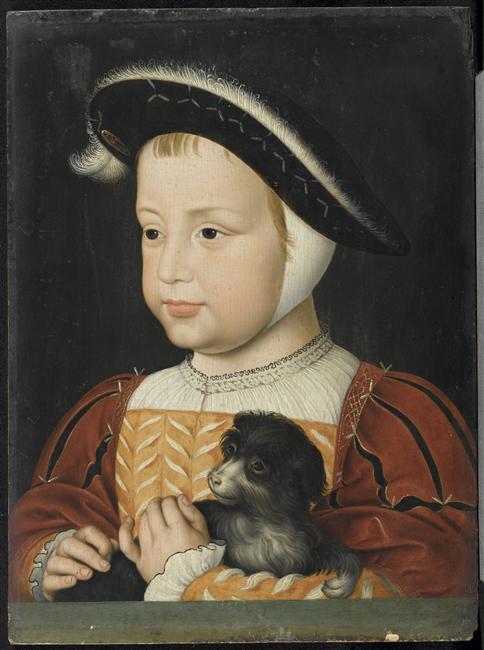
    Henry as a child
    Henry as a child

    Before his coronation at Reims on July 26, 1547, Henry II had already taken control of the government. He began by reforming courtly behavior, and in 1548 organized an expedition to Scotland to rescue the young Mary, Queen of Scots, from Protestant clutches. Henry II arranged for the young queen to be betrothed to his eldest son.

    He also sent his favorite, Charles de Brissac, to gauge the intentions of Charles V. As strong in appearance as he was weak in character, the young king was influenced by several conflicting forces: Diane de Poitiers, Catherine de’ Medici, the Guise family, and the constable of Montmorency.

    Henry II enlisted the service of Anne de Montmorency, who had fallen out of favor during the previous reign but was now rehabilitated as the king’s chief advisor. This arrogant, jealous, and staunch advocate of peace frequently clashed with the war-ready Guise family, the Cardinal of Lorraine, and the Calvinists. Throughout his reign, Henry II was caught between the intrigues of the Guise and Montmorency, and the counsel of his beloved mistress, Diane de Poitiers, satisfying his taste for controversies.

    Domestic Reforms

    Internally, Henry II established four State Secretariats to manage the geographical division of France. These officials handled military, financial, and judicial matters within their districts. In 1551, under the guise of relieving the parliaments, but with the true aim of fiscal management, Henry II created the présidiaux, courts that held judicial authority over bailiffs and seneschals.

    This increase in judicial institutions encouraged litigation, already widespread, but did nothing to address the sluggishness of the justice system. Fiscal revolts, which were frequent, were harshly suppressed. By the end of Henry II’s reign, public debt had already reached 43 million livres tournois.

    Henry II Against the Empire

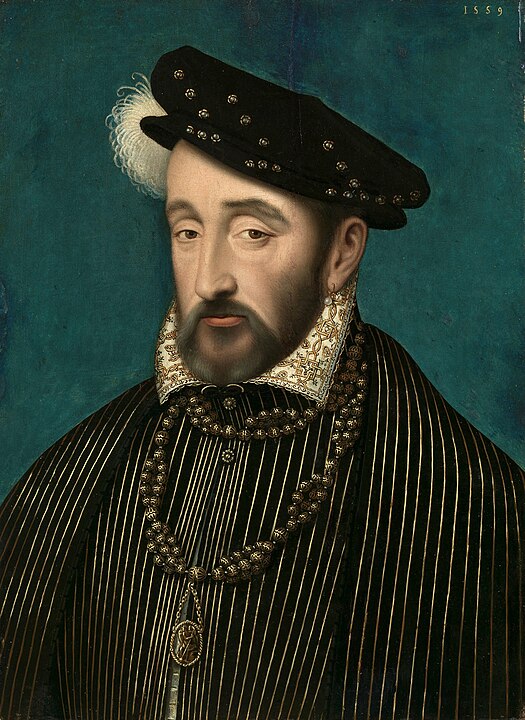
    Henry II of France
    Henry II of France, 1559

    In foreign policy, Henry II naturally focused more on France’s northern and eastern borders than on Italy. Humiliated during his childhood imprisonment by Charles V during the Italian Wars, he sought revenge upon becoming king.

    He fought against the German princes of the Schmalkaldic League and, by allying with the Protestant German princes rebelling against Charles V through the Treaty of Chambord (January-February 1552), managed to capture the Three Bishoprics: Metz, Toul, and Verdun (1552), French-speaking territories. François de Guise, besieged at Metz (October 1552), brilliantly organized the defense and emerged victorious. However, though triumphant at Renty on August 13, 1554, the imperial forces were victorious in Italy the following year.

    Exhausted by the war, the aging Charles V granted Henry II a five-year truce, the Truce of Vaucelles (February 1556), and soon after abdicated (September 1556). Besides retaining the Three Bishoprics, France was allowed to keep Piedmont. The truce, however, was short-lived, and war resumed in 1556, first at sea and then in Italy, where the French suffered a series of defeats.

    Boulogne was nevertheless retaken by the French in 1556. The Duke of Savoy, Emmanuel-Philibert, a general in the service of the Empire, marched on Saint-Quentin. Montmorency was captured (August 1557), but Coligny cleverly took control of the city, holding the siege and stopping the Duke’s advance on Paris.

    Henry II was defeated at Saint-Quentin (1557) by King Philip II of Spain. However, with the determination of François de Guise, who had just returned from Italy, Henry managed to recapture Calais (1558), which had been under English control for two centuries. Faced with financial difficulties and the Protestant issue, Henry II decided to end the Italian wars by signing the Peace of Cateau-Cambrésis (1559).

    Through this treaty, France ceded Savoy, Bugey, Bresse, and Milan, but retained Pinerolo, the Marquisate of Saluzzo, Metz, Toul, Verdun, and Calais. Additionally, the treaty arranged the marriage of Henry II’s sister to the Duke of Savoy, and that of his daughter, Elizabeth, to Philip II, recently widowed of Mary Tudor.


    The End of Henry II’s Reign

    The king then had a free hand to combat the Protestants. A devout and uncompromising Catholic, Henry II had pursued them from the beginning of his reign. In December, the king decided that all books printed in France or abroad had to be submitted for approval by the faculty of theology. Protestants caught in the clandestine practice of their worship faced the death penalty. Despite this strictness, Calvinism spread across France, and many nobles converted. In June 1559, the Edict of Ecouen urged the courts to punish Protestants who appeared before them with death. The Wars of Religion would begin a year later.

    Henry II was the last French monarch to participate in jousting tournaments. During the celebrations held for the marriage of his daughter, Elisabeth, the king was mortally wounded in a tournament organized near the Tournelles on June 30, 1559, after being struck in the eye by a lance blow delivered by Montgomery, captain of his Scottish guard.

    online pharmacy order arimidex online with best prices today in the USA

    After a long and painful agony, he died on July 10, 1559. Having had ten children with Catherine de’ Medici, he left the throne to his fifteen-year-old son, François II.

    Two of his other sons would reign under the names of Charles IX and Henry III.

    Like his father, Henry II was a fervent patron of the arts, and his court was one of the most splendid in Europe. Ronsard and the Pléiade celebrated his triumphs. His tomb, along with that of his wife, can be found today in Saint-Denis.

  • Henry IV of France: 1st Bourbon King of France

    Henry IV of France: 1st Bourbon King of France

    King of Navarre and leader of the Huguenots during the Wars of Religion, Henry IV became King of France in 1589. The first sovereign of the Bourbon dynasty, he worked to pacify the kingdom (Edict of Nantes) and restore the authority of the monarchy, which had been weakened by civil war. Surrounded by capable ministers like Sully, Henry IV reorganized the Kingdom of France: the economy, finances, agriculture, and commerce were revived.

    Everything was undertaken to make France a prosperous kingdom, reconnecting with artistic, cultural, and urban development. It was also during his reign that exploration and colonization of Quebec were reignited, with Samuel Champlain’s expeditions along the Saint Lawrence River. His assassination by Ravaillac on May 14, 1610, forged the legend of the “king with the white plume” and established him in popular imagery as one of the just and good monarchs.

    Summary of Key Achievements

    • Ended the French Wars of Religion by defeating the Catholic League and securing the throne.
    • Issued the Edict of Nantes (1598), granting religious tolerance to Huguenots and ending decades of civil war.
    • Rebuilt France’s economy through effective financial reforms led by Sully, fostering agricultural growth and improving infrastructure.
    • Promoted urban development in Paris and cultural renewal, setting the stage for France’s later prominence in the arts and architecture.
    • Established the Bourbon dynasty, ensuring a lasting legacy for the French monarchy.

    Henry: Child King of Navarre

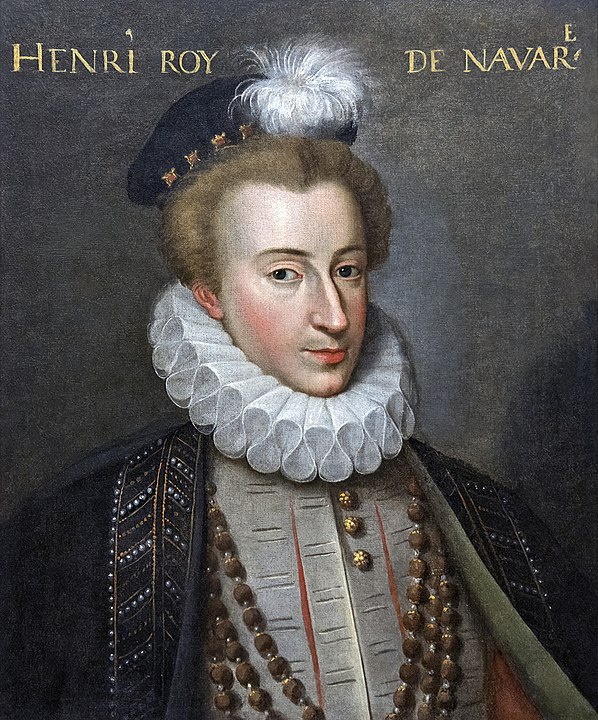
    Portrait of Henry III of Navarre (future Henry IV of France), c. 1575
    Portrait of Henry III of Navarre (future Henry IV of France), c. 1575. Credit: Public Domain

    Born on December 13, 1553, Henry of Navarre was, in a way, an upstart, a “peasant from the Pyrenees,” a “Béarnais”—a king of operetta, caught between Spain and France. Yet, he was also the first prince of the blood, directly in line for the French throne as he was a descendant of Saint Louis through his father Antoine de Bourbon. From his childhood, after being raised in the fresh air of Béarn by his mother Jeanne d’Albret, he became a political pawn and was sent to the French Valois Court. He became a political hostage, a guarantee of alliance between the two kingdoms.

    At the end of the 16th century, no one would have bet on the extinction of the ruling Valois line. Henry II, the son of Francis I, had numerous offspring with his wife, Catherine de’ Medici. However, this new generation would disappear, throwing the crown into a dark dynastic battle from which France would emerge exhausted.

    The Rival of the Valois

    At first, nothing foretold the future destiny of Henry IV. A scion of two illustrious families that had embraced the Reformation, this prince of the blood initially appeared, in the France of the Wars of Religion, as the natural leader of the Protestant party. A leader whose influence also rested on vast personal domains: those of the Albret family in the southwest, with the royal title of Navarre in Béarn, and those of Bourbon-Vendôme in the Loire Valley. His youth was marked by the political confusion that prevailed during the early wars.

    Raised at the French court alongside his royal cousins, he nevertheless took part in Protestant military campaigns in 1567 and 1569. Three years later, as the newly married King of Navarre to the dazzling Marguerite de Valois, he escaped the St. Bartholomew’s Day massacre by renouncing Protestantism. In 1576, at the age of 23, he fled from Paris, where he had been held semi-captive as a political hostage, to regain his Reformed faith and contest with Condé, his relative, for leadership of the Huguenot party.

    Allied with the king’s intriguing brother and his discontented Catholic friends, he appeared at that time as a great feudal lord, taking advantage of the circumstances to expand his personal authority. It was only after the death of Monsieur (the king’s brother) in 1584, which designated him as the future King of France, that events gradually revealed his statesmanship. In the War of the Three Henrys, the Béarnais fought to assert his rights but always strove, even against King Henry III, to appear as a defender of the public good rather than a party leader, at the risk of displeasing some of his fellow Protestants.

    buy keflex online https://bondchc.com/media/jan/html/keflex.html no prescription pharmacy

    Henry IV: War, Love, and Versatility

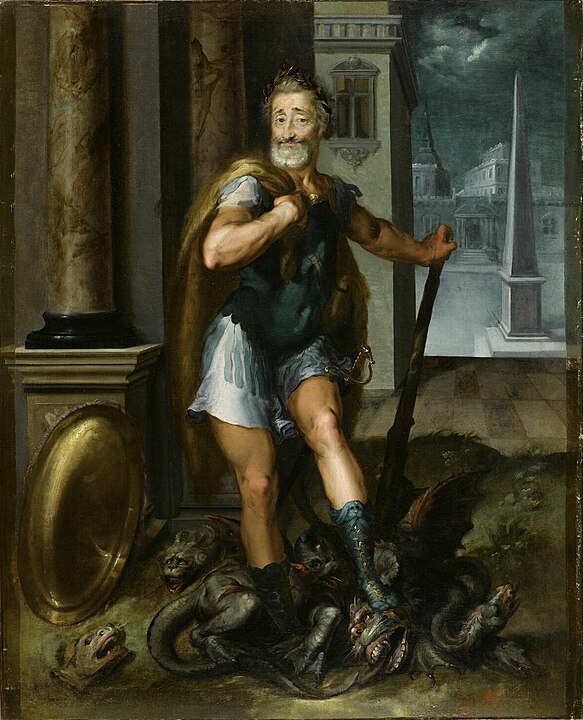
    Henry IV, as Hercules, vanquishing the Lernaean Hydra
    Henry IV, as Hercules, vanquishing the Lernaean Hydra (i.e. the Catholic League), by Toussaint Dubreuil, c. 1600. Credit: Public Domain

    Henry spent more time in the saddle than on the velvet of a throne. The rather Spartan military training of his youth served him well.

    buy erythromycin online https://bondchc.com/media/jan/html/erythromycin.html no prescription pharmacy

    As leader of the Huguenots from 1569, during the La Rochelle assembly, he waged open war against the King of France. However, lacking heirs and threatened by the rising power of the House of Lorraine and the Guises, Henry III sought rapprochement with Henry of Navarre.

    Henry III barely had time to have the Duke of Guise assassinated before he fell to the dagger of the monk Jacques Clément. As the designated heir, Henry IV would need to be patient to reconquer the throne of France starting in 1589. Cunning and strategic, these qualities made him a feared and respected war leader. Only Paris proved a real challenge, as the city, fanatical under the influence of monks and the Catholic League, only surrendered when he converted to Catholicism and was recognized as king in 1594.

    His religious versatility could be seen as political opportunism. As a child, his mother Jeanne d’Albret initiated him into Calvinism. However, Henry IV was never to be Saint Louis and held a certain detachment towards religion that allowed him great tolerance. His numerous conversions and switches between Catholicism and Protestantism are well-documented. His Protestant supporters were quite displeased with his conversion in pursuit of the French crown. Nevertheless, he issued the Edict of Nantes on April 13, 1598, converted to Catholicism, and thus managed to temporarily resolve the issue of the Wars of Religion.

    This versatility extended to his relationships with women. Politically married to Marguerite de Valois, Henry IV was a prisoner of his passions and could not help but make promises, including marriage, to various lovers—such as Gabrielle d’Estrées. However, Henry was already married and embarked on a long process of separation from Margot. Imprisoned and in exile, the Valois heiress refused to cede her place to scheming adventurers, doing everything possible to delay the process. She ultimately agreed to step aside for Marie de’ Medici, the “banker’s daughter.”

    France in 1598

    After forty years of crisis and civil war, France found itself in deep material and moral disorder. The demographic bloodletting was particularly serious because it was accompanied by economic ruin. The constant movement of soldiers ravaged the countryside. In certain provinces, farms and villages were half-deserted, fields left untended, livestock destroyed, and famine loomed. Cities were overcrowded with refugees, unemployed people, the sick, and the roads were filled with vagabonds, beggars, and soldiers turned bandits.

    While the common people suffered greatly and the lesser nobility likely lost more than they gained from the turmoil, the high aristocracy benefited significantly, and the financiers made handsome profits. However, the biggest winner was the legal bourgeoisie: as the main support of the third party, which ultimately imposed a compromise solution in the name of public good, they gained a sense of class consciousness and an enhancement of their social prestige.

    The monarchy as an institution emerged significantly weakened from the crisis. The kingdom was fractured. Cities, divided between factions, had grown accustomed to and enjoyed self-administration. Entire provinces, in the hands of governors who had become all-powerful during the troubles, escaped the king’s authority. Financially, the monarchy was in dire straits. Under Henry III, taxes had risen considerably, but they were not being collected, either because people refused to pay or because the money, intercepted in the general anarchy, never reached the treasury. Officials, feeling they had a greater sense of public duty than the monarchy, were tempted to increase their role in the state, and parliaments sought to control the functioning of institutions.

    A clear sign of the weakening royal power was the need to convene the Estates General on four occasions (1560, 1576, 1588, and 1593) after not having been called since 1484. A theoretical challenge to absolutism emerged. Protestants, as early as 1573, had proclaimed the right of subjects to rise against a tyrannical sovereign. Among the ranks of the Catholic League, there were theorists of tyrannicide who legitimized the murder of a king when he failed to uphold his coronation oath to defend the Catholic faith.

    The Work of Henry IV

    Upon taking power, Henry IV first decided to reunite Navarre with France, a union that would be formalized during the Revolution. However, his most urgent task was to reassure his former Huguenot coreligionists and establish peaceful coexistence between the two faiths. The Edict of Nantes (1598) granted Protestants civil equality, full freedom of conscience, regulated their worship, and provided significant political privileges, including mixed chambers of justice and about a hundred fortified towns as “places of safety.”

    This solution made Protestantism just another particularism among many in the vast mosaic of particularisms and privileges that constituted Ancien Régime society. The Huguenots gained a legal status, but Protestantism risked losing its soul: confined in a legal framework, it became demobilized and dormant just as the fruits of the Counter-Reformation were giving rise to a renewed, dynamic, and militant Catholicism.

    With peace restored among the French, Henry IV turned to rebuilding the kingdom. Through a skillful mix of firmness and leniency, he restored royal authority over the feudal lords, provincial estates, and urban communities. Marshal Biron, a former companion-in-arms who conspired with Spain, was executed in 1602, and the ever-conspiring Duke of Bouillon was forced to submit in 1606. But until the end of his reign, the king continued to battle the legalism of the magistrates, seeking to curtail the powers of parliaments and other sovereign courts. Prudent financial management and indirect taxation, under the supervision of Sully, allowed for a moderation of the taille (direct tax) and the accumulation of a significant royal treasure at the Bastille. However, Sully’s economic achievements were likely overestimated.

    As a country gentleman, Sully primarily promoted agriculture and, as a grand surveyor, sponsored large public works projects (roads, bridges, canals, etc.). Meanwhile, Barthélémy de Laffemas laid the groundwork for industrial and commercial mercantilism, which, systematized by Antoine de Montchrestien in 1615, would inspire the economic thought and actions of Richelieu and later Colbert. In Paris, significant urban planning projects were undertaken, such as the development of the Marais district, the Place Royale (now Place des Vosges), the Pont-Neuf, and the Place Dauphine. Architectural achievements continued the Valois tradition at the Louvre, the Tuileries, Fontainebleau, and Saint-Germain.

    Externally, the Béarnais king continued the anti-Habsburg policy of his predecessors. In 1601, he forced Savoy, Spain’s traditional ally, to cede Bresse and the Pays de Gex. Although he was unable to prevent the United Provinces from signing the Twelve Years’ Truce with Spain in 1609, he took advantage of every incident in the Empire to strengthen his alliance with Protestant princes. He was likely on the verge of resuming the war against the Habsburgs when he was assassinated by Ravaillac.

    The Legend of “Good King Henry”

    On May 14, 1610, in Rue de la Ferronnerie in Paris, Henry IV met his fate with legend. François Ravaillac committed the ultimate crime by assassinating a king consecrated and anointed by God. Although his punishment was widely discussed, Henry IV’s death was met with relative calm in France. By 1610, many French citizens had complaints about the king. The proverbial “chicken in the pot” was not in their dishes every Sunday, and despite his common sense and simplicity, Henry IV was far from being a unifying and beloved figure. Peasant unrest, opposition from both extreme Catholics and Protestants, and other discontent explain the tragic end of the “Green Gallant.”

    To be sure, he was appreciated for restoring peace, and his personal qualities made him likable. A fine horseman, bold soldier, and cheerful companion, Henry, like a true gentleman of his time, enjoyed the countryside, hunting, and rural life.

    buy valtrex online https://bondchc.com/media/jan/html/valtrex.html no prescription pharmacy

    His sturdy rusticity contrasted pleasantly with the refined, somewhat morbid elegance of the last Valois kings. Jealous of his authority, but charming and persuasive, he preferred seduction to coercion. But he had flaws: sometimes careless, often forgetful (of friends and foes alike), and above all, an incorrigible lover. Before and after his remarriage to Marie de’ Medici in 1600, he had countless mistresses, occasionally sacrificing state matters for their sake.

    The public criticized the king’s behavior, but they had other grievances as well. The nobility, although beneficiaries of his reign, felt too tightly controlled. Magistrates complained of his authoritarianism, and parliaments, traditional defenders of Gallican Church liberties, hesitated to register both the Edict of Nantes and the concessions made to the Pope and the Jesuits. The common people, who rejoiced at the end of the civil wars in 1598, found by 1610 that taxes were too high, the “chicken in the pot” too rare, and the rumors of war very alarming.

    While Protestants accused the king of betraying his faith, many Catholics doubted the sincerity of his conversion. As for the League’s nostalgics, they saw his plans against Spain as a betrayal of Catholicism and glorified tyrannicide. The surest proof of the persistent hostility toward the Béarnais king was the number of plots and assassination attempts he survived before succumbing to Ravaillac’s dagger. But his death, by conferring upon him the aura of a martyr, restored the love of his people and secured his place in legend.

  • Henry III of France: The Tragic Monarch of the Valois Dynasty

    Henry III of France: The Tragic Monarch of the Valois Dynasty

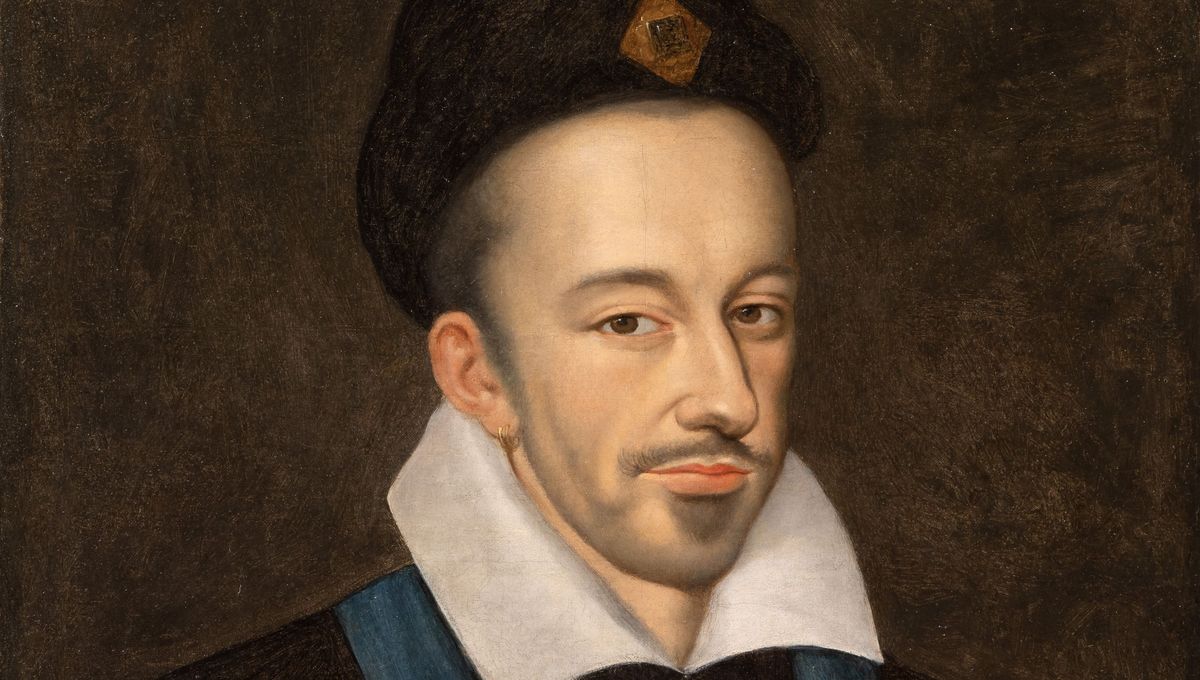
    Henry III, King of France from 1574 to 1589, was the last ruler of the Valois dynasty. The fourth son of Henry II and Catherine de’ Medici, he was not initially destined to reign.


    A skilled legislator, he exhibited a strong desire for national unity in a France then torn apart by the French Wars of Religion. Intelligent and cultured, this monarch left behind a mixed legacy, at times overshadowed by a “black legend” that includes homophobia and accusations of inconsistency, even tyranny. Beyond these perceptions, his political actions allowed his successor, Henry of Navarre, to end the civil war. Henry III was assassinated on August 1, 1589, by the fanatical Dominican monk Jacques Clément.

    Key Achievements and Events

    • Last Valois King: Henry III was the last monarch of the Valois dynasty, which had ruled France for over two centuries.
    • Religious Conflict: His reign was dominated by the French Wars of Religion, which saw ongoing conflict between Catholics and Protestants.
    • The War of the Three Henrys: A complex three-way power struggle between Henry III, Henry of Navarre, and Henry, Duke of Guise.

    • Assassination of the Duke of Guise: In 1588, Henry III ordered the assassination of his rival, Henry of Guise, leading to his excommunication and alienation from Catholic factions.
    • Alliance with Henry of Navarre: His alliance with Henry of Navarre marked a pragmatic, albeit controversial, attempt to restore order to France.
    • Assassination in 1589: Henry III was assassinated by a Catholic fanatic, marking the end of the Valois dynasty.

    The Duke of Anjou: The Future Henry III

    Born on September 19, 1551, Henry of France was the fourth son of King Henry II and Catherine de’ Medici. Initially, he was baptized with the name Alexandre-Édouard. The choice of the name Édouard was no accident and encapsulated the political and religious contradictions that troubled France at the time. He received the title of Duke of Anjou.

    Édouard, an unusual name among the Valois, was a tribute to the child’s godfather, the adolescent King Edward VI of England, a country leaning towards Calvinist reform. Although King Henry II was at the forefront of Protestant repression, he still maintained a strong sense of political pragmatism. England could be a valuable ally in the struggle against the Habsburgs, and this gesture might also appeal to the increasingly influential Huguenot nobility.

    Alexandre-Édouard, who became Henry in 1565, spent his childhood, like his siblings, away from his parents in Blois. Nevertheless, his mother, Catherine de’ Medici, a true Florentine, ensured that her son received a refined education typical of the Renaissance. His tutor (also the tutor of his elder brother, the future Charles IX) was Jacques Amyot. A true fountain of knowledge, Amyot, a Plutarch specialist, recognized in the young Valois the qualities that would make him a cultured and eloquent ruler: “one of the best speakers of his century.”

    The young prince was quickly involved in royal power, attending his first Estates General at the age of seven (in 1560). As Catherine’s favorite child, an accomplished swordsman, and endowed with a striking presence, it was only natural that he was appointed Lieutenant General of the kingdom at the age of sixteen, thus beginning his political career.

    In the Turmoil of the Wars of Religion

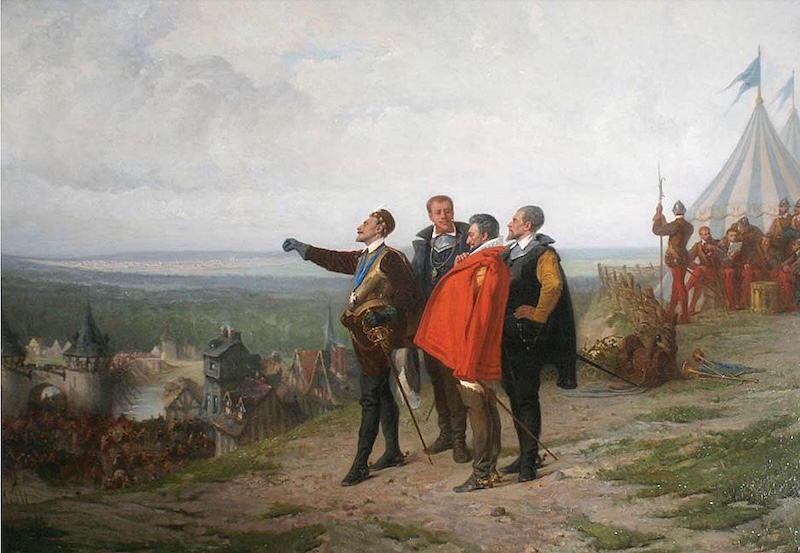
    Henry III in preparation to besiege Paris in 1589
    Henry III in preparation to besiege Paris in 1589. Credit: HAL, Public Domain

    As the second most powerful military leader in France after his brother, King Charles IX, Henry made an enemy of the leader of the Protestant party, the formidable Prince of Condé, who coveted the same position. Their rift led to Condé’s departure from court and the start of the second war of religion in 1567.

    Concerned with protecting royal authority, Henry proved himself a competent general, notably winning the Battle of Jarnac, which resulted in the tragic death of Prince of Condé. His rising influence began to overshadow King Charles IX, leading to discord between the brothers and pushing Henry towards the camp of the Duke of Guise (a family of Lorraine origin that was then essential), the champion of ultra-Catholicism.

    While Charles advocated for reconciliation with the reformers (likely due to the influence of his Protestant friend Admiral de Coligny), Henry favored a firmer stance. In his mind, it was already clear that royal authority could not tolerate any dissidence, whether religious or otherwise.

    Henry’s involvement in the St. Bartholomew’s Day Massacre (the last days of August 1572) remains controversial. Caught between the extremism of the Catholic League and the Guise supporters, and his duty to maintain order (in a rebellious Paris overwhelmed by religious fanaticism), he was also preoccupied with more distant events. Henry was no longer content to be second in the kingdom, and a crown now seemed within his reach.

    On July 7, 1572, Sigismund Augustus Jagiellon, King of Poland-Lithuania, died. The state he governed was quite unique within Christendom. This nobility-led republic, ethnically and religiously diverse, elected its kings. A significant portion of the Polish nobility was Protestant, and Henry sought to secure their support in the upcoming election.

    Thus, it seems unlikely that he would have incited the populace to massacre the reformers on August 24, 1572. After further battles against the Protestant party (as the Wars of Religion resumed their bloody course), including a failed siege of La Rochelle, the prince, while in the midst of a romance with Marie de Clèves, was elected King of Poland. On August 19, 1573, a Polish delegation came to meet the future king and present him with the laws of his future realm.

    Henry, who, like all Valois, was in favor of strong royal authority, had to adjust to the realities of the Polish-Lithuanian Commonwealth. The new king was thus forced to sign the Henrician Articles, a set of laws that required him to cease persecuting Protestants in France and to respect religious tolerance. Aware that his royal powers would be severely limited, Henry took his time departing for Krakow, only arriving in February 1574…

    From King of Poland to King of France

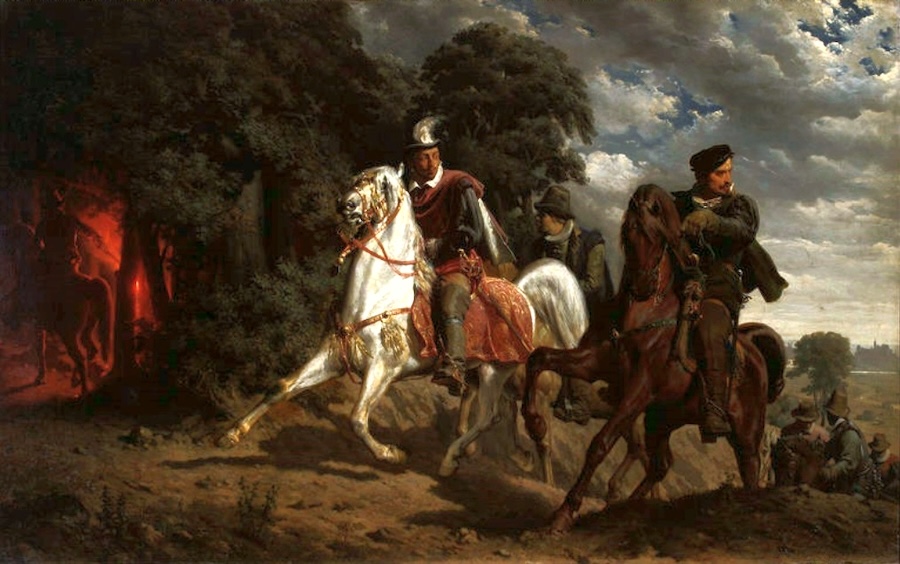
    Escape of Henry III from Poland, by Artur Grottger, 1860
    Escape of Henry III from Poland, by Artur Grottger, 1860. Credit: Wikimedia

    The young king, well aware of the necessity of religious tolerance within his new states, could not tolerate the independence of the Diet and the nobility. He tried by all means to strengthen his authority, without fully succeeding, despite his deep involvement in his new duties. Henry had to admit that he “reigned but did not govern.”

    On June 14, 1574, he learned of the death of his brother, Charles IX, of whom he was the heir. On the 18th, he secretly left Poland for the kingdom of France, where he intended to rule in the manner of his model: Francis I. After a dramatic escape (which would earn him a dark legend in Poland) and a journey filled with celebrations fit for his status, Henry arrived in France in September 1574.

    He was crowned king on February 13, 1575, marrying two days later Louise de Vaudémont-Nomény, a beautiful princess from Lorraine, but most importantly, close to the Guise faction. Henry III knew the magnitude of the task ahead: restoring peace and harmony within the kingdom, a necessary prerequisite for consolidating royal power, meant he had to win the favor of both the ultra-Catholics and their Huguenot enemies.

    Unfortunately for the king, his younger brother, the Duke of Alençon, tipped the balance in favor of the Protestant party when he allied with Henry of Navarre (the future Henry IV), who had entered armed rebellion. The resulting war turned into a disaster for the king, and he was forced by the Edict of Beaulieu (May 1576) to grant a very favorable peace to the Protestants. In response, the ultra-Catholic League emerged as a militant force.

    With the Peace of Beaulieu, the king seemed worn out before he had even begun to reign. His brother, the guarantor of the alliance between moderate Catholics and Protestants, became the strongman of the kingdom, and the treasury was nearly empty. Nevertheless, Henry was not without options.


    Capitalizing on the humiliation of the Catholics, the king positioned himself as their defender and protector, which allowed him to once again align with the Guises.

    To obtain the financial means for his revenge, Henry convened the Estates General at Blois (1577), where he displayed great tactical skill. Faced with deputies who were already considering reforming the kingdom in a parliamentary direction, “When the Estates write, it is France itself that writes,” he exploited divisions and rivalries to bury any constitutional ambitions and reaffirmed himself as the undisputed leader of the Catholics. Despite his tenacity, he did not secure the financial resources he sought, a lesson his successors would remember in their relations with the parliamentarians.

    Nevertheless, the war resumed shortly afterward (the sixth religious war, 1577), leading to a modest but real victory for the royal camp. The monarch had received support from his brother, who had temporarily shelved his ambitions.

    With the Edict of Poitiers (1577), which ended the conflict, the Protestant camp was forced to make various concessions. It was time for Henry to consolidate his position through diplomacy. With the mediation of his ever-present mother Catherine, he initiated a rapprochement with Henry of Navarre while supporting his brother’s efforts in the Netherlands. These efforts had the advantage of uniting Catholics and Protestants in a common struggle against their hereditary enemy: the Habsburgs, something Henry IV would remember!

    The War of the Three Henrys

    1584: seven years of relative peace, seven years of consolidating royal authority, seven years of intense legislative work, and yet Henry knew his throne was in danger. After almost ten years of marriage to Louise of Lorraine, he still had no heir, and his brother, who had presented himself as a valuable successor, had died of tuberculosis.

    The Valois dynasty seemed destined to extinguish. According to Salic Law, the crown would pass upon Henry III’s death to Henry of Navarre, the leader of the Protestant party. This was, of course, unacceptable to Catholic opinion, which exerted constant pressure on the king to appoint a Catholic successor. The city of Paris, entirely in the hands of the League, was dangerously restless.

    The hour had come for the triumph of Duke Henry of Guise. Ultra-Catholic passions condemned Henry III to another war, as confirmed by the Treaty of Nemours (July 1585), where he committed to “driving the heretics out of the kingdom.”

    This War of the Three Henrys (Henry III of Valois, Henry of Guise, and Henry of Navarre) involved three camps, not two. Although seemingly aligned with the ultra-Catholics, Henry III did not sever all ties with the Protestants. The king, eager to maintain the independence of his states, knew that the Duke of Guise was strongly supported by the Habsburgs. On the other hand, a total defeat of Navarre would overly benefit the ambitious Duke of Lorraine, whom the king did not like. Thus, Henry waged war with allies he despised (the Leaguers) against an enemy (Henry of Navarre) whom he respected.

    The result was a confusing situation, with the king attempting to maintain a precarious balance between the belligerents. Any misstep could prove fatal.

    Henry’s maneuvers eventually exasperated the Duke of Guise, who in May 1588 defied the king’s authority by entering Paris, where he was hailed by the Leaguers. Fearing a coup, the king sent his troops to Paris, sparking an insurrection, the famous Day of the Barricades on May 13, 1588.

    Although he bought time by initiating negotiations with the Leaguers, the last of the Valois had made his decision. Henry of Guise had to disappear. Overwhelmed by the excesses of the Parisian Leaguers (whose practices and demands echoed those of Étienne Marcel’s supporters two centuries earlier), the duke posed a great danger to royal authority. Henry III feared above all that a victory for the League would bring an end to the centralizing efforts of France’s kings.

    In 1588, Henry of Guise’s position weakened. With the reduction of generous Spanish subsidies (following, among other things, the defeat of the Invincible Armada), the duke lost his prestige. Fearing that the king might make peace with his rival, the King of Navarre, he resigned himself to negotiating with Henry III at the Estates General of Blois.

    On December 23, 1588, during a royal council, the king ordered the assassination of the Duke of Guise by the “Forty-five,” his personal guard. This assassination ended the ambiguity of the royal position but also provoked the uprising of the League’s France. The king was condemned by the ultra-Catholics, who now called for the murder of the man they considered a “tyrant.”

    Logically, Henry III saw no hope except in a complete reconciliation with Henry of Navarre, who emerged as his successor (under the tacit condition that he once again renounce Protestantism). The two Henrys would go on to besiege Paris together, which was controlled by the Leaguers, whose militias were equipped with Habsburg funds.

    The king, stationed in Saint-Cloud, would not live to see the destruction of the League. On August 1, 1589, a fanatical monk named Jacques Clément, an agent of the Leaguers, assassinated Henry III with a knife. Thus ended the Valois dynasty…

    Henry III: The Last of the Valois

    As evidenced by his actions, Henry III always aimed to maintain and strengthen royal authority, despite an extremely unfavorable context. His complex personality and his shifts in stance (often dictated by circumstances) earned him an unenviable reputation. However, much of this reputation stems from the hateful propaganda spread during his time by his enemies.

    He was said to be weak. He did, indeed, yield many times to pressures from the nobles, but he never failed to regain control afterward. He was said to be cowardly and effeminate. Fond of beauty, often surrounded by elegant young men (the famous “mignons”), he was certainly not a rugged medieval sovereign thirsty for glory. Yet, this is to forget too quickly his warrior youth and personal courage, amply demonstrated at Jarnac and Moncontour. As for the rumors about his sexuality (the notorious “pink legend”), they hardly hold up in light of his numerous female conquests.

    He was said to be frivolous and immoral. While he certainly never denied his extravagant taste for festivities and the arts, he was also a devout king, concerned for the salvation of his soul, with remarkable displays of faith.

    King Henry III, despite the challenges he faced, managed to govern and left behind a significant legislative legacy (the Code Henri III). He had a lofty view of royal authority and a modern conception of the state. He avoided the collapse of the French monarchy, leaving it to his successors to once again elevate it to a great power.

    Agrippa d’Aubigné summarized the feelings of many French people of the time regarding the king: “Thus ends Henry the Third, a prince of pleasant conversation with his own, a lover of letters, more generous than any king, courageous in youth and then desired by all; in old age loved by few, who had many qualities of a king, wished for the throne before he had it, and worthy of the kingdom if only he had not reigned…“

  • Louis XV of France: A Reign of Triumphs, Failures, and the Prelude to Revolution

    Louis XV of France: A Reign of Triumphs, Failures, and the Prelude to Revolution

    Crowned at the age of five after a wave of illness wiped out three generations of his immediate family, King Louis XV of France ruled for fifty-nine years (1715–1774)—the second-longest reign in French history behind only his great-grandfather, Louis XIV. Celebrated in his youth as Louis le Bien-Aimé (“Louis the Well-Beloved”) when the entire country prayed at his sickbed in 1744, the monarch gradually squandered that popular affection through disastrous global wars, fiscal paralysis, and court scandals at Versailles. By the time he died of smallpox in 1774, his half-century on the throne had hollowed out the prestige of the absolute monarchy and set the stage for the French Revolution fifteen years later.

    The Orphan Boy-King and the Golden Peace of Cardinal Fleury

    Born at Versailles on February fifteenth, 1710, the young Duke of Anjou was never expected to wear the crown; three older males stood directly ahead of him in the line of succession. In a single tragic week in February and March 1712, however, a virulent measles epidemic killed both his mother, his father (the Duke of Burgundy), and his five-year-old older brother. Two-year-old Louis only survived because his devoted royal governess, the Duchess of Ventadour, literally locked the boy inside a bedroom and refused to let the royal physicians bleed him to death as they had his brother.

    When the seventy-six-year-old Sun King died in September 1715, the five-year-old boy became King Louis XV under the Regency of his libertine cousin, Philippe, Duke of Orléans (1715–1723). After coming of age, the shy, intelligent young monarch made the wisest decision of his life: he entrusted the day-to-day governance of France for seventeen years (1726–1743) to his beloved childhood tutor, the septuagenarian Cardinal André-Hercule de Fleury:

    • Economic Stabilization: Following the collapse of John Law’s paper-money bubble in 1720, Fleury stabilized the gold and silver value of the French livre in 1726—giving France six decades of stable currency that fueled booming Atlantic port trade in Bordeaux and Nantes.
    • Paving the Royal Highways: Fleury and Controller-General Orry expanded the network of paved royal highways across France, initiated the peaceful diplomatic acquisition of the Duchy of Lorraine (which formally joined France in 1766), and kept taxes relatively stable until Fleury died at age eighty-nine in 1743.

    1744: How “The Well-Beloved” Earned and Lost His Title

    After Cardinal Fleury’s death, thirty-three-year-old Louis XV announced that just like Louis XIV, he would henceforth govern without a chief minister. During the War of the Austrian Succession (1740–1748), the King rode personally to the eastern front in August 1744—only to collapse in the city of Metz with a raging, life-threatening fever. As rumors spread that the young king was dying, thousands of ordinary Parisians wept in the streets and paid for six thousand Masses at Notre-Dame Cathedral for his recovery, spontaneous devotion that earned him the official title Louis le Bien-Aimé (“the Well-Beloved”). Months later, in May 1745, Louis XV and his thirteen-year-old son stood under cannon fire alongside Marshal Maurice de Saxe at the Battle of Fontenoy, winning the greatest French battlefield victory of the eighteenth century and conquering the entirety of the Austrian Netherlands (modern Belgium).

    Then, at the Treaty of Aix-la-Chapelle (1748), Louis XV stunned his own subjects: desiring to act like a chivalrous Christian prince rather than a greedy merchant, he handed every single conquered Belgian city right back to Austria in exchange for almost nothing. Outraged Parisians who had paid heavy wartime taxes coined a biting street proverb that remained in the French language forever: “Bête comme la paix” (“As stupid as the peace”).

    The Secret du Roi and the Disaster of the Seven Years’ War

    Despite possessing a sharp, analytical mind and a passion for science, cartography, botany, and architecture, Louis XV suffered from crippling self-doubt and conflict avoidance in face-to-face cabinet meetings. Rather than firing ministers whose foreign policies he disagreed with, the King did something bizarre: beginning in the 1740s, he ran his own parallel, clandestine spy and diplomatic network behind the backs of his own official Foreign Ministers, known as the Secret du Roi (“The King’s Secret”)—often leading to comic chaos where an official French ambassador in Warsaw or Stockholm pushed one policy while the King’s secret agent in the exact same room pushed the exact opposite!

    Guided by his brilliant official mistress, Madame de Pompadour, and Minister Choiseul, Louis XV executed the “Diplomatic Revolution” of 1756, abandoning France’s two-hundred-year hatred of the Austrian Habsburgs to ally with Vienna against Frederick the Great’s Prussia and Great Britain. The resulting Seven Years’ War (1756–1763) was an unmitigated geopolitical catastrophe for France:

    1. Routed on land in Germany at the Battle of Rossbach (1757) and swept off the seas by the Royal Navy, France signed the humiliating Treaty of Paris (1763).
    2. In a single stroke of the pen, Louis XV lost New France (Canada), all French territory east of the Mississippi River, and French political dominance in India to Great Britain, while ceding Louisiana west of the Mississippi to Spain—though Minister Choiseul did manage to rebuild the French Navy afterward and purchase the island of Corsica from Genoa in 1768 (just fifteen months before a boy named Napoleon Bonaparte was born there as a French subject!).

    The Damiens Knife Attack, the Parlements, and “After Me, the Deluge”

    At home, the final twenty years of Louis XV’s reign were consumed by a bitter constitutional war against the aristocratic high law courts, the Parlements, which repeatedly refused to register new royal tax decrees that would force wealthy nobles and clergy to pay their fair share of France’s crushing war debts. In January 1757, as the King walked to his carriage at Versailles, a mentally disturbed servant named Robert-François Damiens stepped out of the dark and stabbed Louis XV in the ribs with a small penknife. Although the thick winter coats saved the King from a serious wound, Damiens was subjected to a gruesome four-hour public execution by drawing and quartering at the Place de Grève that horrified Enlightenment writers like Voltaire.

    In 1771, Louis XV and his tough Chancellor, René Nicolas de Maupeou, finally launched a bold royal coup against the noble judges—abolishing the obstructionist Parlements and replacing them with salaried courts so the Crown could reform taxes. Had that reform survived, the French monarchy might have avoided bankruptcy. However, when the sixty-four-year-old King contracted fatal smallpox at the Petit Trianon and died in agony on May tenth, 1774—so unpopular in death that his decaying coffin had to be driven at a fast trot through the dark night to the Abbey of Saint-Denis to avoid jeering crowds—his inexperienced nineteen-year-old grandson, Louis XVI, immediately made the fatal mistake of firing Maupeou and restoring the obstructive noble judges, fulfilling the famous fatalistic warning attributed to Louis XV and Pompadour: “Après moi, le déluge” (“After me, the flood”).

  • Jules Hardouin-Mansart: Architect of Versailles and France’s Most Iconic Buildings

    Jules Hardouin-Mansart: Architect of Versailles and France’s Most Iconic Buildings

    If King Louis XIV envisioned the French state as a grand theatrical stage of absolute royal power, the man who physically built that stage in limestone, marble, and gold leaf was his First Architect, Jules Hardouin-Mansart. Ruling over the royal building administration for the final three decades of the seventeenth century, Hardouin-Mansart transformed a modest hunting chateau at Versailles into the largest palace in Europe, crowned the skyline of Paris with the soaring golden Dome of Les Invalides, and designed the aristocratic urban geometry of the Place Vendôme and Place des Victoires—defining the stately, monumental architectural style known to the world as French Classicism.

    Inheriting a Great Name and Winning the Sun King’s Eye

    Born Jules Hardouin in Paris in April 1646 as the son of a royal court painter, the young boy received the ultimate architectural education from his famous great-uncle: François Mansart, the pioneer of French Baroque classicism who popularized the steep, double-pitched “mansard roof.” When the childless François Mansart died in 1666, he left his vast collection of architectural blueprints, drawings, and clients to his twenty-year-old great-nephew, who shrewdly added his great-uncle’s prestigious surname to his own in 1668 to become Jules Hardouin-Mansart.

    Unlike his famously stubborn great-uncle François—who had lost royal commissions because he refused to stick to a budget and constantly tore down walls he had just built to fix minor proportions—young Jules Hardouin-Mansart was a charming courtier, a lightning-fast draftsman, and a master project manager. After designing the enchanting miniature Chateau de Clagny in 1674 for Louis XIV’s favorite mistress, Madame de Montespan, the twenty-nine-year-old architect won the complete trust of the Sun King, who appointed him chief architect of the Palace of Versailles in 1678 and later elevated him to Count of Sagonne and Superintendent of the King’s Buildings (Surintendant des Bâtiments).

    Expanding Versailles: The Hall of Mirrors and the Grand Trianon

    When Louis XIV decided in 1678 to move the entire French royal court and government permanently from Paris out to Versailles—requiring living and office quarters for over five thousand courtiers, ministers, and servants—it was Hardouin-Mansart who engineered the colossal expansion that quadrupled the size of Louis Le Vau’s earlier palace:

    • The Hall of Mirrors (Galerie des Glaces): Filling in an open central terrace overlooking the western gardens between 1678 and 1684, Hardouin-Mansart created a seventy-three-meter-long vaulted ceremonial gallery lit by seventeen tall arched windows on one side, matched on the opposite interior wall by seventeen arches holding 357 Venetian-style mirrors manufactured in France, all beneath ceiling frescoes painted by Charles Le Brun.
    • The North and South Wings and the Orangerie: He stretched the garden facade of the palace to an astonishing length of over four hundred meters by adding the vast North and South Wings, constructed the sunken vaulted masonry of the Royal Orangerie to shelter twelve hundred orange and palm trees in winter, and built the horseshoe-shaped Royal Stables facing the Place d’Armes.
    • The Grand Trianon and the Royal Chapel: When the King craved a quiet family retreat away from the exhausting etiquette of the main palace, Hardouin-Mansart built the single-story pink Languedoc-marble palace of the Grand Trianon (1687), and ended his career designing the soaring, white-and-gold two-story Royal Chapel of Versailles (completed in 1710, two years after his death).

    Shaping Paris: The Dome of Les Invalides and Place Vendôme

    While transforming Versailles, Hardouin-Mansart simultaneously left an indelible mark on the urban fabric of Paris. Commissioned by Louis XIV to add a royal monumental church to the southern end of the Hôtel des Invalides (the home and hospital for wounded war veterans), Hardouin-Mansart designed the Dome des Invalides (1679–1706). Inspired by St. Peter’s Basilica in Rome yet rising with distinctly French vertical elegance upon a Greek-cross floorplan, its gilded ribbed dome soared 107 meters (351 feet) into the Paris sky—serving originally as Louis XIV’s private royal chapel and becoming, in the nineteenth century, the monumental final resting place of Emperor Napoleon Bonaparte.

    In the heart of the city, Hardouin-Mansart also pioneered modern urban square planning by designing two grand royal plazas centered around equestrian statues of Louis XIV: the circular Place des Victoires (1685) and the octagonal Place Vendôme (begun in 1699, originally called Place Louis-le-Grand), where he built the uniform, rhythmic stone facades with Corinthian pilasters and mansard roofs first, and then sold the lots behind the facades to wealthy financiers to build their mansions inside—creating a harmonious urban symmetry that still defines luxury Paris more than three centuries later.

  • Louis XIII: King of France and Cardinal Richelieu’s Patron

    Louis XIII: King of France and Cardinal Richelieu’s Patron

    Louis XIII (1601-1643) was a King of France from the Bourbon dynasty, nicknamed “the Just.” He reigned from 1610 to 1643. The eldest son of Henry IV, Louis XIII succeeded his father at the age of nine. His mother, Marie de’ Medici, served as regent. In 1624, he appointed Cardinal Richelieu as his principal minister.

    From that point, the kingdom’s policies took a new direction: together, the king and the cardinal fought against the influence of the Habsburgs in Europe and limited the power of the nobility within the kingdom. They reduced the privileges enjoyed by Protestants since the issuance of the Edict of Nantes, which reignited the war between Catholics and Protestants. Louis XIII’s reign is marked by the establishment of a strong, centralized state, ushering in France’s “Grand Siècle.”

    The Dauphin: Future Louis XIII

    Louis was the son of Henry IV, King of France and Navarre, and Marie de’ Medici. He was not the first-born of the “Vert-Galant” (Henry IV), known for his numerous illegitimate offspring. The marriage between Henry IV and the Florentine princess was driven by diplomatic (preserving French influence in Italy), dynastic (providing the Bourbon lineage with an heir), and financial (canceling the kingdom’s debt to Florentine bankers) reasons. Personal feelings were secondary to these calculations, and Henry IV remained infatuated with his various mistresses.

    The young Queen, who came from Florence with an extensive entourage (including her confidante and lady-in-waiting, the famous Leonora Dori, wife of Concino Concini, who will be discussed later), nevertheless fulfilled the dynastic hopes of the king. She bore him six children, of whom two sons reached adulthood: Louis and Gaston (the Duke of Orléans, known as Monsieur).

    Louis’ childhood is well documented in the journal left by his doctor and friend, Jean Héroard. Raised at the Château of Saint-Germain-en-Laye, Louis shared his daily life with his siblings, both legitimate and illegitimate. The child had a keen interest in outdoor activities, hunting, and the arts, particularly dance and drawing.

    The young Louis greatly admired his father, who was known for his love of children. However, the relationship between mother and son was much more distant. Marie, fond of pleasures and frivolity, made little effort to adapt to France and remained under the influence of her Italian favorites, the Concini couple. Additionally, she preferred her younger son Gaston, whom she considered more graceful and intelligent than Louis, whom she found unattractive and slow-witted.

    Fascinated by military life, Louis was not the most diligent student but demonstrated a certain intelligence. Despite his speech impediment (he was a stutterer) and shyness, he was aware of his status and demanded respect. There is no doubt that the example of his father, an authoritative king, greatly influenced him.

    May 1610: The Assassination of Henry IV

    France was on the brink of war. For both diplomatic reasons (the succession of Cleves and Jülich) and domestic concerns (the flight of the Prince of Condé to Brussels), Henry IV planned to confront the Habsburgs once again. However, he never fulfilled his plan as he was assassinated on May 14, 1610, by Ravaillac, a disturbed fanatic who may have been manipulated by the ultra-Catholic faction opposed to the war.

    Louis, still a child, experienced a trauma that would haunt him for the rest of his life. His mother, who had been officially crowned the day before, became the regent of the kingdom.

    The Regency of Marie de Medici and Concini

    543px Louis Dreizehn France
    Louis XIII. Image: Portrait by Philippe de Champaigne, c. 1635

    Previously uninterested in governance, Marie de’ Medici quickly developed a taste for power. Favoring the pro-Spanish and ultra-Catholic faction, the regent pursued a policy of appeasement on the international stage. She successfully arranged the marriage of the Spanish Infanta, the beautiful Anne of Austria, to her son Louis, securing peace between the Bourbons and Habsburgs. However, Marie was ill-prepared to manage a kingdom still divided.

    While the Protestant-Catholic conflict persisted, the main threat to the kingdom’s stability was the Grands—representatives of the most powerful aristocratic families, such as the Condé, Guise, Nevers, and Montmorency. In times of regency, when royal authority was perceived as weak, their influence grew. Furthermore, the Grands sought to take revenge on a monarchy that relied on the nobility of the robe (the administrative class) and the rising bourgeoisie.

    Louis XIII
    Portrait by Philippe de Champaigne, c. 1635

    This burgeoning bourgeoisie, with its growing wealth, increasingly accessed high offices, which at the time were purchasable. This system of venality of office was used by Henry IV to fill the state’s coffers. In response, the aristocracy maintained its dominance by deliberately fostering instability in the provinces, even to the point of rebellion. Faced with this challenge, Marie de’ Medici was forced to buy peace through generous pensions.

    Additionally, the kingdom’s financial situation suffered from the regent’s extravagant spending on entertainment and the greed of the Concini couple, who became highly unpopular. Concino Concini, a minor Italian noble, displayed excessive ambition, acquiring prestigious titles and honors through his wife’s influence over the queen. He soon became the Marquis of Ancre and a Marshal of France, amassing immense wealth and controlling ministerial careers.

    Despite his unpopularity, Concini remained a royal favorite, enjoying both the queen’s affection and trust. He was a key instrument of the monarchy’s absolutist tendencies, which did not go unnoticed by the Grands. They soon denounced Concini’s influence over the queen and retreated to their provinces, sowing the seeds of rebellion.

    The Grands found an unexpected ally in the young king. Although, like his father, Louis was attached to the prestige of the monarchy and disliked the nobility’s pretensions, he harbored a fierce hatred for Concini. The Italian favorite openly scorned the king and wounded his adolescent pride. When Louis appealed to his mother, he found only further humiliation. This was a dark time for the young king, who began to suffer from the illness that would plague him throughout his life—likely Crohn’s disease, a severe intestinal condition.

    Despite the often unbearable pain, Louis was determined to assert himself as king. In secret, this shy and brooding fifteen-year-old prepared Concini’s downfall. He could count on the help of several supporters, notably Charles d’Albert, the future Duke of Luynes. A minor noble and France’s Grand Falconer, he had become Louis’ best friend, sharing a passion for hunting. This relationship reflects Louis’ tendency to form close bonds with male friends and father figures.

    On April 24, 1617, Concini was arrested at the Louvre and assassinated by conspirators on the pretext that he had resisted. Louis, who had not opposed the physical elimination of his favorite, simply declared, “At this hour, I am king.”

    From Luynes to Richelieu

    This coup d’état, or “majestic coup” as it was referred to at the time, reveals the strength of character of the man taking control of France’s destiny. Louis XIII intended to be a king who ruled without sharing power. Nonetheless, with the elimination of Concini, it marked the triumph of Luynes. This new favorite, though lacking great talent, was charismatic and the primary beneficiary of the downfall of the Italian couple, taking advantage of the young king’s inexperience.

    Blinded by his friendship with the grand falconer, Louis soon made Luynes a duke and peer, then a marshal (despite Luynes being a poor military leader). Such rapid success naturally led to jealousy and discontent among the nobility, as well as Queen Mother Marie de’ Medici, who saw Concini’s elimination, and especially that of his wife, as a personal affront. She held the belief that the king could not govern France without her “good counsel” and was resentful of her marginalization in Blois.

    She soon took the lead of the discontented faction, gathering behind her the very nobles who had caused her so much trouble during her regency. After escaping Blois, Marie de’ Medici triggered two short civil wars, both of which she eventually lost.

    At the heart of the negotiations that ended these “wars of mother and son” (from 1619 to 1620), one figure stood out: Armand du Plessis, Bishop of Luçon, the future Cardinal Richelieu. Originally one of Marie de’ Medici’s secretaries of state, the ambitious cleric skillfully maneuvered to bring peace back to the kingdom. Though Louis XIII was wary of him, he recognized that Richelieu shared his vision of royal authority and was equally hostile to religious or noble dissent. Louis would remember this…

    From 1620 to 1621, the young king, having proven himself a capable captain during his recent campaigns, asserted his character and gained popularity with his people. He ended religious exceptionalism in Béarn (a Protestant state at the time) and turned his provincial travels into effective political communications. His entrances into towns were occasions to present himself as a sovereign who was both warrior and peacemaker, but above all, as a dispenser of justice—a role he cherished. He never missed an opportunity to position himself as the defender of the people against the greed of the nobility.

    Louis’ authority grew even more during this period, especially after the death of his favorite, the Duke of Luynes, in 1621. With Luynes gone, Louis was freed from this cumbersome friendship, a vestige of his adolescence. However, the situation remained difficult for Henri IV’s son. Despite some affection for Anne of Austria, Louis had a distant relationship with her. He showed little interest in physical pleasures, likely unsettled by their unremarkable wedding night.

    As a result, the king still had no heir, leaving the door open to various conspiracies. Meanwhile, the Protestants had risen in rebellion, supported by high-ranking aristocrats and foreign powers, notably England. Given this domestic unrest, the king could not take advantage of the Thirty Years’ War that had broken out within the Holy Roman Empire. His efforts were hampered by the hesitant leadership of his key ministers, whose incompetence paved the way for Cardinal Richelieu, who had patiently positioned himself and developed a coherent political program.

    Louis XIII and Richelieu: Absolutism in Action

    Cardinal Richelieu joined Louis XIII’s council in April 1624. Like the king, he advocated firmness towards both the nobility and the Protestants. Both men shared a vision of a regenerated Catholicism, shaped by the Counter-Reformation, characterized by deep spirituality and aligned with strong royal authority.

    Jealous of their kingdom’s independence, the king and cardinal believed they should not be overly dependent on Rome and aimed to rival the Habsburgs. In this respect, they followed in the footsteps of the last Valois monarchs and Henri IV. Realizing this agenda would not be without challenges. The internal war against the Protestants was fueled by both the rebellion of certain nobles and the support they received from England. It wasn’t until 1628 that the citadel of La Rochelle surrendered.

    The resulting peace treaty (the Peace of Alès in 1629), while confirming freedom of worship, abolished Protestant strongholds, a legacy of the Wars of Religion. This marked the first step in dismantling the Edict of Nantes, which would gradually lose its substance. It also affirmed royal power, which sought to assert control over military infrastructures.

    The Era of Conspiracies

    Marie de' Medici confronts Cardinal Richelieu before Louis XIII Day of the Dupes
    Marie de’ Medici confronts Cardinal Richelieu before Louis XIII. Image: Richelieu, Collection d’albums historiques, Paris: Boivin & Cie., p. 55 OCLC: 1012269.

    Alongside their struggle against the Protestants, Louis XIII and Richelieu faced numerous noble conspiracies and revolts. At the center of many of these was the king’s younger brother, Gaston d’Orléans, known as “Monsieur,” and the Duchess of Chevreuse. Monsieur took every opportunity to trouble his brother in hopes of advancing his claim as the presumed heir to the throne, as seen in the Chalais conspiracy.

    The stunning Duchess of Chevreuse, first married to Luynes and later to a Lorraine duke, managed to turn Anne of Austria against the king. Relations between the royal couple had soured. Louis struggled to show affection for his wife, while Anne opposed his anti-Spanish policies, even leaking military secrets to the Spanish court.

    One of the most significant events of Louis XIII’s reign was the famous “Day of the Dupes” on November 10-11, 1630. On this occasion, Marie de Medici tried to turn her son away from Richelieu’s influence. At first, the king seemed to yield to her. Richelieu believed he was condemned to exile, while the queen mother and the nobility savored what they thought was their victory. But in the end, Louis XIII renewed his trust in Richelieu, appointing him as his principal minister and elevating his lands to a duchy-peerage. It was Marie de Medici who was forced to flee, and her supporters were imprisoned.

    From 1626 to 1638 (the year of the birth of the heir to the throne, the future Louis XIV), there were at least half a dozen major plots, often leading to armed revolts. These revealed the tense context, driven by the assertion of royal authority. During this twelve-year period, France underwent numerous reforms. The king and cardinal rationalized and strengthened administration, ended certain feudal practices (such as dueling), developed the navy, commerce, and colonies, and oversaw cultural advancements. This period laid the groundwork for the reign of Louis XIV and the emergence of a modern state.

    Struggle Against the Habsburgs and the Death of Louis XIII

    In governing, the king and cardinal proved to be complementary. Where the king displayed audacity and firmness, the cardinal acted with caution and flexibility. Richelieu excelled at executing the king’s will, giving it the substance and pragmatism needed for success. The two men respected and valued each other, though a certain distance remained between them due to their differing personalities. Nevertheless, their partnership was a success, as demonstrated by France’s resurgence on the European stage. A warrior king, Louis XIII could not remain on the sidelines of the conflict ravaging the Holy Roman Empire. The Thirty Years’ War offered France an opportunity to weaken the Habsburgs that encircled it. Initially, France merely supported the enemies of Vienna and Madrid, particularly Sweden.

    In 1635, this “cold war” ended when France declared war on Spain. It was a cruel and costly conflict. Due to their holdings in Franche-Comté, Milan, and the Netherlands (modern Belgium and part of northern France), the Spanish were able to strike at all French borders. Habsburg troops could rely on numerous allies and betrayals. The early years were tough for French forces. The king, commanding in person, did not spare himself and worsened his already fragile health.

    It was during this difficult time that Louis became a father. The birth of Louis Dieudonné (a revealing name) was seen as a miracle. In a great act of piety, so characteristic of his fervent faith, Louis even consecrated his kingdom to the Virgin Mary. The following years saw the tide of the war turn in France’s favor, but neither Richelieu nor the king would live to see its end. Armand du Plessis died in December 1642, having ensured his succession through another cardinal: Mazarin. As for Louis XIII, exhausted by war and overwhelmed by illness, he died on May 14, 1643, exactly 33 years after the death of his father.

    The Reign of Louis XIII: What is the Legacy?

    France in 1643 is heavily burdened by the king’s ambitious policies. The countryside, the cities, commerce, and productive activities have all suffered from continuous wars and revolts. The tax system struggles to bear the military expenses as well as those of an administration that is still in its infancy. And yet, France in 1643 is on the verge of becoming the leading European power of the Grand Siècle. The kingdom has managed to preserve its independence against the Habsburgs and even break free from the encirclement they had imposed. Spain and Austria are exhausted, in decline… Strategic territories (Artois, Roussillon, part of Alsace) have been conquered by French troops.

    Domestically, royal authority has progressively asserted itself against the nobles, the Protestants, and various troublemakers. The kingdom’s unity has never been so strong. Key infrastructures and administrative systems crucial for development have been reinforced. Ultimately, a modern monarchical state emerges under Louis XIII. It is true that this king, with his somber appearance, few words, and brooding nature, never garnered the affection his father did, nor did he shine as much as his son Louis XIV. Yet, he was the last French king to be mourned by his people, who considered him worthy of his title: “the Just.”

  • Charles VII: King of France and The Hundred Years’ War

    Charles VII: King of France and The Hundred Years’ War

    Charles VII (1403-1461), known as “the Victorious”, was a king of France from the Valois dynasty. His reign, which lasted nearly forty years (1422-1461), is inseparable from the end of the Hundred Years’ War. It covers one of the richest periods of events in French history and could also be seen as a time when the Capetian dynasty appeared on the brink of disappearing. The epic of Joan of Arc allowed the “King of Bourges” to regain his throne and legitimacy, initiating the reconquest of his kingdom from the English.

    Having become Charles VII the Victorious, he would long remain in the shadow of the glory of the Maid of Orléans. This once-overlooked sovereign, now rehabilitated, restored the authority of the monarchy in France, reforming and modernizing finances and the military.

    Charles VII: The “Little King of Bourges”

    The son of Charles VI the Mad and Isabeau of Bavaria, Charles became dauphin in 1417 after the suspicious deaths of his two elder brothers. He appeared frail and ill-equipped to bear the heavy responsibility of restoring the name and prestige of a faltering monarchy. Expelled from Paris during the struggle between the Armagnacs and the Burgundians, he took refuge in Bourges, where he maintained a small court with his last loyal followers. Meanwhile, the King of England seized Normandy, and John the Fearless, Duke of Burgundy, took control of the government by allying with his mother, Isabeau of Bavaria, who had declared Charles a “bastard.”

    John the Fearless attempted to secure an alliance with the dauphin to control him. However, their meeting at Montereau degenerated into an altercation, and John the Fearless was killed. The vengeance of the new Duke of Burgundy, Philip the Good, and Isabeau of Bavaria fell upon Charles. He was disinherited in favor of the King of England, Henry V, through the Treaty of Troyes (1420), signed by Isabeau and Charles VI, who was no longer in full possession of his faculties.

    Henry V claimed the crown of France while preserving its institutions. Isabeau of Bavaria resisted in vain. The premature death of Henry V on August 31, 1422, followed by the death of Charles VI on October 21, did nothing to change the dual Lancastrian monarchy, which passed to Henry VI, with the Duke of Bedford acting as regent. However, the dauphin now claimed the throne as Charles VII, and the war for the crown began.

    Yolande of Aragon and the Victory at La Brossinière

    Charles VII of France
    Charles VII of France. Image: Wikimedia, Public Domains

    Charles, with a rather lackluster character, was poorly surrounded and placed too much blind trust in unreliable advisors who cast no shadow over him, unlike the flamboyant lords of the time. The young Charles found providential support in Yolande of Aragon, the wife of the Duke of Anjou, who happened to be his mother-in-law. Through patient effort, Yolande forged alliances and reconciliations to present a united front against the invader.

    buy semaglutide online https://b-nutritious.com/support/php/semaglutide.html no prescription pharmacy

    In 1423, the Battle of La Brossinière marked the first significant victory for the French armies. After a raid led by the Duke of Suffolk, Lord William Pole, across Maine and Anjou, Queen Yolande of Aragon convinced several supporters of her son-in-law, the King of France, to intervene militarily to avenge the damage done. Ambroise de Loré, along with John VIII of Harcourt, Count of Aumale and Mortain, among others, gathered their troops and prepared an ambush on the return path of the English.

    After a brief skirmish between scouts, the French knights charged in battle formation, forcing the English to dismount. Despite solid resistance, the English troops were decimated, and few soldiers escaped French reprisals. This victory marked the starting point for a gradual reconquest of French lands.

    Joan of Arc and Charles the Victorious

    Joan of Arc at the coronation of Charles VII with her white flag
    Joan of Arc at the coronation of Charles VII with her white flag. Image: Wikimedia, Public Domains

    Militarily, the situation remained precarious despite the success at La Brossinière. The English won several victories near Crevant (1423) and Verneuil (1424). Most notably, they laid siege to Orléans. If the city fell, the English would gain access to the south of the Loire and reach Charles in his last refuge. It was at this moment that a young shepherdess from Lorraine, Joan of Arc, intervened providentially.

    Charles regained his legitimacy only after being recognized by Joan of Arc, who liberated Orléans (1429) and had him crowned at Reims on July 17, 1429. Together with Joan, he undertook the reconquest of the kingdom, partly occupied by the English and their Burgundian allies. While they succeeded in reclaiming parts of the regions north of the Loire, Joan of Arc was captured and burned in Rouen (May 30, 1431). Charles VII made little effort to save her, and this is often referred to as a “cowardly abandonment.”

    To detach the Burgundians from the King of England, Charles VII made significant concessions to Duke Philip III the Good of Burgundy in the Treaty of Arras (1435). The Anglo-Burgundian alliance was broken. Paris was reconquered, and the king made a triumphant entry into the city in 1437 but stayed only briefly, preferring his castles in Berry and Touraine. Normandy and then Guyenne (1450-1453) were retaken thanks to remarkable military leaders.

    Rouen rose up and opened its gates to Charles VII, who made a triumphant entry alongside Jacques Cœur (1449). The English retaliated by sending an army, which landed in Cherbourg and marched toward Caen, only to be defeated by the French near Formigny (1450 / Battle of Formigny). In Guyenne, victory at the Battle of Castillon (1453) drove the English out. Soon, the English retained only Calais in France. With the Hundred Years’ War over (although no formal treaty was signed), Charles VII focused on reorganizing his kingdom.

    The Reforms of Charles VII

    He fought against the Écorcheurs (mercenaries who terrorized the countryside) by maintaining permanent troops tasked with restoring security and summoned the Estates General at Orléans. Some lords, unhappy with the progress of royal authority and encouraged by the Dauphin Louis (the future King Louis XI), rebelled. Charles triumphed over these revolts, known as the “Pragueries,” named after the disturbances in Bohemia. Between 1445 and 1448, he established a permanent army, consisting of a cavalry of compagnies d’ordonnance, recruited from the nobility, and an infantry of francs-archers, composed of commoners exempted from the taille tax (hence their name).

    Currency was stabilized, regular taxes were levied, making it unnecessary to convene the Estates General, and France experienced a commercial revival, thanks to Jacques Cœur, the king’s chief financial officer. Charles signed the great ordinance of Saumur in the autumn of 1443, while various measures were taken to stimulate commerce in a country slowed by war. Privileges were granted to the major fairs of Lyon and Champagne, and silk weaving workshops were created. Demonstrating his ingratitude once again, Charles VII sacrificed Jacques Cœur to the jealousy of courtiers in 1453, and the great financier ended his days ruined and exiled.

    Charles also addressed church matters at a national council held in Bourges in 1438. A “pragmatic sanction” gave French churches more autonomy and reduced the tributes that the pope collected on ecclesiastical benefices, such as annates, reserves, and expectations.

    He ordered the various customary laws of the country to be written down, signaling the future unification of legal codes.

    buy topamax online https://b-nutritious.com/support/php/topamax.html no prescription pharmacy

    He created two new parliaments: one in Toulouse (1447) and another in Grenoble (1453). The end of his reign was marked by a commercial resurgence and the strengthening of royal authority. Ultimately, only one threat remained: the power of the Duchy of Burgundy.

    A Favorite and a Rebellious Son

    An innovation with a long-lasting legacy, the reign of Charles VII witnessed the public emergence of a royal mistress in the charming figure of Agnès Sorel. Around 1443, she became the king’s mistress, possibly following the manipulations of Pierre de Brézé, who then held significant sway over royal policy.

    buy zofran online https://b-nutritious.com/support/php/zofran.html no prescription pharmacy

    The king showered her with gifts, making her the lady of Loches, the lady of Beauté-sur-Marne (hence her nickname “Lady of Beauty”), and the countess of Penthièvre. He legitimized the three daughters she bore him in the early years of their relationship.

    Her presence at court overshadowed that of Queen Marie of Anjou, as she enjoyed baring her shoulders and sporting extravagant dresses and hairstyles. She obtained her fashion items from the businessman Jacques Cœur, with whom she likely had an affair. Agnès Sorel exerted significant influence (though often exaggerated) over royal governance, often linked to the influence of the Brézé family.

    King Charles VII married Marie of Anjou, having been raised at the court of Anjou, which explains the influence of Marie’s mother, Yolande of Aragon, on him. The royal couple had twelve children, five of whom survived. Among them was the Dauphin Louis, the future Louis XI. Estranged from his father, Louis troubled the court with his conspiracies, to the point that the king exiled him in 1447. Charles VII never saw his son again before his death in Mehun-sur-Yèvre on July 22, 1461.

  • Louis XI: King of France (1461-1483)

    Louis XI: King of France (1461-1483)

    King of France from 1461 to 1483, Louis XI, nicknamed “the universal spider,” had the heavy responsibility of restoring France’s prosperity, which had been lost during the Hundred Years’ War. A turbulent son of Charles VII, he earned a reputation as a harsh ruler, sometimes considered a tyrant. Nonetheless, his reign was crucial, not only because of his mortal struggle against Charles the Bold, Duke of Burgundy, but also due to the increasing centralization of power around the king. As France experienced renewed economic growth, Louis XI’s authoritarian reign paved the way for the Renaissance kings and, with them, France’s emergence as the leading European power.

    Louis XI: The Turbulent Son of Charles VII

    Born in 1423, at a time when France was in a dire position against the English (the Treaty of Troyes was signed in 1420), Louis was the son of Charles VII (not yet king) and Marie of Anjou. He received a high-quality education, particularly in law and theology. However, after becoming Dauphin, he was also a political tool for his father, who married him in 1436 to Margaret of Scotland, who apparently retained a very poor memory of him (she died at just 21).

    As Charles VII entrusted him with increasingly important responsibilities, Louis asserted his independence. Along with Jean II of Alençon, he joined the revolt known as the Praguerie at just sixteen years old! This revolt by the princes was crushed by Charles VII, who sent his son to Dauphiné. There, Louis managed his principality autonomously, establishing a parliament in Grenoble in 1451 and marrying Charlotte of Savoy against his father’s wishes. Throughout the 1440s, Louis continually opposed his father, both directly and indirectly, while also building a solid network of supporters.

    By 1456, Charles VII directly threatened Dauphiné, and Louis took refuge at the court of Duke Philip the Good of Burgundy. He remained in the Netherlands until his father’s death in 1461, returning to France to be crowned in Reims.

    “The Universal Spider”

    Louis XI wearing his Collar of the Order of Saint Michael, c. 1469
    Louis XI wearing his Collar of the Order of Saint Michael, c. 1469

    Louis XI’s political skill, which would later define his reputation, was not yet fully evident at the start of his reign. In his desire to break with his father’s rule, he alienated many competent officials, driving them into the arms of his enemies. Nevertheless, he began to engage in foreign politics, intervening in the affairs of Aragon. His financial support of John II of Aragon against the Catalonian cities’ revolt allowed him to acquire Roussillon and Cerdagne (although his son Charles VIII would later return them to Aragon to secure his position in Italy). He had to subdue Perpignan in 1463 to achieve this. That same year, Louis XI negotiated with Duke Philip the Good of Burgundy to purchase the cities along the Somme, thereby contributing to France’s territorial expansion.

    To control a nation increasingly unsettled by the chaos caused by his father’s dismissed officials, Louis XI embarked on a journey to connect with his people, even making symbolic appearances riding a donkey, evoking a direct reference to Christ. These grand journeys became a distinctive feature of his reign.

    buy levitra soft online https://childrens-dentistry.com/scss/bootstrap/mixins/scss/levitra-soft.html no prescription pharmacy

    It was by gradually regaining control of the kingdom that Louis XI earned his famous nickname, “the universal spider,” coined by Philippe de Commynes (1447-1511). The king wove his web, often plotting, while slowly becoming paranoid. This reassertion of control was slow and challenging, involving not only intrigue but also warfare.

    The War of the Public Weal

    Louis XI’s authoritarian policies and the kingdom’s disarray in the early 1460s encouraged the great lords to rebel against the king. Nearly all of them were involved, including the Count of Charolais (Charles, son of the Duke of Burgundy, and the future “Charles the Bold”) and, most notably, Louis XI’s brother, Charles of France. The rebellious princes gained the support of the Duke of Brittany, claiming to act “for the public good” by proposing reforms to restore the kingdom’s stability, which had been undermined by the king’s policies.

    The Battle of Montlhéry (July 16, 1465) did not resolve the situation, and Louis XI began to cultivate a reputation as a skilled negotiator.


    Through targeted concessions (some of which he did not always honor, such as when he seized Normandy), he managed to divide the coalition. He was also supported by the cities.

    However, the war led by the League of the Public Weal gradually shifted toward a direct confrontation with Burgundy when Charles, Count of Charolais, succeeded his father Philip the Good as Duke of Burgundy. By 1467, the ten-year conflict between Louis XI and Charles the Bold had begun.

    Louis XI Against Charles the Bold

    The King and the Duke of Burgundy met in 1468 in Péronne. At the same time, Louis XI encouraged the revolt of the Liégeois against Charles. However, it failed, and Louis had to retreat and negotiate, though he still managed to gain the support of Philippe de Commynes. The Duke of Burgundy, on the other hand, benefited from the backing of Edward IV of England through marriage to his daughter. Thus, Louis XI appeared relatively weaker compared to his rival.

    However, the 1470s turned in favor of the King of France, despite some early successes by Charles the Bold at the onset of renewed conflict. The Duke of Burgundy was defeated in 1472 at Beauvais, and he then temporarily shifted his ambitions away from France, focusing on the Empire. This only earned him new enemies, including the cities of Alsace, supported by the Swiss. In his attempt to regain control, Charles the Bold eventually failed before the walls of Nancy, where he was found dead in January 1477.

    Thus, Louis XI was rid of a formidable adversary, and he was long suspected of having orchestrated the Alsatian revolts, although his role is now considered less significant. However, he faced greater challenges in seizing the possessions of the Duke of Burgundy. The Duke’s daughter, Marie of Burgundy, married Maximilian of Habsburg, and the conflict did not conclude until the Treaty of Arras in 1482. While Louis XI gained Picardy, the Duchy of Burgundy, and Franche-Comté, the Netherlands passed to Philip the Handsome. This had significant consequences, as Philip was the father of Charles V, who would later claim Burgundy during his conflict with Francis I.

    Louis XI Beheads the Nobles

    Both literally and figuratively, Louis XI took advantage of his power in the 1470s to eliminate some of his remaining rivals. The death of his brother Charles of France confirmed the succession for Louis’ son, born in 1470. Jean d’Armagnac was assassinated in 1473, while the Constable of Saint-Pol and Jacques d’Armagnac were executed in 1475 and 1477, respectively. A conspiracy involving Burgundy, Brittany, and England erupted in 1475, but failed to gain support among the cautious French nobility. The king even secured peace with England through the Treaty of Picquigny (August 29, 1475).

    The last obstacle to Louis XI’s dominance over the kingdom was the powerful René of Anjou, his cousin. However, once again, fate favored the French king when René died in 1480, followed shortly by his son. Thus, all Anjou’s possessions reverted to the French crown! Louis XI’s son, Charles VIII, would use this to claim the Kingdom of Naples in 1494, marking the beginning of the Italian Wars.

    A Wise Administrator

    Throughout his reign, Louis XI focused on promoting France’s economic development and revitalizing agriculture in regions still suffering from the effects of the Hundred Years’ War. He granted tax exemptions, direct subsidies, and invited populations from Spain and Italy to stimulate the cultivation of abandoned lands.

    Relying on the urban bourgeoisie — to whom he granted many privileges, fostering industrial and commercial expansion — Louis XI encouraged luxury industries (notably by establishing silk workshops in Lyon and Tours), regulated the cloth and mining industries, expanded printing, and developed major fairs (such as the one in Lyon, surpassing its rival in Geneva). He also improved the road network, waterways, and ports.

    In the military realm, Louis XI continued his father’s work, increasing the number of ordinance companies and free-archer corps, while also instituting a mounted courier service, a precursor to a genuine postal system (1464). The return of prosperity allowed him to levy heavy taxes, which made him increasingly unpopular.


    While Louis XI is not usually associated with the arts, he was nonetheless a shrewd and sometimes tyrannical political figure. Though often seen as lacking the refinement of Italian patrons or even Charles V (1364-1380), recent scholarship suggests that Louis XI did take an interest in the arts, albeit for political reasons rather than personal taste.

    Louis XI and Art as a Political Tool

    Louis XI had a reputation for sobriety and simplicity, often avoiding ostentation and luxury, which is reflected in most portrayals of him. This extended to his court and residences, making him stand apart from contemporaries like Borso d’Este, Lorenzo the Magnificent, and Federico da Montefeltro, as well as his rivals, the Dukes of Burgundy, who were great patrons of the arts and lovers of opulence.

    Despite this, Louis XI’s court was not devoid of grandeur, with over 200 individuals reportedly present at the Hôtel du Roi. The King, always mindful of expenses, nonetheless possessed significant wealth (France was the richest monarchy in the West at the time), and he did not hesitate to display it during official receptions for foreign dignitaries, ambassadors, or sovereigns. For instance, during the reception of the Earl of Warwick in 1468 and the Queen of England three years later, elaborate ceremonies were organized.

    Louis XI also used the arts as a tool against his enemies. For example, after the death of Charles the Bold in 1477, the king ordered the removal of the Duke’s arms and their replacement with his own. He even resorted to defamatory paintings, such as one depicting the Prince of Orange hanging upside down, which was displayed in Dijon in 1477. He promoted pamphlets against the English and the Burgundians and used jesters in public squares to spread positive messages about himself.

    Much like the Italians of that time, and foreshadowing the early modern period, Louis XI understood the importance of maintaining a visible image of his person throughout the kingdom. He became one of the most frequently depicted French kings through statues, stained glass, paintings, and medals, such as those created by Francesco Laurana. These depictions particularly emphasized recently acquired territories, such as Anjou after the death of King René.

    Louis XI and Artists

    Louis XI’s approach to the arts influenced his patronage and choice of artists. He followed the tradition of his predecessors, such as his father Charles VII, by bringing Jean Fouquet to his court. Following the example of René of Anjou, he surrounded himself with renowned artists like musician Jean Ockeghem and painters Colin d’Amiens and Coppin Delf. Louis XI attracted both national artists, like Fouquet and Bourdichon, and foreigners like Francesco Laurana and Georges Hermonyme. He also stood out by recruiting local artists and craftsmen, even for major works (such as the Notre-Dame de la Salvation in Compiègne in 1468).

    His interest in the arts extended beyond painting, architecture, and goldsmithing; he also supported humanist literature, engaging figures like François Filelfe, Robert Gaguin, and Francesco Gaddi.

    Louis XI rigorously managed the recruitment of his artists, testing them, creating competition, and assigning them different ranks. For example, Jean Galant was appointed royal goldsmith, Jean Fouquet royal painter, and Jean Ockeghem master of the royal chapel choir. These artists were rewarded with both financial compensation and honorary titles. However, Louis XI did not form close relationships with them, though he trusted Ockeghem enough to send him on a diplomatic mission to Spain.

    Louis XI’s Artistic Taste

    Louis XI had the reputation of being devout, and this was reflected in his artistic preferences. His primary focus was religion, and he made numerous donations to churches, which even his advisor Philippe de Commynes considered excessive. His goldsmithing was mostly religious in nature, such as the arm reliquary of Charlemagne offered to Aachen in 1481. Louis XI expressed his piety through art and patronage, glorifying God, Mary, and various saints, such as Saint Martin of Tours and Saint Michael, after whom he named his chivalric order, established in 1469.

    This religious devotion extended to his early desire to have a unique funerary monument, initially commissioned from Fouquet and Michel Colombe in 1471, then later from Colin d’Amiens in 1481 after being disappointed with the initial work. He had specific requirements, including being depicted kneeling rather than recumbent like previous sovereigns. The monument was placed in the Basilica of Notre-Dame de Cléry, where Louis XI refused to be buried at Saint-Denis.

    For secular arts, Louis XI favored architecture that reflected his personality. His palaces, like the Château of Plessis (purchased in 1463 and regularly improved), emphasized comfort over luxury. Few of his paintings survive, but it is known that he greatly enjoyed illuminated manuscripts (such as those by Jean Colombe) that adorned his library. He is also recognized as a learned and erudite king, especially interested in political works. Sculpture, tapestry, and music were appreciated by the monarch, though seemingly to a lesser extent, as few traces remain.

    While Louis XI did not ignore the arts, he understood their political importance and used them accordingly. The arts he promoted were simple and deeply religious, reflecting his personality. As historian Sophie Cassagnes-Brouquet notes, the king practiced “a tempered and interested patronage with political aims.”

    A Difficult End of Reign

    Over the course of his reign, Louis XI managed to find a certain balance between authoritarianism and negotiations, particularly with the lower nobility, who, unlike the higher nobility, never really revolted against him. For a time, he benefited from the economic prosperity and population growth observed at the end of Charles VII’s reign, and he initiated reforms that demonstrated a certain unity within the kingdom (such as the creation of the royal postal service in 1477).

    However, the early 1480s proved to be more challenging, and Louis XI had to impose a fiscal policy that sparked new tensions, especially with the cities, which had until then been important supporters of the king.

    Increasingly devout and had a fragile health condition that had persisted for a long time, Louis XI died on August 30, 1483. Unlike other French monarchs, he was not buried at Saint-Denis but in the Basilica of Notre-Dame de Cléry, where he had commissioned a funerary monument from several prominent artists of his time as early as the late 1460s, showing an appreciation for the arts that historians had long denied him.

    His son, Charles VIII, still a minor, succeeded him after the regency of Anne of France and Pierre de Bourbon-Beaujeu. France then fully entered the Renaissance.

  • Charles X of France: Biography, Reign, Abdication and Facts

    Charles X of France: Biography, Reign, Abdication and Facts

    Charles X (1757–1836) was the last King of France from the House of Bourbon (1824–1830). Opposed to any attempts at reform during the Estates-General of 1789, he fled France after the storming of the Bastille, later living in Italy, Prussia, and Austria. As the leader of the Ultra-royalist party during the reign of Louis XVIII, he became king upon Louis XVIII’s death.

    His reign was marked by the authoritarian and reactionary policies of his minister Villèle, which made him unpopular despite the victory at Navarino and the appointment of the more liberal Martignac ministry in 1828. The ordinances of July 25, 1830, which dissolved the yet-to-convene Chamber, altered the Charter, and suppressed freedom of the press, triggered the July Revolution of 1830 and Charles X’s abdication on August 2. He died in exile.

    Tumultuous Youth of Charles X

    Born on October 9, 1757, in Versailles, Charles-Philippe of France was the youngest son of Louis, Dauphin of France, and Maria Josepha of Saxony. Titled the Count of Artois, he was the grandson of Louis XV and the younger brother of Louis XVI and Louis XVIII. Married at the age of sixteen to Maria Theresa of Savoy, while leading a somewhat libertine lifestyle, he had two daughters who died in infancy and two sons, the Duke of Angoulême, who became Dauphin, and the Duke of Berry, assassinated in 1820. With a haughty demeanor and undeniable charm, he won the favor of the court, especially with the women.

    His frivolous life, marked by numerous conquests, including the famous Madame de Polastron, reflected his lack of interest in studies and political debate. The scandals of his marital life and his excessive debts due to gambling and extravagant living were quietly handled by his brother, Louis XVI.

    An Anti-Revolutionary Past

    As early as 1787, the Count of Artois became notable for his conservative positions, opposing, for example, the convening of the Estates-General. During the 1789 French Revolution, advised by the king himself, he fled the country and, as an emigrant, rallied the nostalgic supporters of the Ancien Régime. After an unsuccessful attempt to land on the island of Yeu, he lost the leadership of the monarchist refugees following the exile of the Count of Provence (the future Louis XVIII). He had to wait until 1814 to return to the kingdom, where he was appointed lieutenant general by the king.

    During the Second Restoration, his political influence grew considerably, especially after the assassination of his son, the Duke of Berry. He led the conservative opposition and, as the king weakened, gradually took control of the government, particularly since he was the heir to the throne.

    Coronation of Charles X in Reims and Popular Enthusiasm

    When Louis XVIII died from gangrene in both feet, the Count of Artois ascended the throne. A grandson of Louis XV and brother of two kings, Charles X was crowned in Reims on May 29, 1825, following the traditional ceremony. This old-fashioned coronation, full of piety and archaic symbols, sparked reactions from moderate political leaders, who feared a return to the values and customs of the Ancien Régime.

    Nevertheless, upon his accession, the king enjoyed considerable monarchist enthusiasm and extraordinary popularity. Despite his age, he retained a certain charm. However, his days of romantic conquests were over, and the ostentatiously pious monarch only charmed for a brief time. His shallow education made him more focused on protecting his privileges than addressing popular demands.

    A Conservative Reign

    Invasion of Algiers (1830)
    Invasion of Algiers, Attaque d’Alger par la mer 29 Juin 1830, Théodore Gudin. Image: Public Domain

    In foreign policy, the French government struggled to reclaim distant territories that treaties had ultimately granted it. Despite efforts, the island of Saint-Domingue definitively gained independence in 1825. Slowly, ties between the French navy and the colonies were rebuilt, thanks to the Ministry of the Navy. However, attempts to annex Senegal, Madagascar, and French Guiana were unsuccessful. Military intervention thus refocused on Algeria (Invasion of Algiers, 1830) and Greece (Battle of Navarino, 1827).

    Domestically, although Charles X initially promised to respect the 1814 Constitutional Charter, by 1825, he had implemented a number of conservative measures that quickly became unpopular. The Chateaubriand and Villèle government, in place since 1821, marked the end of moderate aspirations. Intellectuals like Thiers, Michelet, and Mignet harshly criticized the regime in their works.

    Despite the short-lived liberal ministry of the Viscount of Martignac (1828–1829), the Ultra-royalists eventually prevailed. From 1829, the cabinet led by Prince de Polignac, who became president of the council, systematically undermined key principles of the Constitutional Charter. In response, the Chamber was dissolved twice, and the most moderate ministers resigned. The conflict between Charles X’s government and the deputies plunged France into a severe political crisis.

    Ordinances of Saint-Cloud and Charles X’s Abdication

    On July 25, 1830, facing political opposition, Charles X initiated a veritable coup d’état. He issued four ordinances, including suspending freedom of the press, dismissing the deputies, calling for new elections, and modifying the electoral system.

    The Parisian uprising, fueled by politicians advocating a republican state, led to the revolt of the “Three Glorious Days” or the July Revolution. Unable to respond to popular demands, the king was eventually forced to abdicate, not in favor of his son, the Duke of Angoulême (who briefly became Louis XIX), but in favor of his grandson, the Duke of Bordeaux, later known as the Count of Chambord, or Henry V.

    In the meantime, the Duke of Orléans, the king’s cousin, was initially appointed regent against his will by Charles X but was pressured by the deputies to accept the lieutenancy general of the kingdom. At the end of the July Revolution, he took power as Louis-Philippe I. Forced into exile, Charles X, titled Duke of Ponthieu, first sought refuge in Great Britain, Austria, and Prague before spending his final days in 1836 at a monastery in Gorizia, Slovenia. The brief reign of Louis XIX, Count of Marne, claimed the title of head of the House of France, but no Bourbon would ever return to the French throne.

  • History of the French Revolutions

    History of the French Revolutions

    In 1787, France entered an economic downturn that gradually turned into a crisis: production was declining, and cheaper British goods flooded the French market. This was compounded by poor harvests and natural disasters, which led to the destruction of crops and vineyards. Additionally, France had spent heavily on unsuccessful wars and support for the American Revolution. Revenue was insufficient (by 1788, expenses exceeded income by 20%), and the treasury took out loans, the interest on which became unbearable. The only way to increase state revenues was to strip the first and second estates of their tax privileges.

    Attempts by the government to abolish the tax privileges of the first two estates failed, encountering resistance from the noble parliaments (the highest courts of the Old Regime period). The government then announced the convening of the Estates-General, which included representatives of all three estates. Unexpectedly for the crown, this sparked a broad public awakening: hundreds of pamphlets were published, and voters wrote instructions for their deputies. Few aimed for a revolution, but all hoped for change.

    The impoverished nobility demanded financial support from the crown while hoping for a limitation of its power; peasants protested against seigneurial rights and hoped to acquire land ownership; among the townspeople, Enlightenment ideas about equality before the law and equal access to positions became popular (in January 1789, the widely known pamphlet by Abbot Emmanuel Joseph Sieyès “What is the Third Estate?” was published, containing the following passage: “1. What is the Third Estate? — Everything. 2. What has it been heretofore in the political order? — Nothing. 3. What does it want to be? — Something“).

    Relying on Enlightenment ideas, many believed that the supreme power in the country should belong to the nation, not the king, that absolute monarchy should be replaced by a limited one, and that traditional law should be replaced by a constitution — a set of clearly defined laws applicable to all citizens.

    The French Revolution and the Establishment of a Constitutional Monarchy

    Storming of the Bastille
    The storming of the Bastille on July 14, 1789. Painting by Jean Pierre Uel, 1789. Image: Bibliothèque nationale de France

    On May 5, 1789, the Estates-General convened in Versailles. Traditionally, each estate had one vote. The deputies of the Third Estate, who were twice as numerous as those of the First and Second Estates, demanded individual voting, but the government refused. Moreover, contrary to the deputies’ expectations, the authorities only put forward financial reforms for discussion. On June 17, the deputies of the Third Estate declared themselves the National Assembly, representing the entire French nation. On June 20, they swore not to disperse until a constitution was drafted. Shortly afterward, the National Assembly proclaimed itself the Constituent Assembly, thereby declaring its intention to establish a new system of government in France.

    Soon, rumors spread in Paris that the government was moving troops to Versailles and planned to disperse the Constituent Assembly. A rebellion began in Paris; on July 14, hoping to seize weapons, the people stormed the Bastille (Storming of the Bastille). This symbolic event is considered the beginning of the revolution.

    Following this, the Constituent Assembly gradually became the supreme authority in the country. Louis XVI, who sought to avoid bloodshed at any cost, eventually approved all its decrees. Thus, from August 5 to 11, all peasants became personally free, and the privileges of the two estates and individual regions were abolished.

    Overthrow of the Absolute Monarchy

    On August 26, 1789, the Constituent Assembly approved the Declaration of the Rights of Man and of the Citizen. On October 5, a crowd marched to Versailles, where Louis XVI was, and demanded that the king move with his family to Paris and approve the Declaration. Louis was forced to agree — and absolute monarchy ceased to exist in France. This was enshrined in the constitution adopted by the Constituent Assembly on September 3, 1791.

    After adopting the constitution, the Constituent Assembly dissolved. Laws were now approved by the Legislative Assembly. Executive power remained with the king, who had become a servant of the people’s will. Officials and priests were no longer appointed but elected; church property was nationalized and sold off.

    Symbols

    • Liberty, Equality, Fraternity: The formula “Liberté, Égalité, Fraternité,” which became the motto of the French Republic, first appeared on December 5, 1790, in an unspoken speech by Maximilien Robespierre, one of the most influential French revolutionaries, elected to the Estates-General from the Third Estate in 1789.
    • The Bastille: By July 14, only seven prisoners were held in the Bastille, an ancient royal prison, so its storming had a symbolic rather than pragmatic meaning, although it was hoped to find weapons there. By municipal decision, the captured Bastille was demolished to its foundation.
    • The Declaration of the Rights of Man and of the Citizen: The declaration stated that “men are born and remain free and equal in rights” and proclaimed the natural and inalienable rights of man to liberty, property, security, and resistance to oppression. It also guaranteed freedom of speech, press, and religion and abolished estates and titles. As a preamble, it became part of the first constitution (1791) and remains the foundation of French constitutional law, being a legally binding document.

    Execution of the King and the Establishment of the Republic

    Execution of Louis XVI – German copperplate engraving, 1793, by Georg Heinrich Sieveking
    Execution of Louis XVI – German copperplate engraving, 1793, by Georg Heinrich Sieveking

    On August 7, 1791, in the Saxon castle of Pillnitz, Prussian King Frederick William II and Holy Roman Emperor Leopold II (brother of Louis XVI’s wife, Marie Antoinette), under pressure from aristocrats who had emigrated from France, signed a document declaring their readiness to support the King of France, including militarily. The Girondists, republic supporters, used this to persuade the Legislative Assembly to declare war on Austria, which occurred on April 20, 1792. When French troops began suffering defeats, the royal family was blamed.

    The Overthrow of the Constitutional Monarchy

    On August 10, 1792, a rebellion occurred, resulting in Louis being deposed and imprisoned on charges of treason against national interests. The Legislative Assembly dissolved itself: now, in the absence of a king, a new constitution needed to be drafted. For this purpose, a new legislative body was convened — the elected National Convention, which first proclaimed France a republic.

    In December, the trial began, which found the king guilty of conspiracy against the nation’s freedom and sentenced him to death.

    Symbols

    • La Marseillaise: A march written by Claude Joseph Rouget de Lisle (a military engineer, poet, and composer) on April 25, 1792. In 1795, La Marseillaise became the national anthem of France, lost this status under Napoleon, and finally regained it in 1879 during the Third Republic. By the second half of the 19th century, it had become an international song of left-wing resistance.

    The Jacobin Dictatorship: The Thermidorian Coup, and the Establishment of the Consulate

    The execution of Robespierre on 28 July 1794 marked the end of the Reign of Terror
    The execution of Robespierre on 28 July 1794 marked the end of the Reign of Terror.

    Despite the execution of the king, France continued to face setbacks in the war. Inside the country, monarchist uprisings erupted. In March 1793, the Convention established the Revolutionary Tribunal to try “traitors, conspirators, and counter-revolutionaries,” followed by the Committee of Public Safety, which was meant to coordinate the country’s domestic and foreign policy.

    Expulsion of the Girondins

    The Girondins gained significant influence in the Committee of Public Safety. Many of them did not support the king’s execution and the introduction of emergency measures; some were outraged that Paris was imposing its will on the country. Competing with them, the Montagnards turned dissatisfied urban poor against the Girondins.

    On May 31, 1793, a crowd gathered at the Convention, demanding the expulsion of the Girondins, who were accused of treason. On June 2, the Girondins were placed under house arrest, and on October 31, many of them were guillotined by the verdict of the Revolutionary Tribunal.

    The expulsion of the Girondins led to civil war. While France was simultaneously waging war with many European states, the constitution adopted in 1793 never came into force: until peace was achieved, the Convention established a “temporary revolutionary order of governance.” Practically all power was now concentrated in its hands; the Convention sent commissioners to the regions with enormous authority. The Montagnards, who now held significant sway in the Convention, declared their opponents enemies of the people and sentenced them to the guillotine. The Montagnards abolished all seigneurial dues and began selling émigrés’ lands to the peasants. Additionally, they imposed maximum prices on essential goods, including bread; to prevent shortages, they forcibly seized grain from the peasants.

    By the end of 1793, most of the rebellions had been suppressed, and the situation on the front turned — the French army went on the offensive. However, the number of terror victims did not decrease. In September 1793, the Convention passed the “Law of Suspects,” which mandated the detention of all individuals who were not accused of any crime but might commit one. From June 1794, the Revolutionary Tribunal abolished the questioning of defendants, their right to lawyers, and the mandatory questioning of witnesses; the only punishment for those found guilty by the tribunal was now death.

    Thermidorian Coup

    In the spring of 1794, Robespierrists began talking about the need for a final wave of executions to purge the Convention of its enemies. Almost all members of the Convention felt their lives were threatened. On July 27, 1794 (or 9 Thermidor Year II, according to the revolutionary calendar), the leader of the Montagnards, Maximilien Robespierre, and many of his supporters were arrested by Convention members who feared for their lives. They were executed on July 28.

    After the coup, the terror quickly subsided, and the Jacobin Club was closed. The power of the Committee of Public Safety was reduced. The Thermidorians declared a general amnesty, and many surviving Girondins returned to the Convention.

    Directory

    In August 1795, the Convention adopted a new constitution. According to it, legislative power was vested in a bicameral Legislative Corps, and executive power was given to the Directory, composed of five directors chosen by the Council of Elders (the upper house of the Legislative Corps) from a list presented by the Council of Five Hundred (the lower house). Members of the Directory sought to stabilize the political and economic situation in France but were not particularly successful: on September 4, 1797, the Directory, with the support of General Napoleon Bonaparte — who was highly popular due to his military successes in Italy — declared martial law in Paris and annulled the election results in many regions of France, where royalists, now a substantial opposition, had won the majority.

    Coup of 18 Brumaire

    A new conspiracy brewed within the Directory itself. On November 9, 1799 (or 18 Brumaire, Year VIII of the Republic), two of the five directors, along with Bonaparte, carried out a coup, dispersing the Council of Five Hundred and the Council of Elders. The Directory was also stripped of its power. In its place arose the Consulate — a government consisting of three consuls, all of whom were the conspirators.

    Symbols

    • Tricolor: In 1794, the official flag of France became the tricolor. To the white of the Bourbons, used on the pre-revolutionary flag, were added blue, the symbol of Paris, and red, the color of the National Guard.
    • Republican Calendar: On October 5, 1793, a new calendar was introduced, with 1792 as its first year. All months were given new names; time was to start anew from the revolution. The calendar was abolished in 1806.
    • Louvre Museum: Although some parts of the Louvre were open for visitation before the revolution, the palace became a full-fledged museum only in 1793.

    Napoleon Bonaparte’s Coup and the Establishment of the Empire

    Napoleon Bonaparte
    Napoleon Bonaparte

    On December 25, 1799, a new constitution (the Constitution of Year VIII), created with the participation of Napoleon Bonaparte, was adopted. The government consisted of three consuls, named directly in the constitution, and elected for ten years (as a one-time exception, the third consul was then appointed for five years). Napoleon Bonaparte was named the first of the three consuls. Almost all real power was concentrated in his hands: only he had the right to propose new laws, appoint members of the State Council, ambassadors, ministers, high-ranking military officials, and prefects of departments. The principles of separation of powers and popular sovereignty were effectively abolished.

    In 1802, the State Council submitted a referendum on whether Bonaparte should be made consul for life. As a result, the consulate became lifelong, and the first consul gained the right to appoint his successor.

    In February 1804, a monarchist conspiracy aiming to assassinate Napoleon was uncovered. Following this, proposals arose to make Napoleon’s power hereditary to prevent such attempts in the future.

    Establishment of the Empire

    On May 18, 1804, the Constitution of Year XII was adopted and approved by a referendum. The republic was now governed by the “Emperor of the French,” who was declared to be Napoleon Bonaparte.


    In December, the emperor was crowned by the Pope.

    In 1804, the Napoleonic Code — a set of laws regulating the lives of French citizens — was adopted, drafted with Napoleon’s participation. The Code established, among other things, the equality of all before the law, the inviolability of land ownership, and civil marriage. Napoleon managed to stabilize the French economy and finances: by constantly recruiting soldiers from both rural and urban areas, he resolved the surplus of labor, leading to increased incomes. He harshly dealt with the opposition and restricted freedom of speech. Propaganda, glorifying the invincibility of French arms and the greatness of France, played a massive role.

    Symbols

    • Eagle: In 1804, Napoleon introduced a new imperial coat of arms featuring an eagle, a symbol of the Roman Empire, which was present on the coats of arms of other great powers.
    • Bee: This symbol, tracing back to the Merovingians, became Napoleon’s personal emblem, replacing the fleur-de-lis in heraldic ornaments.
    • Napoléon d’or: During Napoleon’s rule, a coin called the “Napoléon d’or” (“Golden Napoleon”) came into circulation, featuring Bonaparte’s profile.
    • Legion of Honor: This order, established by Bonaparte on May 19, 1802, was modeled after knightly orders. Membership in the order signified official recognition of special merits before France.

    Restoration of the Bourbons and the July Monarchy

    Liberty Leading the People
    Liberty Leading the People (French: La Liberté guidant le peuple). Image: Eugène Delacroix

    As a result of the Napoleonic Wars, the French Empire became the most powerful European state, with a stable governmental system and well-organized finances. In 1806, Napoleon banned all countries under his control in Europe from trading with England; due to the Industrial Revolution, England was displacing French goods from the markets. The so-called Continental Blockade damaged the English economy, but by 1811, the resulting economic crisis affected all of Europe, including France. The French army’s failures on the Iberian Peninsula began to destroy the image of an invincible French army. Finally, in October 1812, the French were forced to begin retreating from Moscow, which they had occupied in September.

    Restoration of the Bourbons

    From October 16 to 19, 1813, the Battle of Leipzig took place, in which Napoleon’s army was defeated. In April 1814, Napoleon abdicated the throne and went into exile on the island of Elba, while Louis XVIII, the brother of the executed Louis XVI, ascended to the throne.

    Power returned to the Bourbon dynasty, but Louis XVIII was forced to grant the people a constitution — the so-called Charter of 1814, according to which every new law had to be approved by two chambers of parliament. Constitutional monarchy was reestablished in France, but not all citizens, or even all adult men, had the right to vote, only those with a certain level of wealth.

    Hundred Days of Napoleon

    Taking advantage of the fact that Louis XVIII lacked popular support, Napoleon escaped from Elba on February 26, 1815, and landed in France on March 1. A significant part of the army joined him, and in less than a month, Napoleon took Paris without a fight. Attempts to negotiate peace with European countries failed, and he was forced to go to war again. On June 18, the French army was defeated by Anglo-Prussian forces at the Battle of Waterloo, and on June 22, Napoleon abdicated again. On July 15, he surrendered to the British and was sent into exile on the island of Saint Helena. Power returned to Louis XVIII.

    July Revolution

    In 1824, Louis XVIII died, and his brother, Charles X, ascended the throne. The new monarch took a more conservative course. In the summer of 1829, while the Chamber of Deputies was not in session, Charles appointed the extremely unpopular Prince Jules Auguste Armand Marie de Polignac as Minister of Foreign Affairs. On July 25, 1830, the king signed ordinances (decrees with the force of state law) — temporarily abolishing freedom of the press, dissolving the Chamber of Deputies, raising the electoral property requirement (allowing only landowners to vote), and calling for new elections to the lower house. Many newspapers were shut down.

    Charles X’s ordinances caused widespread outrage. On July 27, riots began in Paris, and by July 29, the revolution was over, with major urban centers occupied by the insurgents. On August 2, Charles X abdicated and went into exile in England.

    The new king of France became Louis Philippe, Duke of Orléans, a representative of the younger branch of the Bourbons, who had a relatively liberal reputation. During his coronation, he swore an oath on the Charter of 1830, drawn up by the deputies, and became not “king by the grace of God,” like his predecessors, but “king of the French.” The new constitution lowered not only the property requirement but also the age requirement for voters, stripped the king of legislative power, banned censorship, and restored the tricolor flag.

    Symbols

    • Lilies: After Napoleon’s overthrow, the coat of arms with the eagle was replaced by the coat of arms with three lilies, which had symbolized royal power since the Middle Ages.
    • Liberty Leading the People: The famous painting by Eugène Delacroix, depicting Marianne (a symbol of the French Republic since 1792) holding the French tricolor, was inspired by the July Revolution of 1830.

    The Revolution of 1848 and the Establishment of the Second Republic

    Louis Philippe I, the last King of the French
    Louis Philippe I, the last King of the French

    By the end of the 1840s, the policies of Louis Philippe and his Prime Minister François Guizot, supporters of gradual and cautious development and opponents of universal suffrage, no longer satisfied many: some demanded expanded voting rights, others the return of the Republic and the introduction of suffrage for all. The harvests of 1846 and 1847 were poor, and famine began. Since rallies were banned, political banquets gained popularity in 1847, where the monarchy was actively criticized, and toasts were made to the Republic. In February, political banquets were also banned.

    The Revolution of 1848

    The ban on political banquets led to mass unrest. On February 23, Prime Minister François Guizot resigned. A huge crowd awaited his exit from the Ministry of Foreign Affairs.


    One of the soldiers guarding the ministry fired a shot — likely by mistake — triggering a violent confrontation. After this, Parisians built barricades and moved towards the royal palace. The king abdicated and fled to England. France was declared a republic, and universal male suffrage for those over 21 was introduced. The parliament (now called the “National Assembly” again) became unicameral.

    On December 10-11, 1848, the first general presidential elections were held, unexpectedly won by Napoleon’s nephew, Louis-Napoleon Bonaparte, who received about 75% of the vote. In the elections to the Legislative Assembly, the Republicans secured only 70 seats.

    Symbols

    • Barricades: Barricades were erected on the streets of Paris during every revolution, but it was during the 1848 revolution that almost the entire city was barricaded. Materials used for the barricades included Parisian omnibuses launched in the late 1820s.

    The Coup of 1851 and the Second Empire

    Napoleon III was known as Louis Napoleon Bonaparte.
    Napoleon III was known as Louis Napoleon Bonaparte

    The Republicans were no longer trusted by the president, the parliament, or the people. In 1852, Louis-Napoleon’s presidential term was coming to an end. According to the 1848 constitution, he could only be re-elected after another four-year term. In 1850 and 1851, Louis-Napoleon’s supporters repeatedly demanded a revision of this article, but the Legislative Assembly opposed it.

    The Coup of 1851: On December 2, 1851, President Louis-Napoleon Bonaparte, relying on the army’s support, dissolved the National Assembly and arrested its opposition members. The ensuing unrest in Paris and the provinces was harshly suppressed.

    Under Louis-Napoleon’s leadership, a new constitution was drafted, extending presidential powers for ten years. Moreover, a bicameral parliament was restored, with its upper chamber’s deputies appointed for life by the president.

    Restoration of the Empire

    On November 7, 1852, the Senate, appointed by Louis-Napoleon, proposed the restoration of the Empire. A referendum confirmed this decision, and on December 2, 1852, Louis-Napoleon Bonaparte became Emperor Napoleon III.

    Until the 1860s, the powers of the parliament were limited, and the freedom of the press was restricted. However, from the 1860s, the course changed. To strengthen his authority, Napoleon began new wars. He planned to overturn the decisions of the Congress of Vienna and reconstruct all of Europe, giving each nation its own state.

    The Revolution of 1870 and the Establishment of the Third Republic

    Barricades of the Paris Commune, April 1871
    Barricades of the Paris Commune, April 1871. Corner of the Place de l’Hôtel-de-Ville and the Rue de Rivoli. Image: Pierre-Ambroise Richebourg

    In July 1870, the Franco-Prussian War began. From the outset, the French suffered military defeats, and on September 2, Napoleon III himself was captured along with his army. This news shattered the already fragile authority of the emperor in Paris.

    Proclamation of the Republic

    On September 4, France was proclaimed a republic once again. A provisional government was formed, headed by Adolphe Thiers.

    On September 19, the Germans began the siege of Paris. Hunger set in, and the situation worsened. In February 1871, elections were held to the National Assembly, where the monarchists gained the majority. Adolphe Thiers became head of the government. On February 26, the government was forced to sign a preliminary peace treaty, followed by a German parade on the Champs-Élysées, perceived by many Parisians as betrayal.

    In March, the government, having no funds, refused to pay the National Guard and attempted to disarm it.

    Paris Commune

    On March 18, 1871, an uprising broke out in Paris, resulting in a group of left-wing radicals seizing power. On March 26, they held elections to the Paris Commune — the city council of Paris. The government, led by Thiers, fled to Versailles. However, the Commune’s power did not last long: on May 21, government troops launched an offensive. By May 28, the uprising was brutally suppressed — the week of fighting between the troops and the communards became known as the “Bloody Week.”

    After the fall of the Commune, the monarchists’ position strengthened again, but since they supported different dynasties, the Republic was ultimately preserved. In 1875, Constitutional Laws were adopted, establishing the position of president and a parliament elected based on universal male suffrage. The Third Republic lasted until 1940.

    Since then, France’s form of government has remained a republic, with executive power passing from one president to another through elections.

    Symbols

    • The Red Flag: The traditional republican flag was the French tricolor, but the Commune members, many of whom were socialists, preferred a plain red flag. The symbolism of the Paris Commune — one of the key events in the formation of communist ideology — was also adopted by Russian revolutionaries.
    • The Vendôme Column (Place Vendôme
      )
      : One of the significant symbolic gestures of the Paris Commune was the dismantling of the Vendôme Column, erected in honor of Napoleon’s victory at Austerlitz (Battle of Austerlitz). In 1875, the column was re-erected.
    • Sacré-Cœur: The basilica in the neo-Byzantine style was laid in 1875 in memory of the victims of the Franco-Prussian War and became one of the important symbols of the Third Republic.
  • Elizabeth Charlotte, Madame Palatine

    Elizabeth Charlotte, Madame Palatine

    Elizabeth Charlotte of Bavaria (1652-1722), known as the Princess Palatine, was the second wife of Monsieur Philippe d’Orléans, brother of Louis XIV. A renowned letter writer, she was also nicknamed Madame Europe or the “Gossip of the Grand Siècle”.

    Elizabeth Charlotte of Bavaria: A Coveted Match

    Born in May 1652, Elizabeth Charlotte of Bavaria was nicknamed the Princess Palatine because she was the daughter of Charles Louis, Elector Palatine of the Rhine. She was also the ancestor of most Catholic princes and of Marie Louise (2nd wife of Napoleon Bonaparte), great-grandmother of Marie Antoinette and the emperors Joseph II and Leopold II, great-granddaughter of a King of Bohemia as well as a King of England and Scotland. Skinny at birth, she became plump at six, played with her brother’s swords and guns, walked in her native Palatinate picking grapes, spoke dialect, and listened to folk tales. Torn between estranged parents, her aunt Sophie of Hanover took her under her wing for five years, teaching her languages, dance, music, and writing (she would keep fond memories of Christmas, Carnival, and Pentecost celebrations).

    When her parents spoke to her about marriage, she was eighteen (several suitors such as William of Orange Nassau, the Prince of Denmark, the King of Sweden, the Electoral Prince of Brandenburg, the heir to the Polish Duchy of Courland), but she wished for a true love marriage. Thanks to the Palatine Princess Anne of Gonzaga, Elisabeth Charlotte converted to the Roman religion, then was married by proxy in November 1671 to the Duke of Orléans (a contract where Philippe received all his wife’s assets!). She arrived in France completely abandoned by her family, crying incessantly during the nine-day journey. Her trousseau consisted of “a blue taffeta dress, a sable scarf, six night shirts and as many day shirts”.

    Madame was surprised at the sight of Philippe, of modest height, perched on high heels and adorned with rings, bracelets, and jewels: “without looking ignoble, Monsieur was short and plump, with very black hair and eyebrows, large dark eyes, a long thin face, a large nose and a too-small mouth with ugly teeth. However, the clothes are magnificent“. As for Monsieur, he could only say: “how could I sleep with her?“. She was not a beauty, but not ugly either. Blonde, fresh, massive, with rosy cheeks, blue eyes, fair complexion. She lacked the grace, seduction, and charm of the Court. She formed, with Philippe, a couple with reversed roles: he effeminate, small, precious, coquettish; she masculine, robust, simple, natural. The ten-day honeymoon at Villers-Cotterêts was up to Philippe’s sumptuous standards. The king was quickly won over by Madame, who spoke fluent French. He even pitied her, knowing his brother and his attractions.

    Princess Palatine: Wife of Philippe, the King’s Brother

    Princess Elizabeth Charlotte of the Palatinate
    Princess Elizabeth Charlotte of the Palatinate

    The couple got along well at first. Elisabeth Charlotte discovered Saint Cloud “the most beautiful place in the world“, the Palais Royal and Paris (which she would hate for life, due to the noise and smells), the ovations of the people who would always love her… and the minions whom she distrusted. She did not meddle in Philippe d’Orléans’ affairs, but the most disturbing thing was that he used Elisabeth Charlotte’s assets to offer gifts to the minions!

    Not having had a boy yet, Philippe did his duty: Alexandre-Louis was born in June 1673 but would only live for three years, then Philippe Duke of Chartres future regent in August 1674, Mlle de Chartres in September 1676. From this date on, they slept in separate rooms. Elisabeth Charlotte would later write: “I was quite pleased, for I never liked the business of making children. When His Highness made this proposal to me, I answered yes, gladly, Monsieur, I will be very content provided you do not hate me and continue to have some kindness for me…“. Especially since Philippe had transmitted to her “a beautiful disease“! She quickly replaced his presence in her bed… with 6 spaniels!

    The following ten years (the golden age of music, letters, theater) were the best for Elisabeth Charlotte: she discovered Versailles, enjoyed walks in the gardens, was highly appreciated by the king for her frankness, uprightness, spontaneity, especially her lack of hypocrisy. Having common tastes, he invited her to hunt, to the theater, to the opera, to evening gatherings. Louis XIV, won over by her humor and common sense, offered her his friendship.

    From 1680, “the wind turned”. Elisabeth Charlotte lost her father and Anne of Gonzaga, faced a plot organized by the minions to oust her, destroying the good understanding between the two spouses, Philippe’s double tertian fever, the king destroyed the Palatinate, Philippe suppressed positions in his wife’s household, imposed Effiat as their son’s tutor… Madame rebelled, the king reprimanded her and added: “if you were not my sister-in-law, I would have dismissed you from the court“. He turned away from her… the king began the 2nd part of his life: more serious, more pious, Elisabeth Charlotte’s frankness almost offended him. She lost all credibility and did not realize the rising favor of Mme de Maintenon.

    The worst was reached when the king married the Duke of Chartres (in order to channel him as he was too gifted in war) to Mlle de Blois, his illegitimate daughter. Elisabeth Charlotte left the salons of Versailles Castle, in the midst of courtiers “like a lioness from whom one tears away her cubs”. She felt increasingly alone and lost. Philippe no longer taking care of her, she wished to enter a convent. She complained to the king who replied: “as long as I live, I will not consent to it. You are Madame, and obliged to hold this post, you are my brother’s wife, so I will not allow you to make such a scene… I do not want to deceive you, in all the quarrels you may have with my brother: if it’s from him to you, I will be for him; but also if it’s from other people to you I will be for him“. Only her aunt Sophie of Hanover was there for her. Elisabeth Charlotte’s only consolation was her mail, she wrote freely, recounted her misfortunes, depicted the Court’s antics, without forgetting anyone. Her letters were opened and shown to the king…

    “Gossip of the Grand Siècle”

    Elisabeth Charlotte and Philippe, neglected by the king, grew closer. She took on worrying proportions, he was worn out, tired by his excesses. Wanting to defend his son, Monsieur got so angry and upset with the king that he had an apoplectic fit. On June 9, 1701, Elisabeth Charlotte was alone, threatened with spending the rest of her life in a convent. Following the advice of her entourage, she made peace with Madame de Maintenon on June 11… everyone embraced but the atmosphere remained tense.

    Having neither the Palais Royal nor the domain of Saint Cloud left, she was left with the old castle of Montargis and the king’s goodwill! She settled definitively at Versailles, became philosophical and aspired “only to spend her life peacefully”. Serene, no longer under the pressure and sarcasm of the minions, in good friendship with the king and Mme de Maintenon, the rest of her life alternated between joy and sorrow: the happiness of having a new grandson on her daughter’s side neutralized the grief caused by the death of her favorite dog, the birth of the new Duke of Chartres had no effect on her, her aunt Sophie of Hanover’s daughter died of a throat tumor. Elisabeth Charlotte fell seriously ill by twisting her foot and knee, and deprived of “Marly”, hunts and walks, she wrote: “one changes nature as one ages“. She went through the very harsh winter of 1709 with its numerous deaths, and noticed in July 1710 that her treasurer had subtracted 100,000 écus from her…

    She spent more and more time in her study, playing the guitar, enlarging her collection of beautiful books (3000 volumes) and antique medals (964). She navigated between Virgil, Honoré d’Urfé, Saint Evremond and the Bible. Interested in medicine and sciences, she spent moments studying insects and other things through the three microscopes she owned. Her twenty-page letters did not serve History, they were a testimony of her time, “these little nothings” of everyday life that one tells, a bit like nowadays. In our time, we would say “she chatters”.

    Between Melancholy and Lucidity

    Elisabeth Charlotte was infinitely sad at the death of her aunt Sophie in 1714 and no longer had a taste for life. At the king’s death, she fainted, so real and deep was her grief. Among her occupations, she laid the first stone of the church of the Abbey-aux-Bois, rue de Sèvres, she supported her son during the Cellamare conspiracy. Finally, in 1719, Mme de Maintenon passed away at St Cyr! She exclaimed: “the old Maintenon has croaked. It would have been a great happiness if this could have happened some thirty years ago“. Another contentment: the death of the Marquis d’Effiat. She reconciled with doctors and accepted certain prescriptions, but she was wearing out, tiring very quickly.


    No longer able to walk, but still of sound mind, she was perplexed by this new Parisian wealth produced by the Law system. She still had time to attend the coronation of Louis XV before dying. Courageous to the end, she passed away on December 8, 1722, at the same time as a solar eclipse.

    Mathieu Marais would say: “we lose a good princess, and that is a rare thing“. A princess of the old times, preserving and applying the principles of propriety, always ready to serve the people of her household, having had difficulty understanding the evolution of mores during the Regency.

  • Anne of France: “Madame la Grande”

    Anne of France: “Madame la Grande”

    Anne of France, also known as Anne of Beaujeu, was regent of France until Charles VIII came of age. She governed firmly, convened the Estates General of 1484, and defeated the feudal revolt led by the Duke of Orléans, the future Louis XII, during the “Mad War” (1485-88). Consolidating royal power, she completed the territorial unification accomplished by Louis XI by preparing the annexation of the Duchy of Brittany to the Crown of France.

    Anne of France and the Mad War

    The eldest daughter of Louis XI and Charlotte of Savoy, and elder sister of Charles VIII, she was married at the age of twelve to Pierre II, Lord of Beaujeu and Duke of Bourbon. For her strength of character, she was designated by her father, the King of France, to exercise the regency during the minority of her brother Charles VIII from 1483 to 1491.


    After the disappearance of the last Count of Maine and the last Duke of Anjou, the French crown acquired, by right of return, the provinces of Maine (1481), Provence (1481), and Anjou (1482), thus considerably increasing the territory under monarchical control. Powerful and authoritarian, Louis XI, father of Charles VIII, had managed to subdue the pretensions of the great political bodies, princes, and keep the clergy in check.

    online pharmacy order keflex online with best prices today in the USA


    Saint-Pol and Nemours were executed for their treasons, and Balue was punished for eleven years for his intrigues with the enemy.

    Thus, when Louis XI died on August 30, 1483, leaving his thirteen-year-old son Charles as heir, everything suggested that France would once again be plunged into civil war. During the Estates General of 1484, Anne of France intrigued to exclude Louis of Orléans, the future Louis XII, from the regency. The latter formed, the following year, with Francis II of Brittany, Maximilian of Austria, and Richard III of England, a contestatory league. Disagreements of interests among the leaguers allowed the regent to establish her authority, while working on the annexation of the Duchy of Brittany, although insurgent, to the royal domain.

    Anne of Beaujeu: Duchess of Bourbon

    Anne of France
    Work: Moulins Triptych, right panel: Portrait of Anne de Beaujeu with Daughter Suzanne and Patron Saint

    The revolt nevertheless continued for three years, until the defeat of Louis of Orléans at the Battle of Saint-Aubin-du-Cormier (1488). The Duke of Orléans was taken prisoner; the Duke of Brittany, Francis II, had to sign the Treaty of Sablé, which consecrated the primacy of royal power. Upon his death in 1491, Anne of Beaujeu had the Breton cities seized and arranged the marriage of Charles VIII to Duchess Anne of Brittany, who had been promised by her father to Maximilian of Austria.

    After this alliance, celebrated in 1491, Anne of Beaujeu handed over power to Charles VIII.


    The now Duchess of Bourbon henceforth devoted herself to the administration of the immense possessions of the House of Bourbon, her husband – who had become Duke of Bourbon in 1488 – having died in 1503. Mother of Suzanne of Bourbon, married to Charles of Bourbon, she supported, until her death on November 14, 1522, her son-in-law against the territorial claims of Francis I.