1. You Can Build Up a Tolerance to Certain Poisons
At first glance, poisons seem like substances that simply kill—and no sane person would willingly consume them. Yet, some individuals have deliberately taken poisons in small doses to become resistant to their effects.
This practice is known as mithridatism, named after Mithridates VI, the king of Pontus, who feared assassination by poisoning. From a young age, he regularly ingested tiny amounts of various toxins to develop immunity.
Mithridates’ example was followed by numerous historical figures, including Julius Caesar, Marcus Aurelius, Septimius Severus, Alfred the Great, Charlemagne, Henry VIII, and Queen Elizabeth I of England.
Some medieval antidotes designed to “prepare” the body against poisoning reportedly contained up to 184 different toxic ingredients!
More recently, Bill Haast, a renowned American herpetologist and founder of a large serpentarium in Miami, studied the effects of snake venom on the human body by injecting himself with various venoms and even allowing cobras and vipers to bite him—over 170 times in total.
Haast made significant contributions to medicine by supplying venom for research and antivenom production. Born in 1910, he lived to the remarkable age of 100, passing away in 2011.
So, can a person truly become immune to poison? Partially—but only to certain types. The body can develop metabolic tolerance to biologically complex poisons (like venoms) that trigger an immune response. However, it cannot build resistance to non-biological toxins such as heavy metals, hydrofluoric acid, cyanide, or arsenic oxide—substances that slowly accumulate and can be fatal even in tiny repeated doses.
2. Ancient India Had “Poison Maidens”
Mithridatism wasn’t limited to Europe. In India around the 3rd century BCE, beautiful young women were reportedly raised on diets laced with deadly plants and fungi from an early age. These women were called vishakanyas, meaning “poison maidens.”
Legend claimed their bodily fluids—saliva, sweat, even intimate secretions—became so toxic that a single night with one could kill a man.
However, more skeptical historians suggest the vishakanyas didn’t kill through bodily contact but instead slipped poison into their victims’ wine.
The earliest known mention of these assassins appears in the ancient Indian political treatise Arthashastra, written by Chanakya, advisor to Chandragupta Maurya (340–293 BCE). According to the text, vishakanyas were instrumental in the assassination of Kalashoka, the last ruler of the Shishunaga dynasty.
3. Some Animals Make Themselves Poisonous Through Diet
Nature invented mithridatism long before humans did. Several animals don’t produce toxins naturally—instead, they become poisonous by eating specific toxic prey.
Take the infamous pufferfish (fugu). Its liver contains tetrodotoxin, a deadly neurotoxin. But the fish isn’t born toxic—it acquires the poison by consuming toxic starfish and mollusks that host Alteromonas bacteria, which produce the toxin. In captivity, when fed a non-toxic diet, pufferfish are completely harmless. Gourmets, however, prefer wild fugu precisely for the thrill of its danger—not its taste.
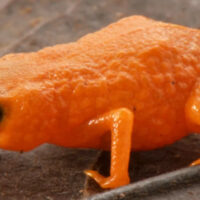
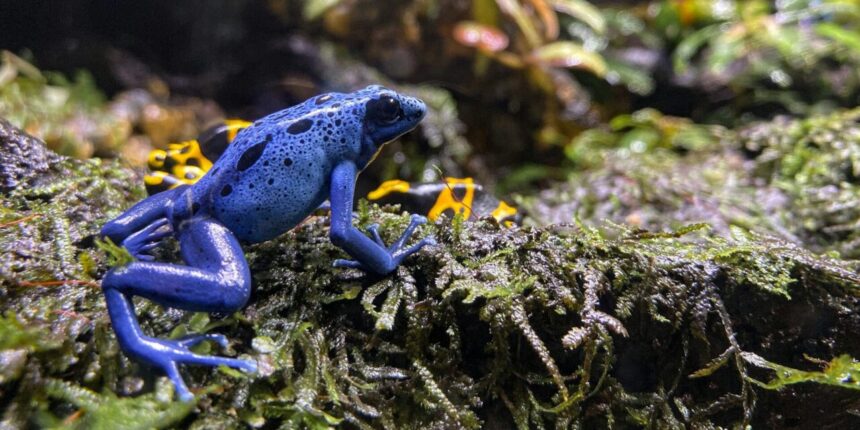
Similarly, the brightly colored poison dart frogs of South America aren’t inherently poisonous. Their toxicity comes from eating certain toxic insects and mites (like armored mites). Captive-bred dart frogs, fed non-toxic diets, are safe to handle—unlike their wild counterparts, whose skin can deliver a lethal dose through mere contact.
Even more astonishing: poisonous birds exist. The hooded pitohui, a songbird native to New Guinea and Indonesia, consumes beetles of the species Choresine pulchra, which contain batrachotoxin—the same toxin found in dart frogs. This makes the pitohui’s skin and feathers toxic enough to cause heart failure upon contact.
4. Many Poisons Have Medical Uses
Poisons aren’t always villains—they can be lifesavers when used correctly.
- Tetrodotoxin from pufferfish is being studied for powerful local anesthetics.
- Melittin, a toxin in honeybee venom, has shown promise in inhibiting HIV replication.
- Henbane, a plant containing 34 alkaloids (including scopolamine, hyoscyamine, and atropine), causes hallucinations and paralysis in high doses—but in controlled amounts, it’s used to relieve spasms in the intestines, bladder, and stomach, reduce saliva during surgery, and treat certain types of poisoning.
Even rat poison has healing properties. Warfarin, now widely used as a blood thinner for stroke and clot prevention, was originally developed from spoiled sweet clover hay that killed cattle in the 1920s due to internal bleeding. Chemist Karl Paul Link later refined it into both a rodenticide and a life-saving anticoagulant.
5. The World’s Most Potent Toxin Is Used in Beauty Treatments
Where would you expect to find the most powerful organic poison known to science? In scorpion stings? Jellyfish tentacles? Snake fangs?
Actually, it’s most commonly found in improperly canned home goods—like pickles, sausages, or fermented meats.
That poison is botulinum toxin, produced by the bacterium Clostridium botulinum, which lives in soil worldwide. It only becomes deadly in anaerobic (oxygen-free), low-acid environments—exactly the conditions found in poorly sterilized jarred foods.
The word “botulinum” comes from the Latin botulus, meaning “sausage.” The first documented outbreak occurred in 1793 in Wildbad, Germany, when six people died after eating tainted sausage—prompting a temporary ban on the food in 1802.
Botulinum toxin attacks nerves, leading to paralysis of respiratory and cardiac muscles—and death by asphyxiation. During the 20th century, militaries weaponized it into aerosols like Agent XR, lethal within days.
Yet this same toxin—marketed as Botox—is now a cornerstone of cosmetic medicine. Injected in microscopic doses, it temporarily paralyzes facial muscles to smooth wrinkles. The risk? If misplaced, it can cause facial nerve paralysis. But as they say: beauty has its dangers.
Interestingly, a close relative of C. botulinum, called Clostridium tetani, produces tetanus toxin—the second most potent organic poison after botulinum.
Poisons remind us that context is everything. In the wrong hands—or stomachs—they kill. In the right ones, they heal, protect, and even beautify.