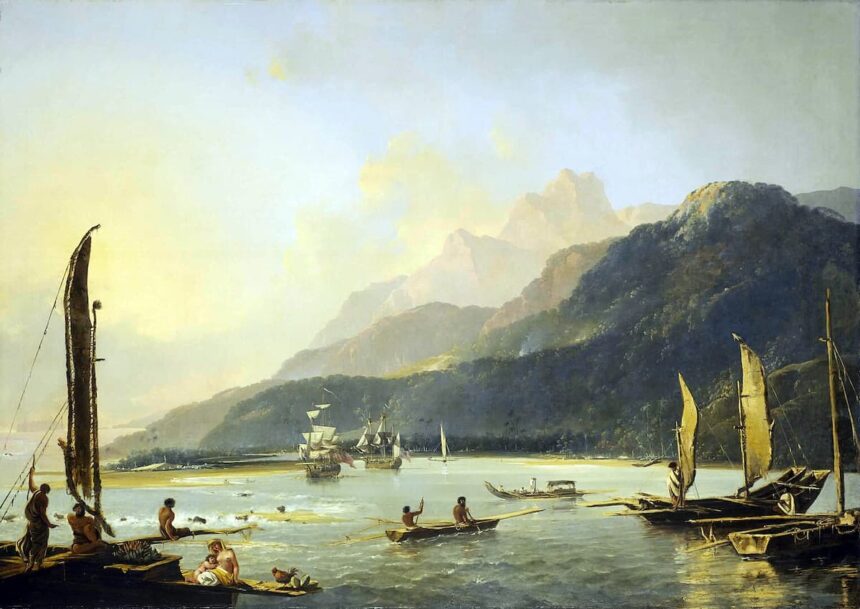
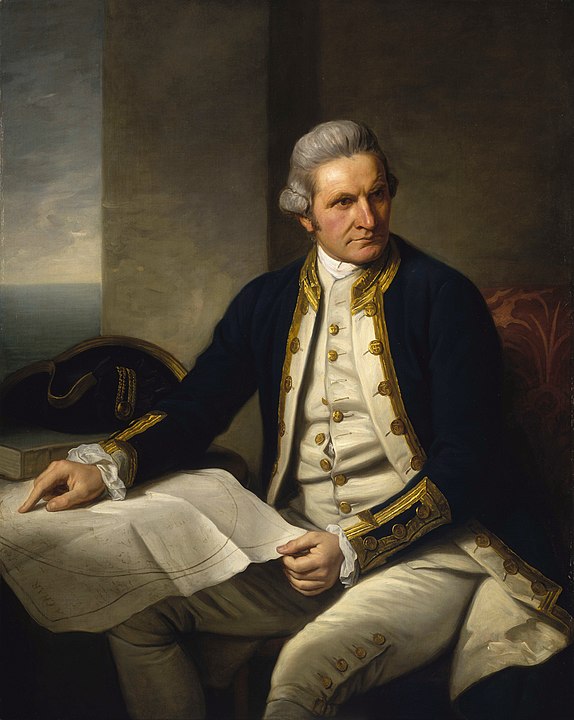
The process by which the famous explorer James Cook (1728–1779)—who, by exploring the Pacific Ocean step by step, led to the discovery of new lands—discovered and named these new territories is quite fascinating. One of the youngest captains in the British Royal Navy, James Cook quickly proved himself to be a skilled sailor. More than a month after leaving Tahiti behind, the Endeavour was plowing its bow through the waves of the Pacific. The world’s greatest wilderness stretched out in every direction.
What the ship was actually searching for was nothing more than a single line drawn on a map over 100 years earlier by a Dutchman named Abel Tasman. By late September 1769, Cook’s crew began to spot encouraging signs. The waters were lighter in color and appeared shallower; seaweed floated on the surface, and there were pieces of driftwood covered in mussels.
James Cook’s Rum Incentive
James Cook promised one gallon of rum to the first man to spot land during the day and two gallons to the one who spotted it at night. On October 6, a faint voice from the top of the mast announced that 12-year-old Nicholas Young had won the prize. He had spotted the southwestern entrance to Poverty Bay in New Zealand, and James Cook named the spot “Young Nick’s Head” in his honor. The 370-ton Endeavour was a coal ship built in Whitby for the east coast of England. Its captain was also born in Yorkshire; he had entered the coal trade on the east coast as an apprentice at a young age.
A natural sailor, James Cook joined the Royal Navy in 1755 at the age of 26. By the time he was 29, he had become captain of the 64-gun HMS Pembroke. Cook distinguished himself during the Seven Years’ War (1756–1763) between England and France, particularly through the maps he prepared and the surveys he conducted on the Saint Lawrence River during General James Wolfe’s Quebec campaign. When his explorations around Newfoundland demonstrated that James Cook was as successful as a researcher as he was a sailor, the Royal Navy began considering him for larger missions.
The mission they had in mind for James Cook was to observe the transit of Venus across the sun in order to determine the distance between Earth and the sun, with the goal of traveling to Tahiti. In addition to an astronomer, Cook’s crew included naturalist Joseph Banks, whose task was to document the plants and animals discovered during the voyage. He was also given a sealed package containing secret orders, which he was told not to open until the first part of his mission was completed.
Terra Australis Incognita
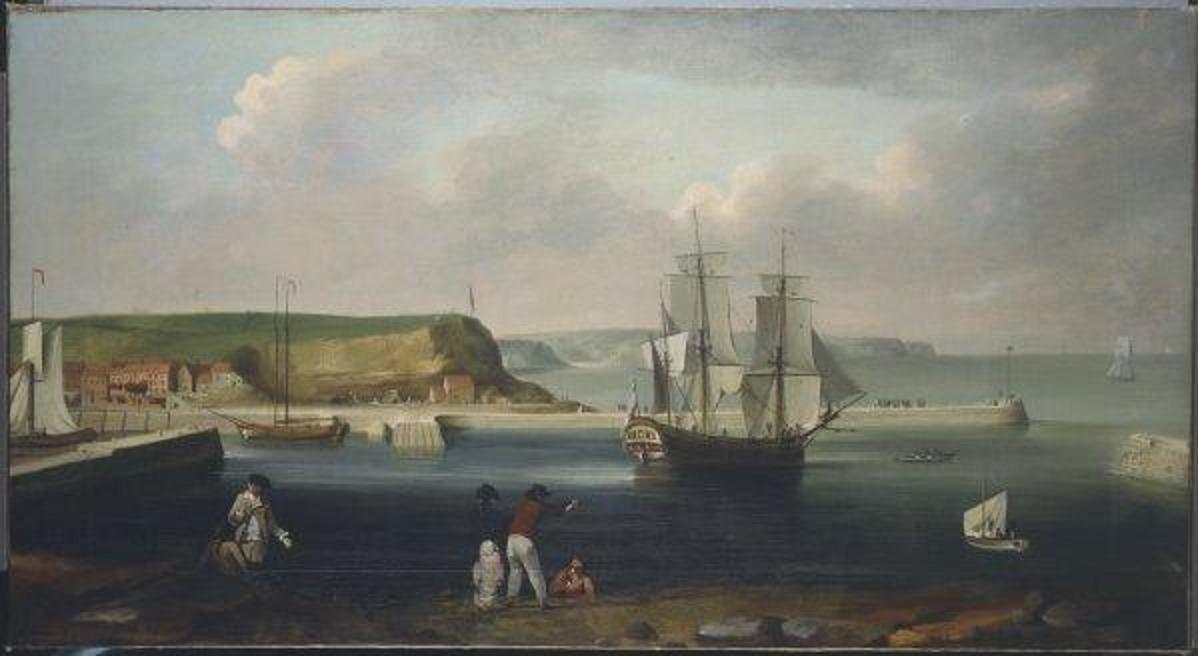
The Endeavour set sail from Plymouth in 1768 with a crew of 94 men. Aware of the illness and death that scurvy could cause on a long voyage, Cook insisted on stocking up on fresh vegetables and meat at every opportunity. No one fell ill during the eight-month journey to Tahiti.
The sailors were weary of the sea, but Tahiti was a paradise. The people were carefree, and most of the women were attractive and eager. However, when gonorrhea began to spread among the crew shortly thereafter, Cook suspected it had been brought to the island by white people who had arrived there earlier. After observing the transit of Venus, James Cook revealed his secret orders. He was instructed to sail south to the 40th parallel, where there were grounds to believe a large landmass or a continent might exist.
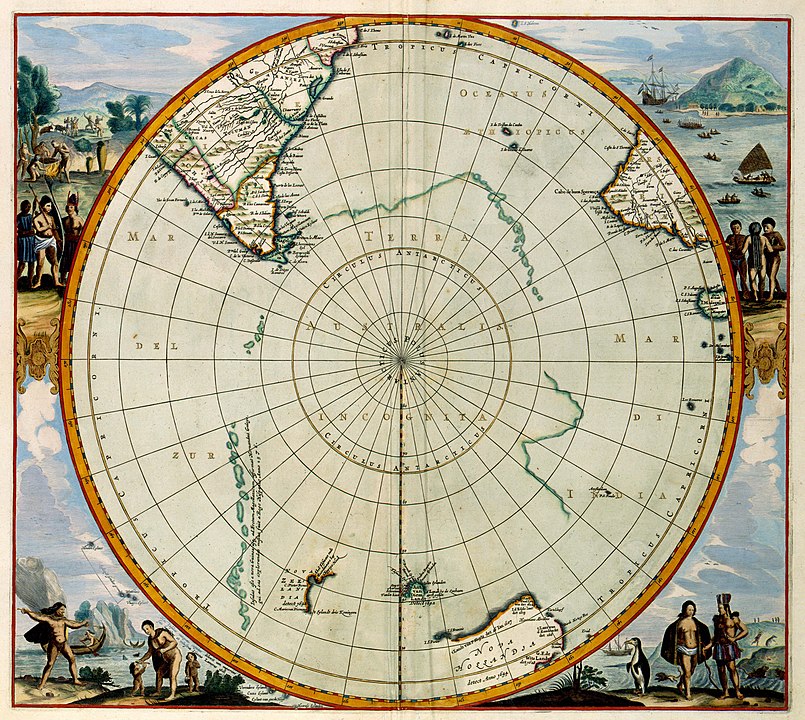
The information obtained by the Royal Navy was partly based on theories regarding Terra Australis Incognita, or the “unknown southern lands.” Geographers believed that such a landmass must exist in the south to balance the landmasses of the northern hemisphere. If Cook found the continent, he would examine its land, animals, plants, and minerals, as well as the potential for trade. If not, he would turn west and chart other regions.
New Holland and New Guinea
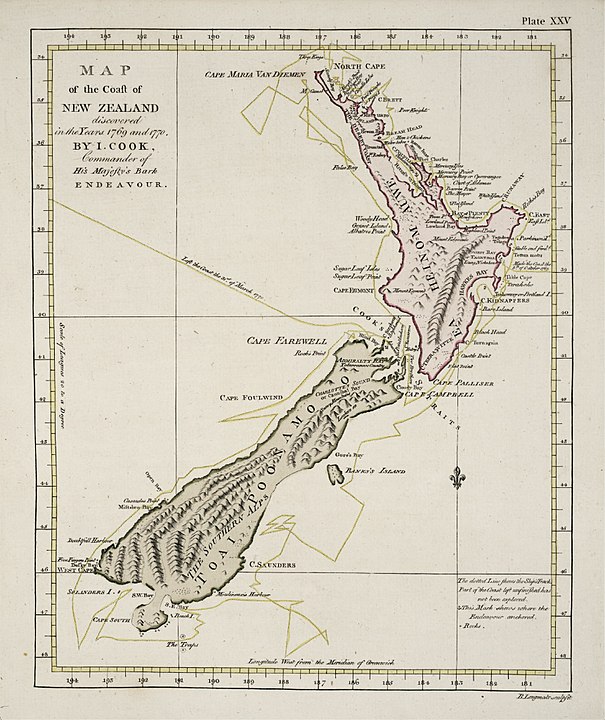
James Cook set sail southward with a Tahitian native serving as his interpreter. However, after weeks of sailing without encountering any land, he turned toward New Zealand. Upon circumnavigating the island, it became clear that there were actually two islands, and the region was mapped over the course of six months. Cook was captivated by New Zealand’s snow-capped mountains and the glaciers flowing down into the forests below. Banks discovered some well-preserved human bones. This was definitive proof of the Maori’s cannibalism.
The surveys were completed. James Cook, following his orders, continued westward to find the Great Southern Continent and then return home via the Cape of Good Hope. Three weeks later, he sighted land. This could be no other place than the eastern coast of New Holland. The region would later be called Australia, but at that time—following Captain Jansz’s first sighting in 1606—it was known by this name because the Dutch had made numerous voyages to its western shores.
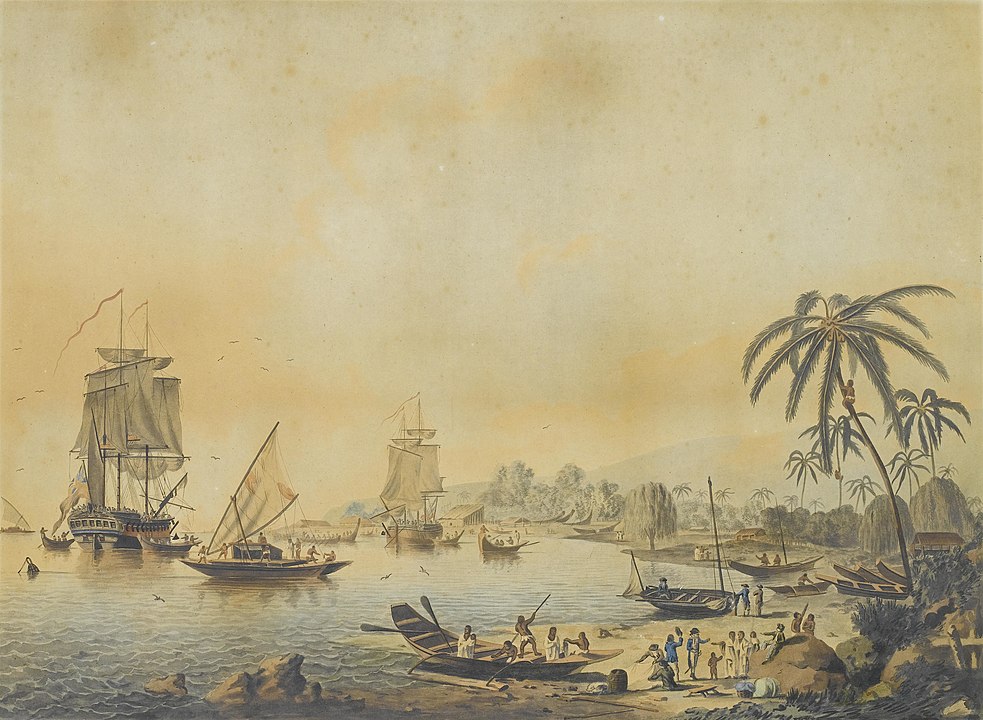
On April 28, 1770, after sailing north along the coast for a week, they came upon a cove and a plain behind it dotted with eucalyptus trees. Banks found so many plants that Cook named the place Botany Bay. Meticulous measurements were then taken over a distance of nearly 3,200 km. A near-disaster occurred when the Endeavour became stuck and was punctured on the Great Barrier Reef. Thanks to exceptional seamanship, the ship was saved. During the six weeks required for repairs, Banks saw for the first time the animals resembling giant rabbits that the locals called “kangaroos.”
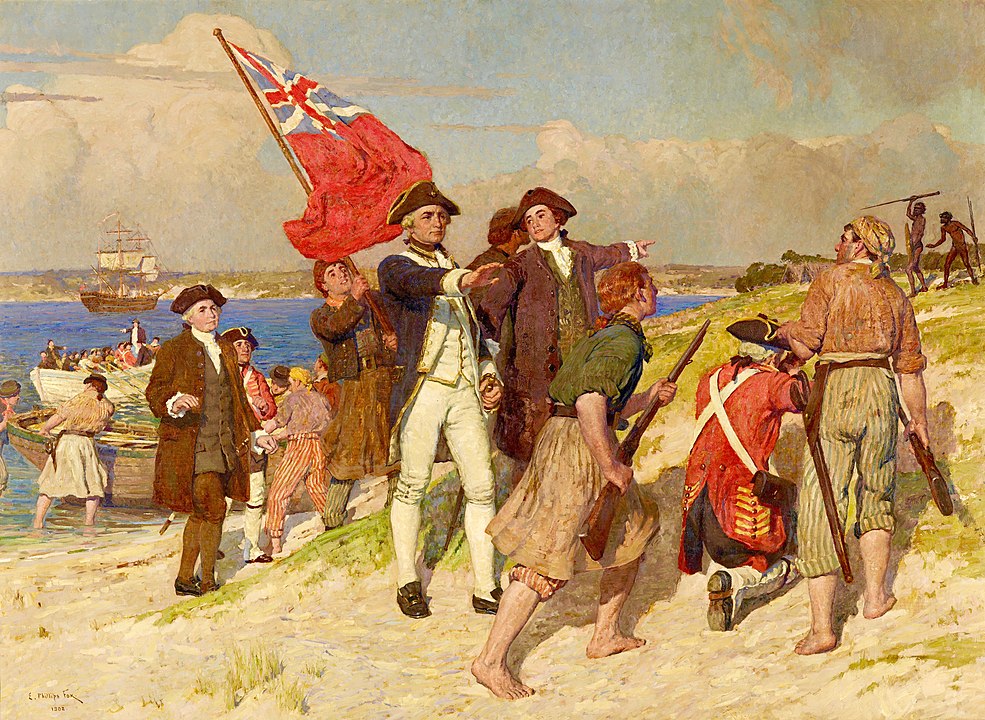
James Cook followed the coastline, rounded the northernmost tip of the island, and named it Cape York. He had proven that New Holland and New Guinea were separate landmasses, and in recognition of this, he claimed the eastern coast of New Holland on behalf of England. The ship returned home in July 1771, after three years at sea. Although no new continent was discovered, surveys had been conducted, and new plants and animals had been discovered. Cook drew the Old World’s attention to the Pacific. How this vast source of abundance was utilized, however, remains an unfinished story.
James Cook’s Other Discoveries
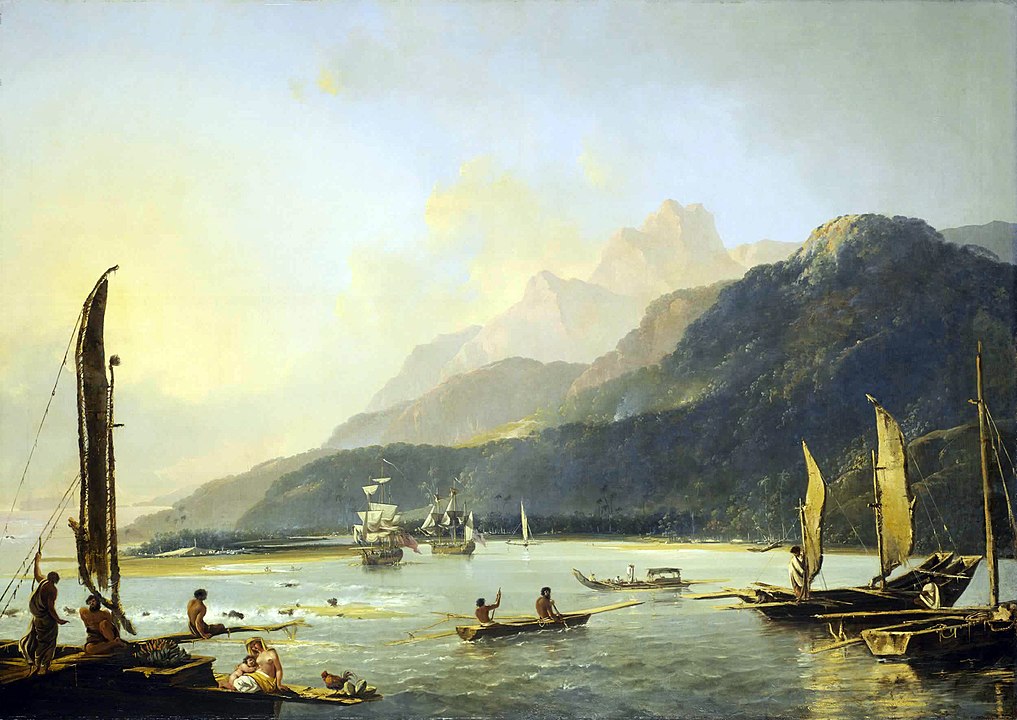
James Cook, immediately upon returning from his first voyage in July 1771, expressed his desire to set out again. The idea that there might be a continent south of “New Holland” greatly interested the Royal Navy. Two ships, Resolution and Adventure, were prepared for a new expedition. On January 17, 1773, Cook crossed the Antarctic Circle and reached latitude 67°16′ south. This was farther south than anyone had ever gone before, yet no land was found. In October 1773, he sailed south again and crossed the Antarctic Circle twice more. Still, there was no land. Beyond the southern horizon lay only Antarctica, but Cook understood that even if a continent existed in those icy latitudes, it would hold little economic value.
Another question concerned whether there was a sea route to China via a Northwest Passage over Canada. Since the 16th century, many explorers had searched for such a route. With this objective, James Cook set out from the Pacific Ocean on July 14, 1776. He was once again aboard the Resolution, this time accompanied by the Discovery.
Cook first traveled to the islands of the South Seas, then headed toward Alaska. Along the way, he discovered the Hawaiian Islands and named them the Sandwich Islands. He then sailed as far as the Arctic ice, but failed to find the passage he sought. Turning south, he prepared to spend the winter in Hawaii, where he was highly respected. However, a dispute arose after a boat was stolen from the Discovery. During the ensuing conflict, Cook was killed. His crew, with great difficulty, recovered what remained of their captain’s body and buried it at sea.
Why Were Convicts Sent to Australia?
The idea of transporting criminals and politically undesirable individuals overseas emerged at the same time Britain acquired territories to which they could be sent. For 200 years, tens of thousands of convicts were effectively sent as forced labor to the American colonies and the West Indies. Prisons were severely overcrowded. Transportation helped alleviate this problem while also supplying cheap labor that contributed to colonial development. As a result, pickpockets, robbers, Jacobite rebels, Irish insurgents, and sheep thieves became some of the first English settlers overseas.
American independence created a crisis. Since the new republic no longer accepted convicts, Cook’s discoveries were seen as a providential solution. Joseph Banks recommended to Parliament that a settlement be established at Botany Bay, pointing out that sending convicts there would also resolve the issue of overcrowded prisons. An additional advantage was that the region’s pine trees and flax could supply masts and sails for ships trading in the Pacific. Thus, in 1786, it was decided that Botany Bay would become the site of Australia’s first penal colony.
How Did Australia Develop?
The First Fleet, consisting of eleven convict ships, arrived at Botany Bay on January 18, 1788. Everyone, including Governor Arthur Phillip, expected—based on Captain Cook’s descriptions—to find a beautiful harbor surrounded by fertile meadows. Instead, they encountered a scrubland stretching to the horizon, covered with eucalyptus trees.
Phillip immediately set out to find a better settlement site. A nearby headland concealed a harbor that Cook had only speculated about: “one of the finest harbors in the world, where a thousand ships could ride in perfect safety.” On January 25, he sailed into Port Jackson, and the following day established the convict colony at Sydney Cove, named after the Secretary of State for the Colonies who had authorized the expedition.
In the early years, crops failed and food shortages were severe. In 1790, new convicts arrived, half of whom were too ill to work. To combat growing disorder, Phillip began rewarding good behavior with land grants. In 1791, one farmer declared himself self-sufficient, and Phillip granted him additional land. By the end of 1792, the population had reached 3,500. That same year, Phillip distributed land to 62 individuals, and 700 hectares were cultivated. The young colony appeared to be taking hold.
When Did People Settle in New Zealand?
As soon as the convict settlers began establishing themselves in Sydney, sealers, whalers, and trading ships started anchoring off the coast of New Zealand. Māori were frequently employed on these vessels, and before long they became familiar figures in Sydney. A chief named Hongi Hika traveled to England, where he was showered with gifts. On his return via Sydney, he exchanged these gifts for muskets. Upon returning home, he used these new weapons to initiate intertribal wars on the North Island.
One of the first Europeans to visit New Zealand was the missionary Samuel Marsden, who arrived in 1814. In the late 1830s, new settlements developed according to the plans of Edward Gibbon Wakefield, who sought to establish self-governing societies that reflected the English class system. To promote his ideas, he founded the New Zealand Company.
In 1839, Wakefield sent his brother William to the Cook Strait region, where he purchased millions of hectares of land from local tribes. In 1840, British Governor William Hobson and 512 northern chiefs signed the Treaty of Waitangi. This agreement granted sovereignty to Britain while recognizing the Māori as British subjects with full rights.
That same year, the first 1,000 settlers who had purchased land from Wakefield arrived in the Wellington region. In a short time, they disrupted Māori life and caused considerable suffering. As these conflicts were gradually resolved over time, a new nation would emerge.
Frequently Asked Questions about James Cook
Who was James Cook?
James Cook was an English explorer and navigator known for his voyages of discovery in the 18th century. He made significant contributions to the exploration and mapping of the Pacific Ocean, discovering many islands and regions, including parts of Australia and New Zealand.
What was the significance of James Cook’s voyages?
James Cook’s voyages were of great importance because they expanded European understanding of the Pacific region. His expeditions helped map previously unexplored areas, discover new lands, and establish a British presence in the Pacific. Cook’s discoveries had a profound impact on scientific knowledge, cartography, and the understanding of different cultures.
What was the Endeavour voyage?
The Endeavour voyage was James Cook’s first major expedition, lasting from 1768 to 1771. Cook commanded HMS Endeavour and sailed into the Pacific primarily to observe the transit of Venus and search for a hypothetical southern continent. This voyage also marked Europe’s first contact with the eastern coastline of Australia.
How did James Cook contribute to the discovery of Australia?
James Cook played a significant role in the discovery of Australia. During his first voyage aboard the Endeavour, he mapped the eastern coastline of Australia and claimed it on behalf of Great Britain. His explorations and scientific observations laid the groundwork for later European settlement in Australia.
What other places did James Cook explore?
In addition to exploring Australia, James Cook explored and mapped other areas in the Pacific. He made numerous voyages to New Zealand, becoming the first European to map the entire coastline of both the North and South Isles. Cook also visited Tahiti, the Hawaiian Islands, the Cook Islands, and other Pacific islands.
Why is James Cook often referred to as Captain Cook?
James Cook is often referred to as Captain Cook because he held the rank of captain in the Royal Navy. His maritime background and expertise in navigation and cartography played a crucial role in his successful voyages of discovery.
What were the main goals of James Cook’s voyages of discovery?
The primary aims of James Cook’s voyages were to explore and map new regions, search for the southern continent (Terra Australis), observe astronomical events, study the flora and fauna of the regions visited, and establish friendly relations with indigenous peoples. These goals aimed to expand knowledge, facilitate trade and scientific research, and advance British exploration and colonization.
What impact did James Cook have on the scientific community?
James Cook’s voyages had a profound impact on the scientific community. His meticulous observations and records of natural phenomena, geography, and indigenous cultures have made significant contributions to various scientific disciplines, including botany, ethnography, geology, and astronomy. Cook’s scientific legacy continues to be recognized and studied today.
Did James Cook circumnavigate the globe?
Yes, James Cook completed a circumnavigation of the globe. During his second voyage, which lasted from 1772 to 1775, Cook circumnavigated the globe, crossing the Antarctic Circle and becoming one of the few explorers to achieve such a feat.
How did James Cook prevent scurvy on his ships?
As a captain, James Cook prevented scurvy on his ships by ensuring cleanliness and ventilation in the crew’s cabins. Cook insisted on a proper diet that included watercress, sauerkraut, and a type of orange extract. His success in keeping his sailors healthy resulted in his name becoming a maritime legend.