On June 19, 1867, Maximilian I of Mexico was executed by a firing squad loyal to the Mexican Republic. With his death, the Second Mexican Empire came to an abrupt end after little more than three years.
Its collapse was not the result of a single defeat. It stemmed from a deeper problem: the empire never secured internal legitimacy, depended heavily on foreign military power, and lost that support at a decisive geopolitical moment.
Mexico Before the Empire: Crisis and Instability
Following independence from Spain, Mexico struggled to establish a stable political system. An earlier attempt at monarchy under Agustín de Iturbide had already failed in the 1820s. In the decades that followed, the country experienced repeated coups, civil conflicts, and economic stagnation.
Military defeats, including the Texas Revolution and the Mexican–American War, resulted in significant territorial losses. By the mid-19th century, Mexico was politically divided and financially strained.
In this context, some conservative factions began to view monarchy not as a return to tradition, but as a possible solution to instability. They believed that a European-backed monarch could restore order and strengthen Mexico against external threats, particularly the growing influence of the United States.
The Creation of the Empire
The opportunity to establish such a monarchy emerged in 1861, when Mexico’s liberal president, Benito Juárez, suspended debt payments to European creditors.
This triggered intervention by European powers. While Britain and Spain negotiated settlements and withdrew, France—under Napoleon III—pursued a different path.
Napoleon III envisioned a French-aligned monarchy in Mexico that could serve as both a geopolitical counterweight to the United States and a sphere of influence for France. With the United States distracted by its Civil War, France escalated its military intervention, eventually capturing Mexico City.
Juárez and his government retreated but continued resistance in other parts of the country.
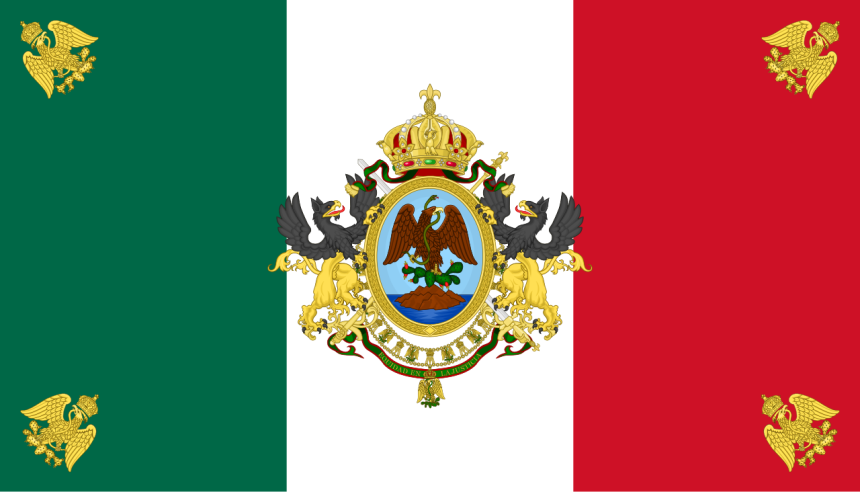
Seeking a suitable monarch, Napoleon III turned to Maximilian, a member of the Habsburg dynasty. Idealistic and eager to rule, Maximilian accepted the throne in 1864. The Second Mexican Empire was established.
The Problem of Legitimacy
From the beginning, Maximilian faced a fundamental problem: he was widely seen as illegitimate.
He was a European prince imposed by foreign troops. No matter how sincere his intentions, this fact undermined his authority. Many Mexicans, including those who had not strongly supported Juárez before, now rallied behind the republican cause as a defense against foreign intervention.
Juárez remained the symbol of legal continuity and national sovereignty. Maximilian, by contrast, was associated with occupation.
This legitimacy gap would prove impossible to close.
Political Miscalculations
Maximilian’s political decisions further weakened his position.
Although supported initially by conservative elites and the Catholic Church, he soon alienated them. Influenced by liberal European ideas, Maximilian enacted reforms that contradicted the expectations of his conservative base. He upheld religious tolerance, refused to fully restore Church privileges, and supported protections for workers and Indigenous communities.
These policies distanced him from his core supporters without winning over his opponents.
Liberals continued to view him as a foreign ruler, while conservatives began to question their commitment to his regime. The empire found itself politically isolated, lacking a stable base of support.
An Empire Dependent on Foreign Arms
The military strength of the empire was equally fragile.
While Maximilian attempted to build a national army, his efforts were undermined by financial shortages and limited recruitment. The most significant victories of the imperial regime were achieved by French troops, not Mexican forces.
This dependence created a structural weakness. The empire was sustained not by domestic power, but by external intervention.
Without French military support, its survival was uncertain.
The United States Returns
The end of the American Civil War in 1865 transformed the situation.
Until then, the United States had been unable to respond effectively to the French intervention. Once the war ended, however, the U.S. government reaffirmed its opposition to European involvement in the Americas, consistent with the Monroe Doctrine.
Support for Juárez increased. The United States provided weapons, funding, and political backing to the republican forces. This external support strengthened the republican position both materially and psychologically.
At the same time, it placed increasing pressure on France.
The Black Decree and Escalation
In October 1865, Maximilian issued what became known as the Black Decree. It authorized the execution of captured republican fighters rather than treating them as prisoners of war.
The intention was to suppress resistance through fear.
The effect was the opposite.
The decree intensified hostility toward the empire and strengthened support for the republican cause. It reinforced the perception of the regime as both illegitimate and repressive, further eroding any remaining sympathy.
The Withdrawal of French Support
By 1866, Napoleon III faced mounting challenges.
The risk of conflict with the United States, rising tensions in Europe—particularly with Prussia—and the financial burden of the Mexican campaign made continued intervention increasingly untenable.
France decided to withdraw its troops.
This decision was decisive. The empire had relied on French military power from the beginning. Without it, the balance shifted rapidly in favor of the republicans.
Maximilian chose to remain, believing it was his duty to continue the struggle. In reality, his position had become untenable.
Collapse at Querétaro
As French forces withdrew, republican armies advanced.
Maximilian retreated to the city of Querétaro with the remaining imperial forces. There, he was surrounded by a much larger republican army. Despite initial resistance, the situation was hopeless.
In May 1867, betrayal from within opened the city to republican forces. Maximilian was captured along with his senior commanders.
He was tried by the republican government. The Black Decree was used as one of the key charges against him.
Despite international appeals for clemency, Juárez refused to pardon him. The execution was intended as a clear message: foreign-imposed rule would not be tolerated.
The Second Mexican Empire did not collapse because of a single mistake. It failed because it lacked the foundations necessary for survival.
Politically, it never achieved legitimacy. Socially, it alienated both conservatives and liberals. Militarily, it depended on foreign troops. Geopolitically, it collapsed when that support was withdrawn.
In this sense, the empire was not simply defeated. It was structurally unsustainable from the beginning.
Its rise and fall illustrate a broader pattern in history: regimes imposed from outside, without deep internal support, rarely endure once the conditions that sustain them disappear.