The Declaration of the Rights of Man and of the Citizen: An English Localization
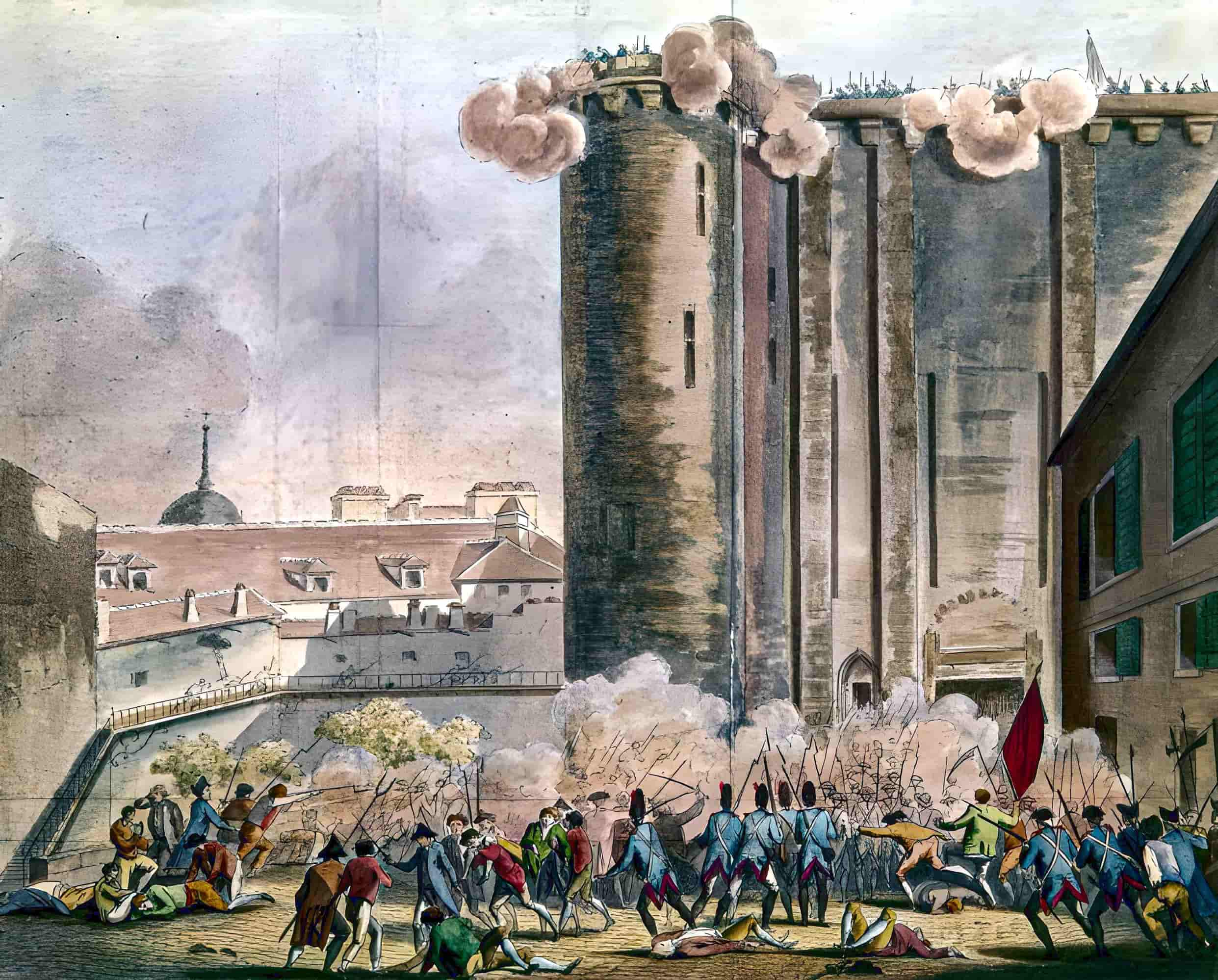
The Declaration of the Rights of Man and of the Citizen is a foundational document drafted by the National Constituent Assembly and adopted on August 26, 1789. The storming of the Bastille on July 14 sent shockwaves through every royal court in Europe and marked the beginning of the end for the French monarchy. That same summer, representatives of the people convened to establish a new constitution. Under the leadership of the Marquis de Lafayette, the National Constituent Assembly drafted a text granting all human beings natural, inalienable, and sacred rights. This document, which brought the philosophical ideals of the “Age of Enlightenment” into concrete form, formally abolished the Ancien Régime and left an immense legacy.
What is the Declaration of the Rights of Man and of the Citizen?
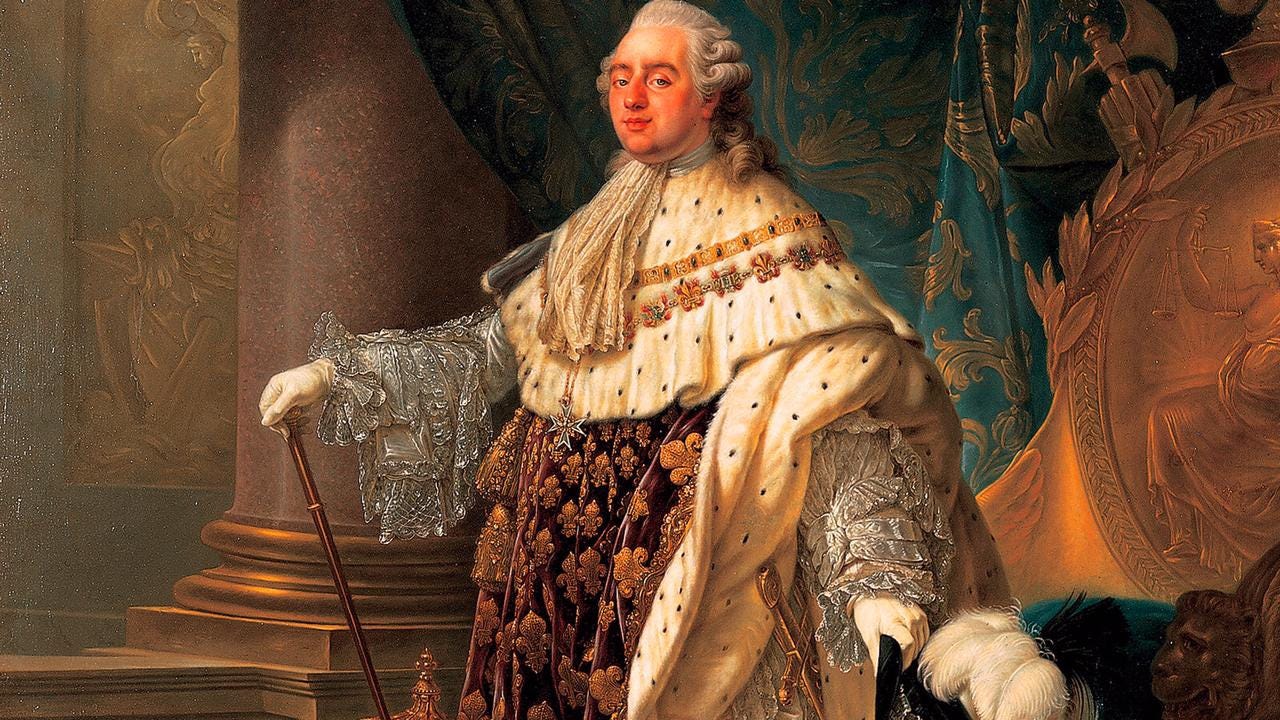
Following the storming of the Bastille, the National Assembly gathered in Versailles to draft a new constitution for France. Drawing inspiration from the American Declaration of Independence of 1776, they decided to include a text enumerating fundamental human liberties. The Declaration of the Rights of Man and of the Citizen solemnly defines the natural and sacred rights applicable to all people. It was adopted on August 26, 1789, by the deputies and signed by King Louis XVI on October 5, 1789.
Who drafted the Declaration of the Rights of Man and of the Citizen?
By the end of 1788, France was burdened with crippling debt. Seeking a solution, Louis XVI convened the Estates-General: an assembly bringing together the nobility, the clergy, and the Third Estate. In June 1789, this body transformed itself into the National Constituent Assembly. In August, its 1,154 deputies—including prominent figures such as Mirabeau and Lafayette—drafted the Declaration of the Rights of Man and of the Citizen. Once adopted, the Declaration was incorporated into the text establishing a constitutional monarchy in France.
What does the text of the Declaration say?
Composed of a preamble and seventeen articles, the document establishes the “natural, inalienable, and sacred rights of man.” It recognizes inherent and imprescriptible prerogatives belonging to every human being, stating that “men are born and remain free and equal in rights.” It establishes that sovereignty now resides in the Nation and reaffirms the necessity of the separation of powers. Finally, it introduces the right to property, freedom of opinion and religion, freedom of the press, and the presumption of innocence.
The representatives of the French people, organized as a National Assembly, believing that the ignorance, neglect, or contempt of the rights of man are the sole cause of public calamities and of the corruption of governments, have determined to set forth in a solemn declaration the natural, unalienable, and sacred rights of man, in order that this declaration, being constantly before all the members of the Social body, shall remind them continually of their rights and duties; in order that the acts of the legislative power, as well as those of the executive power, may be compared at any moment with the objects and purposes of all political institutions and may thus be more respected, and, lastly, in order that the grievances of the citizens, based hereafter upon simple and incontestable principles, shall tend to the maintenance of the constitution and redound to the happiness of all. Therefore the National Assembly recognizes and proclaims, in the presence and under the auspices of the Supreme Being, the following rights of man and of the citizen:
Consequently, the National Assembly recognizes and declares, in the presence and under the auspices of the Supreme Being, the following rights of man and of the citizen.
Article 1
Men are born and remain free and equal in rights. Social distinctions may be founded only upon the general good.
Article 2
The aim of all political association is the preservation of the natural and imprescriptible rights of man. These rights are liberty, property, security, and resistance to oppression.
Article 3
The principle of all sovereignty resides essentially in the nation. No body nor individual may exercise any authority which does not proceed directly from the nation.
(The Declaration contains 17 articles in total; the above are the first three as referenced in the source text.)
How can we analyze the Declaration of the Rights of Man and of the Citizen?
As a pivotal event of the French Revolution, the Declaration of the Rights of Man and of the Citizen gave concrete form to the ideals of the Enlightenment. It notably aimed to establish the rule of law, yet it remains imperfect by modern standards for omitting any mention of women or enslaved people in the colonies. Nevertheless, it has inspired numerous countries worldwide in their pursuit of liberty and equality. In 1948, it even served as a foundational reference for the Universal Declaration of Human Rights adopted by the United Nations General Assembly.
What about Article 35?
On June 24, 1793, the First Republic adopted a new Declaration of the Rights of Man and of the Citizen. This text codified certain revolutionary principles and introduced unprecedented rights, such as the right to resist oppression. Article 35 thus affirms that popular revolt against a totalitarian government is not only a right but a civic duty. It states: “When the government violates the rights of the people, insurrection is… the most sacred of rights and the most indispensable of duties.”
What legal value does the 1793 Declaration hold?
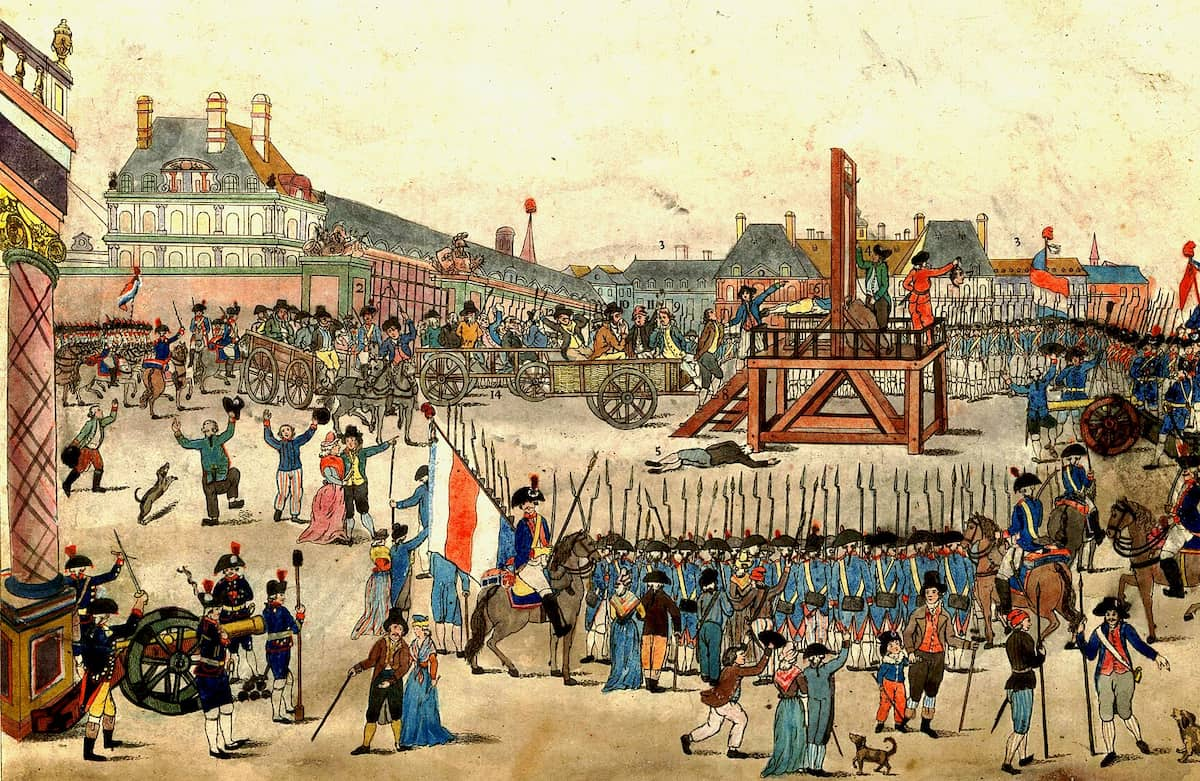
Adopted only weeks before the proclamation of the Reign of Terror, the 1793 Declaration proposed a more egalitarian approach than its 1789 predecessor. However, despite its powerful symbolic significance, it never acquired formal legal standing. Indeed, the text was suspended the same year by the revolutionary government and formally repealed in 1795, when a new declaration was drafted. Thereafter, the 1793 document was frequently cited but never officially recognized. To this day, it is the 1789 Declaration that serves as a constitutional foundation for France’s Fifth Republic. The 1795 Declaration, meanwhile, introduced concepts such as the separation of powers and the reserve army—principles that remain in effect today.
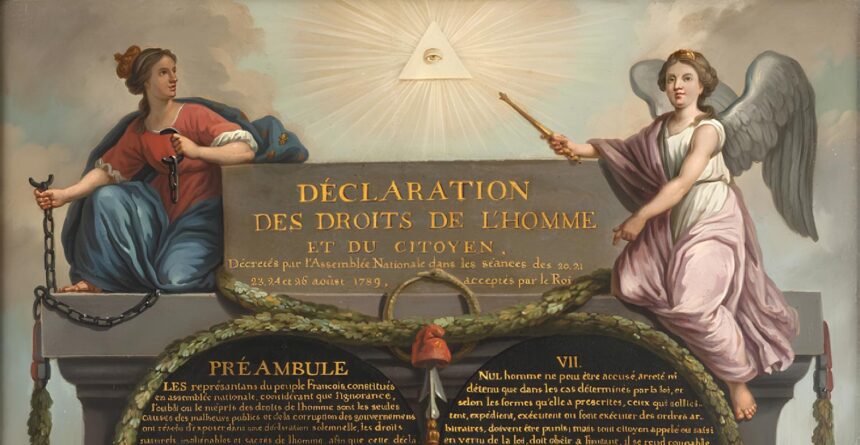
How should we interpret Le Barbier’s painting?
In 1789, the artist Jean-Jacques Le Barbier created a painting of the Declaration evoking the Tablets of the Law given to Moses, thereby lending his representation a sacred character. The work is rich in symbolism: it features two women personifying a monarchy freed from absolutism and the spirit of Liberty. Also depicted are the Eye of the Creator God and the pike of the sans-culottes—symbolizing national unity—topped with the Phrygian cap, emblem of freedom. Finally, a laurel wreath expressing glory and an ouroboros (a serpent biting its own tail), symbolizing eternity, complete the composition.