In the 21st century, China exports tea, silk, and porcelain to Europe. For its part, the United Kingdom begins cultivating and exporting opium to this empire in order to balance the trade deficit. However, this drug causes widespread devastation among the population. The Qing dynasty, which rules China, decides to ban the substance. The two countries attempt to negotiate, but without success. The First Opium War is triggered in 1839 by a blockade of foreign ships in China and the confiscation of their goods. The British, determined to continue trade, decide to deploy their troops. Following the United Kingdom’s victory, the Treaty of Nanking is signed, favoring the British. A Second Opium War begins in 1856 as a consequence of these “unequal treaties.” China is once again defeated. Economically and culturally weakened, the Chinese Empire loses all power. It is forced to open itself to the world and to enter the industrial era.
What was the context of the Opium Wars?
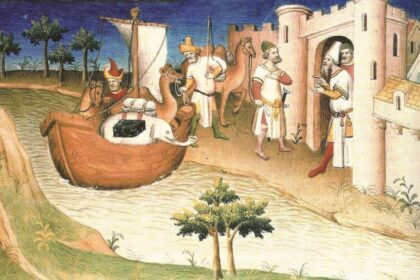
To understand why the British declared the First Opium War on the Qing dynasty’s empire in China, it is essential to examine the broader context. At that time, and since 1773, the United Kingdom held a monopoly on the sale of opium in China. Derived from the latex of the opium poppy, this substance is a drug that affects the central nervous system and induces a state of drowsiness. The British East India Company had begun cultivating this psychoactive substance in Bengal in order to restore a trade balance between China and the United Kingdom. Chinese goods such as tea, silk, and porcelain were in high demand in Europe. The result? A massive influx of narcotics into China, leading to a rise in addiction and a flow of money out of the country. This empire, which had long lived in relative isolation, gradually began to open up to foreign powers.
What were the causes of the Opium Wars?
It was at the end of the 1830s that the Qing dynasty began taking action to ban the opium trade in its ports, which was dominated by the United Kingdom. The Daoguang Emperor, who reigned from 1820 to 1850, refused to legalize the drug. On the contrary, he ordered Lin Zexu (a viceroy, military leader, and official) to go to Canton with a clear mission: to put a definitive end to the opium trade. This city was chosen because opium primarily passed through the port of Canton. A blockade of foreign ships and the confiscation of their goods were implemented along the Pearl River. At the same time, Lin Zexu ordered the destruction of a large quantity of opium. This action triggered the First Opium War. The Second War followed directly from the first. It was initiated after Chinese authorities arrested the crew of a British ship and imprisoned the sailors on board.
How did the First Opium War unfold?
Following the blockade and the destruction of confiscated opium in March 1839, Lin Zexu informed Queen Victoria that the consumption of this drug was now banned in China. Lord Melbourne, the Prime Minister, decided to send an expedition to Canton. He was supported by more than 300 British trading companies, which demanded compensation for the destroyed goods. In April 1840, 4,000 soldiers arrived off the coast of Canton. Unable to land due to stakes driven into the harbor, the British fleet nonetheless managed to seize Hong Kong. The fighting truly began in July 1840, and 29 Chinese ships were destroyed. During negotiations held in Canton, the United Kingdom demanded the resumption of trade, sovereignty over Hong Kong, and compensation for the lost opium. The Chinese Empire refused, but was eventually forced to capitulate after a series of defeats. The British army emerged victorious, and the Treaty of Nanking was signed on August 29, 1842. The opium trade was resumed, China was required to pay 21 million dollars, new ports were opened to trade, and Hong Kong became a possession of the United Kingdom.
How did the Second Opium War unfold?
The Second Opium War was triggered in October 1856. On October 8, the Arrow Incident took place. Chinese authorities arrested the ship’s crew and accused them of piracy. The United Kingdom learned of the incident, as the vessel was (allegedly) flying a British flag at the time. While the Chinese governor advocated for de-escalation, a British fleet was dispatched to invade and bombard Canton. At the same time, the British Parliament was determined to obtain compensation for the damages caused to the Arrow.
The British government sought alliances with three other countries: France, the United States, and Russia. A specific event pushed France to join the war, namely the execution of a French Catholic missionary priest, Auguste Chapdelaine. At the time, Christianity was only permitted in certain ports, and the priest had been denounced and then beaten to death. The war continued, and in May 1858, the forts of Peiho (which protected access to Beijing) were bombarded. The Treaty of Tientsin was signed that same year. It aimed once again to promote foreign trade and to open diplomatic missions, but its ratification was delayed.
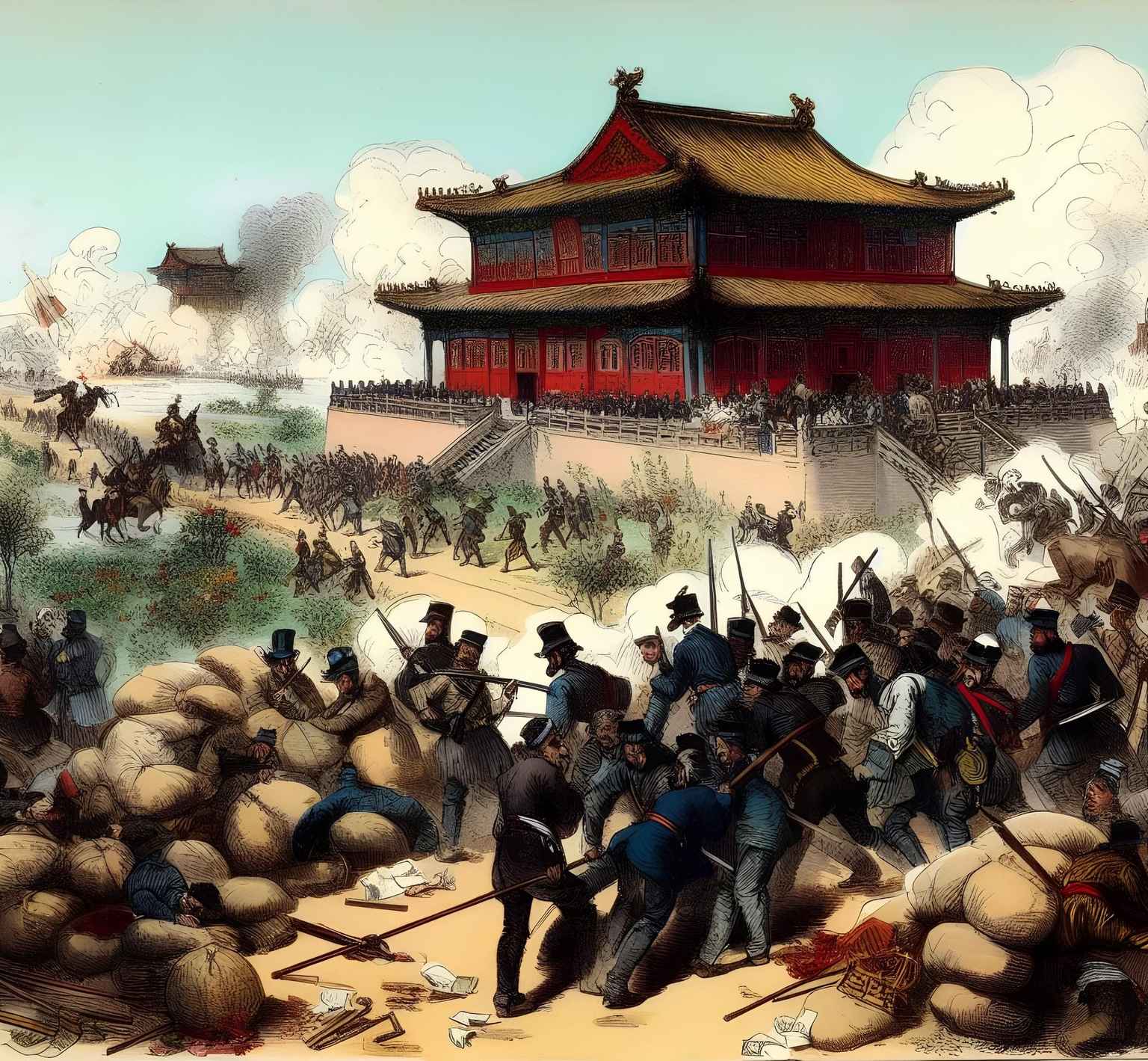
Meanwhile, Russia took advantage of the situation to expand its borders by negotiating a separate treaty with China. In 1859, hostilities resumed, as China refused to accept the foreign embassies stipulated in the treaty. Franco-British forces surrounded the forts along the Hai River and eventually advanced to Beijing. The Summer Palace was looted and burned on October 5, 1860, in retaliation for the execution of European prisoners. The Convention of Beijing was signed in October 1860. The war ended with territorial concessions, the opening of additional ports to foreign trade, and increased Western influence in China.
Which treaty ended the Opium Wars?
The Convention of Beijing, ratified on October 18, 1860, by Prince Gong (the emperor’s brother), brought the Second Opium War to an end. What measures were implemented? In addition to the legalization of opium and the opening of Tianjin to trade, civil rights for Christians were officially recognized, including the freedom to evangelize and to build churches. The Convention of Beijing also provided for the cession of the Kowloon district (a part of Hong Kong) to the United Kingdom, authorized British ships to transport Chinese laborers abroad (known as “coolies”), and required China to pay indemnities to both Britain and France. The provisions of the Treaty of Tientsin were also confirmed. This agreement was regarded as unequal by the Chinese Empire, as it had been imposed through military force by Western powers taking advantage of China’s weakened position.
What was the impact of the Opium Wars on China?
Following these treaties, China became burdened with heavy financial obligations, leading to what is often referred to as the “Century of Humiliation.” The trade balance, which had been favorable to China before the Opium Wars due to exports such as tea and silk, became negative. Chinese exports were no longer sufficient to cover the cost of opium imports. Overwhelmed, China was also forced to compensate Russia in order to recover territories occupied by the Tsar during the Second Opium War.
On a cultural level, major landmarks such as the Summer Palace were destroyed by British forces. In 1861, a very young emperor, only five years old, ascended the throne. His mother, Empress Dowager Cixi, believed that the empire needed to begin modernizing and industrializing. Steamships and railways were introduced, and the country gradually opened itself to the outside world.
The Taiping Rebellion also contributed to weakening China. This was a civil war that lasted from 1851 to 1864, opposing the Taiping Heavenly Kingdom, a revolutionary and religious movement seeking to establish a more egalitarian and socially just Chinese state, against the Qing Empire. The Qing took around fifteen years to suppress the rebellion and nearly lost their power in the process. The Taiping ideals included opposing the old social order and promoting equality across classes, ethnic groups, and genders.
This was followed by the Boxer Rebellion, between 1899 and 1901, a nationalist uprising led by a secret society symbolized by a clenched fist. This movement was a direct consequence of China’s fragmentation under Western influence. The Boxers organized themselves into militias and carried out numerous acts of violence and killings against foreigners.
Key dates of the Opium Wars
August 1839 — The First Opium War breaks out
In August 1839, the First Opium War broke out, opposing the United Kingdom and the Chinese Empire. At that time, the trade balance favored the British, who were exporting large quantities of opium to China. The widespread consumption of opium among the Chinese population caused serious social disruptions, prompting the authorities to ban the practice and to seize opium stockpiles and cargo. Pressured by trading companies involved in the opium trade, the British sent an expeditionary force to China in 1840.
August 29, 1842 — End of the First Opium War
China ratified the Treaty of Nanking, which required the cession of Hong Kong to Britain and the opening of five ports to foreign trade. This treaty ended the war that had begun two years earlier when Chinese authorities had seized and destroyed a stock of British opium. A similar conflict would resume in 1856, further strengthening European influence in China.
August 29, 1842 — Hong Kong becomes British
At the conclusion of the First Opium War, launched to defend British interests in China, China and Britain signed the Treaty of Nanking, which forced the Chinese government to cede the island of Hong Kong to Great Britain. Hong Kong, meaning “fragrant harbor” in Cantonese, became a British colony for more than 150 years. It was returned to China on July 1, 1997.
October 24, 1844 — Signing of the Treaty of Whampoa
The French ambassador in China signed the Treaty of Whampoa, allowing France to trade with China in five different ports. It also promoted Christian missions, and Catholicism was henceforth tolerated in China. These advantages were granted within the broader context of the First Opium War between Britain and China. The country was forced to open its trade to foreign powers. Major nations, including France, the United States, and Britain, all benefited from the conflict.
October 24, 1844 — Treaty of Huangpu between France and China
The Treaty of Huangpu was signed between France and China in 1844. Through this agreement, China granted France the same rights it had previously extended to the United Kingdom. Five Chinese ports were opened to French goods, and fixed customs duties were established. France was also allowed to station consuls, and French citizens in China were granted extraterritorial privileges.
March 9, 1850 — Beginning of the reign of Emperor Xianfeng
Xianfeng ascended to the Chinese throne upon the death of his father, Emperor Daoguang. During his reign, China engaged in the Opium Wars against Britain and was ultimately defeated. The country also faced floods and numerous famines. The Qing dynasty experienced multiple uprisings during this period, including the significant Taiping Rebellion.
December 1850 — Beginning of the Taiping Rebellion
The Taiping were rebels who established a kingdom in southern China and sought to overthrow the Qing dynasty. In 1850, their army prepared for an offensive against the imperial government, launching their rebellion by massacring Qing troops at the end of the year. The uprising would last nearly fifteen years and significantly weaken the ruling power.
1853 — Nian Rebellion in China
The Nian, opposed to the Qing dynasty, revolted against the government following devastating floods that caused widespread destruction and loss of life. Government inefficiency pushed them to rebel. Nian forces attacked the imperial army and initially gained the upper hand. The revolt ended in 1868 with the defeat of the insurgents.
March 19, 1853 — The Taiping capture Nanking
The city of Nanking fell to the Taiping rebels, who made it their capital. The movement was both religious and revolutionary, advocating equality and collectivism. They sought to establish a more just society and to replace the ruling Manchu dynasty with a Chinese one. Influenced by Protestant missionary ideas, their leader Hong Xiuquan claimed to be the “younger brother of Jesus Christ.” The Taiping would control much of southern China before imperial forces, with Western assistance, recaptured Nanking on July 19, 1864, and crushed the rebellion.
1854 — Miao tribal uprising
The Qing dynasty faced numerous popular uprisings across China. In 1854, during Emperor Xianfeng’s reign, the Miao tribes revolted in the Guizhou region. The rebellion lasted until 1873 and resulted in massive population losses, dropping from sixteen million to six million people in about fifteen years. These uprisings left the Qing government severely weakened.
1856 — Beginning of the Second Opium War
Following the First Opium War and the Treaty of Nanking, Britain, France, and the United States requested a revision of the treaty in 1854. The Qing dynasty refused. Western powers then waited for an opportunity to enforce their demands by force. When Chinese authorities arrested the ship Arrow and imprisoned its crew on suspicion of piracy, Britain seized the opportunity to invade Canton.
June 27, 1858 — Signing of the Treaty of Tientsin
To end the Second Opium War, the Qing government was forced to sign the Treaty of Tientsin with France, Britain, the United States, and Russia. The conflict had been initiated by Britain and France under the pretext of protecting their merchants. The treaty opened eleven new ports to foreign trade, required improved diplomatic relations with Western nations, legalized the opium trade, reduced internal tariffs, allowed foreign legations, and permitted Catholic missions. However, the Qing government delayed implementing these clauses, leading to renewed hostilities until 1860.
August 19, 1860 — Western forces halt the Taiping advance
After capturing Hangzhou and Suzhou in June, Taiping forces advanced toward Shanghai. Franco-British forces defeated them there during the Second Opium War. Western armies continued capturing Chinese cities, including Tianjin (September 2) and Beijing (October 13), leading to the signing of a treaty in Beijing on October 24. Meanwhile, the Taiping gradually lost their strongholds, signaling the end of the rebellion.
October 18, 1860 — Destruction of the Old Summer Palace
Five days after taking control of Beijing, British and French forces began destroying the Old Summer Palace, an imperial complex located about eight kilometers from the Forbidden City. Around 3,500 British soldiers were mobilized to set fire to the site, which burned for three days. A few days later, the Treaty of Beijing was signed. The site would suffer further destruction in 1900, leaving almost nothing standing today.
October 24, 1860 — Signing of the Treaty of Beijing
France, Great Britain, and China signed the Treaty of Beijing, formally ending the Second Opium War. The agreement established freedom of religion in China, allowing French Catholic missionaries to settle there. Britain also secured the cession of the Kowloon district and gained permission to recruit Chinese labor to replace emancipated slaves.
October 25, 1860 — The Conventions of Beijing
At the end of the Second Opium War, China signed the Conventions of Beijing. Having failed to respect the terms of the Treaty of Tientsin, China had faced renewed Western attacks. Tianjin and Beijing were occupied, and the Summer Palace was burned. Faced with military pressure, the imperial government had no choice but to submit to Western demands. In addition to enforcing the earlier treaty’s provisions, China ceded northern Hong Kong to Britain and paid war indemnities.
November 14, 1860 — Russian expansion in Manchuria
In the aftermath of the Second Opium War, Russia took advantage of China’s weakened state to sign another treaty with the Qing government. It gained control over territories east of the Ussuri River. In 1858, Russia had already extended its borders along the entire left bank of the Amur River.