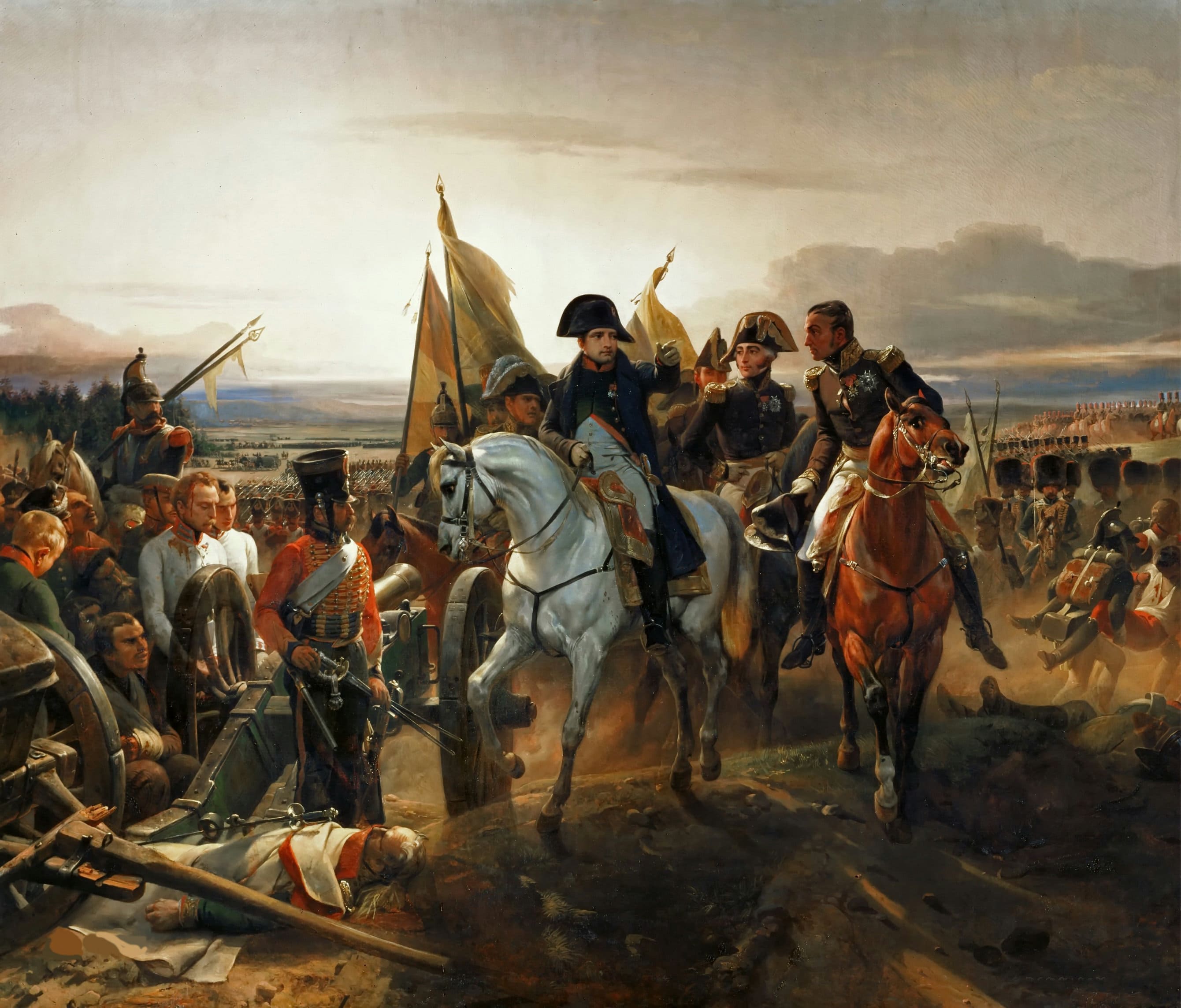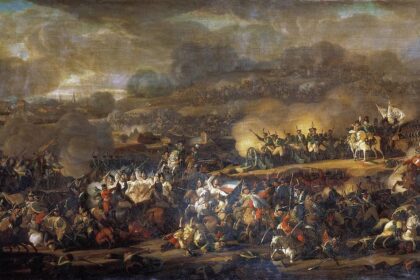
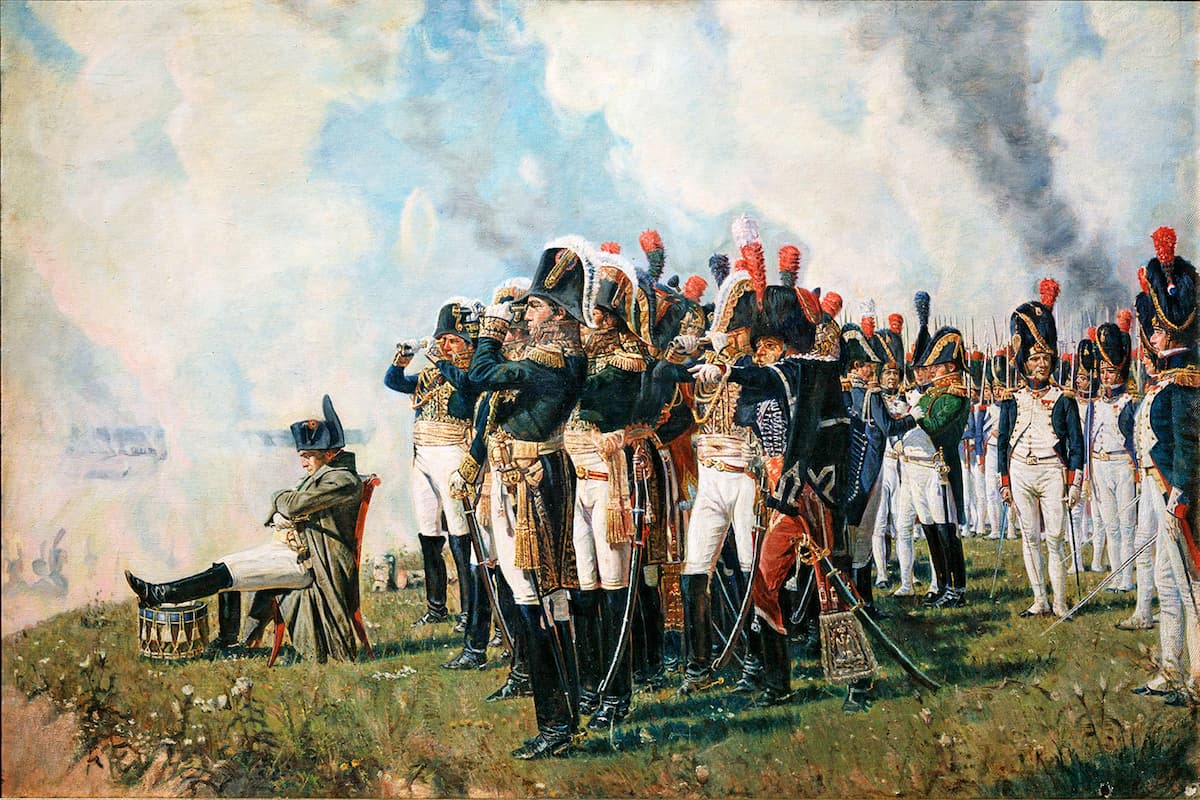
September 7, 1812: the Battle of Borodino (also known as the Battle of the Moscow) was a major engagement of Napoleon’s Russian Campaign led by Napoleon Bonaparte. Nearly 200,000 men faced each other. Due to repeated and sustained heavy artillery fire, the fighting was especially intense and relentless. Strategic positions such as the Bagration fleches and the Raevsky redoubt were fiercely contested before the tsar’s army retreated. Both sides suffered heavy losses. Tens of thousands of soldiers and officers were killed, and many more were wounded. History generally records a French tactical victory, though it was not decisive for the outcome of the Russian campaign. The end of the battle allowed Napoleon’s forces to continue their advance toward Moscow. However, Russia also claimed victory and did not consider itself defeated.
Why did the Battle of Borodino take place?
In 1812, Napoleon I launched his campaign in Russia. His march toward Moscow was driven by the political decisions of the Russian emperor Alexander I of Russia, which ran counter to Napoleon Bonaparte’s strategy. In particular, Russia had lifted its participation in the Continental System blockade against the United Kingdom. The Russian campaign lasted just over five months, from June 24 to December 14, 1812. The Battle of Moscow, also called the Battle of Borodino, took place on September 7, 1812, two days after the Battle of Shevardino. In this context, Napoleon sought a decisive victory over his opponent. His primary objective was to force Russia to sign a peace treaty on his own terms. Among his ambitions was the enforcement of the Continental System, aimed at economically isolating the United Kingdom.
Who took part in the Battle of Borodino?
The Battle of Borodino pitted the Russian Empire against France and its allies. These included Italy, Bavaria, Westphalia, Saxony, Württemberg, the Duchy of Warsaw, and the Grand Duchy of Hesse. Among the French commanders were Napoleon I, Michel Ney, Joachim Murat, Louis-Nicolas Davout, and Eugène de Beauharnais. On the Russian side, the main commanders were Mikhail Kutuzov, Michael Andreas Barclay de Tolly, and Pyotr Bagration. Following the battle, Bagration died of his wounds a few weeks later.
How did the Battle of Borodino unfold?
As mentioned earlier, the Battle of Borodino took place on September 7, 1812, near the village of the same name. It is also referred to as the Battle of the Moscow, after the nearby river. On both sides, hundreds of thousands of men were engaged. Russian artillery units held a strategic high-ground position on the “Great Redoubt.” Napoleon, however, commanded only a limited portion of his total forces, as not all his troops had yet crossed the Niemen River.
On the morning of September 7, the French army initiated the battle with artillery fire. Initially, it attacked the Bagration fleches, advanced fortified positions where a large part of the enemy troops was stationed. Although Napoleon succeeded in taking these positions at first, he failed to hold them against General Bagration’s counterattack. Over successive assaults, both Russians and French temporarily occupied this strategic position.
France then carried out a diversion maneuver. Led by Eugène de Beauharnais, it aimed to draw Russian attention away from the forces of Louis-Nicolas Davout. Davout launched an assault on the Raevsky redoubt, along with two other key positions on the battlefield. Intense artillery exchanges followed. Several Russian generals and officers were killed, which partly explains why some of the tsar’s cannons were never used. Napoleon’s troops continued bombarding Russian positions while exploiting this strategic advantage. The Russian army was eventually routed and forced to withdraw from the battlefield.
Who won the Battle of Borodino?
Officially, the French army won the Battle of Borodino. Napoleon I succeeded in capturing key Russian strategic positions, including the Bagration fleches and the Raevsky redoubt. This allowed him to continue his march toward Moscow, which he reached seven days later. However, this French tactical victory is sometimes disputed due to the heavy casualties and its limited impact on the broader campaign. While the road to Moscow was opened, Napoleon’s army was exhausted. Some historians question whether the Russians deliberately retreated to lure the French deeper into Russia, where they would be more vulnerable to winter conditions and further attacks. This question remains unresolved.
How many casualties resulted from the Battle of Borodino?
The losses at Borodino were extremely high on both sides. The French army suffered nearly 20,000 wounded and more than 6,500 dead. It should be noted that supply shortages led to the deaths of some incapacitated soldiers, due to hunger or neglect. Desertion and disease also decimated French forces. Russian losses are estimated at around 45,000 men, though no precise distinction is made between dead and wounded. Among them were about twenty generals, including Pyotr Bagration.
What were the consequences of the Battle of Borodino?
Napoleon I continued his advance while employing a scorched-earth strategy. This involved weakening the enemy by destroying production systems, resources, and infrastructure that could support the war effort. The French army captured Moscow on September 14, 1812, seven days after the Battle of Borodino. That evening, the city was devastated by fires set by its inhabitants, preventing French troops from establishing winter quarters. Nearly a month later, French forces were forced to leave Moscow without having secured Russia’s surrender. The tsar’s army quickly replenished its losses and continued to resist. Meanwhile, Napoleon’s troops were poorly prepared for the harsh Russian winter. Ultimately, the French army retreated, as the Russians refused to capitulate. The Russian campaign and its aftermath marked the beginning of Napoleon’s decline in Europe.