Author: Hrothsige Frithowulf

  • 14 Facts About Ancient Greece

    14 Facts About Ancient Greece

    Why Were the Ancient Greeks So Educated and Enlightened?

    Like any society, ancient Greek culture was diverse, encompassing more than just the distinctions between citizens, slaves, and foreigners living in Greek cities. The majority of citizens were not highly educated, and their interest in enlightenment was not particularly broad. Truly educated individuals belonged to a narrow circle of thinkers and wealthy citizens, primarily aristocrats. However, there were also plenty of ordinary laborers, crude soldiers, artisans, and citizens focused solely on their personal affairs.

    What distinguished the Greeks was their near-universal literacy. It was impossible to exist in Greek society without knowing how to read and write, so all citizens either hired private tutors to teach their children literacy or taught them at home. Additionally, children became familiar with various poetic works. A deeper education required money and time.

    Why, then, do we tend to think that all Greeks, or at least all Greek men, were universally educated thinkers? This misconception arises from the foundation of European education since the Roman Empire. It has been based on the texts of Greek and Roman authors, who often featured famous philosophers, scholars, or public figures as their heroes. This could create the impression that Greeks were constantly engaging in deep conversations. However, such discussions were only available to a narrow circle of intellectuals, while the topics of conversation among ordinary residents of Greek cities at a banquet or during a walk were not as elevated.

    Did They Look Like Their Statues?
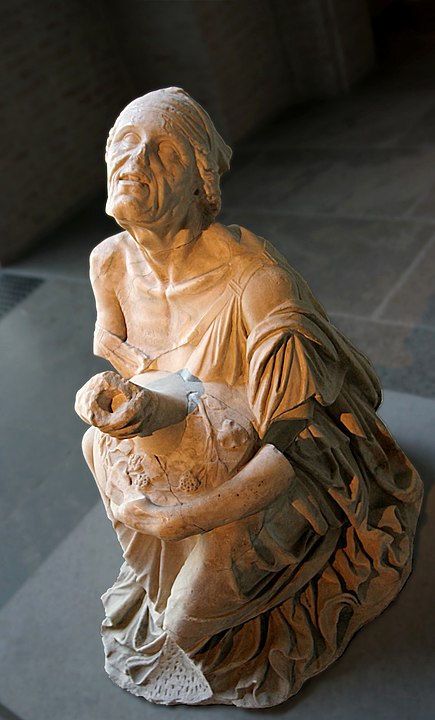
    The Old Woman and the Wine-jar
    The Old Woman and the Wine-jar, A Roman copy after a Greek original of the 2nd century BCE. Image: Wikimedia, CC BY-SA 3.0

    It depends on which statues we are talking about; Greek statues are very diverse. Some depicted gods or perfect athletes of the classical era; others showed orators and philosophers of the Hellenistic period; and still others were characteristic representations of ordinary people, such as an old fisherman or a drunken old woman. Faces in Greek art were conventionally portrayed symmetrically, and bodies were depicted as anatomically perfect, considering only the specifics of age (though there were exceptions).

    Diversity was achieved through the unique features of the faces (symmetry was maintained, and unattractive details were not depicted) and the canons of depiction used by different sculptors. For example, the Argos sculptor Polykleitos in the 5th century BCE depicted young men with barely suggested anatomical details, while his contemporary Myron showed them more developed, as in older men.

    To answer the question of which statues the ancient Greeks resembled, we need to know if modern Greeks resemble their ancestors. Physical anthropology suggests that the differences between ancient and modern Greeks are not very significant. However, while the faces may have been only slightly idealized, the bodies of ancient models certainly were not as perfect or physically developed. Statues aimed to depict the ideal human form, but reality was often quite different. Of course, occasionally, one might encounter an athlete with the physique of Apollo or a beauty with the body of Aphrodite, but such cases were rare. On the other hand, drunken old women and elderly fishermen were common, especially in the poorer neighborhoods of ancient Greek cities.

    By the Way, Why Are All the Statues Naked? Were the Greeks Not Ashamed of Anything?

    This is a misconception. First, not all Greek statues are naked, though many are. Second, this does not mean that the Greeks did not experience feelings of shame. They were as modest as modern people.

    The question of why the Greeks favored depicting the naked body is quite complex. In ancient times, men worked naked in the fields—this custom was recorded by the poet Hesiod in the 8th century BCE. In the same century, runners began competing naked, and other athletes followed suit. According to legend, during the Olympic Games in 720 BCE, a loincloth fell off the runner Orsippos, and he finished naked. Another version of the legend states that the Spartan Akanthos started the race naked from the outset.

    In any case, only men could be naked, and only under specific circumstances within their own circles: during sports, some religious rituals, etc. One hypothesis explains this shared nudity as a reflection of democratic thinking, which suggested that equal citizens should hide nothing from each other, including the intimate parts of their bodies. Statues emphasized the social role of the citizen, which is why their authors began depicting Greeks naked.

    However, respectable women, including goddesses, were not allowed to be depicted naked. A female citizen of a polis could not appear in public without clothes. In artworks, only courtesans, dancers, flutists, and other women whose profession involved entertaining men during banquets were depicted as nude. In the 4th century BCE, the Athenian sculptor Praxiteles made a statue of a naked Aphrodite, which initially was not well received by the Greeks. It was said that he used his lover, the courtesan Phryne, as a model. However, over time, statues of a naked Aphrodite became popular.

    Did They Have Free Love, and Were All Men Homosexuals?
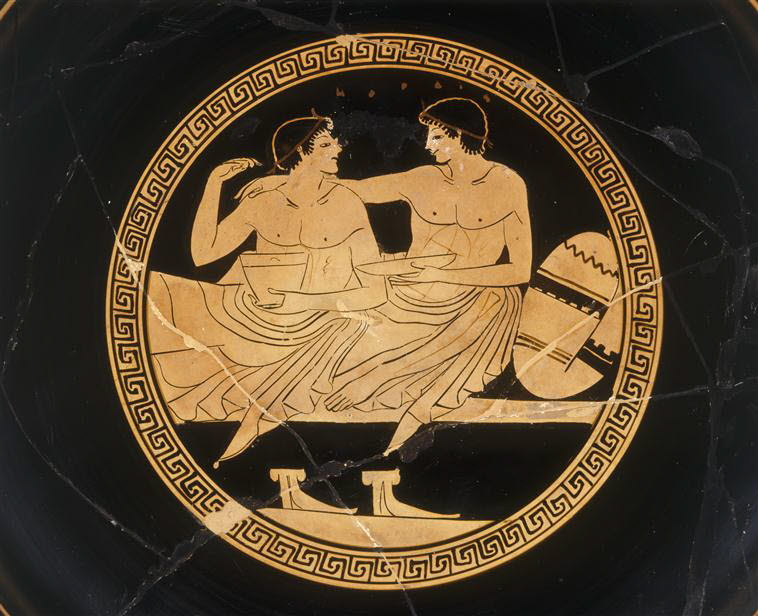
    Homosexuality in ancient Greece
    The Greek Youthening: Assessing the Iconographic Changes within Courtship during the Late Archaic Period. Image: Louvre

    No, and no. Rather, sexual relations among the Greeks were organized somewhat differently than in our society. In modern terms, Greek men could be described as bisexual, albeit with certain restrictions. For a married Greek man, it was unacceptable to engage in relationships with a free female citizen of the polis (although relations with a courtesan were possible). According to Athenian law, a lover caught in the act could be killed by the husband, and such precedents did occur. This does not sound much like free love.

    However, outside the family, a man was not restricted in his sexual relations with women. Relationships with slave women were generally not taken seriously, and sexual relations with free non-citizens (metics) were not considered shameful. Courtesans, hired by men for entertainment during banquets or intimate encounters, often came from these non-citizen groups.

    buy tamiflu online https://viagra4pleasurerx.com/buy-tamiflu.html no prescription pharmacy

    Homosexuality is more complex. For Greek men, it was normal to form sexual relationships with beardless youths up to the ages of 15–16, and such relationships were even encouraged as a form of mentorship. However, relationships between adult men were considered shameful and were often subjects of ridicule.

    buy valtrex online https://viagra4pleasurerx.com/buy-valtrex.html no prescription pharmacy

    Nonetheless, this behavior was viewed more tolerantly than in many traditional societies.

    When it comes to women, female citizens of Greek cities were restricted in their sexual relationships: they could only sleep with their husbands, and other relationships were strictly forbidden. At the same time, women sometimes imitated homosexual relationships with men: adult women formed relationships with young girls. The famous poet Sappho, who lived on the island of Lesbos, was known for such relationships—hence why homosexual relationships between women are called lesbian. However, Sappho’s writings are more about platonic rather than sexual love between women.

    Did Ancient Greeks Wear Underwear?

    No, the Greeks didn’t wear anything like underwear. Instead, loincloths were sometimes used as undergarments; slaves, craftsmen, and peasants wore them during work. However, loincloths were not always worn under clothes—they were used to keep warm or to protect the groin. True underwear, resembling modern bikinis or thongs with side ties, appeared in Roman times but was likely used only by women serving at feasts and perhaps during sports activities.

    Did They Really Dilute Wine with Water?
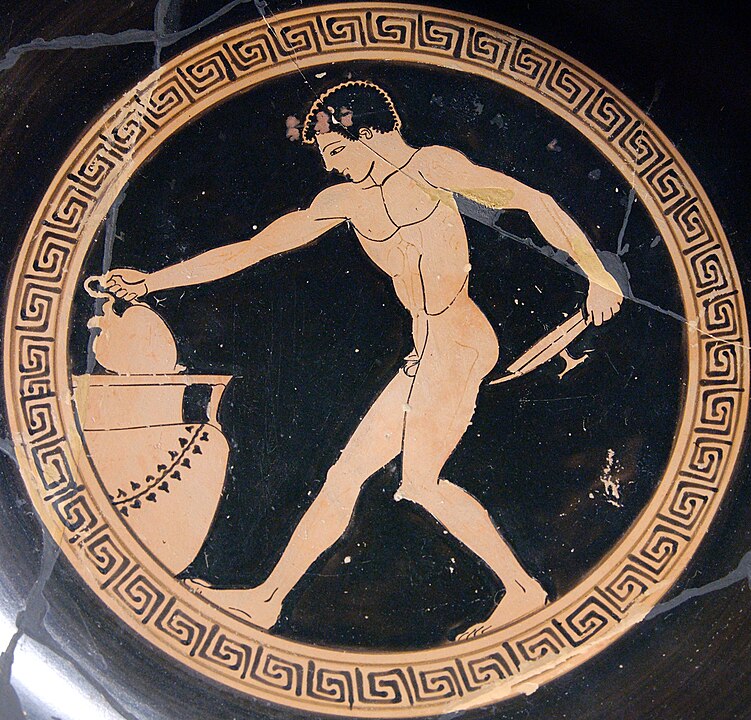
    Wine boy at a symposium
    Wine boy at a symposium. Image: Public Domain

    Yes, indeed, and sometimes quite heavily. A common practice was to dilute one part wine with two parts water, but it could go up to ten parts water. Considering that Greeks did not fortify their wine—that is, add alcohol to it—and it rarely contained more than 15% alcohol, diluted wine often became weaker than modern beer.

    There are different explanations for the origin of this tradition: Greek authors merely state that diluting wine distinguished Greeks from barbarians. One might assume that diluting wine prevented participants at feasts from getting too drunk, but Greek vases often depict very drunk people, even vomiting. There is a theory that water from wells and cisterns could be of poor quality, and wine was used to disinfect it. However, further dilution reduced the alcohol content, lowering the antiseptic properties of the wine.

    Most likely, Greek wine was significantly different from modern wine in its production technology. To increase the sugar content, grapes were slightly dried, resulting in a very sweet and thick drink. Additionally, they added seawater, crushed stone, and other ingredients to the wine; these helped prevent spoilage but made it cloudy. A strainer through which the drink was filtered was an essential attribute of a Greek feast.

    However, in some circumstances, wine was not diluted, such as during cold weather when it was drunk as a medicine, at the beginning of a feast, or simply because someone liked its taste. Barbarians, on the other hand, drank undiluted wine to get drunk as quickly as possible, which Greeks considered inappropriate behavior.

    What Did They Eat Besides Olives? Buckwheat?

    Processed olives or olive oil were certainly not the only dishes on the Greek table. However, their cuisine was much less diverse compared to our modern diet. The most important staples in Greek nutrition were grains—wheat and barley. Wheat was used to make bread, and it was also used, like other grains such as millet or emmer, to make porridge. Unfortunately, the Greeks did not know about buckwheat; otherwise, they would have surely used it.

    Another important food base was legumes. Large beans were unknown in Ancient Greece (they were brought from America much later), but they grew peas, lentils, and various types of vetch, which is now considered livestock feed. Legumes were used raw and as a base for thick stews. They also ate onions, peppers, cucumbers (which were very bitter at the time), and other vegetables.

    Meat, as in other ancient cultures, did not appear on the Greek table every day, and its main sources were sheep and goats, which were raised in abundance. They were often used as sacrificial animals, and after the sacrifice, they were eaten at specially organized feasts. Beef was rarely eaten; only the wealthy could afford it. Pork was not very popular. Among poultry, chicken was often prepared, and of course, they ate chicken eggs. They hunted boars and deer, as well as various birds, including small birds. However, near cities, large animals were not found, so games rarely appeared on the table. Cheeses made from sheep, goat, and cow milk were also common products.

    If in ancient times the aristocracy disdained eating fish—as mentioned in Homer’s poems—in archaic and classical Greece, all sea products were consumed. Tuna and sturgeon, caught in the mouths of major rivers of the Black Sea, were especially valued. Fish was salted and dried; crabs, lobsters, octopuses, cuttlefish, and so on were also eaten.

    buy elavil online https://viagra4pleasurerx.com/buy-elavil.html no prescription pharmacy

    Mollusks, primarily oysters and mussels, were consumed in large quantities.

    The Greeks ate fruits like apples, pears, figs, and grapes. For dessert, they had dried figs, raisins, and honey, which was also added to salads and bread.

    They drank water, milk (often goat milk), and wine. Beer was known but not particularly popular.

    Did They Really Believe That Thunder and Lightning Were Zeus’s Anger, and That a Three-Headed Dog Awaited Them Underground?

    Some did, and some didn’t. Since ancient times, myths have explained the world’s structure, and most Greeks certainly did not question them: they saw the gods’ will behind natural phenomena, with Zeus throwing lightning bolts and Poseidon controlling the waves. However, with the development of philosophy and science, by the 6th century BCE, educated Greeks began to doubt such a worldview. On one hand, the world of gods seemed insufficiently structured and logical; on the other, the concept of Hades, where everyone became bodiless, memoryless shadows, seemed hopeless.

    In some new philosophical ideas, powerful elements took on the primary role, while in others, the gods were absent altogether. Nevertheless, intellectual musings about the world’s structure were typical of a narrow educated stratum, while more ordinary people continued to believe in omnipotent gods, mighty heroes, and fearsome monsters. They accepted these stories as a given but worshiped the gods more out of tradition than genuine faith.

    How Much Larger Was the Poor Population Compared to the Rich, and What Were the Relations Between Them?

    We do not know the exact ratio of wealthy to poor populations in Ancient Greece, as it varied greatly from city to city and era to era. Even in cities like Athens and Sparta, these figures are very approximate. In Athens in the 5th century BCE, there were about 300,000 people. Among them were around 40,000 free men, which is about 10–15%. Adding their family members brings the number to roughly 150,000 people. Around 100,000 were slaves, and the rest were free non-citizens, known as metics. Slaves were not just poor; they had no property at all.

    The Solonian reforms of the 6th century BCE divided the free citizens of Athens into four property classes. The wealthiest, whose annual income exceeded 26,000 liters of grain, wine, or oil, were called pentacosiomedimnoi (500-medimnoi). Such a Greek could own large lands and gardens and possibly even his own ships. In the case of war, they were required to equip a warship at their own expense. Those whose income ranged from 300 to 500 medimnoi were called hippeis, or horsemen, meaning they could afford to maintain a horse.

    In Greece, where fertile land was scarce, this required either a piece of uncultivated land or purchased feed, which was quite expensive. These citizens owned substantial land and spacious, wealthy homes. During wartime, they naturally served in the cavalry.

    Citizens with an income between 200 and 300 medimnoi were called zeugitai. These were sturdy landowners who could maintain a normal household and had enough land to do so. These citizens formed the backbone of Greek city-states and initially constituted the majority. During wars, they served as heavy infantry—hoplites, since their income allowed them to buy armor and weapons. Finally, those with even lower income were called thetes. These were people who were barely making ends meet; they were exempted from any duties in the city, as it could undermine their already modest budget.

    Essentially, thetes were poor farmers and the working poor. During wartime, they served as lightly armed infantrymen, whose role in battle was minimal, and as rowers in the fleet. Greeks did not use slaves on their galleys; the rowers were poor but free men. Initially, there were relatively few thetes, but gradually the number of poor in large cities increased. From these examples, we see that the wealthiest people were at least two and a half times richer than the poor and about twice as wealthy as the middle class—zeugitai. The gap between the rich and poor in Ancient Greece was smaller than in modern society.

    Naturally, poor citizens and free non-citizens did not particularly like the rich, but since any issue could be resolved in court (and for citizens, also in the assembly or other governmental bodies), open conflicts were rare. In some cases, citizens were paid for participating in the assembly, serving in court, or were even given funds to attend the theater during festivals. One could also turn to the authorities for social support. Such measures prevented social explosions.

    The situation of slaves varied in Greek states, and there were occasional small uprisings. The hardest work in Athens was in the Laurium silver mines, from where slaves would escape at the first opportunity. Moreover, the positions of private slaves and state slaves differed; the latter could serve as policemen, clerks, jailers, heralds, and so on. In fact, they were state employees and were in a better position than other slaves. In Athens, where slaves were treated fairly decently (which sometimes caused discontent among citizens who considered them too bold), there were no uprisings.

    Were the Greeks as Warlike as the Vikings? Did They Often Engage in Warfare?

    The Greeks were very good warriors and often fought, but their martial nature was somewhat different from that of the Vikings. Essentially, the Vikings were professional pirates and mercenaries who roamed the world for plunder and profit. They posed a threat even to their own compatriots. Sometimes the Vikings managed to conquer significant territories and even establish kingdoms, but these entities often survived only due to the strength of small military bands that did not exert significant cultural influence on the subjugated people.

    The Greeks were good warriors because they knew what they were fighting for and were well-prepared for battle. Ideally, every citizen of a Greek city-state would arm himself at his own expense and, if necessary, join the militia. Usually, such a “militia,” a force of armed citizens, had a good fighting spirit but could not compete on the battlefield with professional soldiers. However, constant physical exercises and competitions made the Greeks strong, accurate, and ready for combat.
    Moreover, the Greeks possessed brilliant battle tactics.

    They formed in long lines shoulder to shoulder, shielded, approached the enemy at arm’s length, and fought hand-to-hand with short spears and swords. This style of fighting required composure and provided a sense of support from comrades standing closely on either side and behind. To learn to move in a phalanx—this formation was called—a Greek soldier would undergo military training. The best were the Spartans, who almost daily practiced military skills.

    Constant military conflicts that arose between Greek states and their neighbors were also important for training. These wars were swift and did not lead to heavy losses. If one phalanx overturned another, the losers would flee, abandoning their shields. Victors could not leave their heavy shields on the ground, as it was considered unworthy of a warrior, and running with them in hand was inconvenient. Therefore, the defeated did not suffer losses during the retreat. Usually, a truce was declared immediately after the battle to bury the dead.

    Greek farmers did not like to fight unnecessarily, as it distracted them from farming, but they were always ready for war and well-prepared. This played a huge role in the defeat of such dangerous and experienced warriors as the Persians, who conquered vast territories but were defeated by the small Greek cities.

    Did They Invent the Olympic Games?

    Greek vase depicting runners at the Panathenaic Games c. 530 BC
    Greek vase depicting runners at the Panathenaic Games c. 530 BC. Image: Wikimedia, CC BY 2.5

    Yes, there is no doubt about it. The Greeks had a tradition of holding competitions in honor of the gods, as it was believed that the gods took pleasure in the process of choosing a winner (naturally, only their chosen one could win). The most important competitions were held under the auspices of major sanctuaries at regular intervals. For example, in Athens, there were the Panathenaic Games in honor of Athena, in Corinth, the Isthmian Games in honor of Poseidon, and in Delphi, the Pythian Games in honor of Apollo. However, the most prestigious and significant were the Olympic Games, held at the sanctuary of Zeus in Olympia, on the Peloponnesian Peninsula.

    According to Aristotle, the first games took place in 776 BC, although this might be a legend. The Olympic Games were held every four years. To ensure that athletes could travel to Olympia and return home without fear for their lives and freedom, a pan-Hellenic truce was declared during the games. Initially, the only event was a running race, but gradually, other sports were added. Victory in these competitions was highly honorable and glorified not only the athlete, known as an Olympian, but also their city. The games continued until the end of the 4th century AD when they were banned along with other pagan festivals.

    In modern times, some European competitions were traditionally called the Olympic Games, and since 1896, the games were revived and, like before, began to be held every four years.

    Why Is Everything Ancient Still Considered the Most Beautiful by Many?

    To answer this question, one needs to understand what people generally consider beautiful. Scientists suggest that the sense of beauty is partly explained by biological reasons. For example, people like the division of an object along its length in a ratio of 68 to 32%, which is called the golden ratio. On the other hand, something is considered beautiful if it is associated with the cultural tradition of a particular people.

    Ancient Greek sculptors, artists, and architects were known for their high artistic sensibility and often intuitively found proportions pleasing to the human eye. They placed great importance on accurately copying human anatomy while maintaining strict symmetry in the depiction of the face and body, which corresponds to beauty standards accepted in various cultures.

    However, the most significant reason is that Greek art, slightly modified by the Romans, became the foundation for the art of several European peoples. In the Middle Ages, much changed, but during the Renaissance, artists returned to Antiquity, actively using ancient images, and sometimes copying works of art. From this period, classical education, which included the study of Ancient Greek and Latin, as well as acquaintance with ancient art, began to develop. From the 18th century, this became standard, and Ancient Greek art was considered the ideal and foundation of European art. Despite the significant changes in art today, the ancient foundations of European culture are well-known, continue to influence modern culture, and, because of this, ancient art seems beautiful to many.

    Why Did Greece, With All Its Advantages, Not Become a Great Empire Like Rome?

    The Greeks were prevented from establishing a large empire by the very structure of their society. The ancient Greeks lived in independent city-states—poleis, which usually controlled nearby, easily visible lands. Colonies founded in distant lands usually immediately became independent states, maintaining friendly relations with their metropolises but remaining independent from them. To address various issues, such as waging war against a common enemy, the poleis formed alliances: some lasted for centuries, while others existed briefly.

    If one city gained strength, a coalition of opponents would immediately form against it, attempting to weaken the neighbor. Some states, particularly Athens and Sparta, managed to control fairly large territories by Greek standards, but they extended their influence mainly through allied relations. The Roman state, however, was essentially the rule of one city that managed to subjugate vast territories.

    The Greeks managed to establish a large state only under the Macedonians—a people possibly related to them but considered barbarians. Under the unified rule of King Philip II, the Macedonians conquered and effectively united Greece, and then, thanks to the exceptional military talent of his son, Alexander III, known as the Great, they defeated the Persian Empire and conquered some of its neighboring territories.

    Despite the leading role of the Macedonians, the Greeks played a huge role in this conquest, and their language and culture became unifying forces for the conquered territories. However, this state barely outlived its founder, but on its ruins emerged large Greek states: the Ptolemaic Egypt, the Seleucid Empire, and the Kingdom of Pergamon. Gradually, the Romans subjugated most of these states.

    How Did Such a Vast Civilization Disappear?

    The Greek civilization did not disappear like the states of the American Maya or the mythical Atlantis. The Romans, who conquered Greek territories, treated Greek culture with respect, recognizing the taste and education of the Greeks, and they preserved local self-government in the cities, allowing the ancient traditions to be maintained and developed. Thus, Greek culture did not disappear but continued to develop within the Roman state. After the Roman Empire split into the Western and Eastern Empires, the Byzantine Empire gradually formed in the latter’s territory, with the Greek population at its core, speaking Middle Greek—a later form of Ancient Greek.

    From the end of the 7th century AD, it became the official language of the empire. Of course, Orthodoxy became the main religion of Byzantium, but its culture was inherited from the ancient Greeks and Romans. The Greeks did not lose their cultural uniqueness even under the rule of the Ottoman Empire, preserving it until the early 19th century, when Greek statehood was revived. Therefore, modern Greece is a rightful cultural successor of the ancient Greek states, with which it is connected by an unbroken line of historical development. Ancient Greece did not perish but transformed into modern Greece.
  • The Naked Truth: Why Artists Depicted Christ Unclothed in Art History?

    The Naked Truth: Why Artists Depicted Christ Unclothed in Art History?

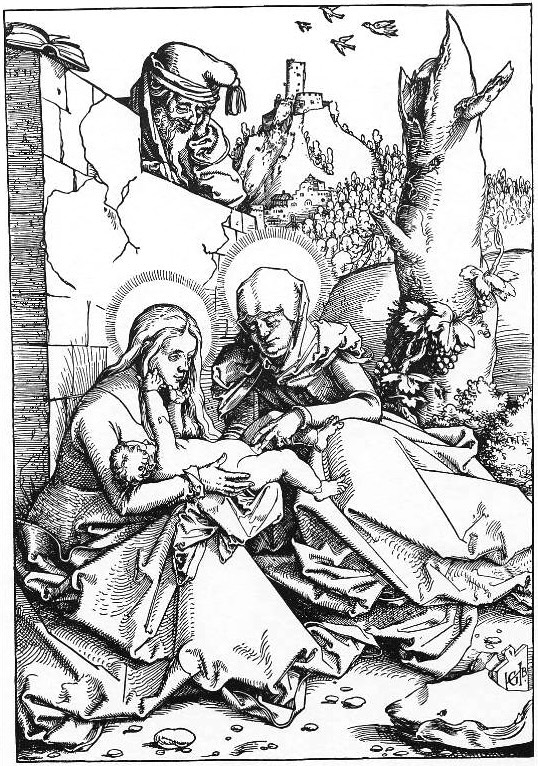
    In Hans Baldung Grien’s engraving, we see familiar figures: the infant Jesus, the Virgin Mary, her mother St. Anne, and St. Joseph, Mary’s husband. Yet, something strange is happening. Mary is holding Jesus on her lap, while Anne, under Joseph’s gaze, leans in and touches the child’s genitals.

    Art historians explain this scene as either a “domestic vignette” or a magical ritual. But why would an artist depict such a medical examination when it involves not just an ordinary child, but the newborn Savior? Why show the Holy Family under the sway of superstitions?

    The Holy Family, woodcut by Hans Baldung
    The Holy Family, woodcut by Hans Baldung, circa 1511

    Medieval people were much more frank in discussing sexual matters than we might assume today. They understood very well that if Jesus was incarnated as a male and not a female, it raised certain questions: Was he truly a man in every sense? Did he experience desire? Did he remain a virgin? Could he become a father?

    Art does not shy away from these doubts. The scene where someone examines the genitals of the young Jesus is not merely the product of Baldung Grien’s twisted imagination. His engraving is just one of many works where artists aimed to emphasize the sex of the Divine Infant.

    Christ as a Man

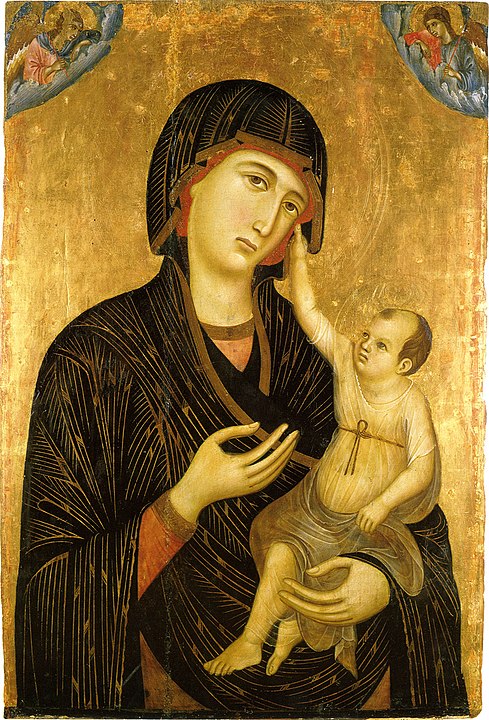
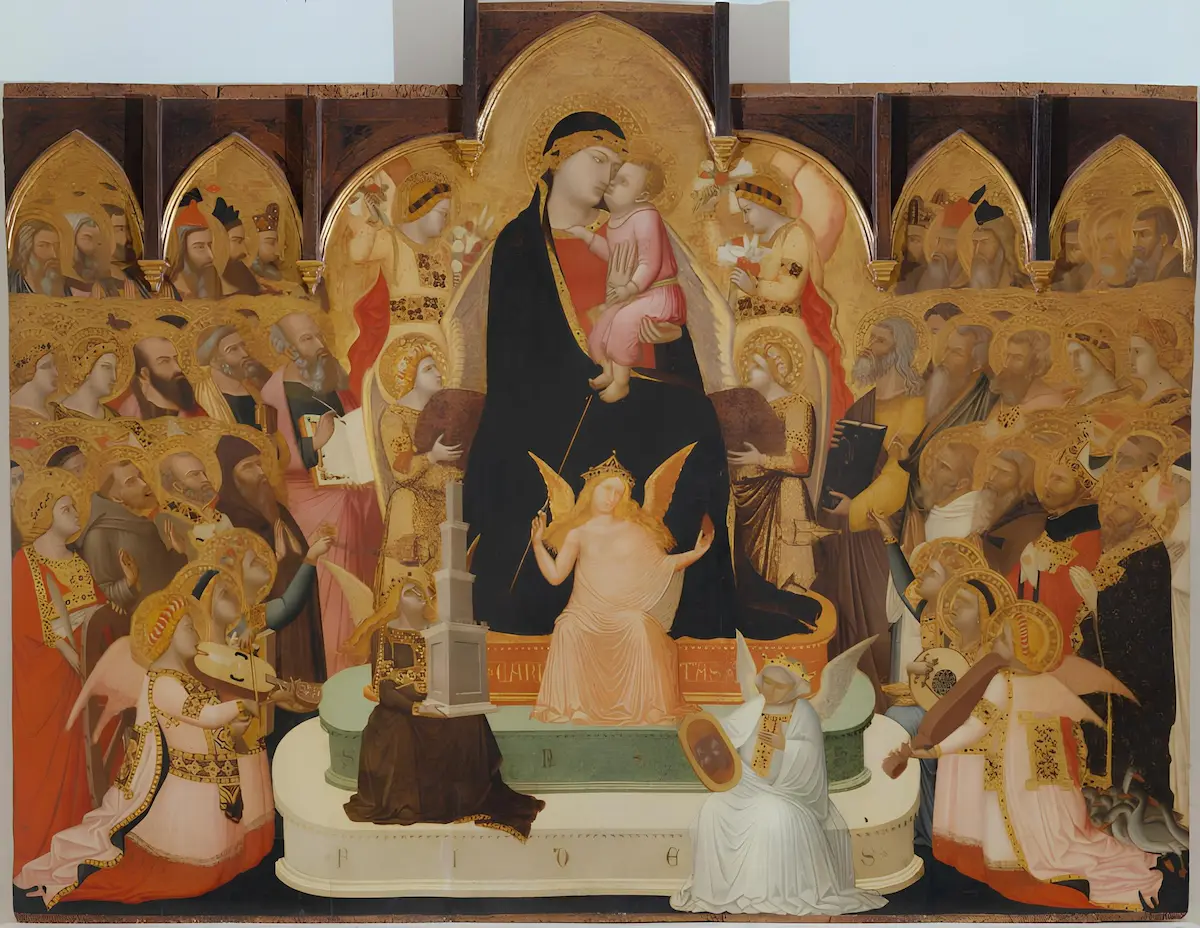
    Madonna and Child with Two Angels (Crevole Madonna)
    Madonna and Child with Two Angels (Crevole Madonna). Image: Museo dell’Opera del Duomo

    In 1983, American professor Leo Steinberg published a book with the intriguing title “The Sexuality of Christ in Renaissance Art and in Modern Oblivion.” In it, he drew attention to something long known but so familiar that it had gone unnoticed: after 1260 in Italy, artists began to depict the infant Jesus nude. Some would lift the hems of his garments to reveal his legs, others would dress him in a transparent tunic, or fully expose his torso.

    By the early 15th century, a naked infant, whether in a Nativity scene or in depictions of the Madonna holding him, had become quite commonplace. But that wasn’t all—by the latter half of the same century, European art developed numerous methods to draw the viewer’s attention to the sexual organs of the young Jesus. In Byzantine art, only exposed hands and feet of the infant were depicted, and that too, rarely.
    Artists were inventive: sometimes, for unclear reasons, the infant’s tunic would suddenly rise, or his tunic would abruptly end. Jesus might reveal his covering or clothes himself to show us that he was a boy and not a sexless being. Sometimes the Virgin Mary assists him in this; in other instances, she covers his genitals, but this gesture still directs the viewer’s attention to specific body parts.

    Although in the Middle Ages, as today, small children were often (especially in summer) left naked, the number of naked infant Jesuses in European art from the 14th to the 16th century is too large for such a motif to be explained merely by observations of reality. Artists don’t depict everything they observe—they choose. For instance, in no medieval depiction do we see the infant Jesus crawling, although infants usually move that way, and no one ever saw anything wrong with it.
    Therefore, the origins of the images of the naked Christ child should likely be sought not in daily life but in theology. The popularity of such images may have been influenced by the preaching of the Franciscans—an order that was incredibly influential in the 14th and 15th centuries. They constantly emphasized that Christ was not only God but also man, and their slogan was “nudus sequi nudum Christum”—”naked follow the naked Christ.”

    In the religious life of the late Middle Ages, the suffering Savior’s human aspect comes to the forefront—first as a man, then as God. The humanity of Christ was constantly discussed in theological treatises intended for learned clerics and sermons directed at the laity. They reminded people that the path to salvation for every believer was opened by Jesus’ crucifixion. However, to die, God had to fully become a man. Thus, artists strove to show not only the divine but also the earthly nature of Christ, demonstrating that, like other people, he possessed gender and the ability to reproduce.

    The connection between human mortality and the ability to reproduce was repeatedly noted by Christian theologians. The eternal God is not subject to death and does not engage in reproduction. However, upon becoming human, He had to be capable of dying and leaving descendants.

    For when our first parents sinned in Paradise, they forfeited the immortality which they had received, by the just judgement of God. Because, therefore, Almighty God would not for their fault wholly destroy the human race, he both deprived man of immortality for his sin, and, at the same time, of his great goodness and loving-kindness, reserved to him the power of propagating his race after him.

    The Venerable Bede. “Ecclesiastical History of the English People.” Circa 731 [Link]
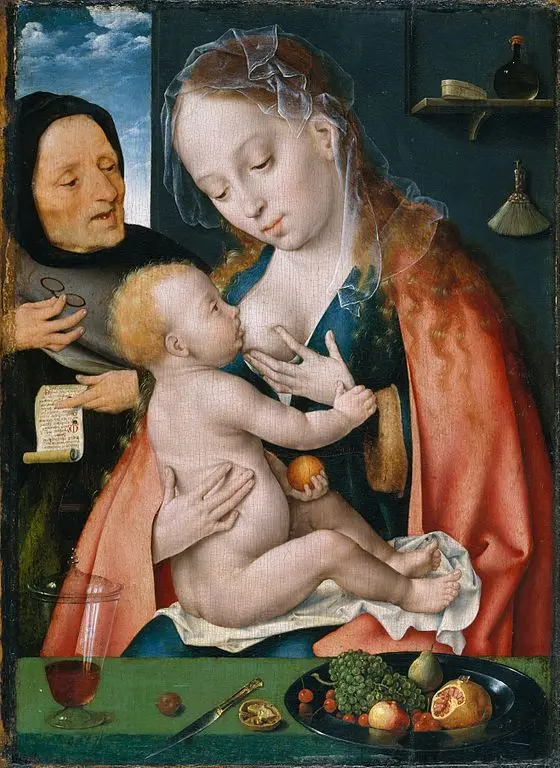
    Joos van Cleve - The Holy Family
    Joos van Cleve – The Holy Family, circa 1512. Image: Metropolitan Museum of Art

    Of course, before the Fall, Adam could also have children. But this ability only became crucial for the preservation and subsequent salvation of humanity after he was expelled from paradise. Jesus assumed precisely this fallen human nature with all its possibilities and limitations, which likely explains some of the unusual details in his depictions. Of course, unlike all other people, he is not tainted by original sin. But he willingly accepted its consequences—carnal desire, pain, and death.

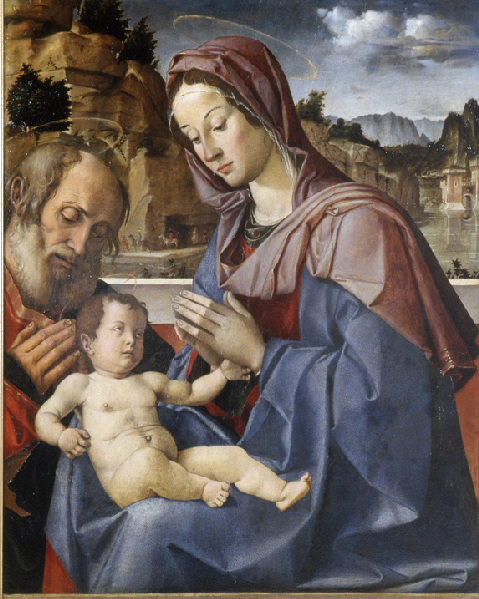
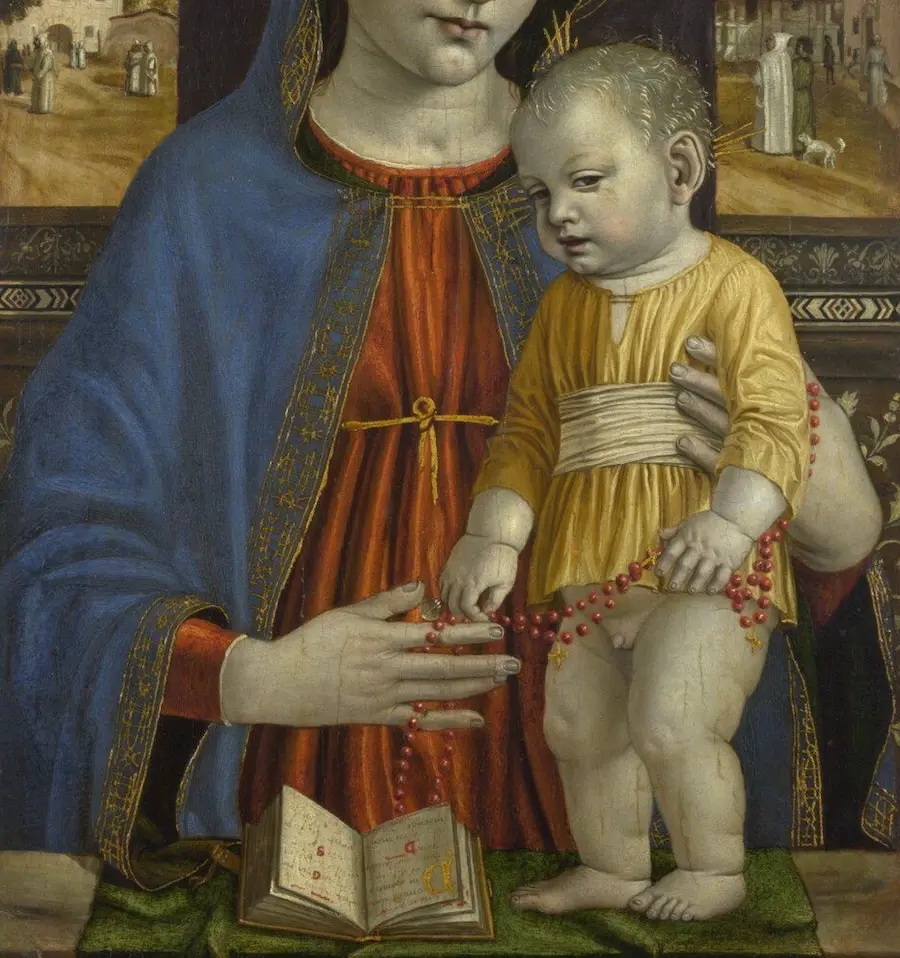
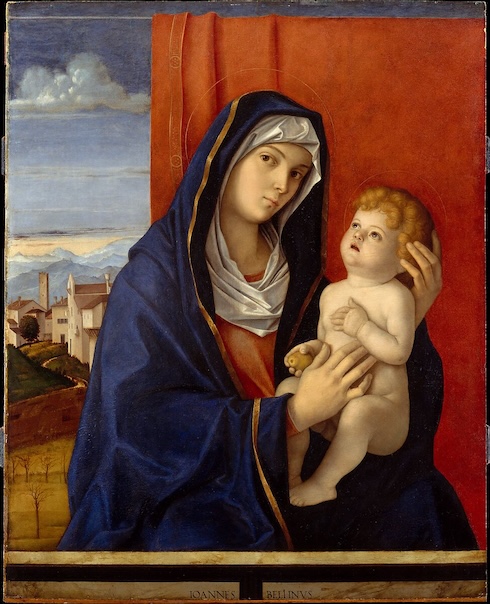
    Giovanni Bellini. Madonna and Child
    Giovanni Bellini, Madonna and Child, Late 1480s. Image: The Met

    Adam and Eve, before the Fall and before they became mortal, were naked and unashamed of their nakedness. Similarly, Christ, free from original sin, may not be ashamed of his nakedness. If so, the common gesture of the Madonna covering Jesus’ genitals with her hand may not have been a concession to propriety, but rather an attempt by the mother to protect her human son from impending suffering and death. In some depictions, the infant himself covers his genitals or touches them.

    Doubting Shepherds

    One of the most famous female mystics of the late Middle Ages was Bridget of Sweden (1303–1373). Among her numerous revelations was a vision of the Nativity, emphasizing the importance of Christ being incarnated specifically in a male body. According to Bridget, the shepherds who came to worship the Divine Infant wanted to know who was born, a girl or a boy (since the angels had told them that the savior of the world, not a savior, had been born). Upon finding out, they left, praising the Lord.

    According to the Gospel of Luke (2:21), on the eighth day after the Nativity, the Divine Infant was circumcised, and “he was named Jesus, the name given by the angel before he was conceived in the womb.” Already in the 6th century, the Church established a feast in honor of this event—the Feast of the Circumcision of the Lord (January 1), and theologians began to teach that the cutting of Jesus’ foreskin was his first “installment” in the redemption of all Christians from the power of sin and death. The Church Fathers argued that, unlike other clueless infants who undergo circumcision, Jesus on that day first shed blood for people voluntarily; he allowed himself to be circumcised to set an example of obedience to the Law and, according to Bernard of Clairvaux (1090–1153), to obtain “proof of true humanity” on his body. Thus, circumcision became the first step toward the Passion of Christ, the beginning of the sacrifice.

    Scenes of Christ’s circumcision, rare in early medieval art, became increasingly popular in the 14th and 15th centuries. In many cases, this event (through details emphasizing the Child’s suffering: blood and a large knife) visually corresponded with the Crucifixion. The Virgin Mary is always present in depictions of circumcision. This was not mentioned in the Gospel text. Her involvement directly contradicted medieval Jewish traditions—according to which, mothers were forbidden to be present at their sons’ circumcision (Christian theologians believed the same rules applied to Jews in the Gospel times). There is even a miniature where the Virgin Mary performs Jesus’ circumcision herself.

    The active role of the Mother of God can be explained either by the fact that artists, depicting the infant, almost “automatically” included his mother in the frame (after all, someone had to hold him), or by the fact that they (together with their theologian “consultants”) were guided by the scene of the Crucifixion, in which Mary always stood at the foot of the cross. The first sacrifice of Christ was depicted after the model of the last.

    Betrothal with God

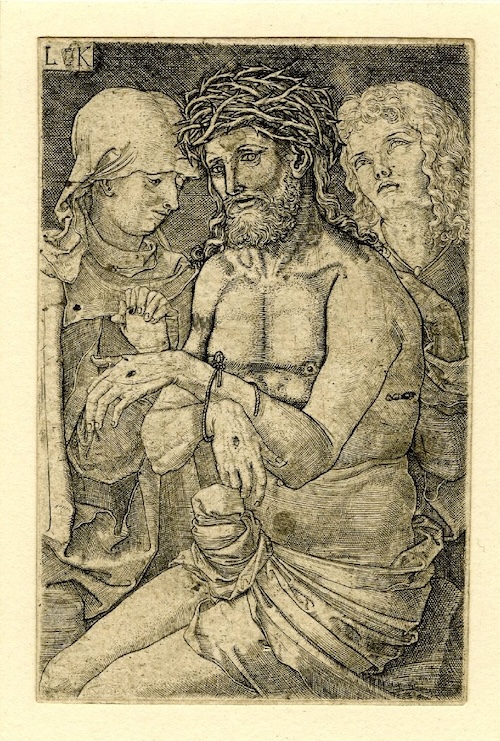
    Ludwig Krug, Christ as the Man of Sorrows
    Ludwig Krug, Christ as the Man of Sorrows, Circa 1510–1532.

    In one of the visions of Catherine of Siena (1347–1380), an Italian religious figure later recognized as a Doctor of the Church (only four women have received such an honor), Jesus spiritually betrothed her by placing on her finger a ring made from the cut-off part of his foreskin.

    Your unworthy servant and the slave of Christ’s servants is writing to you in the precious blood of God’s Son.  I long to see you a true daughter and spouse consecrated to our dear God.  You are called daughter by First Truth because we were created by God and came forth from him.  This is what he said: “Let us make humankind in our image and likeness.”  And his creature was made his spouse when God assumed our human nature.  Oh Jesus, gentlest love, as a sign that you had espoused us you gave us the ring of your most holy and tender flesh at the time of your holy circumcision on the eighth day. 

    You know my reverend mother, that on the eighth just enough flesh was taken from him to make a circlet of a ring.  To give us a sure hope of payment in full he began by paying this pledge.  And we received the full payment on the wood of the most holy cross, when this Bridegroom, the spotless Lamb, poured out his blood freely from every member and with it washed away the filth and sin of humankind his spouse.

    Catherine of Siena. Letter to Joanna, Queen of Naples, August 4, 1375

    Images depicting the circumcision of Christ demonstrate the connection between redemption and masculinity. However, it is very important to note that although Jesus was a man, like his mother, he remained a virgin. But this was not the virginity of a eunuch; it was virginity as a triumph over sin, just as the resurrection is a triumph over death. The surprising and even shocking details in the iconography of the infant Jesus may have a quite canonical theological foundation.

    This more perfect Adam, Christ—more perfect because more pure—coming in the flesh to set an example of your weakness, offers Himself to you in the flesh, if only you accept Him, a man completely virginal.

    Tertullian, On Monogamy, around 213 AD

    “So what did the Lord, the truth and the light, do when He came [into the world]? He, having taken on flesh, kept it incorrupt—in virginity.”

    Methodius of Olympus, The Banquet of the Ten Virgins, late 2nd – early 3rd century [Link]

    This, says he, I wish, this I desire that you be imitators of me, as I also am of Christ, who was a Virgin born of a Virgin, uncorrupt of her who was uncorrupt. We, because we are men, cannot imitate our Lord’s nativity; but we may at least imitate His life… When difference of sex is done away, and we are putting off the old man, and putting on the new, then we are being born again into Christ a virgin, who was both born of a virgin, and is born again through virginity.

    Jerome of Stridon, Two Books Against Jovinian, around 393 AD [Link]

    It is not accidental that Jesus was depicted naked not only in infancy but also in death. This, however, required greater boldness from the artist (after all, this is the nudity of an adult, not an infant) and often resulted in public disapproval.

    But let us return to the engraving by Hans Baldung Grien. Before us is the embodied symbol of faith—God truly became man. The guarantee of complete incarnation is St. Anne, Jesus’ grandmother by flesh. As she touches her grandson from below, Jesus touches his mother’s chin. This almost imperceptible gesture had quite a specific meaning for the medieval person. But what was it?

  • History of the Plague

    History of the Plague

    For centuries, plague swept through European cities like a grim reaper with a schedule, claiming millions of lives. Where did this nightmare of the early modern era originate? How did people fight it? How did societies hold together when death became inevitable? And what finally tipped the scales in our favor?

    Among the countless infectious diseases that have haunted humanity across the millennia, plague has always occupied a category of its own. Its sheer lethality captured the imagination, and people saw it as divine punishment—the wrath of gods or God made flesh. For Europeans living between the 14th and 18th centuries, recurring outbreaks weren’t abstract historical events; they were a terrifying fact of life. You simply cannot understand the story of the Old World without reckoning with this unwelcome guest.

    Plague wasn’t, of course, history’s only mass killer. Over thousands years of urban civilization, humanity has faced wave after wave of epidemics: smallpox, measles, syphilis, cholera, typhus, influenza (including the infamous “Spanish Flu”)… Some of these diseases emptied entire regions, toppled states, or erased ethnic groups from the map. When Captain James Cook “discovered” the Hawaiian Islands in 1778, the archipelago was home to roughly half a million people. Seventy years after European contact, that number had plummeted to around 80,000.

    Then there are the ghosts of epidemics past—diseases that preferred to remain anonymous. Descriptions in oral traditions, chronicles, and medieval medical treatises are often too vague or symbolic for modern historians and epidemiologists to pin down with certainty. Was the “English sweat” (sudor anglicus), which struck the British Isles repeatedly between the late 1400s and mid-1500s, a form of influenza? Hantavirus? Something else entirely? In many cases, we can only guess.

    Yet even in this grim lineup, plague stood apart. It was perceived as the absolute disease—the very embodiment of pestilence. Its Latin name, pestis, meant “scourge,” “calamity,” “ruin”—a word so potent it was sometimes applied to epidemics caused by entirely different pathogens. The English word plague shares this heritage, deriving from Latin plaga: “blow,” “wound,” “disaster.” These names aren’t accidental. They echo the primal terror people felt toward a scourge from which there seemed no escape.


    Three Great Waves

    Pathogens thrive on the infrastructure of civilization. Most major epidemics require dense populations to spread—and they tend to emerge alongside cities and the movement of people.

    Thanks to trade routes that, since the days of the Roman Empire, linked the Far East to the Mediterranean, plague traveled from Central Asia across Eurasia at least three times in recorded history, claiming millions of lives. Though none of these waves engulfed the entire global population, historians still classify them as pandemics (from Greek pandēmia: “of all the people”).

    🌊 The First Wave: Justinian’s Plague (6th–8th centuries)

    The first pandemic began in Central Asia around the mid-6th century, during the reign of Emperor Justinian I. It reached Constantinople, capital of the Byzantine Empire, then radiated outward across the Mediterranean, North Africa, and beyond. Outbreaks continued intermittently until the mid-700s. Historians estimate the death toll of Justinian’s Plague at 30–50 million people—but it’s crucial to remember that statistics from such distant eras are necessarily approximate and often speculative.

    🌊 The Second Wave: The Black Death (14th–18th centuries)

    After centuries of relative quiet, plague struck again in the mid-1300s. This second pandemic—later dubbed the “Black Death”—likely began in China in the 1330s. Traveling the Silk Road, the bacillus reached the Genoese port of Caffa in Crimea, then hitched a ride on merchant ships to Sicily in 1347.

    From southern Italy, the disease raced across Europe between 1348 and 1352, reaching as far as England, Scandinavia, and the distant principalities of Rus’. Historians estimate it killed roughly one-third of Europe’s population. In some regions, the toll was lower; in others, entire towns were emptied. England’s population may have been halved—and it took 250 years to recover to pre-1348 levels. Global estimates range wildly, from 50 to 200 million dead.

    The Florentine merchant and chronicler Giovanni Villani (c. 1276–1348) was writing his Nuova Cronica when the plague hit his city. Unsure when—or if—it would end, he left a blank in his manuscript: “The plague lasted until…” He never filled in the date. The plague claimed Villani himself, along with tens of thousands of his fellow Florentines.

    The Black Death didn’t just strike and vanish. It became a recurring visitor to Europe, returning in waves for centuries. Seville lost roughly half its 120,000 residents in 1649–1650; Naples lost more than half of its 400,000–450,000 inhabitants in 1656. Western Europe’s last major outbreak struck Marseille in 1720, brought by a ship from Syria. By 1722, the disease had spread across southern France and killed over 140,000 people. Moscow suffered a devastating outbreak in 1771; Constantinople in 1778. In the Ottoman Empire, flare-ups continued into the late 1800s.

    🌊 The Third Wave: The Modern Pandemic (mid-19th–early 20th century)

    The third pandemic began in China in the mid-1800s and didn’t fully subside until the 1920s. From Asia, plague traveled aboard ships infested with rats, reaching India, then ports across the Americas, Africa’s coasts, and much of Southeast Asia. Total deaths are estimated at around 12 million. For perspective: the 1918–1920 influenza pandemic (“Spanish Flu”) killed roughly 50 million worldwide.


    Causes and Scapegoats

    Plague terrified people in part because of its ruthless egalitarianism. It struck young and old, rich and poor, unraveling the social hierarchies that gave life structure. And it always left two urgent questions unanswered: What causes this? And how do we stop it?

    During the late Middle Ages and early modern period—when plague returned to Europe again and again—doctors, clergy, and ordinary people relied on a handful of dominant theories. These explanations weren’t mutually exclusive; they often blended seamlessly.

    ⚡ Divine Punishment

    For millennia, people interpreted epidemics as expressions of divine wrath. The Church taught that the Black Death and its successors were punishments sent by God for the sins of entire cities or kingdoms. Plague, like a hailstorm of invisible arrows, struck sinner and saint alike—because it was collective retribution. To halt God’s anger, medicines, doctors, and human cleverness were useless. Clergy insisted that only spiritual remedies would work: mass repentance, public prayers, processions, and the intercession of saints.

    In Catholic lands, two saints became the go-to protectors against plague: Saint Sebastian and Saint Roch.

    Saint Sebastian, an early Christian martyr from the 3rd century, was reportedly sentenced to death by archers under Emperor Diocletian. Countless paintings show him bound to a tree or column, pierced by a storm of arrows—yet he survived, only to be martyred later. In both Greco-Roman and Jewish texts, plague and other diseases were often described metaphorically as arrows raining down from the heavens. Perhaps for that reason, Sebastian—the man who endured the arrow-storm—became, in the Middle Ages, a heavenly shield against this very scourge.

    Saint Roch, by contrast, had a more direct connection to plague. Legend holds he was born in Montpellier in the late 1200s. While on pilgrimage to Rome, he contracted plague and retreated to a forest hut. A local lord’s hunting dog began bringing him food from the master’s table. Roch recovered, returned to France, but his own family failed to recognize him. Accused of espionage, he was imprisoned and died in captivity. As a sign of his sanctity, his cell was said to have filled with light, and an angel inscribed beside his body in Latin: “Eris in peste patronus”—”You shall be a protector against plague.” In most depictions, Roch points to a bubo (a swollen, inflamed lymph node) on his leg—a visual cue to his specialized intercessory role.

    💨 Poisoned Air

    From the 14th to the 18th century, physicians most commonly argued that plague was caused by corrupted air—made lethal either by malignant influences of stars and comets, or by poisonous miasmas rising from the earth: from unburied corpses, rotting waste, or stagnant water. Protection, therefore, meant purifying the atmosphere or deploying strong scents capable of overpowering the plague’s poison.

    Giovanni Boccaccio, describing Florentines during the 1348 outbreak in The Decameron, notes that some citizens walked the streets “holding in their hands flowers, or fragrant herbs, or some sweet-smelling substance, which they frequently brought to their noses, believing it an excellent preservative to fortify the brain with such aromas—since the air seemed infected and tainted by the stench of corpses, of the sick, and of medicines.”

    By the 17th–18th centuries, one of plague’s most enduring symbols had emerged: the plague doctor. Physicians in bizarre beaked masks patrolled the streets of infected cities. This iconic costume was designed in 1619 by French physician Charles de Lorme. It included a waxed leather or fabric coat, a cane for examining patients without touching them, and—most famously—a mask with glass eyeholes and a long, bird-like beak. Think of it as an early respirator: the beak was stuffed with aromatic substances, dried flowers, and pungent herbs, intended to filter out the plague’s toxic vapors.

    Naturally, scientific and medical theories about plague coexisted easily with theological ones. One could argue, for instance, that an angry God (the ultimate cause) employed the influence of celestial bodies poisoning the air (secondary causes) as instruments of divine justice.

    ☠️ The Poisoners

    Fear demands a target. Periodically, rumors spread that plague was being deliberately spread by Jews, lepers, witches, vagrants, beggars, foreigners, or other “dangerous elements” who needed to be hunted down and neutralized. Despite repeated warnings from church authorities, in many places the arrival of the Black Death triggered frenzied accusations that Jews were poisoning wells—and pogroms erupted.

    But scapegoats weren’t always outsiders or religious minorities. In 1530 Geneva, authorities “uncovered” a conspiracy involving the head of the plague hospital, his wife, a local surgeon, and even a chaplain. Under torture, they confessed to having sold their souls to the Devil, who taught them to brew a deadly potion. Fifteen years later, Geneva executed 39 more alleged poisoners on similar charges. During Milan’s 1630 outbreak, women accused barber-surgeon Gian Giacomo Mora and public health commissioner Guglielmo Piazza of deliberately spreading plague by smearing infected ointments on house walls. Both were executed.


    The Bacterium That Changed the World

    The true culprit behind plague is a rod-shaped bacterium: Yersinia pestis. Humans are merely accidental casualties in an ancient evolutionary arms race. In certain natural reservoirs, the bacterium lies dormant among its primary hosts—rodents—and only occasionally spills over into human populations.

    Even the ancient Romans suspected that plague spread via invisible “creatures.” In his 1546 treatise On Contagion, Italian physician Girolamo Fracastoro proposed that infectious diseases might be transmitted by tiny “seeds.” But without microscopes and the tools of modern science, proof remained out of reach.

    The plague bacterium was finally identified in 1894 during an outbreak in Hong Kong. Swiss-French bacteriologist Alexandre Yersin and Japanese physician Kitasato Shibasaburō independently isolated the pathogen from victims’ tissues. By 1897, bacteriologist and epidemiologist Waldemar Haffkine—a native of Odessa who had emigrated to Europe as a young man—had developed the first anti-plague vaccine while working during an epidemic in British India.

    In nature, Y. pestis circulates primarily among rodents: marmots, ground squirrels, mice, rats… Only occasionally—via flea bites (though other routes exist)—does it jump to humans. In medieval Europe, the black rat (Rattus rattus) was plague’s chief vector. Wild rodents often show mild symptoms; domestic mice and rats are far more vulnerable; humans, tragically, are nearly defenseless.

    The infection mechanism is brutally elegant:

    1. A flea bites an infected animal and ingests plague bacteria.
    2. The bacteria multiply rapidly in the flea’s gut, eventually forming a blockage between its esophagus and stomach.
    3. Blood the flea ingests can no longer reach its stomach. It remains perpetually hungry.
    4. Desperate to feed, the flea attacks new hosts.
    5. When it bites, it regurgitates a clot of bacteria into the wound—injecting a lethal army of Yersinia directly into the bloodstream.

    Plague Victims — Miniature from the Toggenburg Bible, 1411
    Kupferstichkabinett, Berlin

    Depending on the route of infection and disease progression, the same bacterium can cause several distinct forms of plague:

    🔹 Bubonic plague (most common): Bacteria enter the bloodstream, travel to lymph nodes, and multiply explosively. Nodes swell into painful, hardened lumps—buboes. The infection then spreads systemically. Without modern treatment, death from septic shock is highly likely.

    “At the onset of the illness, both men and women developed swellings in the groin or under the arms, some as large as a common apple or egg… the common people called them gavoccioli [plague buboes]; before long, this mortal swelling would spread indifferently from those initial sites to other parts of the body. Soon after, the sign of the disease changed to black or livid spots appearing on the arms, thighs, and elsewhere—large and sparse in some, small and numerous in others. And just as the initial swelling was, and remained, the surest sign of approaching death, so too were these spots. It seemed that neither medical advice nor the power of any medicine availed against these illnesses… only a few recovered, and nearly all died within three days of the first symptoms—some sooner, some later.”
    — Giovanni Boccaccio, The Decameron

    🔹 Pneumonic plague: Bacteria reach the lungs. When the infected person coughs, microscopic droplets spray countless bacteria into the air. Transmission becomes nearly unavoidable. Pneumonic plague could devastate medieval cities, leaving almost no survivors. Before antibiotics, bubonic plague killed 60–70% of those infected; pneumonic plague was virtually 100% fatal.


    The City Under Siege

    A plague-stricken city quickly becomes a fortress under siege—not just from without, but from within. Its enemy is contagion. And for everyone still healthy, every infected person becomes a potential threat. Neighborhoods, streets, households, individuals: the city fractures into countless miniature fortresses, each fighting for survival. Epidemics—where death sweeps away all conventions—reveal just how fragile social bonds truly are.

    Sometimes, denial feels like the safest strategy. In many cities, when the first cases appeared, residents refused to believe plague had returned. Authorities delayed imposing quarantines or other restrictions, fearing panic, supply-chain collapse, or economic ruin. What if it’s not really plague? What if the doctors are mistaken—or exaggerating to profit from the crisis? What if it passes us by?

    In 1599, as plague raged across northern Spain, physicians in Burgos and Valladolid, reluctant to acknowledge the obvious, issued evasive diagnoses: “This isn’t quite plague,” or “We’re dealing with a tertiary and double fever, diphtheria, ague, pleurisy, catarrh, gout, and similar afflictions… Some patients have buboes, but they’re easily treatable.” Tragically, many buboes did not heal—and both cities were devastated.

    Epidemics are almost always “foreign.” They arrive from distant lands—or so the story goes. In Lorraine in 1627, people called it the “Hungarian plague”; in 1636, the “Swedish plague”; in Toulouse in 1630, the “Milanese plague.”

    Saint Macarius of Ghent Administering Communion During the Plague — Jacob van Oost the Younger, 1673
    The Louvre

    Plague was doubly destructive: it consumed not only the body’s cells, but society’s very fabric. When collective prayers and processions failed to appease an angry God, religious fervor gave way to fragmentation. The stranger praying beside you might unknowingly become your executioner. Witnesses to epidemics in Florence (1348), Braunschweig (1509), London (1664–1665), and Marseille (1720) described, almost verbatim, how parents abandoned sick children, children fled their parents, husbands deserted wives, and wives forgot their vows. During Milan’s 1630 outbreak, some citizens took to the streets armed with pistols, daring anyone to approach.

    Plague shattered daily life and civic order. Rumors abounded: plague inspectors looting homes; gravediggers, eager to avoid return trips, burying people still alive.

    “This calamity bred such terror in the hearts of men and women that brother abandoned brother, uncle his nephew, sister her brother—and often, wife her husband. More astonishing still: fathers and mothers avoided visiting or caring for their own children, as though they were not their own. Consequently, the countless men and women who fell ill had no help but the charity of friends (few indeed) or the greed of servants, lured by extravagant wages; and even these were scarce, and often coarse, unaccustomed to such care, able to do little beyond fetching what was asked and watching for the end. In performing such duties, they often lost their own lives along with their earnings.”
    — Giovanni Boccaccio, The Decameron

    In some cities, priests and doctors—whose calling was to comfort the despairing and care for the incurable—abandoned churches and hospitals. In others, they stayed, fulfilling their duty and dying alongside their patients. In Perpignan in 1348, six of eight physicians perished; in Florence, 78 of 150 Franciscan friars. In Milan during the 1575 epidemic, Archbishop Carlo Borromeo remained in the city, visiting lazarettos to comfort the sick. Fifty-five years later, his nephew Federico—also an archbishop—did the same. Yet many church leaders fled, leaving their flocks behind.

    Confronting mortality often pushed people to psychological extremes: despair gave way to reckless revelry; mourning to indulgence. If the end is near, why not seize life’s pleasures? Moralists condemned contemporaries who gambled and caroused amid scenes of death. Yet in Paris in 1401, the Dukes of Burgundy and Bourbon founded a cour amoureuse—a “court of love.” Think of it as a salon or chivalric society dedicated to feasting and literary exercises in honor of ladies. Its stated purpose: to “pass the time with grace and discover new joy in life” during “these grievous days of pestilence.”

    Even earthly pleasures could be justified scientifically. Many 16th–17th century physicians argued that apathy and fear dramatically increased infection risk—and prescribed moderate amusements, music, and pleasant reading as preventive medicine. Sometimes, city authorities organized public festivities mid-epidemic to stave off despair. When plague finally receded, many cities experienced a wedding boom: survivors, having lost families, rushed to remarry and rebuild. In Cologne, shortly after the 1451 outbreak that killed over 20,000, records suggest roughly 4,000 marriages were contracted.

    “Some believed that a moderate life and abstinence from all excess greatly aided the fight against evil; gathering in small groups, they lived apart from others, shutting themselves in houses free of the sick… passing their time with music and whatever pleasures they could afford. Others, drawn to the opposite view, maintained that drinking and reveling, wandering with songs and jests, indulging every desire as far as possible, laughing and mocking at all that befell—this was the surest medicine against the malady. And as they spoke, so they acted, day and night roaming from tavern to tavern, drinking without measure or restraint, often arranging these gatherings in others’ homes, provided they heard there was something to their taste and pleasure.”

    — Giovanni Boccaccio, The Decameron

    London: From Plague to Fire

    London’s experience offers a vivid case study of how a major European city navigated catastrophe. In the winter of 1664–1665, plague arrived—later remembered as the Great Plague. The first cases appeared in the impoverished port districts and the parish of St. Giles. Today, the British Museum stands nearby; then, it was a distant suburb. Cold weather initially kept the disease dormant. But as temperatures rose, plague exploded—and any hope it might pass unnoticed evaporated.

    Plague was a regular visitor to London. Every generation in the 1600s remembered one or more outbreaks: 30,000 dead in 1603; 35,000 in 1625; 10,000 in 1636. But the Great Plague of 1664–1666 dwarfed them all: 70,000–100,000 Londoners dead—roughly 20% of the city’s population.

    Plague typically entered England via continental ports, then spread along trade routes and rivers. Infected rats or fleas, hidden among cargo or in the folds of clothing, traveled inland aboard ships or in merchants’ wagons.

    Contemporaries were convinced the Great Plague had been imported from the Netherlands, where it had lingered for years: Leiden and Amsterdam had lost tens of thousands in the mid-1660s. Some even alleged the Dutch—then at war with England—had deliberately sent the disease across the Channel.

    When plague returned to London in 1664, authorities began implementing measures to slow its spread. Special inspectors canvassed neighborhoods searching for the sick. Houses with infected residents were ordered sealed to isolate the contagious and prevent further transmission. But deaths mounted rapidly. In early 1665, King Charles II and his court fled to Oxford. Many wealthy citizens followed: merchants, lawyers, professors, clergy, physicians, apothecaries. Ordinary people fled too—some to distant estates, others to relatives, others simply anywhere but the infected city. Yet Lord Mayor Sir John Lawrence and the city’s aldermen stayed at their posts.

    Flee or stay? This question confronted countless Londoners—and victims of epidemics everywhere, across centuries. As early as the 1300s, the University of Paris advised: cito, longe, tarde—”flee quickly, go far, return late.” But neighboring villages and towns weren’t always eager to shelter dangerous refugees. Often, barriers were erected; lone travelers were met with clubs or musket fire.

    Lose everything but save yourself? Flee immediately, or wait and hope the epidemic wanes? Among those who chose to stay were Samuel Pepys, the naval administrator whose famous diary chronicles the era, and Henry Foe—a cordwainer (shoemaker) and uncle of writer Daniel Defoe, future author of Robinson Crusoe. In 1722, Defoe published A Journal of the Plague Year, a documentary novel styled as the diary of a Londoner identified only as “H.F.” (perhaps Henry Foe?), who survived the 1664–1666 outbreak. Defoe may have drawn on his uncle’s recollections—or perhaps, like Pepys, Foe kept a plague diary of his own.

    “I began now seriously to consider my condition, and what I ought to do; that is, whether I should stay in London, or shut up my house and flee, as many of my neighbors did. <…>

    I had two weighty considerations to balance: on one hand, I had to continue my business and trade, which was considerable—for my entire fortune was invested in it; on the other, I had to think of preserving my life in the face of this great calamity, which, as I understood, was evidently advancing upon the whole city, and, however great my fears and those of my neighbors, might prove more terrible than any expectation.

    <…>

    And one morning, as I was again reflecting on all this, a perfectly clear thought struck me: if what befalls us happens only by the will of God, then surely all my troubles are not without purpose; and I ought to consider whether this might not be a sign from above, plainly indicating that Heaven intended me to stay. And immediately following that, I understood that if God truly willed me to remain, it was within His power to preserve me amid the dangers and death raging all around…”

    — Daniel Defoe, A Journal of the Plague Year

    By summer 1665, the epidemic peaked. Newspapers published weekly Bills of Mortality—and the numbers climbed alarmingly: one thousand dead, then two, then seven thousand per week by September. Churchyards overflowed; victims were hastily dumped into mass graves.

    Attempting to halt the spread, the Lord Mayor ordered the killing of dogs and cats, believed to carry contagion. The measure backfired spectacularly: cats controlled the rat populations that harbored infected fleas.

    If contagion traveled through air, logic suggested shielding oneself with strong scents and perfumes. Bonfires were lit at street corners. Wealthy Londoners burned sulfur, frankincense, hops. The poor burned old shoes. Authorities recommended—and in some places mandated—tobacco smoking.

    But the only truly effective measure was isolation: of the sick, or self-isolation by the healthy. Since antiquity, cities had closed their gates during epidemics, posting guards against outsiders. In 1377, the Adriatic port of Ragusa (modern Dubrovnik) introduced measures to protect against plague: all ships arriving from infected or suspect regions had to wait thirty days before crew could disembark. This isolation period was called trentina (from Italian trenta: “thirty”). For overland arrivals, the period was forty (quaranta) days—giving us the word quarantine. Such measures later spread to other ports. In 1423, Venice established a dedicated quarantine station on a nearby island: a hospital-isolator for suspect arrivals and plague patients. Because the island long housed the Church of Saint Mary of Nazareth, and Saint Lazarus was considered a protector of the plague-stricken, the site became known as Lazzaretto—origin of the word lazaretto.

    Within cities, authorities isolated individual houses, streets, or entire neighborhoods. In London, homes with plague victims were sealed and boarded from the outside. Guards were posted to prevent the infected from escaping and spreading disease—but residents regularly tried to outwit them.

    “Today, with great sadness, I found in Drury Lane two or three houses marked with a red cross and the words ‘Lord have mercy upon us’—a sight most grievous to me, for I do not recall ever seeing the like before. I immediately began to examine myself and was forced to buy tobacco, which I sniffed and chewed until the ill omen passed.”
    — Samuel Pepys, Diary, June 7, 1665

    “Went out briefly for a walk—to show off my new waistcoat, truth be told—and on the way back noticed that the door of poor Dr. Burnett’s house has been boarded up. I heard he won the respect of his neighbors by discovering his own illness and voluntarily locking himself in, performing a most admirable act.”
    — Samuel Pepys, Diary, June 11, 1665

    “Today ends this sad month—sad, for plague has now spread through almost the entire kingdom. Each day brings grimmer news. In the City this week, 7,496 died, of whom 6,102 from plague. Yet I fear the true death toll approaches 10,000—partly because the poor die in such numbers they cannot be counted, and partly because Quakers and others refuse to have bells tolled for their dead.”
    — Samuel Pepys, Diary, August 31, 1665
    (Quakers, members of the Religious Society of Friends, rejected traditional church rituals, including funeral bells.)

    Desperation made people clutch at straws. Londoners rushed to buy plague amulets. Charlatans multiplied, peddling miracle cures: “infallible plague-preventing pills,” “the finest preservative against unwholesome air,” “the unparalleled plague mixture, never before applied,” “the only effectual healing water,” “the royal antidote for all diseases.”

    “Rose and put on my colored silk waistcoat—a fine thing—and my new curled wig. I bought it some time ago but dared not wear it, for when I purchased it, plague was raging in Westminster. Curious to see what the fashion for wigs will be when the plague ends, for now no one buys them for fear of infection: rumors circulate that wigs are made from the hair of plague victims.”
    — Samuel Pepys, Diary, September 3, 1665

    “Lord, how deserted and dismal the streets are! How many wretched, afflicted people everywhere—covered in sores; what sad stories I heard along the way—talk of nothing but: this one died, that one is sick, so many dead here, so many there. They say not a single physician remains in Westminster, and only one apothecary—all have perished. Yet there is hope the disease may abate this week. God grant it.”
    — Samuel Pepys, Diary, October 16, 1665

    By late autumn 1665, the epidemic began to recede. In February 1666, King Charles II returned to London. But the city faced another blow: the Great Fire. On September 2, a blaze ignited in baker Thomas Farriner’s shop on Pudding Lane. It spread rapidly, consuming the City of London: over 13,000 homes, 87 churches, and St. Paul’s Cathedral. In the reconstruction that followed, streets were widened—partly to hinder plague’s spread in future outbreaks.

    “I, with Lord Brouncker and Mrs. Williams, in a coach drawn by four horses—to London, to my master’s house in Covent Garden. Lord, what a stir our coach caused entering the city! Porters bow low, beggars gather from all sides. What joy to see the streets full of people again, shops beginning to reopen—though in seven or eight places all remains boarded—and yet the city feels alive compared to what it was…”
    — Samuel Pepys, Diary, January 5, 1666


    Epilogue: Pathogens and Progress

    There’s a famous aphorism attributed to Napoleon: every French soldier carries a marshal’s baton in his knapsack. But that same knapsack often harbored dangerous microbes, which traveled colossal distances alongside armies and their supply trains. Until World War II, the deadliest killers in armed conflict weren’t arrows, bullets, or cannonballs—but microbes. War’s eternal companions—famine and plague—followed in its wake. Roads filled with soldiers, refugees, and traders, who spread disease like postal carriers delivering letters. In 1627–1628, during a campaign to suppress French Protestants, an 8,000-strong royal army crossed France from La Rochelle on the Atlantic coast to Montferrat, near the modern Swiss-Italian border. Plague bacilli traveled with them. Over the next few years, according to French historian Emmanuel Le Roy Ladurie, the country lost over a million subjects.

    Epidemics exploit the infrastructure we build to connect the world: roads, bridges, ships, trains, airplanes. Cholera offers a striking example.

    Long endemic to India, cholera lingered there even after Portuguese colonization in the 1500s—but it took centuries to reach Europe. Only in the first half of the 1800s did outbreaks erupt in Russia, France, England, and even the Americas. The likely culprit? Speed and intensity of global connections. Cholera outbreaks typically burn out within weeks once the bacterium exhausts susceptible hosts. Old sailing ships moved too slowly for the pathogen to survive the voyage. But faster 19th-century vessels—and later, steamships and the opening of the Suez Canal, linking the Indian Ocean to the Mediterranean—allowed cholera to travel in comfort.

    Progress, it turns out, comes with a price tag.

  • History of Cancer

    History of Cancer

    Before the Common Era

    Traces of Cancer in the Remains of Ancient People

    In 1990, during excavations of the Chiribaya tribe cemetery in Peru on the northern border of the Atacama Desert, American professor Arthur Aufderheide discovered the mummy of a young woman with osteosarcoma — a malignant bone tumor. These remains were well-preserved thanks to the local climate: clay extracted all the liquid from the body, and the desert wind dried the tissues. However, scientists do not always find remains of tumor tissues. Sometimes, they come across traces of the disease left in the body of an ancient person, such as small holes in the skull and shoulder bones — results of metastases from skin melanoma or breast cancer.

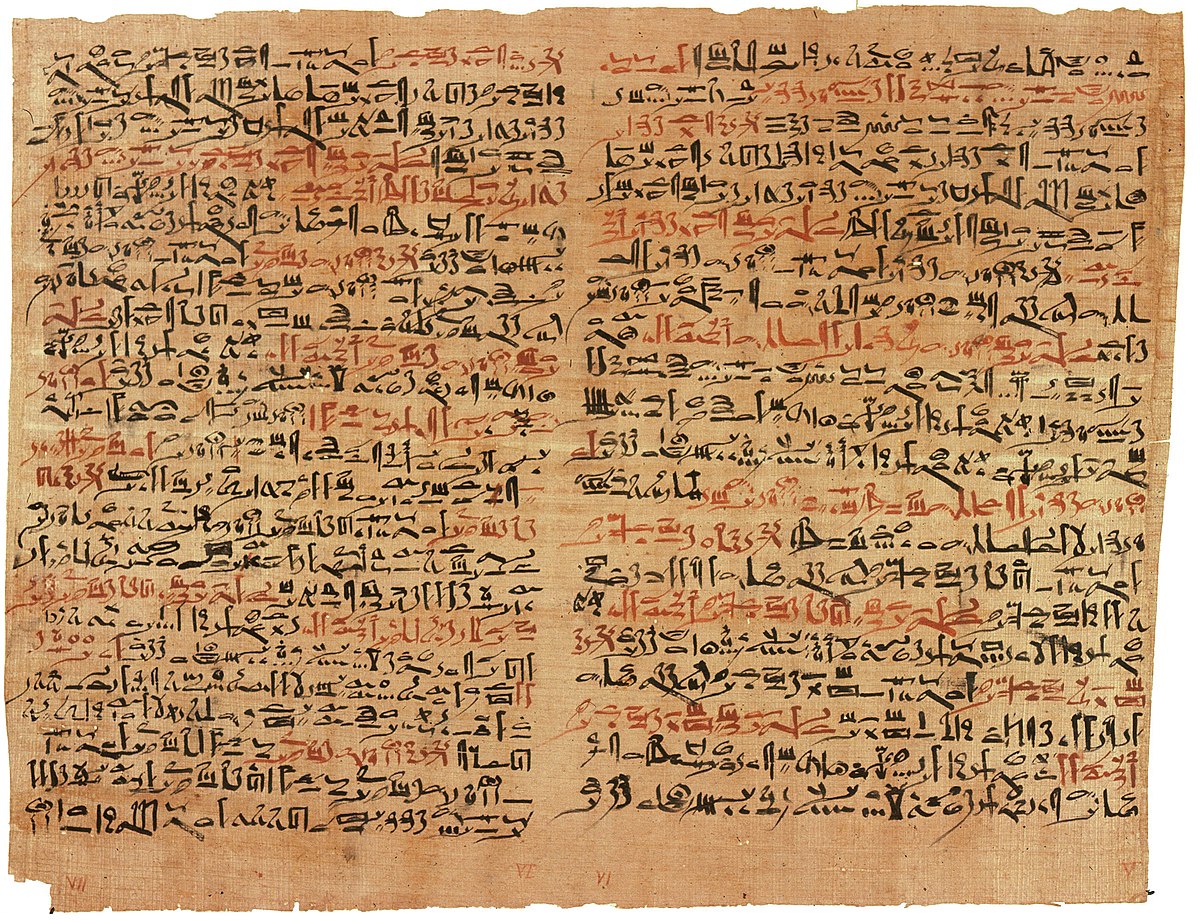
    Incurable “Lumps in the Breast” from the Edwin Smith Papyrus

    One of the earliest written records of the disease is the Edwin Smith Papyrus, named after the American archaeologist who bought the artifact in an Egyptian market in 1862. This ancient Egyptian manuscript, dated to around 1600 BCE, is likely an incomplete copy of an earlier medical treatise created in the 27th century BCE. Its authorship is attributed to the famous Imhotep — an architect and healer of the Old Kingdom period. The surviving document describes 48 cases of various injuries, with the forty-fifth section unexpectedly devoted to the consequences of a severe specific disease — presumably breast cancer:

    When you examine the swelling lumps in the breast and find that they have spread throughout the breast, and if you place your hands on the breast, you find no heat and the tissues feel cool, with no graininess, internal fluid, or liquid discharge, but they protrude when touched, then you can say of the patient: ‘Now I treat the growth of tissues… the enlarged lumps of the breast mean the presence of swellings in the breast, large, spreading, and firm, and touching them is like feeling a ball of bandages, or they may be compared to an unripe fruit, hard and cool to the touch…’.

    For each injury described in the papyrus, the author suggests different treatments: for example, poultices for wounds and balms for burns. However, the mysterious “swelling lumps in the breast” baffled the ancient physician — unable to find a cure for this ailment, the “Treatment” section dryly states: “None exists.”

    The Persian Queen Atossa and the Successful Surgical Treatment of Breast Cancer from Herodotus’ “Histories”

    Two millennia after the Imhotep Papyrus, a similar disease reappears in written sources. Herodotus, in his “Histories,” tells of the Persian queen Atossa, who suffered from a bleeding breast tumor. Some researchers believe she had inflammatory breast cancer. None of the remedies helped Atossa, so the Greek physician Democedes proposed surgically removing the malignant tumor. The queen agreed, and the operation ultimately saved her life. Thus, Atossa’s story can be considered the first recorded example of a successful mastectomy — a surgical procedure to remove the breast.

    Ancient Rome

    Black Bile

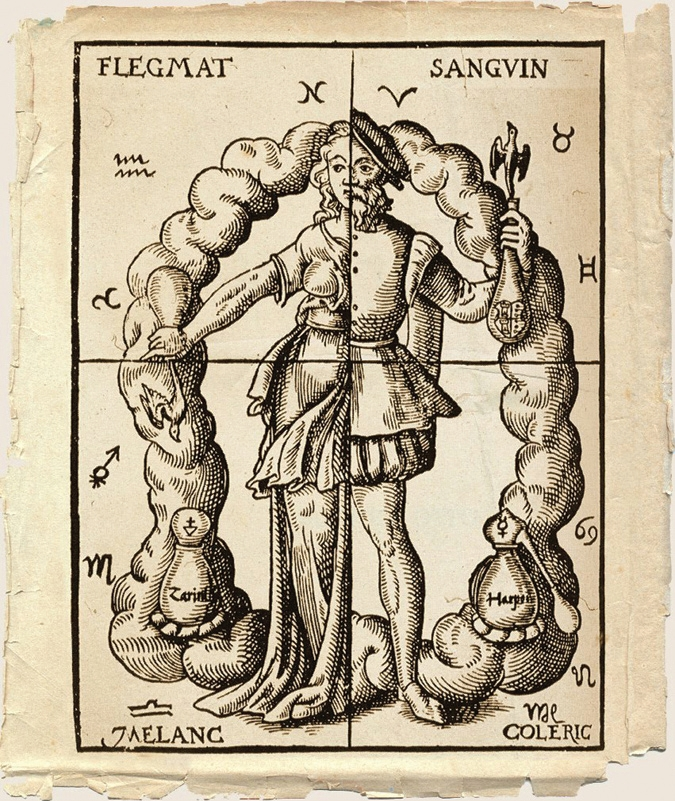
    The four humors. Illustration from Leonard Tourneisser's book Quintessence. 1570
    The four humors. Illustration from Leonard Tourneisser’s book Quintessence. 1570

    Roman physician Galen, who lived from 129 to 216 CE, following Hippocrates, believed that a healthy person’s body was in balance with four humors (fluids): blood, phlegm, yellow bile, and black bile. An excess of any humor inevitably led to illness, and treatment involved removing excess fluid from the body, for example, through bloodletting, emetics, and laxatives.

    Galen believed that malignant tumors were caused by an excess of black bile, which became a dense mass in the body. Interestingly, medieval physicians believed that an excess of black bile also caused melancholy: μελαγχολία in ancient Greek means “black bile.” Galen, whose authority remained unchallenged for over a thousand years, argued that the disease could not be defeated by surgery: the black bile would remain and pose a threat of new tumors. According to him, a patient could only be supported with general therapeutic measures.

    Middle Ages

    Boar Tusk, Fox Lungs, and Ground Elephant Bone

    Galen’s views predetermined the medieval medical approach to tumors. Surgery was generally considered more harmful than beneficial, and the absence of radical treatment was seen as the best possible remedy. An alternative to the surgeon’s knife was a wide range of rather exotic remedies: arsenic tincture, lead tincture, boar tusk, fox lungs, ground elephant bone, crushed white coral, castor bean seeds, senna plant, and more. Alcohol and opium tincture were used to relieve unbearable pain.

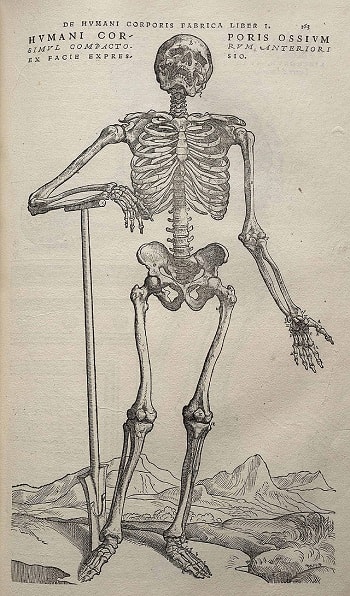
    Image from Andreas Vesalius' De humani corporis fabrica (1543), page 163
    Image from Andreas Vesalius’ De humani corporis fabrica (1543), page 163

    In the Renaissance, medicine revisited Galen’s idea that an excess of black bile in the body caused malignant tumors. Andreas Vesalius, the founder of scientific anatomy and author of “On the Fabric of the Human Body in Seven Books” (1543), who personally dissected corpses, could not find even the slightest trace of the infamous substance supposedly responsible for the development of tumors.

    Enlightenment: Cancer from an Excess of Lymph

    Another suspected cause of malignant tumors was lymph (also known as phlegm in humoral theory). According to this new understanding, tumors were no longer attributed to mysterious black bile but to a clear fluid that permeates the human body and is responsible for a calm temperament. German physicians of the 17th–18th centuries, Georg Ernst Stahl and Friedrich Hoffmann, suggested that tumors consisted of fermented lymph, which could have different densities, acidities, and alkalinities in each specific case.

    Cancer as Contagion

    While Hippocrates, Galen, Stahl, and Hoffmann sought the cause of the disease within the body, two 17th-century Dutch physicians, Zacutus Lusitanus and Nicolaas Tulp, found it outside. Independently, they reached the same conclusion: cancer is contagious. The doctors proposed moving all patients outside major cities to isolate them and thus prevent the spread of the dangerous disease. The idea of the contagiousness of cancer, prevalent in Europe during the 17th and 18th centuries, is now considered mistaken. However, it is known that certain viruses, bacteria, and parasites can indeed increase the risk of developing tumors, such as the human papillomavirus or the bacterium Helicobacter pylori.

    Cancer from Lifestyle

    In the 18th century, scientists made three important discoveries that laid the foundation for the epidemiology of cancer. In 1713, Italian physician Bernardino Ramazzini noted that cervical cancer was almost nonexistent among nuns, while the incidence of breast cancer was relatively high. Ramazzini concluded that lifestyle (in the case of nuns — lack of sexual relations) could directly influence the development of this disease in women.

    In 1775, English surgeon Percivall Pott discovered that scrotal cancer, often found in chimney sweeps, had an occupational nature: tumors arose due to the accumulation of soot in the folds of the scrotum. Pott’s discovery later led to the study of carcinogens associated with specific professions and the gradual adoption of occupational health and safety measures.

    By the 20th century, it was established that carcinogens could include benzene, used in the production of medicines, plastics, and rubber, as well as the fine-fiber mineral asbestos, used in construction, among others.

    It also became clear in the 18th century that bad habits could cause this disease. In 1761, English scientist John Hill, in his book “Cautions against the Immoderate Use of Snuff…,” first directly linked tobacco use and the development of tumors. However, lung cancer caused by smoking only became a subject of intensive research in the 20th century.

    Surgery as the Only Way to Defeat Cancer

    The medicine of the Enlightenment era drew a final line under Galen’s teachings. While Vesalius created a scheme of the “healthy” human body, the English anatomist Matthew Baillie managed to describe the “pathological” body in minute detail. In his work “The Morbid Anatomy of Some of the Most Important Parts of the Human Body” (1793), Baillie thoroughly examined various malignant formations, but in none of them could he find any hint of black bile.

    Having “buried” black bile as a scientific error, medicine paved the way for surgery as possibly the only effective method of fighting malignant tumors. However, as before, patients could only rely on the skill of doctors. Indeed, in the absence of means to alleviate their condition during operations, it was difficult to count on a favorable outcome: people who agreed to go under the surgeon’s knife typically died from pain shock, heavy blood loss, and various infections.

    19th Century

    Ether and Carbolic Acid

    The situation changed dramatically in the middle to late 19th century with the invention of anesthesia and antiseptics. American dentist William Morton began using the organic substance ether as a general anesthetic, while English surgeon Joseph Lister started using carbolic acid to disinfect wounds. After these important discoveries, doctors were able to resort to radical surgery when it was necessary to remove a tumor along with lymph nodes.

    Surgeons such as Theodor Billroth and William Stewart Halsted became famous in this field. Billroth performed the first esophagectomy (removal of part of the esophagus), laryngectomy (removal of the larynx), and gastrectomy (removal of the stomach) in history, while Halsted performed radical mastectomy, which is the complete removal of breast tissue.

    Cell Theory

    Illustration of Virchow's cell theory
    Illustration of Virchow’s cell theory

    In the 19th century, as microscope design was improved, scientists began to gradually approach an understanding of the true nature of cancer. In 1838, German biologist Johannes Peter Müller, in his work “On the Finer Structure and Form of Morbid Tumors,” proved that malignant formations consist not of lymph but of cells. However, he still believed that tumor cells were formed not from normal cells but from blastema between them. But his student Rudolf Virchow proved that all cells, including tumor cells, are formed from other similar cells: omnis cellula e cellula (“all cells come from cells”).

    However, even Virchow was mistaken: he was sure that cancer spread through the body like a fluid. In the 1860s, German surgeon Karl Thiersch disproved Virchow, proving that tumors consist of epithelial tissue, not connective tissue. He showed that metastases appear as a result of the spread of malignant cells, not through some unknown fluid.

    20th Century

    Hormone Therapy

    In the late 1870s, English physician George Thomas Beatson discovered a direct connection between the ovaries and milk production in the breast: after removing this organ in rabbits, he noticed that they stopped producing milk. This discovery led Beatson to wonder: could oophorectomy, or removal of the ovaries, have a positive effect on advanced breast cancer? Indeed, his experiments showed that such an operation often helped improve the condition of women with this type of cancer.

    The scientist also suggested that the ovaries themselves might be the main cause of breast cancer development. Even before estrogen was discovered, Beatson determined that the female hormone from the ovaries had a stimulating effect on breast cancer. Beatson’s discoveries laid the foundation for modern hormone therapy, where substances like tamoxifen, which suppresses the effects of estrogen, and aromatase inhibitors, which inhibit enzymes that convert male hormones (androgens) into female hormones (estrogens), are used to treat and prevent breast cancer.

    In the 20th century, a hormonal method was also found to treat a male disease—prostate cancer. In the 1940s, American scientist Charles Huggins discovered that after castration, patients experienced a sharp regression of metastatic prostate cancer. In addition, it was found that simultaneously decreasing testosterone levels and increasing estrogen levels helps in treating “male” cancer.

    Radiation Therapy

    Radiation therapy at MSK circa 1949
    Radiation therapy at MSK circa 1949. Image: Memorial Sloan Kettering Cancer Center

    At the end of the 19th century, Wilhelm Röntgen discovered X-rays, and Marie Curie and Pierre Curie discovered radium. Along with this came a new direction in tumor treatment: radiation therapy. Scientists found that radium could damage tumor cells in the body to the point of their complete destruction. However, in the early stages of radiation therapy, many doctors did not fully realize that radiation attacks healthy cells just as successfully as diseased ones. If the necessary dose is miscalculated, the rays can be deadly.

    It took almost a century to fully control unmanageable radiation. At the end of the 20th century, conformal radiation therapy was invented, in which the beam is precisely directed at tumor tissues thanks to detailed three-dimensional models created using computed tomography.

    Chemotherapy

    The militarism of World War II killed millions of human lives but unexpectedly helped find a new means in the fight against malignant tumors. In the 1940s, as part of developing more effective weapons, American scientists Louis Goodman and Alfred Gilman, commissioned by the US Department of Defense, studied chemical substances related to mustard gas, a poisonous chemical compound. During these studies, they accidentally found that nitrogen mustard helps in treating cancer of the lymph nodes (lymphoma). This was one of the first steps towards introducing chemotherapy into medical practice.

    Sidney Farber. 1960
    Sidney Farber, 1960. Image: Public Domain

    The real era of chemotherapy began with Sidney Farber, an American oncologist who, in the late 1940s, proved that a substance called aminopterin could cause remission in children suffering from acute leukemia: it blocks the division of leukocytes. Subsequently, adjuvant therapy became widely used in medical practice, which is a special chemotherapy aimed at destroying all tumor cells remaining in the body after surgery. Such therapy was first tested in the treatment of breast cancer, then in the treatment of colon cancer, testicular cancer, and other diseases. Another important innovation was combination chemotherapy, in which several different drugs are used simultaneously for more effective treatment.

    Immunotherapy and Targeted Drugs

    One of the most effective modern means in the fight against malignant tumors is immunotherapy. It has been actively used since the 1970s. Immunotherapy involves introducing special biological agents into the patient’s body that can both mimic the natural immune response and help the body’s own immune cells fight the tumor. The first targeted drugs—rituximab and trastuzumab—were created in the late 1990s; since then, they have been used to treat lymphoma and breast cancer, respectively.

    Lymph node with mantle cell lymphoma
    Lymph node with mantle cell lymphoma. Image: Gabriel Caponetti, CC BY-SA 3.0

    A promising direction in modern immunotherapy is the development of special cancer vaccines. For example, in 2010, the first vaccine was approved in the USA for a form of prostate cancer that no longer responds to hormone treatment. This drug, unfortunately, cannot kill the disease, but it helps the immune system fight tumor cells, prolonging the life of patients who seem to have a fatal diagnosis.

    Another important direction in modern immuno-oncology is the development of checkpoint inhibitors that regulate mechanisms that block the body’s immune response. The first of these drugs, ipilimumab, was approved in the USA in 2011. Now patients with diseases that were previously considered incurable have a chance for effective therapy. For example, former US President Jimmy Carter was able to get rid of metastatic melanoma when he was already over 90 years old.

    Also, quite recently, cell therapy using lymphocytes taken from the patient, which are then genetically modified, began to spread. It was first and successfully used against acute lymphoblastic leukemia in a five-year-old American girl, Emily Whitehead. In addition, research in the field of gene therapy continues. In general, modern medicine strives for ever-greater personalization of treatment, which makes it possible to completely cure the disease.

  • 11 Questions About Judaism

    11 Questions About Judaism

    Spanning nearly four thousand years of continuous history from the bronze-age Fertile Crescent to the modern twenty-first-century globe, Judaism is the oldest of the world’s three great Abrahamic monotheistic faiths—serving as the historical and theological root from which both Christianity and Islam later branched out. Yet despite its immense influence on Western law, ethics, and literature, because Jews make up just 0.2 percent of the world’s total population (roughly 15.7 million people worldwide), many neighbors have never had the chance to ask basic questions about how Jewish faith, culture, and daily practice actually work. Answering eleven of the most common questions about Judaism illuminates a rich tradition centered on ethics, study, family, and sacred action in the here and now.

    1. Is Being Jewish a Religion, an Ethnicity, or a Culture?

    The short answer is: all three at once. Unlike universalizing missionary religions that define membership strictly by signing onto a theological creed, Judaism began in antiquity as the national, covenantal tradition of a specific historical tribe and people: the Am Yisrael (“the People of Israel” or the Jewish People, taking the word “Jew” from the ancient Kingdom of Judah). Because Judaism is an ethno-religion—a family and a nation that carries a sacred religious tradition—a person can be Jewish by birth (traditionally through having a Jewish mother in Orthodox and Conservative law, or either Jewish parent if raised Jewish in Reform Judaism) OR by sincere religious conversion (giyur), which welcomes a convert as a 100% full member of both the faith and the family.

    2. What Are the Sacred Texts of Judaism (Torah vs. Talmud)?

    Jewish scripture and law rest upon two complementary pillars known as the Written Law and the Oral Law:

    • The Tanakh (The Hebrew Bible / Written Torah): An acronym formed from its three sections: Torah (the Five Books of Moses: Genesis, Exodus, Leviticus, Numbers, and Deuteronomy, scrolled on parchment inside every synagogue ark), Nevi’im (the Prophets, such as Isaiah and Samuel), and Ketuvim (the Writings, including the Psalms, Proverbs, and Job).
    • The Talmud (The Oral Torah): Compiled by rabbis in Galilee and Babylonia between roughly 200 AD and 500 AD (combining the Mishnah and the Gemara), the Talmud is a massive, multi-volume record of legal debates, ethical stories, and lively arguments over how to apply the Torah’s 613 commandments (mitzvot) to everyday life.

    3. How Do Jews View God (and Why Is “G-d” Sometimes Written With a Dash)?

    Judaism is strictly, uncompromisingly monotheistic—summarized twice a day in the central Jewish prayer, the Shema (Deuteronomy 6:4): “Hear, O Israel: The Lord our God, the Lord is One.” God in Judaism is completely incorporeal (possessing no physical body, gender, or division into persons), eternal, omnipotent, and directly accessible to every human being through prayer without requiring any intermediary. You will often see observant Jews write “G-d” with a hyphen on paper because Jewish law forbids erasing, tearing, or throwing a page bearing the sacred Hebrew Name of God into the trash; writing “G-d” in English is a sign of reverence to protect the holiness of the name.

    4. What Are the Main Branches of Modern Judaism?

    While sharing the same Torah, calendar, and history, modern Judaism encompasses several major movements that differ in how they interpret Jewish law (Halakha):

    1. Orthodox Judaism (Including Modern Orthodox and Haredi / Hasidic): Holds that both the Written and Oral Torah were divinely revealed at Mount Sinai and that all traditional laws regarding the Sabbath, kosher diet, and prayer remain permanently binding.
    2. Conservative (Masorti) Judaism: Holds that Jewish law is binding, but has always evolved organically through history alongside rabbinic scholarship and changing social realities (for example, ordaining female rabbis while maintaining traditional Hebrew liturgy and kosher standards).
    3. Reform and Reconstructionist Judaism: Emphasizes individual moral autonomy, social justice (Tikkun Olam, “repairing the world”), and adapting ritual traditions to modern egalitarian life.

    5. What Does “Kosher” Actually Mean?

    The Hebrew word kashrut (kosher) does not mean “blessed by a rabbi”; it literally means “fit” or “proper” according to biblical dietary laws (Leviticus 11). To be kosher: (a) land mammals must both **chew their cud AND have split hooves** (meaning cattle, sheep, goats, and deer are kosher, while pigs, rabbits, and horses are forbidden); (b) fish must have **both fins AND removable scales** (meaning salmon and tuna are kosher, while shellfish like shrimp, lobster, crab, oysters, and catfish are forbidden); (c) meat and poultry must be slaughtered swiftly and painlessly by a trained ritual slaughterer (shochet) and drained of all blood using salt; and (d) **meat and dairy products may never be cooked or eaten together** (following the thrice-repeated biblical command not to “boil a kid in its mother’s milk”), with kosher homes maintaining two separate sets of dishes for meat and dairy.

    6. Why Does the Jewish Sabbath (Shabbat) Start at Sundown on Friday?

    In the first chapter of Genesis, the creation of each day is described with the words: “And there was evening, and there was morning—one day.” Because the biblical day begins at sundown rather than midnight, every Jewish holiday and the weekly Shabbat (Sabbath) begins eighteen minutes before sunset on Friday evening (welcomed by lighting two candles and blessing wine and braided challah bread) and lasts until three stars appear in the sky on Saturday night. For twenty-five hours, observant Jews unplug completely from the rat race of work, money, and technology to focus on family, rest, and prayer.

    7. What Is a Rabbi (and How Is a Synagogue Different From a Temple)?

    A rabbi (Hebrew for “My Master” or “Teacher”) is not a priest with mystical sacrament powers above ordinary laypeople; a rabbi is an ordained scholar and teacher thoroughly trained in the Torah and Talmud to answer legal questions, teach, and guide a community. Any gathering of ten Jewish adults (a minyan) can lead a full prayer service without a rabbi present! The building where Jews gather for prayer, study, and community is called a synagogue (Greek for “house of assembly”), a Beit Knesset in Hebrew, or a shul in Yiddish (Reform congregations often call their synagogues a “Temple” in homage to the ancient Temple in Jerusalem destroyed by the Romans in 70 AD).

    8. Why Don’t Jews Believe Jesus Was the Messiah?

    While modern Jews view Jesus of Nazareth with respect as a historical first-century Jewish teacher, Judaism does not accept him as the Messiah (Mashiach, “the Anointed One”) or as divine. In Jewish scripture (such as Isaiah 2 and 11), the Messiah is not a divine “Son of God” who dies to forgive original sin (Judaism does not believe in inherited original sin); rather, the Messiah is a mortal human leader descended from King David whose arrival will be proven by unmistakable, concrete physical facts on Earth: ending all war across the planet forever, gathering all exiles, and ushering in an era of universal peace and knowledge. Because war, suffering, and injustice continued after the first century, Judaism holds that the Messianic age has not yet arrived.

    9. What Is the Most Important Holiday in Judaism? (Hint: It’s Not Hanukkah!)

    Because the eight-day winter Festival of Lights—Hanukkah—falls in December right beside Christmas, many non-Jews assume Hanukkah is the “Jewish Christmas” and the biggest holiday of the year. In reality, Hanukkah is a minor post-biblical historical holiday celebrating the 164 BC Maccabean rededication of the Jerusalem Temple! The actual holiest days of the Jewish calendar occur in autumn: Rosh Hashanah (the Jewish New Year) and Yom Kippur (the Day of Atonement), a solemn twenty-five-hour day of fasting, prayer, and making amends with one’s fellow human beings, alongside the spring festival of Passover (Pesach) celebrating the Exodus from Egyptian slavery.

    10. What Does Judaism Believe About the Afterlife?

    While Judaism affirms belief in the immortality of the soul and a spiritual world to come (Olam Ha-Ba)—and uniquely teaches that righteous people of all nations and religions have a share in the World to Come (Chasidei Umot HaOlam), which is why Judaism doesn’t try to convert non-Jews!—the Torah focuses overwhelmingly on this life. Rather than doing good deeds merely to win a ticket to heaven or avoid hell, Judaism teaches that the ultimate purpose of human existence is to sanctify everyday life on Earth through ethical action, charity (tzedakah), and kindness right now.

    11. What Are a Bar Mitzvah and Bat Mitzvah?

    When a Jewish boy turns thirteen (or a girl turns twelve or thirteen), they automatically reach the age of religious majority, becoming a Bar Mitzvah (“Son of the Commandment”) or Bat Mitzvah (“Daughter of the Commandment”). You don’t “have” a Bar Mitzvah—you *become* one, publicly celebrating your adult responsibility for your own moral choices by being called up to read directly from the handwritten Hebrew Torah scroll in front of the congregation.

  • How Long Did It Take to Deliver Goods Along the Silk Road?

    How Long Did It Take to Deliver Goods Along the Silk Road?

    The Silk Road is a conventional name for trade routes in Antiquity and the Middle Ages that connected China with Western Asia, the Black Sea region, and the Mediterranean. The name is conventional because the most famous product was silk. Moreover, it was not a single road but three different routes:

    • The southern land route from China through Bactria or Sogdiana (Samarkand), and through the Parthian trading center Merv to Ecbatana, Seleucia on the Tigris, and Syria;
    • The northern route from China through the steppes of Central Asia, the southern Urals, to the northern Black Sea region;
    • The maritime route that connected the countries of India and Southeast Asia across the Indian Ocean with Arabia, the Persian Gulf, and Egypt.

    Sea navigation in ancient times was coastal, meaning they sailed along the coast. The duration of these routes is known to us from the peripli — navigation guides that describe in detail the coastlines, distances between settlements, their sequence, the character and customs of the local population, and how they treated foreigners. The description of the waters from the modern Red Sea to the eastern regions of India is found in the Periplus of the Erythraean Sea. This route was fraught with many difficulties and risks, the main ones being storms and pirate attacks.

    In ancient times, no attempt to sail continuously around Arabia succeeded, so goods traveling from China to Europe were transferred to other ships at intermediate points. It could take several years for Chinese goods to reach European markets.

    buy toradol online http://miamihealth.com/jarrod/html/toradol.html no prescription pharmacy

    A figurine of a Western merchant made in the Chinese state of Northern Wei. 386–534 years
    A figurine of a Western merchant made in the Chinese state of Northern Wei. 386–534 years. Image: Wikimedia Commons

    An alternative was overland routes. One way for Chinese imports to reach Europe was through caravan trade across the steppes. Valuable goods (such as silk, jewelry, and lacquerware) were typically accompanied by more ordinary and practical items (such as dishes and agricultural products). Additionally, the caravan did not travel directly from the point of departure to the final destination; instead, it stopped at several caravanserais where some goods were sold or exchanged.

    buy bactrim online http://miamihealth.com/jarrod/html/bactrim.html no prescription pharmacy

    Camels were the primary draft animals. The ancient historian Strabo wrote that they were used for transporting commercial goods, a fact confirmed by archaeological findings. Camel bones have been found in layers dating back to the 1st century CE in Greek cities of the northern Black Sea region, including Olbia, Panticapaeum, Phanagoria, and Tanais. A loaded camel could cover up to 100 kilometers per day. With the total distance of the route from Southeast Asia to Crimea being about 12,000 kilometers, such a journey could take around six months.

    The existence of trade routes between China and Europe in ancient times has been confirmed by archaeological discoveries of Chinese mirrors, silk, and lacquerware found in the northern Black Sea region. In the late 1990s, remains of Chinese lacquered boxes were discovered in tombs from the end of the 1st century CE at the necropolis of the late Scythian Ust-Almin settlement in southwestern Crimea.

    buy addyi online http://miamihealth.com/jarrod/html/addyi.html no prescription pharmacy

    Together with gold jewelry, Roman bronze utensils, and other luxury items, they were placed in the graves of local elite women, serving primarily as markers of the high status of the deceased.

  • Buddhism in 9 Questions

    Buddhism in 9 Questions

    Who Invented Buddhism?

    Unlike the two other major world religions (Christianity and Islam), Buddhism is a nontheistic religion, which denies the existence of a creator God and an eternal soul. The founder of Buddhism, Siddhartha Gautama of the Shakya clan, who belonged to the kshatriya varna (the warrior caste), was born in northern India, presumably in the mid-6th century BCE. His biography quickly became surrounded by various legends, and the historical facts became firmly intertwined with myths, beginning with the circumstances of his birth, which were quite unusual. The future mother of the prince dreamed that a white elephant entered her body, which was interpreted as a prophecy of the arrival of a great person, a future ruler of the universe.

    Siddhartha’s childhood and youth were cloudless: he knew neither illness, nor sorrow, nor need. But one day, when he left the palace, he encountered a sick person, an old man, and a funeral procession. This shocked him so deeply that he left his home and became an ascetic.

    At the age of 35, during a long meditation, Siddhartha attained enlightenment, becoming the Buddha, and began to preach his teachings — the Dharma. The essence of this teaching is contained in the Four Noble Truths. First, the world is imperfect and full of suffering. Second, the source of suffering is desire and the thirst for life, which keep the wheel of samsara — the cycle of life, death, and rebirth — in motion.

    Third, it is possible to break free from the cycle of samsara by attaining enlightenment (bodhi) and ultimately nirvana, a state of blissful non-existence. Fourth, there is a path to liberation, consisting of eight steps, which includes following ethical norms, meditation, and salvific wisdom. This path is called the Eightfold and Middle Path because it is equidistant from both strict asceticism and a life full of pleasures (which ultimately lead to suffering).

    How Is Buddhism Different From Hinduism?

      Buddhism is a world religion, which means that people of any nationality can become Buddhists. This is one of the radical differences between Buddhism and Hinduism — a national religion that is absolutely closed to external influences.


      The social structure of Indian society was formed by four classes, or varnas — Brahmins (priests and scholars), Kshatriyas (warriors), Vaishyas (farmers and merchants), and Shudras (artisans and laborers). Belonging to a varna was determined solely by birth, just like belonging to Hinduism as a whole.

      For several centuries, the teachings of the Buddha were transmitted orally, and in the 1st century BCE, they were written down on palm leaves, which were stored in three baskets. Hence, the name of the Buddhist canon — the Tripitaka (“Three Baskets”). There are several branches and many schools within Buddhism, but all Buddhists share a belief in the “Three Jewels” — the Buddha, the Dharma (the teachings of the Buddha), and the Sangha (the monastic community).

      buy diflucan online http://rxdc.com/images/html/diflucan.html no prescription pharmacy

      The ritual of joining the Buddhist community involves reciting a short ritual formula mentioning the “Three Jewels”: “I take refuge in the Buddha, I take refuge in the Dharma, I take refuge in the Sangha.”

      In addition, all Buddhists must follow five precepts established by the Buddha: do not harm living beings, do not steal, do not engage in sexual misconduct, do not lie, and do not use alcohol or drugs.

      Are There Branches in Buddhism (Like in Christianity)?

        Buddhism, which initially was one of the many movements opposed to Hinduism, became a radical reformist doctrine both intellectually and spiritually, as well as socially. Buddhists placed a person’s ethical merits above their birth status, rejecting the varna system and the authority of the Brahmins. Over time, this small movement developed its own social structure, a body of sacred texts, and ritual practices. As a world religion, it spread far beyond the Indian subcontinent.

        However, in India, Buddhism gradually declined. Today, less than 1% of Indians identify as Buddhists. Buddhism ranks only fifth among religions in India, significantly trailing Hinduism, Islam, Christianity, and Sikhism. Nevertheless, the founder of Buddhism, Buddha Shakyamuni, is revered in Hinduism as one of the incarnations (avatars) of the god Vishnu. On the world stage, Buddhism ranks fourth among religions: it is practiced by about 7% of the global population.

        What Does It Mean to Be a Buddhist?

          There are three main branches in Buddhism: Theravada — “the teaching of the elders,” Mahayana — “the Great Vehicle,” and Vajrayana — “the Diamond Vehicle.” Theravada, which is primarily practiced in Sri Lanka and Southeast Asia, is considered the oldest branch, directly tracing back to Buddha Shakyamuni and his circle of disciples.

          From the Mahayana followers’ point of view, Theravada is an overly elitist teaching, which they disdainfully call Hinayana, or the “Lesser Vehicle,” because it suggests that nirvana can only be achieved through the monastic path. Mahayana followers, however, assert that laypeople can also attain enlightenment. A special role for them is played by the doctrine of Bodhisattvas — enlightened beings who voluntarily remain in samsara to help others escape the cycle of rebirth. For instance, in the Tibetan tradition, the spiritual leader of the Tibetans, the 14th Dalai Lama, is considered the incarnation of Avalokiteshvara, the Bodhisattva of Compassion. Mahayana is prevalent in China, Tibet, Nepal, Japan, Korea, Mongolia, and southern Siberia.

          Finally, Vajrayana emerged within Mahayana at the end of the first millennium CE and reached its peak in Tibet. Followers of this tradition claim that enlightenment can be achieved within a single lifetime by adhering to Buddhist virtues and employing special meditative practices.

          buy keflex online http://rxdc.com/images/html/keflex.html no prescription pharmacy

          It is currently practiced mainly in Mongolia, Tibet, Buryatia, Tuva, and Kalmykia.

          Is There Only One Buddha, or Are There Many?

          Buddhism postulates the existence of countless “awakened ones” — buddhas, with Shakyamuni being the most famous among them. However, Buddhist texts also mention the names of his predecessors, ranging from 7 to 28 in number. Additionally, the future arrival of another buddha, Maitreya, is expected. Currently, as Buddhists believe, the bodhisattva Maitreya resides in the Tushita heaven (the “Garden of Joy”), and he will later appear on earth, attain enlightenment to become a buddha, and begin preaching the “pure dharma.”

          Is Buddha a God or Not?

          As mentioned earlier, Buddhism is a non-theistic religion. However, in Buddhist mythology, the “human” aspects of the life of Buddha Shakyamuni coexist with descriptions of his supernatural abilities, as well as cosmic-scale phenomena that accompanied various stages of his life journey.

          buy clenbuterol online http://rxdc.com/images/html/clenbuterol.html no prescription pharmacy

          He is described as a being who has existed eternally, capable of creating special worlds — “Buddha fields.”

          The Buddha’s relics are perceived as evidence of his mystical presence in our world and are surrounded by special reverence. According to tradition, his remains were divided into eight parts and stored in the first Buddhist worship structures — stupas (which translates from Sanskrit as “top” or “earthen mound”). Additionally, Mahayana Buddhism introduced the concept of the eternal “dharmic body” of the Buddha, which he possessed alongside his ordinary, physical body. This body is identified both with the dharma and with the universe as a whole. It is evident that the Buddha is revered not only as a “great person” but also as a deity, especially in Mahayana and Vajrayana Buddhism.

          Furthermore, Hindu deities have not been completely expelled from the Buddhist pantheon — the figure of the Buddha has merely pushed them into the background. According to Buddhist teaching, gods, like all other living beings, are subject to the cycle of samsara, and in order to escape from it, they must be reborn in the human world — since only there are buddhas born. Incidentally, before his final birth, Buddha Shakyamuni, according to legends, was reborn more than five hundred times, having lived as a king, a frog, a saint, and a monkey.

          Do Buddhists Celebrate the New Year?

          In popular Buddhism, there are many holidays — quite popular, though often only loosely related to religion. One of these is the New Year, which is celebrated differently in various regions. In general, the Buddhist festive cycle is based on the lunar calendar (everywhere except Japan). One of the main specifically Buddhist holidays is Vesak, which in different countries is associated with one to three key events in the life of Buddha Shakyamuni (birth, enlightenment, nirvana).

          Other holidays include the Day of the Sangha, commemorating the Buddha’s meeting with his disciples, and the Day of Dharma, commemorating the Buddha’s first sermon. Additionally, in Buddhist countries, there is a Day of the Dead: pre-Buddhist ancestor worship is very persistent and plays a significant role.

          Do Buddhists Have Temples?

          The most well-known Buddhist religious structure is the stupa. Initially, stupas were built as reliquaries where the remains of Buddha Shakyamuni were kept and venerated, later as memorials to important events. There are several varieties of stupas, and their architectural appearance largely depends on regional traditions: they can be hemispherical, square-stepped, or have the shape of pagodas. To earn good karma, Buddhists practice ritual circumambulation of the stupa.

          There are also temples with even more diverse architectural styles. It is believed that these temples house the three treasures of Buddhism — the Buddha (his statues and other images), the dharma, embodied in the texts of the Buddhist canon, and the sangha, represented by monks living in the temple or monastery.

          Are Buddhists Vegetarians or Not?

          One might think that one of the most important Buddhist principles — ahimsa — implies abstaining from eating meat.


          However, in reality, dietary restrictions in different regions are mostly determined by local customs. Among Buddhists, there are both proponents and opponents of vegetarianism, and both sides cite legendary sayings of the Buddha to support their positions. For example, there is a Buddhist parable about a deer and a tiger, in which the deer ends up in hell for boasting about its vegetarianism while unknowingly killing small insects by eating grass, whereas the tiger, a predator, purified its karma because it suffered and repented throughout its life.

        1. 7 Questions About Korea

          7 Questions About Korea

          Do Koreans Use Hieroglyphs?

          Replica of Hunmin Jeongeum Haerye
          Replica of Hunmin Jeongeum Haerye, the book in which the creation of hangul is explained. Picture taken at the National Museum Korea in Seoul

          Both no and yes. No, because both in the South and the North of the Korean Peninsula, they use their own alphabets. In the Republic of Korea, it is called Hangul, and in the DPRK — Chosongul, and both countries consider it an outstanding achievement of their national culture.

          Korean writing has several unique features. For example, the shape of the letters representing consonant sounds schematically reflects the position of the articulatory apparatus when pronouncing the corresponding sound. For instance, the letter ㄱ (read as “k” or “g” depending on its position in the syllable) resembles the position of the tongue when pronouncing this sound.


          The shape of the letter ㅇ represents the position of the vocal cords when pronouncing the nasal sound “ng.”

          The letters representing vowel sounds use symbols of the three fundamental elements of Korean natural philosophy — heaven, earth, and man. Their combinations demonstrate the central idea of Korean traditional culture — harmony and balanced coexistence of different principles.

          buy female viagra online https://therehabcentres.com/wp-content/uploads/2025/03/jpg/female-viagra.html no prescription pharmacy

          Hangul was created in the mid-15th century by King Sejong, who was ruling in Korea at that time (the title “wang” means “king”). Before that, Korean noblemen used Chinese characters for reading and writing: at that time, China was the cultural hegemon, not only in Korea but throughout the Far East region.

          King Sejong decided that writing was needed not only for the aristocracy but also for ordinary people, and an alphabet is simpler than hieroglyphics, which takes years to learn. Hangul indeed looks like hieroglyphs, so it is not surprising that they are often confused. This can be explained by the fact that medieval Koreans lived under Chinese cultural influence and, when inventing their writing system, were guided by familiar patterns.

          Despite their own alphabet, Koreans did not completely abandon hieroglyphics, continuing to study it in school and use it in life.


          Any educated person should know a minimum (for today’s high school graduates, it is 1,800 characters). Additionally, hieroglyphics, along with the national alphabet, is widely used in the scientific field, jurisprudence, and some media.

          Are All Koreans Named Kim?

          Of course, not all of them, but Kim is indeed the most common Korean surname. According to the 2015 census in South Korea, 21.5% of residents (that is, one-fifth of the country) had this surname. The second most common is Lee (14.7%), followed by Park (8.4%), and then Choi (4.7%). Less common surnames are Jung, Kang, Cho, and Yoon.

          All Korean surnames have a hieroglyphic writing, meaning they can be written both with the Korean alphabet and with Chinese characters. There are slightly fewer than three hundred such “family” characters — accordingly, there are about the same number of Korean surnames. But this does not mean that all Kims are related to each other. Each clan has its “bon” — the birthplace of its founder, which is documented for modern Koreans. For example, there are Andong Kims whose ancestor came from Andong, and Gimhae Kims who originated from Gimhae.

          The same applies to other surnames. If a couple planning to marry has the same surname but different bons, there will be no problems. If the bons coincide, there may be difficulties — even if the family trees of these people crossed several hundred years ago. Until 1997, such marriages were legally prohibited; now they are still avoided, although the ban has been officially lifted.

          Kim Jong-un — Which Is the Surname, the Name, and Is There A Patronymic?

          Kim_Jong-un
          Kim Jong-un. Image: Kremlin.ru, CC BY 4.0

          We already mentioned that Kim is the surname. Therefore, the name is Jong-un. Koreans do not have patronymics. Most often, Korean personal names consist of three elements, each read as a syllable. The first syllable is the surname, and the following two are the given name. Occasionally, there are personal names consisting of a single syllable.

          In Russian Korean studies, there is a rule that Korean names should be written in two words — first separately the surname, then the given name as one word. This method was proposed in the last century by linguist and orientalist Alexander Alekseevich Kholodovich and his follower Lev Rafailovich Kontsevich. However, despite the rules, many write Korean names in three words.

          Confusion is further compounded by the Koreans themselves, especially when they write their names in foreign languages. Adapting to Western norms, they write their given name first, followed by the surname. Additionally, there are several different systems for Romanizing Hangul, which also leads to misunderstandings and errors.

          For example, the name of the founder and first leader of the DPRK in his native language sounds like Kim Il Sung (Kim Ilsong). However, due to certain features of Korean phonetics, dialects, and discrepancies in Cyrillic transliteration systems, this name was once written in Russian as Kim Ir Sen, and his son’s name as Kim Jong Il (in the DPRK it sounds like Kim Jong Il). The third Kim — the current leader of North Korea — is now called Kim Jong-un in Russian (the first character in his name is the same as his father’s), whereas in his homeland his name is pronounced as Kim Jong-un.

          Why Are There Two Koreas?

          Colonel-level discussions between the US and North Korean militaries on 11 October 1951
          Colonel-level discussions between the US and North Korean militaries on 11 October 1951. Image: U.S. National Archives and Records Administration, Public Domain

          This was the result of World War II and the subsequent division of the world into two camps — capitalist and socialist. Japan’s defeat in World War II restored national independence to the Koreans — from 1910 to 1945 Korea was a Japanese colony — but then the victorious countries could not agree on an acceptable future for Korea, resulting in the infamous 38th parallel, which later divided the spheres of influence.

          In 1948, the Democratic People’s Republic of Korea (DPRK), supported by the USSR, was established in the north, and the Republic of Korea (ROK), allied with the United States, was established in the south. Each Korea wanted to be the main and only Korea — in the summer of 1950, the Korean War broke out, nearly escalating into World War III. The conflict lasted three years and ended with a temporary truce that remains in place to this day, and the two countries developed independently, still striving to prove to themselves and the world that each is the true Korea.

          Are Koreans Buddhists?

          According to 2016 statistics, only 16% of the population of the Republic of Korea are Buddhists. There are more Christians (28%), of which 20% are Protestants and only 8% are Catholics. 56% of South Korea’s residents do not adhere to any religious teachings. In the DPRK, freedom of religion is officially declared, but the cult of personality surrounding the country’s leaders and a generally materialistic worldview make any religious activity impossible. The few existing Buddhist monasteries in the country function more like museums.

          However, statistics on faith are not the most reliable source. A Western missionary in Korea once said that in their minds, Koreans are Christians, in their hearts, they are Buddhists, and in their stomachs, they are shamanists. Indeed, in the Republic of Korea, shamans (more often shamanesses) and their followers still exist. In big cities, many secular people, when opening a new restaurant or other small business, set a special ritual table, place a pig’s head with a bundle of cash in its mouth on it, and invite a shamaness to perform a ritual to ensure the project’s success.

          Moreover, on a personal level, people turn to shamans to restore peace in the family, overcome illness, help a child get into a good university, and the like. Shamans are respected at the state level — they are treated as carriers of traditional culture, paid stipends, and famous shamans go on tours, including abroad. Their dances and chants are studied by ethnographers and musicologists.

          Why Is the Carrot “Korean”?

          Morkovcha and other salads at Tolkuchka Bazaar
          Morkovcha and other salads at Tolkuchka Bazaar, Turkmenistan. Image: Kerri-Jo Stewart, CC BY 2.0

            In fact, the carrots and other salads sold in Russian markets and stores as Korean are not quite Korean. At least, neither in South nor in North Korea are they prepared and eaten. All this is the cuisine of Central Asian Koreans who found themselves in the USSR, mainly on the territory of modern Kazakhstan and Uzbekistan, as a result of the deportation of 1937.

            In the new, difficult conditions, people tried to cook the familiar food from the products that were at hand. This is how the popular in Russia Korean pickles and snacks appeared. The native food tradition is only related to the method of preparation: in Korea, the basic meal involves a bowl of rice and soup, which are necessarily accompanied by several panchan — side dishes made from pickled vegetables, herbs, salted seafood.

            The most famous Korean panchan is the spicy fermented cabbage kimchi. In general, kimchi is made from a variety of ingredients — radish, cucumbers, garlic shoots, sesame leaves, bamboo, and much more. The main thing is that the product is well fermented — otherwise it will not be kimchi.

            Do Koreans Really Eat Dogs?

              Yes, but not everyone and only on special occasions. Dog meat dishes have never been and are not part of the everyday Korean diet, they are considered a special healing food and are consumed for recovery after illness or severe fatigue, as well as traditionally on the three hottest summer days, determined by the lunar calendar: this helps better withstand the heat. However, today this remedy is resorted to only by the older generation and mainly men, while the young prefer to fight the heat with the help of samgyeopsal – a special chicken soup with ginseng root.

              With the spread of Western values and lifestyle in Korea, the practice of eating dogs is losing popularity, but they do not completely abandon it. Society and the authorities consider it more important to introduce reasonable ethical and sanitary standards in the field of keeping and slaughtering the dog breed – now there is really no order in this matter.

            1. 13 Questions About the Inquisition

              13 Questions About the Inquisition

              What Does the Word “Inquisition” Mean, and Who Invented It?

              Lucius III
              Lucius III, 1879

              The word “inquisition” comes from the Latin word inquisitio, which means “investigation,” “inquiry,” or “search.” We know the Inquisition as a church institution, but initially, this term referred to a type of criminal process. Unlike an accusation (accusatio) or denunciation (denunciatio), where a case was initiated as a result of an open accusation or a secret denunciation, in the case of inquisitio, the court itself started the process based on known suspicions and requested confirming information from the population. This term was coined by lawyers in the late Roman Empire and became established in the Middle Ages in connection with the reception, that is, the discovery, study, and assimilation in the 12th century, of the main monuments of Roman law.

              Judicial investigations were practiced by both the royal court — for example, in England — and the Church, in their fight not only against heresy but also against other crimes within the jurisdiction of ecclesiastical courts, including fornication and bigamy. However, the most powerful, stable, and well-known form of church inquisitio became inquisitio hereticae pravitatis, or the search for heretical depravity. In this sense, the term “inquisition” was invented by Pope Lucius III, who, at the end of the 12th century, obliged bishops to search for heretics by traveling around their diocese several times a year and questioning trustworthy local residents about the suspicious behavior of their neighbors.

              Why Is It Called “Holy”?

              The Inquisition was not always and everywhere called “holy.” This epithet does not appear in the term “search for heretical depravity,” nor in the official name of the highest body of the Spanish Inquisition — the Council of the Supreme and General Inquisition. The central authority of the papal Inquisition, established during the reform of the papal curia in the mid-16th century, was indeed called the Supreme Sacred Congregation of the Roman and Universal Inquisition. However, the word “sacred” was similarly included in the full names of other congregations or departments of the curia — for example, the Sacred Congregation of Rites or the Sacred Congregation of the Index.

              At the same time, in common usage and in various documents, the Inquisition began to be called Sanctum Officium — in Spain, Santo Oficio — which translates as “holy office,” or “department,” or “service.” In the first half of the 20th century, this phrase entered the name of the Roman congregation, and in this context, the epithet does not cause surprise: the Inquisition was subordinated to the Holy See and was engaged in the protection of the holy Catholic faith, a mission that was considered not just holy but almost divine.

              For example, the first historian of the Inquisition, himself a Sicilian inquisitor — Luis de Paramo — began the history of religious investigation with the expulsion from Paradise, making God himself the first inquisitor: he investigated the sin of Adam and punished him accordingly.


              Who Became Inquisitors, and to Whom Were They Subordinate?

              Exile from Paradise. Painting by Giovanni di Paolo.
              Exile from Paradise. Image: Giovanni di Paolo.

              Initially, for several decades, the popes tried to entrust the Inquisition to the bishops and even threatened to remove those who were negligent in cleansing their dioceses of heretical contagion. However, the bishops were not well-suited to this task: they were busy with their routine duties, and, more importantly, their efforts to combat heresy were hindered by established social ties, primarily with the local nobility, who sometimes openly supported the heretics. Thus, in the early 1230s, the pope entrusted the search for heretics to monks of the mendicant orders — Dominicans and Franciscans.

              They had several qualities necessary for this work: they were loyal to the pope, independent of local clergy and lords, and popular among the people for their demonstrative poverty and asceticism. The monks competed with heretical preachers and ensured public cooperation in the search for heretics. Inquisitors were given extensive powers and were independent of local ecclesiastical authorities or papal legates. They were directly subordinate only to the pope, held their powers for life, and in any force majeure situations, could travel to Rome to appeal to the pope. Moreover, inquisitors could justify each other, making it almost impossible to remove an inquisitor, let alone excommunicate them from the Church.

              buy diflucan online http://www.biop.cz/slimbox/css/png/diflucan.html no prescription pharmacy

              Where Did the Inquisition Exist?

              The Inquisition — episcopal from the late 12th century and papal, or Dominican, from the 1230s — appeared in southern France. Around the same time, it was introduced in the neighboring Crown of Aragon. In both places, the problem was the eradication of the Cathar heresy: this dualistic doctrine, which came from the Balkans and spread across much of Western Europe, was especially popular on both sides of the Pyrenees.

              buy strattera online http://www.biop.cz/slimbox/css/png/strattera.html no prescription pharmacy

              After the anti-heretical Crusade of 1215, the Cathars went underground, and the sword proved ineffective; what was needed was the long and tenacious hand of the church investigation.

              Throughout the 13th century, at the papal initiative, the Inquisition was introduced in various Italian states: in Lombardy and Genoa, the Inquisition was managed by the Dominicans, while in Central and Southern Italy, the Franciscans were in charge. Towards the end of the century, the Inquisition was established in the Kingdom of Naples, Sicily, and Venice. In the 16th century, during the Counter-Reformation, the Italian Inquisition, led by the first congregation of the papal curia, gained new momentum in combating Protestants and various free-thinkers.

              In the German Empire, Dominican inquisitors operated from time to time, but there were no permanent tribunals due to the centuries-long conflict between emperors and popes and the administrative fragmentation of the empire, which made any initiatives at the state level difficult. In the Czech Republic, there was an episcopal Inquisition, but it was not particularly effective — at least in eradicating the heresy of the Hussites, followers of Jan Hus, the Czech Church reformer burned in 1415, they had to send specialists from Italy.

              At the end of the 15th century, a new, or royal, Inquisition emerged in unified Spain — first in Castile and then again in Aragon. In the early 16th century, it appeared in Portugal, and in the 1570s, in the colonies — Peru, Mexico, Brazil, and Goa.

              Why Is the Spanish Inquisition the Most Famous?

              The Inquisition Tribunal. A painting by Francisco Goya
              The Inquisition Tribunal. Image: Francisco Goya

              Probably because of its negative publicity. The fact is that the Inquisition became a central element of the so-called “black legend” of Habsburg Spain as a backward and obscurantist country, ruled by arrogant nobles and fanatical Dominicans. The “black legend” was spread by both political opponents of the Habsburgs and the victims — or potential victims — of the Inquisition.

              Among them were converted Jews — Marranos, who emigrated from the Iberian Peninsula, for example, to the Netherlands, where they cultivated the memory of their fellow martyrs of the Inquisition; Spanish Protestant emigrants and foreign Protestants; residents of non-Spanish possessions of the Spanish crown: Sicily, Naples, the Netherlands, and England during the marriage of Mary Tudor and Philip II, who either resented the introduction of the Inquisition by the Spanish model or only feared it; and French Enlightenment thinkers, who saw the Inquisition as the embodiment of medieval obscurantism and Catholic domination.

              All of them, in their numerous writings — from newspaper pamphlets to historical treatises — worked long and hard to create the image of the Spanish Inquisition as a terrible monster threatening all of Europe.

              Finally, by the end of the 19th century, after the abolition of the Inquisition and during the collapse of the colonial empire and deep crisis in the country, the demonic image of the Holy Office was adopted by the Spaniards themselves, who began to blame the Inquisition for all their problems.

              The conservative Catholic thinker Marcelino Menéndez y Pelayo parodied this line of liberal thought: “Why is there no industry in Spain? Because of the Inquisition. Why are Spaniards lazy? Because of the Inquisition. Why the siesta? Because of the Inquisition. Why the bullfight? Because of the Inquisition.”

              Who Were They Hunting, and How Was It Determined Who to Execute?

              At different times and in different countries, the Inquisition was interested in different groups of people. What united them was that they all, in one way or another, deviated from the Catholic faith, thereby damaging their souls and causing “harm and insult” to this very faith. In southern France, these were the Cathars, or Albigensians; in the north, the Waldensians, or Lyonese Poor, another anticlerical heresy striving for apostolic poverty and righteousness.

              In addition, the French Inquisition persecuted Jewish converts who returned to Judaism and Spirituals — radical Franciscans who took the vow of poverty seriously and were critical of the Church. Sometimes the Inquisition was involved in political cases like the trial of the Knights Templar, accused of heresy and worshiping the devil, or Joan of Arc, accused of roughly the same; in reality, both represented a political obstacle or threat to the king and the English occupiers, respectively. In Italy, there were Cathars, Waldensians, and Spirituals; later, the heresy of the Dolcinists, or Apostolic Brethren, was persecuted. During the Counter-Reformation, they sought out various types of reformers, from the real Protestants who joined Luther and Calvin to the German merchants in Venice who smuggled heretical literature into Italy.

              The Spanish Inquisition initially opposed the conversos, descendants of converted Jews who were suspected of continuing to practice their former religion in secret. Later, the Inquisition spread to the Moriscos, converts from Islam. In the 16th century, it hunted Protestants and various free-thinkers, including the supporters of Erasmus of Rotterdam. In the 17th century, it prosecuted Jews who migrated from Portugal to Spain and those who were only accused of Judaizing. In the 18th century, it focused on enlightened intellectuals and secret societies like the Masons.

              In the New World, the tribunals hunted conversos — mainly immigrants from Portugal — and Protestant foreigners.

              The Inquisition identified its suspects in several ways. There were public confessions — an annual ceremony of denunciation — and regular purges of monasteries. There were denunciations by neighbors and hired informants who received a percentage of the confiscated property or even a salary. There were also denunciations by slaves against their masters, and vice versa, denunciations in the Inquisition could only be canceled by another denunciation. Inquisitors themselves traveled around the country, summoning people for interviews and interrogations. Finally, inquisitors read books and decided whether to initiate a trial based on what they found.

              Why Were Witches Hunted?

              Bartolomé Esteban Murillo: The martyrdom of San Pedro de Arbués (1664).
              Bartolomé Esteban Murillo: The martyrdom of San Pedro de Arbués (1664)

              At the turn of the 16th and 17th centuries, there was a strong belief in the existence of a secret conspiracy of witches that arose in society — first in the areas most affected by the religious wars of the 16th century, then in other parts of Europe. It was believed that witches and sorcerers made pacts with the devil and periodically gathered at witches’ sabbaths to have orgies, kill and eat babies, and commit other atrocities. Against the backdrop of the rising Protestant and Catholic Reformation, the secular and ecclesiastical authorities simultaneously felt the need for uncompromising methods to restore and maintain order — hence the hunt for witches.

              Interestingly, the witch hunt was carried out primarily by secular authorities; the Inquisition, although not opposed to persecuting witches, was more interested in combating heresy and did not have the same fervor or resources for a mass hunt. The Spanish and Portuguese Inquisitions were generally skeptical of witches and sorcerers, considering many of the accusations to be exaggerations.

              Moreover, in several cases, inquisitors opposed the local authorities, who were eager to execute witches. For example, in 1610, the Spanish Inquisition intervened in the witch trials in the Basque region, where local officials had already executed several people. The inquisitors argued that there was insufficient evidence and released most of the suspects.

              Why Did the Inquisition Torture People?

              Torture was used to obtain confessions from suspects. The justification for using torture was based on the Roman legal tradition, where it was an accepted practice for extracting confessions in cases of serious crimes. The medieval Inquisition adopted this practice, considering heresy to be a severe crime that endangered both the individual soul and the Christian community. The Inquisition believed that it was better to extract a confession under torture to save the soul of the accused, who might otherwise be condemned to eternal damnation.

              However, the use of torture by the Inquisition was regulated by a set of rules. Torture could not be applied without sufficient evidence or indications of guilt, and it could not be used repeatedly on the same individual. Moreover, the torture methods were generally less severe than those used by secular authorities at the time. The Inquisition was also concerned with the possibility of false confessions obtained under torture, so it often sought corroborating evidence before proceeding with punishment.

              While the use of torture by the Inquisition is often highlighted in historical accounts, it is essential to note that it was a common practice in many judicial systems during the Middle Ages and the early modern period, both secular and religious.

              Could Inquisitors Accuse a King or, for Example, a Cardinal?

              Diego Mateo Lopez Zapata in his cell before his trial by the Inquisition
              Diego Mateo López Zapata in his cell before his trial by the Inquisition Court of Cuenca. (An engraving by Goya)

              Everyone was subject to the Inquisition: in cases of suspicion of heresy, the immunity of monarchs or church hierarchs did not apply. However, only the Pope himself could convict people of such a rank. There are known cases of high-ranking defendants appealing to the Pope and attempting to remove their case from the jurisdiction of the Inquisition.

              For example, Don Sancho de la Caballería, an Aragonese grandee of Jewish origin known for his hostility toward the Inquisition, which violated noble immunities, was arrested on charges of sodomy. He enlisted the support of the Archbishop of Zaragoza and complained about the Aragonese Inquisition to the Suprema — the supreme council of the Spanish Inquisition, and then to Rome.

              Don Sancho insisted that sodomy did not fall under the jurisdiction of the Inquisition and tried to transfer his case to the Archbishop’s court, but the Inquisition had received appropriate authority from the Pope and would not release him. The trial lasted several years and ended in nothing — Don Sancho died in confinement.

              Did Witches Really Exist, or Were They Just Burning Beautiful Women?

              The question of the reality of witchcraft obviously goes beyond the historian’s competence.


              Let’s put it this way: many — both the persecutors and the victims, and their contemporaries — believed in the reality and effectiveness of sorcery. Renaissance misogyny considered it a typically female activity. The most famous anti-witchcraft treatise, “The Malleus Maleficarum” (“Hammer of Witches”), explains that women are overly emotional and not sufficiently rational. Firstly, they often deviate from faith and succumb to the devil’s influence, and secondly, they easily get involved in quarrels and brawls, and due to their physical and legal weakness, resort to witchcraft for protection.

              Women were not necessarily “appointed” as witches simply because they were young and beautiful, though young and beautiful women were also targeted — in such cases, the accusation of witchcraft often reflected men’s (particularly monks’) fear of female allure. Elderly midwives and healers were also accused of consorting with the devil, likely due to the clergy’s fear of their unfamiliar knowledge and the influence these women held in their communities. Furthermore, single and poor women — the most vulnerable members of society — were frequently accused of witchcraft.

              According to the theory of British anthropologist Alan Macfarlane, witch hunts in England during the Tudor and Stuart periods (16th–17th centuries) were driven by social changes, such as the breakdown of traditional communities, rising individualism, and increasing economic inequality in rural areas. Wealthy individuals, seeking to justify their prosperity amidst the poverty of their neighbors — particularly single women — began accusing them of witchcraft. The witch hunts thus served as a means of managing communal conflicts and alleviating social tensions.

              In contrast, the Spanish Inquisition pursued witches far less frequently. Instead, “new Christians” often became scapegoats, especially “new Christian women,” who were sometimes accused of quarrelsomeness or witchcraft in addition to Judaizing.

              Why Were Witches Burned?

              Galileo before the trial of the Inquisition. Painting by Joseph-Nicolas Robert-Fleury. 1847
              Galileo before the trial of the Inquisition. Painting by Joseph-Nicolas Robert-Fleury. 1847

              The Church, as is known, should not shed blood; therefore, burning after strangulation seemed preferable. Moreover, it illustrated the Gospel verse: “If anyone does not remain in Me, he is thrown away like a branch and withers; such branches are gathered, thrown into the fire, and burned.” In reality, the Inquisition did not carry out executions themselves but “handed over” unrepentant heretics to the secular authorities. According to secular laws adopted in Italy and then in Germany and France during the 13th century, heresy was punishable by loss of rights, confiscation of property, and burning at the stake.

              Is It True That the Accused Were Constantly Tortured Until They Confessed?

              There was some truth to this. Although canon law prohibited the use of torture in ecclesiastical court proceedings, in the mid-13th century, Pope Innocent IV legitimized torture in the investigation of heresy through a special bull, equating heretics with robbers who were tortured in secular courts. As we have said, the Church should not shed blood, and inflicting severe injuries was also forbidden, so methods of torture were chosen that involved stretching the body and tearing muscles, crushing certain parts of the body, breaking joints, as well as torture with water, fire, and red-hot iron. Torture was allowed to be applied only once, but this rule was circumvented by declaring each new torture a continuation of the previous one.

              How Many People Were Burned in Total?

              Apparently, not as many as one might think, but it is difficult to calculate the number of victims. Speaking of the Spanish Inquisition, its first historian, Juan Antonio Llorente, who was himself the general secretary of the Madrid Inquisition, calculated that in over three centuries of its existence, the Holy Office accused 340,000 people and sent 30,000 to be burned — about 10%. These figures have been revised many times, mainly downward.

              Statistical research is complicated by the fact that tribunal archives were damaged, not all have survived, and only partially. The Suprema archive, with reports on cases reviewed by all tribunals sent annually, is better preserved. Usually, data are available for some tribunals over specific periods, and these data are extrapolated to other tribunals and other times. However, this reduces accuracy because the level of severity likely decreased over time.

              Based on reports sent to the Suprema, it is estimated that from the mid-16th to the end of the 17th century, inquisitors in Castile and Aragon, Sicily and Sardinia, Peru and Mexico considered 45,000 cases and burned at least 1,500 people — about 3%, but half of them in effigy. “At least” because information for many tribunals is available only for part of this period, but one can form an idea of the scale.

              Even if this figure is doubled and it is assumed that in the first 60 and last 130 years of its activity, the Inquisition killed as many, it would still be far from the 30,000 named by Llorente.

              The Roman Inquisition of the early modern period is believed to have considered 50,000–70,000 cases and executed around 1,300 people. Witch hunts were more destructive — with several tens of thousands burned. But in general, inquisitors tried to “reconcile” rather than “hand over.”

              How Did Ordinary People View the Inquisition?

              Critics of the Inquisition, of course, believed that it enslaved the people, binding them with fear, while the people, in turn, hated it. “In Spain, where fear muted voices, / Ruled Ferdinand and Isabella, / And the Grand Inquisitor reigned with an iron hand over the land,” wrote American poet Henry Longfellow.

              Modern revisionist researchers refute such a view of the Inquisition, including the idea of violence against the Spanish people, pointing out that in terms of its bloodthirstiness, it was noticeably inferior to German and English secular courts dealing with heretics and witches, or French persecutors of Huguenots, and also that the Spanish themselves never seemed to have anything against the Inquisition until the Revolution of 1820.

              There are known cases where people tried to bring themselves under its jurisdiction, considering it preferable to the secular court, and indeed, if you look at cases not involving Marranos and Moriscos, but “Old Christians” from among the common people accused, for example, of blasphemy out of ignorance, coarseness, or drunkenness, the punishments were relatively mild: a number of lashes, expulsion from the diocese for several years, imprisonment in a monastery.

              When Did the Inquisition End?

              It hasn’t really ended — it just changed its name. The Congregation of the Inquisition (in the first half of the 20th century — the Congregation of the Holy Office) was renamed the Congregation for the Doctrine of the Faith at the Second Vatican Council in 1965, and it still exists today, dealing with the protection of faith and morality among Catholics, in particular investigating sexual crimes by clergy and censoring works by Catholic theologians that contradict Church doctrine.

              As for the Spanish Inquisition, its activity declined in the 18th century, and it was abolished in 1808 by Joseph Bonaparte. During the restoration of the Spanish Bourbons after the French occupation, it was reinstated, abolished during the “Trienio Liberal” of 1820–1823, reinstated again by the king returned on French bayonets, and finally abolished in 1834.

            2. 10 Facts About Thomas Aquinas

              10 Facts About Thomas Aquinas

              Revered by the Roman Catholic Church as the Doctor Angelicus (“the Angelic Doctor”) and recognized by secular historians of philosophy as the towering intellectual giant of the High Middle Ages, Saint Thomas Aquinas (1225–1274) accomplished a synthesis that many in the thirteenth century thought was impossible: harmonizing the newly rediscovered pagan rational science and logic of Aristotle with Christian theology. Yet behind the millions of Latin words in his monumental Summa Theologiae lived a warm, stubborn, six-foot-plus Italian nobleman whose real-life biography—including being kidnapped by his own brothers and locked in a castle tower for a year—is every bit as fascinating as his philosophy.

              1. His Wealthy Noble Family Kidnapped Him and Locked Him in a Castle for a Year!

              Born in 1225 at the family castle of Roccasecca halfway between Rome and Naples, Thomas was the youngest son of Count Landulf of Aquino, a powerful aristocratic family related to the Holy Roman Emperors. His parents planned for young Thomas to become the wealthy, politically powerful Abbot of the nearby Benedictine monastery of Monte Cassino. Instead, while studying at the University of Naples at age nineteen in 1244, Thomas shocked his noble family by joining a brand-new order of barefoot, begging friars founded just decades earlier: the Dominican Order (Order of Preachers)—the medieval equivalent of a billionaire’s son dropping out to join a penniless street commune!

              Furious at the social embarrassment, Thomas’s mother Theodora ordered his older brothers—who were knights in Emperor Frederick II’s army—to ambush Thomas on the road to Paris, kidnap him on horseback, and lock him inside the family fortress of Monte San Giovanni Campano. For over a year, his family tried everything to force him to take off his Dominican habit, until he finally escaped out a tower window lowered in a basket by his sympathetic sisters!

              2. He Chased a Temptress Out of His Prison Cell With a Flaming Firebrand

              During that year locked inside the castle tower, Thomas’s older brothers decided on one final desperate scheme to break their teenage brother’s vow of celibacy and ruin his priestly vocation: one night, they smuggled a beautiful, richly dressed courtesan directly into Thomas’s locked bedroom to seduce him. The moment young Thomas realized why she was there, he didn’t argue—he walked over to the open stone fireplace, grabbed a blazing wooden log (firebrand) in his hand, chased the terrified woman out the door screaming, and used the glowing charcoal tip of the log to draw a black cross on the stone wall before falling asleep.

              3. Classmates Nicknamed Him “The Dumb Ox” Until Albert the Great Spoke Up

              Standing exceptionally tall, heavy-set, and quiet in the classroom when he studied in Paris and Cologne under the brilliant German polymath Saint Albertus Magnus (Albert the Great), young Thomas spoke so rarely during student debates that his louder French and German classmates mocked him behind his back as “the Dumb Ox of Sicily” (bos mutus). One day, after reading a brilliant paper Thomas had written and listening to him defend a complex thesis flawlessly, Professor Albertus Magnus silenced the laughing classroom with a famous prophecy: “We call this young man a dumb ox, but I tell you that the bellowing of his doctrine will one day resound throughout the entire world!”

              4. He Rescued Aristotle From Being Banned in Christian Universities

              In the early 1200s, when the complete scientific and metaphysical works of the pagan Greek philosopher Aristotle (alongside commentaries by Islamic philosophers Avicenna and Averroes) were translated from Arabic and Greek into Latin, conservative churchmen in Paris panicked and tried to ban Aristotle’s physics and metaphysics as dangerous pagan heresy. Rather than fearing pagan science, Aquinas respected Aristotle so deeply that throughout his writings he referred to Aristotle simply as “The Philosopher” (Philosophus)—writing line-by-line commentaries on twelve of Aristotle’s works and proving that because both natural human reason and divine revelation come from the exact same Creator, genuine scientific truth and religious faith can never truly contradict each other.

              5. His “Five Ways” (Quinque Viae) Remain the Most Famous Proofs of God in History

              In the opening pages of his masterwork, the Summa Theologiae, Aquinas rejected the earlier purely mental “ontological argument” of Saint Anselm, insisting that human beings must reason starting from what we can observe physically with our five senses in the real world. He laid out five concise philosophical proofs for the existence of God known as the Five Ways (Quinque Viae):

              • 1. The Unmoved Mover (Argument from Motion/Change): Everything moving in the universe is put in motion by something else; since an infinite regress of movers can never start motion, there must be a First Unmoved Mover.
              • 2. The Uncaused First Cause: Nothing in nature can cause itself to exist before it exists; therefore there must be an Uncaused First Cause.
              • 3. Contingency and Necessity: Physical things come into existence and pass away; if everything could fail to exist, at some point nothing would exist, requiring a Necessary Being.
              • 4. Gradation (Degrees of Perfection): We judge things as more or less good, true, and noble only by comparison to a maximum standard of Truth and Goodness.
              • 5. Teleology (The Grand Designer / Governance of the World): Unintelligent natural bodies (like acorns or planets) consistently act toward orderly goals and laws, pointing to an Intelligent Mind directing nature like an archer shooting an arrow.

              6. He Simultaneously Dictated to Four Secretaries at Once—Even in His Sleep!

              How did one man write more than eight million words (over sixty hefty volumes) before dying at age forty-nine using only quill pens? His personal companion and secretary, Reginald of Piperno, testified at Thomas’s canonization trial that inside his study in Paris, Thomas routinely sat surrounded by three or four secretaries at the same time—dictating four completely different books on four different complex theological subjects to each scribe in turn without ever losing his train of thought, and when he grew exhausted and nodded off, the scribes testified he sometimes kept dictating grammatically perfect Latin sentences in his sleep!

              7. He Invented the “Just War Theory” Still Taught at Military Academies Today

              Building on Saint Augustine, Aquinas formulated the systematic Just War Theory (in Summa Theologiae II-II, Question 40) that still forms the backbone of modern international law and the Geneva Conventions. He argued that for any military conflict to be morally justifiable, it must satisfy three strict criteria: (1) Legitimate Authority (declared by a lawful sovereign state, not a private warlord); (2) Just Cause (defending the innocent or righting a grave wrong, never for greed or conquest); and (3) Right Intention (aimed strictly at restoring a just peace and avoiding disproportionate harm to non-combatants).

              8. He Defined “Natural Law” and the Right to Resist Tyrants

              Aquinas taught that every human being—regardless of whether they are Christian, Jewish, Muslim, or pagan—is born endowed with rational conscience capable of grasping Natural Law (Lex Naturalis): the self-evident moral truth that good is to be done and evil avoided (preserving human life, educating children, seeking truth, and living justly in society). Crucially, Aquinas declared boldly that **an unjust human law enacted by a tyrant that violates Natural Law or God’s law is “no law at all, but rather a species of violence”**—a passage explicitly quoted 700 years later by Dr. Martin Luther King Jr. in his 1963 Letter from Birmingham Jail!

              9. In December 1273, He Put Down His Pen and Called All His Books “Straw”

              The unfinished Summa Theologiae (consisting of 38 treatises, 3,000 articles, and 10,000 objections and replies!) stopped abruptly on December sixth, 1273 (the Feast of Saint Nicholas). While celebrating morning Mass at the Dominican priory in Naples, Thomas experienced a profound, overwhelming mystical vision. When he walked out of the chapel, he put away his inkwell and parchment and refused to write another single word. When a frantic Reginald of Piperno begged him to finish the Summa, Thomas replied quietly: “Reginald, I cannot do any more. Everything I have written seems to me like straw compared to what I have seen and what has been revealed to me.”

              10. He Died After Hitting His Head on a Fallen Tree Branch on the Road to Lyon

              Just weeks later in January 1274, Pope Gregory X ordered the ailing forty-nine-year-old scholar to travel north across the Alps to attend the Second Council of Lyon in France to help reunite the Greek Orthodox and Roman Catholic churches. Obeying the Pope despite his poor health, Thomas was riding a mule along the Via Latina south of Rome when his head accidentally struck the low-hanging branch of a fallen tree across the road. Suffering a severe concussion or subdural hematoma, he was carried to the nearby Cistercian Abbey of Fossanova, where the monks lovingly nursed him until he passed away on March seventh, 1274—leaving behind an intellectual cathedral that outlasted the Middle Ages.

            3. 6 Victims of a Medieval Trial

              6 Victims of a Medieval Trial

              Desiderius (Died 607)

              Desiderius, Archbishop of Vienne, was not only a well-educated man but also a righteous one. However, because he advocated for teaching grammar based on secular literature, the church authorities accused him of an inappropriate love for pagan poets. Additionally, Desiderius openly condemned what he saw as the debauched lifestyles of King Theuderic II, his grandmother Queen Brunhilda, and other secular authorities.

              The archbishop’s real troubles began after he quarreled with Prothadius, an official with connections to the royal family (it is believed that Prothadius was the lover of the elderly queen). In 603, a noblewoman named Justa, one of the parishioners, suddenly accused Desiderius of rape. Not long before, several similar scandals had erupted in the Frankish kingdoms, and Vienne was the capital of their religious life, so Queen Brunhilda could not ignore this case. Desiderius did not deny his guilt or comment on the incident at all, yet historians believe the accusation was completely fabricated.

              buy celexa online https://workplacementalhealth.iu.edu/images/jpg/celexa.html no prescription pharmacy

              A church council was convened to judge Desiderius. The case was examined in Cabillonum (modern-day Chalon-sur-Saône), the royal residence of Burgundy. The presiding bishop was Aredius of Lyon, who did not like Desiderius. In the presence of King Theuderic II and Queen Brunhilda, the council quickly found the archbishop guilty and sentenced him to removal from office, deprivation of civil rights, and exile to a monastery on the island of Lérins.

              Four years later, Prothadius died, and doubts were raised about the truthfulness of the accusations against Desiderius. Theuderic and Brunhilda restored the exiled archbishop to his post — but not for long. Desiderius again turned the queen against him, was arrested, and taken to a village near Lyon (which still bears his name). There, royal soldiers, without trial or investigation, beat him to death. Later, the church canonized Desiderius.

              Conradin (1252–1268)

              Execution of Conradin by Giovanni Villani
              Execution of Conradin by Giovanni Villani, Nuova Cronica, 14th century. Image: Public Domain

              Conradin, Duke of Swabia, King of Jerusalem, and Sicily, lost his father at the age of two and inherited the throne. In Sicily, his father’s brother, Manfred, became regent. Upon receiving a false report of his nephew’s death, Manfred declared himself king. When it was revealed that Conradin was still alive, he decided not to return the throne to his nephew but promised to make him his heir.

              Meanwhile, Pope Clement IV did not recognize the right to Sicily for either of them and blessed Charles I of Anjou to the throne. Charles defeated Manfred’s forces and took possession of the Kingdom of Sicily. Then, Conradin, who was already fifteen years old, won several important battles, but his army was eventually defeated, and he was captured. Most of his supporters were immediately executed, while Conradin and his close associate, Frederick of Baden, were taken to Charles in Naples to be executed following a court ruling.

              In Naples, a public and allegedly impartial hearing was organized, where the prosecution’s lawyers presented Conradin’s invasion as an act of treason and robbery. They argued that the accused had gone against the Pope, resulting in the deaths of civilians in the area of Tagliacozzo (an Italian town near the site of Conradin’s decisive battle), which was outside the disputed territory of Sicily. They characterized these deaths as murders and crimes against divine and human laws.

              The defense was represented by a Neapolitan lawyer who claimed that Conradin was the legitimate heir to the throne, and thus his actions should not be seen as defiance of the Pope’s will or as aggression. As for the civilian deaths, he argued they were the result of a military conflict, and Conradin should not be held responsible.

              Ultimately, four judges found Conradin guilty, adding the charge of insulting the Pope, for which Conradin was first excommunicated. Additionally, the court sentenced Conradin and Frederick of Baden to death. The execution was carried out in 1268: Conradin and several of his associates were beheaded. This execution shocked all of Europe. Conradin was later mentioned as an innocent victim by Dante and Heinrich Heine.

              Jacques de Molay (1244–1314)

              Jacques de Molay sentenced to the stake in 1314
              Jacques de Molay sentenced to the stake in 1314, from the Chronicle of France or of St Denis (fourteenth century). Image: Public Domain

              In the early 14th century, rumors spread throughout France that the Templars, members of one of the largest and wealthiest military-monastic orders, were forcing new members during initiation to spit on the cross, worship idols, encourage “unnatural lust,” and commit other indecencies and blasphemies. Jacques de Molay, the 23rd and last Grand Master of the order, first appealed to King Philip the Fair and then to Pope Clement V to investigate the defamatory rumors about the order.

              Both promised to comply with his request, but instead, the king secretly instructed his officials to begin mass arrests of Templars. De Molay was among those arrested. The order’s property was confiscated and added to the royal treasury. Furthermore, Philip sent letters to other European monarchs demanding the extradition of knights who were outside France.

              buy professional cialis online https://workplacementalhealth.iu.edu/images/jpg/professional-cialis.html no prescription pharmacy

              At first, they refused, but after the Pope, who was trying to lead the persecution of the Templars, issued a bull essentially requiring compliance with the king’s request, they handed over a few people.

              This was followed by a lengthy trial during which the original five charges grew to an unprecedented number.

              During the investigation, the defendants were subjected to the harshest torture, explaining why Molay changed his testimony several times. In October 1307, he admitted that there was indeed a custom in the order to renounce Christ and spit on the cross. He wrote a letter to the members of the order, urging them to follow his example and confess to the offenses described in the letter; many knights followed his advice. But at the first hearing held by the papal commission, Molay recanted his testimony, and Clement V suspended the investigation.

              Soon, Philip forced the Pope to reopen the hearings. The process was now divided into two parts: the papal court dealt with the cases of individual members, while the fate of the order as a whole was to be determined by a specially convened Council of Vienne. In August 1308, Molay was interrogated again, this time in the presence of royal agents, and returned to his confessional statements, but in 1309, before the papal commission, he denied the charges against the order.

              Other members of the order began to join him, claiming that their confessions had been extracted under torture. In response, Philip IV executed 54 knights of the order, burning them at the stake as relapsed heretics. In 1312, the Pope finally dissolved the order.

              The hearings continued for another two years. Finally, Molay and his closest associates were sentenced to life imprisonment. Most Templars listened to the verdict in silence, but Molay and a member of the order, Geoffrey de Charney, declared that they were guilty not of what they were accused of, but of renouncing the order in an attempt to save their lives. The Grand Master stated that the order was holy and innocent. This enraged Philip. Molay was swiftly condemned and burned at the stake as a heretic without further investigation. Before his execution, he was offered a quicker death if he confessed his guilt, but he refused.

              William Wallace (1270–1305)

              William Wallace's trial in Westminster Hall
              Wallace’s trial in Westminster Hall. Painting by Daniel Maclise

              In 1296, King Edward I of England proclaimed himself King of Scotland. The following year marked the beginning of the First War of Scottish Independence. The war began with the murder of the English sheriff of Lanark by William Wallace, a member of the lower Scottish nobility. According to legend, Wallace was avenging his wife’s death. The war gradually spread throughout Scotland, and the Scottish nobility began to join the rebels. The struggle proceeded with varying success, and at one point, only a few castles remained in English hands.

              However, in 1305, Wallace was captured near Glasgow and taken to London.

              His trial took place in Westminster, presided over by King Edward I of England himself. Wallace was accused of treason, the murders of royal officials and civilians, sacrilege, and the burning of churches and relics. He was not allowed to defend himself; instead, he had to silently listen to the full list of actions for which he was blamed. Nevertheless, in response to the accusations, he uttered the famous phrase that he could not be a traitor because he had never been Edward’s subject nor sworn allegiance to him.

              This remark, essentially true, changed nothing: in front of a large crowd, it was announced that Wallace was sentenced to the punishment reserved for all traitors to the crown. He was tied to a horse and dragged through the streets from the Tower to Smithfield, the execution ground in London. There, he was hanged, drawn, and quartered, and his head was cut off. Parts of his body were displayed in major Scottish cities to intimidate their inhabitants.

              John Ball (1330–1381)

              Medieval drawing of John Ball giving hope to Wat Tyler's rebels
              Medieval drawing of John Ball giving hope to Wat Tyler’s rebels

              The English priest John Ball preached social equality and sympathized with the emerging ideas of Protestantism. Due to his radical views, he was repeatedly imprisoned for heresy. At one point, the Archbishop of Canterbury even banned him from speaking and forbade the congregation from listening to his sermons, apparently excommunicating him from the church. However, this did not stop Ball; he became a wandering preacher without a parish and continued to enjoy popularity among the public.

              In the spring of 1381, the first major peasant uprising began, led by a village craftsman named Wat Tyler. According to one version, at this time Ball was once again in prison, where he was to remain for three months, but was freed by the rebels. The preacher then joined the uprising and became its ideological leader, proclaiming that slavery was unnatural because all people are born equal, and therefore, serfdom in England should be abolished. In his most famous sermon, he said, “When Adam delved and Eve span, who was then the gentleman?”

              By the summer, the rebellion had reached London. The young King Richard II, concerned by the scale of the revolt, sought to appease the rebels, assuring them that he would meet their demands. However, during one of his meetings with Tyler, the latter was killed. Deprived of their leader, the rebellion gradually subsided.

              buy soft cialis online https://workplacementalhealth.iu.edu/images/jpg/soft-cialis.html no prescription pharmacy

              The peasants, trusting the king’s promises, dispersed and returned home.

              After this, John Ball was arrested and brought to trial the very next day. Many of the rebels were merely fined or given short prison sentences. However, Ball, who at the trial did not deny the charges against him, refused to renounce his ideas, express regret, or show any doubt in his actions, fully acknowledging his authorship of the speeches and letters, was sentenced to death as a traitor. In the presence of King Richard II, he was hanged, drawn, and quartered, and his head was displayed on London Bridge as a reminder of the fate that awaits rebels.

              Girolamo Savonarola (1452–1498)

              Savonarola's execution in the Piazza della Signoria
              Savonarola’s execution in the Piazza della Signoria, painting by Filippo Dolciati (1498). Image: Public Domain

              At the height of humanism, with its cult of classical literature, pursuit of spiritual pleasures, and proclaimed freedom of human will, Savonarola, a Florentine Dominican priest, delivered sermons at the church of San Marco, denouncing vice and predicting divine punishment that would befall Italy for its sins. He openly criticized Lorenzo de’ Medici, the ruler of Florence, and later his son Piero the Unfortunate, accusing them of debauchery, lack of piety, and passion for luxury. He also spoke out against the Pope and prelates who were excessively fond of Greek poetry and the arts.

              Savonarola became an extraordinarily influential preacher. He claimed that God’s words descended directly to him from heaven, thus placing himself on par with Old Testament prophets. His credibility was strengthened after several of his prophecies came true.

              In 1494, the French King Charles VIII invaded Italy and ousted Piero de’ Medici. Savonarola became the de facto ruler of Florence and began its purification. He reformed the governance of the republic and punished impious citizens—fashionistas, gamblers, blasphemers, and the depraved. In February 1497, a massive “Bonfire of the Vanities” took place in the city, in which expensive clothes, mirrors, playing cards, books, musical instruments, paintings, and sculptures were burned—several of Botticelli’s works are believed to have been burned in this fire.

              During his fanatical activities and uncompromising sermons, Savonarola made many enemies. In May 1497, Pope Alexander VI excommunicated Savonarola from the church and demanded that the Florentine authorities either imprison him immediately or send him to Rome, threatening Florence with a ban on religious rites if they disobeyed and excommunicating anyone who listened to the priest.

              Eventually, under pressure from Rome, the city authorities banned Savonarola from preaching. In response, the priest wrote a letter to Charles VIII, proposing to depose the Pope, but the letter never reached the king as it was intercepted and delivered to the Pope himself.

              Savonarola was challenged to prove his righteousness through an ordeal: he and a Franciscan monk were to pass through several fires—it was assumed that the one on God’s side would remain unharmed. Without notifying Savonarola, one of his followers volunteered to undergo the ordeal. On the day of the test, the whole city gathered in the square, but rain prevented the ordeal from taking place. The absence of the promised miracle and the fact that another person was to undergo the trial instead of Savonarola led to a loss of popular support. He had to take refuge from the angry crowd in the monastery of San Marco. The next day, the crowd besieged the monastery, and, choosing between the enraged people and the authorities, Savonarola chose the latter.

              Contrary to the Pope’s wishes, the trial took place not in Rome, but in Florence. However, the Pope established a special commission of seventeen of Savonarola’s opponents to review the case. During the investigation, he was subjected to torture fourteen times a day, during which he repeatedly confessed that all his teachings, visions, and sermons were false, but as soon as the torture stopped, he retracted his words. This could not serve as convincing evidence, so the defendant’s testimony was eventually falsified and published in a more consistent form. The court sentenced him to death. Before a large crowd, Savonarola and his followers were hanged, and their bodies were then burned. Two centuries later, the church exonerated Savonarola, and today there is discussion about his canonization.

            4. History of Japan in 20 Points

              History of Japan in 20 Points

              The Mythical First Emperor Ascended to the Throne – February 11, 660 BC

              Emperor Jimmu, ukiyo-e by Tsukioka Yoshitoshi (1880)
              Emperor Jimmu, ukiyo-e by Tsukioka Yoshitoshi (1880)

              Information found in ancient Japanese mythological and historical chronicles has allowed for the establishment of the date of the ascension to the throne of the mythical first emperor Jimmu, from whom the imperial family of Japan is said to originate. On this day, Jimmu, a descendant of the sun goddess Amaterasu, went through an enthronement ceremony in the capital he founded, in a place called Kashihara.

              Naturally, there was no question of statehood in Japan at that time, nor of the existence of Jimmu or the Japanese people themselves. The myth was integrated into everyday life and became a part of history. In the first half of the 20th century, the day of Jimmu’s enthronement was a national holiday, during which the reigning emperor participated in prayers for the well-being of the country. In 1940, Japan celebrated 2,600 years since the founding of the empire.

              Due to a complex foreign political situation, it was necessary to abandon plans for hosting the Olympic Games and the World Expo. The symbol of the latter was to be Jimmu’s bow and a golden kite that appeared in the myth:

              “The army of Jimmu fought the enemy but could not defeat them. Suddenly, the sky was covered with clouds, and hail began to fall. Then, a miraculous golden kite appeared and perched on the upper edge of the imperial bow. The kite glowed and sparkled like lightning. The enemies saw this, were thrown into complete confusion, and lost all will to fight.”

              Nihongi : Chronicles of Japan from the Earliest Times to A.D. 697 – Link

              After Japan’s defeat in World War II in 1945, references to Jimmu became rare and cautious due to his strong association with militarism.

              The First Legal Code – 701

              In the early 8th century, Japan continued its active efforts to form institutions of power and establish norms governing relations between the state and its subjects. The Japanese state model was based on the Chinese one. Japan’s first legal code, compiled in 701 and enacted in 702, was called “Taihō Code.”

              Its structure and specific provisions were based on Chinese legal thought, although there were significant differences. For example, criminal law norms in Japanese legislation were developed with much less precision, reflecting the cultural peculiarities of the Japanese state, which preferred to delegate the responsibility of punishing offenders and replace physical punishment with exile, to avoid ritual impurity (kegare) caused by death. Thanks to the Taihō Code, historians refer to 8th-9th century Japan as a “state founded on laws.” Despite some provisions of the code becoming obsolete even at the time of its creation, it formally remained in force until the adoption of Japan’s first constitution in 1889.

              The Founding of Japan’s First Permanent Capital – 710

              Plan of Nara Yamato Province
              Plan of Nara, Yamato Province, 1844. Image: UBC Library Digitization Centre

              The development of statehood required the concentration of the court elite and the establishment of a permanent capital. Until that time, each new ruler built a new residence, as staying in a palace defiled by the death of a previous ruler was considered dangerous. However, by the 8th century, the model of a nomadic capital no longer matched the scale of the state. Nara became Japan’s first permanent capital.

              The site for its construction was chosen based on geomantic principles of spatial protection: a river to the east, a pond and plains to the south, roads to the west, and mountains to the north. These principles would later be used for selecting sites for the construction of cities and aristocratic estates.

              Nara was laid out as a rectangle covering 25 square kilometers, copying the structure of the Chinese capital, Chang’an. Nine vertical and ten horizontal streets divided the area into equal blocks. The central Suzaku Avenue stretched from south to north, ending at the gates of the imperial residence. The title of the Japanese emperor, Tennō, also referred to the Pole Star, positioned immovably in the northern sky. Like the star, the emperor surveyed his domains from the north of the capital. The districts adjacent to the palace complex were the most prestigious; exile from the capital to the provinces could be a severe punishment for an official.

              Attempted Soft Coup – 769

              Political struggle in Japan took various forms during different historical periods, but a common feature was the absence of attempts to seize the throne by those outside the imperial family. The sole exception was the monk Dōkyō. Coming from the impoverished provincial Yuge family, he rose from being an ordinary monk to a powerful ruler of the country. Dōkyō’s rise was particularly surprising, given that the social structure of Japanese society strictly determined a person’s fate. Ancestry played a decisive role in the assignment of court ranks and government positions. Dōkyō joined the court monk staff in the early 50s.

              Monks of that time were not only trained in Chinese literacy, which was necessary for reading Buddhist texts translated from Sanskrit in China, but also possessed other useful skills, particularly in medicine. Dōkyō earned a reputation as a skilled healer, which likely led to his being sent to the ailing former Empress Kōken in 761. Not only did he manage to cure the former empress, but he also became her closest advisor.

              buy azithromycin online https://myindianpharmacy.net/buy-azithromycin.html no prescription pharmacy

              According to the collection of Buddhist legends “Nihon Ryōiki,” Dōkyō shared a pillow with the empress and ruled the empire. Kōken ascended the throne again under the name Shōtoku and introduced new positions specifically for Dōkyō, which were not provided for by law and granted him extensive powers.

              The empress’s trust in Dōkyō was boundless until 769 when he, using faith in prophecies, declared that the god Hachiman from the Usa shrine wished for Dōkyō to become the new emperor. The empress demanded confirmation from the oracle, and this time Hachiman declared: “From the beginning of our state to this day, it has been determined who should be the ruler and who should be the subject. Never has a subject become the ruler. The throne of the sun in the heavens must be inherited by the imperial house.

              The unrighteous should be exiled.” After the empress’s death in 770, Dōkyō was stripped of all ranks and positions and expelled from the capital. The cautious attitude toward the Buddhist church persisted for several decades. It is believed that the transfer of the capital from Nara to Heian, completed in 794, was partly motivated by the state’s desire to free itself from the influence of Buddhist schools, as none of the Buddhist temples were moved from Nara to the new capital.

              Establishing Control Over the Imperial Family – 866

              The most effective tool for political struggle in traditional Japan was establishing kinship ties with the imperial family and holding positions that allowed one to dictate their will to the ruler. The Fujiwara family excelled in this more than others, supplying brides to emperors for a long time and, from 866, securing a monopoly on appointments to the positions of regents (Sesshō) and, slightly later (from 887), chancellors (Kampaku). In 866, Fujiwara no Yoshifusa became the first regent in Japanese history not of imperial descent.

              Regents acted on behalf of underage emperors, who lacked their own political will, while chancellors represented adult rulers. They not only controlled current affairs but also determined the order of succession to the throne, forcing the most active rulers to abdicate in favor of minor heirs, who typically had kinship ties to the Fujiwara.

              The regents and chancellors reached the height of their power by 967. The period from 967 to 1068 is known in historiography as the “Sekkan Period”—the “Era of Regents and Chancellors.” Over time, they lost influence, but their positions were not abolished. Japanese political culture is characterized by the nominal preservation of old institutions of power while creating new ones that duplicate their functions.

              Cessation of Official Relations Between Japan and China – 894

              Foreign contacts of ancient and early medieval Japan with continental powers were limited. They mainly consisted of exchanges of embassies with the states of the Korean Peninsula, the Bohai state, and China. In 894, Emperor Uda summoned officials to discuss the details of the next embassy to the Middle Kingdom. However, the officials advised against sending an embassy at all.

              Influential politician and renowned poet Sugawara no Michizane particularly insisted on this. The main argument was the unstable political situation in China. From this time, official relations between Japan and China ceased for a long period. In the historical perspective, this decision had many consequences. The absence of direct cultural influence from abroad led to a need to rethink the borrowings made earlier and to develop uniquely Japanese cultural forms.

              This process was reflected in almost all aspects of life, from architecture to fine literature. China ceased to be considered a model state, and later Japanese thinkers would often point to the political instability on the continent and the frequent change of ruling dynasties to justify Japan’s uniqueness and superiority over the Middle Kingdom.

              Introduction of the Mechanism of Abdication – 1087

              A system of direct imperial governance is not typical for Japan. Real politics are conducted by the emperor’s advisors, regents, chancellors, and ministers. This, on the one hand, strips the reigning emperor of many powers, but on the other hand, makes it impossible to criticize him personally. The emperor usually engages in the sacred governance of the state. There were exceptions, however.

              One of the ways emperors regained political authority was through the mechanism of abdication, which allowed a ruler to govern without being bound by ritual obligations when transferring power to a loyal heir. In 1087, Emperor Shirakawa abdicated in favor of his eight-year-old son Horikawa, then took monastic vows, but continued to manage court affairs as an ex-emperor. Until his death in 1129, Shirakawa dictated his will to both the reigning emperors and the regents and chancellors from the Fujiwara clan.

              This form of governance by abdicated emperors became known as insei — “rule from the cloister.” Despite the reigning emperor holding sacred status, the ex-emperor was considered the head of the family, and according to Confucian teachings, his will had to be obeyed by all junior family members. The Confucian type of hierarchical relations was also prevalent among the descendants of Shinto deities.

              Establishment of Dual Governance in Japan – 1192

              In traditional Japan, military professions and forceful methods of conflict resolution were not particularly prestigious. Civil officials, who were literate and able to compose poetry, were preferred. However, in the 12th century, the situation changed. Representatives of provincial military houses, particularly the Taira and Minamoto, emerged on the political scene with significant influence. The Taira achieved what was previously impossible — Taira no Kiyomori occupied the position of chief minister and managed to place his grandson on the imperial throne.

              By 1180, dissatisfaction with the Taira from other military houses and members of the imperial family reached its peak, leading to a protracted military conflict known as the “Genpei War.” In 1185, the Minamoto, under the leadership of the talented administrator and ruthless politician Minamoto no Yoritomo, achieved victory.

              However, instead of restoring power to the court aristocrats and members of the imperial family, Minamoto no Yoritomo systematically eliminated his competitors, established himself as the sole leader of the military houses, and in 1192 received the title of Seii Taishogun — “Great General who Subdues the Barbarians” — from the emperor.

              From this time until the Meiji Restoration in 1867–1868, a system of dual governance was established in Japan. Emperors continued to perform rituals, while the shoguns, as military rulers, conducted actual political governance, managed foreign relations, and often interfered in the internal affairs of the imperial family.

              Attempted Mongol Invasion of Japan – 1281

              The defeat of the Mongols in 1281.
              The defeat of the Mongols in 1281.

              In 1266, Kublai Khan, who had conquered China and founded the Yuan Dynasty, sent a message to Japan demanding recognition of Japan’s vassal status. He received no response. Later, several similar messages were sent without success. Kublai Khan began preparing a military expedition to the shores of Japan, and in the fall of 1274, the Yuan fleet, which included Korean units and totaled 30,000 men, pillaged the islands of Tsushima and Iki and reached Hakata Bay.

              The Japanese forces were inferior in both numbers and weaponry, but direct military confrontation was largely avoided. A storm scattered the Mongol ships, forcing them to retreat. Kublai Khan made a second attempt to conquer Japan in 1281. The military campaign lasted just over a week before events repeated: a typhoon destroyed much of the massive Mongol fleet and thwarted plans to subjugate Japan.

              These campaigns are linked to the emergence of the concept of kamikaze, which literally means “divine wind.” To the modern person, kamikaze is primarily associated with suicide pilots, but the term is much older. According to medieval beliefs, Japan was the “land of the gods.” Shinto deities, who inhabited the archipelago, protected it from external harmful influences. This was confirmed by the “divine wind” that twice prevented Kublai Khan from conquering Japan.

              Schism within the Imperial House – 1336

              Traditionally, it is believed that the Japanese imperial line has never been interrupted, which allows us to speak of the Japanese monarchy as the oldest in the world. However, there were periods in history when the ruling dynasty experienced schisms. The most serious and prolonged crisis, during which two sovereigns ruled Japan simultaneously, was triggered by Emperor Go-Daigo. In 1333, the position of the Ashikaga military house, led by Ashikaga Takauji, strengthened. The emperor sought their assistance in his struggle against the shogunate.

              In return, Takauji desired the position of shogun and aimed to control Go-Daigo’s actions. The political struggle turned into open military conflict, and in 1336, Ashikaga’s forces defeated the imperial army. Go-Daigo was forced to abdicate in favor of a new emperor favored by Ashikaga. Unwilling to accept these circumstances, Go-Daigo fled to Yoshino in the Yamato Province, where he founded the so-called Southern Court. Until 1392, two centers of power existed in Japan — the Northern Court in Kyoto and the Southern Court in Yoshino.

              Both courts had their own emperors and appointed their own shoguns, making it virtually impossible to determine the legitimate ruler. In 1391, Shogun Ashikaga Yoshimitsu proposed a truce to the Southern Court, promising that henceforth, the throne would alternate between representatives of the two lines of the imperial family. The proposal was accepted, ending the schism, but the shogunate did not keep its promise: the throne was occupied by representatives of the Northern Court. Historically, these events were perceived very negatively.

              For example, in history textbooks written during the Meiji period, the Northern Court was often ignored, and the period from 1336 to 1392 was referred to as the Yoshino Period. Ashikaga Takauji was portrayed as a usurper and an enemy of the emperor, while Go-Daigo was described as an ideal ruler. The schism within the ruling house was seen as an unacceptable event, one that should not be remembered unnecessarily.

              Beginning of the Period of Feudal Fragmentation – 1467

              Neither the shoguns from the Minamoto dynasty nor those from the Ashikaga family were sole rulers who commanded all the military houses of Japan. Often, the shogun acted as an arbitrator in disputes arising between provincial warriors. Another prerogative of the shogun was the appointment of military governors in the provinces. These positions became hereditary, which contributed to the enrichment of certain clans. The rivalry between military houses for positions, as well as the struggle for the right to be called the head of a clan, did not bypass the Ashikaga family.

              The shogunate’s inability to resolve accumulated contradictions led to major military clashes that lasted 10 years. The events of 1467–1477 are known as the “Ōnin-Bunmei War.” Kyoto, then the capital of Japan, was almost completely destroyed, the Ashikaga shogunate lost its authority, and the country was left without a central government. The period from 1467 to 1573 is called the “Era of Warring Provinces.” The absence of a real political center and the strengthening of provincial military houses, which began issuing their own laws and introducing new systems of ranks and positions within their domains, led to a period of feudal fragmentation in Japan.

              Arrival of the First Europeans – 1543

              Maps of Japan by Luis Teixeira Iaponia nova discriptio. 1636.
              Maps of Japan (Teixeira Iaponia nova discriptio, 1636). Image: Luis Teixeira

              The first Europeans to set foot on Japanese soil were two Portuguese traders. On the 25th day of the 8th month in the 12th year of Tenbun (1543), a Chinese junk with two Portuguese on board was driven to the southern tip of the island of Tanegashima. The negotiations between the newcomers and the Japanese were conducted in writing. Japanese officials could write in Chinese, but they did not understand the spoken language.

              The characters were drawn directly in the sand. It was established that the junk had been accidentally driven ashore by a storm, and these strange people were traders. Soon they were received at the residence of Tokitaka, the ruler of the island. Among the various exotic items they brought were muskets. The Portuguese demonstrated the capabilities of firearms. The Japanese were struck by the noise, smoke, and firepower: the target was hit from a distance of 100 paces. Two muskets were immediately purchased, and Japanese blacksmiths were tasked with setting up their own firearm production.

              By 1544, several gunsmith workshops were operating in Japan. Contacts with Europeans soon intensified. Besides weapons, they spread Christian teachings throughout the archipelago. In 1549, Jesuit missionary Francis Xavier arrived in Japan. He and his followers engaged in active proselytizing, converting many Japanese lords — daimyo — to Christianity. The nature of Japanese religious consciousness suggested a calm attitude toward faith. Adopting Christianity did not necessarily mean renouncing Buddhism or the belief in Shinto deities. Later, Christianity was banned in Japan under the threat of the death penalty, as it undermined state authority and led to unrest and uprisings against the shogunate.

              The Beginning of the Unification of Japan – 1573

              Among the historical figures of Japan, perhaps the most recognizable are the military leaders known as the Three Great Unifiers: Oda Nobunaga, Toyotomi Hideyoshi, and Tokugawa Ieyasu. Their actions are believed to have overcome feudal fragmentation and unified the country under a new shogunate, founded by Tokugawa Ieyasu. The unification began with Oda Nobunaga, an outstanding military commander who managed to subdue many provinces thanks to the talents of his generals and the skilled use of European weapons in battle.

              In 1573, he expelled Ashikaga Yoshiaki, the last shogun of the Ashikaga dynasty, from Kyoto, making it possible to establish a new military government. According to a proverb from the 17th century: “Nobunaga kneaded the dough, Hideyoshi baked the cake, and Ieyasu ate it.” Neither Nobunaga nor his successor, Hideyoshi, were shoguns. It was only Tokugawa Ieyasu who obtained the title and secured its hereditary transfer, but this would have been impossible without the actions of his predecessors.

              Attempts at Military Expansion on the Mainland – 1592

              Kiyomasa hunting a tiger in Korea
              Kiyomasa hunting a tiger in Korea. Tiger hunting was a common pastime for the samurai during the war. Image: Public Domain

              Toyotomi Hideyoshi was not of noble birth, but his military achievements and political intrigue allowed him to become the most influential person in Japan. After Oda Nobunaga’s death in 1582, Hideyoshi dealt with General Akechi Mitsuhide, who betrayed Oda. Revenge for his lord greatly increased Toyotomi’s authority among his allies, who rallied under his command. He managed to subdue the remaining provinces and strengthen his ties not only with the military houses but also with the imperial family.

              In 1585, he was appointed as Kampaku (Chancellor), a position traditionally held only by aristocrats from the Fujiwara clan. His legitimacy was now based not only on arms but also on the Emperor’s will. After unifying Japan, Hideyoshi attempted external expansion on the mainland. The last time Japanese troops participated in mainland military campaigns was in 663. Hideyoshi planned to conquer China, Korea, and India. However, these plans were not realized.

              The events from 1592 to 1598 are known as the Imjin War, during which Toyotomi’s forces fought unsuccessful battles in Korea. After Hideyoshi’s death in 1598, the expeditionary corps was urgently recalled to Japan. Japan would not attempt any further military expansion on the mainland until the end of the 19th century.

              Completion of Japan’s Unification – October 21, 1600

              The founder of the third and final shogunate dynasty in Japanese history was the military leader Tokugawa Ieyasu. He was granted the title of Seii Taishogun by the Emperor in 1603. Tokugawa secured his position as the head of the military houses through his victory at the Battle of Sekigahara on October 21, 1600. All military houses that fought on Tokugawa’s side were called fudai daimyo, while his opponents were called tozama daimyo.

              The former received fertile lands and the opportunity to hold government positions in the new shogunate. The lands of the latter were confiscated and redistributed. The tozama daimyo were also excluded from participating in government, leading to dissatisfaction with Tokugawa’s policies. Members of the tozama daimyo would later become the main force of the anti-shogunate coalition that brought about the Meiji Restoration in 1867-1868. The Battle of Sekigahara marked the end of Japan’s unification and paved the way for the establishment of the Tokugawa shogunate.

              The Edict on National Isolation – 1639

              The period of Tokugawa shoguns’ rule, also known as the Edo period (1603-1867) after the name of the city (Edo, now Tokyo) where the shogunate’s residence was located, was characterized by relative stability and the absence of serious military conflicts. This stability was partly achieved through the rejection of foreign contacts. Beginning with Toyotomi Hideyoshi, Japanese military rulers implemented a consistent policy to limit European activities on the archipelago: Christianity was banned, and the number of ships allowed to enter Japan was restricted.

              Under the Tokugawa shoguns, the process of national isolation was completed.

              buy levitra super force online https://buynoprescriptionrxonline.net/buy-levitra-super-force.html no prescription pharmacy

              In 1639, an edict was issued prohibiting any Europeans, except for a limited number of Dutch traders, from entering Japan. The year before, the shogunate had faced difficulties in suppressing a peasant uprising in Shimabara, which was led under Christian slogans. From then on, Japanese were also forbidden from leaving the archipelago. The seriousness of the shogunate’s intentions was confirmed in 1640 when the crew of a ship from Macau, which had arrived in Nagasaki to renew relations, was arrested. Sixty-one people were executed, and the remaining 13 were sent back. The policy of self-isolation would last until the mid-19th century.

              The Beginning of Japan’s Cultural Flourishing – 1688

              Location of Tokugawa Shogunate japan map
              Japan in Provinces in the time of Tokugawa Ieyasu. Image: Wikimedia, CC BY-SA 3.0

              During the Tokugawa shogunate’s rule, urban culture and entertainment flourished. The peak of creative activity occurred during the Genroku era (1688-1704). It was during this time that the playwright Chikamatsu Monzaemon, later called the “Japanese Shakespeare,” the poet Matsuo Basho, a reformer of the haiku genre, and the writer Ihara Saikaku, known to Europeans as the “Japanese Boccaccio,” created their works. Saikaku’s works were secular in nature and often humorously depicted the everyday life of townspeople. The Genroku years are considered the golden age of Kabuki theater and the Bunraku puppet theater. This period also saw the active development of crafts as well as literature.

              Meiji Restoration and Modernization of Japan – 1868

              The end of the military houses’ rule, which lasted over six centuries, came during the events known as the “Meiji Restoration.” A coalition of warriors from the Satsuma, Choshu, and Tosa domains forced Tokugawa Yoshinobu, the last shogun in Japanese history, to return supreme power to the Emperor. This marked the beginning of Japan’s active modernization, accompanied by reforms in all areas of life. Western ideas and technologies were quickly adopted. Japan embarked on a path of Westernization and industrialization.

              The reforms during Emperor Meiji’s reign were carried out under the slogan “Japanese spirit, Western technology,” reflecting the specifics of how the Japanese incorporated Western ideas. Universities were opened, compulsory elementary education was introduced, the army was modernized, and a Constitution was adopted. During Emperor Meiji’s reign, Japan became an active political player: it annexed the Ryukyu Archipelago, colonized Hokkaido, won the Sino-Japanese and Russo-Japanese wars, and annexed Korea. After the restoration of imperial power, Japan participated in more military conflicts than during the entire period of the military houses’ rule.

              Surrender in World War II and the Beginning of American Occupation – September 2, 1945

              World War II ended on September 2, 1945, after the act of full and unconditional surrender of Japan was signed aboard the American battleship “Missouri.” The American military occupation of Japan continued until 1951.

              buy xenical online https://buynoprescriptionrxonline.net/buy-xenical.html no prescription pharmacy

              During this time, there was a complete reassessment of the values that had taken hold in the Japanese consciousness since the beginning of the century. Even such a once unshakable truth as the divine origin of the imperial lineage was subject to reconsideration.

              On January 1, 1946, a decree was issued on behalf of Emperor Showa about the construction of a new Japan, containing a provision that became known as the “Hirohito and the Declaration of Humanity” This decree also formulated the concept of democratic transformation of Japan and the renunciation of the idea that “the Japanese people are superior to other peoples and destined to rule the world.” On November 3, 1946, a new Constitution of Japan was adopted, which came into force on May 3, 1947. According to Article 9, Japan henceforth renounced “war as the sovereign right of the nation” for all eternity and declared the rejection of maintaining armed forces.

              The Beginning of Post-War Reconstruction of Japan – 1964

              Post-war Japanese identity was built not on the idea of superiority, but on the idea of the uniqueness of the Japanese people. In the 1960s, a phenomenon known as nihonjinron — “discussions about the Japanese” — began to develop. Numerous articles written within this framework demonstrated the uniqueness of Japanese culture, the peculiarities of Japanese thinking, and admired the beauty of Japanese art.

              buy propecia online https://myindianpharmacy.net/buy-propecia.html no prescription pharmacy

              The rise of national consciousness and reassessment of values were accompanied by world-scale events held in Japan.

              In 1964, Japan hosted the Summer Olympics, the first to be held in Asia. The preparations for the games included the construction of urban infrastructure projects that became a source of pride for Japan.

              buy buspar online https://buynoprescriptionrxonline.net/buy-buspar.html no prescription pharmacy

              High-speed “Shinkansen” trains were launched between Tokyo and Osaka, which are now famous worldwide. The Olympics became a symbol of the return of a changed Japan to the global community.

            5. History of the French Revolutions

              History of the French Revolutions

              In 1787, France entered an economic downturn that gradually turned into a crisis: production was declining, and cheaper British goods flooded the French market. This was compounded by poor harvests and natural disasters, which led to the destruction of crops and vineyards. Additionally, France had spent heavily on unsuccessful wars and support for the American Revolution. Revenue was insufficient (by 1788, expenses exceeded income by 20%), and the treasury took out loans, the interest on which became unbearable. The only way to increase state revenues was to strip the first and second estates of their tax privileges.

              Attempts by the government to abolish the tax privileges of the first two estates failed, encountering resistance from the noble parliaments (the highest courts of the Old Regime period). The government then announced the convening of the Estates-General, which included representatives of all three estates. Unexpectedly for the crown, this sparked a broad public awakening: hundreds of pamphlets were published, and voters wrote instructions for their deputies. Few aimed for a revolution, but all hoped for change.

              The impoverished nobility demanded financial support from the crown while hoping for a limitation of its power; peasants protested against seigneurial rights and hoped to acquire land ownership; among the townspeople, Enlightenment ideas about equality before the law and equal access to positions became popular (in January 1789, the widely known pamphlet by Abbot Emmanuel Joseph Sieyès “What is the Third Estate?” was published, containing the following passage: “1. What is the Third Estate? — Everything. 2. What has it been heretofore in the political order? — Nothing. 3. What does it want to be? — Something“).

              Relying on Enlightenment ideas, many believed that the supreme power in the country should belong to the nation, not the king, that absolute monarchy should be replaced by a limited one, and that traditional law should be replaced by a constitution — a set of clearly defined laws applicable to all citizens.

              The French Revolution and the Establishment of a Constitutional Monarchy

              Storming of the Bastille
              The storming of the Bastille on July 14, 1789. Painting by Jean Pierre Uel, 1789. Image: Bibliothèque nationale de France

              On May 5, 1789, the Estates-General convened in Versailles. Traditionally, each estate had one vote. The deputies of the Third Estate, who were twice as numerous as those of the First and Second Estates, demanded individual voting, but the government refused. Moreover, contrary to the deputies’ expectations, the authorities only put forward financial reforms for discussion. On June 17, the deputies of the Third Estate declared themselves the National Assembly, representing the entire French nation. On June 20, they swore not to disperse until a constitution was drafted. Shortly afterward, the National Assembly proclaimed itself the Constituent Assembly, thereby declaring its intention to establish a new system of government in France.

              Soon, rumors spread in Paris that the government was moving troops to Versailles and planned to disperse the Constituent Assembly. A rebellion began in Paris; on July 14, hoping to seize weapons, the people stormed the Bastille (Storming of the Bastille). This symbolic event is considered the beginning of the revolution.

              Following this, the Constituent Assembly gradually became the supreme authority in the country. Louis XVI, who sought to avoid bloodshed at any cost, eventually approved all its decrees. Thus, from August 5 to 11, all peasants became personally free, and the privileges of the two estates and individual regions were abolished.

              Overthrow of the Absolute Monarchy

              On August 26, 1789, the Constituent Assembly approved the Declaration of the Rights of Man and of the Citizen. On October 5, a crowd marched to Versailles, where Louis XVI was, and demanded that the king move with his family to Paris and approve the Declaration. Louis was forced to agree — and absolute monarchy ceased to exist in France. This was enshrined in the constitution adopted by the Constituent Assembly on September 3, 1791.

              After adopting the constitution, the Constituent Assembly dissolved. Laws were now approved by the Legislative Assembly. Executive power remained with the king, who had become a servant of the people’s will. Officials and priests were no longer appointed but elected; church property was nationalized and sold off.

              Symbols

              • Liberty, Equality, Fraternity: The formula “Liberté, Égalité, Fraternité,” which became the motto of the French Republic, first appeared on December 5, 1790, in an unspoken speech by Maximilien Robespierre, one of the most influential French revolutionaries, elected to the Estates-General from the Third Estate in 1789.
              • The Bastille: By July 14, only seven prisoners were held in the Bastille, an ancient royal prison, so its storming had a symbolic rather than pragmatic meaning, although it was hoped to find weapons there. By municipal decision, the captured Bastille was demolished to its foundation.
              • The Declaration of the Rights of Man and of the Citizen: The declaration stated that “men are born and remain free and equal in rights” and proclaimed the natural and inalienable rights of man to liberty, property, security, and resistance to oppression. It also guaranteed freedom of speech, press, and religion and abolished estates and titles. As a preamble, it became part of the first constitution (1791) and remains the foundation of French constitutional law, being a legally binding document.

              Execution of the King and the Establishment of the Republic

              Execution of Louis XVI – German copperplate engraving, 1793, by Georg Heinrich Sieveking
              Execution of Louis XVI – German copperplate engraving, 1793, by Georg Heinrich Sieveking

              On August 7, 1791, in the Saxon castle of Pillnitz, Prussian King Frederick William II and Holy Roman Emperor Leopold II (brother of Louis XVI’s wife, Marie Antoinette), under pressure from aristocrats who had emigrated from France, signed a document declaring their readiness to support the King of France, including militarily. The Girondists, republic supporters, used this to persuade the Legislative Assembly to declare war on Austria, which occurred on April 20, 1792. When French troops began suffering defeats, the royal family was blamed.

              The Overthrow of the Constitutional Monarchy

              On August 10, 1792, a rebellion occurred, resulting in Louis being deposed and imprisoned on charges of treason against national interests. The Legislative Assembly dissolved itself: now, in the absence of a king, a new constitution needed to be drafted. For this purpose, a new legislative body was convened — the elected National Convention, which first proclaimed France a republic.

              In December, the trial began, which found the king guilty of conspiracy against the nation’s freedom and sentenced him to death.

              Symbols

              • La Marseillaise: A march written by Claude Joseph Rouget de Lisle (a military engineer, poet, and composer) on April 25, 1792. In 1795, La Marseillaise became the national anthem of France, lost this status under Napoleon, and finally regained it in 1879 during the Third Republic. By the second half of the 19th century, it had become an international song of left-wing resistance.

              The Jacobin Dictatorship: The Thermidorian Coup, and the Establishment of the Consulate

              The execution of Robespierre on 28 July 1794 marked the end of the Reign of Terror
              The execution of Robespierre on 28 July 1794 marked the end of the Reign of Terror.

              Despite the execution of the king, France continued to face setbacks in the war. Inside the country, monarchist uprisings erupted. In March 1793, the Convention established the Revolutionary Tribunal to try “traitors, conspirators, and counter-revolutionaries,” followed by the Committee of Public Safety, which was meant to coordinate the country’s domestic and foreign policy.

              Expulsion of the Girondins

              The Girondins gained significant influence in the Committee of Public Safety. Many of them did not support the king’s execution and the introduction of emergency measures; some were outraged that Paris was imposing its will on the country. Competing with them, the Montagnards turned dissatisfied urban poor against the Girondins.

              On May 31, 1793, a crowd gathered at the Convention, demanding the expulsion of the Girondins, who were accused of treason. On June 2, the Girondins were placed under house arrest, and on October 31, many of them were guillotined by the verdict of the Revolutionary Tribunal.

              The expulsion of the Girondins led to civil war. While France was simultaneously waging war with many European states, the constitution adopted in 1793 never came into force: until peace was achieved, the Convention established a “temporary revolutionary order of governance.” Practically all power was now concentrated in its hands; the Convention sent commissioners to the regions with enormous authority. The Montagnards, who now held significant sway in the Convention, declared their opponents enemies of the people and sentenced them to the guillotine. The Montagnards abolished all seigneurial dues and began selling émigrés’ lands to the peasants. Additionally, they imposed maximum prices on essential goods, including bread; to prevent shortages, they forcibly seized grain from the peasants.

              By the end of 1793, most of the rebellions had been suppressed, and the situation on the front turned — the French army went on the offensive. However, the number of terror victims did not decrease. In September 1793, the Convention passed the “Law of Suspects,” which mandated the detention of all individuals who were not accused of any crime but might commit one. From June 1794, the Revolutionary Tribunal abolished the questioning of defendants, their right to lawyers, and the mandatory questioning of witnesses; the only punishment for those found guilty by the tribunal was now death.

              Thermidorian Coup

              In the spring of 1794, Robespierrists began talking about the need for a final wave of executions to purge the Convention of its enemies. Almost all members of the Convention felt their lives were threatened. On July 27, 1794 (or 9 Thermidor Year II, according to the revolutionary calendar), the leader of the Montagnards, Maximilien Robespierre, and many of his supporters were arrested by Convention members who feared for their lives. They were executed on July 28.

              After the coup, the terror quickly subsided, and the Jacobin Club was closed. The power of the Committee of Public Safety was reduced. The Thermidorians declared a general amnesty, and many surviving Girondins returned to the Convention.

              Directory

              In August 1795, the Convention adopted a new constitution. According to it, legislative power was vested in a bicameral Legislative Corps, and executive power was given to the Directory, composed of five directors chosen by the Council of Elders (the upper house of the Legislative Corps) from a list presented by the Council of Five Hundred (the lower house). Members of the Directory sought to stabilize the political and economic situation in France but were not particularly successful: on September 4, 1797, the Directory, with the support of General Napoleon Bonaparte — who was highly popular due to his military successes in Italy — declared martial law in Paris and annulled the election results in many regions of France, where royalists, now a substantial opposition, had won the majority.

              Coup of 18 Brumaire

              A new conspiracy brewed within the Directory itself. On November 9, 1799 (or 18 Brumaire, Year VIII of the Republic), two of the five directors, along with Bonaparte, carried out a coup, dispersing the Council of Five Hundred and the Council of Elders. The Directory was also stripped of its power. In its place arose the Consulate — a government consisting of three consuls, all of whom were the conspirators.

              Symbols

              • Tricolor: In 1794, the official flag of France became the tricolor. To the white of the Bourbons, used on the pre-revolutionary flag, were added blue, the symbol of Paris, and red, the color of the National Guard.
              • Republican Calendar: On October 5, 1793, a new calendar was introduced, with 1792 as its first year. All months were given new names; time was to start anew from the revolution. The calendar was abolished in 1806.
              • Louvre Museum: Although some parts of the Louvre were open for visitation before the revolution, the palace became a full-fledged museum only in 1793.

              Napoleon Bonaparte’s Coup and the Establishment of the Empire

              Napoleon Bonaparte
              Napoleon Bonaparte

              On December 25, 1799, a new constitution (the Constitution of Year VIII), created with the participation of Napoleon Bonaparte, was adopted. The government consisted of three consuls, named directly in the constitution, and elected for ten years (as a one-time exception, the third consul was then appointed for five years). Napoleon Bonaparte was named the first of the three consuls. Almost all real power was concentrated in his hands: only he had the right to propose new laws, appoint members of the State Council, ambassadors, ministers, high-ranking military officials, and prefects of departments. The principles of separation of powers and popular sovereignty were effectively abolished.

              In 1802, the State Council submitted a referendum on whether Bonaparte should be made consul for life. As a result, the consulate became lifelong, and the first consul gained the right to appoint his successor.

              In February 1804, a monarchist conspiracy aiming to assassinate Napoleon was uncovered. Following this, proposals arose to make Napoleon’s power hereditary to prevent such attempts in the future.

              Establishment of the Empire

              On May 18, 1804, the Constitution of Year XII was adopted and approved by a referendum. The republic was now governed by the “Emperor of the French,” who was declared to be Napoleon Bonaparte.


              In December, the emperor was crowned by the Pope.

              In 1804, the Napoleonic Code — a set of laws regulating the lives of French citizens — was adopted, drafted with Napoleon’s participation. The Code established, among other things, the equality of all before the law, the inviolability of land ownership, and civil marriage. Napoleon managed to stabilize the French economy and finances: by constantly recruiting soldiers from both rural and urban areas, he resolved the surplus of labor, leading to increased incomes. He harshly dealt with the opposition and restricted freedom of speech. Propaganda, glorifying the invincibility of French arms and the greatness of France, played a massive role.

              Symbols

              • Eagle: In 1804, Napoleon introduced a new imperial coat of arms featuring an eagle, a symbol of the Roman Empire, which was present on the coats of arms of other great powers.
              • Bee: This symbol, tracing back to the Merovingians, became Napoleon’s personal emblem, replacing the fleur-de-lis in heraldic ornaments.
              • Napoléon d’or: During Napoleon’s rule, a coin called the “Napoléon d’or” (“Golden Napoleon”) came into circulation, featuring Bonaparte’s profile.
              • Legion of Honor: This order, established by Bonaparte on May 19, 1802, was modeled after knightly orders. Membership in the order signified official recognition of special merits before France.

              Restoration of the Bourbons and the July Monarchy

              Liberty Leading the People
              Liberty Leading the People (French: La Liberté guidant le peuple). Image: Eugène Delacroix

              As a result of the Napoleonic Wars, the French Empire became the most powerful European state, with a stable governmental system and well-organized finances. In 1806, Napoleon banned all countries under his control in Europe from trading with England; due to the Industrial Revolution, England was displacing French goods from the markets. The so-called Continental Blockade damaged the English economy, but by 1811, the resulting economic crisis affected all of Europe, including France. The French army’s failures on the Iberian Peninsula began to destroy the image of an invincible French army. Finally, in October 1812, the French were forced to begin retreating from Moscow, which they had occupied in September.

              Restoration of the Bourbons

              From October 16 to 19, 1813, the Battle of Leipzig took place, in which Napoleon’s army was defeated. In April 1814, Napoleon abdicated the throne and went into exile on the island of Elba, while Louis XVIII, the brother of the executed Louis XVI, ascended to the throne.

              Power returned to the Bourbon dynasty, but Louis XVIII was forced to grant the people a constitution — the so-called Charter of 1814, according to which every new law had to be approved by two chambers of parliament. Constitutional monarchy was reestablished in France, but not all citizens, or even all adult men, had the right to vote, only those with a certain level of wealth.

              Hundred Days of Napoleon

              Taking advantage of the fact that Louis XVIII lacked popular support, Napoleon escaped from Elba on February 26, 1815, and landed in France on March 1. A significant part of the army joined him, and in less than a month, Napoleon took Paris without a fight. Attempts to negotiate peace with European countries failed, and he was forced to go to war again. On June 18, the French army was defeated by Anglo-Prussian forces at the Battle of Waterloo, and on June 22, Napoleon abdicated again. On July 15, he surrendered to the British and was sent into exile on the island of Saint Helena. Power returned to Louis XVIII.

              July Revolution

              In 1824, Louis XVIII died, and his brother, Charles X, ascended the throne. The new monarch took a more conservative course. In the summer of 1829, while the Chamber of Deputies was not in session, Charles appointed the extremely unpopular Prince Jules Auguste Armand Marie de Polignac as Minister of Foreign Affairs. On July 25, 1830, the king signed ordinances (decrees with the force of state law) — temporarily abolishing freedom of the press, dissolving the Chamber of Deputies, raising the electoral property requirement (allowing only landowners to vote), and calling for new elections to the lower house. Many newspapers were shut down.

              Charles X’s ordinances caused widespread outrage. On July 27, riots began in Paris, and by July 29, the revolution was over, with major urban centers occupied by the insurgents. On August 2, Charles X abdicated and went into exile in England.

              The new king of France became Louis Philippe, Duke of Orléans, a representative of the younger branch of the Bourbons, who had a relatively liberal reputation. During his coronation, he swore an oath on the Charter of 1830, drawn up by the deputies, and became not “king by the grace of God,” like his predecessors, but “king of the French.” The new constitution lowered not only the property requirement but also the age requirement for voters, stripped the king of legislative power, banned censorship, and restored the tricolor flag.

              Symbols

              • Lilies: After Napoleon’s overthrow, the coat of arms with the eagle was replaced by the coat of arms with three lilies, which had symbolized royal power since the Middle Ages.
              • Liberty Leading the People: The famous painting by Eugène Delacroix, depicting Marianne (a symbol of the French Republic since 1792) holding the French tricolor, was inspired by the July Revolution of 1830.

              The Revolution of 1848 and the Establishment of the Second Republic

              Louis Philippe I, the last King of the French
              Louis Philippe I, the last King of the French

              By the end of the 1840s, the policies of Louis Philippe and his Prime Minister François Guizot, supporters of gradual and cautious development and opponents of universal suffrage, no longer satisfied many: some demanded expanded voting rights, others the return of the Republic and the introduction of suffrage for all. The harvests of 1846 and 1847 were poor, and famine began. Since rallies were banned, political banquets gained popularity in 1847, where the monarchy was actively criticized, and toasts were made to the Republic. In February, political banquets were also banned.

              The Revolution of 1848

              The ban on political banquets led to mass unrest. On February 23, Prime Minister François Guizot resigned. A huge crowd awaited his exit from the Ministry of Foreign Affairs.


              One of the soldiers guarding the ministry fired a shot — likely by mistake — triggering a violent confrontation. After this, Parisians built barricades and moved towards the royal palace. The king abdicated and fled to England. France was declared a republic, and universal male suffrage for those over 21 was introduced. The parliament (now called the “National Assembly” again) became unicameral.

              On December 10-11, 1848, the first general presidential elections were held, unexpectedly won by Napoleon’s nephew, Louis-Napoleon Bonaparte, who received about 75% of the vote. In the elections to the Legislative Assembly, the Republicans secured only 70 seats.

              Symbols

              • Barricades: Barricades were erected on the streets of Paris during every revolution, but it was during the 1848 revolution that almost the entire city was barricaded. Materials used for the barricades included Parisian omnibuses launched in the late 1820s.

              The Coup of 1851 and the Second Empire

              Napoleon III was known as Louis Napoleon Bonaparte.
              Napoleon III was known as Louis Napoleon Bonaparte

              The Republicans were no longer trusted by the president, the parliament, or the people. In 1852, Louis-Napoleon’s presidential term was coming to an end. According to the 1848 constitution, he could only be re-elected after another four-year term. In 1850 and 1851, Louis-Napoleon’s supporters repeatedly demanded a revision of this article, but the Legislative Assembly opposed it.

              The Coup of 1851: On December 2, 1851, President Louis-Napoleon Bonaparte, relying on the army’s support, dissolved the National Assembly and arrested its opposition members. The ensuing unrest in Paris and the provinces was harshly suppressed.

              Under Louis-Napoleon’s leadership, a new constitution was drafted, extending presidential powers for ten years. Moreover, a bicameral parliament was restored, with its upper chamber’s deputies appointed for life by the president.

              Restoration of the Empire

              On November 7, 1852, the Senate, appointed by Louis-Napoleon, proposed the restoration of the Empire. A referendum confirmed this decision, and on December 2, 1852, Louis-Napoleon Bonaparte became Emperor Napoleon III.

              Until the 1860s, the powers of the parliament were limited, and the freedom of the press was restricted. However, from the 1860s, the course changed. To strengthen his authority, Napoleon began new wars. He planned to overturn the decisions of the Congress of Vienna and reconstruct all of Europe, giving each nation its own state.

              The Revolution of 1870 and the Establishment of the Third Republic

              Barricades of the Paris Commune, April 1871
              Barricades of the Paris Commune, April 1871. Corner of the Place de l’Hôtel-de-Ville and the Rue de Rivoli. Image: Pierre-Ambroise Richebourg

              In July 1870, the Franco-Prussian War began. From the outset, the French suffered military defeats, and on September 2, Napoleon III himself was captured along with his army. This news shattered the already fragile authority of the emperor in Paris.

              Proclamation of the Republic

              On September 4, France was proclaimed a republic once again. A provisional government was formed, headed by Adolphe Thiers.

              On September 19, the Germans began the siege of Paris. Hunger set in, and the situation worsened. In February 1871, elections were held to the National Assembly, where the monarchists gained the majority. Adolphe Thiers became head of the government. On February 26, the government was forced to sign a preliminary peace treaty, followed by a German parade on the Champs-Élysées, perceived by many Parisians as betrayal.

              In March, the government, having no funds, refused to pay the National Guard and attempted to disarm it.

              Paris Commune

              On March 18, 1871, an uprising broke out in Paris, resulting in a group of left-wing radicals seizing power. On March 26, they held elections to the Paris Commune — the city council of Paris. The government, led by Thiers, fled to Versailles. However, the Commune’s power did not last long: on May 21, government troops launched an offensive. By May 28, the uprising was brutally suppressed — the week of fighting between the troops and the communards became known as the “Bloody Week.”

              After the fall of the Commune, the monarchists’ position strengthened again, but since they supported different dynasties, the Republic was ultimately preserved. In 1875, Constitutional Laws were adopted, establishing the position of president and a parliament elected based on universal male suffrage. The Third Republic lasted until 1940.

              Since then, France’s form of government has remained a republic, with executive power passing from one president to another through elections.

              Symbols

              • The Red Flag: The traditional republican flag was the French tricolor, but the Commune members, many of whom were socialists, preferred a plain red flag. The symbolism of the Paris Commune — one of the key events in the formation of communist ideology — was also adopted by Russian revolutionaries.
              • The Vendôme Column (Place Vendôme
                )
                : One of the significant symbolic gestures of the Paris Commune was the dismantling of the Vendôme Column, erected in honor of Napoleon’s victory at Austerlitz (Battle of Austerlitz). In 1875, the column was re-erected.
              • Sacré-Cœur: The basilica in the neo-Byzantine style was laid in 1875 in memory of the victims of the Franco-Prussian War and became one of the important symbols of the Third Republic.
            6. How Napoleon Created the Nations of Europe

              How Napoleon Created the Nations of Europe

              When Napoleon Bonaparte seized control of the French government in November 1799, the map of continental Europe looked much as it had during the late Middle Ages: a fragmented patchwork of feudal principalities, ecclesiastical bishoprics, free imperial cities, and multi ethnic dynastic empires where ordinary people owed allegiance to a local lord or monarch rather than to a shared national identity. By the time Napoleon boarded a British warship into exile sixteen years later in 1815, his armies, legal codes, and administrative consolidations had permanently shattered the feudal order. Both through deliberate institutional reform and through the fierce patriotic resistance his occupations provoked, Napoleon became the accidental architect of the modern European nation state.

              Shattering the Holy Roman Empire and Consolidating Germany

              Nowhere was Napoleon’s cartographic transformation more dramatic than in the German speaking lands of Central Europe. For nearly a thousand years, Germany had existed as the Holy Roman Empire, a loose, convoluted structure comprising over three hundred independent territories, ranging from powerful kingdoms like Prussia and Bavaria down to tiny imperial knights’ estates covering just a few acres of farmland, each maintaining its own tolls, weights, currencies, and feudal courts.

              Through the German Mediatization of 1803 and the creation of the Confederation of the Rhine in 1806 following his crushing victory at Austerlitz, Napoleon swept away this medieval mosaic with the stroke of a pen. Dissolving the Holy Roman Empire entirely, he abolished over one hundred tiny ecclesiastical states and free cities, merging them into thirty nine consolidated, medium sized states such as Baden, Wurttemberg, and Saxony. For the first time in history, Germans experienced streamlined borders and centralized state administration. Simultaneously, the humiliation of French military occupation sparked a profound cultural awakening among German thinkers like Johann Gottlieb Fichte, students, and poets, who began demanding that these newly consolidated states unite into a single German fatherland—setting the direct trajectory toward the unification of Germany in 1871.

              Awakening the Risorgimento in the Italian Peninsula

              Before Napoleon’s famous Italian Campaign of 1796, the Italian peninsula had been divided for fourteen centuries since the fall of Rome, partitioned among Austrian Habsburgs, Spanish Bourbons, the Papal States, and oligarchic merchant republics like Venice and Genoa. Marching across the Alps, the young Corsican general—himself of Italian ancestry—toppled these ancient regimes and reorganized the peninsula into two major administrative blocks: the Kingdom of Italy in the north, with himself crowned with the Iron Crown of Lombardy in Milan, and the Kingdom of Naples in the south.

              Under Napoleonic rule, customs barriers between Italian cities were torn down, a unified currency and metric system were introduced, mountain passes were paved, and young men from Milan, Venice, Bologna, and Rome served side by side in the same military regiments under a green, white, and red tricolor flag. Even after the Congress of Vienna restored the old Austrian and Papal rulers in 1815, a generation of Italian administrators, lawyers, and officers had tasted the efficiency of a unified Italian state, lighting the fuse of the Risorgimento that culminated in the creation of the modern Kingdom of Italy five decades later.

              The Napoleonic Code: Turning Feudal Subjects Into Citizens

              Beyond redrawing physical borders, Napoleon exported a revolutionary legal framework that fundamentally changed how Europeans viewed their relationship to the state. Wherever the Grande Armee marched—from Madrid and Warsaw to Amsterdam and Naples—Napoleon implemented the Code Civil of 1804, universally known as the Napoleonic Code.

              Before the Code, laws varied from village to village, and noblemen and clergy were judged in separate, privileged courts while peasants remained bound by feudal dues and guild restrictions. The Napoleonic Code established one simple, revolutionary principle: every citizen stood equal before a single, uniform written law, regardless of birth, aristocratic title, or religion. By abolishing serfdom, ending feudal land privileges, establishing civil marriage, opening government jobs to merit and talent rather than noble lineage, and emancipating Jewish communities from medieval ghettos across Europe, the Code created a unified civic identity. People were no longer subjects of a duke; they were equal citizens of a state.

              The Duchy of Warsaw and the Revival of Polish Statehood

              In Eastern Europe, Napoleon revived a nation that had been completely erased from the map. Between 1772 and 1795, the neighboring empires of Russia, Prussia, and Austria had partitioned the Polish Lithuanian Commonwealth out of existence. Thousands of Polish patriots fled to France to form the Polish Legions under General Jan Henryk Dabrowski, fighting alongside Napoleon in Italy under the famous marching song Mazurek Dabrowskiego, whose opening lyrics declared that Poland had not yet perished so long as they lived—a song that remains Poland’s national anthem today.

              In 1807, after defeating Prussia and Russia at Friedland, Napoleon signed the Treaties of Tilsit and carved out the Duchy of Warsaw from Prussian held Polish lands. Equipped with a modern constitution, the Napoleonic Code, the abolition of peasant serfdom, and a proud Polish army commanded by Prince Jozef Poniatowski, the Duchy of Warsaw kept the institutional flame of Polish sovereignty alive throughout the nineteenth century.

              Nationalism by Resistance in Spain, Russia, and Illyria

              Paradoxically, Napoleon’s most powerful contribution to European nationalism came when Europeans turned the ideals of the French Revolution back against him. When Napoleon deposed the Spanish monarchy in 1808 and placed his brother Joseph on the throne in Madrid, ordinary Spanish citizens rose up in the Dos de Mayo rebellion and waged years of relentless guerrilla warfare—coining the very word “guerrilla” (little war)—while Spanish delegates met at Cadiz in 1812 to draft Spain’s first modern liberal constitution in the name of the sovereign Spanish nation.

              Even in the Balkans, Napoleon’s creation of the Illyrian Provinces along the Adriatic coast between 1809 and 1813 introduced Slovenian and Croatian language schools where local dialects were elevated to official administrative status, planting the early seeds of South Slavic national consciousness. Speaking from exile on the island of Saint Helena before his death in 1821, Napoleon himself predicted that the national movements he had set in motion could never be reversed by the old kings of Europe, leaving behind a continent defined by the modern nation state.

            7. Top 10 Selfies of 19th Century Artists

              Top 10 Selfies of 19th Century Artists

              Francisco Goya: “Self-Portrait” (1815)

              Francisco Goya: "Self-Portrait" (1815)

              Goya is almost 70 here, long deaf, with several lifetimes behind him, a career at court, political upheavals, illness, and numerous portraits, engravings, and phantasmagorical paintings. In this self-portrait, we see disheveled hair, a tired but not very old face. Goya is again receiving royal commissions, but in a few years, he will leave Spain for France forever.

              Goya is an amazing person, changing simultaneously with the era and yet always recognizable, unique in his mature works. It is his engravings and drawings that will later fascinate the surrealists, it is he who was not afraid to bring out the fears and subconscious images that psychoanalysts would later deal with. But there are no monsters in the portrait — only a man with slumped shoulders and a heavy gaze who has endured a great deal.

              Karl Bryullov: “Self-Portrait” (1833)

              Karl Bryullov: "Self-Portrait" (1833)

              In 1833, Karl Bryullov was on his way to European fame. He had just finished the blockbuster painting “The Last Day of Pompeii,” which impressed viewers in Milan and Rome, and later in St. Petersburg. This portrait depicts a very self-satisfied young man. Contemporaries compared him to Apollo – alas, poor health and a questionable lifestyle soon left nothing of this beauty. Fashionable curls, a dark jacket – the set of a romantic, but not a lonely wanderer, rather a winner who knows his worth. Well-groomed, pampered by Italy, calm and with a touch of gloss. A tribute to romantic fashion is mandatory: furrowed brows, attentive gaze, mouth slightly open, collar unbuttoned. He is ready for a quick remark or listening attentively to the interlocutor. This is a man in his prime, full of life, like the heroes of Baroque sculpture, which he, of course, saw in his beloved Rome.

              Gustave Courbet: “The Desperate Man” (1843–1845)

              Gustave Courbet: "The Desperate Man" (1843–1845)

              There is no doubt that Courbet would have started an Instagram account these days and photographed himself with a dog and in unusual poses. He loved to play and admire himself. And his early self-portraits unequivocally point to this. One of Courbet’s many roles (wounded, musician, hedonist with a pipe, etc.) is a man on the verge of despair. Was he ever in despair? Undoubtedly. Did he look in the mirror at these moments, wringing his hands and grabbing his thick hair? Unlikely.

              In the self-portrait, we see an acting study: he seems to be playing a dramatic role in front of the camera. And he’s overacting a bit — which is quite in the tradition of 17th-18th century artists. At that time, many studies of facial expressions and gestures were painted, where models exaggeratedly demonstrate emotions. Courbet is the most accessible model for himself and at the same time an aesthetic object. Quite modern narcissism, quite understandable interest. The future “chief realist,” the subverter of the ideal in painting, is still practicing on himself and doing it with pleasure.

              Edgar Degas: “Degas Saluting” (1865–1866)

              Self-portrait by Edgar Degas

              The self-doubting melancholic and misanthrope Degas often depicted himself – but not for self-admiration, rather for research. He always has a sad-skeptical look and not too sociable appearance. It’s all the more strange that he greets us. Why? Probably, the ironic Degas repeats a popular pose from photographic visiting cards, on which gentlemen often raised their hats, greeting the addressee. At this time, Degas was already interested in photography and later briefly became an amateur photographer himself. And this time was pivotal for him: it was then that he moved away from academic contrived subjects and turned to modern life. Already in the next decade, Degas will exhibit in the company of the Impressionists and look like an innovator. For now, he is on the way.

              Vincent Van Gogh: “Self-Portrait” (1889)

              Vincent van Gogh - Self-Portrait

              Van Gogh paints his face as if slowly and tensely crawling up a rock: not a single easy line, everything is excessive. In all his self-portraits, we see a dramatic experience of forms, surfaces, and color. This self-portrait — one of the last three — was painted in September 1889, 10 months before his death. At this time, Van Gogh was confined to the Saint-Rémy asylum. It was here that he painted the famous “Starry Night” – an unreal, cosmic landscape.

              This portrait is also a kind of landscape — rocky, craggy, southern. There’s no straw hat, no beard, no pipe — everything is austere and bare. The face is turned so that the mutilated ear is not visible. The eyes are like voids, the nose like a mountain ridge. It seems that there is nothing to cling to in this face: it’s like a mountain against a blue sky. Van Gogh seems to become nature itself, and nature in the process of development and change. Looking into himself, the artist sees forces of a different, non-human scale.

              Aubrey Beardsley: “Self-Portrait” (1892)

              Vincent Van Gogh: "Self-Portrait" (1889)

              Dressed for a social reception (jacket, vest, bow tie), the 20-year-old Beardsley seems to be looking into a narrow mirror. He has a sickly thin decadent face, a frozen gaze, sharp cheekbones. The ears and nostrils are emphasized as if he’s listening and sniffing. Beardsley was able to make a sarcastic remark in response to critical attacks — this is reminded by the skeptical smirk. All lines are elongated, the figure with black hair resembles a gloomy night flower.

              Where does such a young person get such acuteness of feelings, sickness, melancholy? Beardsley was forced to grow up early: he had been suffering from tuberculosis since he was seven. And he also became famous early, by the mid-1890s: society treated him with rejection, and the press aggressively met his works. In 1892, scandalous fame had not yet come to him, but he already looks tired and reminds one of Dorian Gray: outwardly young, inwardly an old man. Beardsley already guesses that in a few years the disease will defeat him. And the world of his famous refined-sickly drawings — artificial, fantastical — probably distracted from suffering, human stupidity, and earthly troubles.

              Paul Cézanne: “Self-Portrait” (1882–1885)

              Paul Cézanne: "Self-Portrait" (1882–1885)

              Who is infinitely far from selfies as a narcissistic action, it’s Cézanne. In fact, he doesn’t care what to paint: an apple, his wife, a coffee pot, or himself. As long as the object doesn’t move. After all, Cézanne is concerned with unchanging eternal things. He molds the world anew – like a sculptor, from colorful matter. The shadows are colored, the objects are voluminous and heavy. There’s no sensuality (this is the opposite of Bryullov), no conveyance of textures. There is strength, power, clumsiness, the slowness of an analyst. As if he wants to understand the essence of objects. Cézanne painted his pictures, including self-portraits, for a long time, as if summarizing impressions from individual moments.

              The artist’s task here is not to grasp the surface of the phenomenon, but to study it carefully. And you need to look at the self-portrait for a long time, like an old tree with annual rings. This is already a mature artist who has found his manner of building form. His landscapes and still lifes are self-sufficient, and he doesn’t want to please anyone. It’s impossible to guess if he has feelings and mood: he’s not looking at us and doesn’t live in the portrait for us. He is on his own. Like a mountain or an apple.

              Mikhail Vrubel: “Self-Portrait” (1885)

              Mikhail Vrubel: "Self-Portrait" (1885)

              A demonic bird-like face, dramatic light – is this an acting role or a nightmare? In many self-portraits, Vrubel peers into his face, as if trying to understand the degree of its materiality. It was during the period of creating this drawing (when he was healing his heartache in Odessa) that Vrubel finds an image that will later completely absorb him — the image of the Demon. This self-portrait brings to mind Gogol with his grotesque, night scenes, and mysticism: we see the contrast of light and darkness, a grotesque nose, vagueness of outlines.

              The hatching is very bold, even rough, in some places the edges sculpt the form, and in some places one has to guess what exactly is depicted. The mouth is almost invisible, the eyes look questioningly. There is no clarity, no certainty, but there is a question, uncertainty. For Vrubel, there is a very thin line between the real and unreal worlds — and this is probably related to his future madness. And in this self-portrait, the young strange artist depicts himself not as a whole personality, but as a vision that flashed in the darkness.

              Edvard Munch: “Self-Portrait with Burning Cigarette” (1895)

              Edvard Munch: "Self-Portrait with Burning Cigarette" (1895)

              Munch would make an ideal character for a dark TV series. His life is excessively dramatic: handsome appearance, romantic passions, strange ideas, paranoia, outbursts of irritation, the death of loved ones, illnesses, anxieties, and fears. In his 1895 self-portrait, he reminds us of his bohemian nature: standing and smoking a cigarette as if in the spotlight. This brings to mind the artistic Berlin café “The Black Piglet,” where poets, writers, and artists would meet, as well as another self-portrait painted in 1903, where the artist depicts himself in hellish flames.

              Darkness and flashes of light, twilight and radiance—something tumultuous, contrasting, like the music of Wagner or Sibelius. By this time, he had already begun the “Frieze of Life” series, which includes the famous “The Scream.” All of Munch’s paintings are deeply personal and autobiographical: there is always a sense of drama, suffering, fear, jealousy, and pain. This is a self-portrait of an anxious man at the turn of the century: there is no harmony in him, the future terrifies him, he is in despair and stupor.

              Paul Gauguin: “Self-Portrait with Yellow Christ” (1890–1891)

              Paul Gauguin: "Self-Portrait with Yellow Christ" (1890–1891)

              This strongman with a mysterious expression constantly encrypted his paintings. Gauguin’s self-portrait is a symbolic manifesto in which he sums up his life. Here is the Breton period, when he painted “The Yellow Christ” surrounded by worshippers (whether it’s a mystical vision of Golgotha or the veneration of a statue of Christ in Brittany). And here is the Tahitian period, when he made a grotesque ceramic vessel in the shape of his own head, associating himself with something like an ancient totem. This vessel is visible in the background—so are we looking at two self-portraits? Or even three (since Gauguin considered the work of an artist to be something like the Stations of the Cross)? On the left is his past: an interest in the Middle Ages with a touch of Japanese influence, icons, and sculptures of Brittany, ancient customs. On the right, behind his mighty shoulder, is the present: he has become a primitive ceramic vessel, as if made by islanders. Here is Christianity and paganism, and here is the new prophet—Gauguin. He is a myth-maker, a demiurge, a mystifier, almost a shaman, and many other artists will follow his path into the 20th century.